HEMA longswords are blunt two handed trainers built for the German and Italian longsword systems. The edge is left as an unground flat land of 2 mm or more rather than a grind, the point is turned over or flared, and the blade keeps the real profile taper and the real fuller of a sharp sword. That is the whole argument for owning one. A blunt teaches you what a sword does in the bind in a way a thin bladed feder never quite manages.
Eight pieces sit here. Seven are 51CrV4 spring steel hardened to 49 to 52 HRC, running from about 47 to 49 inches overall with blades of about 36 to 38 inches. The eighth is a moulded high density nylon waster with a bolted steel cross, which is the cheapest honest way into the sport. Flex runs from medium through medium to strong and up to one strong tier blade, and every listing names its tier rather than a measured number.
One thing to know before you order. Many longsword tournaments ban blunt longswords outright and accept only purpose built feders, so read the gear rules guide and your own event requirements first. Blunt against sharp covers the other half of the question, and the rest of the range sits in the HEMA sword hub.
Every sword on this page takes a custom engraving on the blade, the ricasso or the grip, chosen on the product page.
If you want one built to your own reach, start with the sword builder and set the blade length, the fuller, the cross, the pommel and the grip wrap.
Free US shipping
On most pieces. Heavier and oversized ones carry a flat charge.
Hand Forged
Heated, hammered and ground by hand.
Engraving available
Names, dates or Norse runes on most pieces.
Ships from New York
Inspected and dispatched from our New York warehouse. No import duty, no customs delay on US orders.
HEMA Longswords
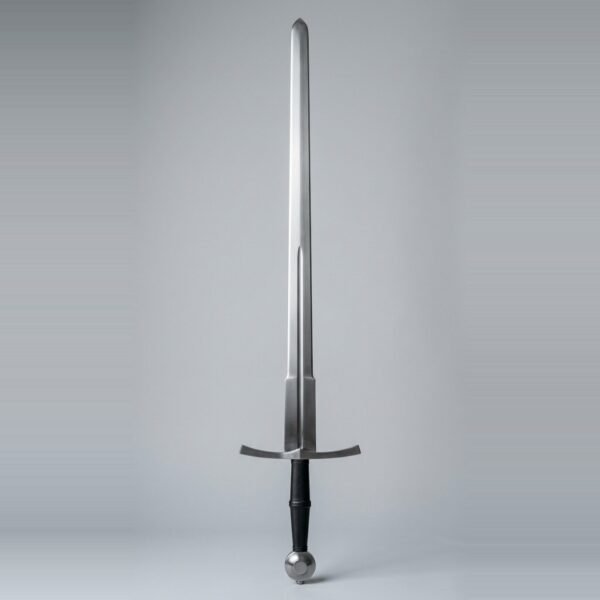
The Liechtenauer tradition, and what a longsword trainer is for
The German longsword tradition runs back to Johannes Liechtenauer, whose teaching survives as a compressed mnemonic verse preserved in manuscripts from around 1400 onward. The verse is deliberately obscure. What makes it usable is the body of glosses written by later masters, who took each line and explained the play behind it, and those glosses are what most clubs work from.
The system rests on a small set of ideas rather than a long list of moves. There are four principal guards, vom Tag over the shoulder, Ochs with the point levelled at the face, Pflug low in front of the body and Alber with the point down. There are five named strikes that break them. Above all there is the question of who holds the initiative, the Vor and the Nach, and the moment called Indes where one turns into the other inside a single bind.
All of that happens with two blades in contact. Winding, pressing and feeling whether the other fencer is strong or weak at the bind is the core of the art, and none of it can be learned from a sword that does not behave like a sword. That is what a blunt longsword is for. It carries the mass and geometry of a sharp so the bind tells the truth, while the unground edge and turned tip make it safe enough to work at speed. The Italian material of Fiore dei Liberi asks much the same of the tool.
Blunt against feder, and the tournament reality
A feder takes steel out of the blade and puts it back into the hilt, so a thin blade still handles like a sword, and adds a widened schilt above the cross to shield the hands. A blunt longsword does none of that. It is a sword shape with the edge left unground, so the blade stays wide and the mass sits where a sharp's mass would sit.
That difference has a hard consequence and it should be said plainly. Many longsword tournaments ban blunt longswords outright and accept only purpose built feders. If you are buying for competition, buy a feder. Nothing here is sold as tournament legal, because legality belongs to a named ruleset.
What a blunt is excellent at is everything else. Drill, pair work, slow sparring under control, reenactment and stage work, and preparation for cutting with a sharp. It also makes sense of the manuals, because the plays were written about this object rather than a training substitute. Most fencers who stay in the sport keep a feder in the kit bag for sparring and a blunt at home for the rest.
One safety note gets skipped too often. A blunt is not safe to be hit with at full speed simply because it is unsharpened. Steel moving fast breaks fingers whatever the edge is doing, so treat a blunt as a controlled speed tool unless your club says otherwise.
Fullers and taper
The fuller is the groove running down the flat of the blade, and it is not a blood channel, whatever the internet says. It is a stiffening device. Removing material along the centre line while leaving the edges intact gives a section that resists bending for less mass, in the same way an I beam does. On a sword that means a blade that can be made broad without becoming heavy.
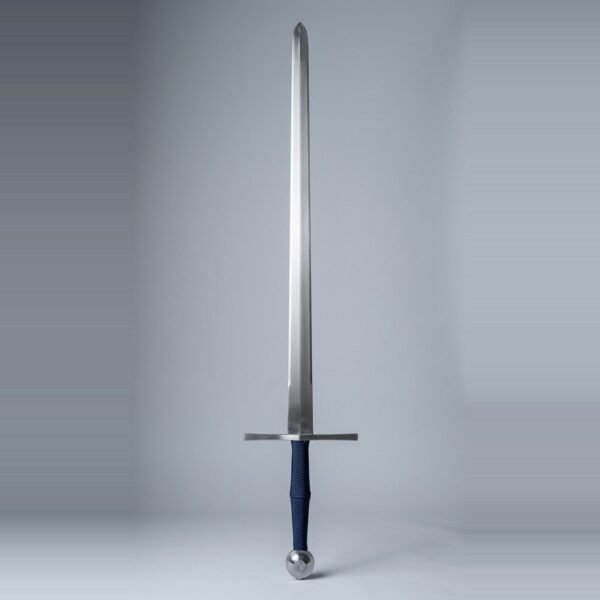
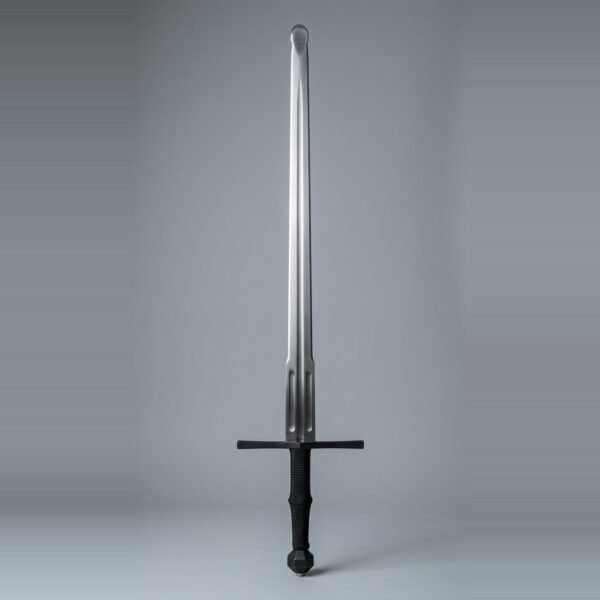
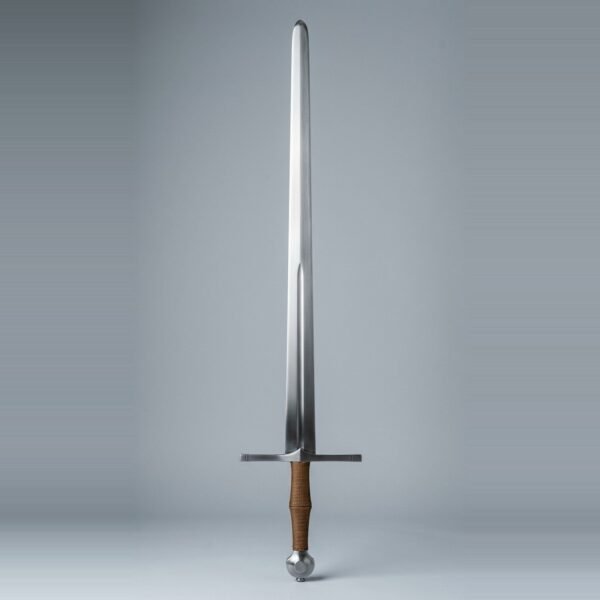
Where the fuller stops tells you what the sword is meant to do. One running to the middle of the blade, as on the Vernholt and the Draugmoor, keeps mass forward for the cut. One carried to two thirds, as on the Myrkvald, lightens the blade further out and quickens the point. Twin low fullers through the strong, as on the Nattvarn, stiffen the part that takes the bind. A blade with no fuller at all, like the flat diamond section Drakvend, is thicker through the centre and sits at the stiff end of the flex range, which is exactly where it is listed.
Profile taper is the other half. A blade that narrows steadily from cross to point moves the balance back towards the hand and quickens the thrust. One that stays broad and narrows late keeps mass in the cut. Neither is better, and both are on this page.
Hand and a half against two hands
Grip length is the quietest specification on a longsword listing and the one people notice after a month. A hand and a half grip takes both hands with the rear hand crowding the pommel. A full two hand grip gives room to slide the rear hand behind the pommel, which lengthens the lever and changes how the sword pivots.
The swords here cover both. The Vardholt, Vernholt and Valkspire are hand and a half. The Drakvend, Draugmoor and Nattvarn take two hands with room to move, and the Myrkvald sits between them. A longer grip favours big cuts and strong leverage in the bind, a shorter one a quicker point.
Pommel form matters here too, because the pommel is where the rear hand often ends up. A wheel is flat and comfortable to grip round, a faceted globe or barrel gives more to hold, and a fishtail like the one on the Valkspire flares across the end and locks the hand. Read the grip line and the pommel line together.
The nylon waster option
One piece here is not steel at all. The Tevrand is a moulded high density nylon waster with a steel cross bolted through the blade and a steel ball pommel, about 47 inches overall with a 36 inch blade, at a fraction of the price of the steel swords.
A nylon waster is a genuine training tool rather than a toy. It bends under a bind and returns straight, it will not rust, it needs no maintenance beyond a wipe and a check of the bolts, and most clubs allow it for drill and controlled sparring with the right gloves and mask. Before you know whether the sport will stick, it is the honest recommendation.
What it will not do is teach the bind. Nylon does not bite, the feel of strong and weak at the cross is muted, and there is no edge alignment feedback worth the name, so a cut that would have wobbled with steel feels fine. Use it for footwork, measure and the shape of the plays, then move to steel. The synthetic against steel guide goes through the trade in more detail.
Steel, hardness and flex
Seven of these eight swords are 51CrV4 spring steel hardened to 49 to 52 HRC, softer than the 1095 at 54 to 58 HRC used on the sharps elsewhere in this shop. A blade hard enough to hold a fine cutting edge is brittle enough to crack when two of them meet at full speed. Spring steel bends a long way and comes back straight instead.
Flex on this page runs across three of the four market tiers. Most are medium, the band around 25 to 29 lb of load where daily club training happens. The Nattvarn is listed as medium to strong, the band clubs use for hard drill. The Drakvend is the one strong tier blade, stiff through the forte with a little give at the tip. None of these figures has been measured on a rig here, which is why every listing names a tier rather than publishing a number.
Edge lands run from about 2 mm to about 3 mm of flat across this group and every listing states its own. Tips split between rolled and flared heads of about 15 mm across and points simply blunted and rounded off. A rounded point is not a spatulated tournament tip, and the listings say which is which.
Lengths, blade types and flex across this category
Every figure in the table below is taken from the specification panel of a product on this page. Nothing is estimated. Sizes vary piece to piece because each blade is forged and ground by hand, so read a stated length as nominal rather than exact.
| Piece | Overall length | Blade type | Steel and hardness | Flex | Guard or tip note |
|---|---|---|---|---|---|
| Vardholt hand and a half blunt longsword | About 47 inches | Double edged blunt with a narrow fuller from the base to past the middle | 51CrV4 at 49 to 52 HRC | Medium tier, the usual choice for club sparring | Straight cross of plain bar stock, tip rolled and flared about 15 mm across |
| Vernholt hand and a half blunt sword | About 47 inches | Broad double edged blade with a fuller running to about mid blade | 51CrV4 at 49 to 52 HRC | Medium tier, the bow sits from mid blade forward | Straight steel cross, tip blunted and rounded off |
| Nattvarn blackened longsword trainer | About 48 inches | Double edged blunt with twin fullers running low through the strong | 51CrV4 at 49 to 52 HRC | Medium to strong, the band clubs use for hard drill | Straight blackened cross, tip rolled and flared about 15 mm across |
| Drakvend blunt longsword trainer | About 49 inches | Flat diamond section, double edged, no fuller, tapering to the point | 51CrV4 at 49 to 52 HRC | Strong tier, stiff through the forte with a little give at the tip | Straight steel cross, tip blunted and rounded off |
| Valkspire hand and a half longsword | About 48 inches | Double edged blunt opening into a squared wide ricasso at the cross | 51CrV4 at 49 to 52 HRC | Medium tier, the working range for club sparring | Straight cross above the ricasso, tip rolled and flared about 15 mm across |
| Draugmoor two handed blunt longsword | About 49 inches | Double edged blunt with a fuller from the base to mid blade | 51CrV4 at 49 to 52 HRC | Medium tier, the working range for two handed sparring | Long straight cross of plain bar stock, tip rolled and flared about 15 mm |
| Myrkvald blunt longsword | About 47 inches | Straight double edged, fuller to about two thirds, flat diamond beyond it | 51CrV4 at 49 to 52 HRC | Medium tier | Straight blackened cross, tip blunted and rounded, not a flared feder knob |
| Tevrand nylon waster longsword | About 47 inches | Moulded nylon, matte finish, moulded central groove down the flat | High density nylon with steel fittings, not hardened steel | Nylon flex, bends under a bind and returns straight | Steel cross bolted through the blade, moulded rounded nylon tip |
Care
Spring steel rusts exactly as high carbon does. Wipe the blade down after every session, because sweat comes through a glove and hand oil marks steel overnight. Keep a light film of mineral oil on the flats and in the fuller, store the sword flat or hanging rather than standing on its point, and never leave one in a kit bag with a damp jacket.
Check the hilt before a session rather than after. A peened pommel loosens slowly and the first sign is a faint rattle at the cross. Blunt tips spread over months of thrusting into a mask, and a spread lip is sharper than a fresh tip, so dress it back with a file and measure again. A bend in spring steel is normal and comes out over a knee with steady pressure rather than a hammer. The nylon waster needs none of this: wipe it and check the two bolts through the cross. The care guide covers rust, oil and storage.
Where these are made
Every sword in this category is made by hand in the Czech Republic and imported by Ransack Viking. Each is checked for hilt tightness, pommel seating and blade straightness at the North Babylon, New York warehouse and ships from there. Shipping inside the United States is free and returns run for seven days.
The lifetime warranty covers defects in the forging, the grind, the heat treat and the fittings, with no end date and no receipt needed. It does not cover a blade bent in normal sparring, because bending is what spring steel is meant to do. Engraving is carried out in the United States after the sword arrives, so send the exact spelling with the order, and an engraved piece cannot be returned.
Browse related sword categories
- The full HEMA sword range across every family
- Feders with schilts, rolled tips and medium flex blades
- Single handed arming sword trainers for sword and buckler
- Messers and kriegsmessers with riveted scale grips
- Bolognese sideswords with finger rings and knuckle bows
- Sharp longswords for cutting and for display
- Two handed greatswords and zweihanders at full length
Guides worth reading first
- What HEMA is and how a club actually trains
- What a feder is and why it is not a blunt longsword
- Blunt against sharp training swords, and which you need
- HEMA tournament gear rules and what gets checked
- HEMA sword flex explained, tier by tier
- Synthetic against steel trainers for a first year fencer
- How to choose your first HEMA sword without wasting money
- How to display swords and axes on a wall safely
Frequently asked questions
What is a HEMA longsword?
It is a blunt two handed training sword for Historical European Martial Arts. The edge is left as an unground flat land rather than a grind, the point is turned over or rounded, and the blade keeps the profile taper, the fuller and the mass distribution of a sharp longsword so it behaves correctly in the bind. Seven of the eight here are 51CrV4 spring steel at 49 to 52 HRC.
Can I use a blunt longsword in a tournament?
Often not. Many longsword events ban blunt longswords outright and accept only purpose built feders or sword shaped feders. No listing on this page claims tournament legality, because legality belongs to a named ruleset. Read the requirements of your event, check them against the tip shape, edge land and flex tier in the specification panel, and buy a feder if you intend to compete.
Should I buy a blunt longsword or a feder first?
A feder, if you are going to spar weekly or compete. A blunt, if your club works mostly in drill and pair work, or if you want to understand what a real sword does at the cross. The blunt keeps the mass and geometry of a sharp and teaches the bind honestly. The feder is safer on a partner and more widely accepted at events.
What does the fuller do?
It stiffens the blade for less mass. Taking material out along the centre line while leaving the edges intact gives a section that resists bending, as an I beam does, which lets a blade be broad without being heavy. It is not a blood channel. Where the fuller stops changes the balance: to mid blade keeps mass forward, to two thirds quickens the point.
What flex should a blunt longsword have?
Medium in most cases, the band around 25 to 29 lb of load. Six of the seven steel swords here are medium or medium to strong for that reason. One is listed as strong tier, stiff through the forte with a little give at the tip, which suits a fencer who wants the point to stay where it was put. Every listing names its tier rather than a measured number.
Is a nylon waster good enough to train with?
For a first six months, yes. It bends and returns, it will not rust, and most clubs allow it for drill and controlled sparring with proper gloves and a mask. What it will not teach you is the bind, because nylon does not bite and the feel of strong and weak at the cross is muted.
Are these longswords sharp?
No. Every steel sword in this category is a blunt trainer with an edge land of about 2 mm to 3 mm across and a tip that is either rolled and flared to about 15 mm or blunted and rounded off. None of them can be sharpened into a cutting sword without changing the heat treat, and the nylon waster has no edge at all. Sharp cutting swords sit elsewhere in the shop.
Where are these longswords made and what is covered?
They are made by hand in the Czech Republic, then imported, inspected and shipped by Ransack Viking from North Babylon, New York. Shipping inside the United States is free and returns run for seven days. The lifetime warranty covers defects in the forging, the grind, the heat treat and the fittings, with no end date and no receipt needed, but not a blade bent in normal sparring.
Featured pieces
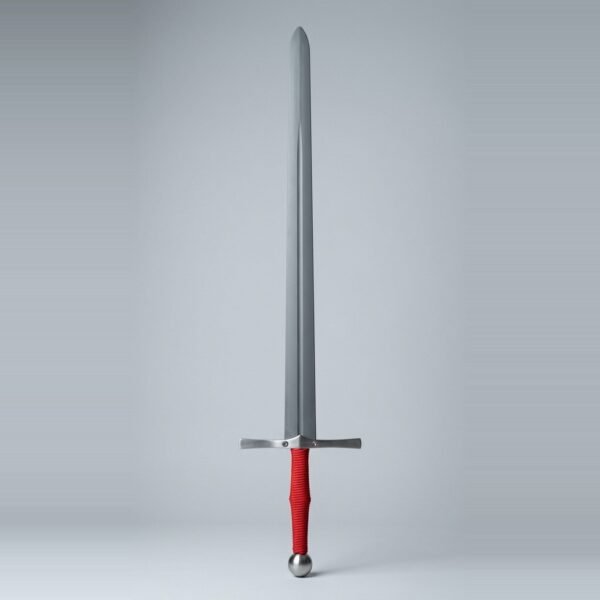 Tevrand Hand Made High Density Nylon Waster Longsword with Bolted Steel Cross & Ball Pommel
$119.00
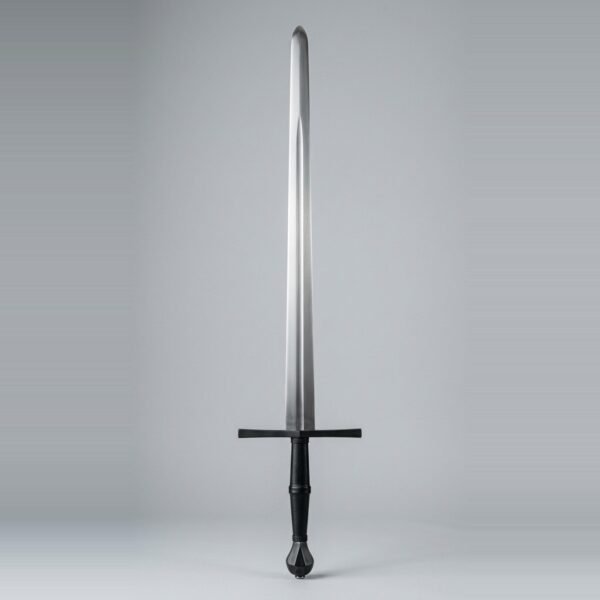 Myrkvald Hand Forged 51CrV4 Blunt Longsword with Blackened Cross & Fuller to Two Thirds
$489.00
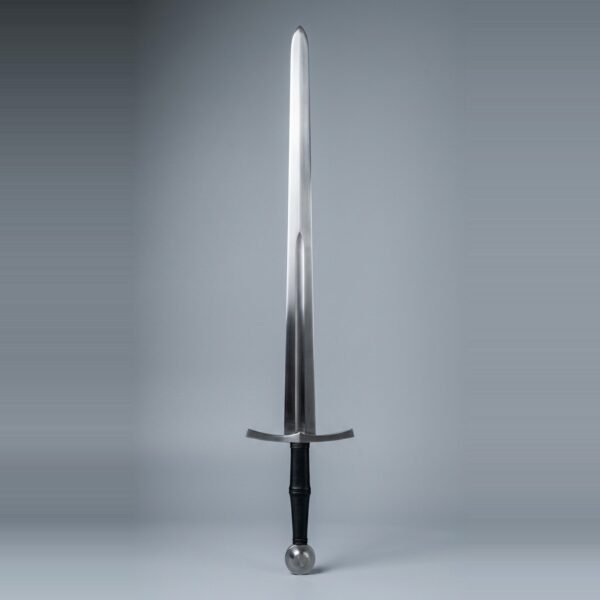 Draugmoor Hand Forged 51CrV4 Two Handed Blunt Longsword with Mid Blade Fuller & Wheel Pommel
$459.00
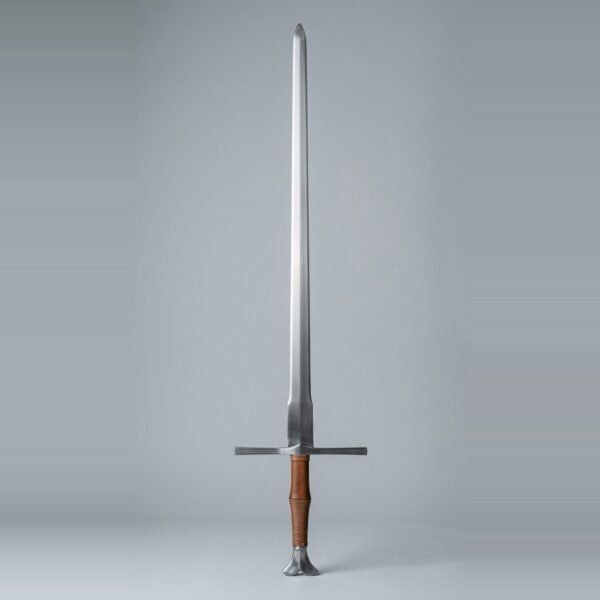 Valkspire Hand Forged 51CrV4 Hand and a Half Longsword with Squared Ricasso & Fishtail Pommel
$449.00