Blog
Viking Jewelry for Men: Rings, Pendants and Mjolnir

A good Viking ring for a man is a solid band he will actually wear, with a symbol he can explain if someone asks. Below are the rings, Mjolnir pendants, arm rings and symbol pendants the shop carries, what each symbol meant to the people who first wore it, how to get the size right first time, and what each piece is made of, in the plain words the product pages use.
A word on where these come from. Every piece is handmade in the Czech Republic by workshops that still work by hand, and imported by Ransack Viking. The prices below are regular prices. When a sale is running, the cart shows the current offer.
Quick picks by the man wearing it
| If he wants | Pick | Price | Why it works |
|---|---|---|---|
| One ring to wear every day | Knotvow Viking rune ring | $139 | Celtic plait outside, runes cut inside where only he sees them |
| A wide, heavy band | Ropewind Norse rune ring | $129 | 9mm across, twisted rope borders, US 7 to 15 |
| Thor on his finger | Runeclasp rune ring | $149 | Polished steel with a small Mjolnir at the front |
| A Mjolnir pendant | Thunderknot or Thunderclasp | $159 | Heavy hammer, 24 inch chain, about 2 inches tall |
| Something for the wrist | Coilspire Viking arm ring | $189 | Open cuff with spiral terminals and stamped runes |
| A symbol other than the hammer | Thricebound Valknut pendant | $129 | Polished steel on a leather cord, 20 reviews |
| No idea of his ring size | Runeband ring set | $169 | Six open ended rings that adjust to fit |
Viking rings
Finger rings are one of the parts of the look people assume television invented. It did not. Rings turn up across Scandinavian finds, a lot of them twisted from wire, and in a world where silver was weighed rather than counted, a ring was portable wealth first and decoration second. Nobody in the tenth century was asking whether it went with his shoes.
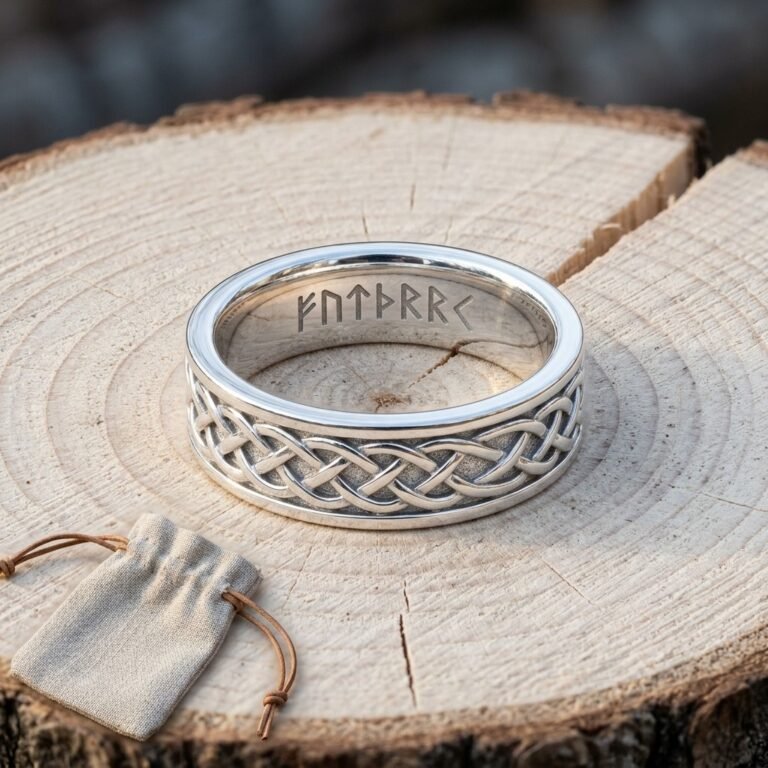
 Knotvow Hand Made Viking Rune Ring with a Celtic Knotwork Band & Elder Futhark Cut Inside | Norse Wedding Gift | RK-1658
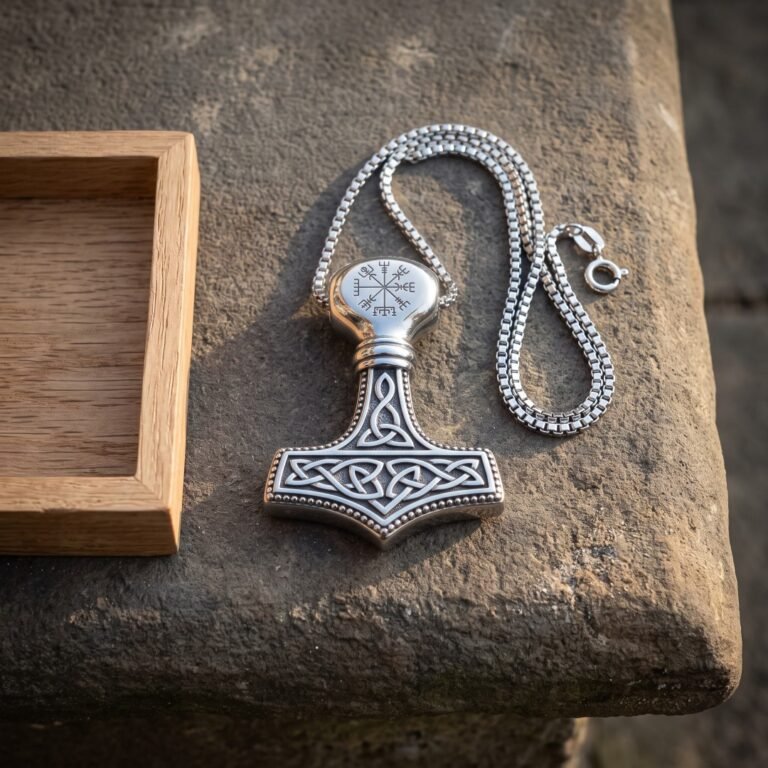
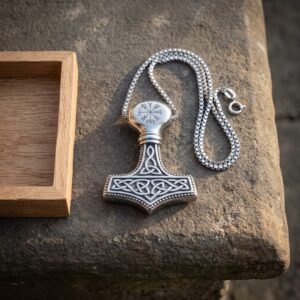 Thunderknot Hand Made Silver Finish Mjolnir Pendant with Celtic Knotwork & Vegvisir Crown | 24 Inch Box Chain | Norse Gift | RK-1754
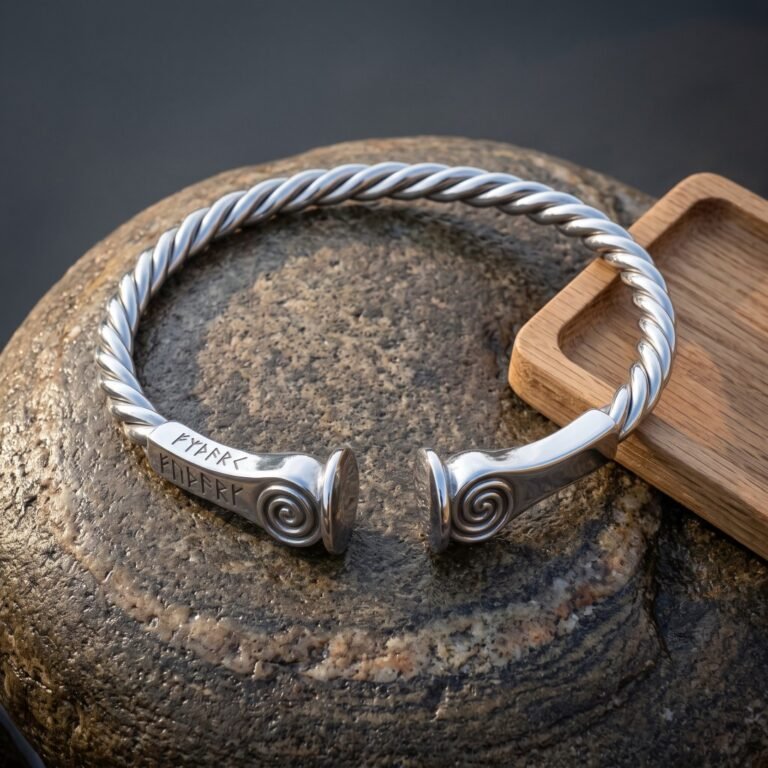
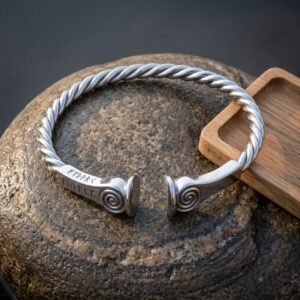 Coilspire Hand Made Twisted Viking Arm Ring with Spiral Terminals & Elder Futhark Runes | Open Cuff Torc | Norse Oath Gift | RK-1761
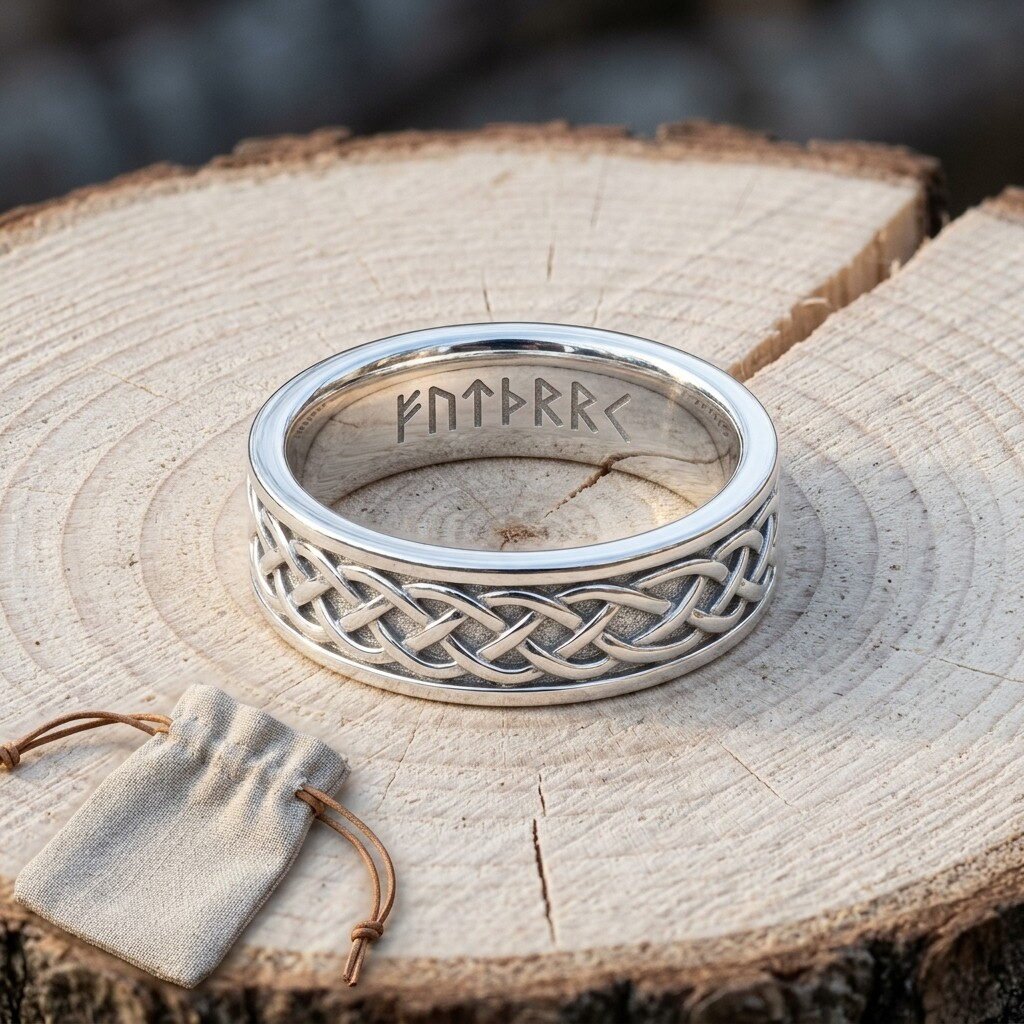
The Knotvow is the pick for a man who wants one ring and wants to forget he is wearing it. It is a flat band of about 8mm with a raised rail on each edge and a four strand Celtic plait running all the way round the channel between them. The first six staves of the Elder Futhark are cut on the inside of the shank. That inside inscription has old precedent: the Kingmoor and Bramham Moor rings from northern England carry runic text partly on the inner face, where it sat against the skin. It comes in US sizes 6 to 14 including half sizes, and it sits at 4.8 from 20 reviews. Only the Runeband set has as many reviews.
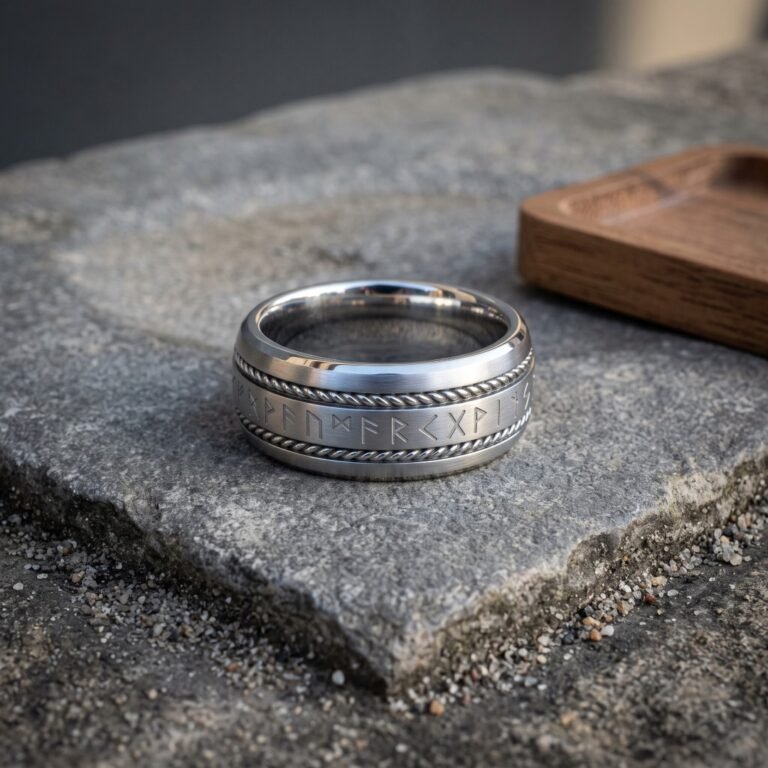
The Ropewind at $129 is the wide one. The band is 9mm across and about 2.6mm thick, with a brushed centre carrying a line of Elder Futhark and a twisted rope cable above and below it. It runs from US 7 to 15. If he has big hands, or simply prefers a ring that can be seen from across a bar, start here.
The Runeclasp at $149 is polished steel with a row of darkened Elder Futhark runes and a small Mjolnir standing proud at the front where a stone would sit. It is made to the size you put in the order notes, so measure first. The Everrune at $109 is the slim option, a 6mm band with a line of runes on a brushed panel and polished bevels, in US 6 to 14.
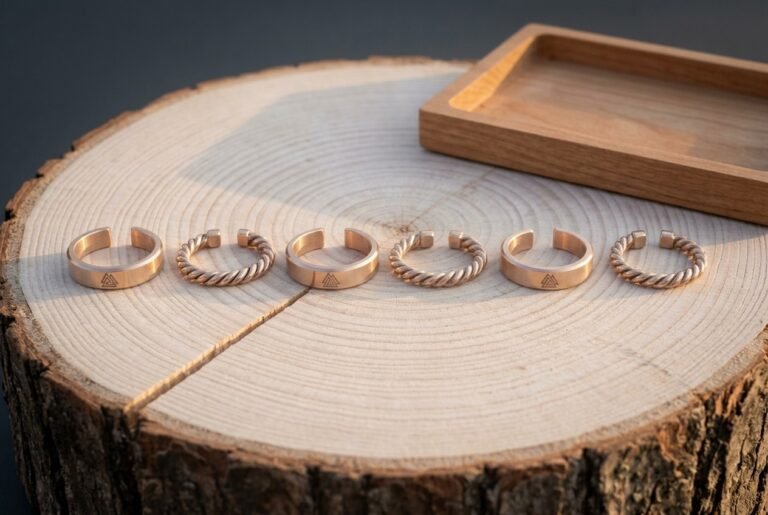
For the man who will not tell you his ring size, and who would rather lose a finger than be measured, the Runeband set solves the problem. It is six open ended rings, three flat Valknut bands and three twisted wire rings, in a bronze tone jewellery alloy. The product page says plainly that this is a finished costume set and not solid precious metal, which is refreshing. Because every ring is open at the back, each one adjusts across a range of sizes. It is $169 and rated 4.7 from 20 reviews.
Mjolnir pendants
The Mjolnir pendant is the one piece of Norse jewellery with real archaeology behind it in quantity. Small hammer amulets turn up in Viking Age graves and hoards across Scandinavia, mostly from the tenth century, which is the same period Christianity was spreading north. There is a soapstone mould from Trendgarden in Denmark cut with cavities for both a cross and a hammer, so the smith could cast whichever the customer wanted. Commercial thinking is older than it looks.
In the poems the hammer did more than hit giants. In Thrymskvida it is laid in the lap of the bride to hallow the wedding, and the sources have Thor using it to bless. So a hammer round the neck meant protection and luck as much as anything to do with fighting. The full story, including what the name probably means, is in our piece on what Mjolnir means.
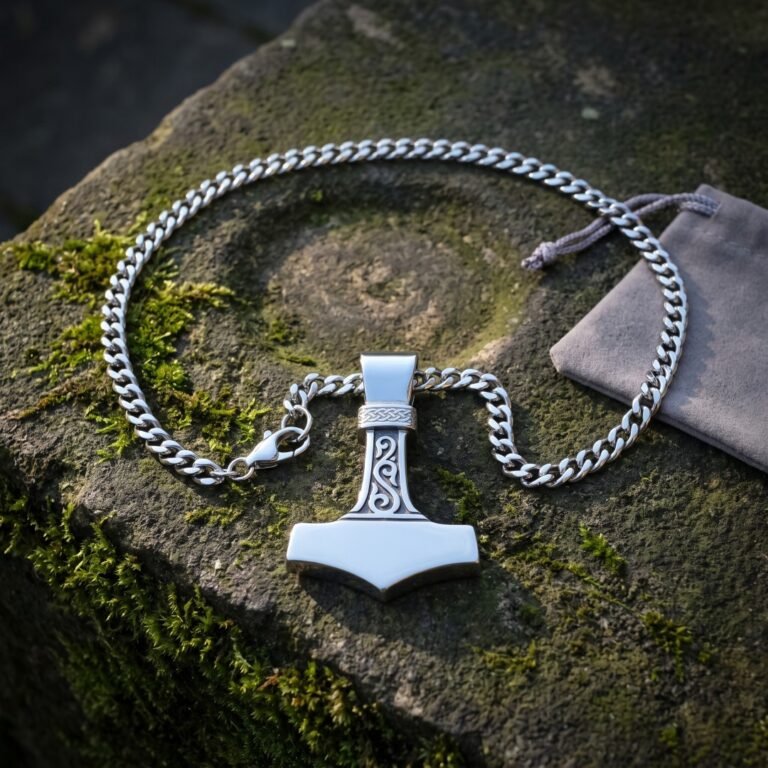
The shop carries two, both at $159. The Thunderknot is polished silver finish stainless steel, about 2 inches tall and 1.8 inches across the head, with deep cut interlace, a beaded border and a Vegvisir engraved on the crown. It hangs on a box chain of about 24 inches and comes in a wooden gift box. The Thunderclasp is plain stainless steel, polished, with opposed scrolls on the shaft and knotwork below the bail, on a heavy curb chain of about 24 inches. Its page says it will not tarnish and will not turn skin green, which is exactly what a man who never takes anything off needs to hear.
Choose the Thunderknot if he likes detail and two symbols in one. Choose the Thunderclasp if he wants a hammer that survives the gym, the shower and general neglect.
Viking arm rings
Arm rings carried more weight in Norse society than anything else here, literally and otherwise. A lord rewarding his men with rings was such a standard image that poets called a generous lord a breaker of rings, and silver arm rings were cut up and traded by weight when cash was needed. Wearing one says he keeps his word, or at least that he would like people to think so.
The Coilspire at $189 is an open cuff with a tightly twisted band about 6mm across and heavy flared terminals that finish in flat discs with a raised spiral. Elder Futhark runes are stamped on the flats behind them. The inner opening is about 2.5 inches and adjusts by gentle flexing. It is silver finish alloy, not sterling, and rated 4.67 from 3 reviews.
The Coilbright at $159 is the simpler, heavier looking piece: a round bar worked into a deep rope twist with smooth domed terminals, open at the back and adjustable. It sits as a cuff at the wrist and rides higher on a slimmer forearm, which is how the originals were usually carried.
Other symbols worth wearing
If the hammer feels too obvious, there are older and stranger choices. Each one has a story, and a few have a modern history that the jewellery trade tends to skip.
The Valknut
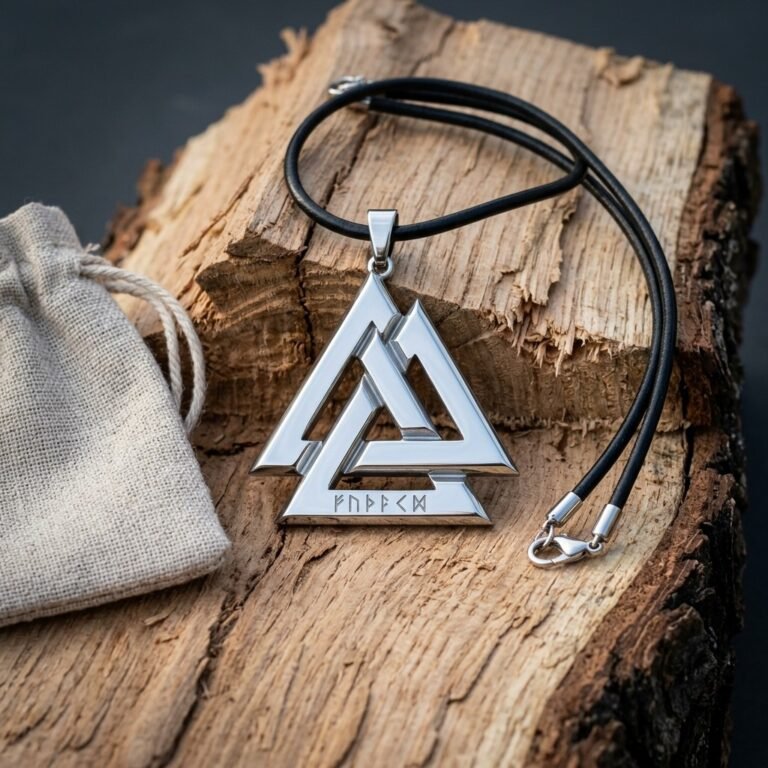
Three interlocked triangles. The name is modern, but the symbol appears on Gotland picture stones and on a bedpost from the Oseberg ship burial, often beside scenes most scholars connect with Odin and the dead. The Thricebound is polished steel, about 1.5 inches across, with an Elder Futhark band on the lower bar, on a black leather cord. It is $129 and rated 4.65 from 20 reviews.
The Vegvisir
The eight spoked runic compass is Icelandic, recorded in manuscripts centuries after the Viking Age. Lovely design, wrong era, and it is worth knowing that before he tells a historian it is a Viking compass. The Wayrune is a 1.5 inch disc with the stave on a brushed centre and a knotwork border, on a 24 inch curb chain, for $129.
The Helm of Awe
The name, Aegishjalmur, is old and appears in the Eddic poems. The eight armed stave most people know comes from later Icelandic manuscripts. The Wardstave is a 30mm silver tone disc on a box chain, the cheapest pendant here at $119 and rated 5.0 from 3 reviews.
Sizing a Viking ring
Most ring trouble starts with a guessed size. Measure instead.
Wrap a strip of paper round the base of the finger, mark where it overlaps, and measure the length in millimetres. That is the circumference. A US size 9 is about 59mm, a size 10 about 61.6mm, and each full size adds roughly 2.6mm. Measure late in the day in a warm room. Fingers are at their smallest in the cold and first thing in the morning, which is the worst time to find out anything about yourself.
Width changes the fit. A 9mm band like the Ropewind touches far more of the finger than a slim one, so at the same nominal size it feels tighter. Its product page advises a half size up from your usual size. Rings with a continuous cut pattern, such as the Knotvow, cannot be resized afterwards because cutting the shank breaks the plait. The size you order is the size you keep.
If you are buying as a surprise and cannot measure, borrow a ring he already wears on the same finger and measure its inside diameter, or go with the open ended Runeband set and skip the problem.
Materials, in plain words
None of the rings or pendants here are sold as sterling silver, and the product pages say so. Here is what they are, according to each listing.
| Piece | Material as listed | Chain or cord |
|---|---|---|
| Knotvow ring | Solid metal band, bright silver tone finish | Not applicable |
| Ropewind and Everrune rings | Solid silver tone band, not sterling silver | Not applicable |
| Runeclasp ring | Polished steel, silver tone finish | Not applicable |
| Runeband set | Bronze tone jewellery alloy | Not applicable |
| Thunderknot Mjolnir | Silver finish stainless steel | Box chain, about 24 inches |
| Thunderclasp Mjolnir | Stainless steel, not plated | Curb chain, about 24 inches |
| Coilspire arm ring | Silver finish metal alloy | Not applicable |
| Thricebound Valknut | Polished steel | Black leather cord |
Take rings off before washing up with soap or using cleaning products, because chemicals sit in the recesses and dull the finish. A soft cloth does the rest.
What about beard rings?
The shop does not list beard rings at the moment. If that is what he is after, the history, sizing and braiding are covered in Viking beard rings and braids, and the Braidhorn horn beard comb the shop does carry is a better gift for a beard than most rings are anyway. For a wider list of presents, including pieces for the man who wears his history, see Viking Christmas gifts.
The full range of rings and arm rings sits under Viking rings and bracelets, and the hammers and symbol pendants are filed under Mjolnir pendants and Norse pendants in the shop menu.
Questions people ask
Did Vikings actually wear rings?
Yes. Finger rings, many of them twisted from wire, turn up across Scandinavian finds, and arm rings were a common store of wealth. Silver was weighed rather than counted, so a ring could be cut and traded when needed.
What does a Mjolnir pendant mean?
It is Thor’s hammer, and in the Norse sources it protected and blessed as well as struck. Hammer amulets were widely worn in the tenth century, often as a sign of the old faith while Christianity spread.
How do I find my ring size at home?
Wrap paper round the base of the finger, mark the overlap and measure in millimetres. A US 10 is about 61.6mm and each full size adds about 2.6mm. For a wide band of 9mm, go half a size up.
Are these rings sterling silver?
No. The listings describe solid silver tone metal, polished steel, stainless steel or a bronze tone alloy, and each page states that it is not sterling silver.
Can a Viking ring be resized later?
Not one with a continuous cut pattern like the Knotvow, because cutting the shank breaks the design. Measure carefully before ordering, or choose the open ended Runeband set, which adjusts.
Where is this jewelry made?
Every piece is handmade in the Czech Republic by workshops that still work by hand, and imported by Ransack Viking.
Shop the range
Knotvow Hand Made Viking Rune Ring with a Celtic Knotwork Band & Elder Futhark Cut Inside | Norse Wedding Gift | RK-1658Thunderknot Hand Made Silver Finish Mjolnir Pendant with Celtic Knotwork & Vegvisir Crown | 24 Inch Box Chain | Norse Gift | RK-1754Coilspire Hand Made Twisted Viking Arm Ring with Spiral Terminals & Elder Futhark Runes | Open Cuff Torc | Norse Oath Gift | RK-1761 Ropewind Hand Made Norse Rune Ring with Twisted Rope Borders & Elder Futhark Centre Band | 9mm Wide | Groomsmen Gift | RK-1604
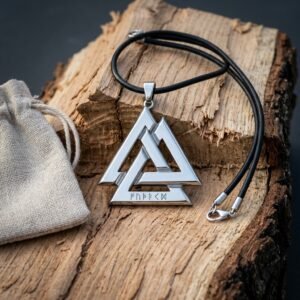 Thricebound Hand Made Polished Steel Valknut Pendant with Elder Futhark Rune Band & Black Leather Cord | Norse Gift | RK-1634
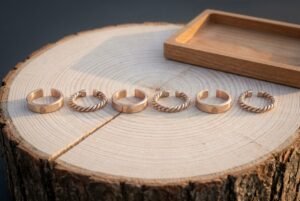 Runeband Hand Made Bronze Tone Viking Ring Set with Valknut Bands & Twisted Open Cuffs | Six Piece Adjustable Gift | RK-1617
