
Hunting knives here are the field blades. Skinners with a deep swept belly and a short blade, gut hook knives with a cutting hook set into the spine, drop point camp knives, clip point bowies and the kukris that end up doing the camp chopping. Sizes run from 7.5 inches overall with a 3.5 inch blade up to 16 inches overall with 11 inches of blade measured along the curve. Almost everything is full tang with pinned scales, and almost everything ships with a stitched leather belt sheath.
Two steels cover most of the range. Plain 1095 high carbon is hardened to 54 to 58 HRC, sharpens quickly and comes back on a stone in camp. Damascus is 1095 and 15N20 forge welded and acid etched, hardened to 58 to 60 HRC. A few older listings state D2 in their own specification table, and that table is the accurate answer for those pieces. Handles are stag antler, ram horn, buffalo horn, bone, rosewood, walnut, olive wood, pakka wood, micarta or stacked leather washers.
If you want one knife for deer, a skinner between 7.5 and 10 inches overall with a 3.5 to 5 inch blade does most of the work.
Most hunting knives here take a custom engraving on the blade, chosen on the product page.
Free US shipping
On most pieces. Heavier and oversized ones carry a flat charge.
Hand Forged
Heated, hammered and ground by hand.
Engraving available
Names, dates or Norse runes on most pieces.
Ships from Memphis
Inspected and dispatched from our Tennessee warehouse. No import duty, no customs delay on US orders.
Hunting Knives
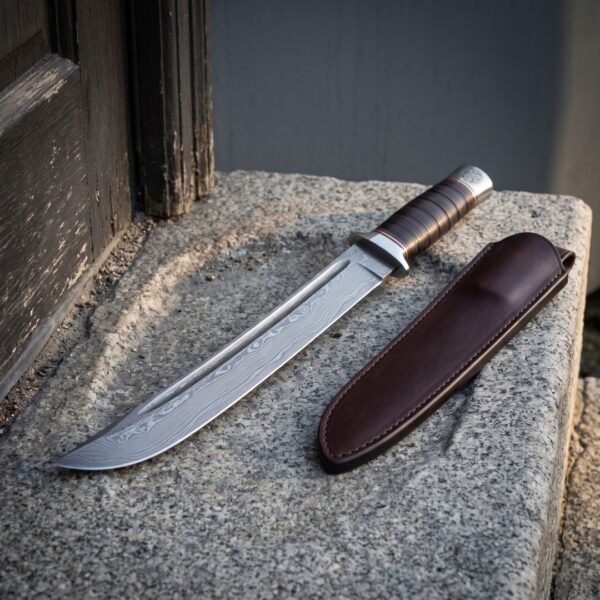
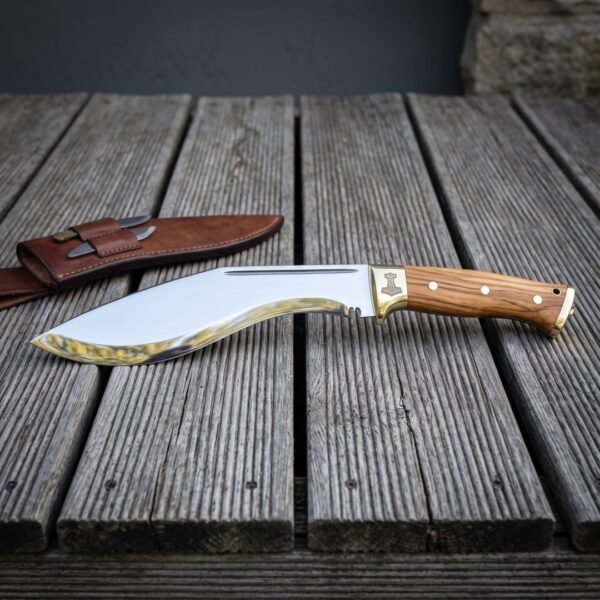
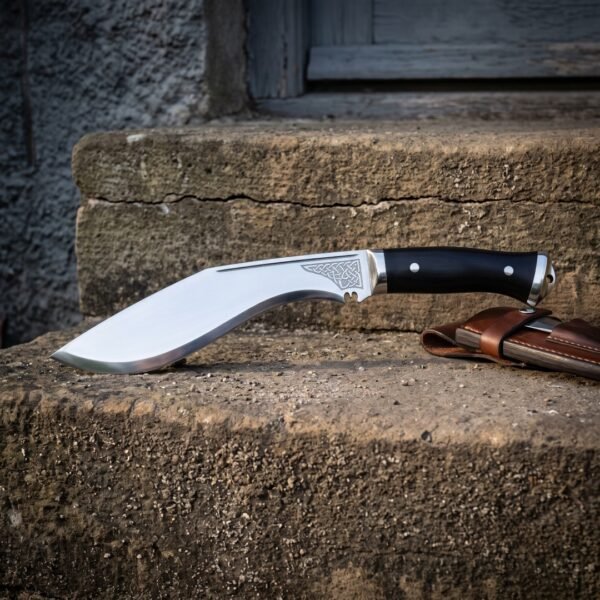
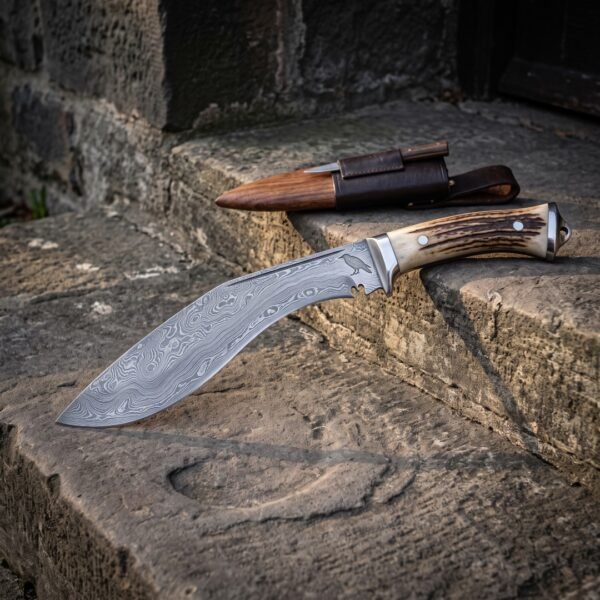
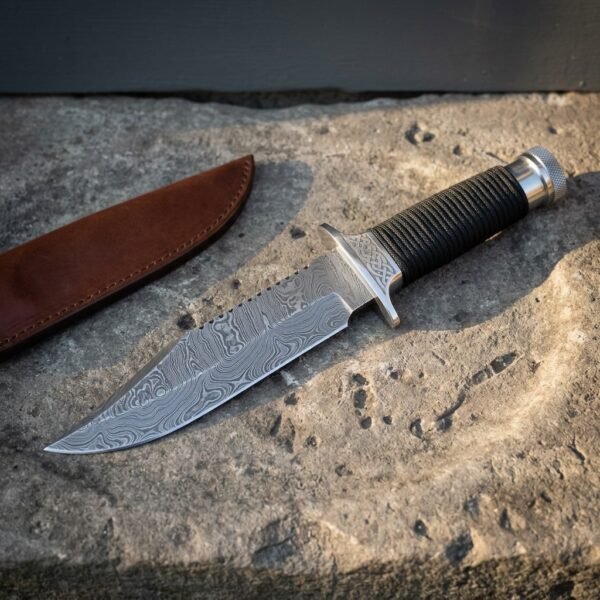
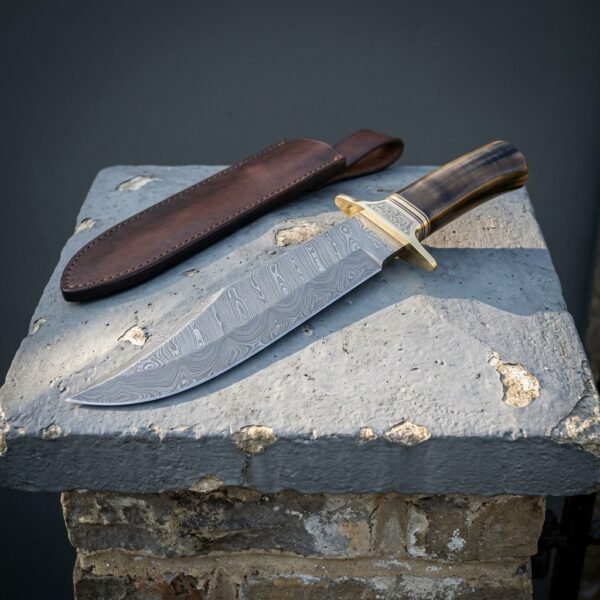
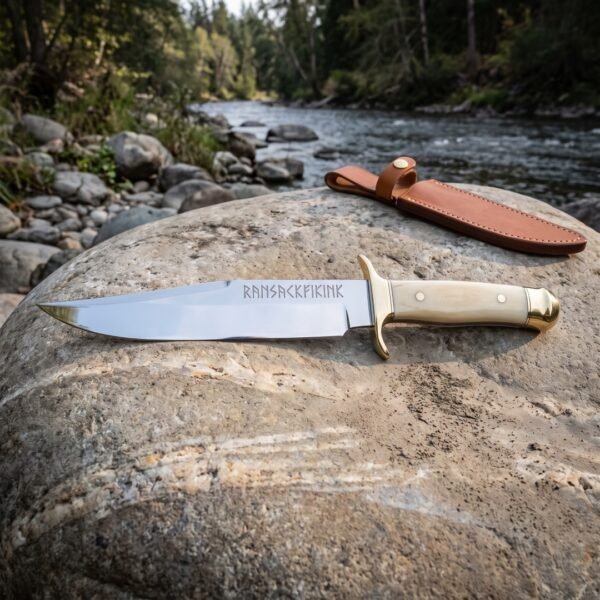
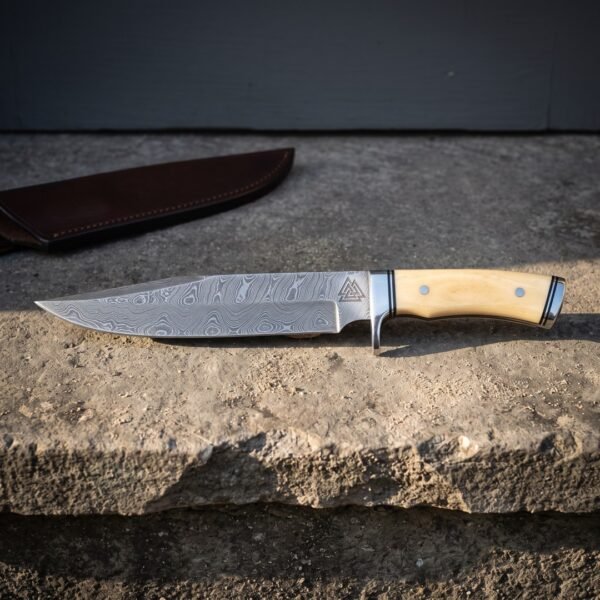
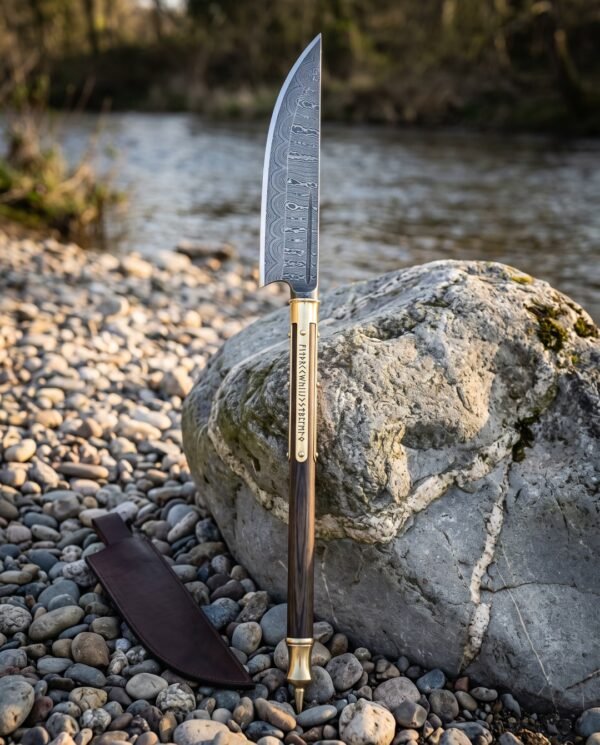
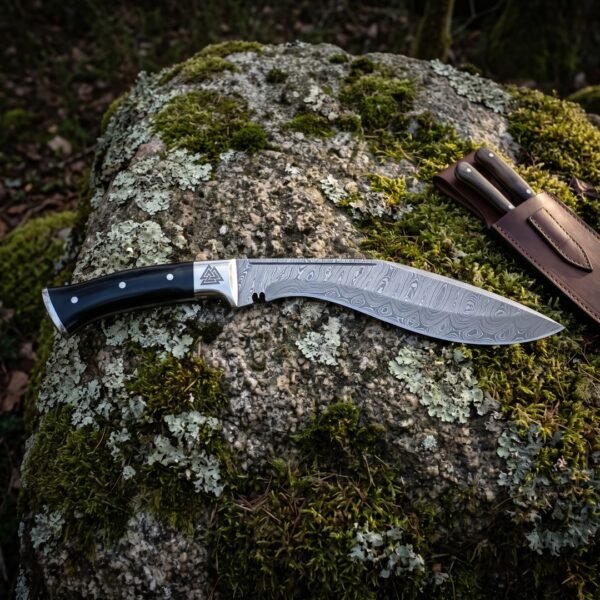
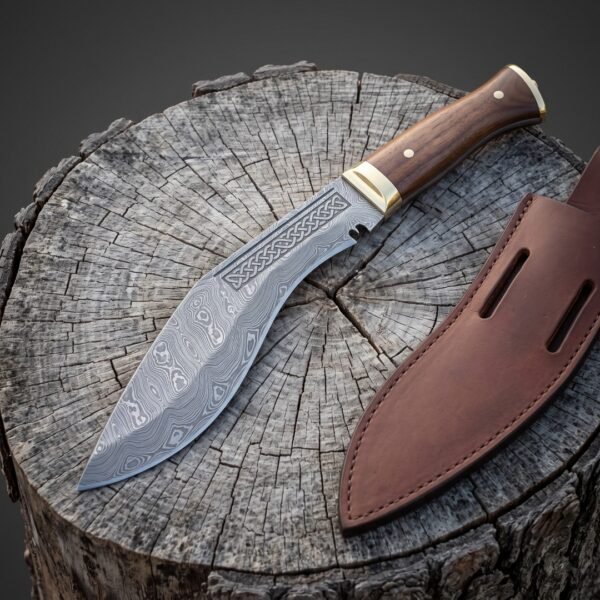
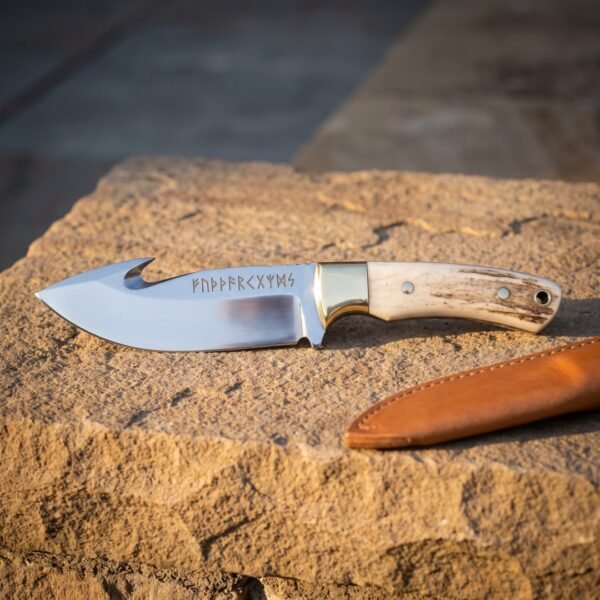
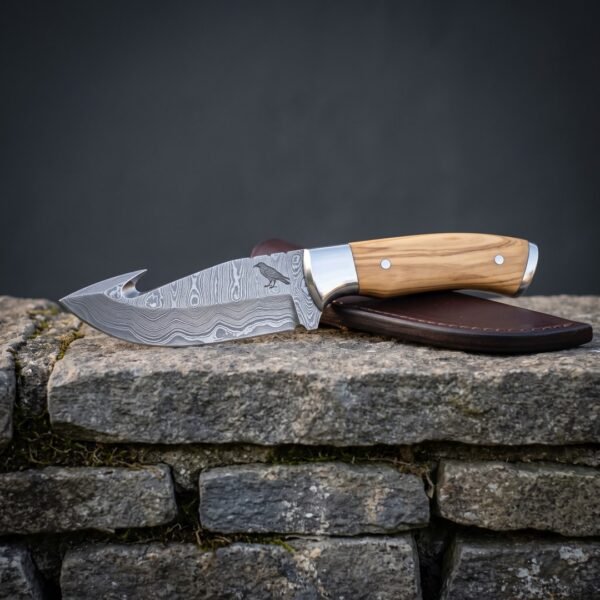
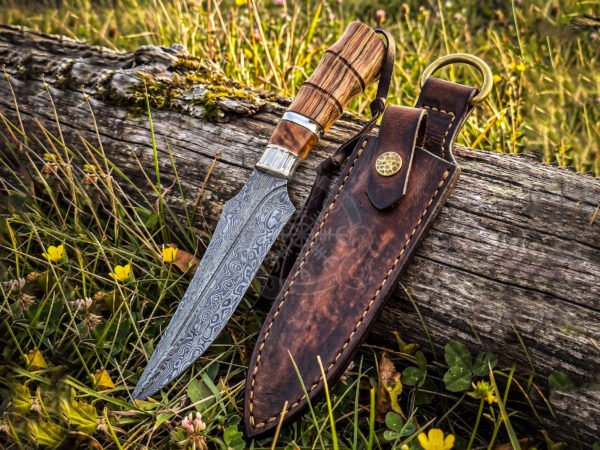
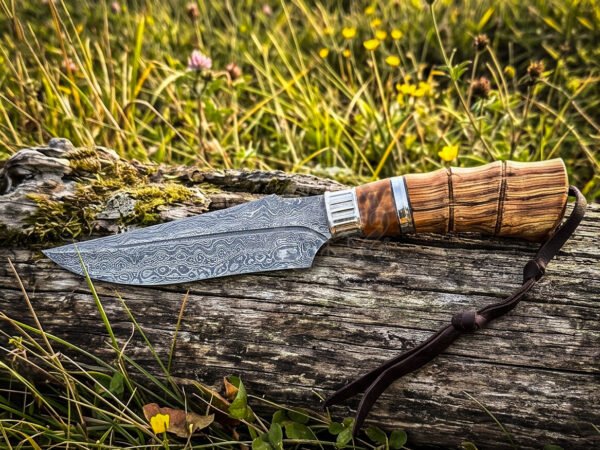

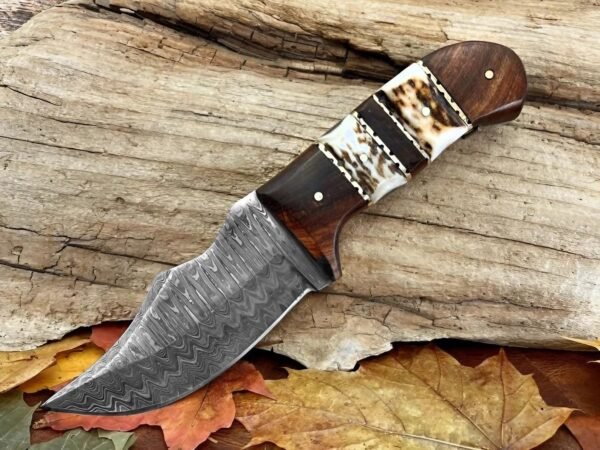
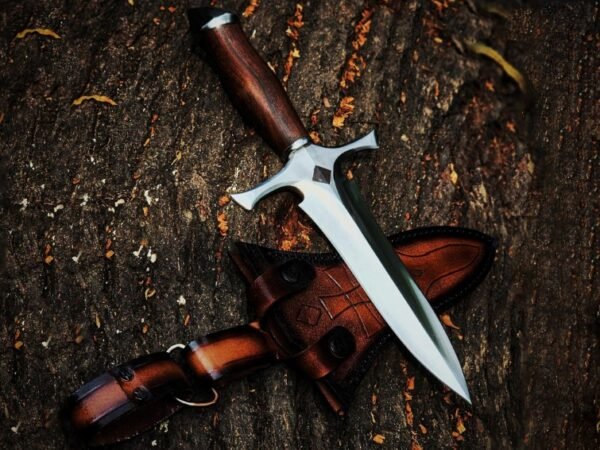
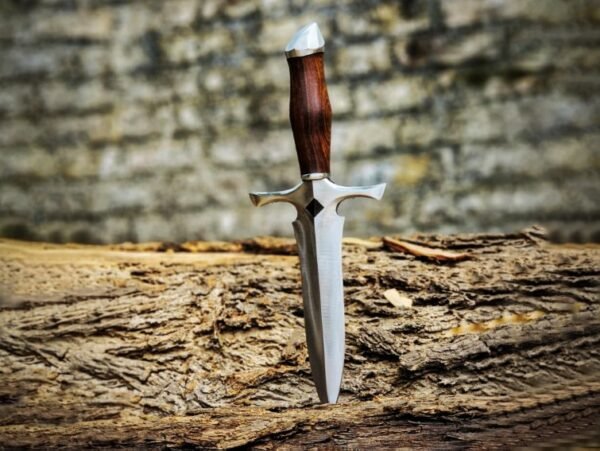
Stagrose Hand Forged Damascus Skinner Knife with Rosewood and Stag Handle & Hand Stitched Leather Sheath | Hunting Skinning Gift | RK-1102
Price range: $129.00 through $169.00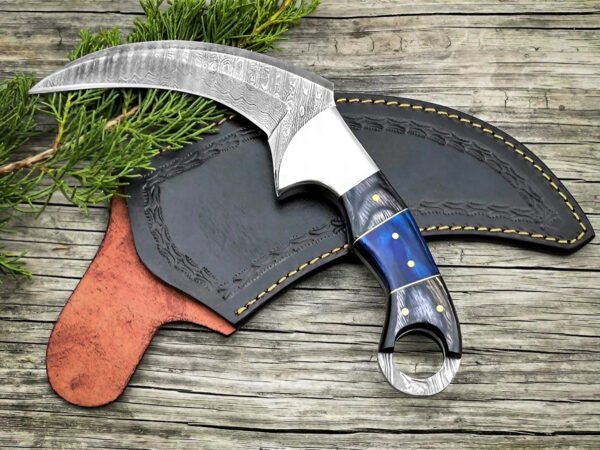
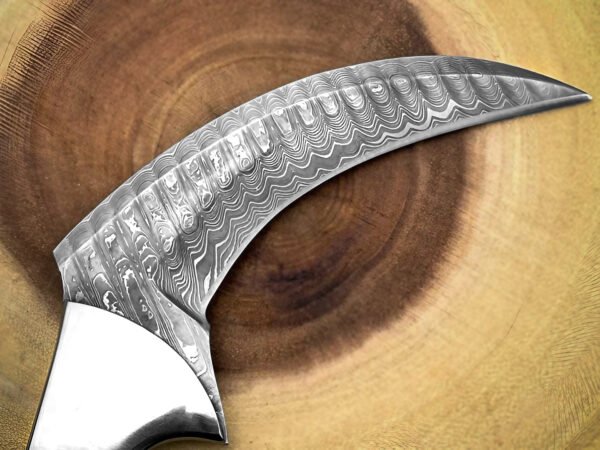
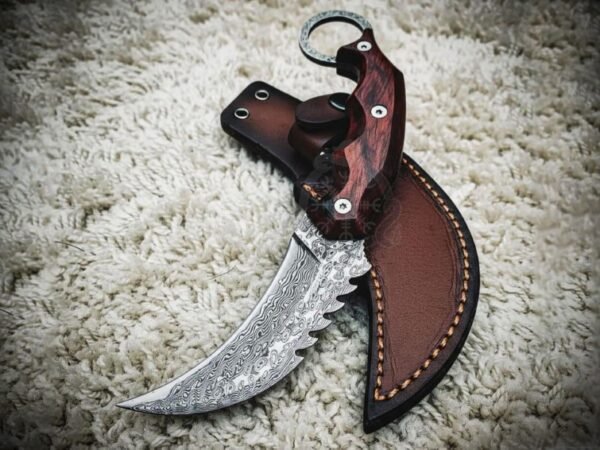
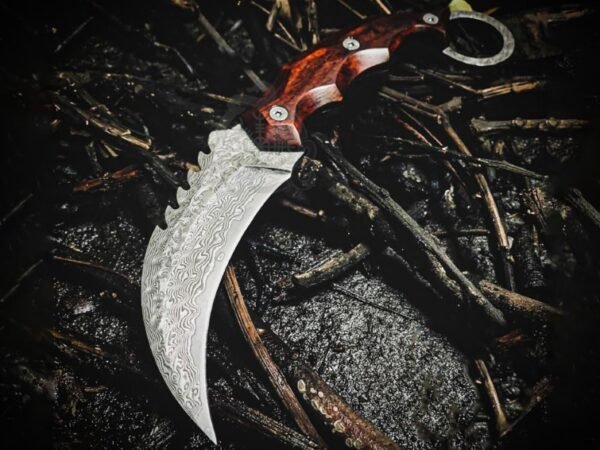
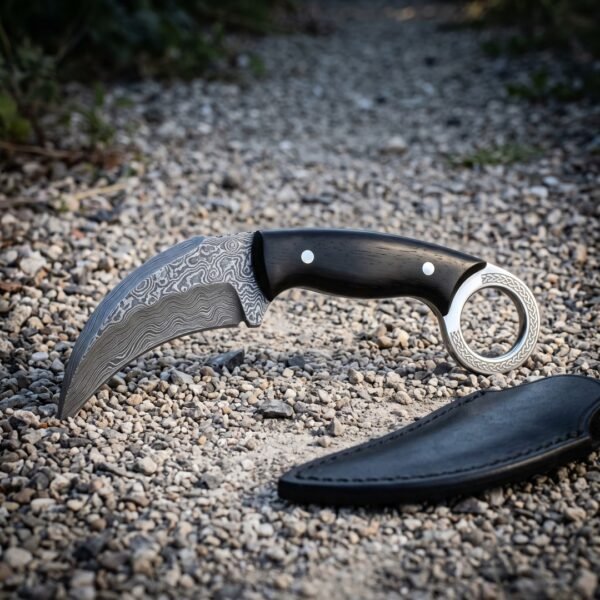
Roseclaw Hand Forged Damascus Karambit Knife with Rosewood Handle & Handmade Leather Sheath | Tactical Everyday Carry and Collector Gift | RK-1068
$189.00What a hunting knife has to do
A hunting knife spends almost none of its life chopping and almost all of it separating skin from muscle and muscle from bone. That is a small job done with great precision, usually with cold hands, often in poor light, sometimes with the animal on the ground rather than hanging. Everything about a good field knife follows from that.
The blade wants to be short. Four inches of edge is enough for a whitetail and a good deal easier to control than seven, because the part you cut with is the belly near the tip, not the length near the handle. A long blade puts steel you are not using near an organ you do not want opened. The belly wants to be swept, so the edge meets the hide at a shallow angle and slices rather than pushes. The point wants to be at or below the spine line, so it follows the plane you are working in instead of diving.
The handle matters more than the blade on a wet job. Blood and fat make anything slick, so a shape that fills the palm and stops the hand running forward beats a pretty profile every time. Pinned scales over a full tang give you that plus something to hit with the heel of the hand.
Everything else is preference. Gut hooks, saw spines, guards and finger grooves are all real solutions to real problems, and none of them is a requirement.
The shapes in this collection
Six families cover almost everything on this page. Once you know which one you want, what remains is size, steel and handle material.
Skinners
The specialists. A short blade of 3.5 to 6 inches with a deep, almost circular belly and very little straight edge, ground thin behind the edge so it parts hide without tearing it. Overall lengths here run 7.5 to 11 inches, and weights on the listings that state one sit between 6.3 oz and 9.5 oz. That lightness is deliberate. A skinner is held in the fingertips and rolled, not gripped and driven. Handles include white bone with hardwood bolsters, walnut, stag antler with buffalo horn and walnut spacers, and stabilised wood with brass spacers.
Gut hook knives
A skinner or drop point with a small hook ground into the spine near the tip. You slip the hook under the hide at the sternum and pull, and it unzips the belly from the inside without the point ever touching the paunch. It is the single most useful feature on a field knife for anyone who works alone. Examples here run 8.5 to 10 inches overall with 4 to 5 inch blades, on stag antler with a brass bolster, or stag horn with wenge wood. The hook needs a round file or a small round rod to sharpen, since no flat stone will reach into it.
Camp and bushcraft knives
The general purpose middle of the range, 8 to 15 inches overall with 4 to 10 inches of blade, drop point or spear point, thicker through the spine than a skinner. These are the knives that cut cord, split kindling, shave feather sticks and prepare food, and they will dress an animal at a pinch. Handles here include olive wood with a steel bolster, rosewood with a Damascus guard, pakka wood, walnut with an engraved brass bolster, and stag horn over stacked leather.
Bowies
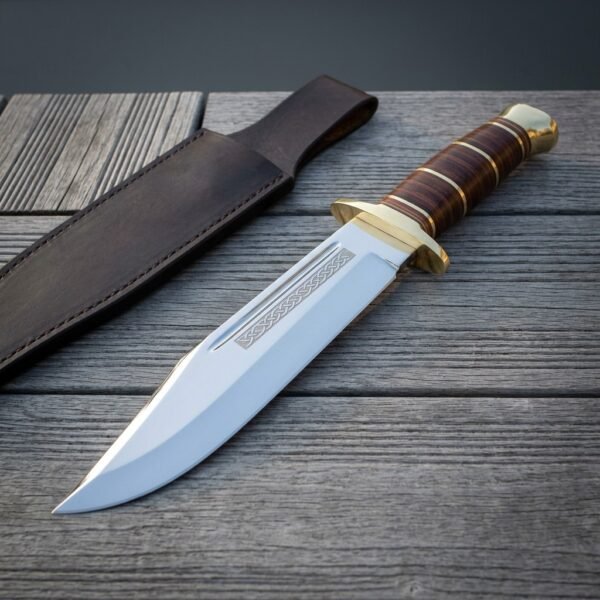
Big clip point knives with a long swept belly and often a swedge along the false edge. Sizes on this page run 10.5 to 15 inches overall with 6 to 10 inches of blade, and listed weights from 10.5 oz to 1 lb 6 oz. A bowie is a hunting knife for larger game and for anyone who wants one blade to cover camp and field rather than two. Handles run to pale bone scales over dark liners, dyed camel bone, buffalo horn with stabilised wood and brass bolsters, ram horn, and stacked leather washers with brass spacers.
Kukris
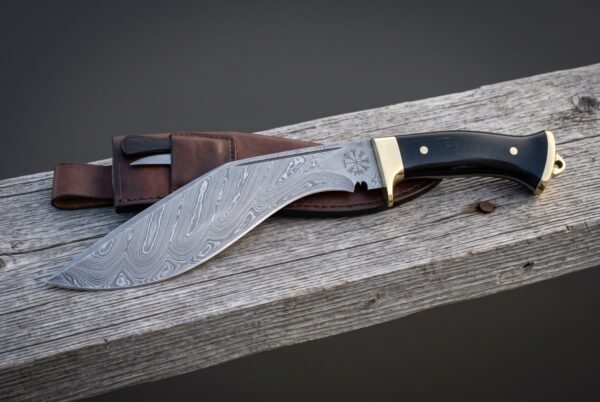
The heaviest cutters here, 15 to 16 inches overall with 10 to 11 inches of blade measured along the curve, weighing about 1 lb 6 oz to 1 lb 8 oz for the kukri alone. The forward bend puts the mass ahead of the hand, so the blade does the work on a swing. Several ship with the traditional karda utility knife and chakmak burnisher in the same sheath. Handles are olive wood, rosewood, black micarta, buffalo horn or stag antler, pinned through a full width tang. Buy one for clearing a lane or processing firewood, not for skinning.
Karambits, tantos and throwing sets
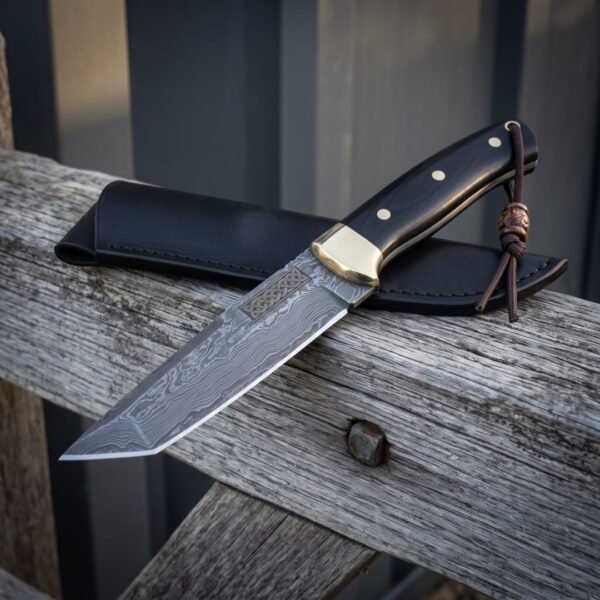
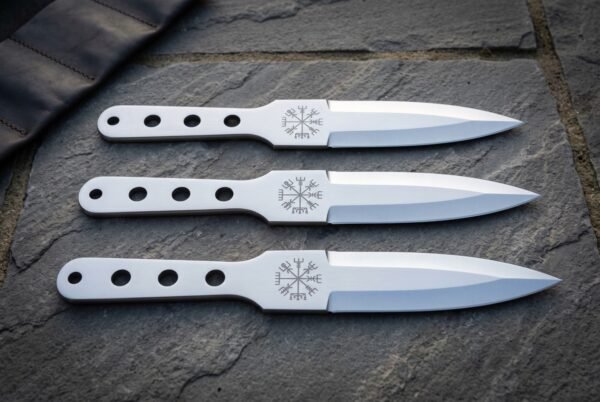
The remainder of the page. Karambits are small hawkbill blades with a finger ring at the butt, 8 to 9.5 inches overall including the ring with 3.5 to 4.75 inches of edge along the curve, on ebony, rosewood or pakka wood. The curve pulls rather than pushes, which suits cord, packaging and any cut where you want the blade to bite and stay. Tantos here run 9.5 to 10 inches overall with a reinforced chisel point. There is also a set of three throwing knives with skeletonised handles, which are consumables rather than tools and should be thrown at end grain soft wood.
Sizes, steel and weights across the range
Every figure below comes from the specification panel or the title of a product on this page. Nothing is estimated, and blank figures are shown as not listed rather than filled in.
| Piece | Overall length | Blade length | Steel per the listing | Weight | Handle |
|---|---|---|---|---|---|
| Bonewarden skinner | 7.75 in | 3.5 in | Damascus | 8 oz | White bone with hardwood bolsters |
| Stagrose skinner | 7.5 in | 3.5 in | Damascus | Not listed | Rosewood and stag with a rosewood bolster |
| Bobcat skinner | 9.7 in | 4.7 in | Damascus | 6.3 oz | Walnut, full tang |
| Yumastag hunting knife | 9 in | 4.5 in | Damascus | 10.5 oz | Stag antler with turquoise spacers |
| Stagcurve gut hook knife | About 8.5 in | About 4 in | 1095 high carbon | Not listed | Stag antler with a brass bolster |
| Wengehunter gut hook knife | 10 in | 5 in | Damascus | Not listed | Stag horn and wenge wood |
| Bonecliff Viking bowie | About 13 in | About 8 in | 1095 high carbon | About 12 oz | Pale bone scales over a full tang |
| Brasscliff bowie | 15 in | 10 in | 1095 high carbon | About 1 lb 6 oz | Stacked leather washers with brass spacers |
| Curvefang kukri | About 16 in | About 11 in along the curve | Damascus | About 1 lb 8 oz | Buffalo horn with steel bolster and butt |
| Hollowfell camp knife | 14 in | 9 in | D2 per its own listing | Not listed | Stag horn with a hollow thread wrap |
One figure is easy to misread. Kukri blade lengths are measured along the curve, so a kukri listed at 11 inches has noticeably less straight line reach than a bowie listed at 10. Karambit overall lengths include the finger ring, which adds close to an inch of steel you never cut with.
1095, Damascus and the legacy D2 pieces
Two steels are presented as a house standard across this site. Plain 1095 high carbon is hardened to 54 to 58 HRC, and Damascus of 1095 and 15N20 forge welded and etched is hardened to 58 to 60 HRC. A small number of older listings on this page state D2 in their own specification table, and where they do, that table is the accurate answer for that specific knife rather than a house standard.
For field work the choice is genuinely close. Plain 1095 sharpens faster than anything else here, takes a very fine edge and forgives a beginner on a stone because you can feel the burr form. Take it if you expect to touch the knife up between animals or if you are learning to sharpen. Damascus at 58 to 60 HRC holds an edge longer through a long day and takes more effort to bring back, and it is the choice when the knife is also a gift or a piece you want to look at.
Neither is stainless. Damascus here is mostly 1095 with 15N20 layers, so it behaves like carbon steel in every way that matters. Blood is salty and mildly acidic, and a carbon blade left with blood on it overnight will show spotting by morning. Wipe the blade down in the field, dry it properly at home, and put a light film of oil on it before it goes back in the sheath drawer.
Tang, handle, sheath and sharpening
Nearly every fixed blade here is full tang, with the steel running the whole length and width of the handle and the scales pinned through it. That is the construction you want on a knife you will lever with. The exceptions are the stacked leather handles, where washers are compressed over a narrower tang under a peened cap, which is a proven design but not the same thing. Each product page states the construction in its own table.
Natural handle materials look better than they behave in some conditions. Stag antler, ram horn and buffalo horn are grippy when wet and are the reason those handles are traditional on hunting knives. Bone and stabilised wood are stable and easy to clean. Plain wood needs a wipe of oil once a season. Micarta is the least attractive and the most reliable of the lot.
Sheaths are vegetable tanned leather, hand stitched, mostly belt carry. Leather is the wrong place to store a carbon blade for months, since the tannins are mildly acidic and the leather holds damp. Carry in the sheath, store out of it.
For sharpening, a skinner belly is sharpened by sweeping the curve across the stone so the whole edge gets equal work, rather than dragging it straight and flattening the belly. A gut hook needs a round file or a chainsaw file. A kukri is easiest with a stone in the hand and the blade on a bench. There is more detail in the knife care guide linked below.
Carry law and where these knives are made
Fixed blade carry rules vary by state and sometimes by city, and length limits, concealment rules and hunting exemptions all differ. A knife that is legal to own and to carry to a hunting camp may not be legal to carry concealed in town. The state by state summary linked below is the place to start, and the local statute is the place to finish.
Every knife on this page is made by hand in the Czech Republic. Finished pieces are imported into the United States, inspected by Ransack Viking in Memphis, Tennessee, and shipped from there, with engraving added after arrival. Small differences in grind, colour and the figure of antler or horn between two knives of the same name are normal, because two people made them on two different days.
Browse related knife categories
- Damascus skinner knives with deep swept bellies
- Bowie knives with long clip points and swedged spines
- Kukri knives with forward curved chopping blades
- Damascus tracker knives with combination edges
- Damascus knives across every shape in the catalogue
- Viking knives and seaxes for belt carry
- Leather sheaths and replacement scabbards
Guides worth reading first
- Choosing a skinning knife for deer, blade shape and size
- Hunting knife or skinning knife: what the difference buys you
- How to skin and quarter a deer, step by step
- What a gut hook does and how to sharpen one
- The complete knife care guide: blade, handle and sheath
- Knife laws by state, length limits and carry rules
Frequently asked questions
What size hunting knife do I need for deer?
A blade of 3.5 to 5 inches on a knife 7.5 to 10 inches overall covers skinning and quartering on whitetail and mule deer. Longer blades are harder to control near the paunch and give no advantage. Go up to a bowie of 8 to 10 inches only if you also want one knife for camp work.
What is the difference between a hunting knife and a skinning knife?
A skinning knife is a specialist with a short blade, a deep almost circular belly and very little straight edge, ground thin so it parts hide without tearing. A general hunting or camp knife has a longer straighter blade and a thicker spine, so it handles cord, wood and food as well as game. Most hunters end up owning both.
What does a gut hook actually do?
You slip the hook under the hide at the sternum and pull towards the tail. It opens the belly from the inside with the point facing away from the organs, so nothing gets punctured. It is most useful when you are working alone. Sharpen it with a round file or a chainsaw file, since a flat stone cannot reach into the curve.
Do these knives arrive sharp?
Yes. Blades are ground and finished by hand and arrive with a working edge. They are not razors out of the box, because a very thin edge chips on bone. A few passes on a 1000 grit stone will take any of them further if you want them keener.
Will 1095 and Damascus rust in the field?
Both will if you let them. Neither is stainless, and Damascus here is mostly 1095 with 15N20 layers, so it behaves like carbon steel. Blood is salty and will spot a blade overnight. Wipe it down in the field, dry it at home, keep a light film of oil on it, and do not store it in a damp sheath.
Are the knives full tang?
Nearly all of them, with the steel running the full length and width of the handle and the scales pinned through it. The exception is the stacked leather washer handles, where the washers are compressed over a narrower tang under a peened cap. Each product page states the construction in its own specification table.
Can I have a name or runes engraved on a hunting knife?
Yes, on most fixed blades. Engraving is carried out in the United States after the knife arrives, so send the exact spelling you want. Elder Futhark works phonetically rather than letter for letter, and there is no rune for the letter C. Engraved pieces cannot be returned.
Where are these hunting knives made?
They are made by hand in the Czech Republic, then imported, inspected and shipped by Ransack Viking from Memphis, Tennessee, with engraving added in the United States after arrival.
Featured pieces
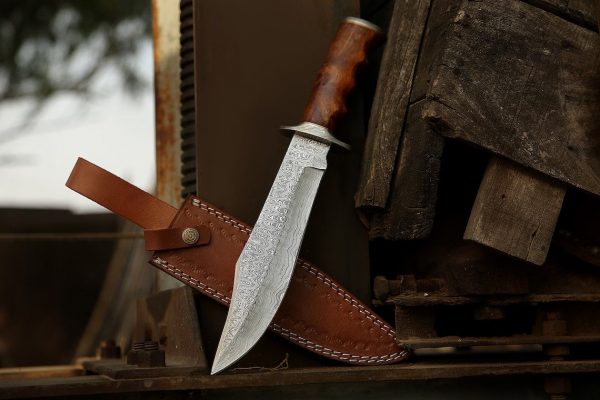 Timberedge Hand Forged Damascus Bowie Knife with Wood Handle & Leather Sheath
Price range: $129.00 through $169.00
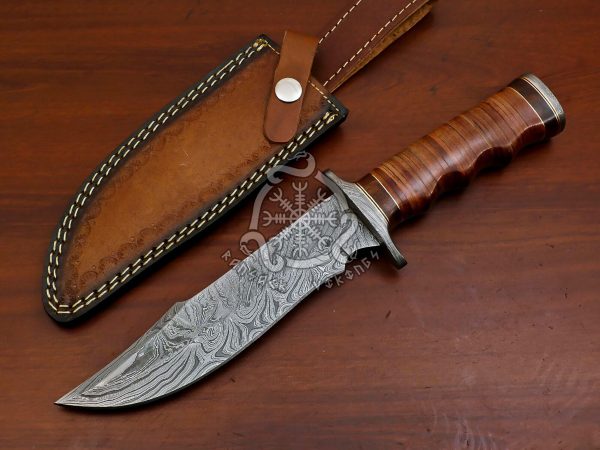 Campmaster Hand Forged Damascus Camp Knife with Stag Horn and Stacked Leather Handle and Damascus Guard and Butt Cap
Price range: $119.00 through $179.00
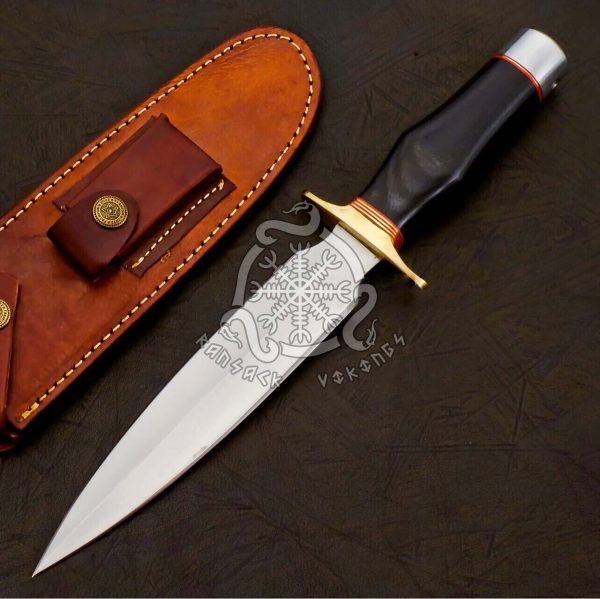 Blackguard Hand Forged D2 Steel Bowie Knife with Stag Horn and Black Micarta Handle and Steel Guard and Bolster
Price range: $149.00 through $199.00
 Hollowfell Hand Forged D2 Steel Camp Knife with Stag Horn and Hollow Thread Wrapped Handle and Steel Guard and Bolster
Price range: $109.00 through $189.00