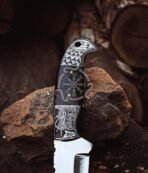
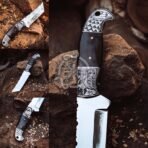
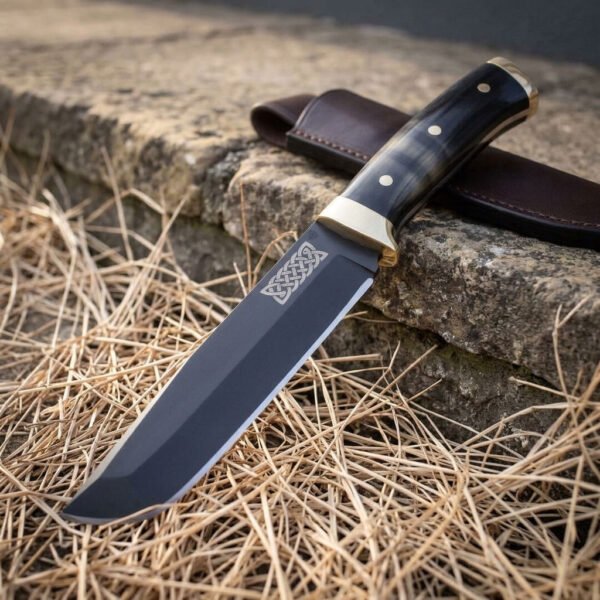
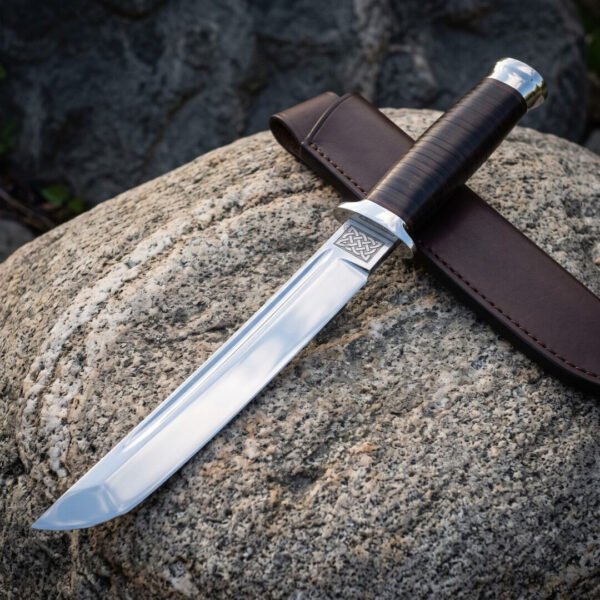
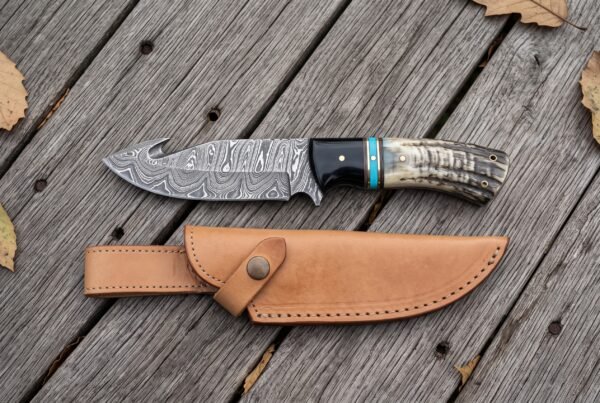
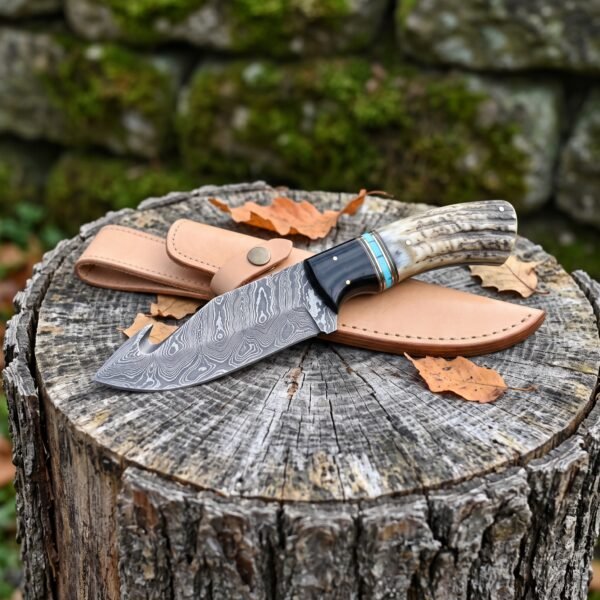
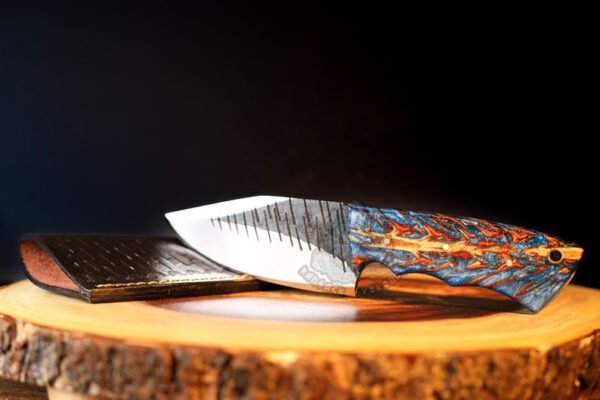
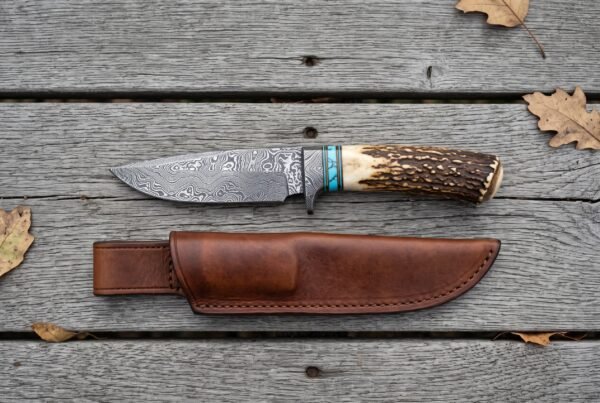
Take the Tantoguard out of the box and the weight tells you what it is. A hand forged D2 tool steel blade with an angled tanto point, an engraved stag horn and bull horn handle, hand made steel guard and bolster, 10 inches overall with a 5 inch blade. It comes in a cowhide leather pouch cut for right hand carry and it was built to be used rather than admired. Where the tanto shape came from is covered in the tanto explained.
The word tanto in Japan describes a length rather than a shape. Anything with a blade under one shaku, roughly thirty centimetres, was a tanto, and the class covered dozens of profiles. The most interesting of them for a knife like this one is the yoroi doshi, the armour piercing tanto, which was deliberately made thick and stiff through the spine and short in the edge because its job was to punch through lacquered plate and mail at close quarters where a sword was useless. That is the same reasoning behind the modern angled tanto point: put as much steel as possible directly behind the tip and accept that you lose slicing ability in exchange for a point that will not fail.
The Tantoguard is forged and finished in the Czech Republic. Shipping inside the United States is free.
Specifications
| Steel | D2 tool steel |
|---|
| Hardness | 58 to 60 HRC |
|---|
| Blade shape | Angled tanto point |
|---|
| Overall length | 10 inches |
|---|
| Blade length | 5 inches |
|---|
| Handle | Engraved stag horn and bull horn, hand made steel guard and bolster |
|---|
| Sheath | Cowhide leather pouch, right hand carry |
|---|
| SKU | RK-583 |
|---|
Why the point is the strongest part of this knife
On almost every other blade shape, the tip is the weakest point. A drop point, a clip point or a trailing point all sweep the edge up into a fine tapering tip, and the last quarter inch of steel is thin in every direction. It slices superbly and it is the part that breaks.
The angled tanto refuses that trade. The primary edge runs dead straight and stops short of the end, then a second short edge runs up to the point at an angle. Because the transition happens late, the blade keeps most of its width and most of its thickness right up to within a few millimetres of the tip. You end up with a point supported by a wedge of steel rather than by a sliver, and it will take loads that would fold or snap a fine point outright.
The corner where the two edges meet is the part you will use most and the part nobody mentions. It behaves like a chisel. It scores plastic and cardboard, opens seams and packaging, starts a cut in webbing or hose, and digs without the risk of skating. On the Tantoguard that corner is ground crisp rather than blended, which is what makes it work.
What a tanto cannot do is skin. There is no belly on this blade, and skinning is entirely a job for a long curved edge drawn through hide. If that is what you need, buy a skinner and keep this for the jobs that punish a delicate point. The long straight primary edge in exchange is the best push cutting geometry there is on a board or a bench.
Why D2 and not stainless
D2 carries around twelve percent chromium and around one and a half percent carbon, which puts it just below the threshold usually used to call a steel stainless. That is why it is described as semi stainless, and the term is accurate rather than a hedge.
The chromium in D2 combines with carbon into large, extremely hard carbides, and those carbides are what resist wear. Hardened to 58 to 60 HRC, this blade will hold a working edge through a great deal more cutting than a plain carbon steel, which on a knife whose main virtue is a point that survives abuse is exactly the right property.
The honest downsides are worth stating plainly. D2 is slow to sharpen, because the same carbides that resist your work also resist your stone, and a diamond plate will save you a lot of time over a natural stone. Those carbides also mean the edge does not refine down to a razor as cleanly as a simple carbon steel, and taken too thin it can microchip rather than roll. And it is not stainless: leave it wet or leave salt on it and it will spot. A fully stainless blade would beat it on corrosion and lose badly on edge holding, and on this knife we would rather have the edge. The detail sits in D2 steel for knives, and the wider comparison in Damascus versus stainless.
The engraved horn handle
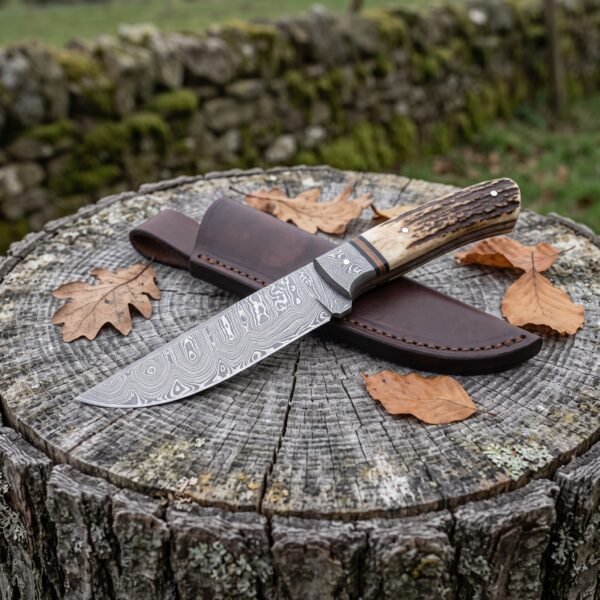
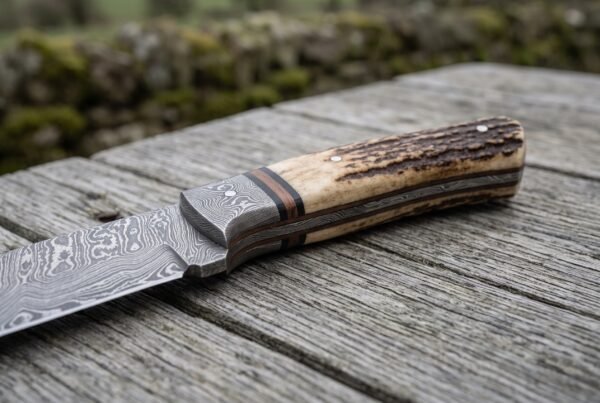
The grip pairs engraved stag horn with bull horn, with a hand made steel guard and bolster. Horn is keratin, the same material as a fingernail, which gives it two properties you notice immediately. It warms to the hand within seconds where steel and resin stay cold, and it is slightly resilient rather than rigid, so it damps shock instead of transmitting it straight into the palm.
It is also one of the best surfaces in the catalogue for engraved work, which is why this model carries a cut design as standard. A line cut into dark horn comes up pale and reads clearly without any filling or inlay. Because it is a natural material the banding, colour and translucency will differ from the photograph, and no two grips carry the same figure.
Care is the same routine timber gets and it takes two minutes: a light coat of oil once or twice a year, applied thin and wiped back. Keep horn out of long soaking and away from direct heat, both of which dry it and can open a crack. The method is set out in wooden handle care and applies to horn and bone without change.
Engraving, runes and your own design
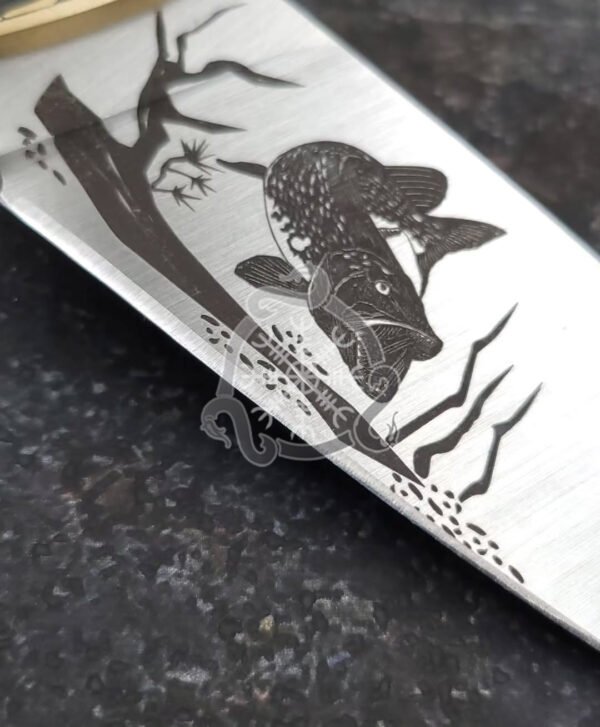
Use the rune converter on this page to turn a name, a date or a short phrase into Elder Futhark and we will cut it into the steel or the handle. If you would rather have a Viking pattern than a rune line, choose your own design in the engraving option above the add to cart button and tell us whether it goes on the blade or the handle. Where a piece already carries an engraved design, your chosen engraving replaces it rather than sitting alongside it. That applies directly here: the Tantoguard ships with a cut design on the stag, so if you order handle engraving we will cut yours in place of it rather than adding to it. Blade engraving sits on the long flat above the primary edge and leaves the standard handle design untouched. See the engraving page.
Care and sharpening
Very little is needed. Wipe it down after use, oil it before it goes away, and expect long gaps between sharpenings. Do not store it in the leather pouch for months at a time, because vegetable tanned leather holds moisture against steel.
When you do sharpen it, remember that a tanto is two bevels and not one. The straight primary edge and the short angled tip edge sit at different angles and meet at a corner. Sweep them as one continuous curve and you will round that corner off and lose the reason the shape exists. Work the long edge first, then treat the tip edge as a separate job. Use a coarse stone or a diamond plate to reset and finish fine, and leave the angle slightly obtuse rather than chasing a razor. Full method in steel care and sharpening with a whetstone.
Made in the Czech Republic
Every piece we sell is made by hand in the Czech Republic. The smiths there work the way the trade has been worked for a long time, heating and hammering the steel, taking the bevels down by eye, and fitting the handle and the leather one at a time. There is no automated line anywhere in it, so small differences from one piece to the next are normal and expected.
Ransack Viking is a United States company based in Chicago, Illinois. We bring the pieces in ourselves, inspect them on arrival and ship them from our own warehouse. If you add engraving, that is carried out here in the United States before your order goes out.
A note on handmade variation
The Tantoguard is hand forged. It is not machine made and it is not bulk produced, so what arrives will not be a pixel for pixel copy of the photograph. The stag horn and bull horn carry the banding and tone of the animals they came from, the engraved design is cut by hand and never lands identically twice, and the grind and the tip angle shift by fractions because a person made them. The dimensions, the steel and the build are the same every time. The character is not.
Frequently asked questions
Is this knife any good for field dressing a deer
No. It has no belly, and hide work needs a curved edge. Use a skinner for that and keep this for the work that would break a fine point.
The handle already has an engraved design. Can I add my own
You can replace it. Your chosen engraving is cut in place of the standard design rather than beside it. If you want to keep the existing work, order blade engraving instead.
Why does D2 take so long to sharpen
Because the chromium carbides that resist wear in use also resist your stone. Use a diamond plate rather than a natural stone and the job becomes quick.
Is it sharp when it arrives
Yes. Both the primary edge and the short tip edge are honed before packing.
Will the horn crack if I keep it in a car
It can. Repeated cycles of heat and dryness are what damage horn. Keep it out of direct sun in a hot vehicle and give it its annual coat of oil.
Can I carry it on my belt
The cowhide pouch is cut for right hand belt carry. Local carry law on fixed blades varies considerably by state and city, so check yours before you carry it out of the house.
What is in the box
- One Tantoguard D2 steel tanto knife
- Cowhide leather pouch, right hand carry
- Protective packaging
- Forged and finished in the Czech Republic
Explore the range
Compare it with the field blades in Hunting Knives, the curved edges in Damascus Skinner Knives, the larger clip points in Bowie Knives and the Norse pieces in Viking Knives. Background on steel and horn is in the guides.
Others in the same line
Next along the rack is the Shadowreed tanto knife, 19 inches overall. For a straight comparison, see the Amberoak tanto knife, 5 inches overall. Worth putting side by side with this is the Trinesaya tanto knife, pattern welded Damascus.
If you are putting a set together, the Campmaster hunting knife sits alongside it. You can have this made your way instead on the custom hunting knife page.



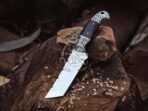
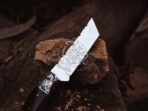
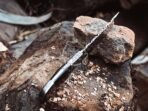
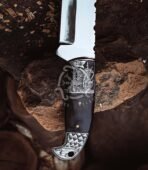
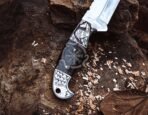
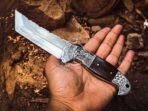



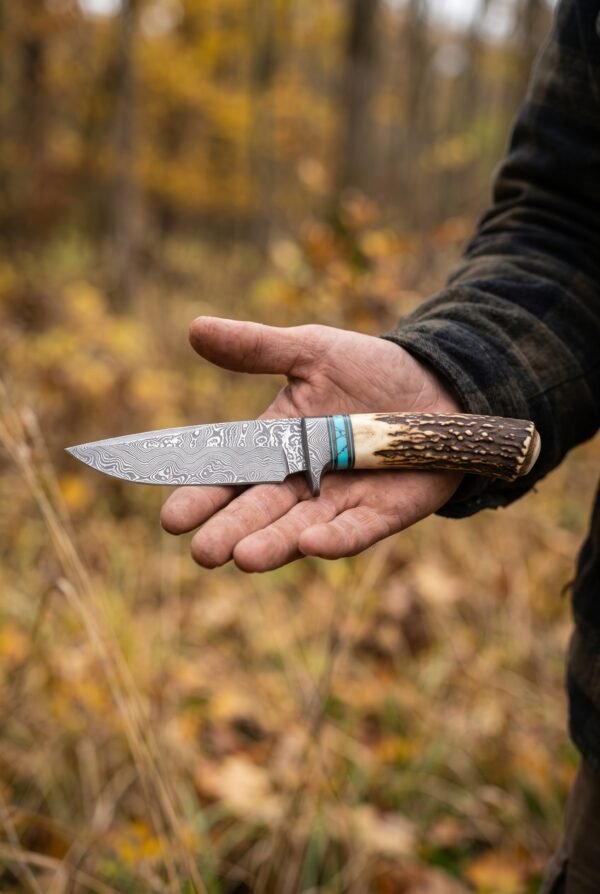
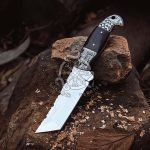
So happy I finally pulled the trigger on this one. Even the small engravings are crisp and clean. Love it. Ransack Viking is quickly becoming my go to shop for anything Norse themed.