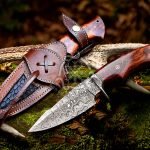
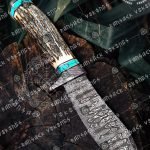
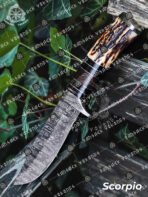
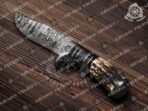
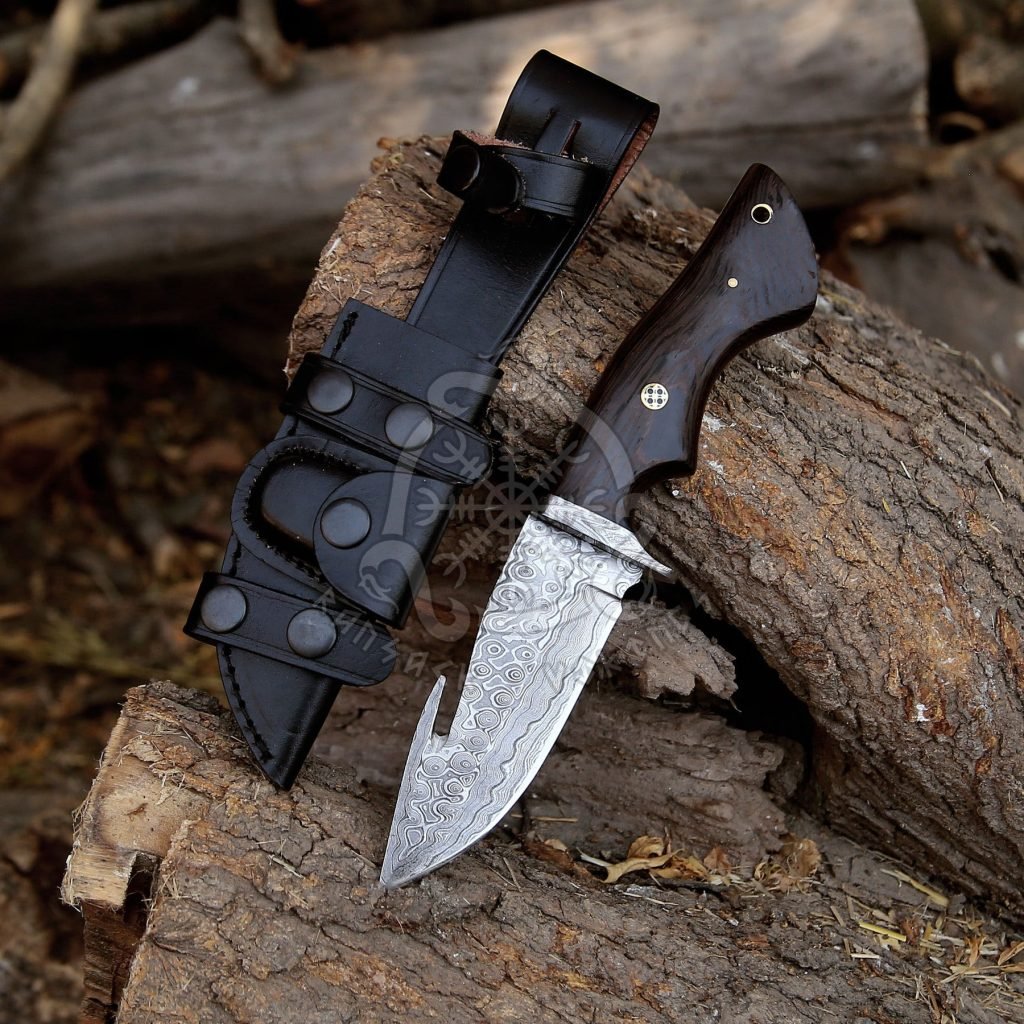
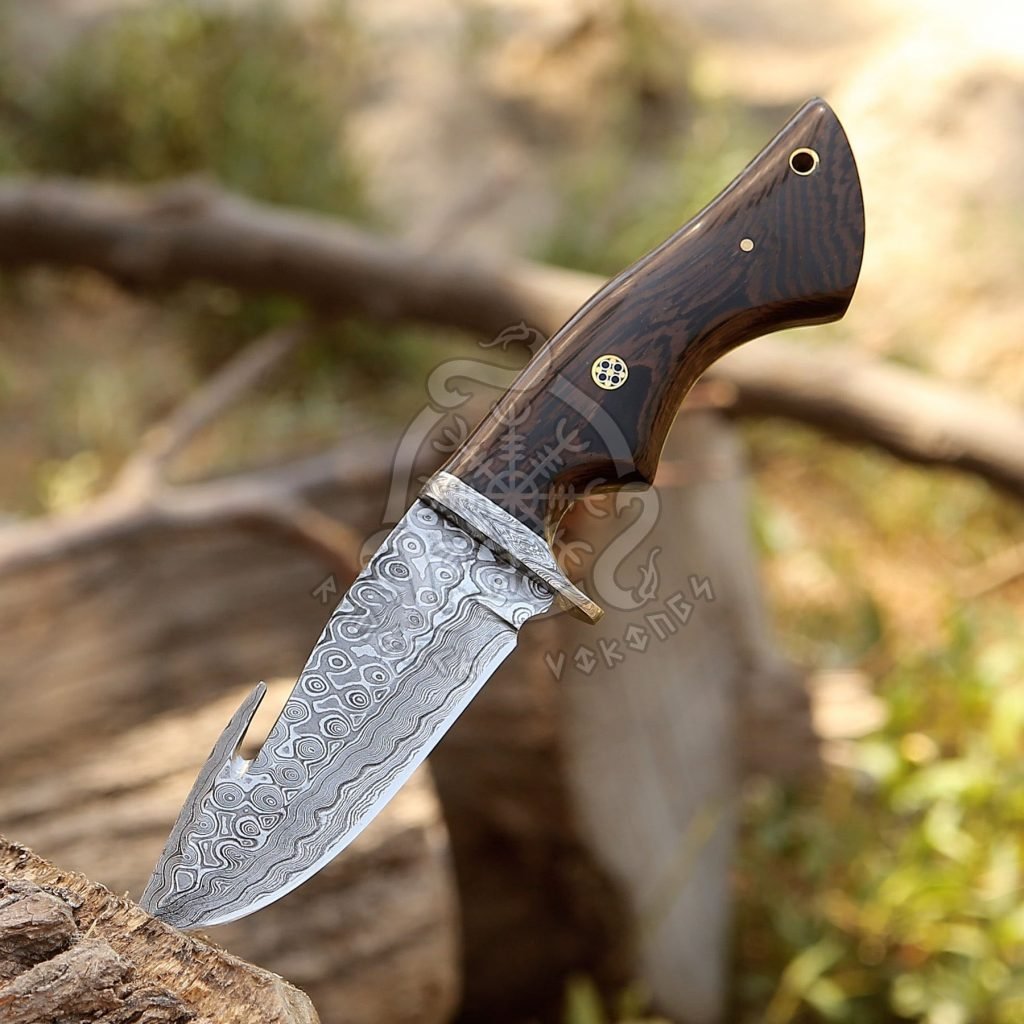
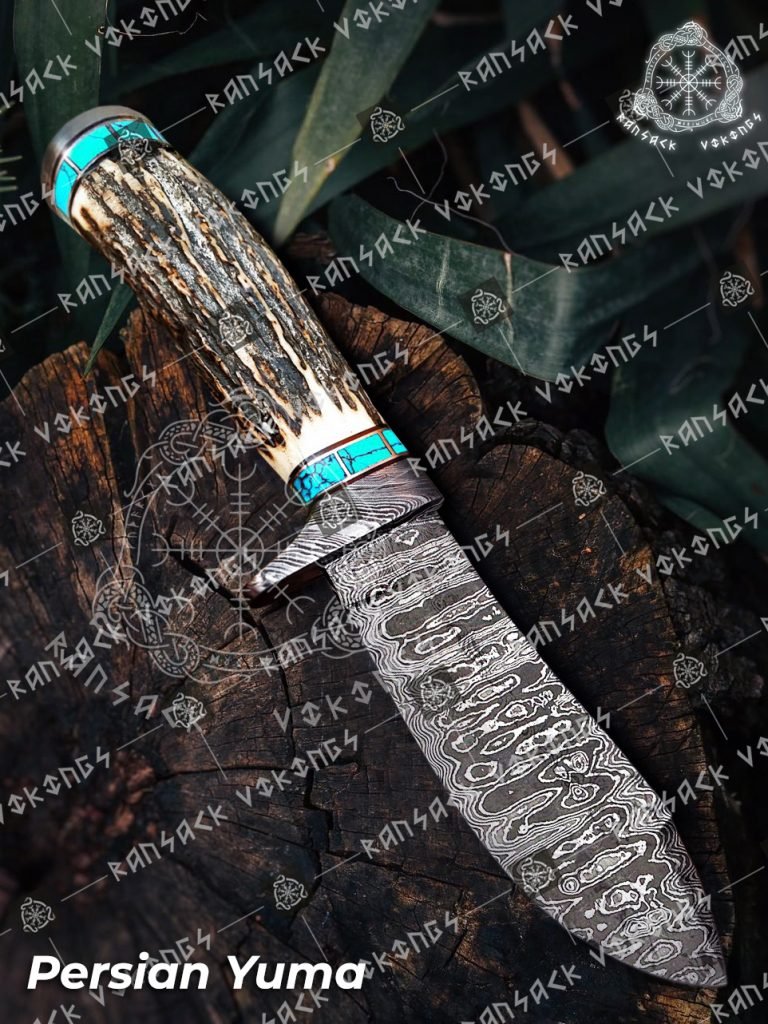
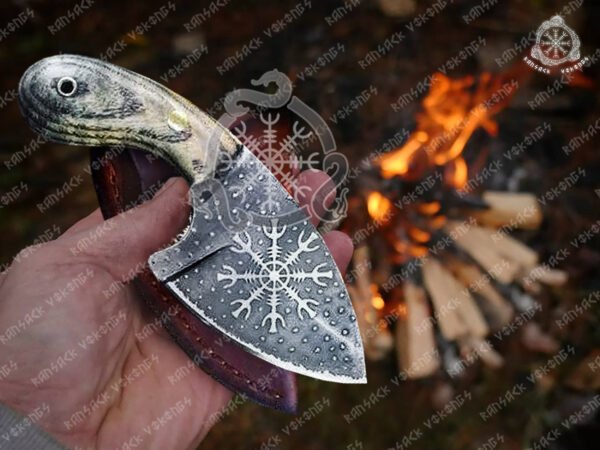
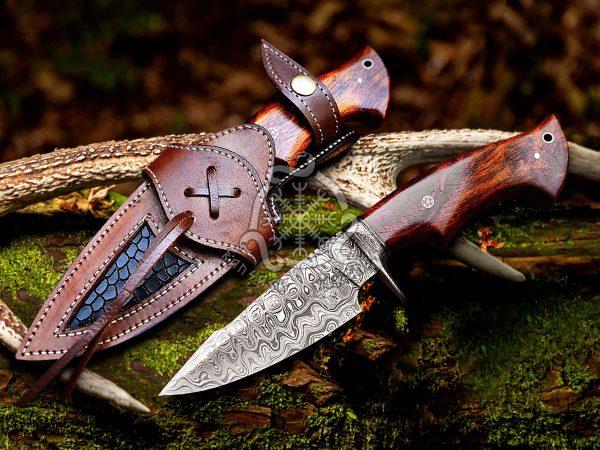
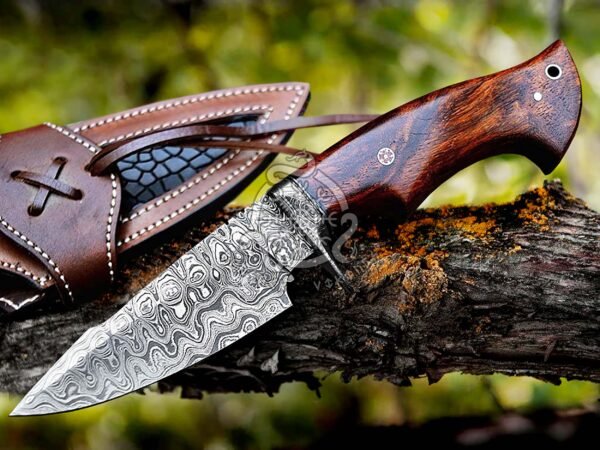
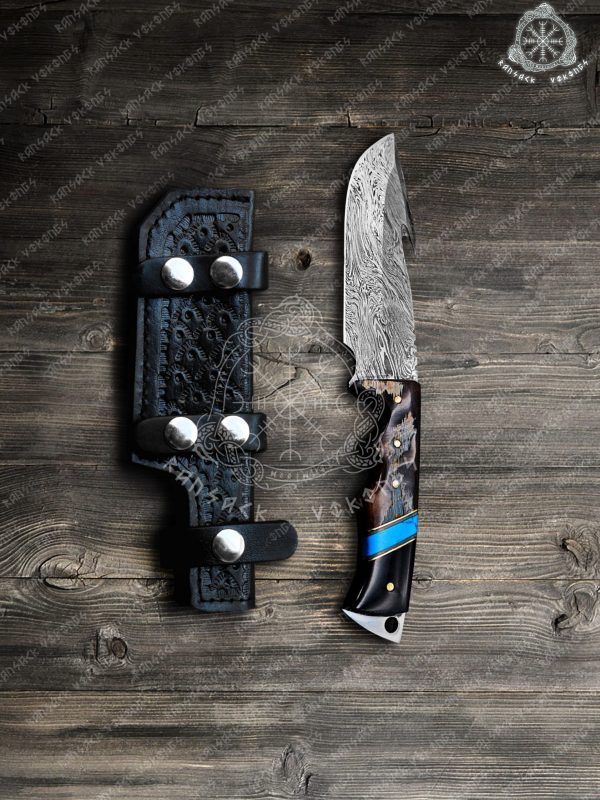
Scorpio is what a skinner knife looks like when it is made by hand instead of stamped out of a strip. The blade is 352 layer Damascus forge welded from 1095 and 15N20 and hardened to 58 to 60 HRC. The grip is stag antler with buffalo horn and walnut spacers and a Damascus bolster. It measures 10 inches overall with a 5 inch blade and a 5 inch handle, and weighs 9 oz. Blade shape and steel matter more here than length, as choosing a skinner explains.
Skinning changes how you think about a knife, because most of the work is not cutting. A hide is attached to the carcass through a layer of loose connective tissue, and once you have opened it and got a purchase, the majority of the separation is done by pulling, with a fist, a knuckle or a hide puller, while the knife only intervenes where the fascia holds fast. Old hands will tell you they use the blade for perhaps a fifth of the job. That is exactly why a skinner is shaped the way it is. Its work is short, precise, angled releasing cuts made against the underside of the hide, not long slicing runs, and every feature of the blade exists to make that specific motion safe and fast.
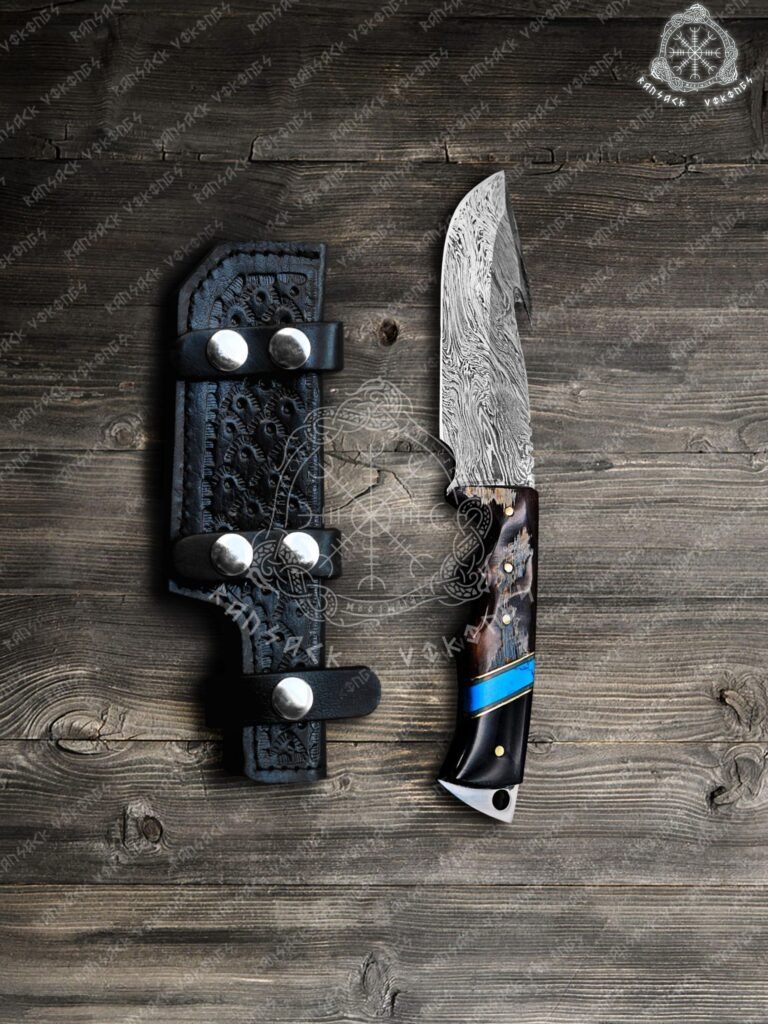
The knife is forged, ground, handled and sheathed in the Czech Republic. It ships with a fitted leather sheath, free within the United States, sharp on arrival.
Specifications
| Steel | Hand forged Damascus, 1095 and 15N20 forge welded |
|---|
| Damascus layers | 352 layers |
|---|
| Hardness | 58 to 60 HRC |
|---|
| Overall length | 10 inches |
|---|
| Blade length | 5 inches |
|---|
| Handle length | 5 inches |
|---|
| Weight | 9 oz |
|---|
| Handle | Stag antler with buffalo horn and walnut spacers and Damascus bolster |
|---|
| Sheath | Leather sheath included |
|---|
| SKU | RK-338 |
|---|
Why a skinner has a trailing point and a deep belly
Look along the spine of this blade. The point does not sit on the centreline and it does not drop below the spine the way a drop point does. It sweeps upwards, finishing above the line of the spine. That is a trailing point, and it is the defining feature of the type.
It does two things. The first is that it maximises the length of curved edge you can fit into a 5 inch blade. Curved edge is the part that skins. When you cut with a curve, only a short section of the edge touches the hide at any moment and that contact point travels as you sweep, so the blade slices along its own length instead of being forced through. On a hide that is the difference between a clean release and a tear.
The second is that it lifts the tip out of the way. In skinning the point is your enemy. A point that dips into the hide punches holes that ruin a cape or a rug, and a point that dips the other way opens the abdominal wall. A trailing point sits high, so when you work with the belly of the blade rolled against the underside of the hide the tip is naturally angled clear of everything you do not want to touch.
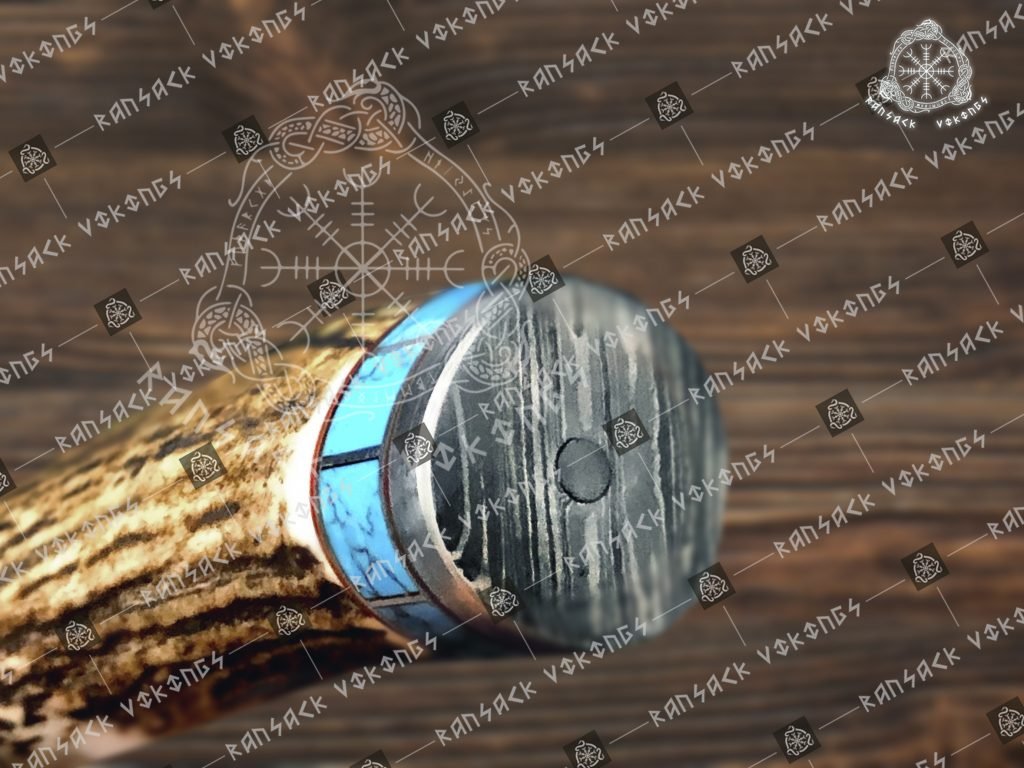
The belly itself is ground with a continuous sweep rather than a straight section and a curve, which means there is no flat spot to catch and stall. Behind the edge the blade is ground thin, because a thick blade wedges and drags in a soft cut. The Damascus bolster at the front of the grip adds a little mass ahead of the hand to steady the sweep and gives your index finger a positive stop, which matters more than usual on a job where your hands will be wet.
The honest limitation is that a trailing point is a poor piercing shape. If you also want to open, cape and quarter with one knife, a drop point hunting knife is the better single purchase. A skinner is a specialist and it is very good at what it specialises in.
Why Damascus and not stainless
The blade is pattern welded Damascus, forge welded from 1095 high carbon and 15N20 nickel steel into a single billet, then folded and drawn out to 352 layers. The two steels take an etch differently, which is where the light and dark banding comes from. The pattern runs through the full thickness of the steel and no amount of sharpening will remove it.
Hardened to 58 to 60 HRC, it holds a working edge through far more hide than a soft stainless blade, and hide is abrasive work. Skinning dulls a knife faster than almost anything else you will do with one, because you are cutting through dirt and hair as well as tissue, so edge retention is not a marketing number here, it is the difference between finishing an animal on one edge or stopping halfway. The cost is that this is high carbon steel under the pattern and it rusts if it is put away wet. The full comparison, including where stainless genuinely wins, is in Damascus versus stainless, and the background on the billet is in what Damascus steel is.
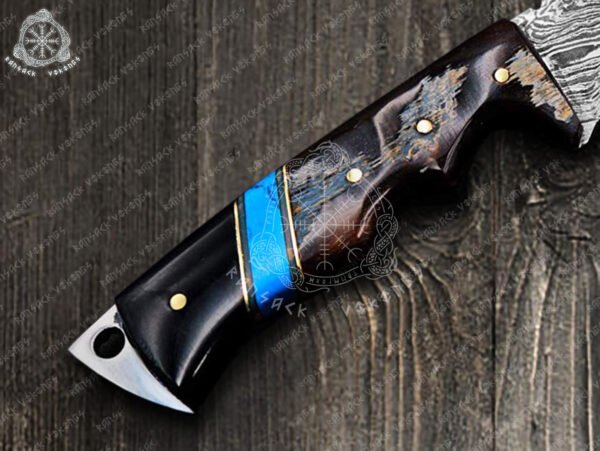
The stag antler handle
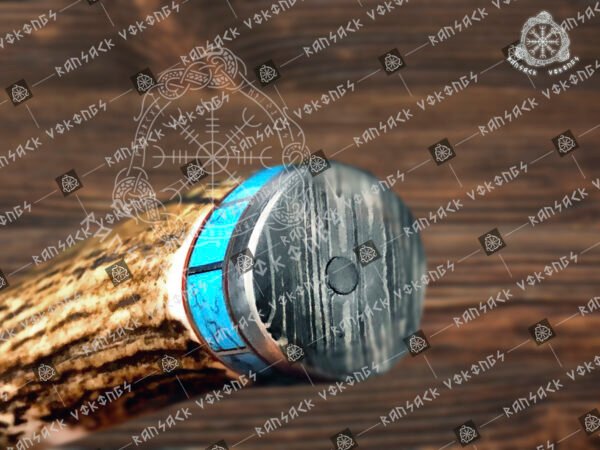
Stag antler has been used for knife handles for as long as there have been knives, and on a skinner it earns its place for a practical reason rather than a traditional one. Its natural surface, the pearling and the shallow grooves running down the beam, gives grip without any checkering being cut into it, and it keeps that grip when your hands are wet and greasy, which is exactly the condition this knife will be used in. It is also warm to hold on a cold morning in a way that steel and micarta are not.
The buffalo horn and walnut spacers between the antler and the Damascus bolster do the same job visually and physically: they band the grip so the eye reads it as built, and they put slightly harder lines under the fingers.
Antler, horn and wood all want the same care and it is not much. Keep the handle out of prolonged soaking and away from direct heat, wash the blade rather than the grip, and two or three times a year work a little mineral oil or a wax conditioner into the handle with your fingers and buff it back. That prevents the fine surface cracking that dried out antler eventually shows. The routine is in wooden handle care, and the sheath in leather sheath care.
Engraving, runes and your own design
Use the rune converter on this page to turn a name, a date or a short phrase into Elder Futhark and we will cut it into the steel or the handle. If you would rather have a Viking pattern than a rune line, choose your own design in the engraving option above the add to cart button and tell us whether it goes on the blade or the handle. Where a piece already carries an engraved design, your chosen engraving replaces it rather than sitting alongside it. On this knife the broad flat above the edge is the field that takes lettering cleanly, because the antler surface is textured and uneven and does not hold fine work reliably. Sizes and placement are on the engraving page.
Care and sharpening
Damascus is high carbon at heart, so it will rust if you leave it wet. Wash and dry after use and give it a wipe of mineral or camellia oil before it goes away for the season. Do not store it in the sheath for months, because leather holds moisture against the steel. A grey patina is normal and protective, and active orange rust should be taken off with a soft abrasive and oil before it pits.
Sharpening a curved edge takes one adjustment. Do not drag the whole blade straight down a stone, because the belly will only touch at one point. Sweep the handle up as you draw the blade back so the contact point travels along the curve to the tip, and keep the angle constant while you do it. A rod or a curved ceramic makes it easier still. Method in sharpening with a whetstone, and rust and oils in steel care.
Made in the Czech Republic
The work behind this piece happens in a Czech Republic workshop that has kept to the old methods. Steel is forged and heat treated by hand, the grind is taken down by eye rather than by machine, and the handle, fittings and sheath are cut and finished one at a time. Because of that, every piece carries small marks of the hand that made it.
Ransack Viking is a United States company. We import direct, check each piece when it reaches us, and ship from our Memphis, Tennessee warehouse. Engraving is added here in the United States after arrival, so the piece you receive is finished to your order.
A note on handmade variation
This is a hand forged knife, not a machine made or bulk produced one, so the knife that arrives will not be a pixel for pixel copy of the photograph. A 352 layer billet never draws out the same way twice, so the banding along your blade belongs to it alone. Stag antler is the most variable handle material there is, running from bone white through cream to weathered brown, with pearling and grooves that record one individual animal. The buffalo horn spacers vary from near black to smoky grey, and the walnut carries its own grain.
The dimensions are the same every time, the steel is the same every time and the build is the same every time. Only the character changes, and on a handmade knife that is the feature.
Frequently asked questions
Can I use a skinner for field dressing as well?
You can, carefully, but it is not what the shape is for. A trailing point is a poor piercing tool. If you want one knife for opening, caping, quartering and skinning, choose a drop point hunting knife instead and keep this for the hide.
Is it sharp out of the box?
Yes. It is sharpened on a stone before it is boxed and it will skin the day it arrives.
Is it full tang?
Yes. The tang runs the length of the handle with the antler, spacers and bolster fitted to it, which is what keeps the knife solid under the sideways loads skinning puts on a blade.
How do I sharpen a curved belly properly?
Sweep the handle upwards as you draw the blade back along the stone, so the contact point travels around the curve and the angle stays constant. Dragging it straight only sharpens the middle of the edge.
Will the antler match the photograph?
No. Antler colour, pearling and taper are individual to the animal and to the section it was cut from, and the Damascus pattern is individual to the billet. The size and the build are what stay constant.
Can it be engraved for a gift?
Yes. Use the rune converter on this page for an Elder Futhark line, or choose your own design in the engraving option above the add to cart button. The blade flat is the usual location on a knife with an antler grip.
What is in the box
- One Scorpio 352 layer Damascus skinner knife, 10 inches overall
- Fitted leather sheath
- Protective packaging
- Forged and finished in the Czech Republic
Explore the range
Related knives sit in Damascus skinner knives, hunting knives, Bowie knives and Viking knives. The steel, the antler and the sharpening detail are covered in the guides.






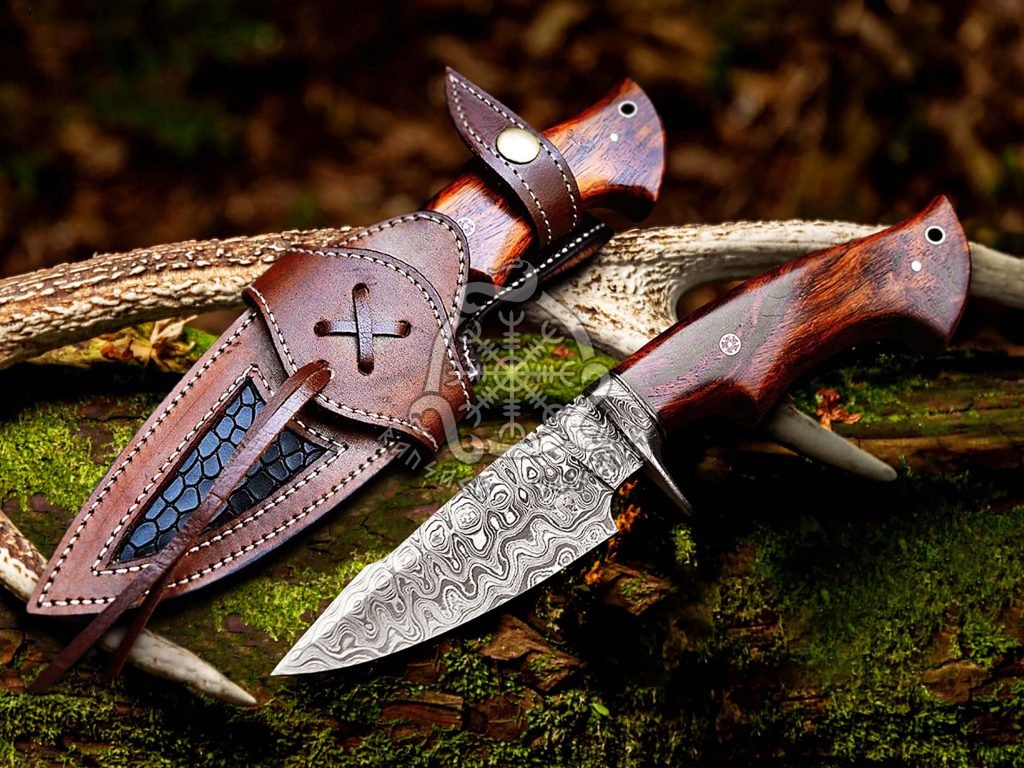
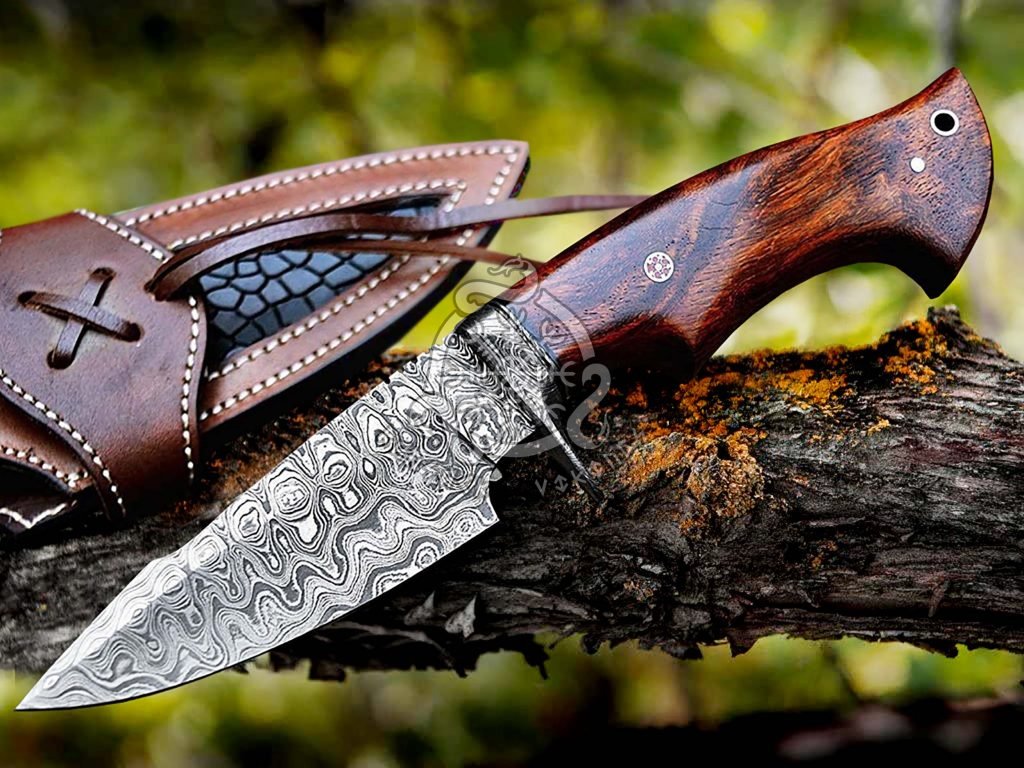





Really happy with this knife overall. Would buy from this shop again.
So happy I finally pulled the trigger on this one. Shipping was fast and everything arrived well packaged. This is my third order from Ransack Viking and they never disappoint.
My whole family was impressed when I unboxed it. Leather sheath is thick and well stitched. Not the cheap stuff you usually get. I keep coming back to Ransack Viking because it’s always this good. Worth every penny.
So happy I finally pulled the trigger on this one. Came in a nice gift box which made it feel even more special. So worth it.
Was nervous ordering something like this online but so glad I did. The walnut handle feels amazing and the balance is perfect. Couldn’t be happier with this.