Every blade long enough to chop has a spot on it called the centre of percussion, and finding it is the difference between a camp knife that works and one that stings your hand all afternoon. It is the point along the blade where an impact produces no reaction at the handle, so all the energy goes into the wood and none of it comes back up your arm. On a 7 inch blade it sits roughly two thirds of the way toward the tip. Hit a branch there and the knife feels like it barely noticed. Hit it two inches back and the shock travels straight into your palm. Axe makers have known this for centuries and it applies just as much to a large knife. If you are comparing hunting knives, what to look for in a hunting blade covers the field.
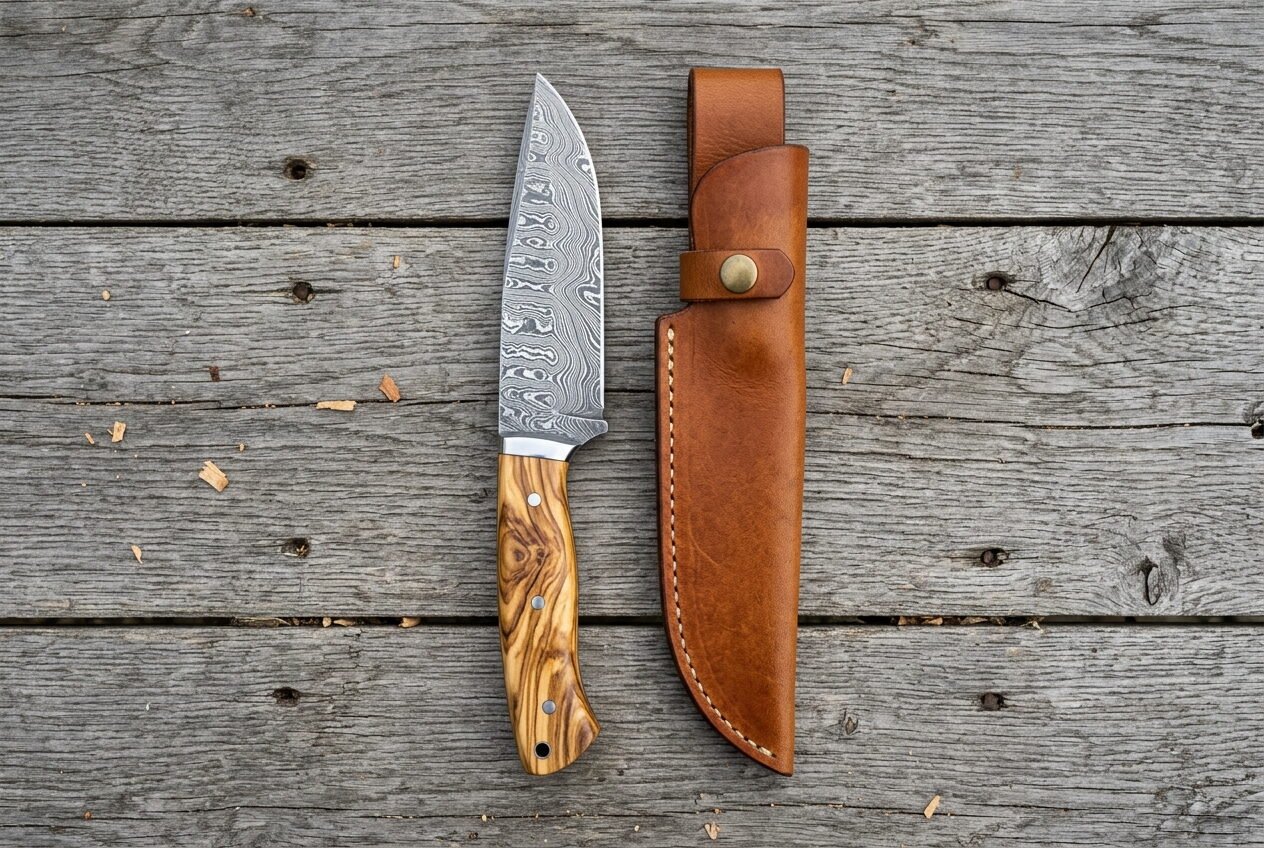
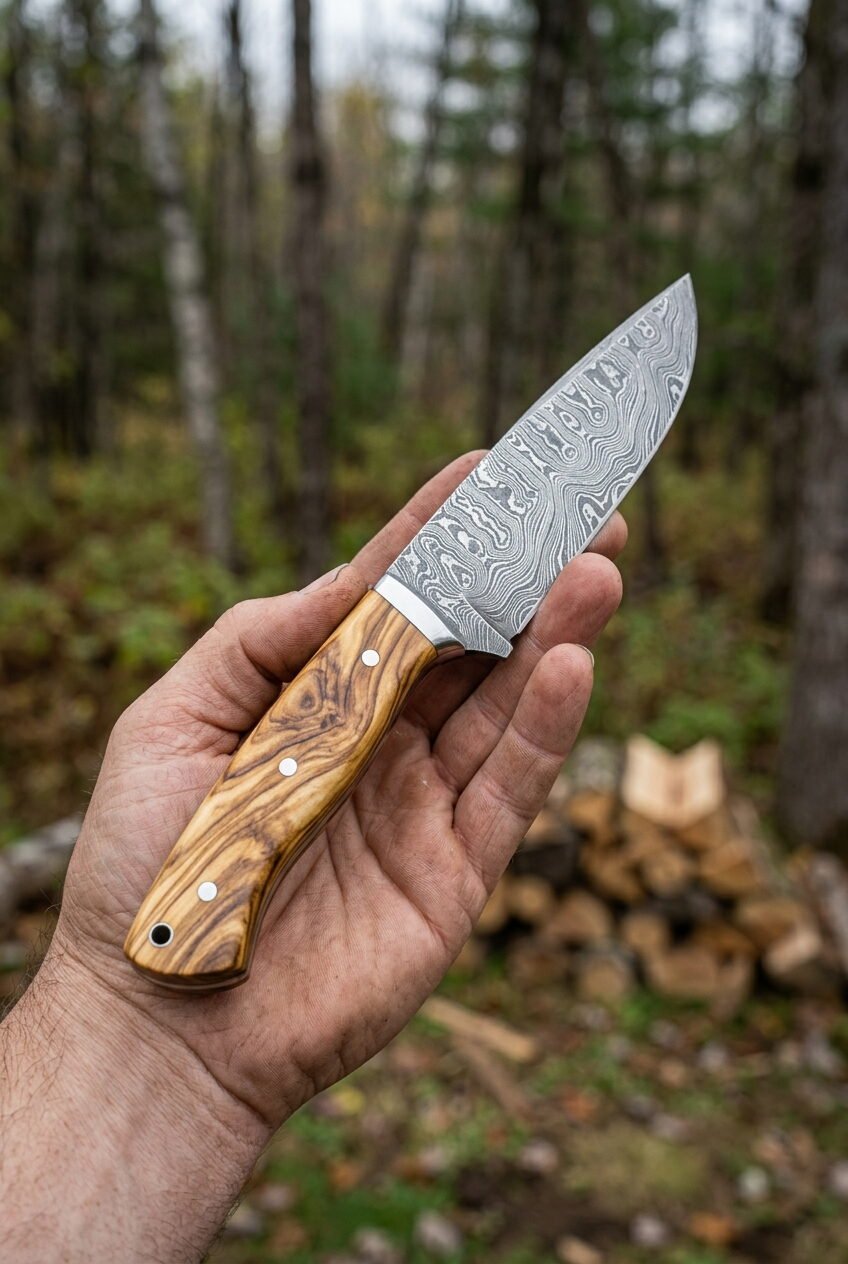
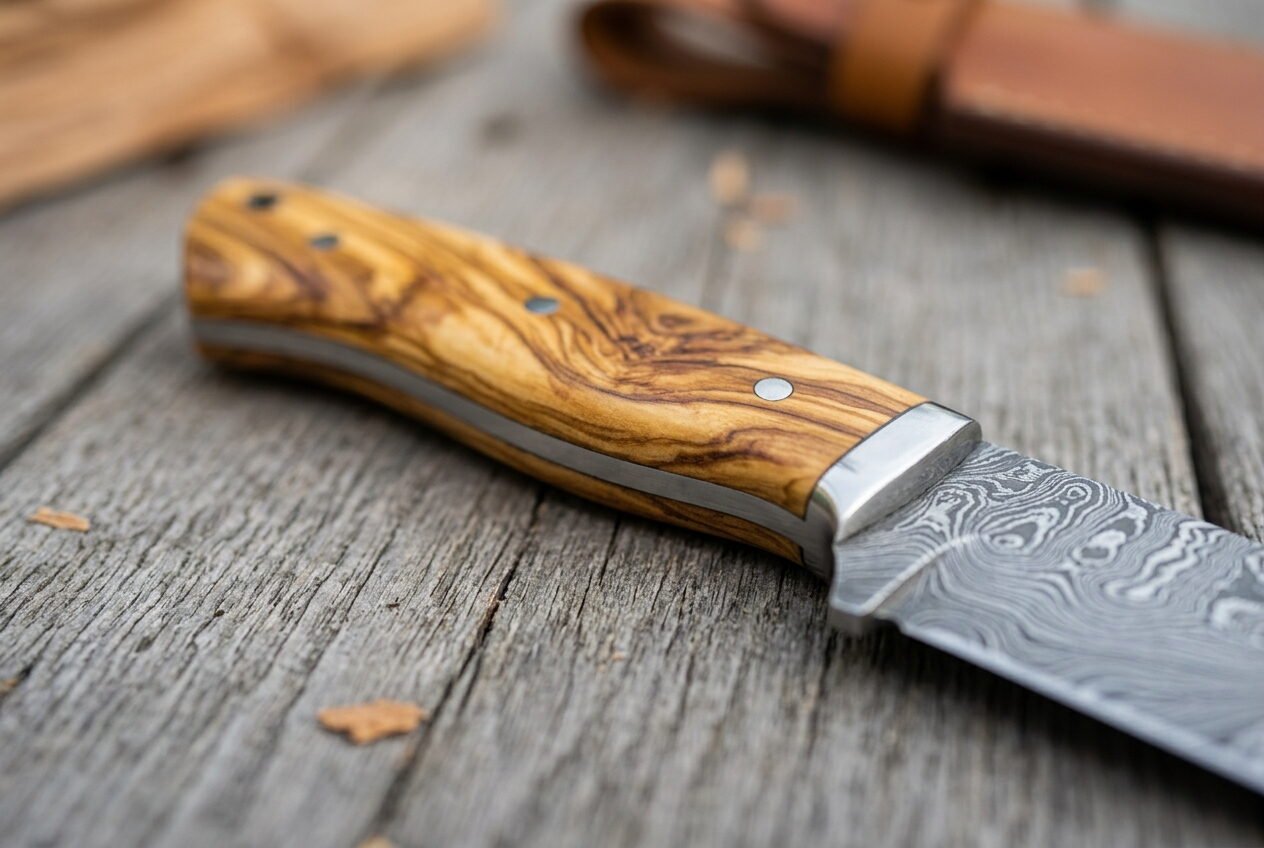
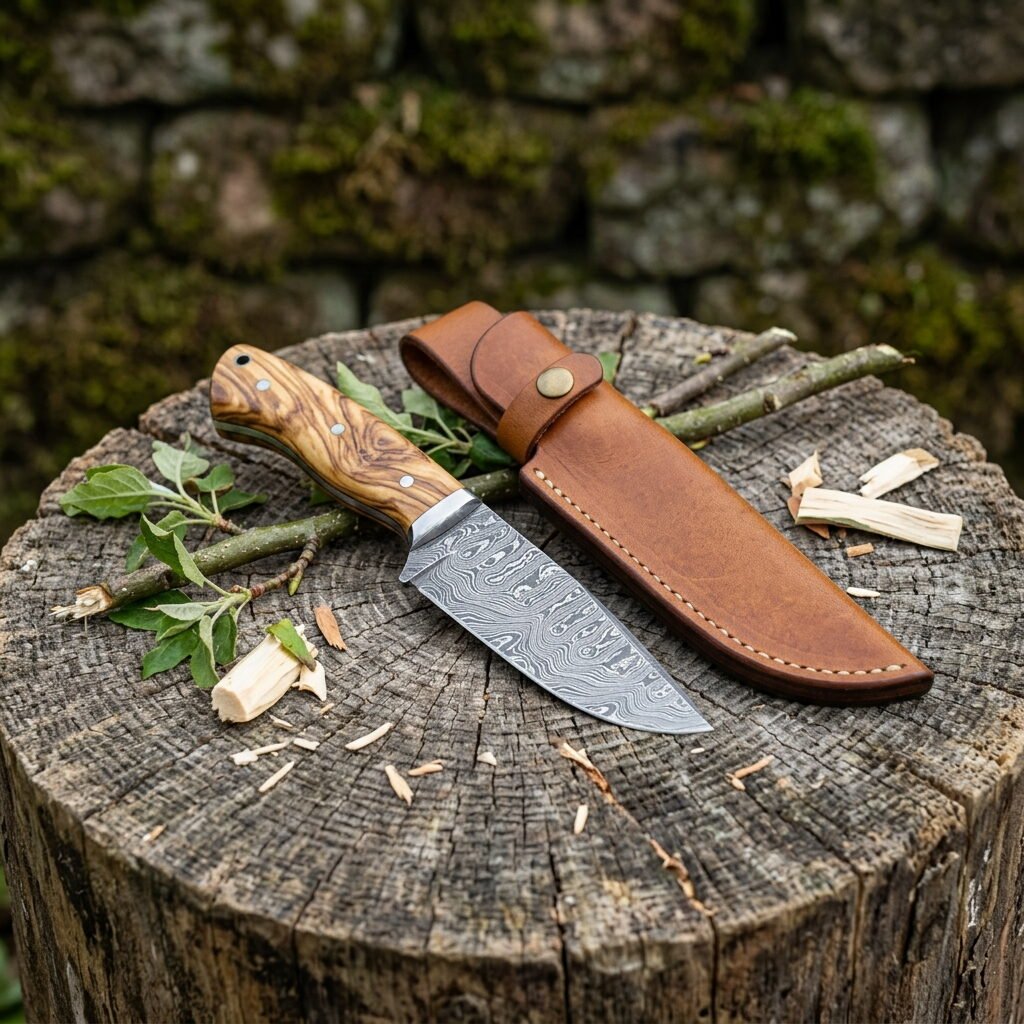
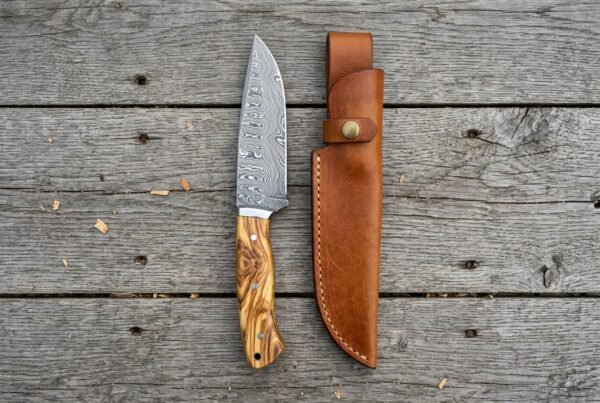
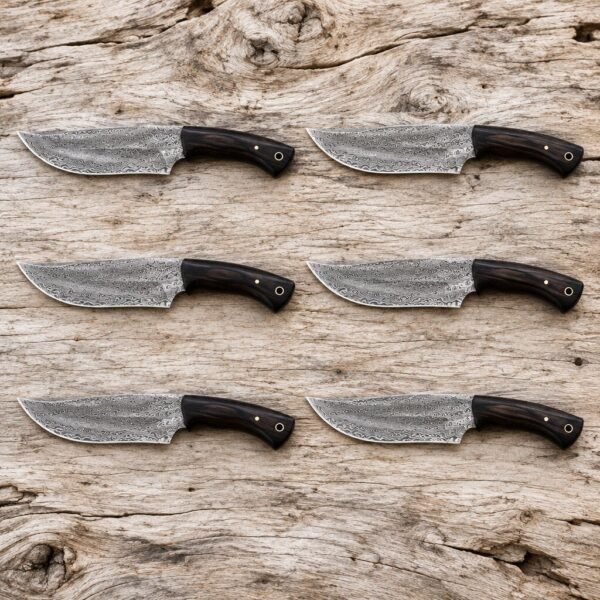
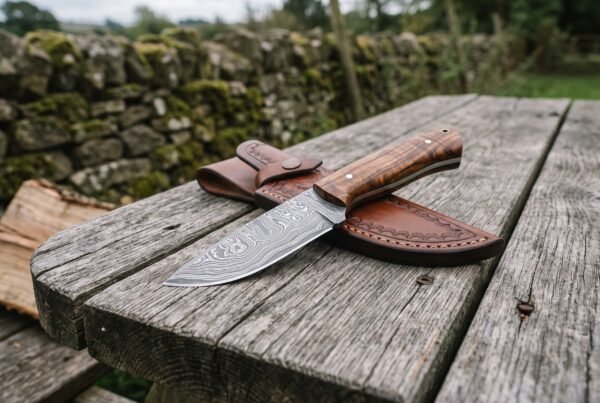
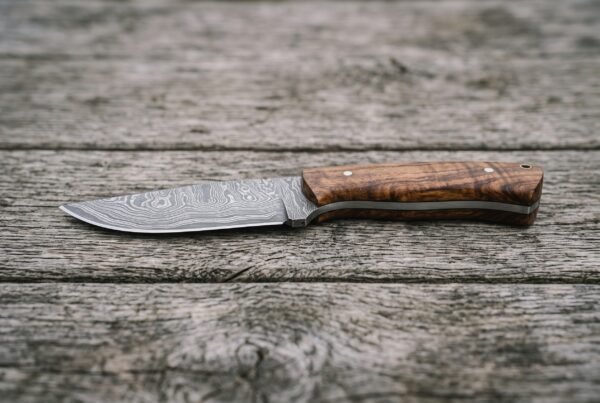
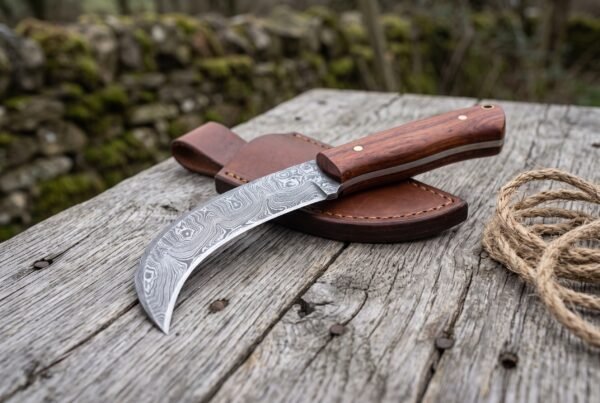
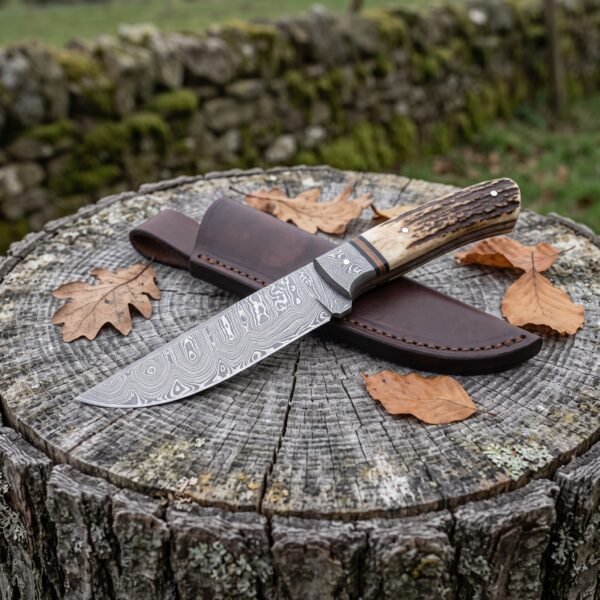
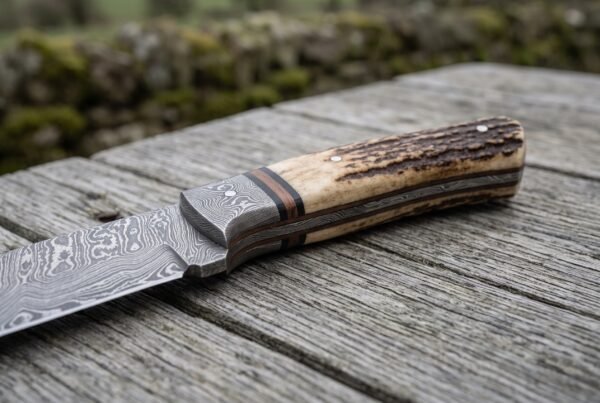
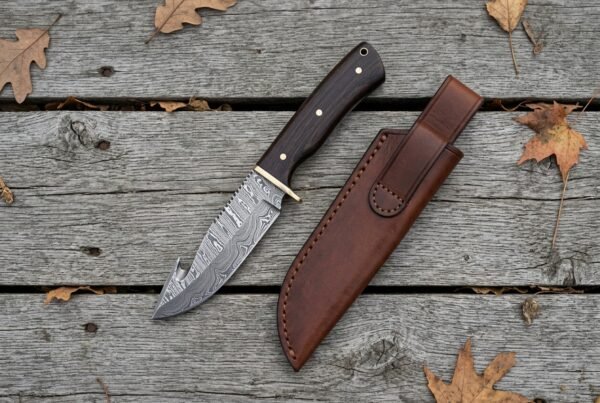
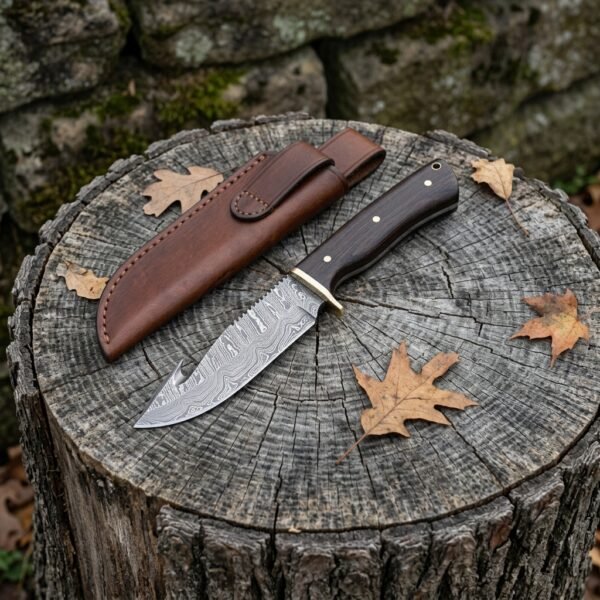
The Olivecamp is built for that kind of work. It pairs a hand forged Damascus blade of 1095 and 15N20 at 58 to 60 HRC with an olive wood handle and a steel bolster, running 12 inches overall with a 7 inch blade and a 5 inch grip. It feels heavier in the hand than it looks on a screen, which is exactly what you want when the job is getting wood down to size.
It is made in the Czech Republic, and ships with a handmade leather sheath, protective packaging and a working edge already set.
Specifications
| Steel | Hand forged Damascus, 1095 and 15N20 |
|---|
| Hardness | 58 to 60 HRC |
|---|
| Overall length | 12 inches |
|---|
| Blade length | 7 inches |
|---|
| Handle length | 5 inches |
|---|
| Handle | Olive wood with steel bolster |
|---|
| Sheath | Handmade leather |
|---|
| SKU | RK-10469 |
|---|
What seven inches of blade buys you
A 7 inch camp knife sits in the territory where a knife starts doing jobs that would otherwise need a hatchet. There is enough mass forward of the hand to bite into standing deadwood, enough length to limb a branch in one stroke rather than three, and enough edge to keep cutting when the first few inches have gone dull. It will also still slice, which is the thing a hatchet cannot do at all, so one blade covers preparing firewood, clearing a site, cutting cordage and dealing with food.
The honest counter argument is worth stating. A hatchet of the same weight will out chop this because all its mass sits at the head, and a 4 inch bushcraft knife will out carve it because the balance is at the hand. What a 7 inch camp knife gives you is one tool instead of two, and a piece you can carry on a belt rather than strapped to a pack. That is the trade, and for most people camping or working a woodlot for a weekend it is the right one. The 5 inch handle matters here as well, because a blade this long needs a full hand on the grip with room to slide back for chopping and forward for control.
Why Damascus and not stainless
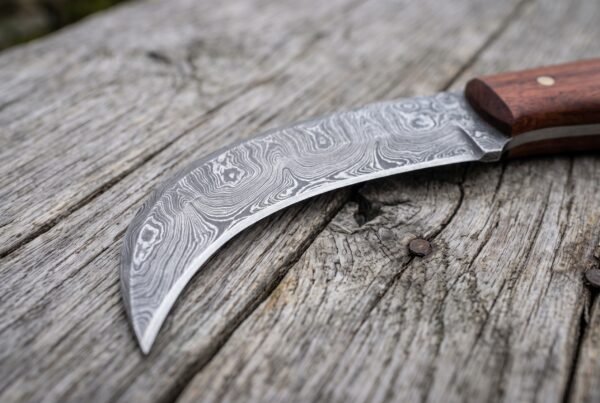
Forge welded from 1095 and 15N20, this blade carries a pattern that goes all the way through the steel. Printed and laser etched blades look similar in a photograph and fall apart under a file, so if you are buying Damascus anywhere, run through our five checks for real Damascus first. The construction matters on a chopper as well as looking good: alternating layers of a harder and a tougher steel give a blade that resists cracking under impact better than a single homogeneous bar of the same hardness.
Against stainless the case is straightforward on a knife this size. At 58 to 60 HRC this steel takes a keen edge and holds it through a session of chopping and batoning, and it comes back on a stone quickly when it dulls, which is what you want when you are resharpening in a camp rather than a workshop. Stainless resists rust without any thought, which is genuinely useful, but at the hardness most stainless runs it will not hold up to the same impact work. This blade is high carbon underneath the pattern and it will spot if you put it away wet. The comparison is set out in Damascus versus stainless.
The olive wood handle
Olive is one of the most distinctive timbers used for knife handles and one of the few dense enough to use without stabilising. It grows extremely slowly, which packs the growth rings tight and gives it a density well above most hardwoods, and it carries a natural oil content that keeps it grippy in the wet rather than slick. The look is the other half of it: pale gold shot through with dark, almost black veining that wanders across the grain in a way no two boards repeat.
Because it is genuine timber it wants feeding. A light coat of oil once or twice a year keeps the grain tight, keeps the fit around the bolster and the pins from opening up, and deepens the tone rather than sitting on the surface as a film that can flake. On a knife that gets struck and levered, keeping the handle fed matters more than it does on a display piece. The method is in wooden handle care. The steel bolster wants nothing beyond the wipe of oil you give the blade.
Engraving, runes and your own design
Use the rune converter on this page to turn a name, a date or a short phrase into Elder Futhark and we will cut it into the steel or the handle. If you would rather have a Viking pattern than a rune line, choose your own design in the engraving option above the add to cart button and tell us whether it goes on the blade or the handle. Where a piece already carries an engraved design, your chosen engraving replaces it rather than sitting alongside it. A 7 inch flat is the most generous surface in this part of the range, so a long rune line sits comfortably without crowding, and olive wood takes a crisp cut. All of it is done in house before the knife is packed. Options on the engraving page.
Care and sharpening
A minute after use is all it asks: wipe, dry, oil. Leather holds moisture, so store it out of the sheath for long spells rather than leaving it sheathed on a shelf for a season. Sap is acidic and will mark a bright blade overnight, so a wipe at the end of a day cutting wood is worth more than a clean the following week. The routine is in steel care and looking after the sheath is in leather sheath care.
Sharpening a long blade is easiest in sections. Divide the edge into thirds, work each one until a burr rises, move along, then repeat on the other side and finish on a fine stone or a strop. Leave the edge slightly more obtuse than you would on a kitchen knife, because an edge ground very thin will roll the first time it meets a knot or a piece of grit in bark. Method in sharpening with a whetstone.
Made in the Czech Republic
This piece is made by hand in the Czech Republic, in a workshop that still works the old way. The steel is forged, ground, heat treated and finished by smiths who learned the trade from the people before them, and the wood, horn and leather are cut and fitted by hand rather than pressed out on a line. That is also why no two pieces come out exactly the same.
Ransack Viking is a United States company. We import these pieces ourselves, check every one when it lands and ship from our warehouse in Chicago, Illinois. Engraving is done here in the United States after the piece arrives, so your runes or your own design go on before it leaves for you.
A note on handmade variation
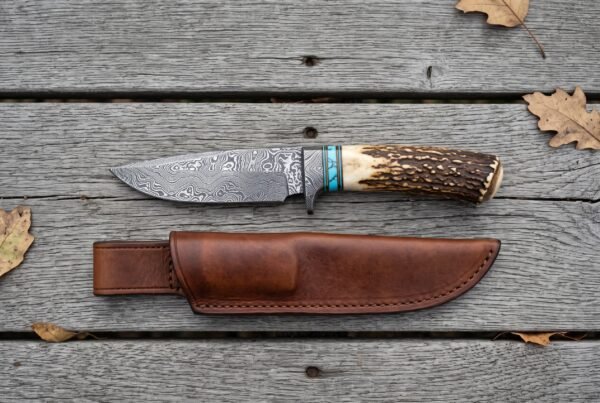
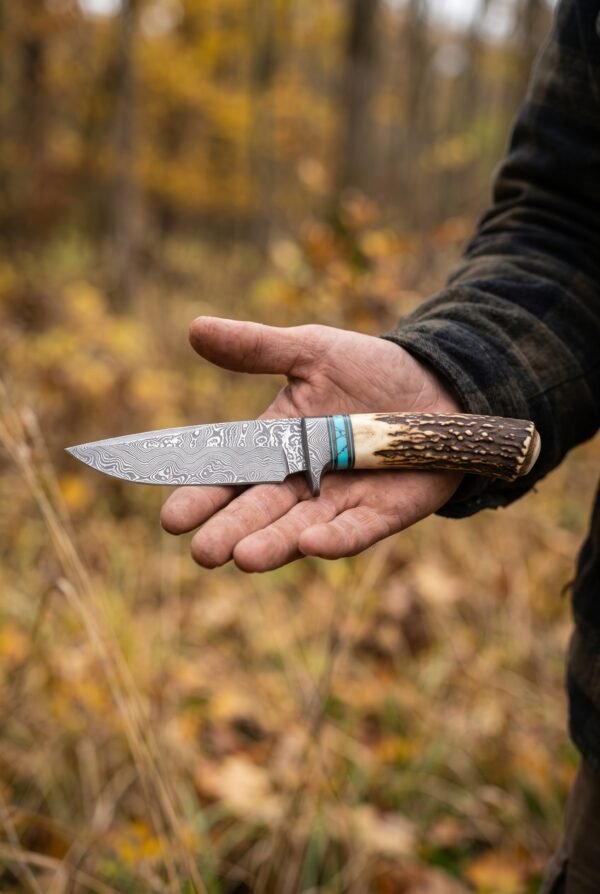
This camp knife is hand forged, not machine made and not bulk produced, so what arrives will not be a pixel for pixel copy of the photograph on this page. The Damascus is drawn out under a hammer and every billet lands differently, so the banding along a 7 inch blade has plenty of room to be its own. Olive wood is the least predictable timber we use, and where the dark veining falls on your handle depends entirely on where in the board the scales were cut. The dimensions, the steel, the hardness and the build are the same every time. The character is not.
Frequently asked questions
Where on the blade should I be chopping?
About two thirds of the way toward the tip, where the centre of percussion sits. Strike there and the shock stays in the wood. Strike closer to the handle and you will feel it in your palm.
Is a camp knife this size better than a hatchet?
Different rather than better. A hatchet of the same weight chops harder because the mass is concentrated at the head. This will chop nearly as well and can also slice, carve and prepare food, which a hatchet cannot. One tool instead of two is the argument.
Can I baton with it?
Yes. Lay the blade across the round, strike the exposed spine with a wooden billet, and let it walk through. Use wood rather than a steel hammer, and do not twist the blade sideways once it is in the split.
Is olive wood durable enough for a working handle?
Very. It is exceptionally dense from slow growth and carries its own oil, which is why it has been used for tool handles and kitchenware around the Mediterranean for thousands of years. Feed it once or twice a year and it will outlast you.
Will my Damascus look like the photograph?
It will be the same style of forged pattern, but the banding is drawn out by hand and lands differently in every billet. On a blade this long the differences are more obvious than on a small one.
How long before it ships and can I add engraving?
Processing is one to two weeks, longer at the far end if you add engraving. A name, a date or a full Elder Futhark line can go on the blade or the olive wood. Shipping inside the United States is free.
What is in the box
- One Olivecamp Damascus camp knife
- Handmade leather sheath
- Protective packaging for storage or gifting
- Forged and finished in the Czech Republic
Explore the range
Look through Hunting Knives, Damascus Tracker Knives, Bowie Knives and New Arrivals. Deeper reading sits in the guides.
Other pieces in this group
In the same category sits the Pakkaclaw hunting knife, pattern welded Damascus. A near match for this one is the Yumastag hunting knife, pattern welded Damascus. Closest to this in the range is the Bobcat hunting knife, pattern welded Damascus.
Fitting out further, the Bluegrain folding pocket knife belongs with it. Nothing here exactly right, build one to your own spec on the custom Damascus knife page.


Reviews
There are no reviews yet