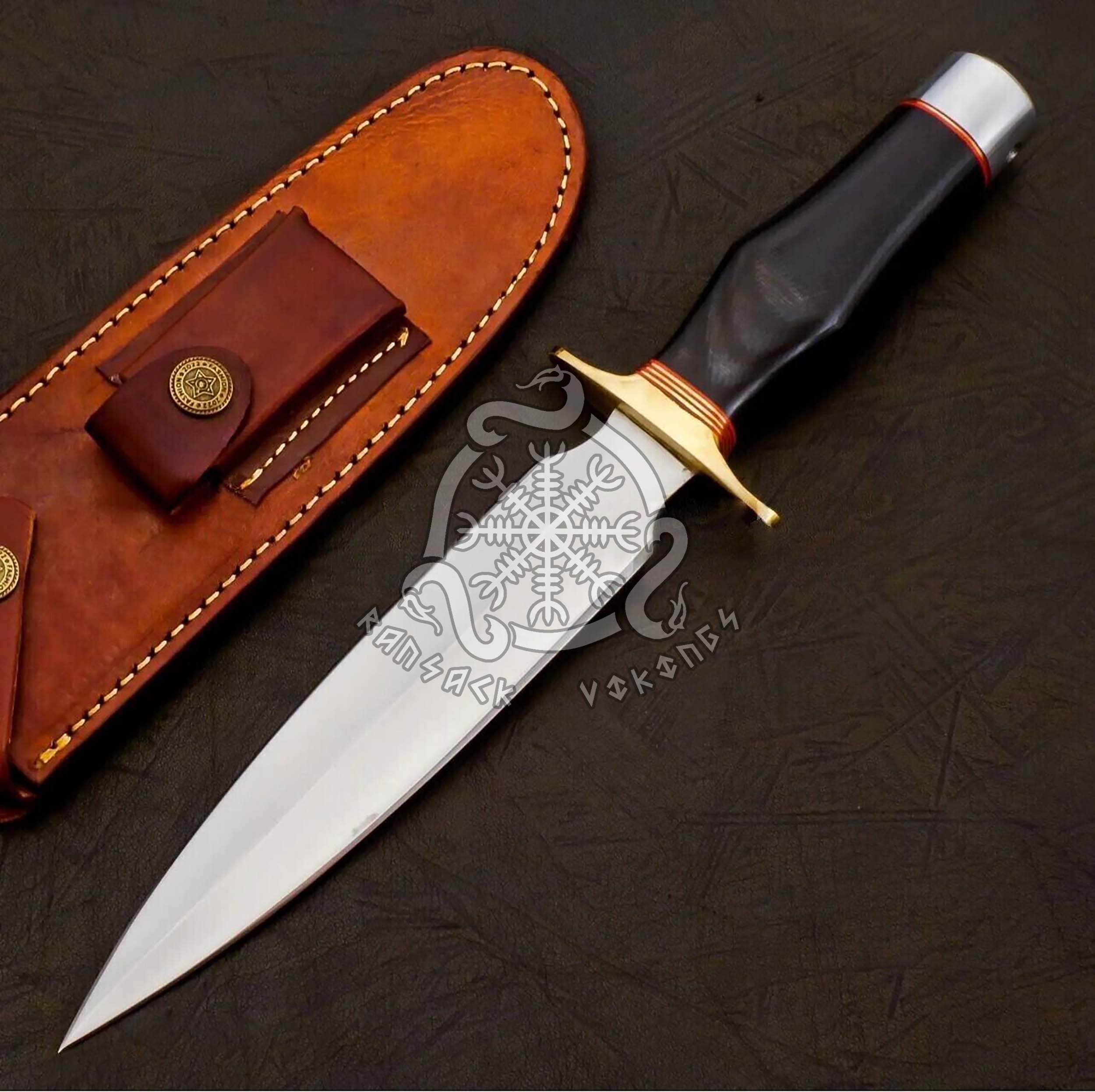
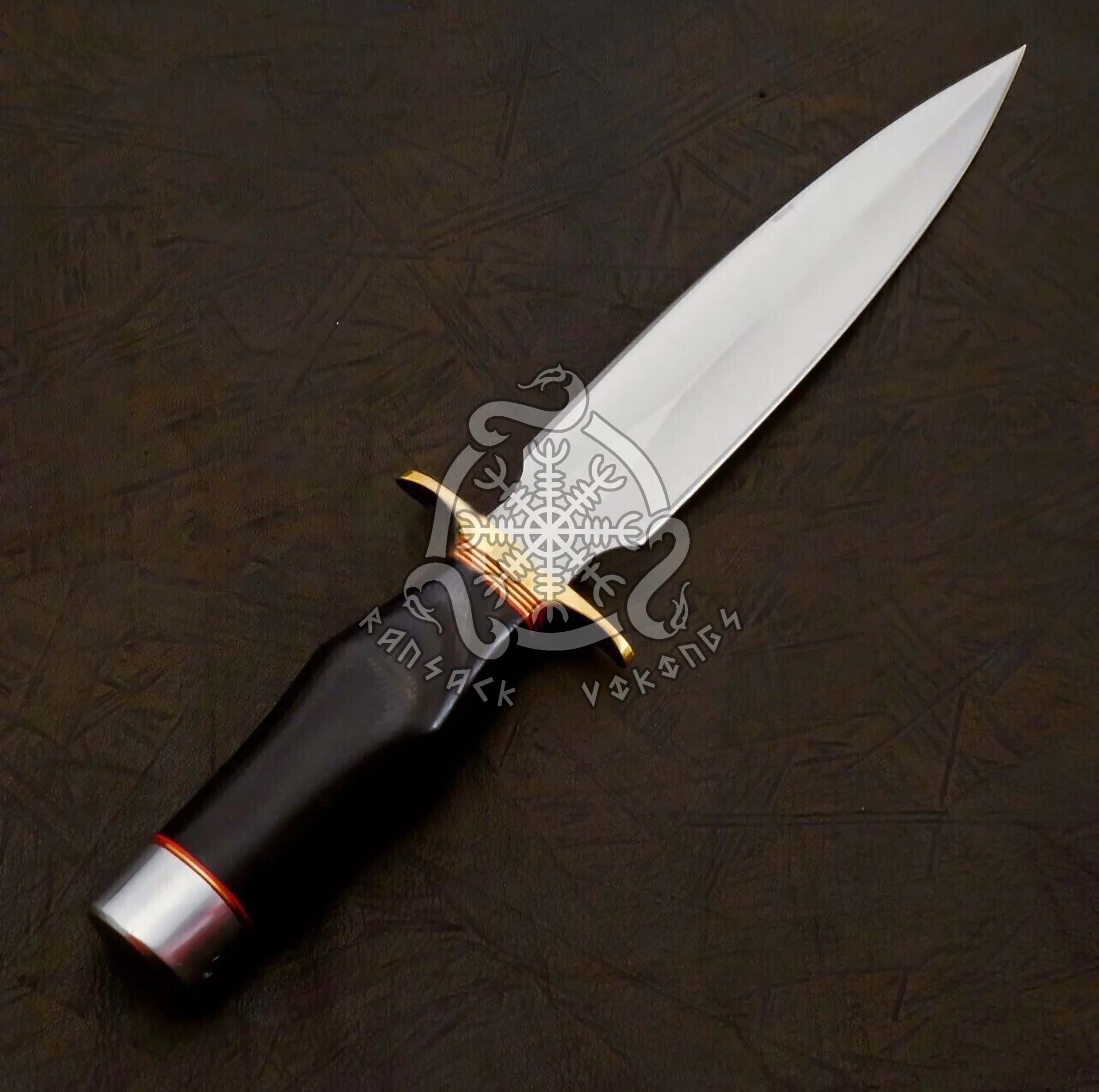
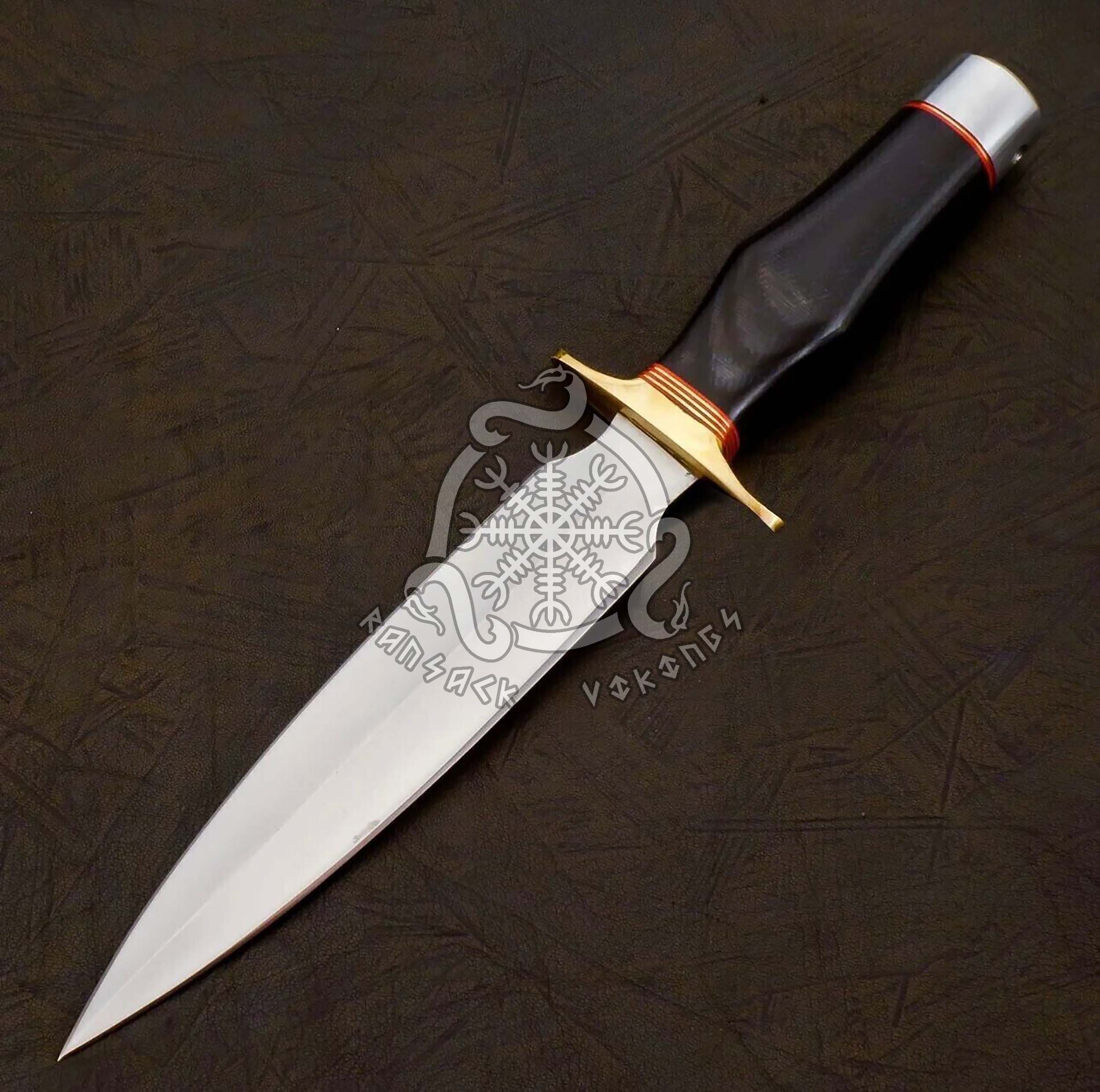
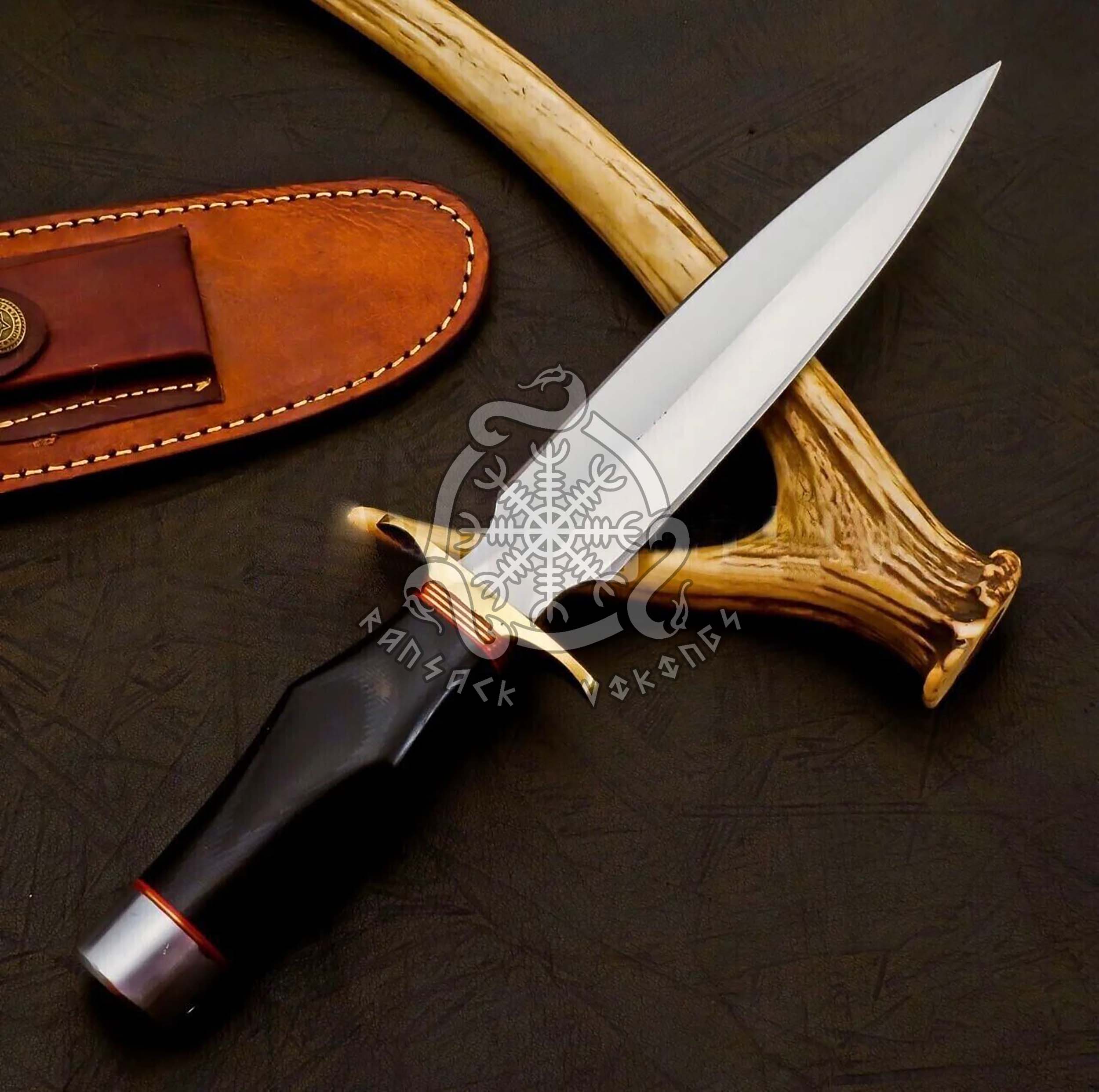
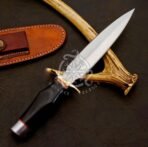
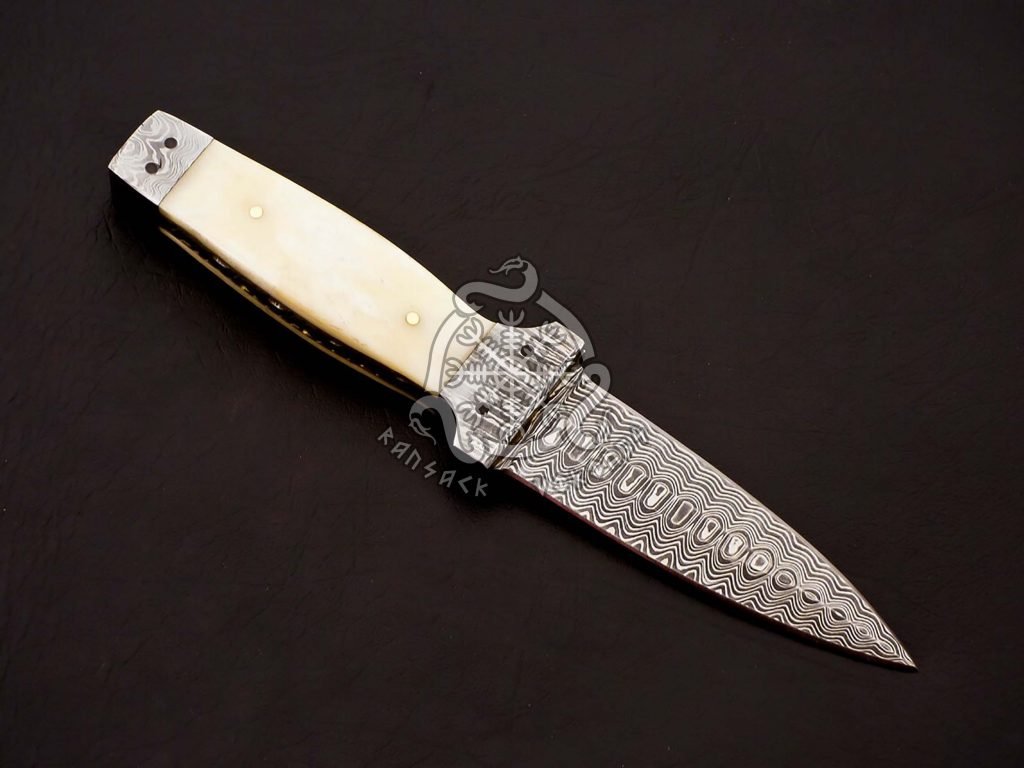
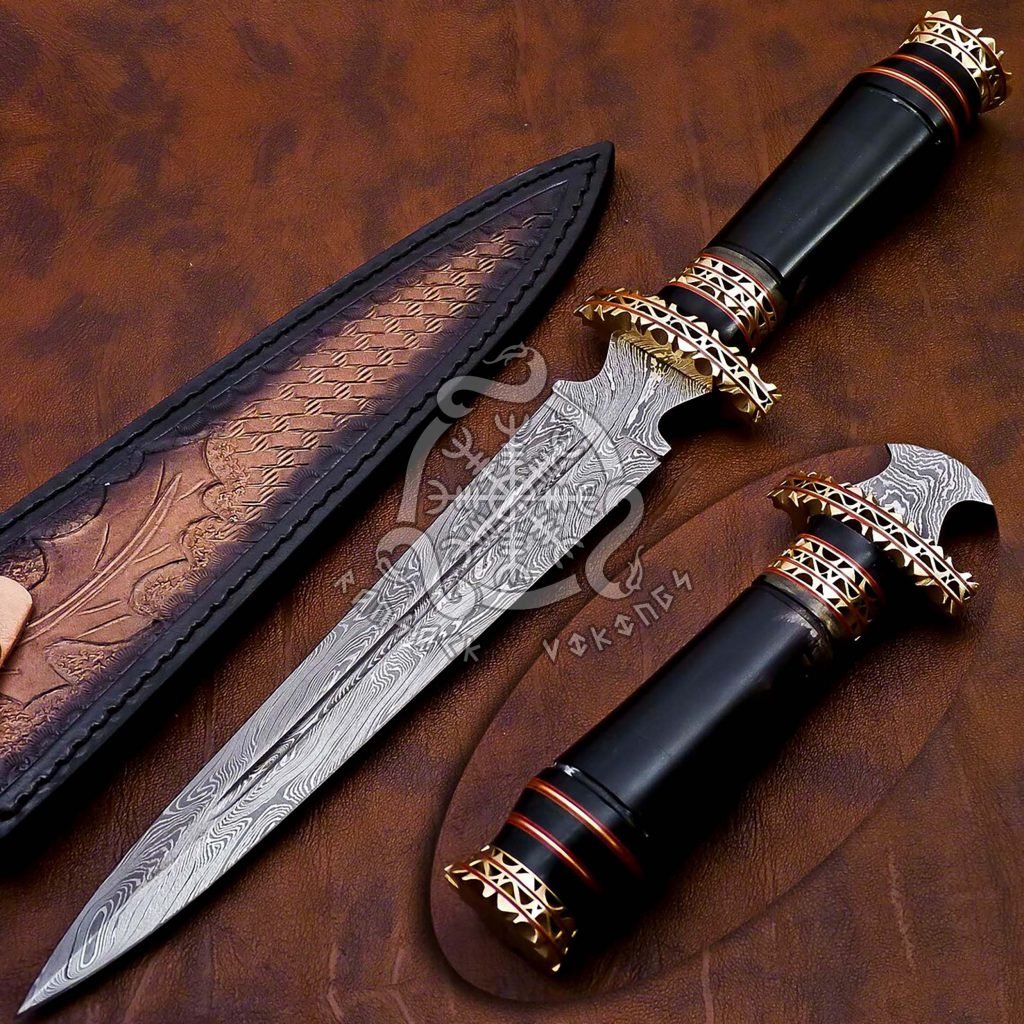
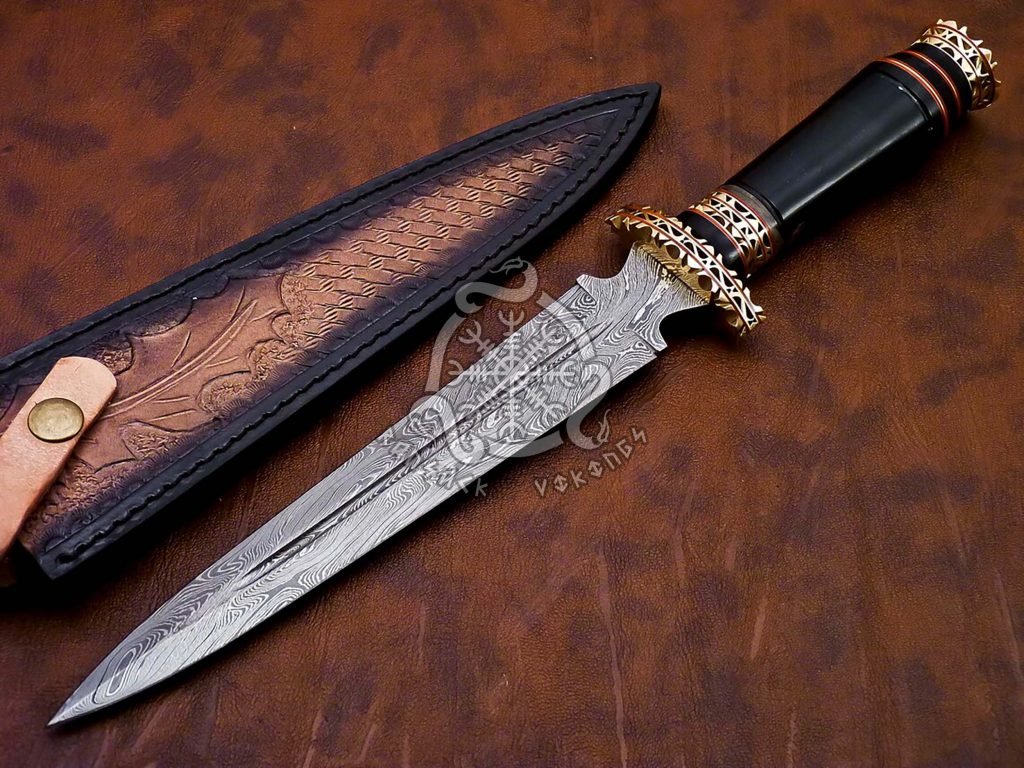
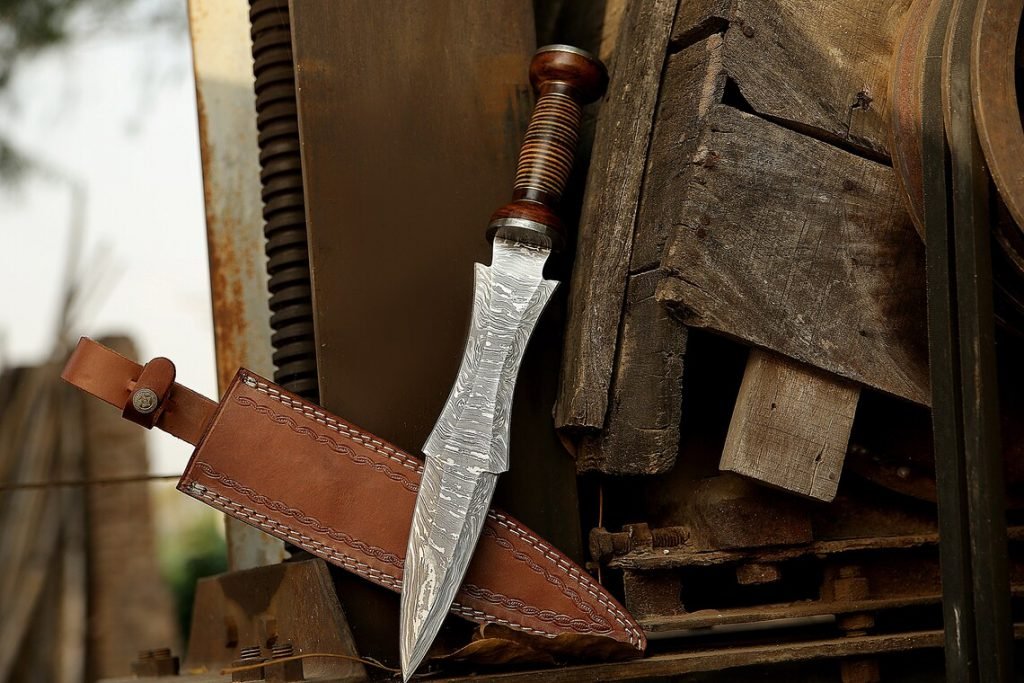
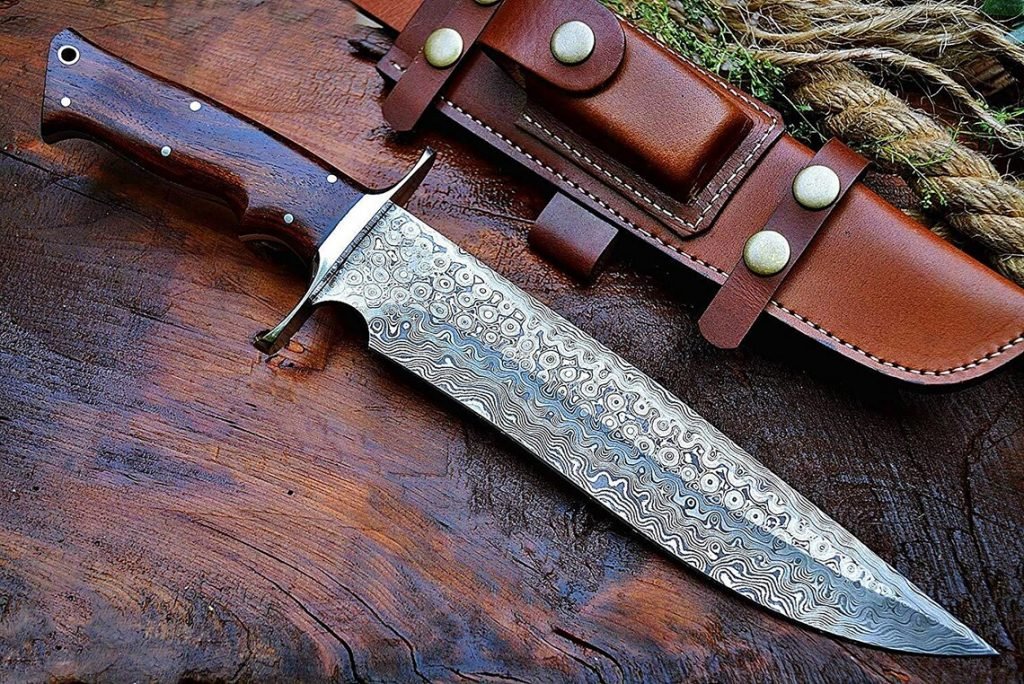
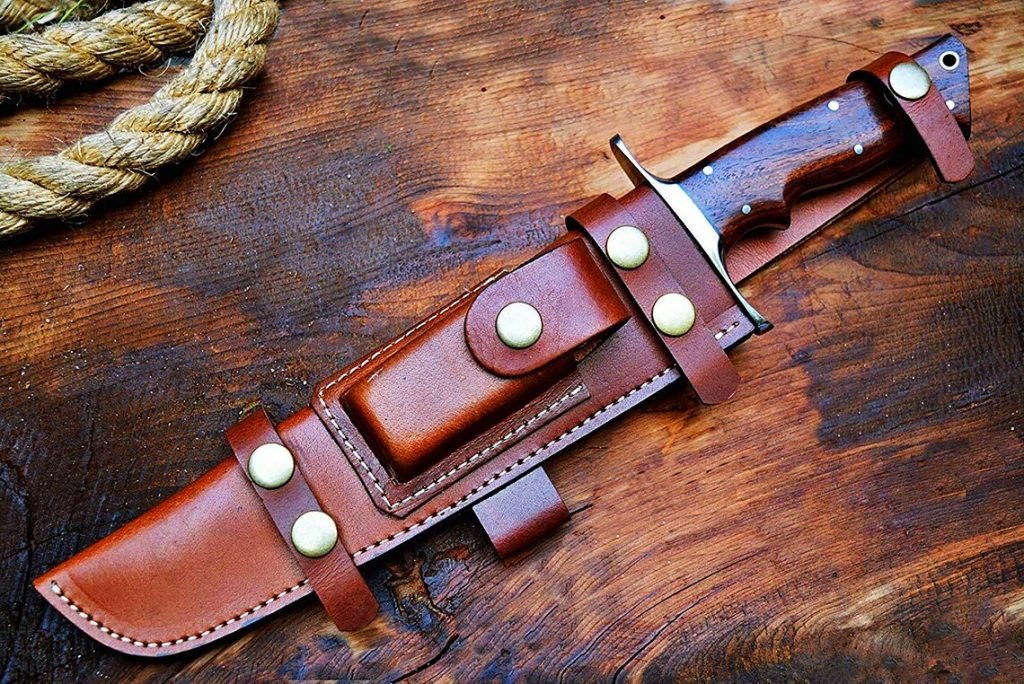
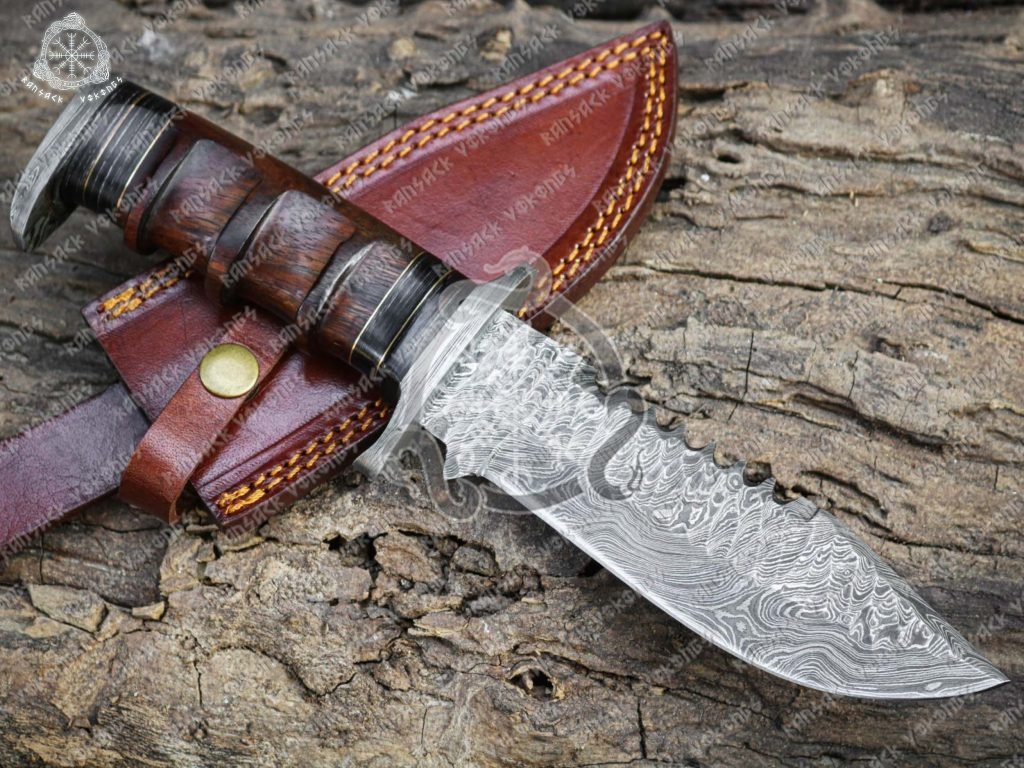
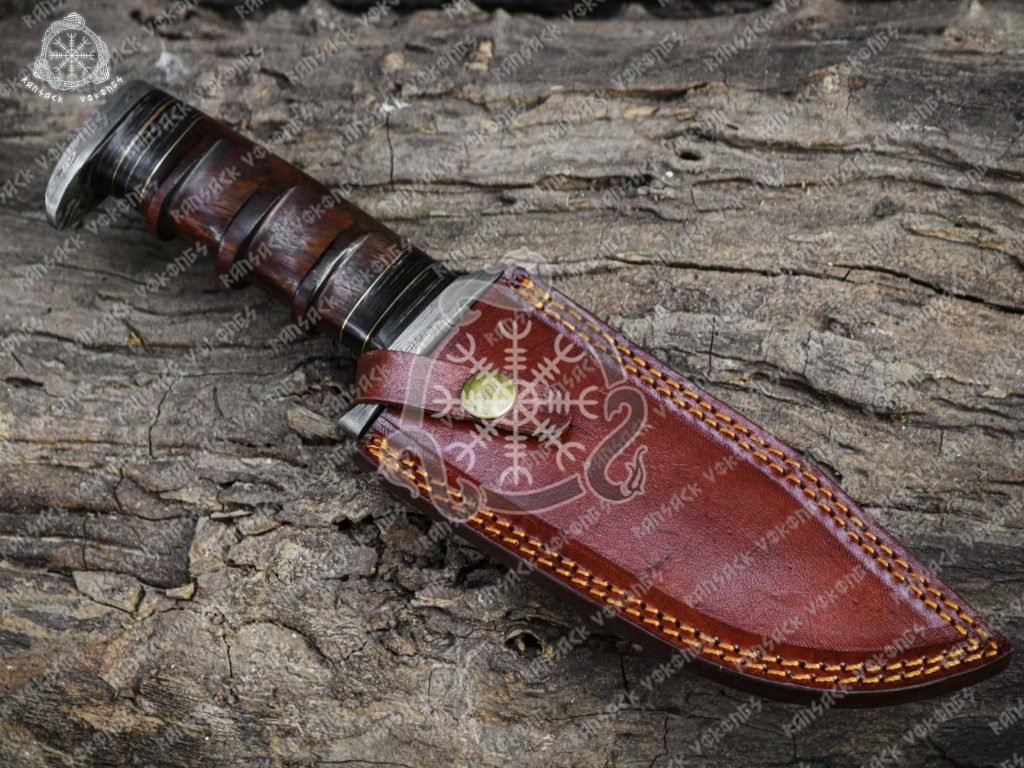
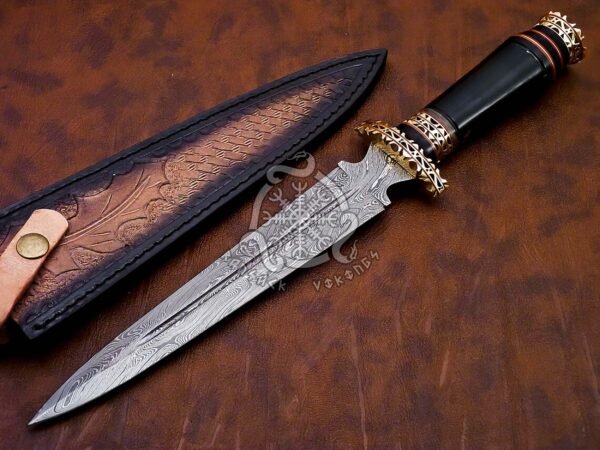
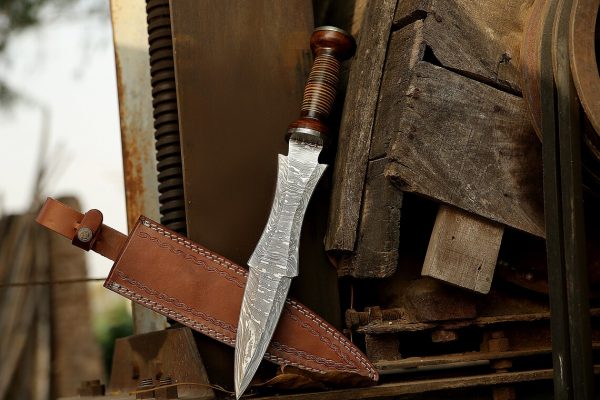
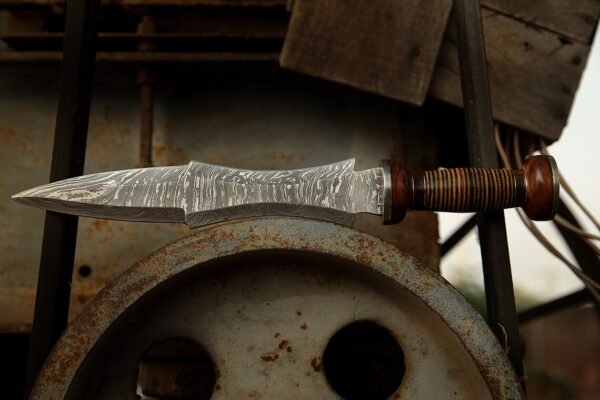
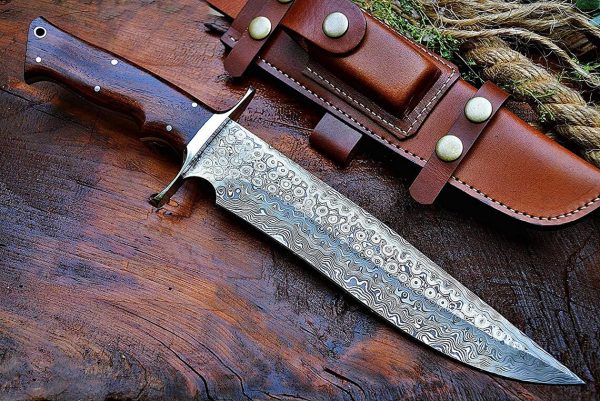
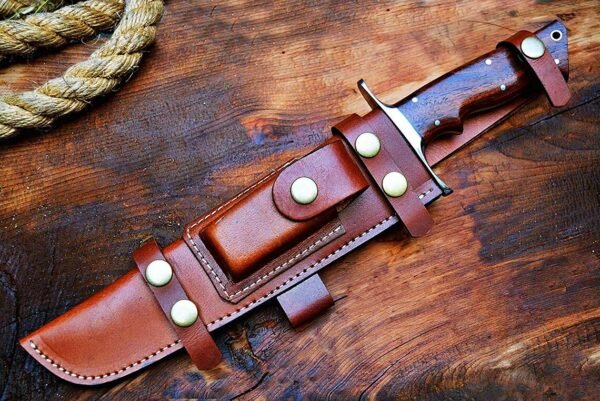
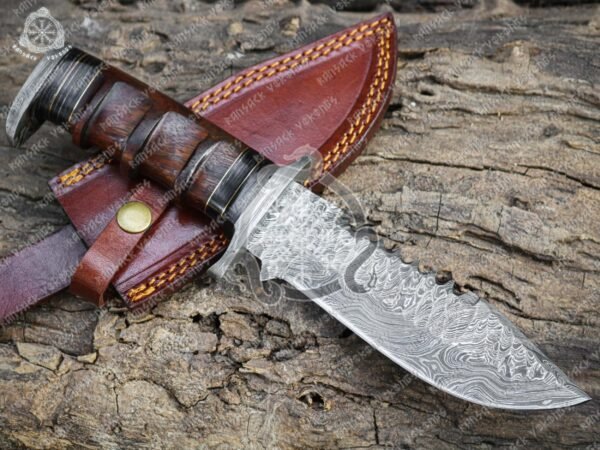
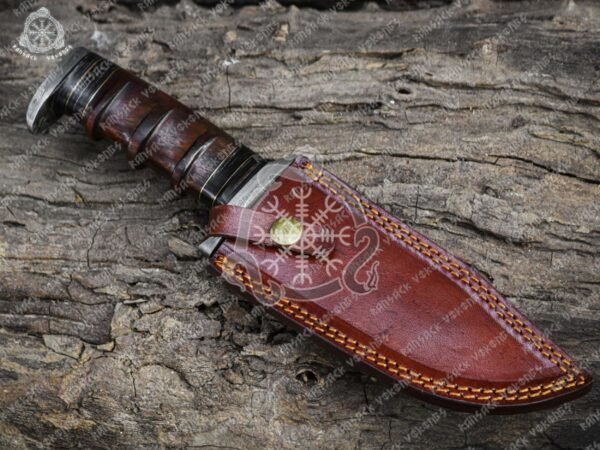
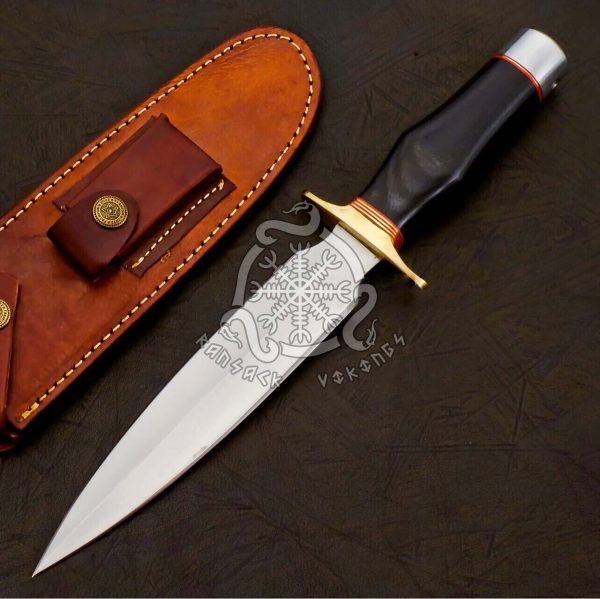
The Blackguard is a Bowie knife for people who notice the difference between a knife that was made and a knife that was manufactured. D2 tool steel blade with a clip point, stag horn and black micarta handle, hand made steel guard and bolster, 13 inches overall with an 8 inch blade. It ships in a cowhide leather pouch cut for right hand carry. How this shape differs from a bowie is set out in the seax and bowie compared.
The Bowie is the only American blade pattern that got famous because of a single fight. In September 1827 a duel on a sandbar in the Mississippi near Natchez turned into a general brawl, and Jim Bowie, shot and stabbed, killed a man with a large knife of his brother Rezin’s design. The story ran in every newspaper in the country. Within a few years every man who could afford one wanted a knife like it, and Sheffield, which had the industrial capacity America lacked, spent the next fifty years shipping Bowie knives back across the Atlantic by the crate. The clip point profile you are looking at is the shape that came out of that scramble, and it survived because it works.
The Blackguard is forged and finished in the Czech Republic, and shipping inside the United States is free.
Specifications
| Steel | D2 tool steel |
|---|
| Hardness | 58 to 60 HRC |
|---|
| Blade shape | Clip point Bowie |
|---|
| Overall length | 13 inches |
|---|
| Blade length | 8 inches |
|---|
| Handle | Stag horn and black micarta, hand made steel guard and bolster |
|---|
| Sheath | Cowhide leather pouch, right hand carry |
|---|
| SKU | RK-574 |
|---|
What the clip actually does
The clip is the section taken out of the spine near the tip, and it is the whole point of the pattern. Take a plain spear or drop point blade and the tip sits high, more or less in line with the spine. That is strong, but it puts the point well above the centreline of the blade, so when you drive it forward the force does not run straight through it and the tip skates.
Cutting the clip does two things at once. It lowers the point toward the middle of the blade, which lines it up with the axis of the thrust, and it removes metal from behind the tip so the point is thinner and enters more easily. That is why a clip point pierces so much better than a drop point of the same size. The unsharpened top edge left behind is called the false edge, and on a knife this size it also acts as a stiffening rib.
Behind the clip the blade keeps a deep, long belly. That is the part that does the actual cutting work, and it is why a Bowie of this length is still a genuinely useful field knife rather than a novelty. The guard is not styling either. On an 8 inch blade with any real force behind it, a wet hand slides, and the guard is the only thing stopping it. Everything about the pattern is a compromise between a knife that cuts and a knife that stabs, which is exactly what it was designed to be.
Why D2 and not stainless
D2 is a high carbon, high chromium tool steel. It carries around one and a half percent carbon and around twelve percent chromium, and that number matters: the usual line for calling a steel stainless is about thirteen percent chromium free in the matrix, and D2 sits just under it. That is why it is described as semi stainless, and the description is honest rather than evasive.
What you get from it is wear resistance. The chromium locks up with carbon into large hard carbides that are much harder than the surrounding steel, and those carbides are what resist abrasion. Hardened to 58 to 60 HRC, a D2 blade will hold a working edge through several times the amount of cutting a plain carbon blade manages before it needs attention. On an 8 inch Bowie that gets used on rope, hide, cardboard and wood, that is the property that matters most.
The honest costs are three. It is slow to sharpen, because you are grinding through those same hard carbides, so budget for a coarse stone and patience rather than a quick touch up on a ceramic rod. Those large carbides also mean a D2 edge taken to a very fine angle can be slightly coarse and can microchip where a simple carbon steel would just roll, so it does not want to be ground as thin as a razor. And it is not actually stainless: leave it wet, or leave salt on it, and it will spot. Fully stainless steel would beat it on corrosion and lose to it badly on edge holding, which is the trade we think is worth making on a knife this size. There is more in our D2 guide, and the general steel comparison sits in Damascus versus stainless.
Stag horn, black micarta and the steel fittings
The handle pairs stag horn with black micarta, with a hand made steel guard and bolster between them. These are two very different materials chosen for two different reasons. Stag horn is natural keratin, warm in the hand, irregular in surface texture and one of the best wet grips there is. Micarta is layers of linen or canvas set in resin and cured under pressure, and it is the material you choose when a handle has to be completely indifferent to weather. It does not swell, shrink, rot or crack, it holds its grip when wet, and it is chemically stable in a way no natural material is.
Because micarta is inert, it needs no maintenance at all: soap and water is the whole routine, and nothing you can do at home will damage it. The stag horn does want attention, and it is the same routine timber gets, a light coat of oil once or twice a year to stop it drying and to keep it from shrinking against the fittings. The method is in wooden handle care and applies to horn without change. Do not oil the micarta, and do not leave either of them on a heat source.
Engraving, runes and your own design
Use the rune converter on this page to turn a name, a date or a short phrase into Elder Futhark and we will cut it into the steel or the handle. If you would rather have a Viking pattern than a rune line, choose your own design in the engraving option above the add to cart button and tell us whether it goes on the blade or the handle. Where a piece already carries an engraved design, your chosen engraving replaces it rather than sitting alongside it. D2 is hard, so engraving into the blade is cut rather than scratched and holds a crisp line for the life of the knife. The wide flat below the clip is the natural place for it. See the engraving page.
Care and sharpening
D2 tolerates damp better than carbon steel but it is not fully stainless, so a light oil before storage is still sensible, especially if the knife lives in a leather pouch. Vegetable tanned leather holds moisture and mild acid against steel, so for long storage take it out of the pouch.
Sharpening needs a coarse stone to reset the bevel and a finer one to finish. Diamond plates work considerably faster on D2 than natural stones because they cut the chromium carbides rather than skating over them. Do not chase a razor thin edge on this steel: leave a slightly more obtuse angle and it will hold far longer. The method is in steel care and sharpening with a whetstone.
Made in the Czech Republic
This is a handmade piece from the Czech Republic, made in a workshop that still forges, grinds and finishes by hand instead of stamping parts out. The smiths there have kept the older way of working, and the wood, horn and leather are shaped and fitted by hand as well. Two pieces of the same design will never be identical, and that is part of what you are buying.
Ransack Viking is a United States company. We handle the import ourselves, look over every piece when it lands and ship from our warehouse in Memphis, Tennessee. Engraving is done in the United States after the piece arrives, so your design goes on before we send it out.
A note on handmade variation
This Bowie is hand forged. It is not machine made and it is not bulk produced, so what arrives will not be a pixel for pixel copy of the photograph. The stag horn is marked by the animal it came from, the micarta figures differently as it is ground, the file work and fittings are cut by eye, and the sweep of the clip and the belly shift by fractions because a person ground them. The dimensions, the steel and the build are the same every time. The character is not.
Frequently asked questions
Is the false edge on the clip sharpened
It ships unsharpened as a false edge, which is the usual arrangement and keeps the tip stiffer. Tell us in the order notes if you want it sharpened and we will do it before the knife goes out.
Is D2 harder to sharpen than carbon steel
Yes, noticeably. The chromium carbides that give it its edge retention are also what your stone has to cut through. A diamond plate makes the job straightforward.
Will D2 rust
It resists rust much better than plain carbon steel but it is not stainless. Left wet or exposed to salt it will spot. A wipe and a thin oil before storage prevents it.
Does the micarta need any care
None. Wash it and forget it. The stag horn beside it wants an annual coat of oil, which is the only maintenance the handle asks for.
Can the pouch be made for left hand carry
The cowhide pouch as shown is cut for right hand carry. If you want it built the other way, say so in the order notes before the leatherwork starts.
How does this compare to a camp knife of the same length
A camp knife puts everything into cutting and chopping with a plain point. This trades a little of that for a point that pierces properly, which is what the clip buys you.
What is in the box
- One Blackguard D2 steel Bowie knife
- Cowhide leather pouch, right hand carry
- Protective packaging
- Forged and finished in the Czech Republic
Explore the range
Compare it with the rest of Bowie Knives, the field blades in Hunting Knives, the double edged pieces in Dagger Knives and the Norse profiles in Viking Knives. Steel and leather reasoning is written up in the guides.




Reviews
There are no reviews yet