
Blog
Seax vs Bowie: Two Big Knives, Two Different Jobs

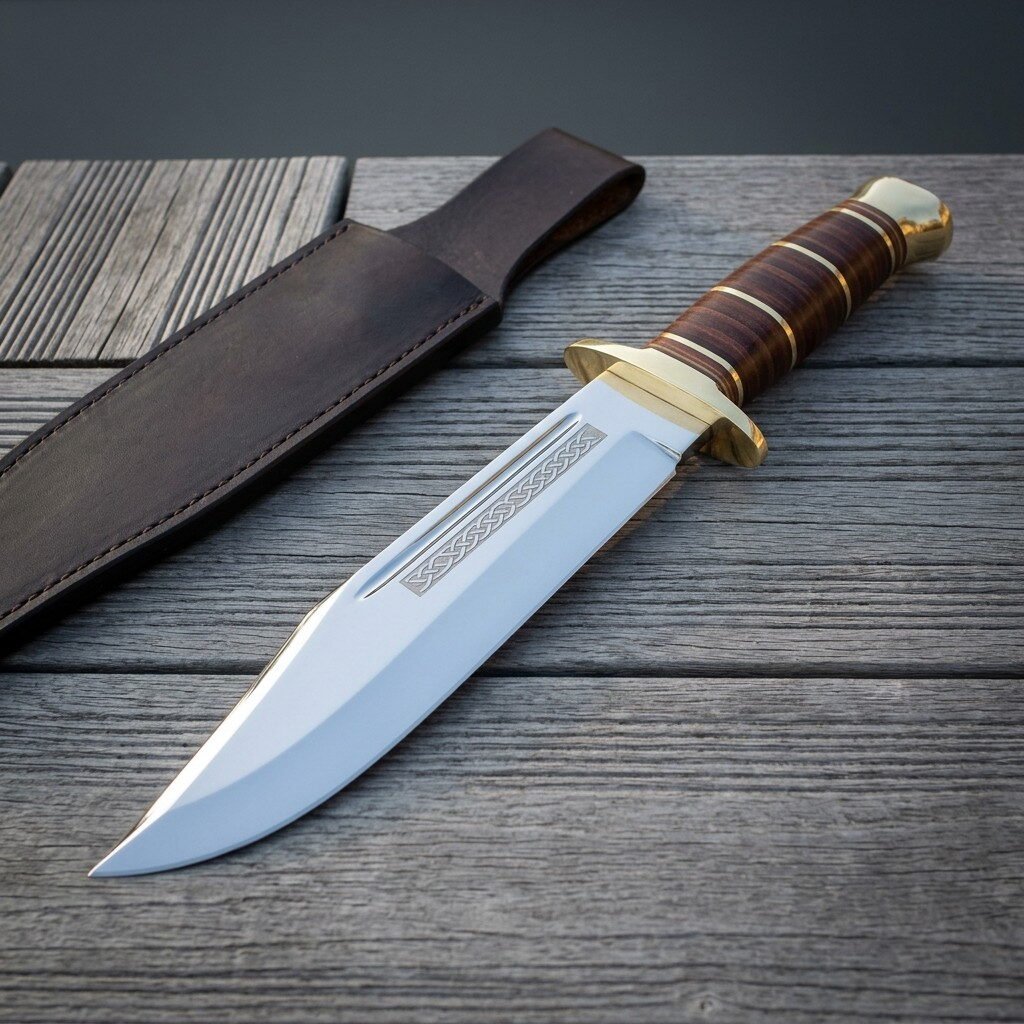
Buy a Bowie if the knife is going hunting or into hard camp work. The guard, the clip point and the deep belly are built for gripping wet, stabbing and chopping. Buy a seax if you want slicing, carving, food and a Viking kit. Most of the rest of this argument is about which one looks better on a wall.
Both are big single edged knives, both were carried every day by people who needed one knife to do everything, and they were separated by about eight hundred years and an ocean. That gap shows up in the geometry, not in the marketing. Once you know what each shape was solving, choosing between them stops being about looks.
The short comparison
| Seax | Bowie | |
|---|---|---|
| Where it comes from | Germanic and Norse Europe, roughly the fifth to eleventh centuries | The American frontier, 1830s onward |
| Blade shape | Single edged, straight or broken back spine, point in line with the edge | Single edged, clip point with a false edge, deep belly |
| Guard | Usually none, sometimes a bolster | Almost always a crossguard, often brass |
| Common blade length | Three to eight inches on a hand seax, up to twenty plus on a langseax | Six to twelve inches on most |
| Best at | Slicing, carving, food, general camp utility | Chopping, piercing, dressing game, heavy camp work |
| Weak at | Hard thrusting and chopping, and your hand can slide forward | Fine slicing and anything that needs a flat edge |
| Carry | Horizontal on the belt, edge up, in a fitted scabbard | Vertical belt sheath |
| Who it suits | Reenactors, bushcrafters, anyone building Norse kit | Hunters, campers, collectors of American pieces |
What a seax is
The seax was the ordinary knife of Germanic and Norse Europe for most of a thousand years, and the word survives in the name of the Saxons. It cut food, wood, leather and rope, and if it came to a fight it was there too, which is why the langseax at the top of the range gets close to sword length.
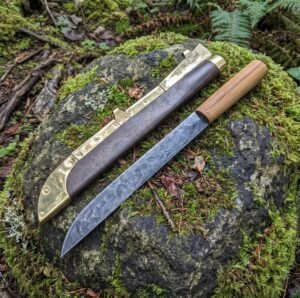 Olivescramasax Hand Forged High Carbon Steel Viking Seax Knife with Wood Handle & Leather Sheath | Norse Reenactment Gift | RK-605
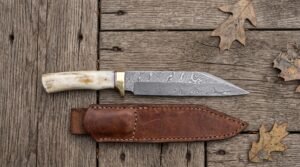 Mosaicsax Hand Forged Damascus Viking Seax Knife with Natural Bone Handle and Brass Bolster & Leather Sheath | Norse Collector Gift | RK-1029
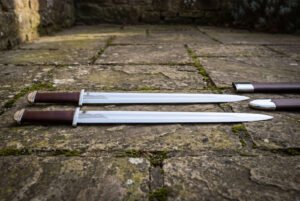 Langfell Hand Forged 1095 Steel Viking Seax Set | 2 Piece Matched Pair | 30 Inch Langseax with Leather Grips and Two Fitted Scabbards | Norse Reenactment Gift | RK-1925
The shape people picture is the broken back seax, where the spine runs straight from the handle then angles sharply down to meet the edge at the tip. That angle is the signature. Other seaxes have a plain straight spine, or a gentle curve, and the smaller hand seaxes look much like a modern fixed blade. Almost none of them have a guard. Grip is handled by the shape of the handle and by a bolster or a swell at the front.
Our Viking seax range runs from short hand knives to full langseaxes, and the wider Viking knives category holds the rest of the Norse patterns. If you want the archaeology and the type names before you buy, start with the seax history post and then the seax buying guide.
What a seax does well
Slicing. The edge on most seaxes is long and close to straight, which is what you want for pull cuts. Bread, meat, rope, leather: a flat section of edge does that better than any curved belly, because you can press the whole edge into the work at once.
Carving and control. No guard means you can move your hand forward onto the blade for detail work, and the broken back point sits low, in line with the edge, so you can see exactly where the tip is going. Bushcrafters who like a scandi style grind get on with a seax immediately.
Looking right. If the knife is going into a Viking Age impression, a Bowie is a thousand years wrong. Nobody at an event will let that pass unremarked, and it matters to gift buyers too. The broken back is instantly recognisable.
What a seax does badly
Hard thrusting. No guard is fine for cutting and stops being fine the moment you push hard into something with a wet hand. Take that seriously if you are batoning or working around bone. Choose a seax with a real bolster or a pronounced swell if you plan to use it hard.
Chopping. A seax carries less weight forward than a Bowie of the same length, so it does not gather momentum the same way. It is not the knife you reach for to limb a branch.
Sheath fit. Historical seax scabbards carried horizontally at the front of the belt, edge up. Some people love it. Others want a normal vertical sheath and should check what the piece ships with before ordering.
What a Bowie is
The Bowie answers a different question: what if one knife had to work as a camp tool, a butchering knife and a fighting knife on a frontier where you might not see a shop for months. It grew out of the fame of Jim Bowie and spread far past anything he actually carried, which is why the name now describes a shape rather than a single design.
Two parts of that shape matter most. The clip, where the spine dips away toward the point, drops the tip lower and thins it so it penetrates. The belly, the long forward curve of the cutting edge, gives a sweeping cut that opens hide without your knuckles dragging. Add a crossguard and a stacked leather handle and you have the standard.
Our Bowie knives cover the classic clip point pattern in plain 1095 and in Damascus, and the hunting knives category holds the shorter blades if a full Bowie is more knife than you need. The Bowie buying guide works through blade lengths and handle materials in detail.
What a Bowie does well
Chopping and heavy camp work. Weight sits forward of your hand on a proper Bowie, so a wrist snap does real work. Pegs, kindling, clearing a fire site: it handles all of that in a way a straight backed knife of the same weight does not.
Piercing. The dropped clip point is one of the best piercing tips on any large knife. It goes in cleanly and it does not roll over on hard contact the way a thin needle point does.
Dressing game. The belly is the reason. A curved edge with a hand’s length of sweep opens hide and skins cleanly, and the guard means your hand does not slip forward when everything is slick. For a hunter this is the whole argument.
What a Bowie does badly
Fine work. Big Bowies are clumsy on small jobs. The point sits away from your hand, the guard blocks a forward grip, and the belly makes it hard to get a flat edge onto a board.
Weight and carry. A ten inch Bowie in a leather sheath is not the knife you keep on you all day. Most owners carry a small fixed blade as well and reach for the Bowie on the days that earn it.
The false edge. On some patterns the clip is sharpened, which makes the knife legally awkward where double edged blades are regulated. Check your local rules if you intend to carry rather than keep it at home.
Choosing by what you will do with it
Display
A langseax on a wall reads Norse from across the room, and Damascus pattern shows off better on a broad blade than a narrow one. A big Bowie displays well too but it needs a stand, because a bare Bowie flat on a shelf just looks like a knife on a shelf.
Reenactment
Seax, and check your group’s rules on edge and length before ordering. The hand seax is the safe universal choice for a Viking Age or Anglo Saxon impression. A Bowie belongs to nineteenth century American living history and nowhere else.
Camp and bushcraft
This is the closest call. If your camping involves fire prep, batoning and processing wood, take the Bowie. If it involves cooking, carving, making things and cutting cord, take the seax. Most people do more of the second than they expect, and a seax with a bolster covers both.
Hunting
Bowie, or a shorter hunting pattern from the same family. The belly and the guard are worth more here than anything the seax offers, and a clip point handles the pelvis and the joints without fuss. If you are choosing between blade sizes, our post on knife blade shapes explains what each profile actually does.
Kitchen
Seax, and it is not close. A straight edged single bevel blade with a flat section is closer to a chef knife than a Bowie will ever be. A short seax handles a board well. A Bowie rocks on its belly and bangs its guard into your knuckles.
Gifts
Bowie for a hunter or a camper, seax for anyone with a Norse interest. Both give well because both are big enough to feel like an occasion out of the box. Engraving lands better on the wide flat of a seax blade than on a clipped Bowie spine.
Steel, and what it changes
Both patterns come in the same two steels here. Plain 1095 is a straightforward high carbon steel run at 54 to 58 HRC. It takes a very keen edge, it sharpens quickly on a stone, and it is tough enough to baton with. Damascus is 1095 and 15N20 forge welded and finished at 58 to 60 HRC, which holds an edge a little longer and gives you the layered pattern people are actually paying for.
Both will rust if you put them away wet, and that matters more on a knife than on an axe because a knife spends time in contact with food, blood and hands. Wipe, dry, oil the blade, and do not store a carbon steel knife in a leather sheath long term. The knife care guide covers the whole routine in a couple of minutes of reading.
Buy this one if
Buy a seax if you want a slicing knife, you cook or carve, you are building a Viking Age or Anglo Saxon kit, you like the look of the broken back, or you want a knife that handles like a very large utility blade rather than a chopper.
Buy a Bowie if you hunt, you want a knife that chops and pierces, you want a guard between your hand and the edge, or you want the piece that reads as a serious knife to anyone who sees it.
Buy the short version of either if this is your first big knife. A six inch seax or an eight inch Bowie does almost everything a longer one does and is far more likely to actually leave the house with you.
What we stock
The Viking seax range runs from short hand knives with leather grips and knotwork etched bolsters up to langseaxes with fitted scabbards. The Bowie knives group holds clip point blades with brass double guards and stacked leather handles, and there are sawback variants if you want a spine that works. Shorter fixed blades for hunting sit in hunting knives. Ransack Viking is a US company in Chicago, Illinois, every piece is handmade in the Czech Republic the old way, then imported, inspected and shipped from Chicago, and engraving is done in the US after arrival.
Choosing between the Norse patterns is covered in choosing a Viking knife, and our pick of the American side is in the best Bowie. Both are large fixed blades, so check the carry rules where you live, and the steel terms are set out in our steel reference.
Questions people ask
Is a seax just a Viking Bowie?
No. They look similar from ten feet away because both are big single edged knives, and that is where the resemblance ends. A seax has a straight or broken back spine, a low point and usually no guard, built for slicing. A Bowie has a clip point, a deep belly and a crossguard, built for piercing and chopping.
Which one is better for camping?
Depends on your camping. If you split wood, prepare fires and process branches, the Bowie does more per swing. If you cook, carve, make repairs and cut cord, the seax is faster and easier to control. A seax with a solid bolster is the better single choice for most people.
What length should I buy?
For a first big knife, six to eight inches of blade covers almost everything. Hand seaxes commonly sit in the three to eight inch range and langseaxes run much longer. Bowies commonly run six to twelve. Anything past ten inches becomes a specialist piece you will use less often than you think.
Why do seaxes not have a guard?
Because they were cutting knives, not thrusting knives, and a guard gets in the way of a forward grip. Historical seaxes handled retention with handle shape and a swell or bolster at the front instead. If you plan hard use, pick a piece with a pronounced bolster rather than a plain tapered handle.
Is Damascus worth it on a working knife?
It holds an edge slightly longer, since Damascus here is 1095 and 15N20 forge welded at 58 to 60 HRC against plain 1095 at 54 to 58. That difference is smaller than the price gap. Buy Damascus because you want the pattern, and buy plain 1095 if the knife will take knocks and you want the cheaper, tougher option.
How should I store a carbon steel knife?
Dry, oiled and out of the sheath. Leather holds moisture and the tanning salts in it will quietly pit a blade left inside for months. Wipe the blade after use, put a thin film of oil on it, and keep the knife on a rack, in a box or in a dry cloth roll rather than in its scabbard.
If you would rather have one made to your own spec, build a custom seax and choose the blade shape, the steel, the blade length and the handle material.
Things you can actually hold
If you are shopping rather than reading, the Wolfmark Seax knife and the Woodsax Viking Seax knife are the nearest match. Also worth opening, the Riverclaw Viking Bowie knife and the Bonecreek Bowie knife.
A third big knife
Both of these have a German relative worth knowing, the bauernwehr, which sits at the short end of the messer family. The Hallvarn bauernwehr is a 1095 sharp and not a sparring tool, so for training the dussack guide is the better read. The longer blades live under HEMA messers.
Shop the range
Olivescramasax Hand Forged High Carbon Steel Viking Seax Knife with Wood Handle & Leather Sheath | Norse Reenactment Gift | RK-605Mosaicsax Hand Forged Damascus Viking Seax Knife with Natural Bone Handle and Brass Bolster & Leather Sheath | Norse Collector Gift | RK-1029Langfell Hand Forged 1095 Steel Viking Seax Set | 2 Piece Matched Pair | 30 Inch Langseax with Leather Grips and Two Fitted Scabbards | Norse Reenactment Gift | RK-1925 Sawcrest Hand Forged 1095 Steel Sawback Bowie Knife | Clip Point Blade with Etched Panel | Cord Wrapped Grip and Leather Sheath | Survival Gift | RK-1880
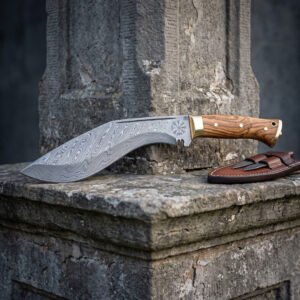 Olivewhorl Hand Forged Damascus Kukri Knife | 17 Inch Overall | Olive Wood Scales and Brass Bolster with Etched Vegvisir, Leather Sheath and Two Companion Blades | Norse Camp Gift | RK-2111
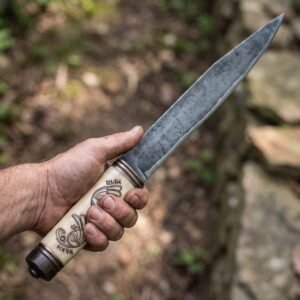 Huginandmunin Hand Forged High Carbon Steel Viking Seax Knife with Camel Bone Handle and Bolster & Tooled Leather Sheath | Norse Raven Collector Gift | RK-606