
Blog
Viking Seax Knife Buyer’s Guide: History, Types, and What to Look For

A seax is the single-edged utility knife of the Viking Age and the wider Germanic world, a straight-backed or broken-back blade, usually 4 to 20 inches long, carried horizontally at the belt by nearly everyone in Norse society, from farmers to warriors. Swords get the sagas and the wall space. The seax was the tool that actually got used, every day, on food, wood, leather, rope, and, at the long end of the size range, in fighting. This buyer’s guide covers the seax’s history, the main blade patterns, what to look for in a modern hand-forged reproduction, and how to care for one. Our hand-forged Viking seax knives ship from Chicago, IL, and most can be personalized with free engraving.
A Short History of the Seax
The seax (also sax or scramasax) gave the Saxons their name and served northern Europe for roughly six centuries, from the Migration Period through the Viking Age. Finds run from small everyday knives a few inches long to the langseax, a short-sword-length blade over 20 inches. Most were plain working tools. The finest, like the famous Seax of Beagnoth pulled out of the Thames, carried inlaid runic inscriptions and pattern-welded steel, and those were very much the exception. The seax was carried horizontally in a sheath at the front of the belt, edge up, where it was equally ready for lunch or trouble.
That is the short version, and it is all you need to buy well. The long one, with the finds and the evidence behind each form, is in our piece on the seax and the knife every Viking carried. The rest of this page is about the decision in front of you.
Seax Blade Patterns
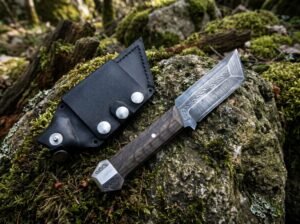
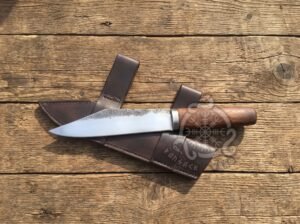 Anglosaxon Hand Forged Viking Seax Knife | Sized for Display and General Outdoor Use | RK-652
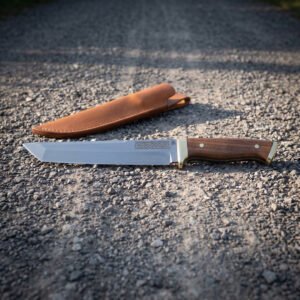
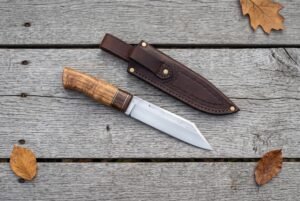 Beltsax Hand Forged High Carbon Steel Viking Seax Knife with Premium Cowhide Sheath | Compact Norse Belt Knife and Collector Gift | RK-656
Broken-Back Seax
The most recognizable pattern: a straight edge with a spine that angles down sharply to the point, like a snapped line. Common in Viking-Age England and Scandinavia, and the pattern most modern makers reproduce. The geometry gives a strong tip and a long, flat cutting edge.
Straight-Back Seax
A simple, gently curving edge under a straight spine, the everyday working shape, closest to a modern bushcraft knife.
Langseax
The long fighting variant, with blades from roughly 12 to over 20 inches. A dramatic collection piece that sits between knife and sword and commits fully to neither.
Small Utility Seax
Palm-size blades of 3 to 5 inches, the pattern most people actually carried daily, and the most practical modern camp companion.
Seax Types Compared
| Pattern | Typical Blade | Best For | Notes |
|---|---|---|---|
| Small utility seax | 3 to 5 in | Camp tasks, daily use | Most practical choice |
| Straight-back seax | 5 to 8 in | Bushcraft, general work | Closest to modern knives |
| Broken-back seax | 6 to 12 in | Display + heavy use | The iconic silhouette |
| Langseax | 12 to 22 in | Collections, reenactment | Short-sword territory |
Blade Length: The Decision That Sets Everything Else
Almost every other choice follows from length, so settle it first. The ranges below are general guidance rather than the spec of any one knife; check the listing for the piece you are looking at, because makers cut these patterns to their own dimensions.
Roughly 3 to 5 inches. The everyday knife most Norse people actually carried. It disappears on a belt and does most of what anyone needs a knife for. If you want one seax and you want to use it, this or the next size up is the honest answer.
Roughly 5 to 8 inches. The sweet spot for a working knife with presence. Long enough to baton kindling, break down a shoulder of meat or clear a branch, short enough to choke up and carve with control. It also still looks right on a wall.
Roughly 8 to 12 inches. The big broken back silhouettes that photograph so well. These chop properly and make an impression, but they need a serious sheath. Buy this size because you want this size, not because the picture was good.
Over 12 inches. Langseax territory, a short sword that happens to be single edged. Display and reenactment. Nobody is peeling an apple with it.
The other number worth asking about is spine thickness. A seax should be thick at the spine and wedge ground, which is where its chopping authority comes from. A blade that is long and thin is a wall hanger whatever it is called.
What to Look For in a Modern Seax
The Tang
The tang runs back from the blade into the handle, and it is the one thing you cannot inspect after you buy. Two builds are historically correct and both are fine when done properly. A full tang runs the width and length of the handle with scales pinned either side, so you can see the steel along the top and bottom. A hidden tang is a narrower spike running through a solid handle, peened over a buttcap or set in place. Most Viking Age seaxes were hidden tang, and a well made one is plenty strong for anything short of prying.
What you want to avoid is a short tang that stops an inch into the handle, which is what fails on cheap decorative knives. If a listing does not say, ask. Any maker who builds real knives will tell you straight away.
Handle Materials
Original seax handles were plain wood, horn, bone or antler, usually with no guard at all, because the broad blade and the shape of the grip did the work. Modern reproductions keep that clean look, and the material choice comes down to how you plan to live with the knife.
Hardwood is the default and the most historically ordinary. It is warm in the hand, takes a knock without looking wounded, and wants an occasional wipe of oil. Antler and horn look the part and feel excellent, though every piece is different, so the knife you receive will not be identical to the photograph, and both dislike being left somewhere hot and dry. Bone sits between the two, harder and paler, and takes carved decoration well.
Whatever the material, the test is the same: the handle should fill your hand with no hard edge landing on a finger joint, and the balance should sit near the front of the grip. A seax is meant to feel blade-forward, but if it feels like a hammer the blade is too heavy for its handle.
The Sheath
A proper seax sheath is leather, often tooled, and hangs the knife horizontally at the belt, edge up, from two or three points. This is not a costume detail. It keeps the knife out of the way when you sit down, it draws naturally with either hand, and edge up means the blade is not sawing at the stitching every time you move.
Things worth checking: the thickness of the leather, since thin leather collapses and makes resheathing a guessing game; whether the seam runs along the edge side where it belongs; and how the knife is retained. Many historical sheaths held the blade by friction alone, which works when the fit is right and is maddening when it is not. If a seax arrives with a sheath that is clearly an afterthought, budget for a better one, because otherwise you will leave a good knife in a drawer.
Proportions and Weight
A seax should feel blade-forward but not clumsy. Historical blades were relatively thick at the spine and wedge-ground, giving them chopping authority for their size. If a listing’s photos show a thin, flat blade with a decorative shape, it is a wall piece wearing a seax costume.
1095 or Damascus: What Each Means for a Seax Buyer
Both of the steels we use are plain carbon steels, so both will rust if you neglect them and both take a genuinely sharp edge. The difference is what you are paying for.
1095 is a simple high carbon steel, hardened on our knives to 54 to 58 HRC. That range is chosen deliberately. Harder steel holds an edge longer but chips when it meets a bone or a hidden nail, and a seax is a knife people baton and chop with. At this hardness the edge rolls rather than chips, which you can fix on a stone in a couple of minutes. If you intend to use your seax, 1095 is not the budget option, it is the correct one.
Damascus here means 1095 and 15N20 forge welded in layers and finished at 58 to 60 HRC. The 15N20 carries nickel, and nickel resists the etch, which is what leaves the bright lines running through the dark ones. The pattern is not printed on; it is the layers themselves showing through. The blade is a little harder, so it holds an edge longer and is slightly less forgiving of abuse, and every pattern is unique, which is the real reason most people choose it. It is also the historically resonant choice, since the high status originals were pattern welded for the same effect.
Neither steel is stainless, and neither should be. If you want a deeper comparison, our guide to Damascus steel vs stainless steel covers the trade-off in full. To see the pattern across a range of blades, the Damascus knives collection is the place to start.
Who Should NOT Buy a Seax?
If you want the most efficient modern skinner or slicer, a purpose-built hunting knife beats the seax’s thick, straight edge at game work. If you want a display sword, a langseax is striking, but an actual sword displays better for similar money. The seax is for people who value the history and want one tough, honest blade that chops, carves, and cuts the way a thousand years of northern Europeans needed it to.
Caring for a Hand-Forged Seax
Both 1095 and Damascus are carbon steels, so the rules are the same for either. Wipe the blade dry after use, every time, and especially after cutting anything acidic or salty. A thin film of oil before it goes away is enough. Mineral oil is cheap, food safe and sold in every pharmacy, so there is no good excuse for skipping it.
Do not store a knife in its leather sheath for months. Leather holds moisture and the tanning chemicals are not kind to steel, so a blade left sheathed over a winter comes out spotted. Sheath it for carry, hang it or box it for storage.
A carbon blade will darken with use whatever you do. That grey-blue patina is stable and actually slows further rust, so leave it alone unless you dislike the look. Orange rust is the problem, and it comes off with oil and bronze wool or a cork; do not attack it with a wire wheel.
Sharpening a seax is easier than almost anything else you are likely to own. The main edge is long and straight, so it sits flat on a bench stone with no belly to roll through. Find the existing bevel angle, keep it, work through your stones and finish by stropping. On a broken back pattern, treat the angled section up to the point as its own short pass rather than sweeping the whole blade in one motion. Oil a wooden handle once or twice a year, keep antler and horn out of direct heat, and the knife will outlast you. More guides live on the Ransack Viking guides.
The seax is one branch of a wider family. Norse belt knives, Celtic and Odin pattern utility blades and Viking styled hunting knives share the same construction, so it is worth comparing shapes side by side in the full Viking knives collection before you commit to one seax.
The closest comparison people ask for is with the Bowie, which we make in seax or Bowie. For the wider Norse range, see how to pick a Viking knife.
Questions people ask
What size seax should I buy?
For a knife you will actually use, look at roughly 5 to 9 inches of blade: long enough to baton and chop, short enough to control for carving and food prep. Under 5 inches is the everyday belt knife most Norse people really carried and the easiest to live with. Over 12 inches is langseax territory, which is a display and reenactment piece whatever a listing may imply about camping with it.
Should I choose 1095 or Damascus for a seax?
Pick 1095 if the knife will be used hard. At 54 to 58 HRC the edge rolls instead of chipping and it sharpens easily in the field. Pick Damascus, which is 1095 and 15N20 at 58 to 60 HRC, if you want a unique layered pattern and slightly longer edge retention, and you accept a blade that is a little less forgiving of abuse. Neither is stainless.
Does the tang matter on a seax?
Yes, and it is the one thing you cannot check once the money has changed hands. Full tang and hidden tang are both historically correct and both are strong when built properly, and most Viking Age seaxes were hidden tang. What matters is that the tang runs the length of the handle rather than stopping an inch in, which is the usual failure point on cheap decorative knives. If a listing does not say, ask before buying.
What handle material should I choose?
Hardwood is the historically ordinary choice and the easiest to live with, needing only an occasional wipe of oil. Antler, horn and bone look and feel excellent but vary piece to piece and dislike heat and dryness. Whatever the material, the handle should fill your hand with no hard edge on a finger joint, and the balance should sit toward the blade.
How should the sheath carry the knife?
Horizontally at the front of the belt, edge up, hanging from two or three points, which is both the historical arrangement and a genuinely good one. Check that the leather is thick enough not to collapse, that the seam runs along the edge side, and that retention is either a good friction fit or a strap. A poor sheath is why good knives end up in drawers.
Is a seax practical for camping and bushcraft today?
A mid-size straight-back or broken-back seax is genuinely practical. The thick spine batons and chops, the flat edge carves and slices, and the simple geometry sharpens easily in the field. It gives up some specialization to modern bushcraft designs, and in exchange it has a thousand years of proof behind it, which is rather more than most modern designs can claim.
Can a seax be engraved with runes?
Yes, and it is the most historically fitting personalization we offer. The most famous surviving seax, the Seax of Beagnoth, carries a full runic alphabet and its owner’s name inlaid in the blade. We offer free engraving on most seax knives, done in the US, and names, dates or runic inscriptions on the blade or handle follow the original tradition directly.
If nothing on the shelf is quite right, build a custom seax and choose the blade shape, the steel, the blade length and the handle material.
Things you can actually hold
In the shop right now, the Wolfnotch Viking long Seax and the Ravenspine Viking Seax knife. The Stagwarden Viking Seax and the Beltsax Viking Seax knife sit next to them.
For reenactors who want to spar
A seax on the belt is a fine thing, but nobody at a HEMA club will let you fence with it. The training answer to a big single edged knife is the dussack, and what a dussack is explains the hole in it. The Ostrevak steel dussack has a rounded blunt tip, and the longer cousins are under HEMA messers.
Shop the range
Anglosaxon Hand Forged Viking Seax Knife | Sized for Display and General Outdoor Use | RK-652Beltsax Hand Forged High Carbon Steel Viking Seax Knife with Premium Cowhide Sheath | Compact Norse Belt Knife and Collector Gift | RK-656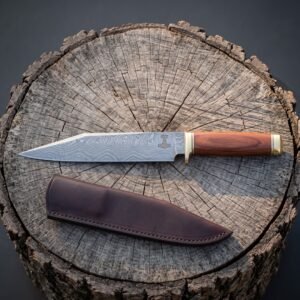

2 thoughts on “Viking Seax Knife Buyer’s Guide: History, Types, and What to Look For”
Comments are closed.