
Blog
How to Choose a Viking Knife: Seax, Steel, Tang and Handle

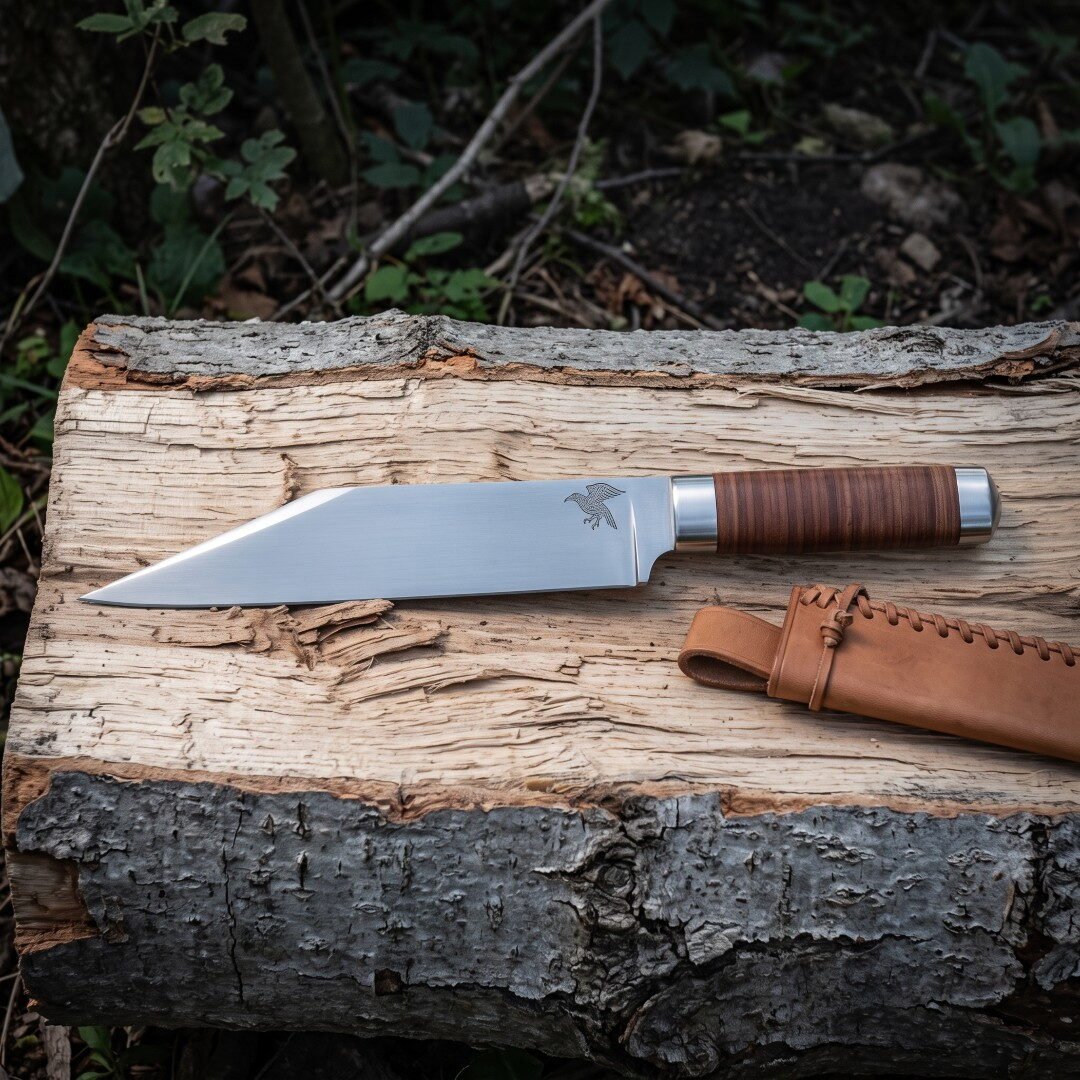
A Viking knife is an easy thing to want and a hard thing to choose, because the phrase covers everything from a hand length seax to a blade that is really a short sword, and listings rarely say which one you are looking at. This guide is for someone about to spend real money on a hand forged knife, and who would rather spend it once. It covers seax versus modern Viking styled knife, blade length, 1095 versus Damascus, tang, handle materials, sheaths, engraving, care, and what changes if the knife is going on a wall rather than a belt. Everything here is in our Viking knives collection, and I will point to the sub categories as we go.
Seax or modern Viking styled knife
The first decision is how close to the historical pattern you want to be. The seax was the everyday knife of the Norse world: a single edged blade with a straight or broken back, a simple handle with no guard, and a sheath worn horizontally at the belt. It was a tool before it was anything else. If you want the piece a person in the Viking Age would recognise, you want a seax, and our Viking seax category is where those live. The seax knife guide goes deeper into the historical patterns.
A modern Viking styled knife borrows the look, the knotwork, the runes, the raven or the horn handle, and puts it on a blade shape that a modern user finds more familiar: a drop point, a clip point, a dagger with a guard. These are not reproductions and a good seller does not pretend they are, but for hunting, camp cooking or a desk display they are often the more practical purchase. Decide whether you are buying history or buying style, then judge the knife on its merits rather than its adjectives.
Blade length
Blade length decides what the knife is for more than any other spec. Pin it down first. As a guide, a blade of around 4 to 6 inches is a belt knife: it carves, skins, preps food and fits in a hand comfortably. Blades of 6 to 9 inches are the classic seax range for a serious camp or bushcraft knife that can also baton kindling. Between 9 and 12 inches you are into a large seax that is more presence than practicality for most people, and it is a strong display piece. Past 12 inches the blade is a langseax, a long seax, which historically sat in for a sword and today is bought for reenactment or the wall.
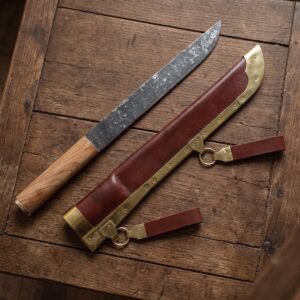 Brassward Hand Forged High Carbon Steel Viking Seax Knife with Wooden Handle & Brass Mounted Leather Sheath | Norse Reenactment Collector Gift | RK-617
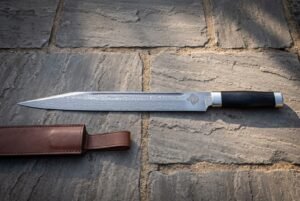 Wolfmark Hand Forged Damascus Seax Knife | 13 Inch Blade with Etched Wolf Head | Buffalo Horn Handle and Leather Belt Sheath | Norse Hunting Gift | RK-1597
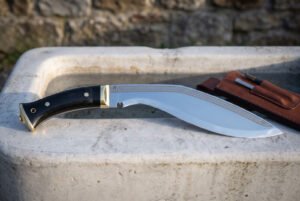 Inkbraid Hand Forged Full Tang Kukri with Buffalo Horn Handle & Etched Knotwork Spine | About 16 Inches Overall | Brass Fittings and Leather Sheath | Norse Camp Gift | RK-2203
Total length and blade length are different numbers, and listings sometimes lead with the bigger one. The sheath you can wear day to day tops out around a 9 inch blade for most people; longer than that it becomes a scabbard you carry rather than a knife you forget about.
1095 or Damascus for this kind of blade
Our knives are forged from one of two steels. Plain 1095 high carbon steel is heat treated to 54 to 58 HRC. It is tough, takes a keen edge with a stone or even a file, and forgives the abuse a camp knife gets. It will darken with use and rust if left wet, which is true of every carbon steel. For a knife you intend to use hard, this is the one to buy.
Damascus in our range is forge welded from alternating layers of 1095 and 15N20, then etched so the two steels show as a light and dark pattern. It is finished at 58 to 60 HRC, a touch harder than the plain blades, so it holds an edge longer and takes slightly more effort to sharpen. It costs more because the billet takes many more heats to make, and part of what you pay for is the pattern. Damascus is the right choice for a gift, a collection or a knife that will be used carefully and admired often. The Damascus knives category holds the patterned blades across every style, seax included.
Damascus is not meaningfully stronger than 1095; it is a little harder at the edge and a lot better looking. Buy it for the look and the edge retention.
Tang
The tang is the part of the blade that runs into the handle, and it is where cheap knives fail. A full tang runs the entire length and width of the handle, with the handle scales pinned to either side, and it is the strongest construction for a knife that will be used to chop or pry. A hidden or stick tang is narrower and passes through a solid handle, usually of wood, horn or stacked leather, and is secured with a pommel nut or peened over at the end. This is the historical construction for a seax and it is perfectly strong for cutting, carving and food work when done well.
The tang should be one piece with the blade, never a rod welded on afterwards, which is the cheapest corner a maker can cut. On a hidden tang knife there should be no wobble between blade and handle and no gap at the bolster. On a full tang knife the scales should sit flush with the steel and the pins should be tight. Our full tang versus partial tang post covers the trade in more detail. For a user, full tang is the safe choice. For a historical seax, a well made hidden tang is correct and plenty strong.
Handle materials
Wood is the most common handle on a Viking knife and the most historically appropriate. Hardwoods such as rosewood, walnut or ash take engraving well and are easy to refinish with a coat of oil. Wood moves with humidity, so keep it oiled and out of a damp shed.
Horn was widely used in the Viking Age and it still makes a handsome handle with a natural grip. It polishes to a deep shine and does not absorb water, but it can crack if it dries out badly or gets very hot, so keep it away from radiators.
Stacked leather handles are built from leather washers threaded onto the tang, compressed and then shaped and sealed. They grip well wet or dry and look right on a working seax; they want an occasional coat of leather dressing and should not be soaked. Bone appears on some pieces too, usually carved, and it behaves much like horn.
Choose wood for engraving and looks, horn or bone for a piece that will be handled and shown, and stacked leather for a knife that will actually work.
Sheath
A knife without a good sheath is a knife you will not carry. A traditional seax sheath is leather, hangs horizontally from the belt and covers most of the handle as well as the blade. A modern styled knife usually gets a vertical belt sheath with a strap or snap. Look for stitching rather than rivets alone, a welt inside so the edge cannot cut the seam, and a fit that holds the knife upside down. A sheath fitted to that blade is worth more than a generic one bought later to make up for it.
Engraving
A Viking knife is a good canvas for engraving because the blade and bolster offer flat steel and the handle offers wood. Names, dates, a short rune row or a small motif near the ricasso all work well, and a line on a wooden handle is a good option if you would rather leave the steel clean. Engraving is done in the US after the knife arrives and is inspected, so it does not add weeks to the wait. Our custom knife engraving page explains the options, the positions and what text works best on each part of the knife.
An engraved blade is the reason a lot of these are bought at all, and the wider selection sits under Viking gifts for men.
Care
Carbon steel care is simple and it is the same for 1095 and Damascus. Wipe the blade clean and dry after use, and never leave it in the sheath wet; leather holds moisture against steel. Put a thin coat of oil on the blade before it goes away. Sharpen on a stone, keeping the original bevel, and strop between sharpenings. Wood handles want oil a couple of times a year, horn and bone a wipe, stacked leather a dressing. Store it out of the sheath if it will not be handled for months.
Display or use
If the knife is going on a wall or a desk, the priorities shift, and there is no shame in that being the plan. Blade length can go up, Damascus makes more sense because the pattern is the point, and a carved handle, a decorated sheath and engraving all add to the effect. Edge geometry matters less, and a thinner, more polished edge that would chip on a cutting board is fine in a stand. You still want a tight handle, because a display knife gets passed around more than you would expect.
If the knife is going to work, flip the list. Choose a blade in the 4 to 9 inch range, plain 1095 unless you are sure you will look after it, a full tang or a proven hidden tang, a handle that grips wet, and a sheath you will actually wear. Put any engraving on the handle rather than the blade if you plan to sharpen it hard for years.
Budget tiers
Prices in this category spread widely, and the spread mostly tracks the steel, the size, the handle work and the extras. Rather than quote numbers that change with the catalogue, it helps to think in tiers.
At the entry level you should expect a hand forged 1095 blade in the belt knife range, a plain wood or leather handle, a stitched leather sheath and honest heat treatment. For a first Viking knife or a working camp knife it is where most people should start.
The middle tier adds size or Damascus, but usually not both. Here you find the 6 to 9 inch seaxes, etched knotwork or a raven on the blade, horn or bone handles, brass bolsters and a tooled sheath. This is where the best gifts sit, because the knife looks special and still holds up to use.
At the top are the large Damascus seaxes, matched pairs and langseaxes, with carved handles, presentation boxes and the kind of detail that takes a smith many extra hours. Buy here for a collection, a milestone gift or a display that needs to hold a room. At every tier ask the same questions about tang, heat treatment and sheath, because price alone guarantees none of them.
Where ours come from
Every knife we sell is handmade in the Czech Republic by smiths working the traditional way, then imported, inspected and shipped from our warehouse in Chicago, Illinois. We check the fit of the handle, the edge and the sheath before a piece goes out, and any engraving is done in the US before it ships. If a knife does not pass, it does not go on the site, which is why we can describe the steel and the hardness plainly.
Carry rules decide what you can take out of the house, so read the knife laws in your state alongside this. A kitchen blade wants a different routine, given in looking after a hand forged kitchen knife, and for a pocket sized option see the best Damascus pocket knives.
Viking knife FAQ
What is the difference between a seax and a Viking knife?
A seax is the historical Norse knife: single edged, guardless, straight or broken backed, worn horizontally at the belt. Viking knife is a broader term that also covers modern blade shapes finished with Norse styling. Every seax is a Viking knife but not every Viking knife is a seax.
What blade length should I choose?
Around 4 to 6 inches for a belt knife, 6 to 9 inches for a serious camp or bushcraft seax, 9 to 12 inches for a large display seax, and over 12 inches for a langseax meant for reenactment or the wall.
Is Damascus better than 1095 for a Viking knife?
Damascus, forge welded from 1095 and 15N20 at 58 to 60 HRC, holds an edge a little longer and looks striking. Plain 1095 at 54 to 58 HRC is tougher, cheaper and easier to sharpen. Choose Damascus for a gift or a collection, and 1095 for a knife that will actually be used.
Full tang or hidden tang?
Full tang is the strongest and the safe choice for a user. A well made hidden tang is historically correct for a seax and strong enough for cutting, carving and food work. Either way the tang must be one piece with the blade, without exception.
Which handle material lasts longest?
All of them, if cared for, and none of them if not. Wood wants oil, horn and bone want to be kept away from heat, stacked leather wants a leather dressing. Stacked leather grips best when wet; wood takes engraving best.
Can I have a Viking knife engraved?
Yes. Names, dates, runes and small motifs work on the blade, the bolster or a wooden handle. Engraving is done in the US after the knife is inspected, so it adds little to the delivery time.
How do I look after a carbon steel Viking knife?
Wipe it dry after use, oil the blade lightly, never store it wet in the sheath, sharpen on a stone and strop between sharpenings. Treat the handle according to its material and the knife will outlast you.
If you would rather have one made to your own spec, build a custom seax and choose the blade shape, the steel, the blade length and the handle material.
What the shop carries
If you are shopping rather than reading, the Olivescramasax Viking Seax knife and the Huginandmunin Viking Seax knife are the nearest match. Also worth opening, the Bonewarden Viking Seax and the Emberfang Viking Seax.
Shop the range
Brassward Hand Forged High Carbon Steel Viking Seax Knife with Wooden Handle & Brass Mounted Leather Sheath | Norse Reenactment Collector Gift | RK-617Wolfmark Hand Forged Damascus Seax Knife | 13 Inch Blade with Etched Wolf Head | Buffalo Horn Handle and Leather Belt Sheath | Norse Hunting Gift | RK-1597Inkbraid Hand Forged Full Tang Kukri with Buffalo Horn Handle & Etched Knotwork Spine | About 16 Inches Overall | Brass Fittings and Leather Sheath | Norse Camp Gift | RK-2203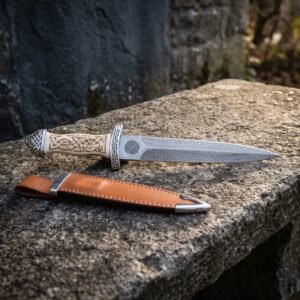 Knotbone Hand Forged Damascus Celtic Dagger | 14 Inch Overall | Carved Bone Handle and Spiral Etched Ricasso with Tan Leather Sheath | Highland Collector Gift | RK-1943
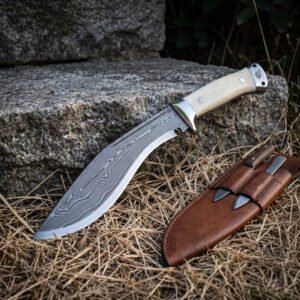 Palefang Hand Forged Damascus Steel Kukri Knife | 16 Inch Overall Length | Bone Handle Scales with Wolf Etched Steel Pommel | Norse Hunting Gift | RK-2151
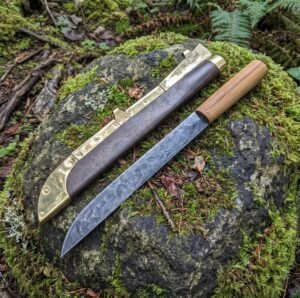 Olivescramasax Hand Forged High Carbon Steel Viking Seax Knife with Wood Handle & Leather Sheath | Norse Reenactment Gift | RK-605