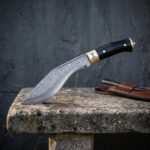
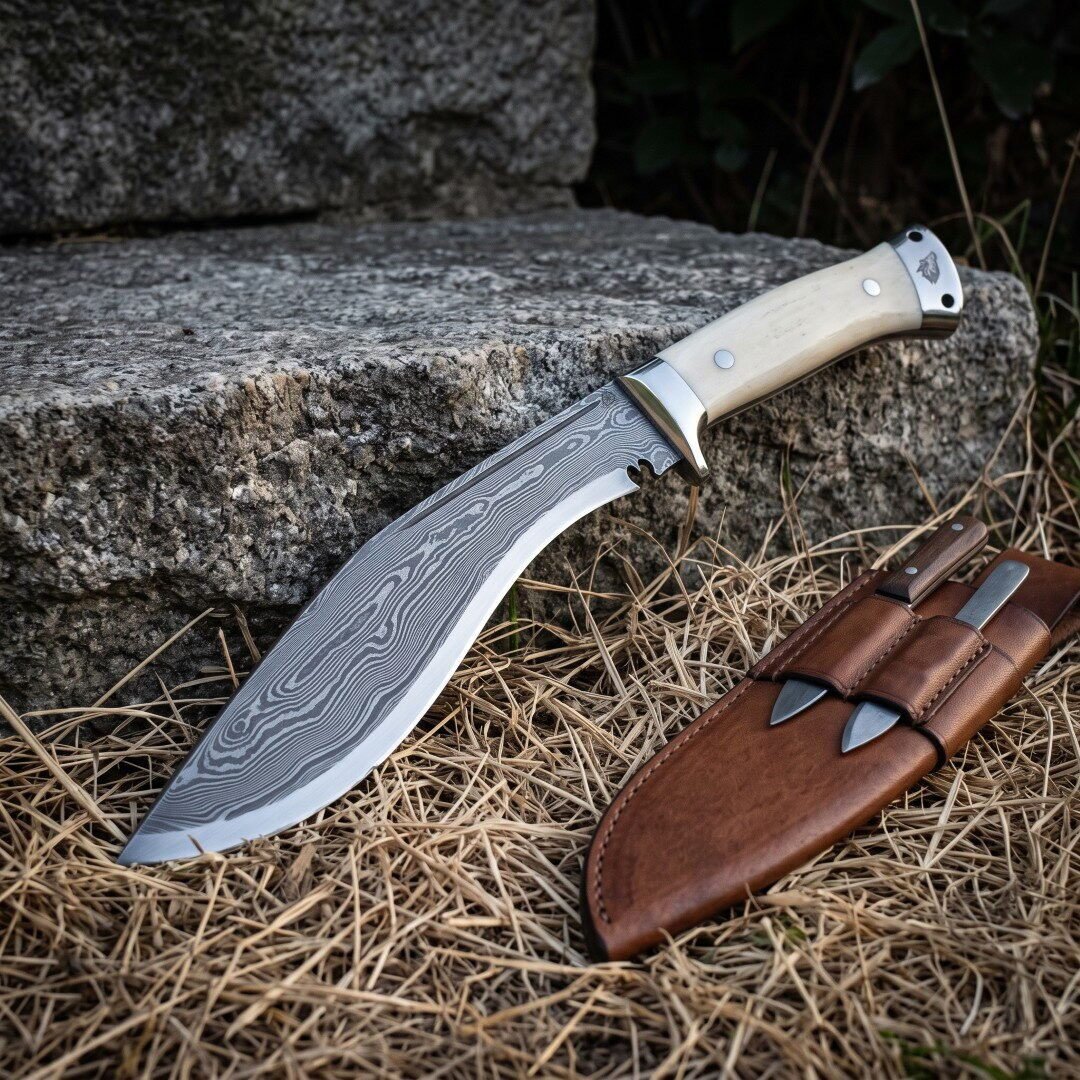
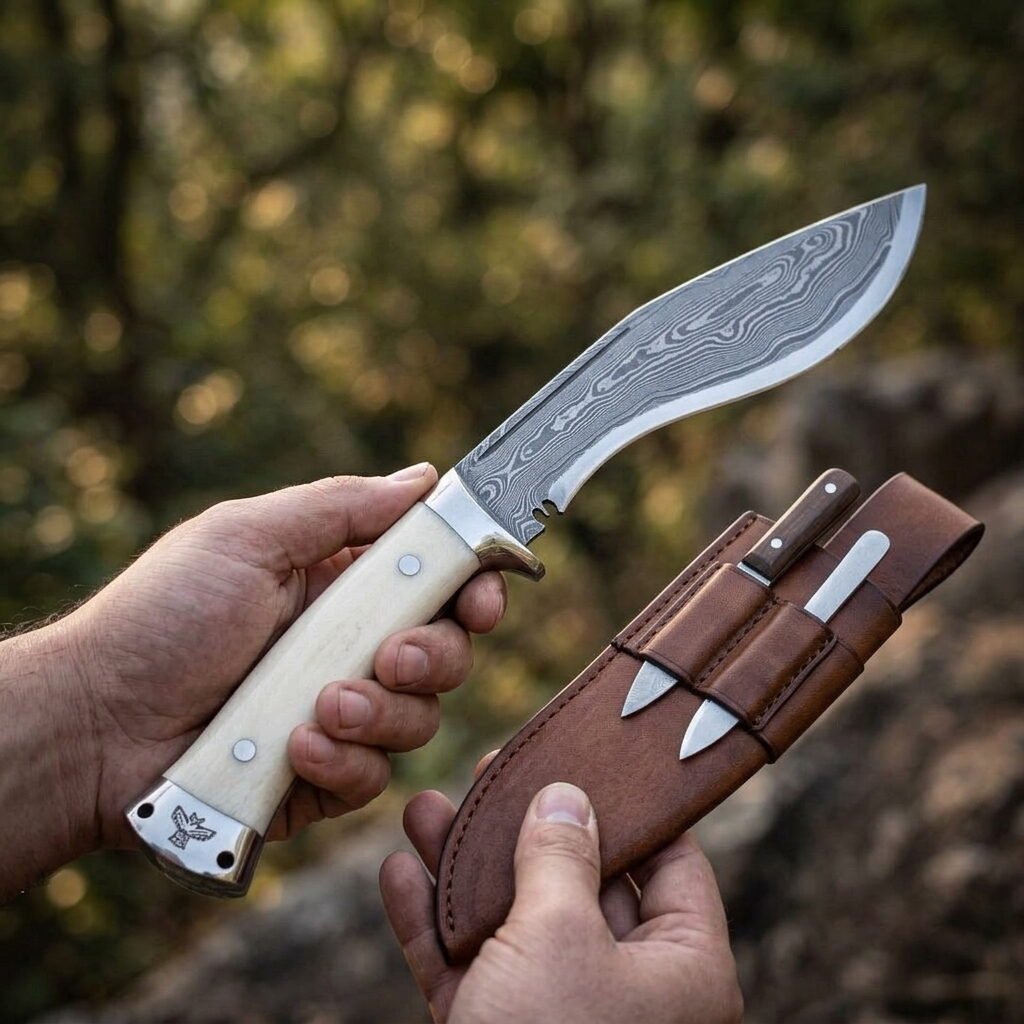
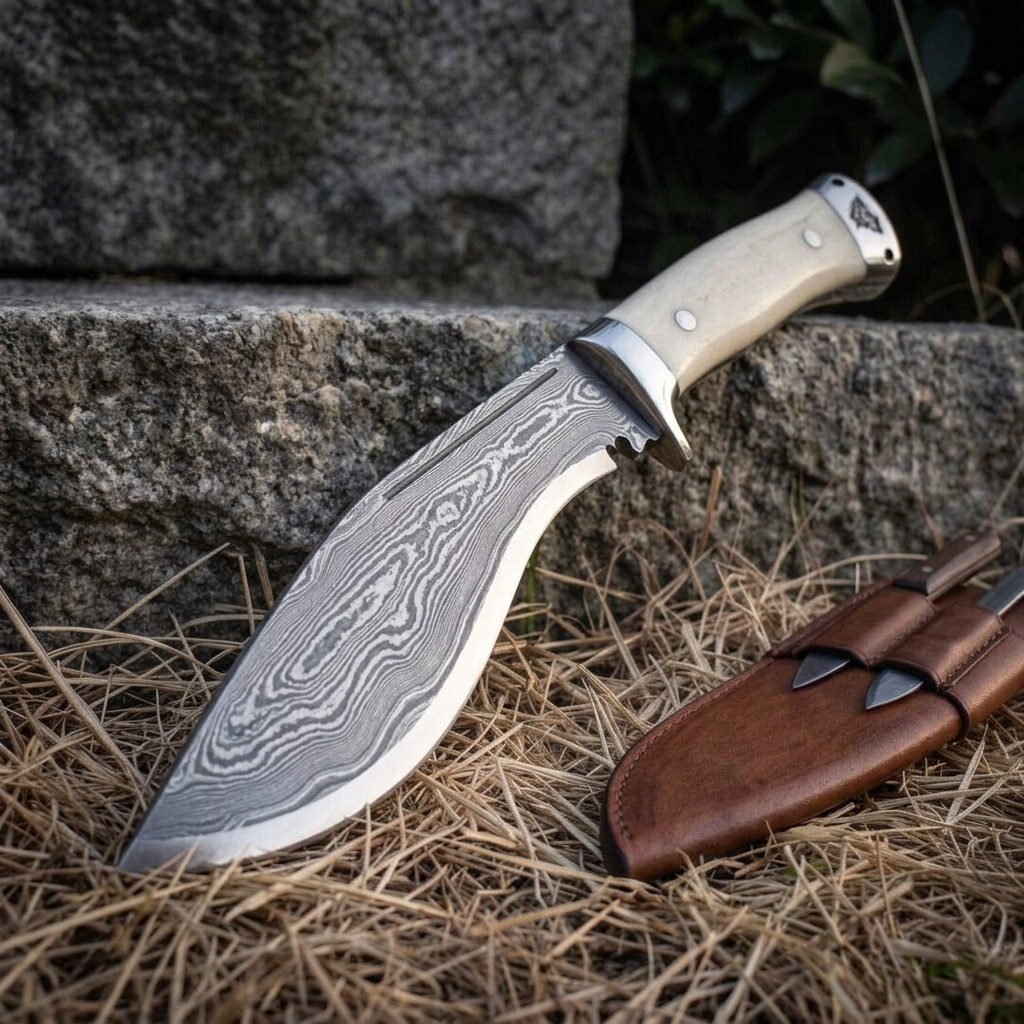
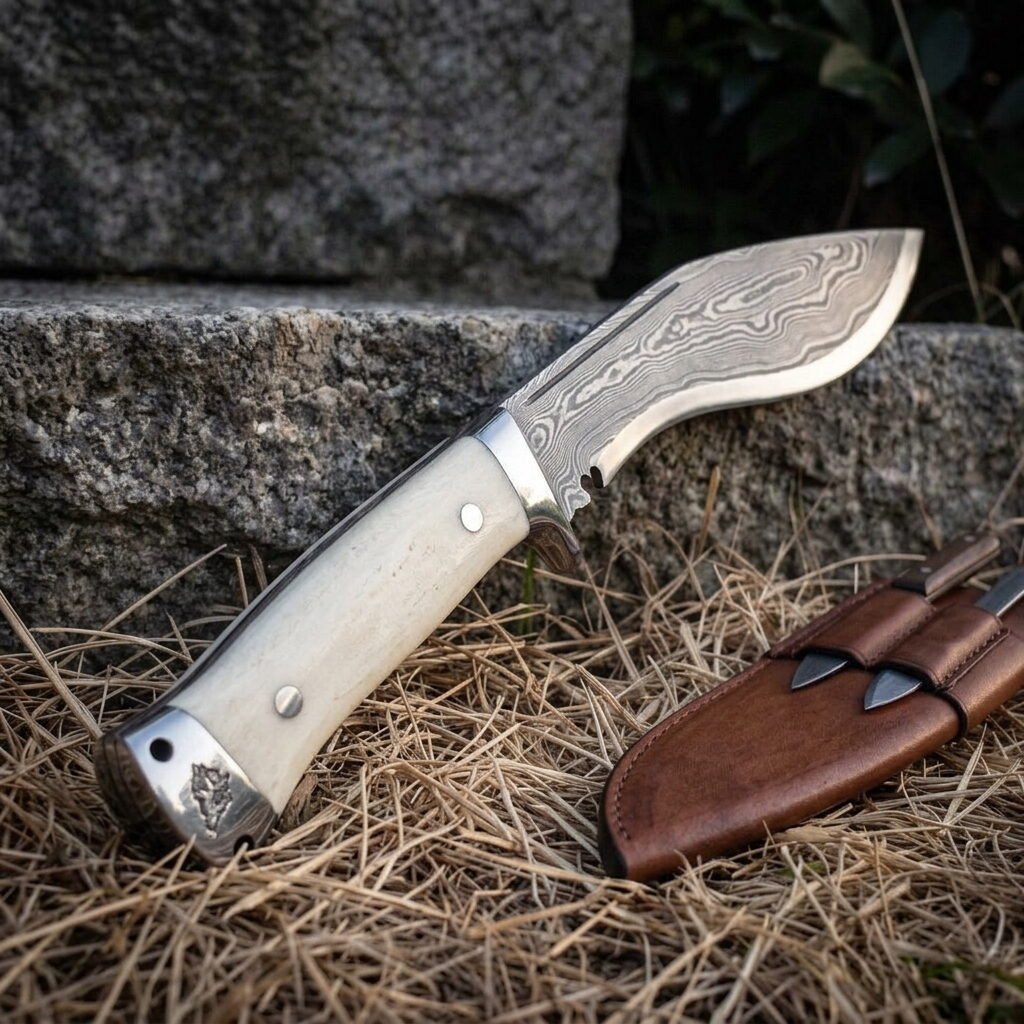
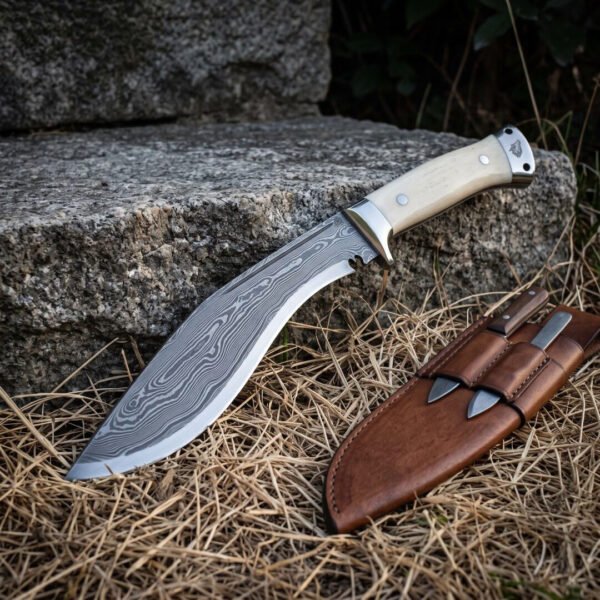
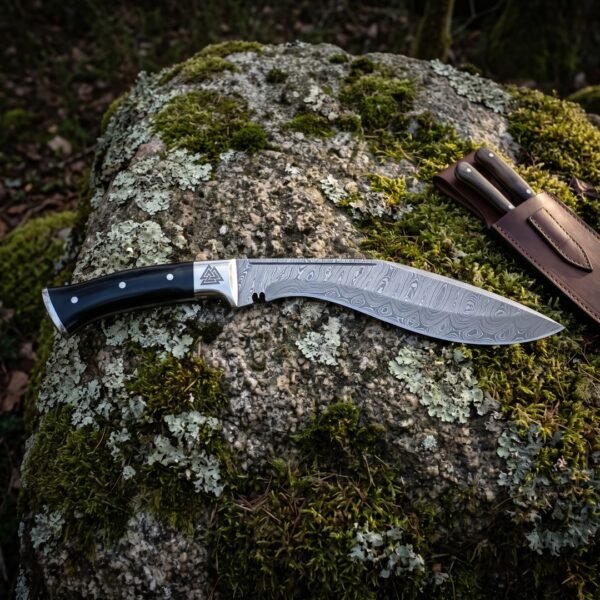
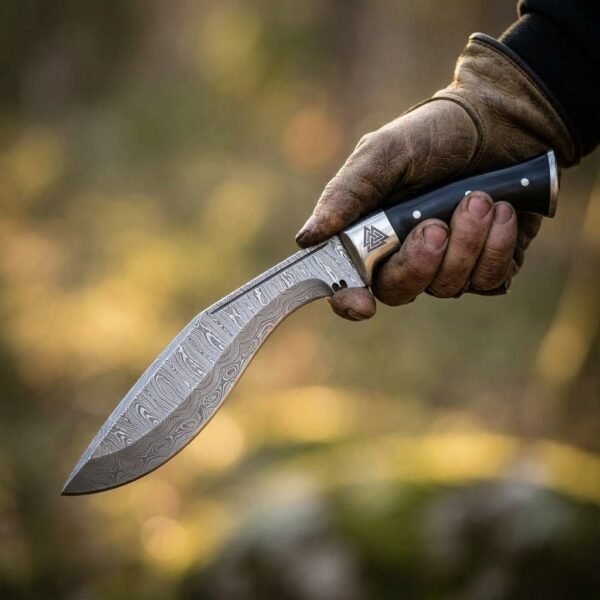
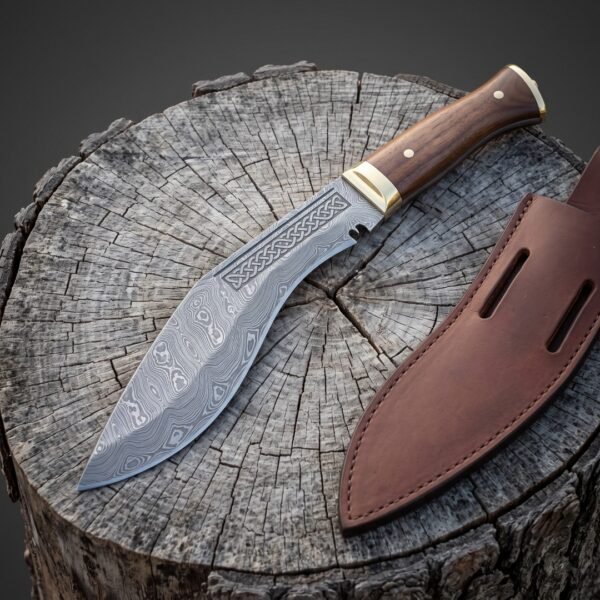
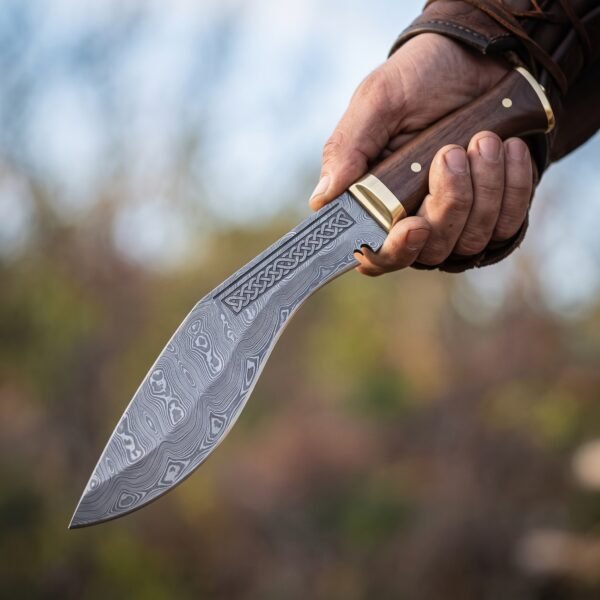
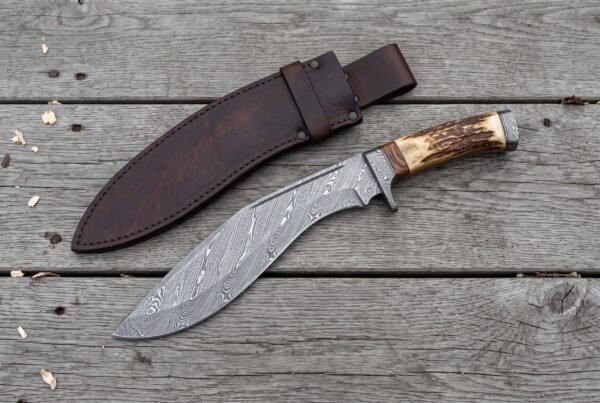
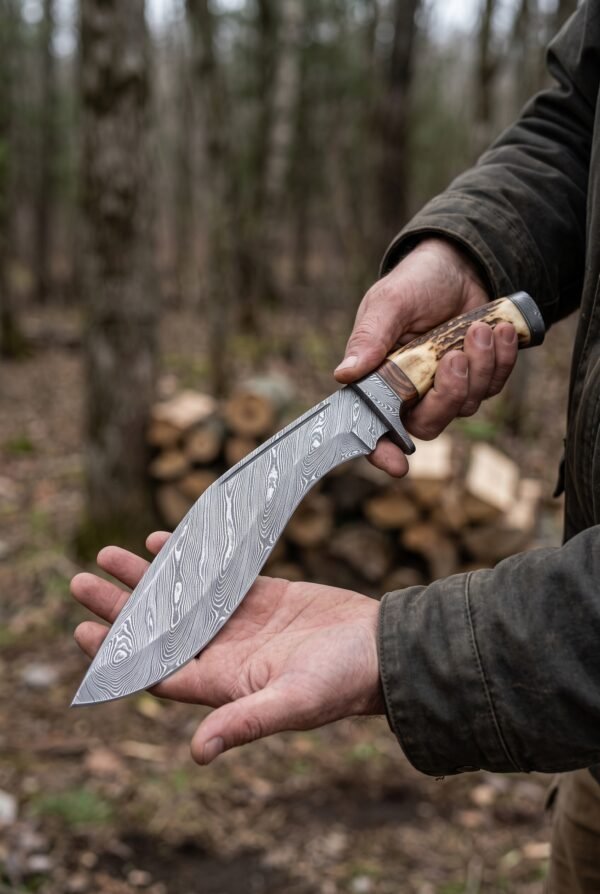
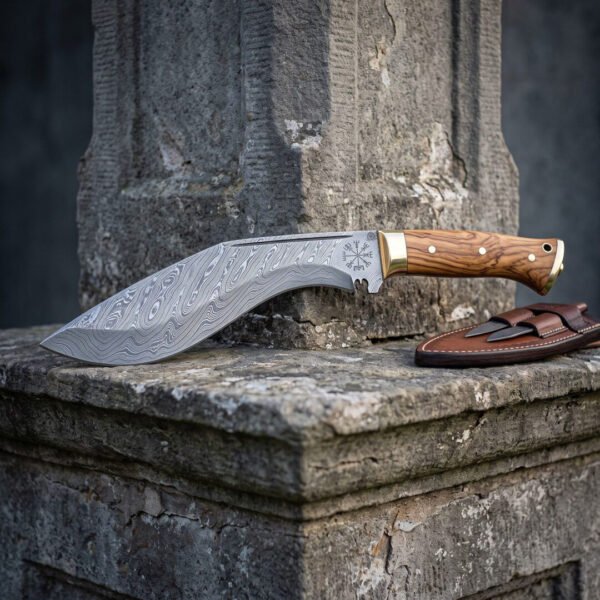
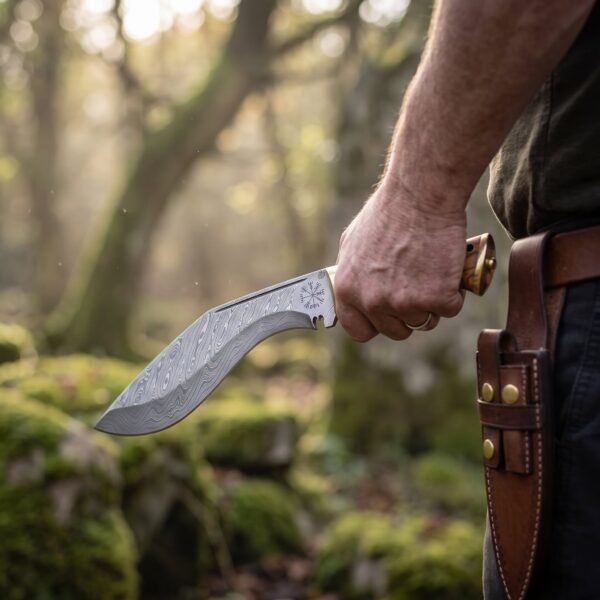
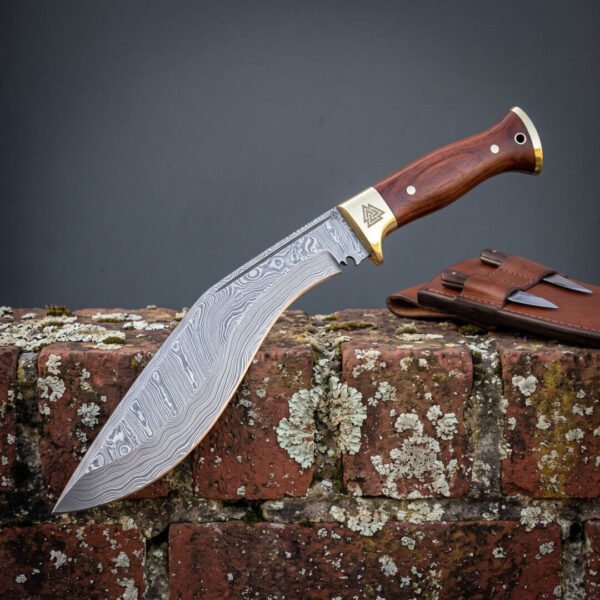
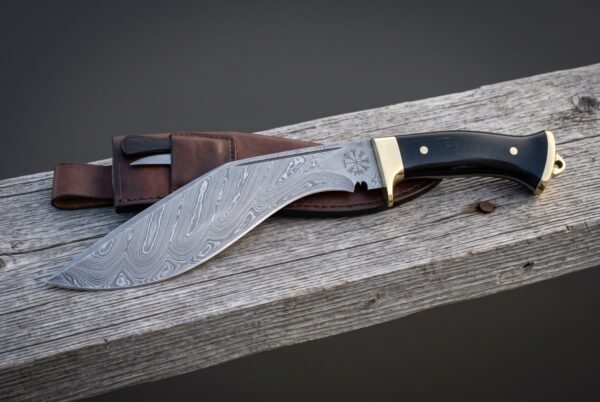
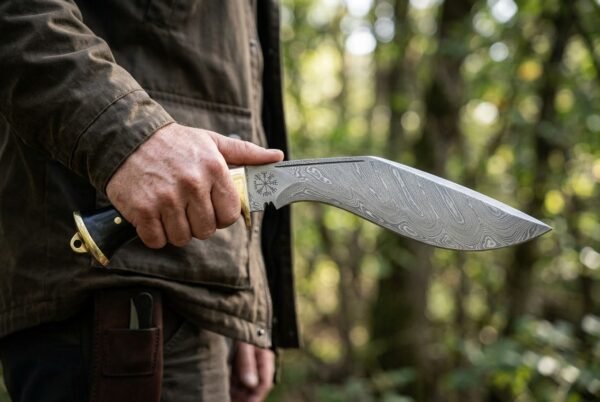
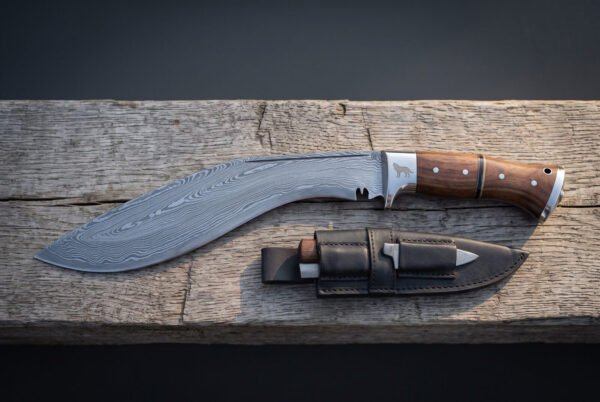
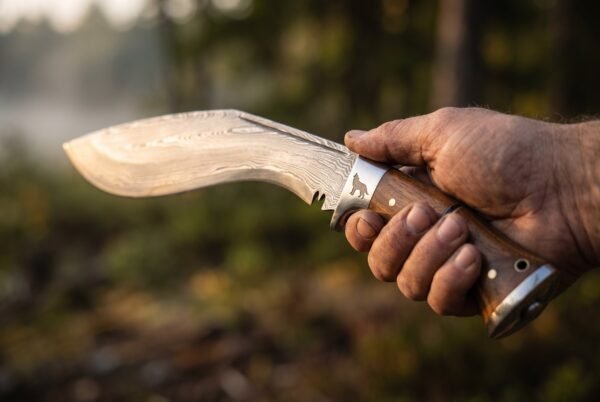
The Palefang is a Damascus kukri with a pale bone handle and steel fittings at both ends. The blade is pattern welded from 1095 and 15N20, etched to bring out a long flowing ladder and wave figure that runs the full length of the belly, and ground with a wide flat bevel that leaves the pattern visible right down to the edge. Under the throat sits the cho notch, and a fine engraved knotwork band runs along the spine above it. The handle is cream bone on a full width tang, capped at the front by a polished steel bolster and at the rear by a shaped steel butt plate carrying an etched wolf head between two lanyard holes.
Pattern welded steel is not a modern invention and it was never mainly about looks. Early smiths welded strips together because they could not reliably make a large homogeneous billet, so combining bars of different carbon content gave a blade that was harder in some places and tougher in others. The patterning was the visible side effect, and it turned out to be beautiful enough that smiths began controlling it deliberately. This knife is hand made in the Czech Republic. Ransack Viking imports it, checks the etch, the tang fit and the sheath before it goes out, and ships it from the Chicago warehouse. It comes in a leather belt sheath that also carries a small utility knife and a burnisher.
A kukri cuts on the belly rather than the tip, which is the argument the kukri explained makes at length. The wolf in Norse myth is Fenrir, and the children of Loki covers him along with the serpent and Hel. If you want a shorter belly for dressing game, the skinner knives cover that job.
Specifications
| Material | 1095 and 15N20 Damascus, 58 to 60 HRC |
|---|
| Overall length | Approximately 16 inches |
|---|
| Blade length | Approximately 11 inches along the curve |
|---|
| Handle | Cream bone scales on a full width tang |
|---|
| Pins | Two steel pins through the scales |
|---|
| Bolster | One polished steel bolster with a short lower finger guard |
|---|
| Butt plate | Shaped polished steel with lanyard holes |
|---|
| Engraving | Etched wolf head on the butt plate, knotwork band along the spine |
|---|
| Blade features | Cho notch at the throat, wide flat grind, acid etched pattern |
|---|
| Sheath | Brown leather belt sheath with two front pockets |
|---|
| Companion pieces | Small wood handled utility knife and an all steel burnisher in the sheath pockets |
|---|
| SKU | RK-2151 |
|---|
How the pattern in this blade is made
Damascus of this kind is properly called pattern welded steel, and it starts as a stack of alternating bars. Here that is 1095, a plain high carbon steel, and 15N20, a steel that carries around two percent nickel. The stack is brought to welding heat, forge welded solid, drawn out, cut, folded back on itself and welded again. Each fold doubles the layer count, so a billet folded eight times from a stack of fifteen bars is already carrying several hundred layers by the time it is drawn down to a blade.
The pattern only appears at the end. The finished blade is polished and then dipped in a mild acid, usually ferric chloride. The 1095 layers are attacked and go dark, while the nickel in the 15N20 resists the acid and stays bright, and the contrast between the two is the pattern you are looking at. The long flowing waves on the Palefang come from how the billet was manipulated before it was drawn out, whether by pressing dents into the surface and grinding them flat again for a ladder, or by twisting the bar. What you see on the surface is a genuine cross section of the internal structure, which is why the pattern continues round the edges and the spine rather than stopping like a printed finish would.
The steel, the bone and the fittings
The blade is run to 58 to 60 HRC. That is harder than the plain carbon kukris in this range, and it is what the 15N20 and the layering allow. The higher hardness holds a keener edge for longer, and the alternating layers give the blade a slightly more forgiving structure than a single high carbon bar at the same hardness would have. It is still simple carbon steel with essentially no chromium in it. It will rust, and an etched Damascus surface actually shows the beginnings of rust faster than a satin one because the etched valleys hold moisture.
The handle is bone, dense and cool in the hand, on a full width tang with steel at both ends. Bone is harder than horn and less forgiving of a knock, which is why the bolster and the butt plate matter here rather than being decoration. The butt plate carries the etched wolf and two lanyard holes, so a cord can be run through if you want a wrist loop. The sheath is thick vegetable tanned leather with a belt loop and two front pockets holding a small utility knife and an unsharpened burnisher.
Engraving, runes and your own design
Use the rune converter on this page to turn a name, a date or a short phrase into Elder Futhark and we will cut it into the steel, the leather or the wood. If you would rather have a Viking pattern than a rune line, choose your own design in the engraving option above the add to cart button and tell us where it goes. Where a piece already carries an engraved design, your chosen engraving replaces it rather than sitting alongside it. On Damascus the usual advice is to keep engraving to the bolster, the butt plate or the leather rather than the patterned blade, because cutting into an etched surface interrupts the figure. See the engraving page for the options.
Handling and balance
The balance sits well forward, in the widest part of the belly, and that is the point of the shape. Hold the handle loosely, let the head fall and let the blade rotate into the cut rather than driving it. A kukri swung with a relaxed wrist takes a deeper bite with less effort than any straight blade of the same weight, and gripping hard just tires your forearm.
Work with the belly for chopping, the narrow section near the bolster for carving and detail, and keep the tip for piercing rather than heavy cuts. At 58 to 60 HRC this edge is harder than the plain steel versions, so it holds longer but is slightly less tolerant of hitting something it should not, such as a nail or a stone. This is a working and collecting knife. It is not a sparring piece and it should never be swung towards another person.
Care
Dry and oil the blade every single time it goes away. Etched Damascus needs this more than plain steel does, because the etch leaves a microscopically textured surface that holds moisture. Use a light mineral oil or a purpose made blade oil and wipe it thin. Do not store the knife inside the leather sheath for months at a time. Sharpen on a stone, stay on the existing bevel and run out through the cho, and avoid powered wheels because heat above the tempering temperature will soften the edge and there is no way back from that. Bone scales want a dry cloth and no prolonged heat or sunlight. Our steel care guide covers etched surfaces in detail.
Damascus wants oil more than plain steel does, because the etch that shows the pattern also opens the surface, and caring for a Damascus pattern covers what to use.
Made in the Czech Republic
The Palefang is made by hand in the Czech Republic and imported by Ransack Viking. It is not drop shipped from an importer catalogue. Every knife is opened in Chicago, checked for etch quality, tang fit, edge condition and sheath fit, then repacked and shipped free within the United States. Processing is one to two weeks because the check is real work. Returns stay open for seven days, and the lifetime warranty covers defects in forging, grind, heat treat and fittings, with no end date and no receipt needed.
A note on handmade variation
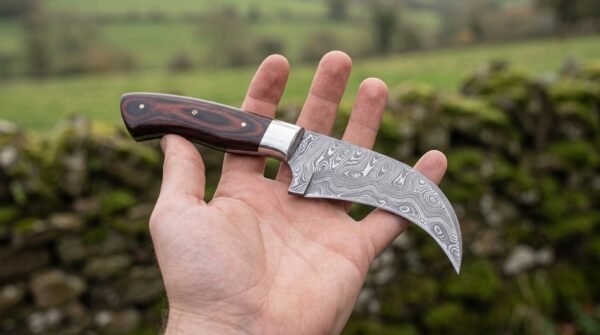
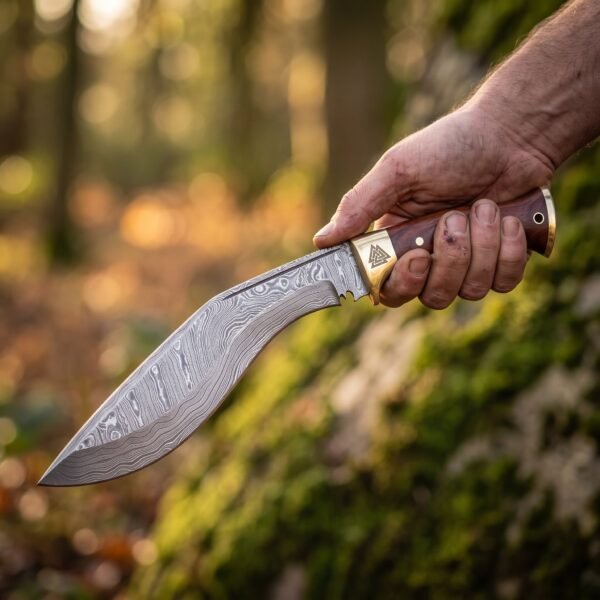
Every Damascus blade is unique, and that is not a marketing line. The pattern comes from how one particular billet was folded, pressed and drawn, so no two blades in this run carry the same figure and yours will differ visibly from the photograph. Bone varies too, from ivory white to cream to a faintly honeyed tone with its own specks and faint grain. The etch depth changes the contrast slightly from piece to piece and the leather sheath will be a shade lighter or darker. The dimensions, the material and the build are the same every time. The character is not.
Frequently asked questions
Is the Damascus pattern real or printed
It is real. The blade is forge welded from alternating layers of 1095 and 15N20 and then acid etched, which is why the pattern runs round the spine and the edge rather than sitting on one face. A printed pattern stops at the bevel.
Is it sharp out of the box
Yes. It arrives with a keen working edge along the belly. At 58 to 60 HRC it will hold that edge noticeably longer than a plain carbon steel kukri of the same shape.
Will the pattern wear off
No. The pattern is the internal structure of the steel, so it goes all the way through. Heavy sharpening exposes fresh steel at the very edge, and a light re etch brings the contrast back if you ever want it.
What are the two holes in the butt plate
They are lanyard holes. Run a cord through if you want a wrist loop, which is worth doing if you are chopping with wet hands.
Can I put runes on it
Yes, and the best places are the steel butt plate, the bolster or the leather sheath. We generally advise against cutting runes into the patterned blade itself, because it interrupts the figure.
How long does shipping take
One to two weeks of processing while the knife is checked and any engraving is cut, then free shipping inside the United States.
What is in the box
- Palefang Damascus kukri knife with bone handle scales
- Leather belt sheath with a small utility knife and a burnisher
- Care card for etched Damascus, bone and leather
- Hand made in the Czech Republic, shipped from our Chicago, Illinois warehouse
Explore the range
Browse the rest of the kukri knives, the wider Viking knives, the Viking seax range and everything under engraved and personalised, or read the guides.
Close to this one
Also in this group is the Coalspine kukri knife, pattern welded Damascus. Sitting beside it in the catalogue is the Fellcarve kukri knife, pattern welded Damascus. Another in the same line is the Trineknot kukri knife, 17 inches overall.
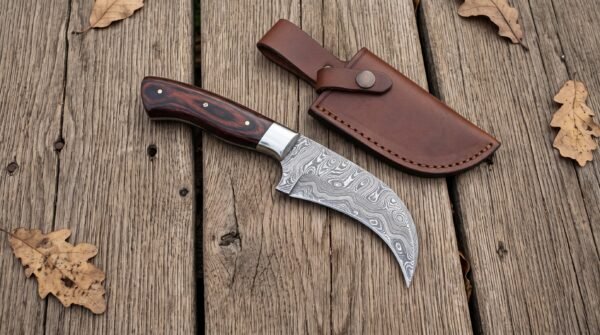
For a different piece from the same family, look at the Ravenhook hunting knife. Nothing here exactly right, build one to your own spec on the custom hunting knife page.

My husband was speechless when he opened this. Weight and balance make it feel like a real functional piece not some cheap replica. 10/10 would buy again.