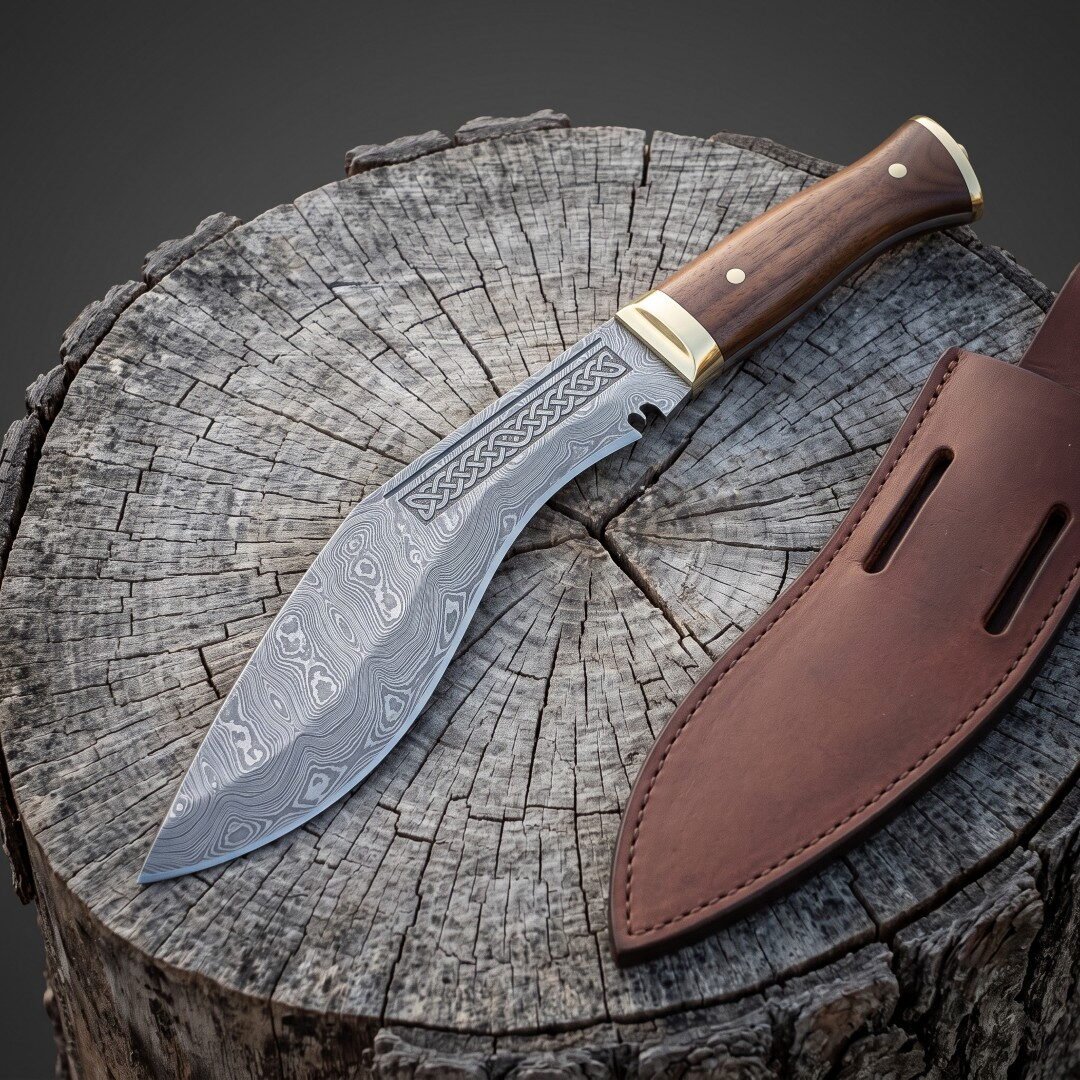
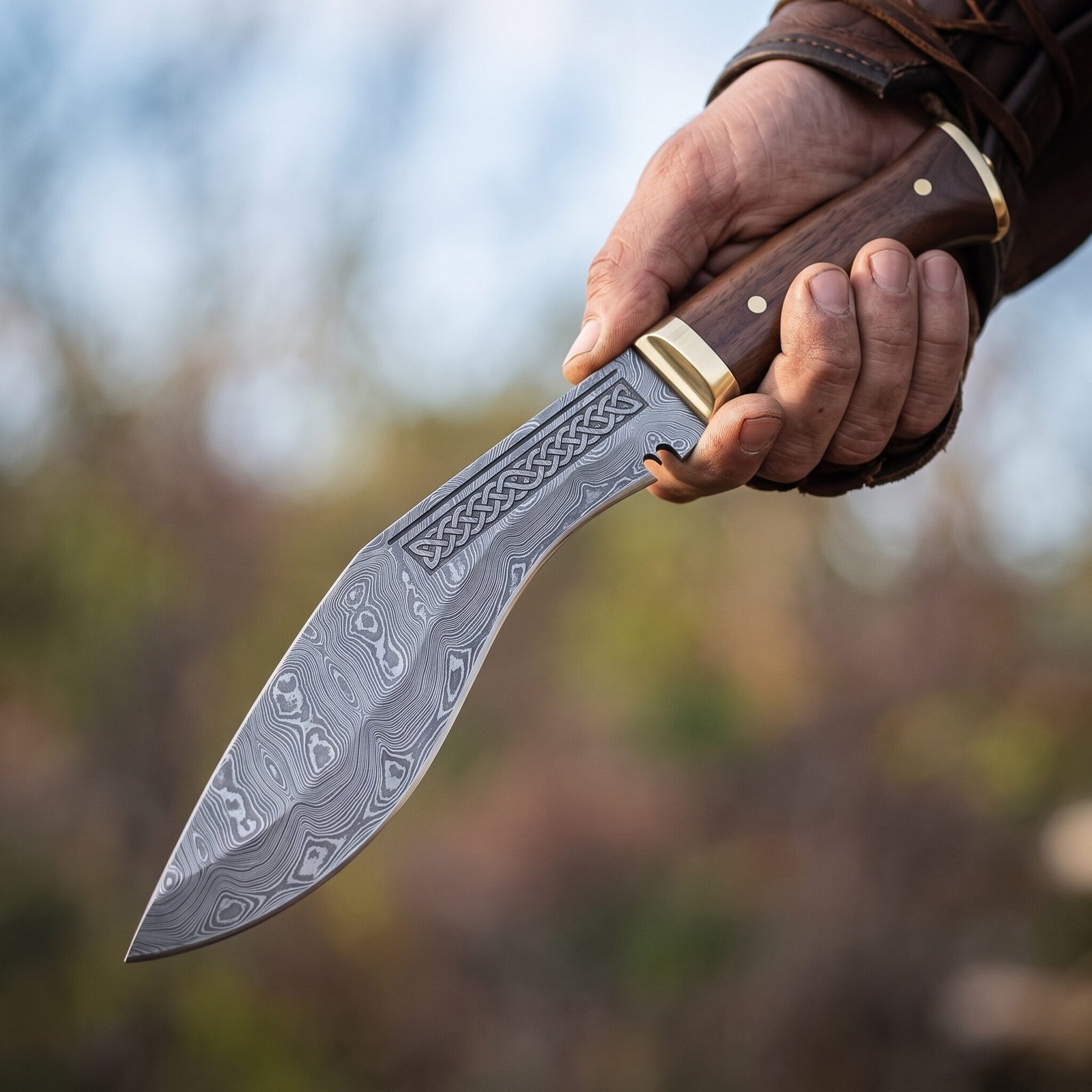
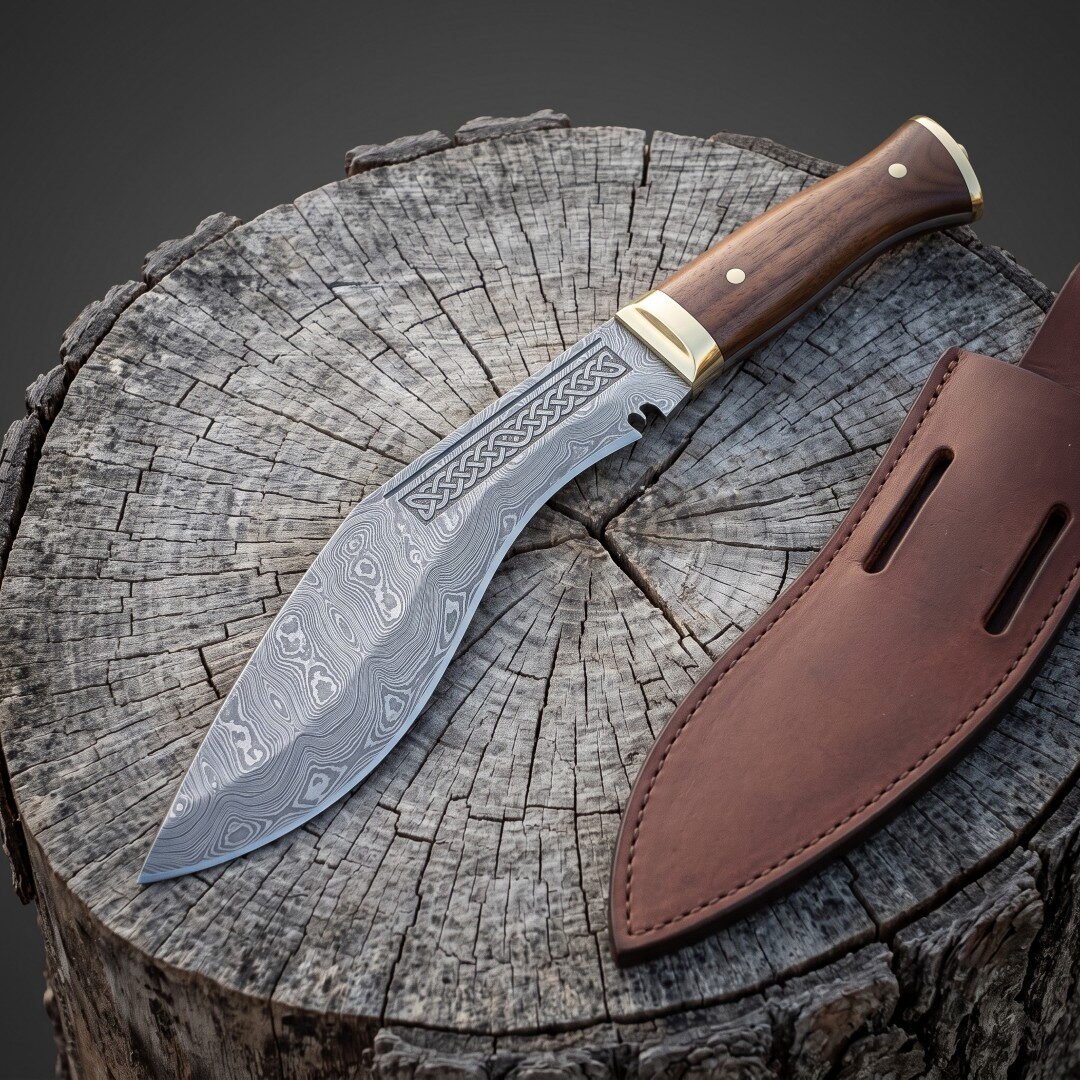
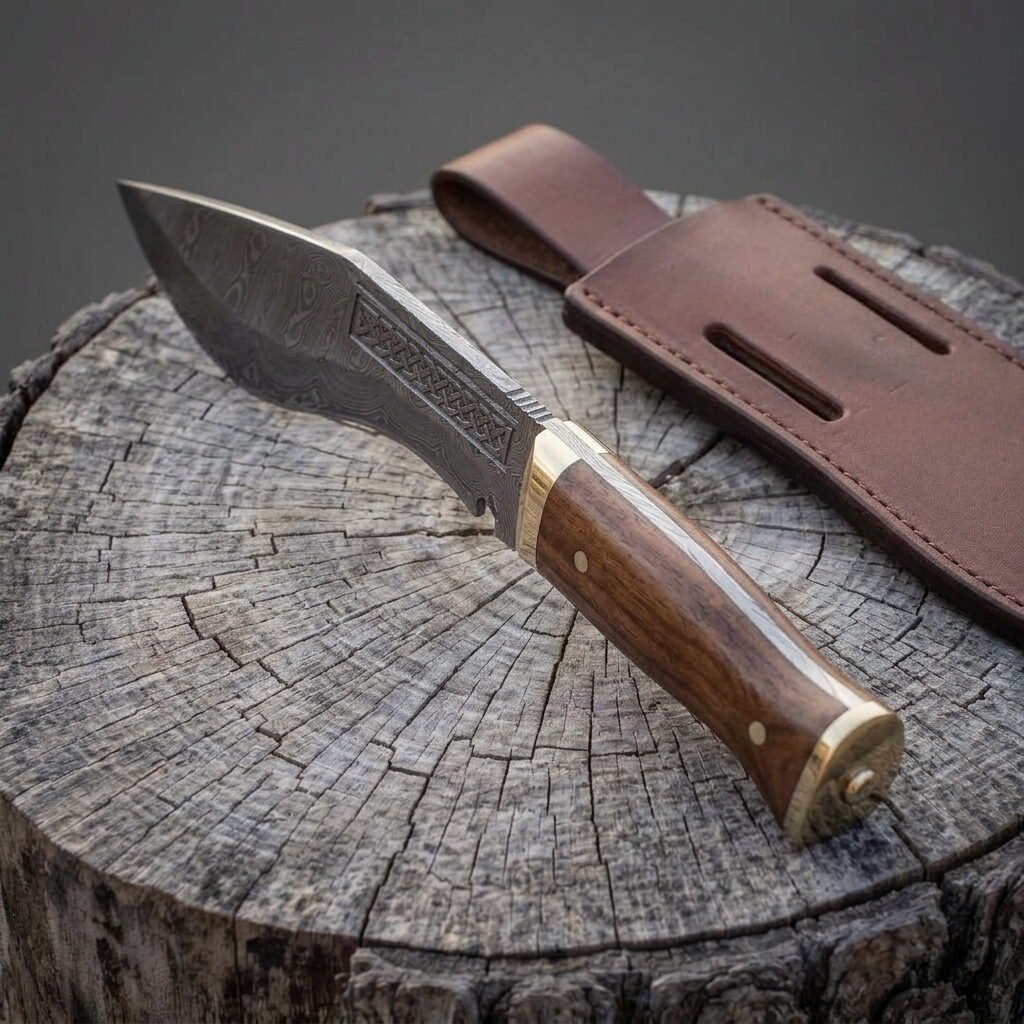
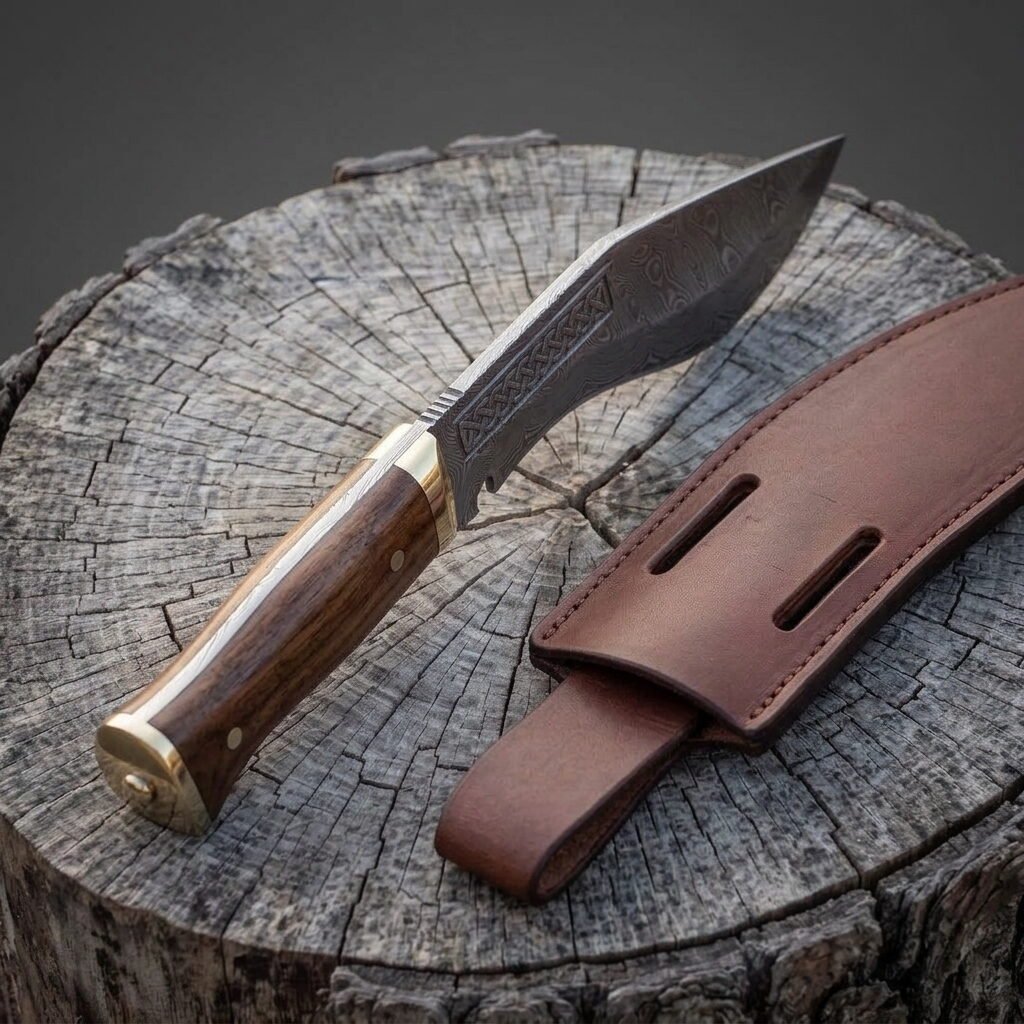
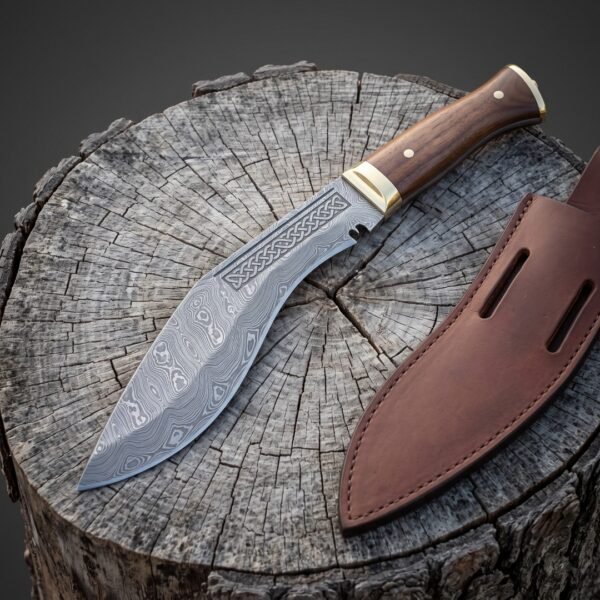
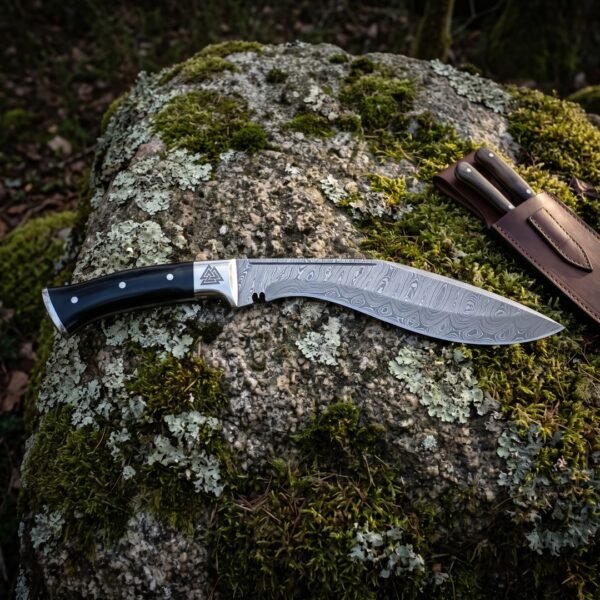
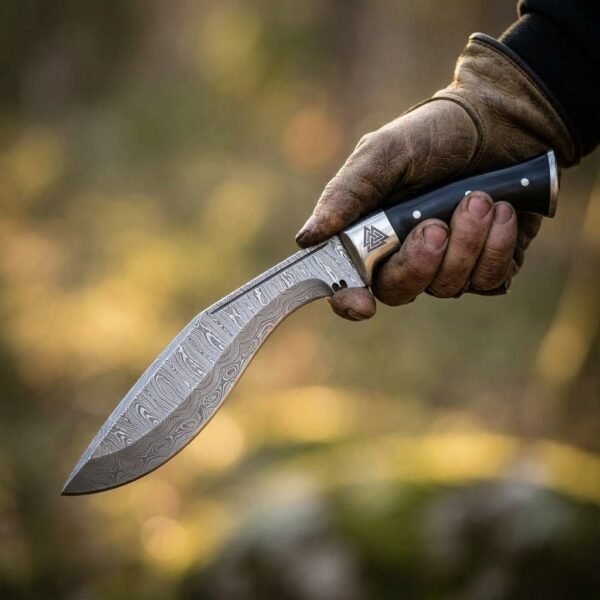
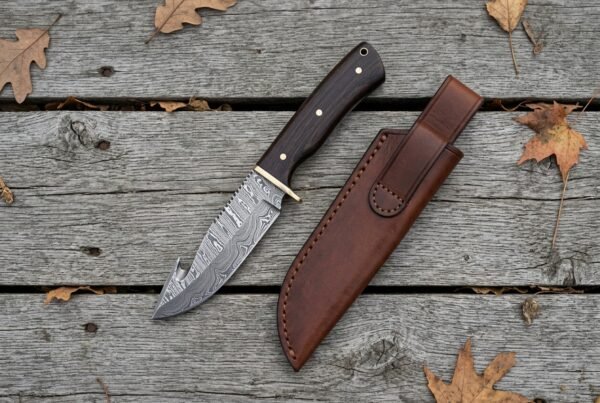
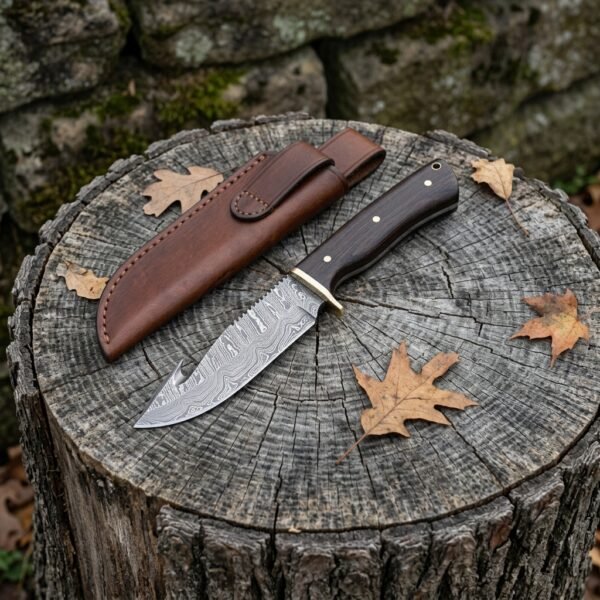
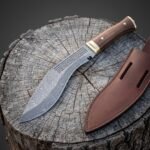
A kukri with a forge welded Damascus blade, the classic forward angled profile dropping into a deep recurved belly, a panel of Celtic knotwork etched along the spine above the bolster, and a small notch cut into the edge where it meets the handle. The fittings are brass, the scales are rosewood pinned through the full tang, and it comes in a stitched brown leather sheath with belt slots.
The kukri is Nepalese, not Norse, and we would rather say that plainly than dress it up in a Viking story it does not need. It has been the working blade and the fighting knife of the Nepali hills for centuries and the service knife of Gurkha regiments since the early nineteenth century, and it earned that place through geometry rather than legend. The forward bend does something clever: it pushes the centre of percussion, the point along the blade where an impact produces no sting in the hand, well ahead of the grip. That is exactly what an axe does. So a kukri chops like a hatchet on the forward belly while the straighter section near the handle still slices like a knife, and one tool covers two jobs. This one is forge welded, ground, etched and fitted in the Czech Republic. The bend, the cho and the reason the balance sits so far forward are in what is a kukri.
Specifications
| Steel | Forge welded 1095 and 15N20 Damascus, acid etched to reveal the pattern |
|---|
| Hardness | 58 to 60 HRC |
|---|
| Blade | Kukri, forward angled with a deep recurved belly, cho notch at the base of the edge |
|---|
| Blade length | Approximately 11 inches along the curve |
|---|
| Overall length | Approximately 16 inches |
|---|
| Weight | Approximately 1 lb 6 oz |
|---|
| Bolster | Polished brass bolster |
|---|
| Handle | Rosewood scales, pinned to a full tang with two brass pins |
|---|
| Pommel | Brass butt cap |
|---|
| Decoration | Etched Celtic knotwork panel along the spine above the bolster |
|---|
| Sheath | Stitched brown leather with twin belt slots |
|---|
| SKU | RK-1564 |
|---|
The bend, the belly and the notch
Hold a kukri and let it hang. It wants to fall forward, and that is the whole point. Weight ahead of the hand means the blade arrives at the target carrying more energy for the same effort, which is why a sixteen inch kukri will get through a green limb that would stop a straight knife of the same length outright.
The belly is where the chopping happens. Look at where the blade is widest and thickest and that is the sweet spot: land the cut there and the shock goes into the wood rather than into your wrist. The straighter section back toward the bolster is thinner and it is for the fine work, so you carve, whittle and cut cord with the first three inches and chop with the last four.
The small notch at the base of the edge is called a cho, and it has two explanations that are both true. Practically it is a stress relief at the end of the edge bevel: an edge that runs straight into the ricasso creates a sharp internal corner, and sharp internal corners are exactly where cracks start under repeated shock. Rounding it out with a notch removes the stress riser. It also gives sap, blood and water somewhere to drip off rather than running back onto the handle. The traditional and symbolic readings are their own subject and worth reading about.
Damascus, hardness and the etch
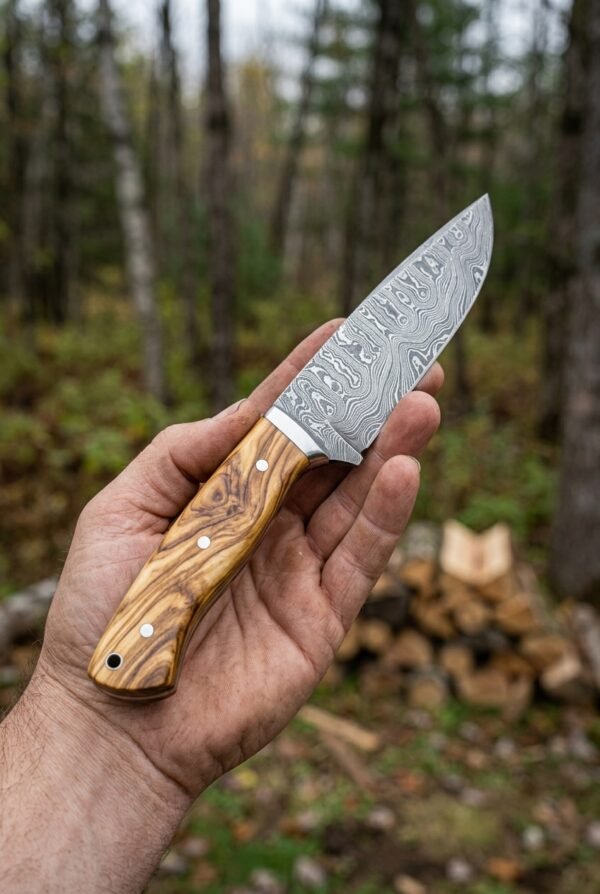
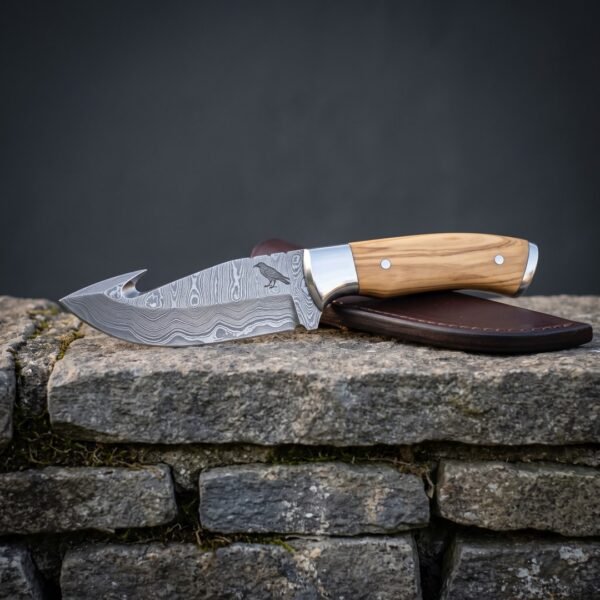
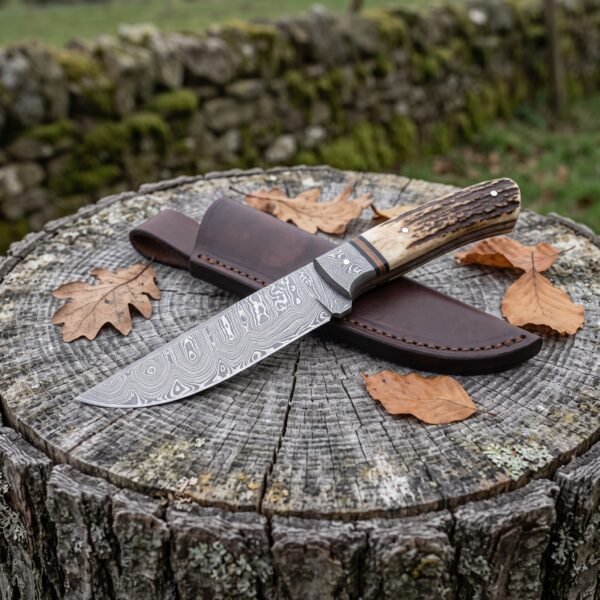
The blade is genuine pattern welded Damascus. Alternating layers of 1095 and 15N20 are forge welded into a billet, drawn out, folded and welded again, then shaped, hardened and etched. The 15N20 carries more nickel than the 1095, so acid bites the two at different rates and the layer structure surfaces as the flowing dark and bright pattern. That pattern is the structure of the steel, not a coating. It goes all the way through and it cannot wear off.
The knotwork panel along the spine is a different thing again, and we would rather be explicit: it is a surface etch laid on top of the Damascus, not inlay and not part of the pattern welding. Both are on this blade and they are not the same process.
At 58 to 60 HRC this blade is properly hard. It takes a fine edge and holds it through a long day of camp work. What it will not tolerate is being used as a pry bar or being chopped into anything metallic or stony, because hard steel chips where soft steel bends. Use it on wood, cord, hide and food and it will outlast you.
Engraving, runes and your own design
Use the rune converter on this page to turn a name, a date or a short phrase into Elder Futhark and we will cut it into the steel or the leather. If you would rather have a Viking pattern than a rune line, choose your own design in the engraving option above the add to cart button and tell us where it goes. Where a piece already carries an engraved design, your chosen engraving replaces it rather than sitting alongside it. On this kukri that means the knotwork panel along the spine gives way to your line, or we can set it into the leather sheath and leave the blade as it is. See the engraving page.
Carry and the sheath
The sheath is vegetable tanned leather, wet formed to this exact blade, saddle stitched and cut with twin slots so it rides flat on a belt rather than swinging. A kukri is a heavy knife and a sheath that swings will bruise your hip within a mile, so the twin slot arrangement is worth having.
Never store a carbon steel blade in leather for long periods. Leather is acid tanned and it holds moisture against the steel, and a Damascus blade left sheathed for a month will come out spotted. Carry it in the sheath, store it out of it. Check your state and local law on carrying a fixed blade of this length before you take it anywhere but your own property or a camp.
Care
Wipe the blade clean and dry after every use, without exception, because an etched Damascus surface takes a fingerprint readily and will spot if it is left. Keep a thin film of light machine oil or a food safe mineral oil on it. If rust appears, lift it with oil and a very fine abrasive rather than a wire wheel or a coarse pad, which flattens the etch and mutes the pattern. Sharpen on a stone at the angle it arrives at, and remember that the curve means you sharpen in sections rather than in one straight pass. Feed the rosewood with a light oil once a year and the sheath with a neutral leather conditioner twice a year. Full detail is on the steel care page. A curved edge is sharpened in segments, which sharpening a curved blade walks through.
Made in the Czech Republic
The work behind this piece happens in a Czech Republic workshop that has kept to the old methods. Steel is forged and heat treated by hand, the grind is taken down by eye rather than by machine, and the handle, fittings and sheath are cut and finished one at a time. Because of that, every piece carries small marks of the hand that made it.
Ransack Viking is a United States company. We import direct, check each piece when it reaches us, and ship from our Chicago, Illinois warehouse. Engraving is added here in the United States after arrival, so the piece you receive is finished to your order.
A note on handmade variation
This kukri is hand made, not machine made or bulk produced. What arrives will not be a pixel for pixel copy of the photograph. No two Damascus billets etch alike, so the flow, density and direction of the pattern down your blade will be genuinely different from the one shown. Rosewood varies in colour and figure from board to board, the brass takes its own polish, and the knotwork panel sits a fraction differently on the spine. The steel, the dimensions and the geometry are the same every time. The character is not, and with pattern welded steel that is precisely the appeal.
Frequently asked questions
Is this a Viking knife?
No. The kukri is a Nepalese form and it has been the Gurkha service knife since the early nineteenth century. We have given it Celtic knotwork because it suits the range, and we would rather tell you that than invent a Norse pedigree for it.
Is the Damascus real?
Yes. It is forge welded from 1095 and 15N20 in alternating layers and the pattern runs right through the steel. The knotwork panel on the spine is a separate surface etch laid over the top, which is a different process and we say so plainly.
Can I chop with it?
Yes, and it is what the shape is for. Land the cut on the wide belly near the forward bend, not near the handle. Stick to wood, cord and camp work, and keep it away from nails, wire and stone.
How do I sharpen a curved edge?
In sections. Work the straighter part near the bolster first, then roll the blade through the belly a few inches at a time, keeping the same angle throughout. A rod or a curved stone makes the recurve easier than a flat bench stone.
Is it stainless?
No. Both steels in the billet are carbon steels, so it will spot if it is left wet or stored in the sheath. Dry it, oil it and it will stay clean indefinitely.
How long before it ships?
Processing is one to two weeks because the billet is welded and the blade forged, fitted and sheathed to order. Shipping inside the United States is free and returns are accepted within seven days.
What is in the box
- One forge welded 1095 and 15N20 Damascus kukri
- Rosewood scales pinned to a full tang with a brass bolster and butt cap
- Etched Celtic knotwork panel along the spine
- Wet formed brown leather sheath with twin belt slots
- Care and warranty card
- Forged and finished in the Czech Republic
Explore the range
See the rest of the hunting knives, the throwing knives, the battle axes, and the guides.
If this one is not it
Another in the same line is the Stagvane kukri knife, 15 inches overall. Next along the rack is the Hammergrove kukri knife, 16 inches overall. For a straight comparison, see the Vegwarden kukri knife, pattern welded Damascus.
The Sawthane bowie knife covers the other half of the same kit. Pick the steel, the length and the fittings yourself on the custom Damascus knife page.

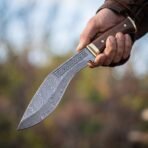
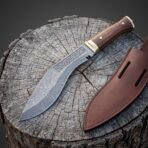
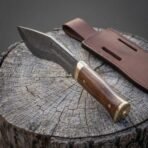
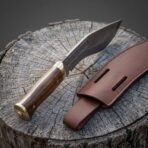
Feels way more premium than the price suggests. Edge retention has been great even after regular use. The rosewood handle feels amazing and the balance is perfect. Love it.