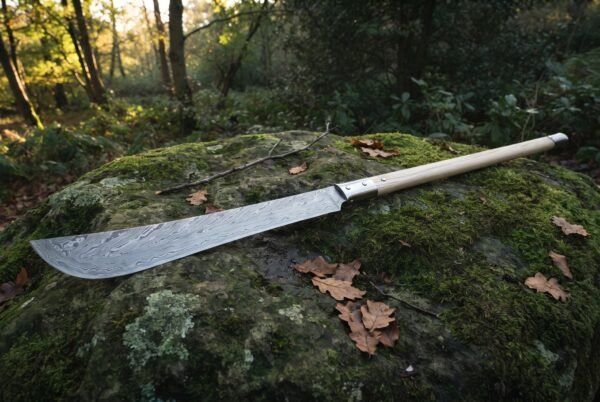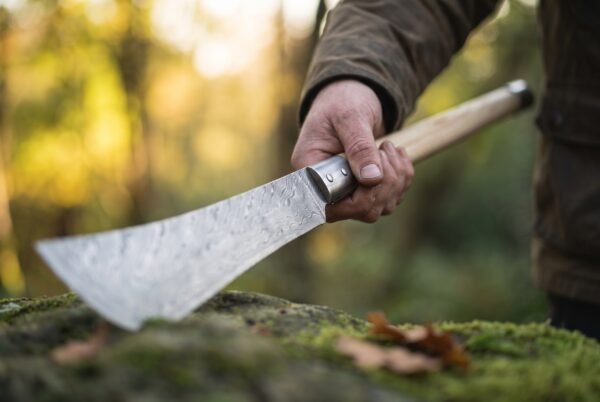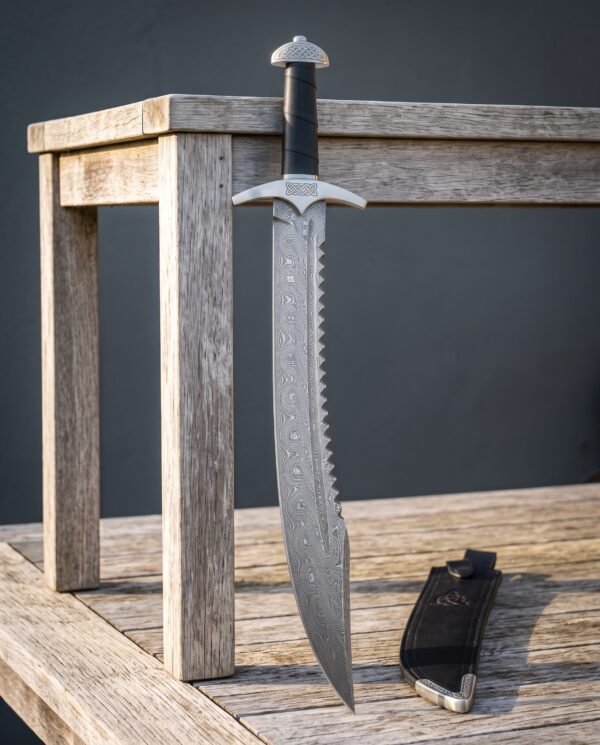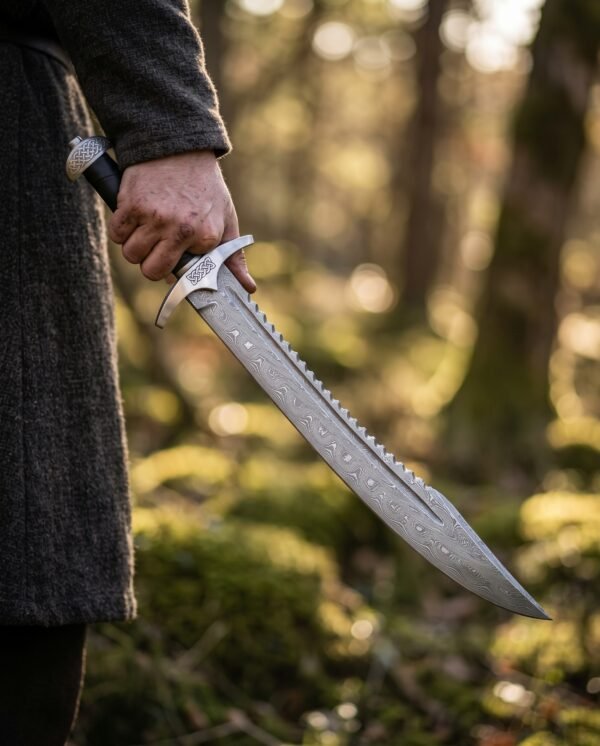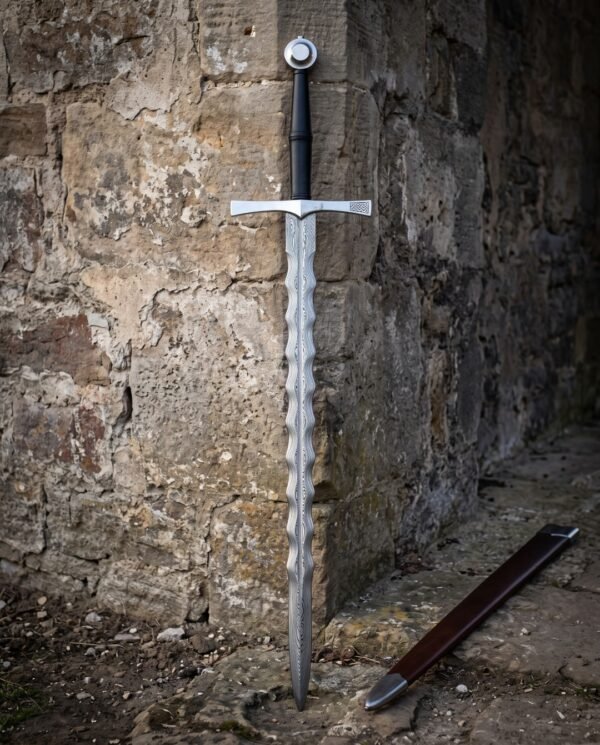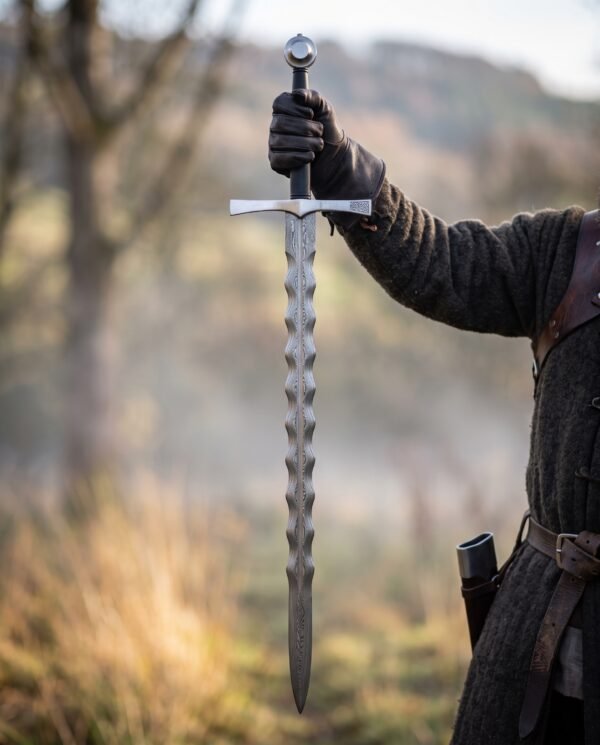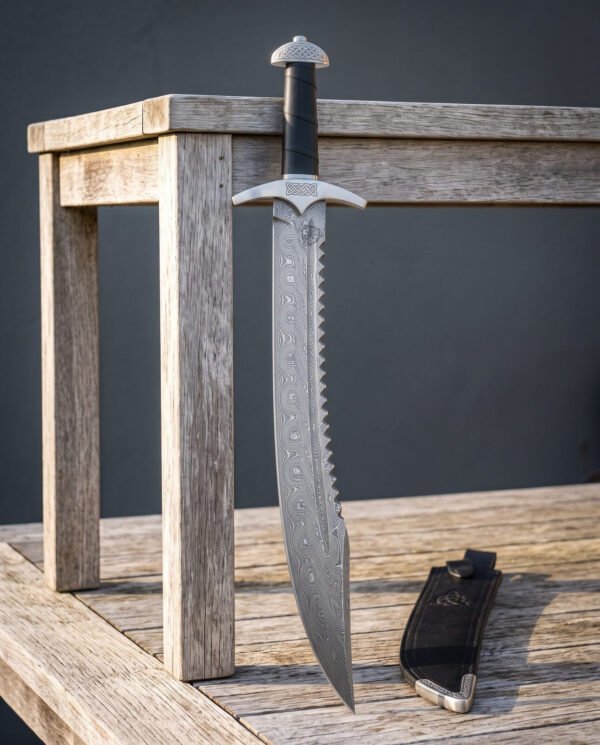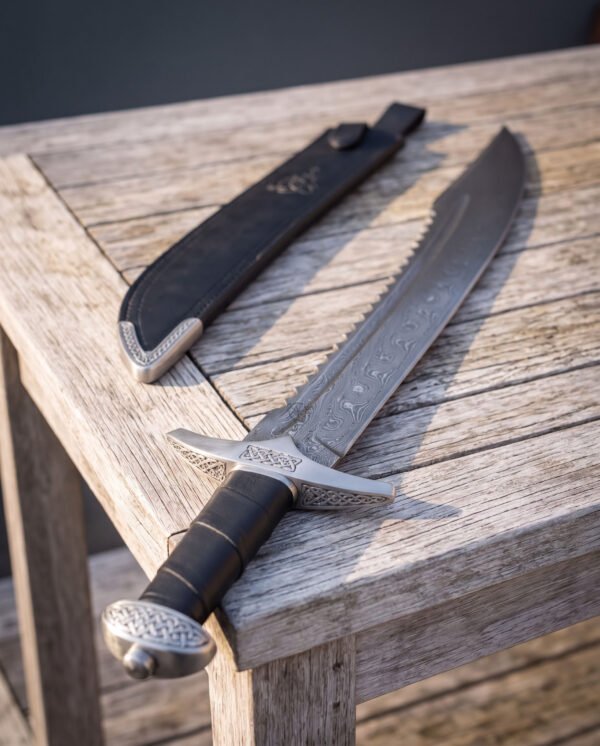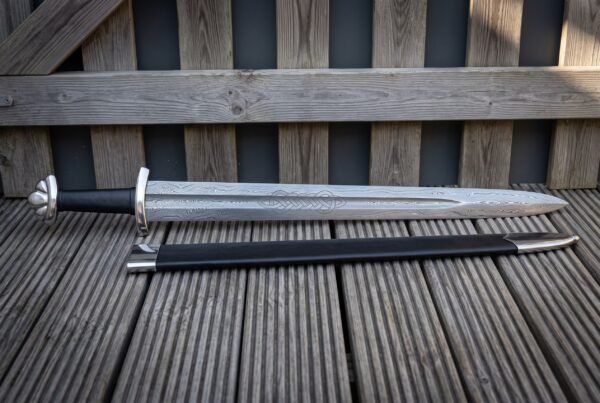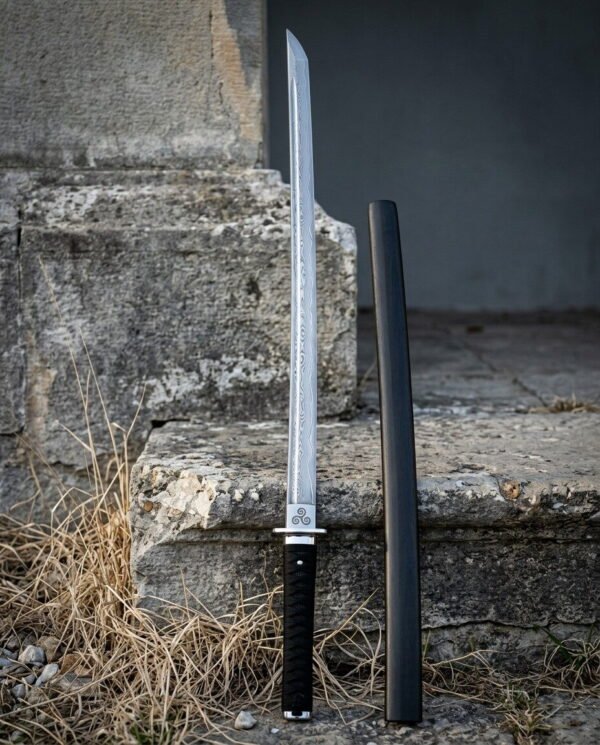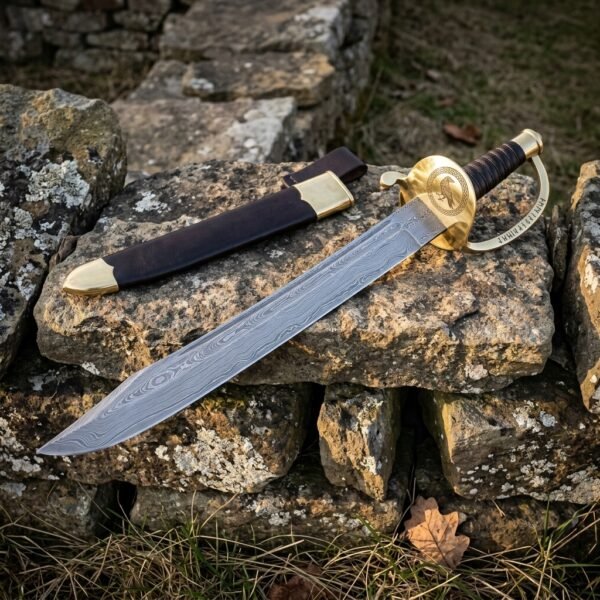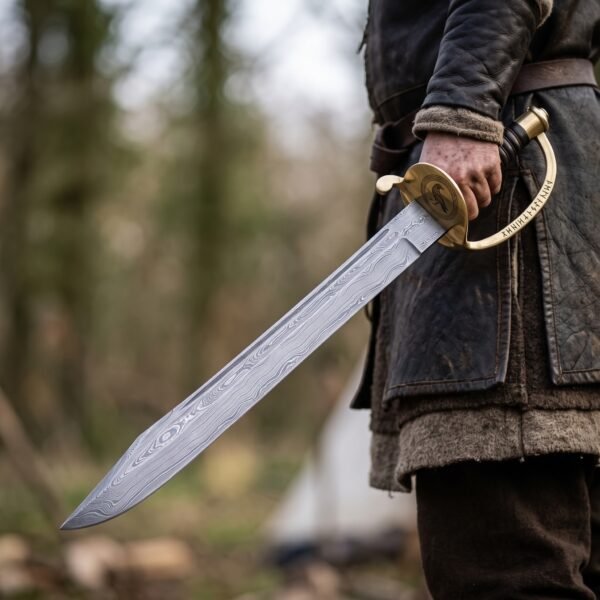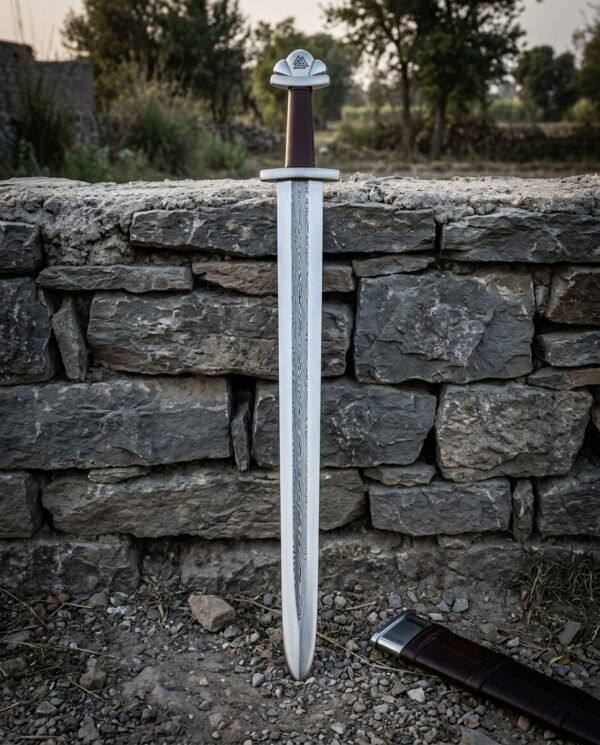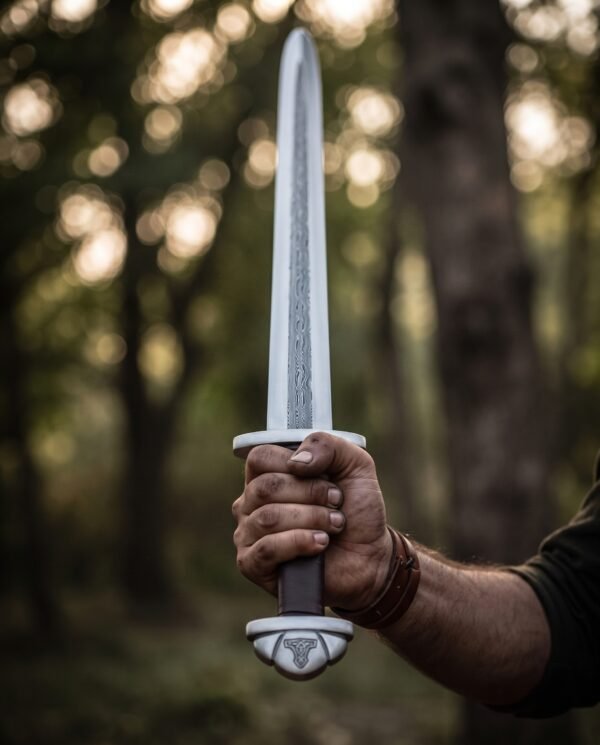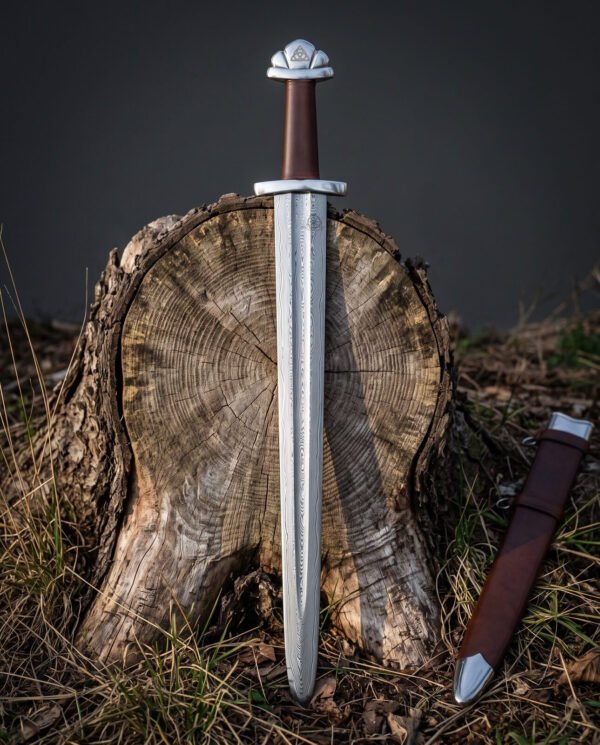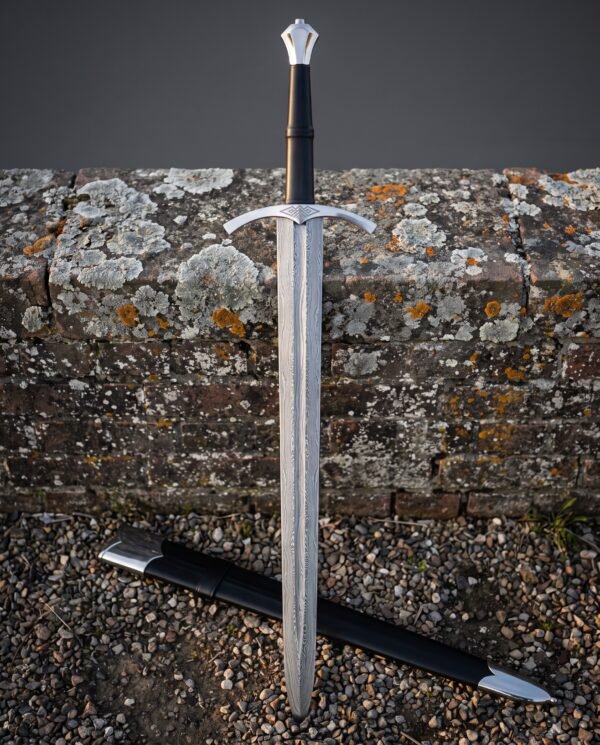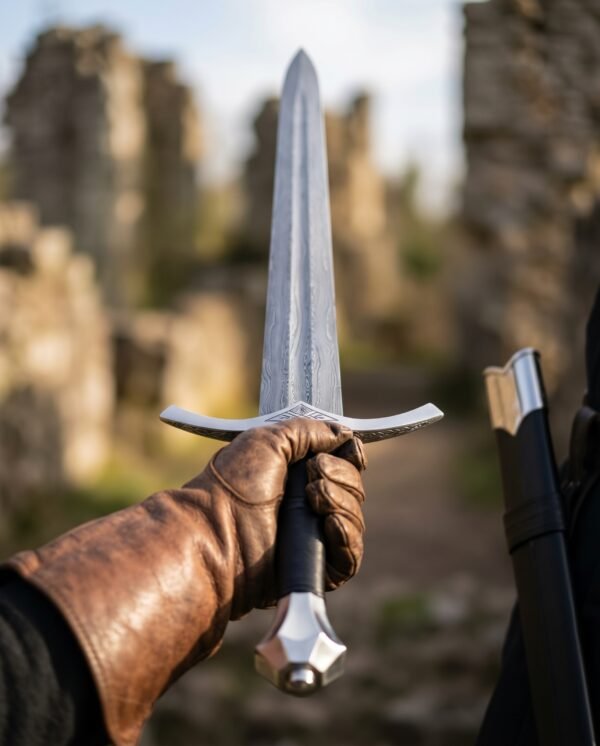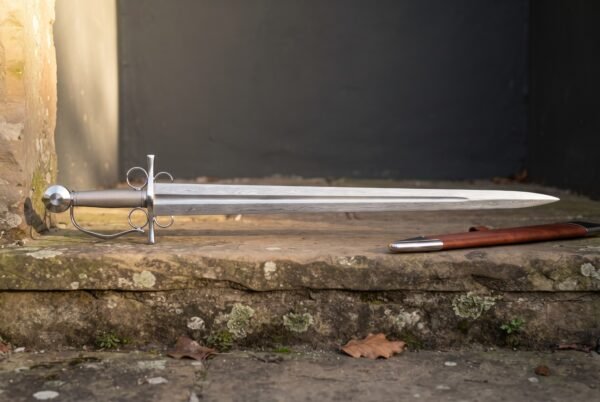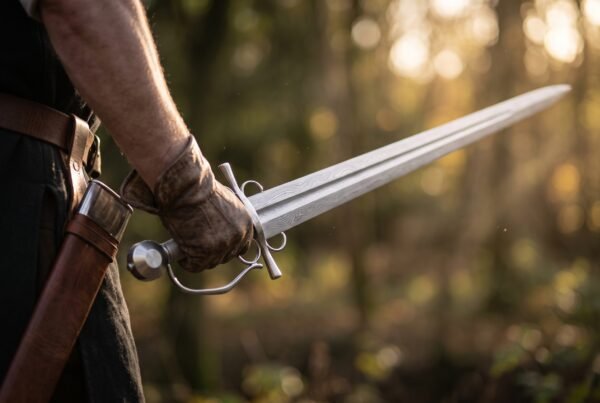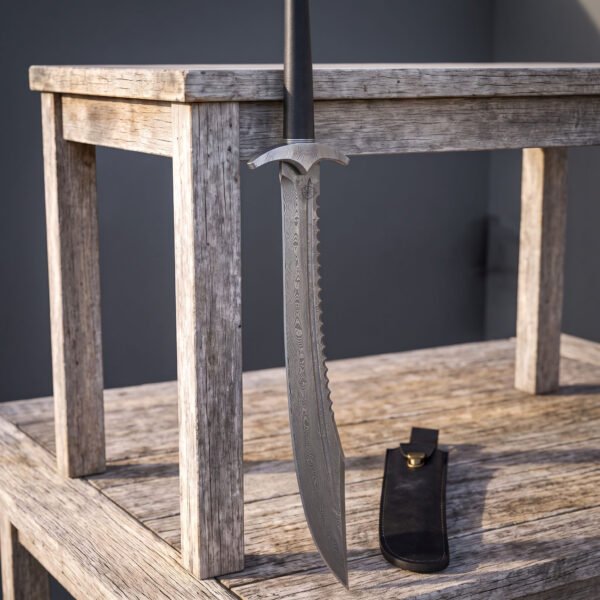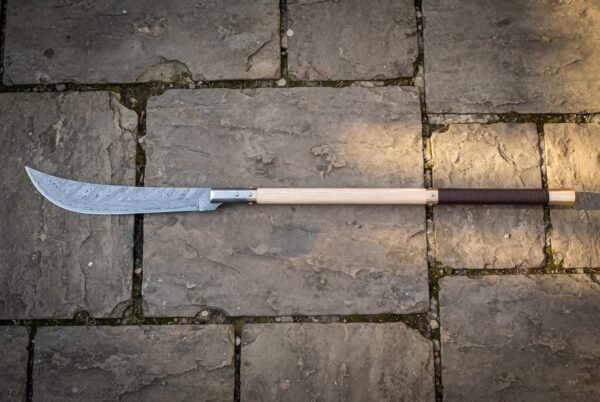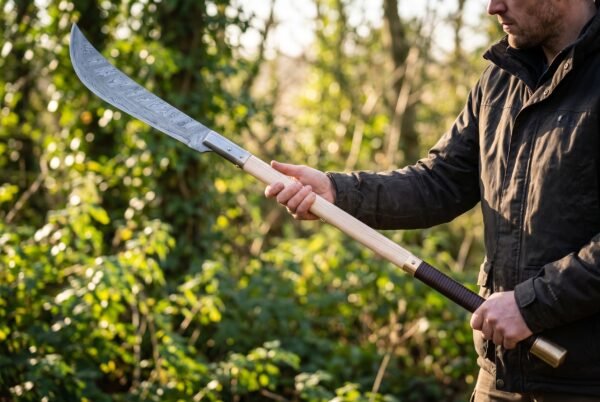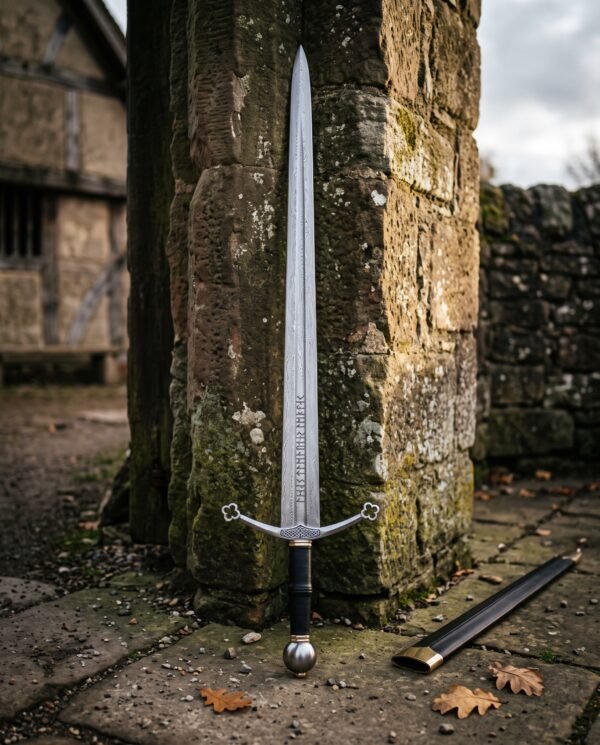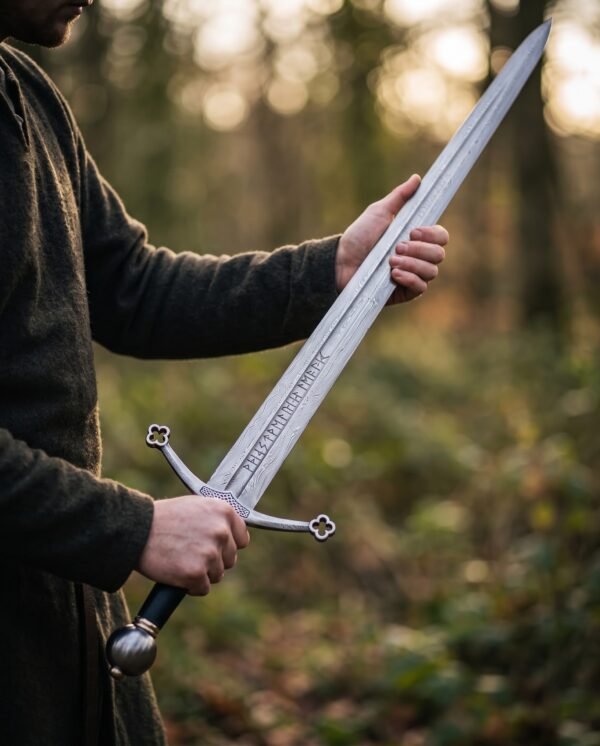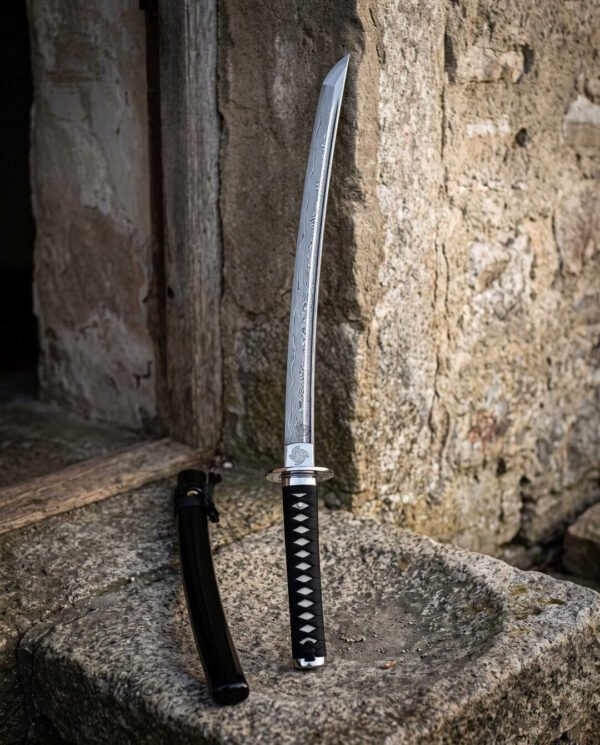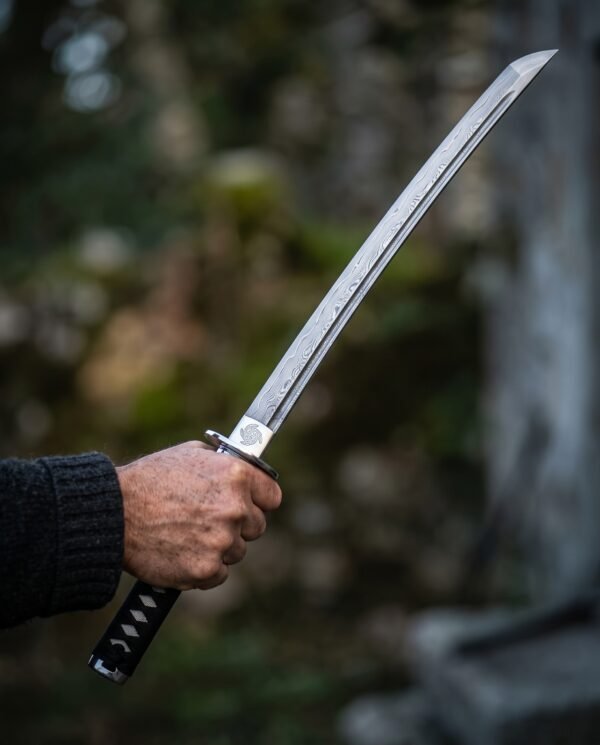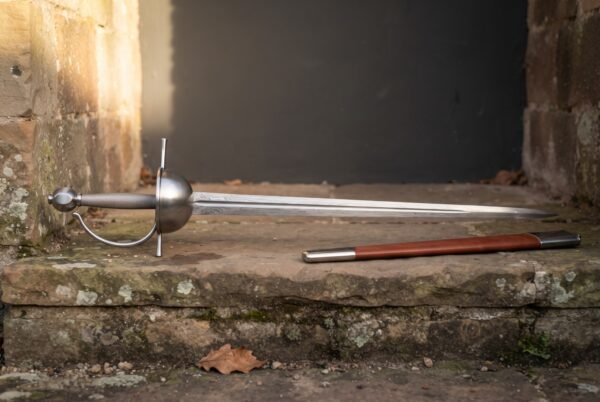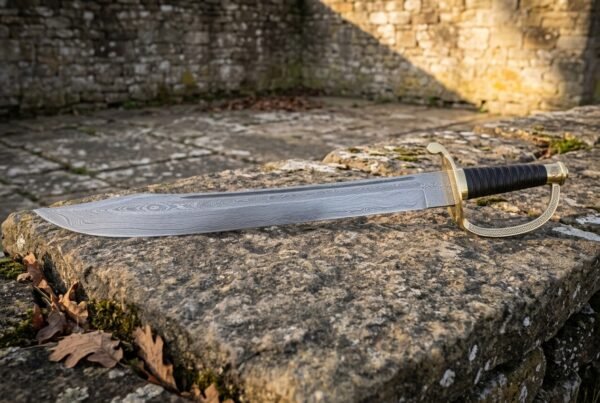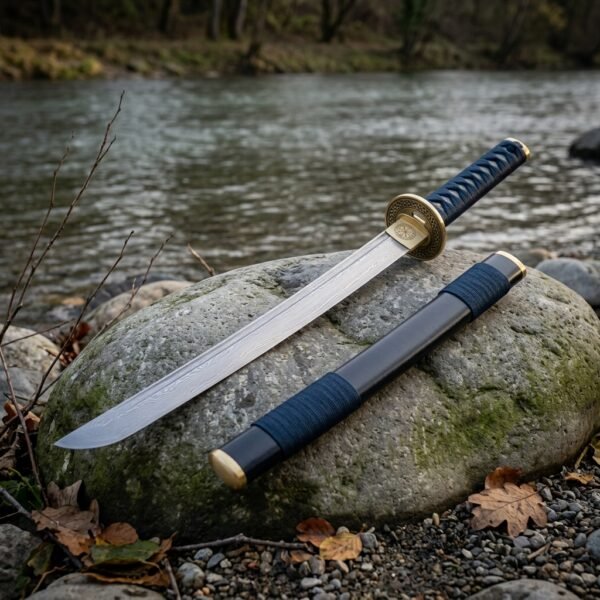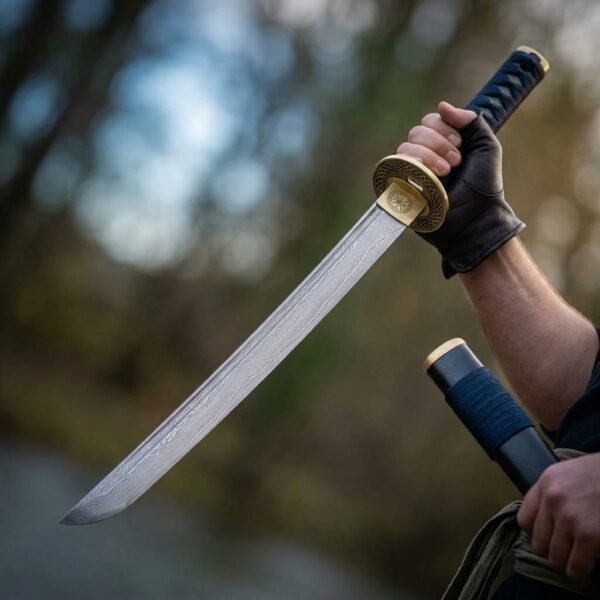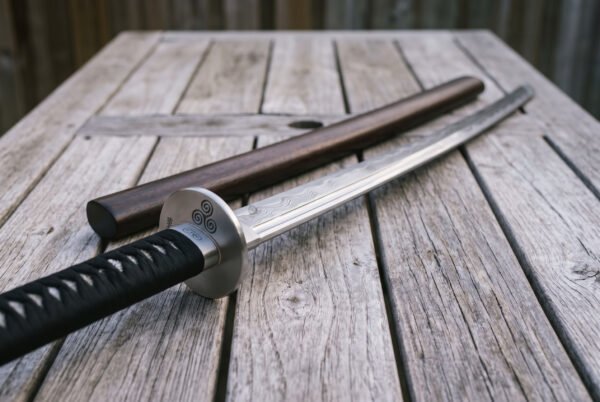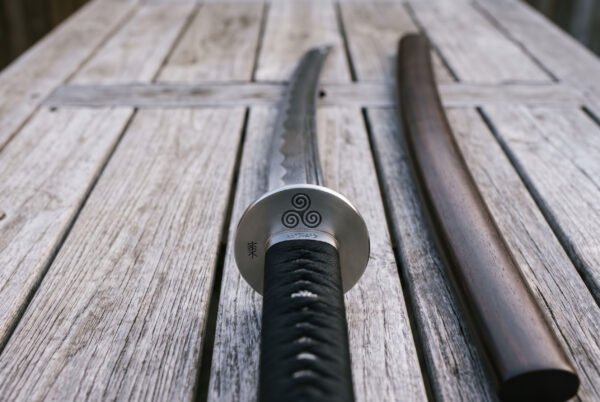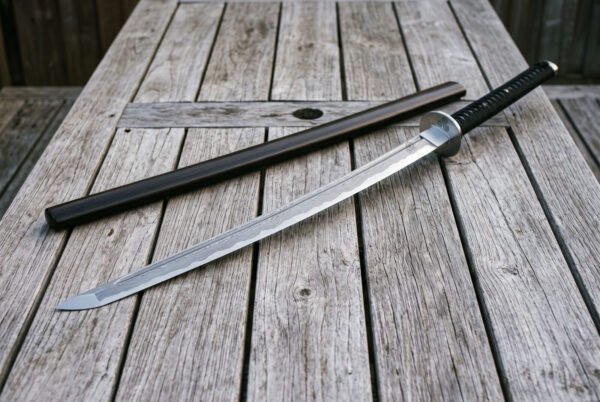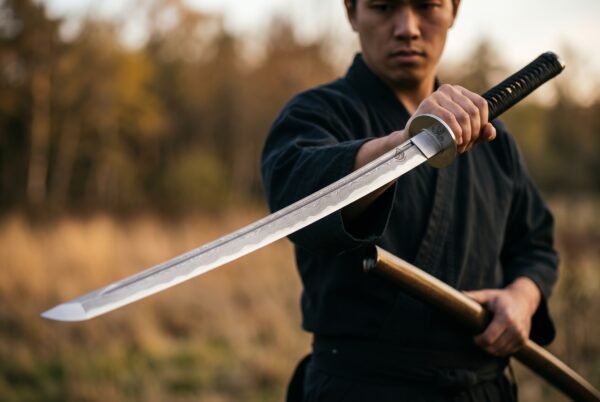
Pattern welded means two steels forge welded into one billet, folded and drawn out, then acid etched so the layers show as a pattern. It is what Damascus means in modern usage. It is not the historical wootz of the middle east, which was a crucible steel and a different thing entirely, and anyone who tells you otherwise is either confused or hoping you are.
What is on this tag
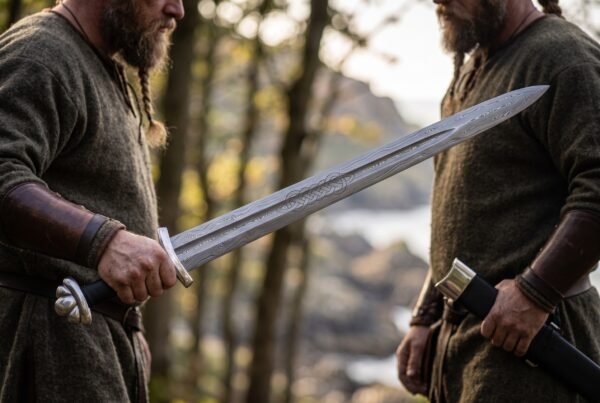
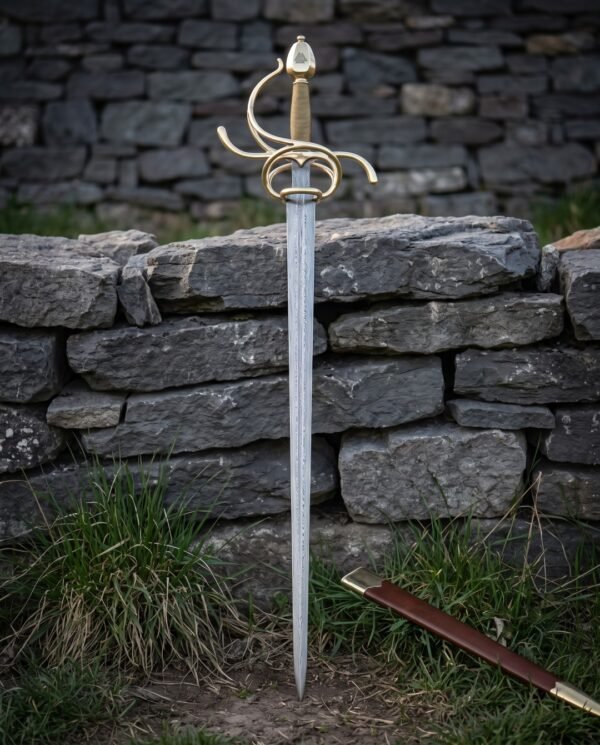
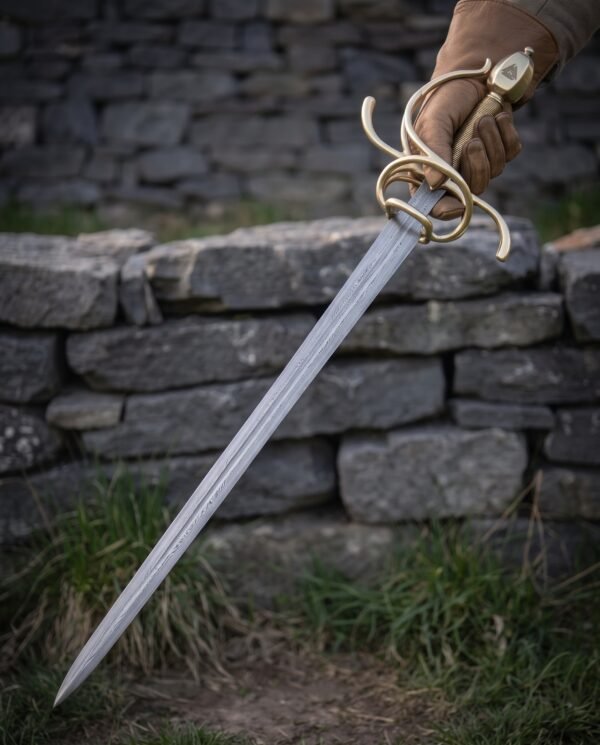
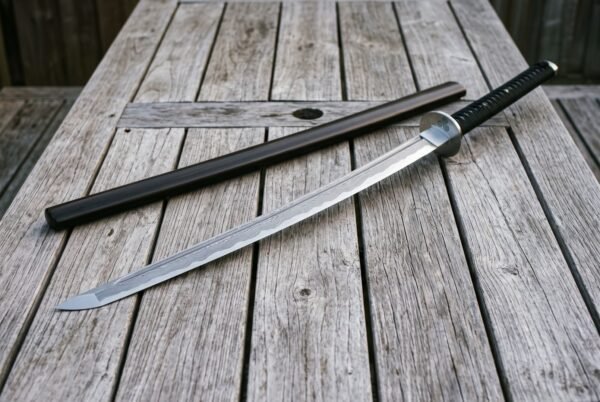
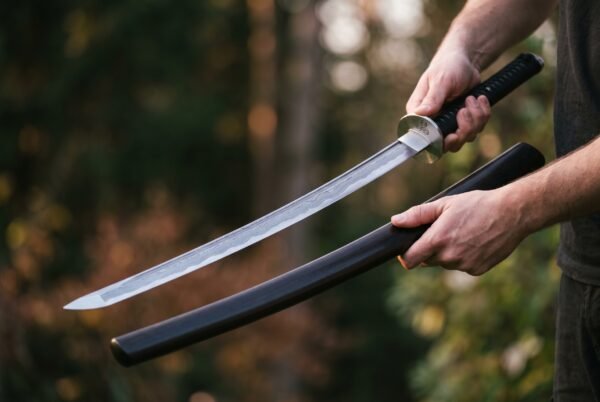
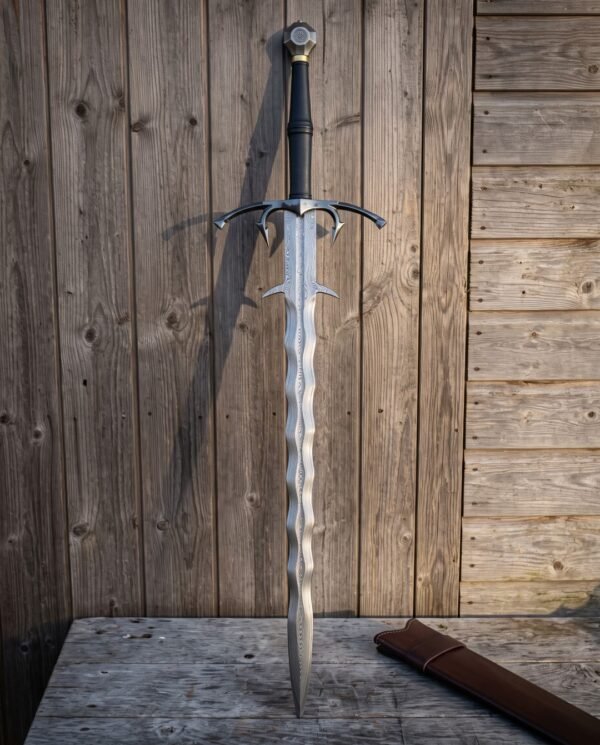
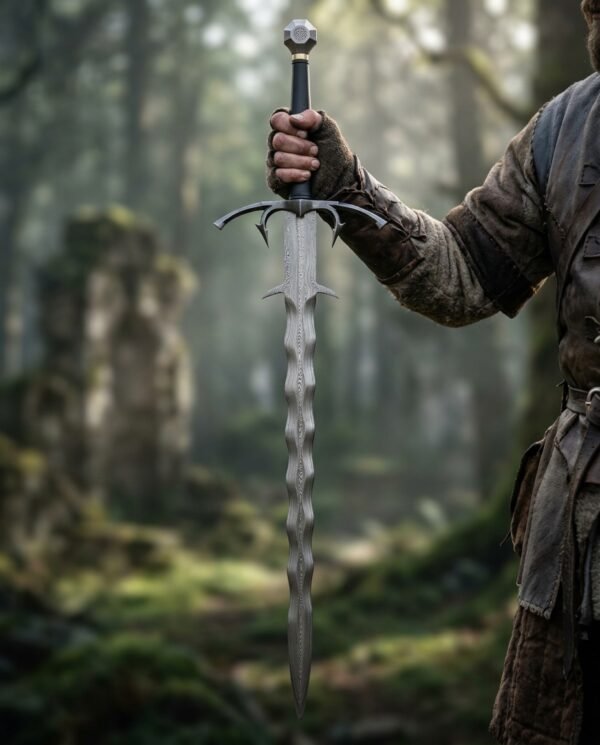
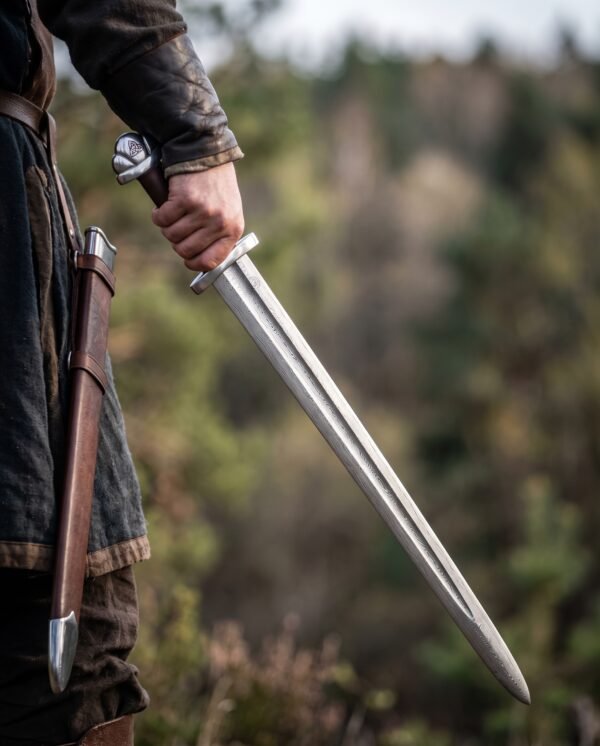
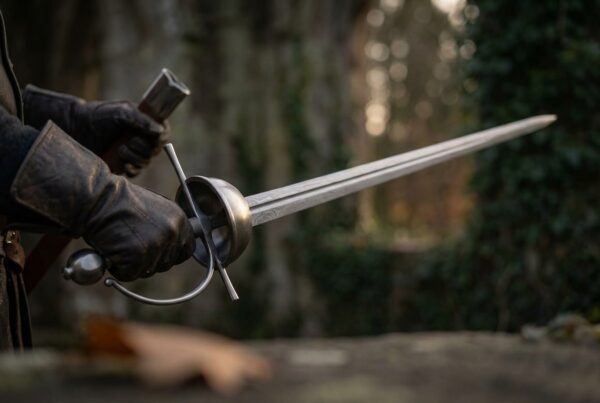
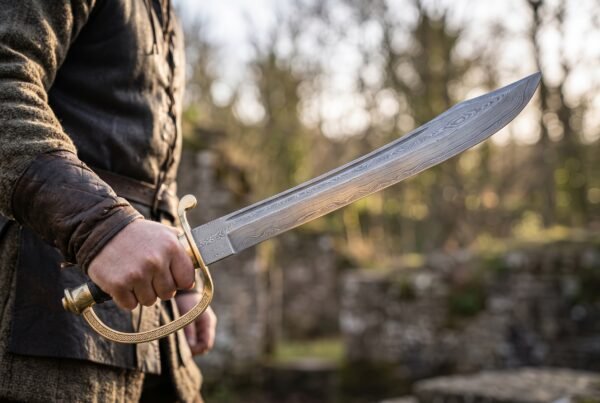
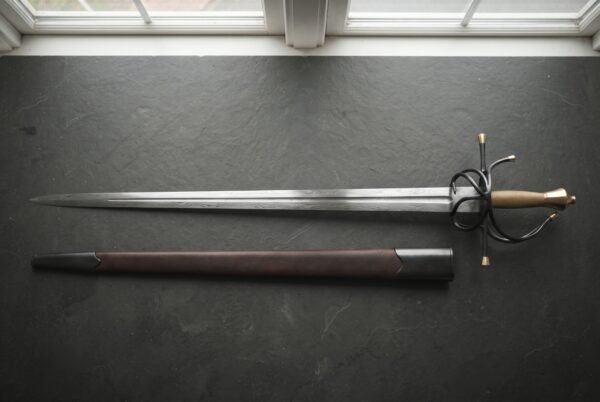
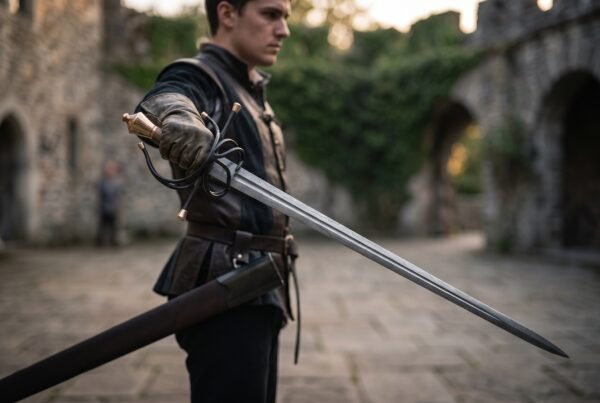
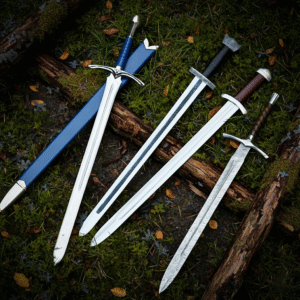
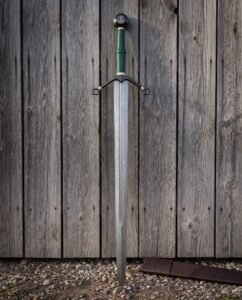
Flamberge swords around 38 inches overall with 31 inch blades, brass hilted rapiers at 43 inches with 36 inch blades, side swords, short swords with pierced shell guards at 28 inches, and Viking patterns. The steel is Damascus of 1095 and 15N20, forge welded and acid etched, at 58 to 60 HRC. The 1095 provides hardness, the 15N20 carries nickel which resists the acid etch and stays bright, and the contrast between them is the pattern you can see.
Why it was done historically
Not for decoration, originally. Early smiths pattern welded because available iron was inconsistent, and combining bars of different quality produced a blade more reliable than any single bar. Once bulk steel became consistent the practical reason vanished and the practice survived because it looks extraordinary. The full process, from stacking the billet to the final etch, is set out in the pattern welding explainer.
Checking that it is real
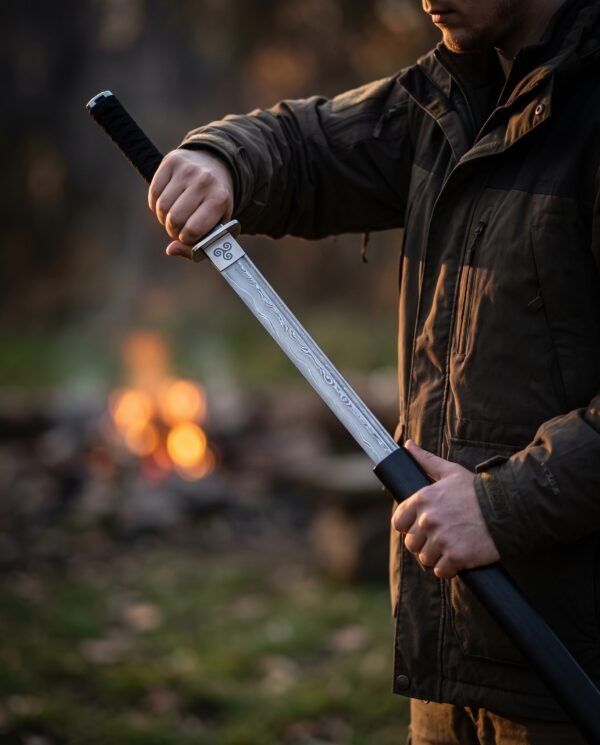
The layers should be visible on the spine and at the tang, not only on the polished flat, because a forged billet is layered through its thickness. A printed or chemically applied surface pattern looks slightly too regular and stops at the grind lines. The five checks covers this properly. The blades are in the Damascus swords and the wavy edged pieces in the flamberges.
Why a long pattern welded blade costs more
Because every weld along the whole length has to hold through repeated heating and hammering as the billet is drawn out. A knife is a few inches of that risk. A 36 inch rapier blade is a great deal more, and a billet that delaminates halfway is scrap after days of work. That failure rate is priced into every pattern welded sword sold honestly.
Keeping the pattern
The etch is a surface finish and not a coating. Handling wears it at the contact points over years and any abrasive cleaner removes it outright. Wipe, dry and oil lightly, and keep the blade out of a closed leather scabbard for storage.
Free US shipping
On most pieces. Heavier and oversized ones carry a flat charge.
Hand Forged
Heated, hammered and ground by hand.
Engraving available
Names, dates or Norse runes on most pieces.