
Blog
Best Damascus Pocket Knives for EDC: A Practical Buyer’s Guide

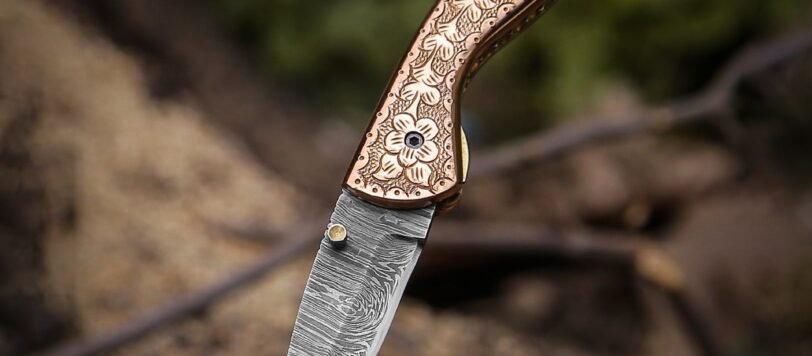
The best Damascus pocket knife for everyday carry is a folder with a 2.5-to-3.5-inch pattern-welded blade, a lock that does not wobble, an opening method you can work one-handed, and a clip that sits flat in the pocket. That is the whole answer. The complication is the word Damascus, because a great deal of what gets sold under it is an etched pattern on a plain blade, and that pattern stops the first time you sharpen through it. Real pattern-welded steel gives every blade a unique surface and an edge that handles boxes, cord, and food without complaint. This guide covers folder styles, lock types, what to check before buying, and the honest downsides of carrying Damascus every day. Browse our hand-forged Damascus folding pocket knives, every one ships from Chicago, IL, and many include free engraving.
Why Carry a Damascus EDC Knife?
Everyday-carry knives spend their lives opening parcels and cutting string, and most of them look identical while doing it. A pattern-welded Damascus folder does the same work while carrying a blade with visible layers formed in the forge, no two are identical. High-carbon Damascus also takes a keen edge that stands up well to cardboard and cordage. If you also want a fixed blade for camp and field work, our Damascus hunting knives cover that side. The trade-off is corrosion resistance. Pocket humidity, sweat and fruit acids will mark a neglected carbon blade, and a folder that never meets a cloth will keep a record of everything you cut. If you sweat heavily or work outdoors in the rain, weigh the options in our Damascus steel vs stainless steel guide first.
Folder Styles for Everyday Carry
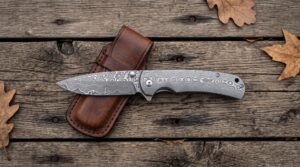 Leafcarry Hand Forged Damascus Folding Pocket Knife with Damascus Steel Handle Ready for Engraving & Cowhide Leather Sheath | Everyday Carry Collector Gift | RK-375
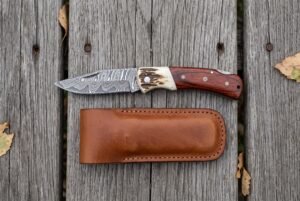 Rosecarry Hand Forged Damascus Folding Pocket Knife with Rosewood Handle and Stag Bolster & Cowhide Leather Sheath | Everyday Carry Gift for Him | RK-372
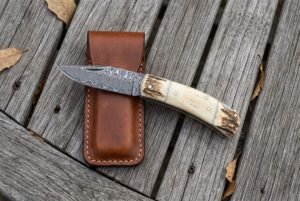 Bonecarry Hand Forged Damascus Folding Pocket Knife with Natural Bone Handle and Stag Bolsters & Cowhide Leather Sheath | Gentlemans Everyday Carry Gift | RK-373
Drop-Point Folders
The default EDC blade: strong tip, useful belly, no surprises. Best first choice for most people.
Clip-Point and Spear-Point Folders
Finer tips for piercing and detail work. Spear points center the tip for control; clip points add a little flash and precision.
Tanto Folders
An angular edge with a reinforced tip. Good at scraping and push cuts, clumsy at slicing an apple. It also looks the part, which accounts for a fair share of tanto sales.
Trapper and Traditional Patterns
Two-blade slipjoint classics with no lock and no clip. Legal in more places, pocket-friendly and handsome in Damascus, though opening one takes both hands and a moment of patience. Not the choice for hard use. At the opposite end of the folder world sits the balisong, which opens with one hand, a flick of the wrist and a certain amount of showing off, and a dedicated balisong store is the place to compare them properly.
EDC Damascus Folder Styles Compared
| Style | Typical Blade | Strengths | Weaknesses |
|---|---|---|---|
| Drop-point folder | 2.5 to 3.5 in | All-around utility | None significant |
| Clip/spear point | 2.5 to 3.5 in | Precise tip work | Slightly weaker tip |
| Tanto folder | 3 to 4 in | Tip strength, scraping | Awkward slicer |
| Traditional slipjoint | 2 to 3 in | Light, legal most places | No lock, two-hand open |
What to Check Before You Buy
Lock Type and Lockup
Liner locks and frame locks dominate modern folders; back locks are slower but very secure. Whatever the style, the blade should open smoothly, lock with no vertical play, and close without your fingers crossing the edge path.
Blade Length and Local Law
Knife carry laws vary by state and city, covering blade length, lock type, and concealment. A folder under 3 inches is legal to carry in most US jurisdictions; longer blades are regulated in some. Check your local rules before clipping any knife to your pocket, it is your responsibility, not the seller’s.
Real Pattern-Welded Steel
As with fixed blades, some cheap “Damascus” folders are plain steel with an etched-on pattern. Genuine pattern-welded blades show layers through the grind and over the spine, and the pattern survives sharpening. Sellers should say what steels go into the billet.
Handle, Clip, and Carry Feel
A knife you carry daily lives in your hand and pocket. Look for handle scales, wood, bone, horn, resin, or Micarta, that fill the palm without hot spots, and a pocket clip or slim profile that disappears until needed. Weight matters more than buyers expect: over about 5 ounces, most people quietly stop carrying a folder within a month and never quite admit why.
Pivot and Action
Open and close the knife (or read closely if buying online). The action should be smooth with no grinding, the pivot adjustable, and the detent strong enough that the blade never drifts open in a pocket.
Who Should NOT Carry a Damascus Pocket Knife?
Some people should buy something else, and it is cheaper to work that out now. If your knife will pry paint cans, strip wire and scrape gaskets, buy a cheap beater instead. Hard prying is the fastest way to chip a fine blade, and a Damascus folder is a fine blade whether or not you treat it like one. If you will never wipe the blade down, sweat and pocket lint will speckle high-carbon Damascus; stainless suits you better. And if your workplace or city restricts locking folders, a traditional slipjoint or a small fixed blade kept at home, like the compact options in our Viking knife collection, may serve the same jobs with less legal friction.
Caring for an EDC Damascus Folder
Once a week: blow out the pivot, wipe the blade with a lightly oiled cloth, and add a drop of oil to the pivot if the action slows. After cutting fruit or anything wet, rinse if needed and dry immediately. Strop the edge regularly; a folder that only ever meets cardboard stays sharp for weeks with stropping alone. Every few months, check clip and pivot screws for tightness. That is the entire routine. Five minutes a week keeps a Damascus folder crisp for years, which is less time than most people spend choosing one. More guides live on the Ransack Viking blog.
Damascus Pocket Knife FAQ
Is Damascus steel good for a pocket knife?
Yes, with one caveat. Pattern-welded high-carbon Damascus takes and holds a working edge extremely well for daily cutting tasks, and no two blades come out of the forge with the same pattern. The caveat is corrosion. Pocket carry exposes the blade to sweat and humidity, so the weekly wipe with an oiled cloth is part of ownership rather than an optional extra.
What blade length is best for everyday carry?
Between 2.5 and 3.5 inches. That range handles boxes, cord, food, and daily tasks comfortably, stays legal in most US jurisdictions, and keeps the closed knife small enough to actually carry. Go smaller for office-friendly carry; go longer only after checking your local blade-length limits.
Are Damascus pocket knives legal to carry?
The steel makes no legal difference whatsoever. Laws regulate blade length, lock style, opening mechanism and concealment, and they vary by state and city. Most ordinary folding knives under 3 inches are legal to carry in most of the US, but check your own state and city rules, and assume schools, courthouses and airports have already decided the answer is no.
How do I keep a Damascus folder from rusting in my pocket?
Wipe the blade weekly with a cloth carrying a drop of mineral oil, dry the knife promptly after cutting wet materials, and do not let pocket lint pack into the pivot where it holds moisture. If you live somewhere humid or sweat heavily, a silicone-treated cloth in a drawer makes the habit effortless.
What is the difference between real and fake Damascus on folders?
Real pattern-welded Damascus is forged from layered steels, so the pattern runs through the blade: you can see it in the edge bevel and on the spine, and it remains after sharpening. Fake “Damascus” is a surface etch or print on a single-steel blade. It looks uniform, it repeats from knife to knife, and it wears off the edge first, which is the part you were planning to use.
Can a Damascus pocket knife be engraved?
Yes. Bolsters, blade flats, and some handle materials all take engraving well, and we offer free engraving on many of our folding knives. Initials or a date turn a daily-carry tool into a personal piece, and engraving is one of the most popular options for groomsmen and Father’s Day gifts.
What you may legally carry varies by state, so check the carry laws before you buy. For the steel itself see what Damascus steel actually is, and for a larger fixed blade in the same steel see our Damascus fillet picks.
On the shelf
In the shop right now, the Bonecarry folding pocket knife and the Antlerfold folding pocket knife. The Walnutfold folding pocket knife and the Bluegrain folding pocket knife sit next to them.
Shop the range
Leafcarry Hand Forged Damascus Folding Pocket Knife with Damascus Steel Handle Ready for Engraving & Cowhide Leather Sheath | Everyday Carry Collector Gift | RK-375Rosecarry Hand Forged Damascus Folding Pocket Knife with Rosewood Handle and Stag Bolster & Cowhide Leather Sheath | Everyday Carry Gift for Him | RK-372Bonecarry Hand Forged Damascus Folding Pocket Knife with Natural Bone Handle and Stag Bolsters & Cowhide Leather Sheath | Gentlemans Everyday Carry Gift | RK-373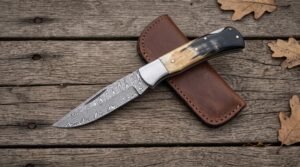 Bullhorn Hand Forged Damascus Folding Pocket Knife with Camel Bone and Bull Horn Handle & Cowhide Leather Sheath | Everyday Carry Collector Gift | RK-426
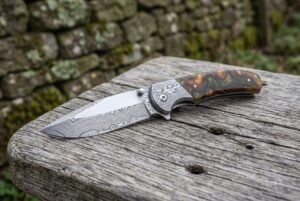 Resincarry Hand Forged Damascus Folding Pocket Knife with Resin Handle | Everyday Carry Collector Gift for Him | RK-10491
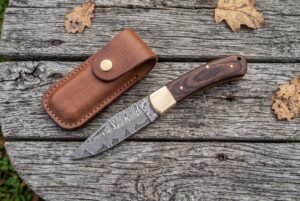 Pakkacarry Hand Forged Damascus Folding Pocket Knife with Pakka Wood Handle & Cowhide Leather Sheath | Everyday Carry Groomsmen Gift | RK-374