Blog
Best Fillet Knives for Fishing: Length, Flex, and Steel Explained

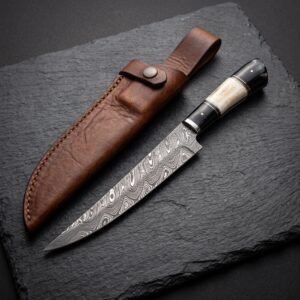
The best fillet knife for fishing has a thin, flexible blade matched to the fish you actually clean, which is rarely the fish you picture yourself cleaning: around 6 inches for panfish, a mid-length blade for walleye, bass, and trout, and 9 inches or more for salmon and saltwater species. Flex lets the edge ride along the backbone and inside the skin, turning a whole fish into clean, boneless fillets with very little left on the frame. This guide covers blade length and flex, steel choices, handles that grip when slimed, and the care habits that keep a fillet knife shaving-sharp. Our hand-forged fillet knives ship from Chicago, IL, and many can be engraved in the US after they arrive, from 19 dollars for text.
Why Fillet Knives Are Built the Way They Are
Filleting is precision slicing along bone and under skin. A stiff, thick blade fights the fish’s contours and leaves meat on the frame; a thin, flexible blade bends to follow the ribs and backbone, gliding between skin and flesh in one long draw. That is why every good fillet knife shares three traits: a narrow blade ground thin, deliberate flex (more for small fish, less for thick-bodied fish), and a fine, sharp point for entry cuts behind the gills and around fins.
Choosing Blade Length by Species
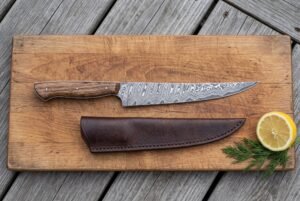 Streamwood Hand Forged Damascus Fish Fillet Knife with Wood Handle & Leather Sheath | Fishing Camping and Anglers Gift | RK-480
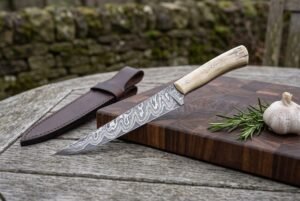 Palebone Hand Forged Damascus Fish Fillet Knife with Natural Bone Handle & Leather Sheath | Fishing Camping and Anglers Gift | RK-422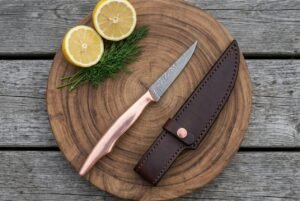
5 to 6.5 in: Panfish and Perch
Short blades give maximum control on bluegill, crappie, and perch, where a long blade overshoots the fillet entirely.
7 to 7.5 in: The All-Rounder
The most useful single size, and the one most people should buy first. It handles walleye, bass, trout, and catfish, and still manages panfish acceptably. If you clean a mixed bag, this is the length.
8 to 10 in: Salmon, Pike, and Saltwater
Long blades sweep the full width of a salmon or redfish side in one stroke and keep knuckles clear of spines and slime rails on big fish.
Fillet Knife Sizes Compared
| Blade Length | Flex | Best For | Weak Spot |
|---|---|---|---|
| 5 to 6.5 in | High | Panfish, perch, crappie | Too short for big fish |
| 7 to 7.5 in | Medium | Walleye, bass, trout, catfish | Jack of all trades |
| 8 to 10 in | Medium-low | Salmon, pike, saltwater | Clumsy on small fish |
| Stiff boning style | Low | Steaking large fish, skinning catfish | Not a true fillet blade |
What Else to Look For
Steel: Sharpness vs. Corrosion
Fillet knives live wet. Stainless steel is the practical default for boat use, especially in saltwater, because it forgives the neglect that a boat more or less guarantees. High-carbon and Damascus fillet knives take a noticeably keener edge, which matters in a knife this thin, but they must be rinsed, dried, and oiled the same day. Our steel glossary breaks down which fits your habits, and the hardness page gives the two house figures; honest answer: freshwater anglers who clean fish at home do fine with carbon, and offshore anglers should lean stainless.
Handle Grip When Wet
Fish slime is the slickest substance in sport. Choose textured, non-slip handles, stabilized wood with texture, Micarta, or rubberized grips, with a guard or flared butt that keeps a wet hand from sliding forward. A beautiful polished handle that turns dangerous when slimed is the most common fillet knife mistake.
Flex Matched to Use
Bend the blade gently against a board (or read the listing). High flex suits thin-bodied fish and skinning; medium flex suits most freshwater work; low flex suits thick fillets and steaking. There is no single correct flex, only a correct match.
Sheath and Storage
A hard or leather sheath protects the thin edge in a tackle box, and spare scabbards and sheaths are sold on their own. Rinse and dry the knife before it goes back in, and never store any blade long-term in leather, which traps moisture against steel.
Who Should NOT Buy a Premium Fillet Knife?
If you clean two or three fish a year, a modest stainless blade serves you perfectly well. Spend the difference on tackle, or on whatever is going to put the fish in the boat. If you want one knife for camp cooking, rope, and fish, a fillet blade is too thin and delicate; a general fixed blade or a kitchen knife for home fillet work fits better. And if your knives live rusty in a boat locker, skip carbon steel entirely, buy stainless and enjoy it guilt-free.
Keeping a Fillet Knife Scary Sharp
A fillet knife earns its keep only while it is sharp enough to glide. A dull one does not fillet a fish so much as argue with it. Rinse off slime and blood immediately after cleaning fish, both are corrosive, then dry the blade fully. Touch up the edge with a fine ceramic rod or stone before each outing; the thin grind resharpens in a minute. On carbon or Damascus blades, finish with a wipe of mineral oil. Twice a season, give the edge a proper stone progression. That routine keeps even a heavily used fillet knife slicing paper-thin. More care guides live on the Ransack Viking guides.
Filleting aside, the blade most anglers want in camp is something stouter for gutting, cutting bait and general work, and the Norse belt knife has been doing that job since long before stainless existed. A short Viking knife in 1095 pairs well with a thin fillet blade and will take the rough jobs that would bend a fillet knife out of shape.
Fillet Knife FAQ
What size fillet knife should I buy first?
A medium-flex blade in the all-rounder range is the best single choice for most anglers, and it is the one to buy before any of the others. It handles walleye, bass, trout, and catfish comfortably and manages both panfish and moderate-size salmon acceptably. Add a shorter, higher-flex blade later if you clean a lot of panfish, or a longer one for regular salmon and saltwater work.
Should a fillet knife be flexible or stiff?
Match flex to the fish. High flex follows the contours of thin-bodied panfish and makes skin removal easy; medium flex suits most freshwater species; stiffer blades track straighter through thick fillets on salmon and big saltwater fish. A knife that is too stiff wastes meat; one that is too flexible wanders on large fillets.
Is a Damascus fillet knife worth it?
For anglers who clean fish at home and will rinse, dry, and oil the blade afterward, yes. The keen edge a high-carbon Damascus blade takes is a genuine advantage in a knife this thin, and no two patterns come out of the forge the same. For boat and saltwater use with minimal care, ordinary stainless is the more sensible choice. There is nothing admirable about owning a blade you will not look after.
How do I keep my fillet knife from rusting?
Rinse the blade in fresh water immediately after use, dry it completely, and store it out of its sheath in a dry place. Carbon and Damascus blades also want a thin wipe of mineral oil before storage, and the Damascus care routine covers the pattern itself. Salt, fish blood, and slime all attack steel, so the five-minute cleanup after filleting is what decides whether the knife lasts five years or fifty.
What is the best way to sharpen a fillet knife?
Use a fine stone or ceramic rod at a shallow angle, around 15 to 17 degrees per side, with light pressure, since the blade is thin and flexible. Support the blade near the edge as you work, raise a tiny burr, then remove it with a few light alternating strokes or a strop. Frequent light touch ups beat occasional heavy grinding on a blade this delicate. The full stone method is in the whetstone walkthrough.
Can a fillet knife be engraved for a fisherman’s gift?
Yes. The blade flat and handle both take engraving, and a name, date, or lake inscription turns a working fillet knife into a keepsake, which is why it is a popular retirement and Father’s Day gift for anglers. Engraving runs 19 dollars for text, 39 for a symbol and 49 for a family crest, and it makes no difference whatsoever to how the knife cuts.
The Damascus versions of the same blade are covered in our Damascus fillet knife picks. If you also dress game, the hooked blade is explained in what a gut hook does.
On the shelf
Ready to ship, the Riverstag fish fillet knife and the Palebone fish fillet knife. The Streamwood fish fillet knife and the Bluetide fish fillet knife are the other two.
Shop the range
Streamwood Hand Forged Damascus Fish Fillet Knife with Wood Handle & Leather Sheath | Fishing Camping and Anglers Gift | RK-480Palebone Hand Forged Damascus Fish Fillet Knife with Natural Bone Handle & Leather Sheath | Fishing Camping and Anglers Gift | RK-422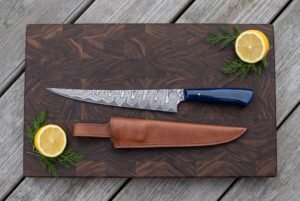 Bluetide Hand Forged Damascus Fish Fillet Knife with Blue Resin Handle & Leather Sheath | Fishing and Anglers Collector Gift | RK-481