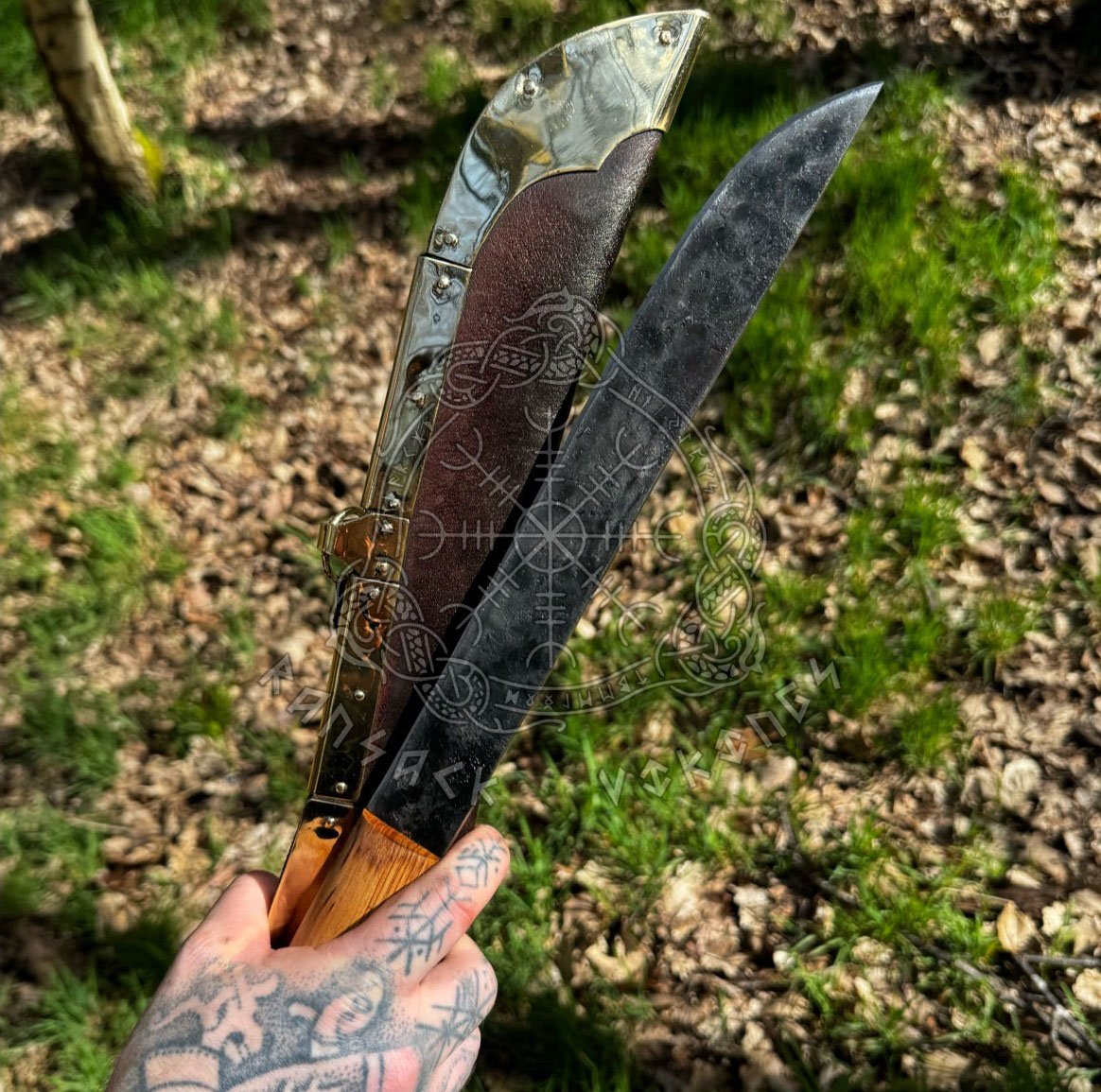
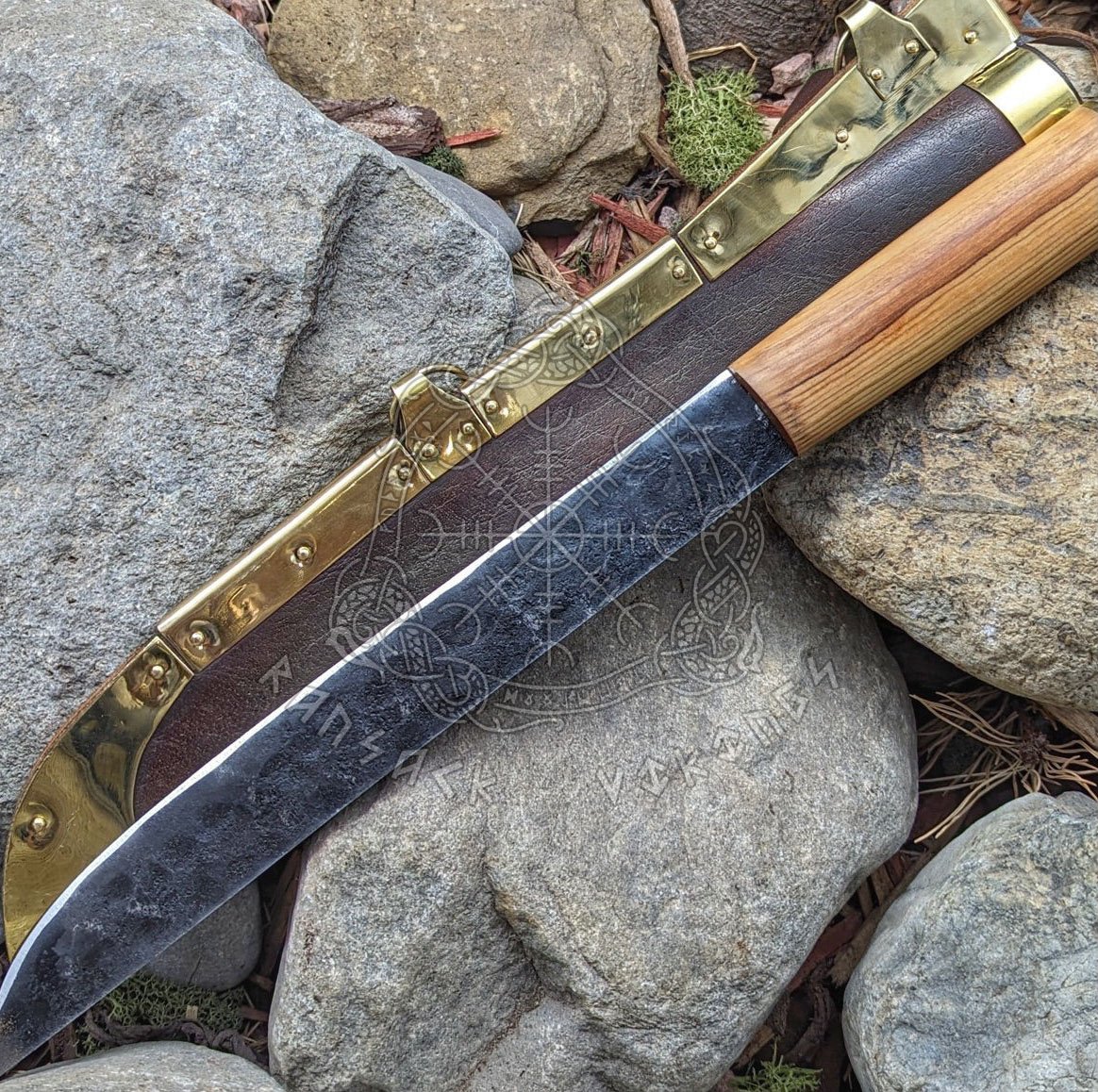
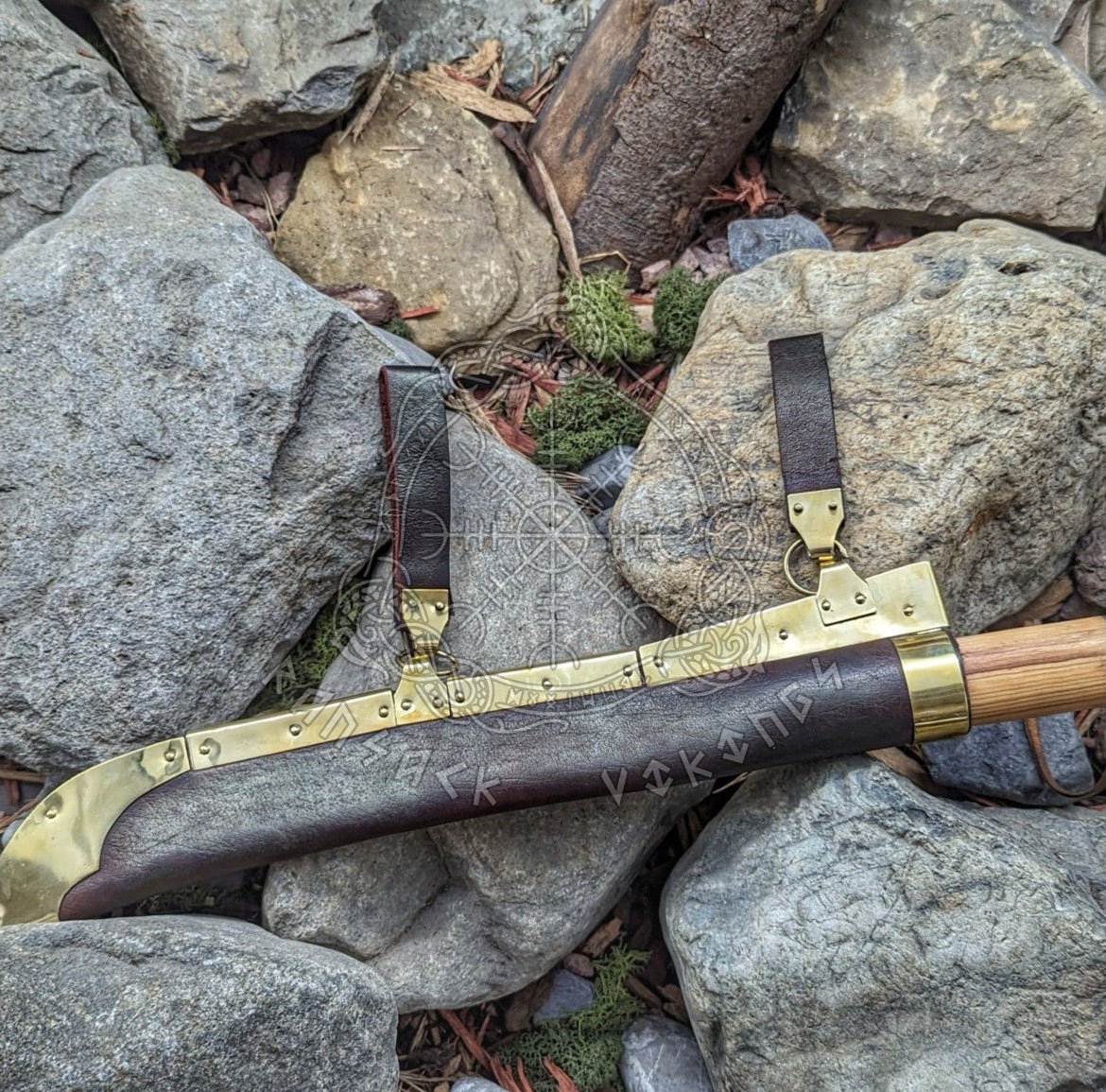
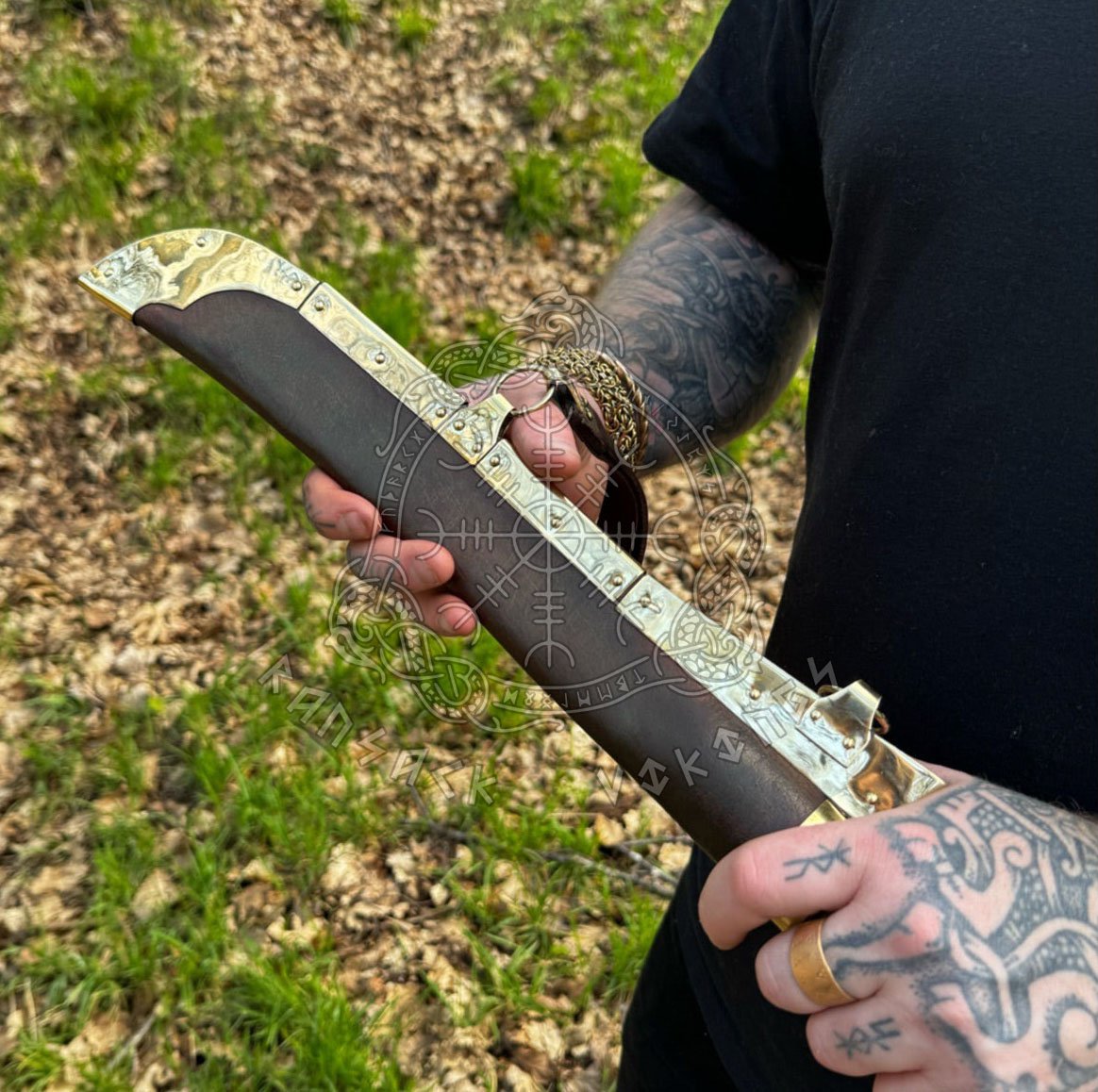
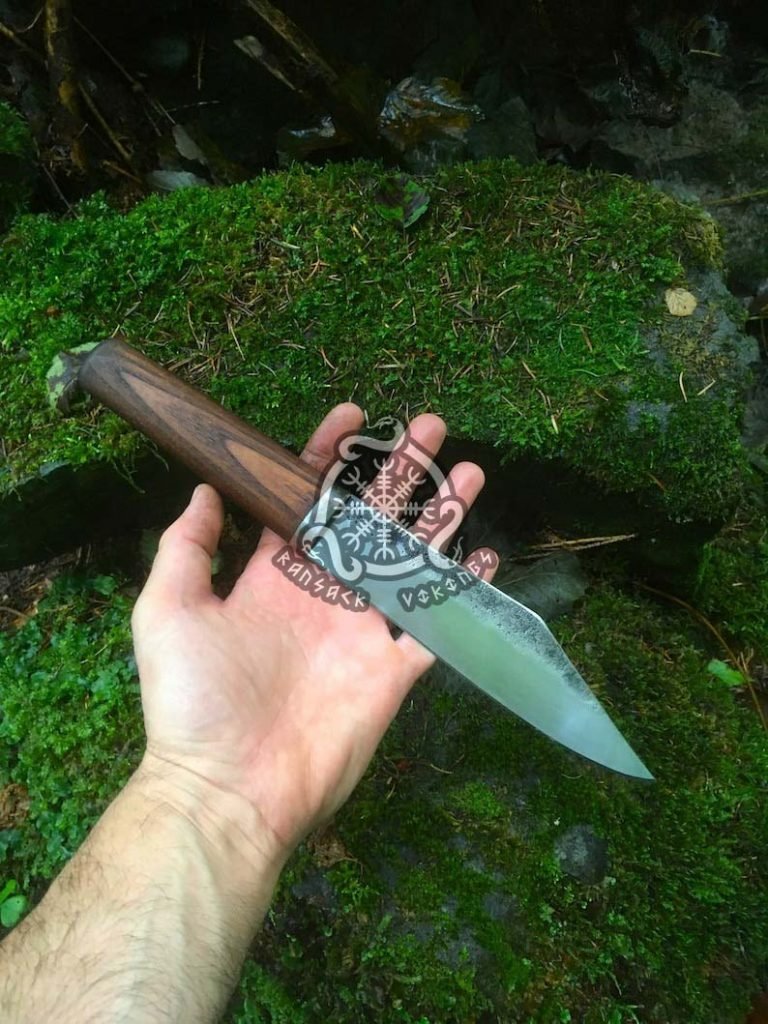
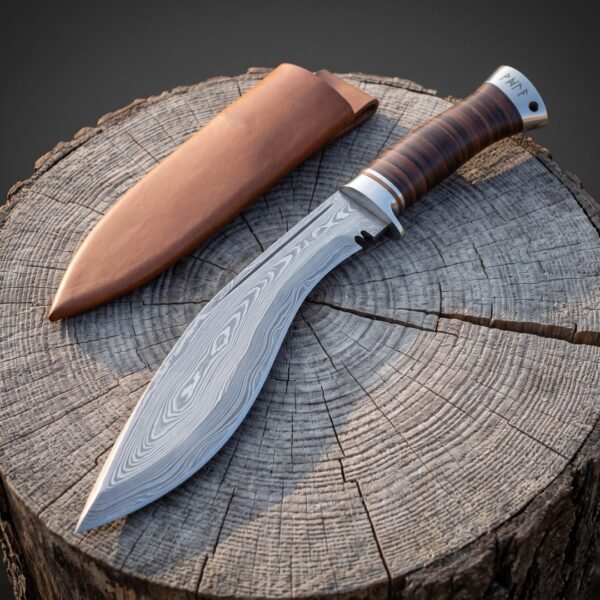
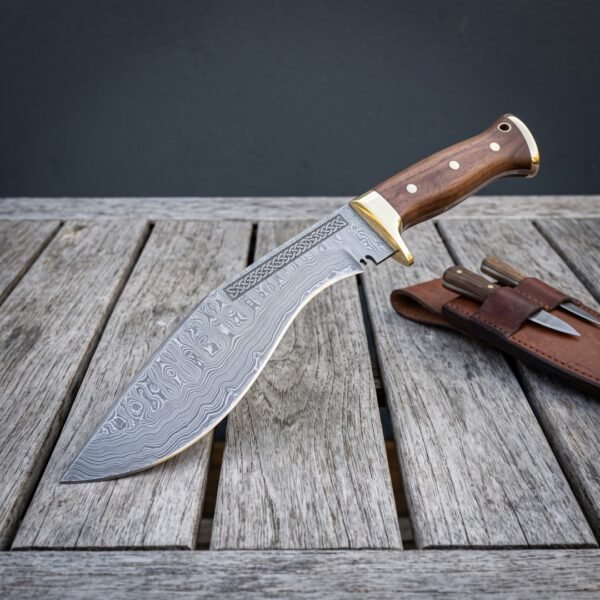
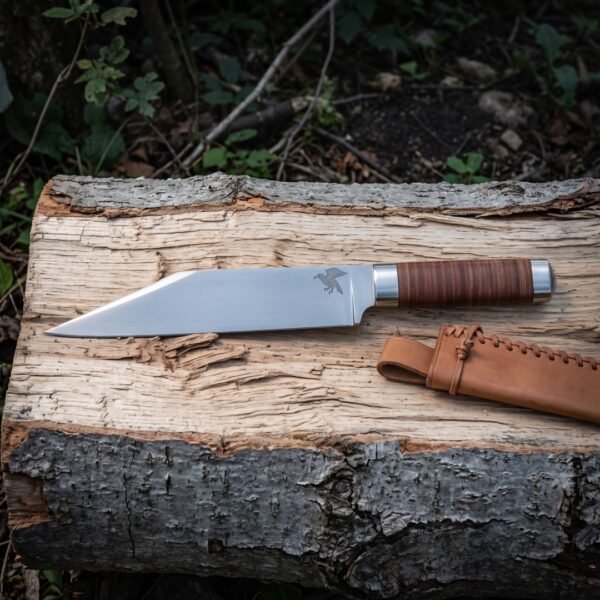
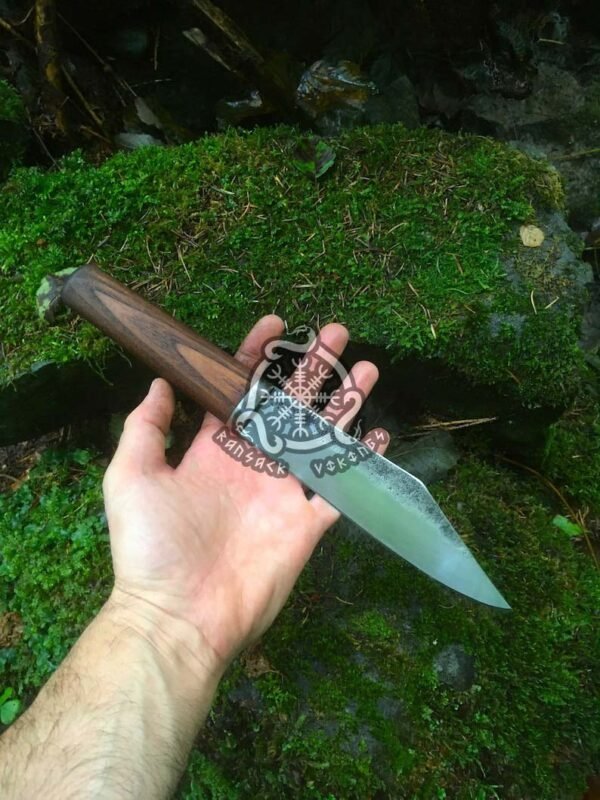
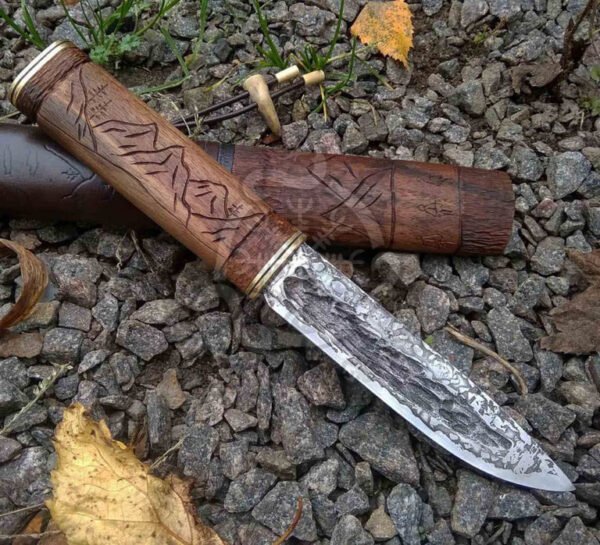
There is nothing stamped about the Olivescramasax. The high carbon steel blade is drawn out under the hammer, the olive wood handle is fitted to it, and the whole Viking seax knife is finished before it is boxed. It runs 16.14 inches overall with an 11 inch blade that is 1.25 inches wide at the spine, and it ships in a fitted leather sheath.
The word in this piece’s name is not marketing. Scramasax appears exactly once in the historical record, in Gregory of Tours writing in the sixth century about the assassination of the Frankish king Sigibert, where the killers used what he calls strong knives which the common people call scramasaxes. Everything else we know about the type comes from the ground rather than from books. Seaxes turn up in Germanic, Frankish, Anglo-Saxon and Norse graves across northern Europe in enormous numbers, and archaeologists sort them by size and profile into a rough sequence: the narrow seax, the light and heavy broad seax, and the langseax, the long seax with a blade past about ten inches. At 11 inches this piece sits at the bottom of the langseax range, which was the fighting end of the family rather than the eating knife end.
The Olivescramasax is forged and finished in the Czech Republic, and shipping inside the United States is free.
Specifications
| Steel | Hand forged high carbon steel |
|---|
| Hardness | 54 to 58 HRC |
|---|
| Blade shape | Broad single edged seax |
|---|
| Overall length | 16.14 inches |
|---|
| Blade length | 11 inches |
|---|
| Blade width | 1.25 inches |
|---|
| Handle | Olive wood |
|---|
| Sheath | Leather sheath |
|---|
| SKU | RK-605 |
|---|
Why the seax is single edged with a heavy spine
The seax is the answer to a question that mattered enormously in early medieval northern Europe and does not matter at all now: what do you carry when a sword costs more than a farm.
A pattern welded sword in the eighth or ninth century represented an extraordinary amount of skilled labour and imported material. Most free men never owned one. What they owned instead was a seax, and its whole design is shaped by being the affordable option that still had to work as a fighting blade.
That is why it is single edged. Grinding one bevel instead of four takes a fraction of the time and, more importantly, uses far less steel, which was the expensive part. It is also why the spine is left thick and flat. On a blade with no fuller and no distal taper, the mass in the spine is what gives the cut authority, and it lets the smith run a hard edge on soft backing steel so the blade bends rather than snaps. The width, 1.25 inches on this piece, is doing the same job: a broad blade puts weight behind the edge without needing the length or the metallurgy of a sword.
Look at the proportions on this one and you can see the logic. The handle is over five inches long, which is unusually generous by modern standards and entirely typical of the archaeology. A long grip lets you slide your hand back for a heavy cut or forward against the blade for close work, and it compensates for the lack of a crossguard, which most seaxes did not have. It is a single tool doing the work of a short sword, a butcher’s knife and a woodworking blade, and that is exactly how it was used.
Why high carbon steel and not stainless
No alloy tricks here. Our plain blades are 1095 high carbon steel, forged, hardened and tempered, then ground to an edge and finished at 54 to 58 HRC. That heat treat is a deliberate choice for a long blade: a little softer than we run Damascus, which means the edge will roll rather than chip if it meets something hard, and an 11 inch blade that flexes and returns is a great deal more useful than one that is glass hard and snaps.
It is also the historically correct choice, which matters on a piece like this. Early medieval smiths worked simple carbon steel because it was what they had, and the way it behaves under the hammer and in the quench is the reason seaxes look the way they do. A stainless seax would be an anachronism as well as a worse blade.
Stainless would resist rust better and that is its only advantage here. High carbon is the most forgiving steel there is to resharpen, it takes a keener edge, and it will develop a grey patina with use that protects the surface underneath. It is also the least forgiving if you leave it wet. More in high carbon versus Damascus and Damascus versus stainless.
The olive wood handle
Olive wood was picked for density and for how it takes a finish. It is one of the hardest and oiliest timbers used on knife handles, and it is oiled rather than lacquered here, so it can be refreshed at home instead of being sent away when it dulls. On a blade this long the density matters practically as well as visually: the weight in the grip pulls the balance back toward your hand, which is what stops a 16 inch piece feeling like it is trying to escape forwards.
Olive grain is wild, running from cream through gold to dark brown in the same handle with no regular figure, which is why no two grips on this model look alike. Historically the closest equivalent would have been a dense fruitwood or a horn grip, both of which show the same irregularity.
Care is a light coat of oil once or twice a year, applied thin and wiped back. It stops the timber shrinking in dry indoor heat and pulling away from the tang. The method takes two minutes and is set out in wooden handle care.
Engraving, runes and your own design
Use the rune converter on this page to turn a name, a date or a short phrase into Elder Futhark and we will cut it into the steel or the handle. If you would rather have a Viking pattern than a rune line, choose your own design in the engraving option above the add to cart button and tell us whether it goes on the blade or the handle. Where a piece already carries an engraved design, your chosen engraving replaces it rather than sitting alongside it. On a seax this is more than decoration: inscribed seaxes are a real archaeological category, and an 11 inch blade gives you the same broad flat that early medieval owners used for exactly this purpose. See the engraving page.
Care and sharpening
Keep it dry, keep it oiled, and let the patina form rather than scrubbing it off. That grey oxide layer is doing a job. If orange rust does appear it comes off easily, and we show how in removing rust. Do not store the blade sheathed for months, because vegetable tanned leather holds moisture against steel.
Sharpening a seax is easier than sharpening almost anything else in the catalogue, because the edge is long, mostly straight and single bevelled. Work in overlapping sections along a bench stone rather than trying to do the whole 11 inches in one pass, keep the angle consistent, and finish fine. High carbon steel responds quickly, so a few minutes brings back a working edge. Detail in steel care and sharpening with a whetstone. There is more on the type in the seax history and the seax buyer guide.
Made in the Czech Republic
Every piece we sell is made by hand in the Czech Republic. The smiths there work the way the trade has been worked for a long time, heating and hammering the steel, taking the bevels down by eye, and fitting the handle and the leather one at a time. There is no automated line anywhere in it, so small differences from one piece to the next are normal and expected.
Ransack Viking is a United States company based in North Babylon, New York. We bring the pieces in ourselves, inspect them on arrival and ship them from our own warehouse. If you add engraving, that is carried out here in the United States before your order goes out.
A note on handmade variation
The Olivescramasax is hand forged. It is not machine made and it is not bulk produced, so what arrives will not be a pixel for pixel copy of the photograph. The hammer marks and the surface tone come from the fire and the anvil rather than from a die, the olive grain and colour belong to the tree the handle was cut from, and the line of the spine and the edge shift by fractions because a person forged them. The dimensions, the steel and the build are the same every time. The character is not.
Frequently asked questions
What does the word scramasax actually mean
It is a Frankish term recorded once, by Gregory of Tours in the sixth century, for a large fighting knife. Seax is the Old English word for the same family of blades, and Old Norse uses sax.
Is an 11 inch seax a knife or a short sword
Archaeologists call a blade this length a langseax, and it sits between the two. It was carried by people who could not afford a sword and used for both work and fighting.
How was a seax actually carried
Horizontally across the front of the belt, edge upward, in a sheath suspended by straps or rings. That is what the grave finds and the surviving fittings show.
Is it sharp when it arrives
Yes. The edge is set and honed before packing, and on a blade this size that is worth respecting when you unwrap it.
Why has the blade gone grey
That is patina, a stable oxide layer on high carbon steel, and it protects the surface. Historically every working blade looked like this. Only orange rust needs attention.
Can I have a rune line cut along the blade
Yes, and it is the most requested option on the seax range. Use the rune converter on this page and choose blade engraving.
What is in the box
- One Olivescramasax high carbon Viking seax knife
- Fitted leather sheath
- Protective packaging
- Forged and finished in the Czech Republic
Explore the range
Compare it with the rest of Viking Seax, the belt blades in Viking Knives, the longer Norse pieces in Viking Swords and the wider Norse Arms range. History and technique sit in the guides.
Others in the same line
A near match for this one is the Runescar Viking seax, forged from 1095. Closest to this in the range is the Wolfmark Viking seax, pattern welded Damascus. If this one is not quite right, there is the Ravenspine Viking seax, 12 inches overall.
The Copperskin Damascus skinner knife covers the other half of the same kit. You can have this made your way instead on the custom seax page.


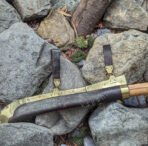
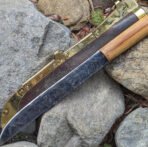
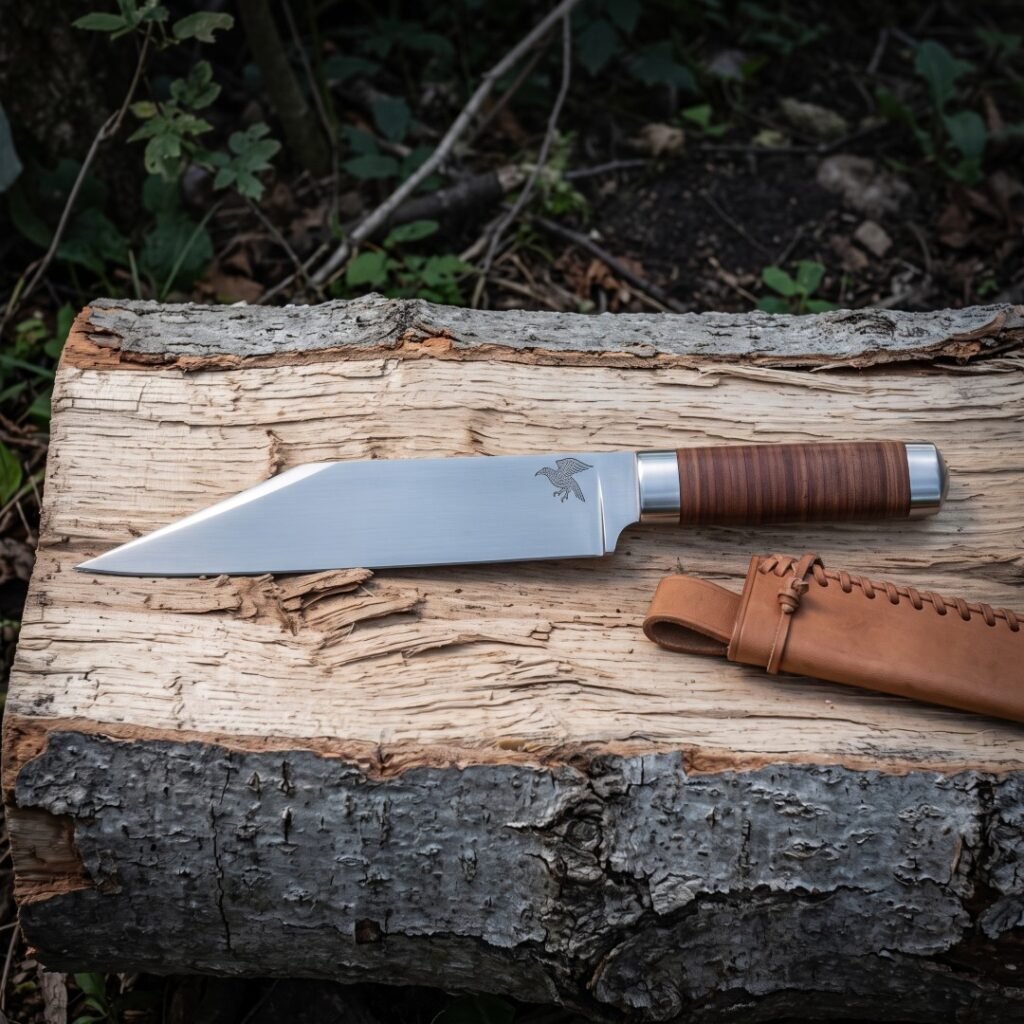










This knife is well made. Just a couple small things kept it from 5 stars. Blade quality is solid. Arrived a bit less sharp than expected but a few passes on a strop fixed it. Sheath is nice. Wish it had more padding but it does the job. Good product. Just not quite perfect.
Did not expect this level of quality for the price. High Carbon Steel blade holds a razor edge right out of the box. This shop clearly takes pride in their work.
Perfect gift. Perfect quality. No complaints. The olive wood handle feels amazing and the balance is perfect. Shipping was fast and everything arrived well packaged.