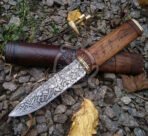
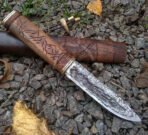
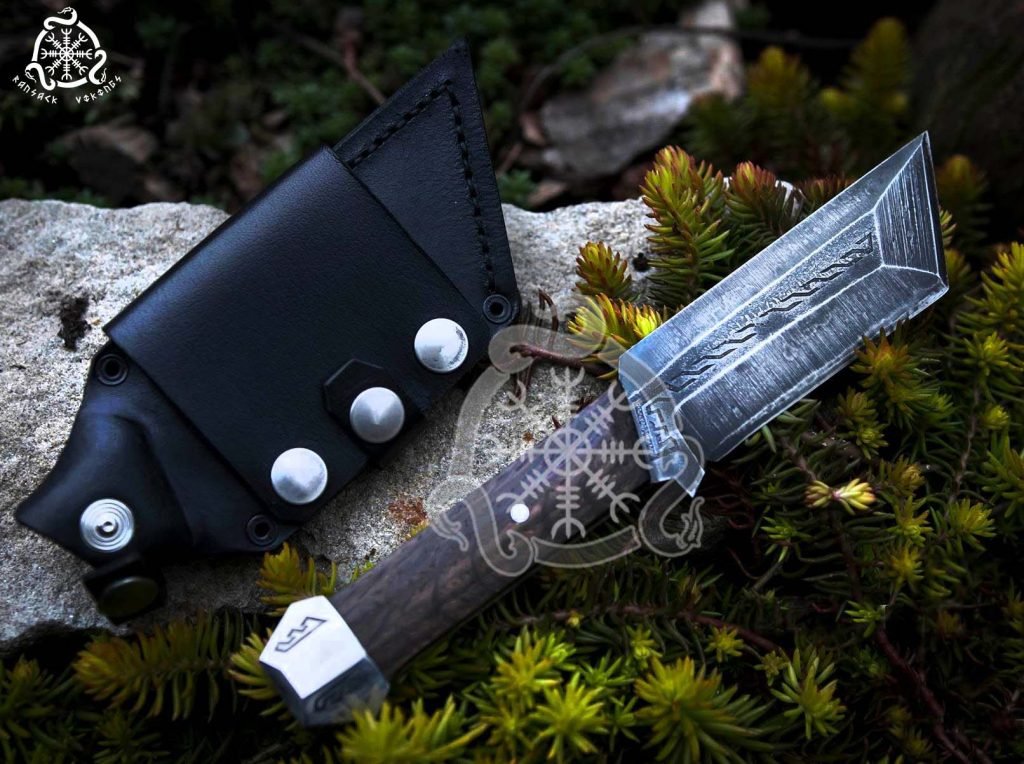
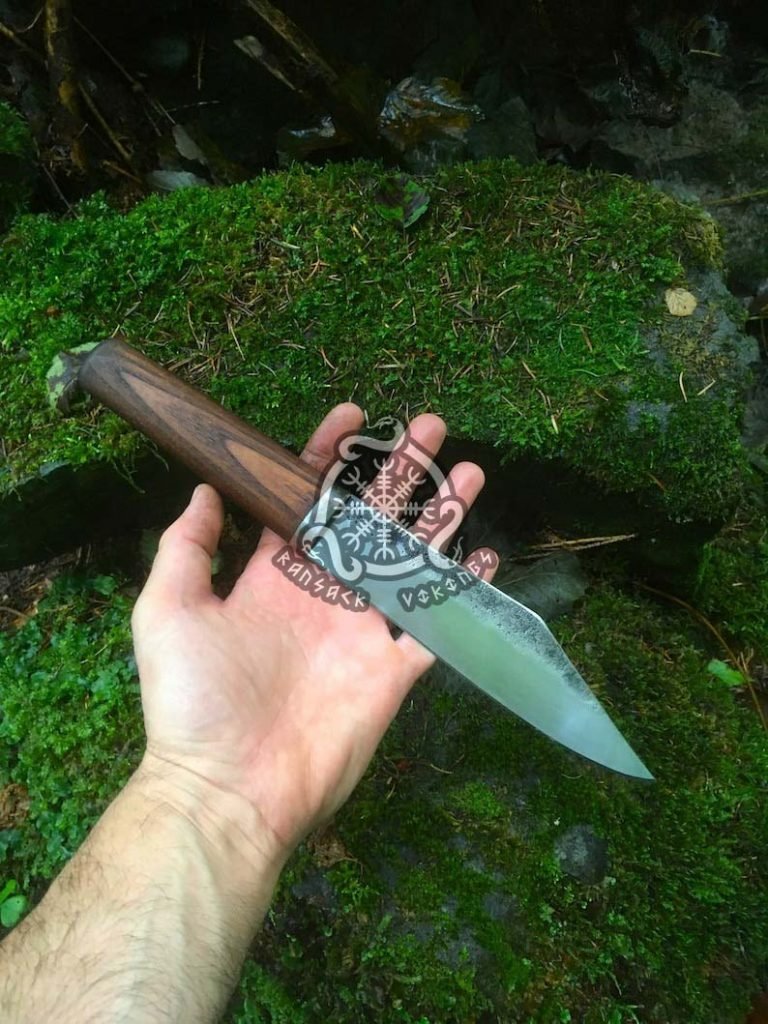
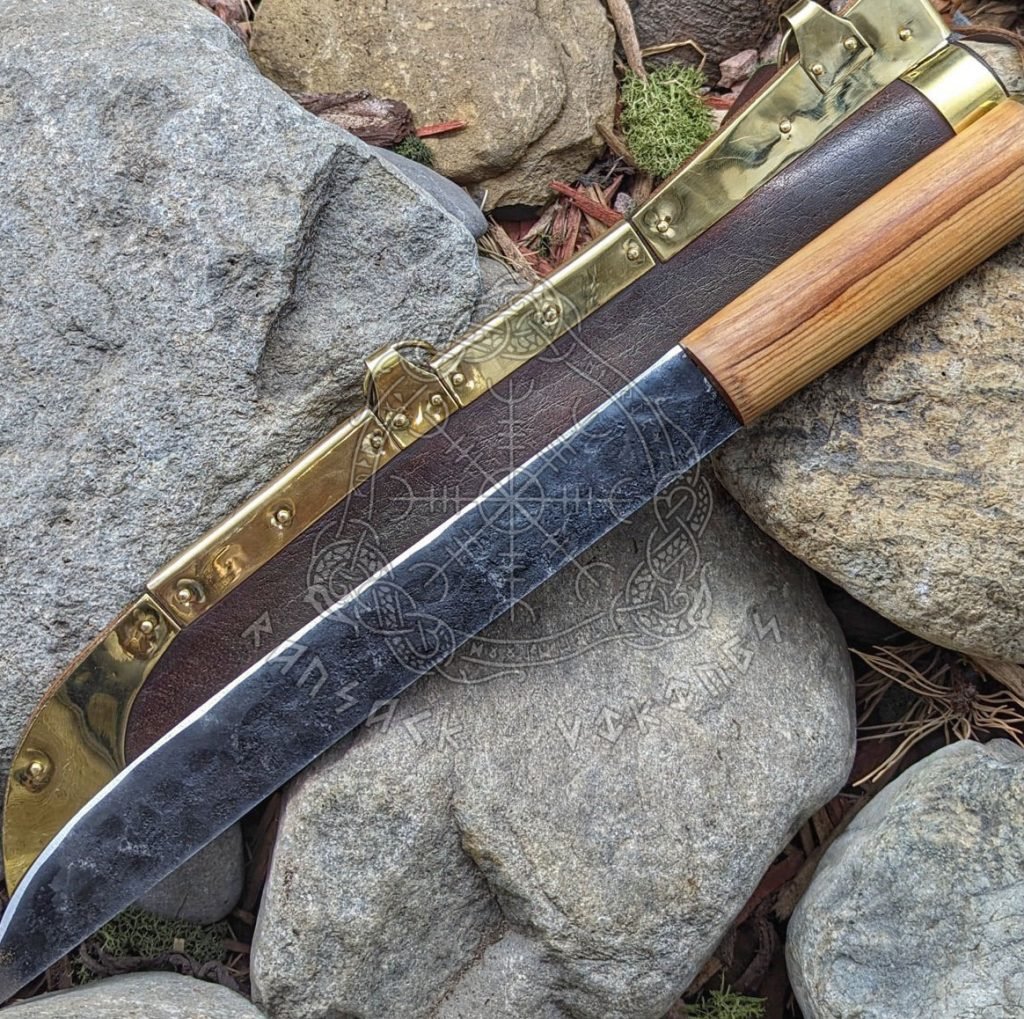
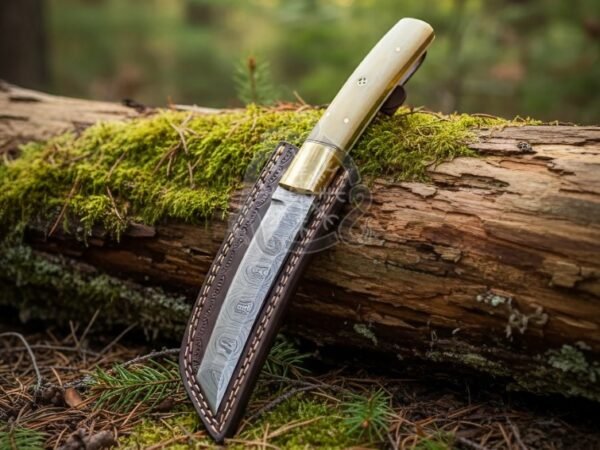
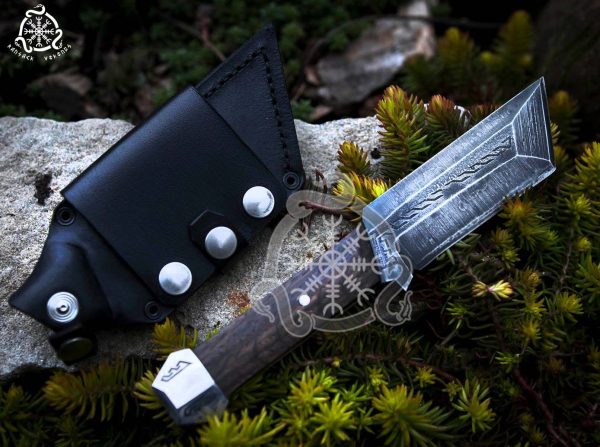
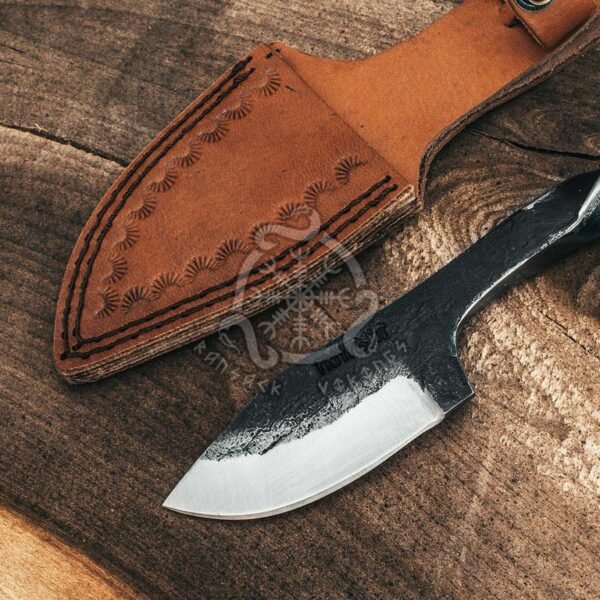
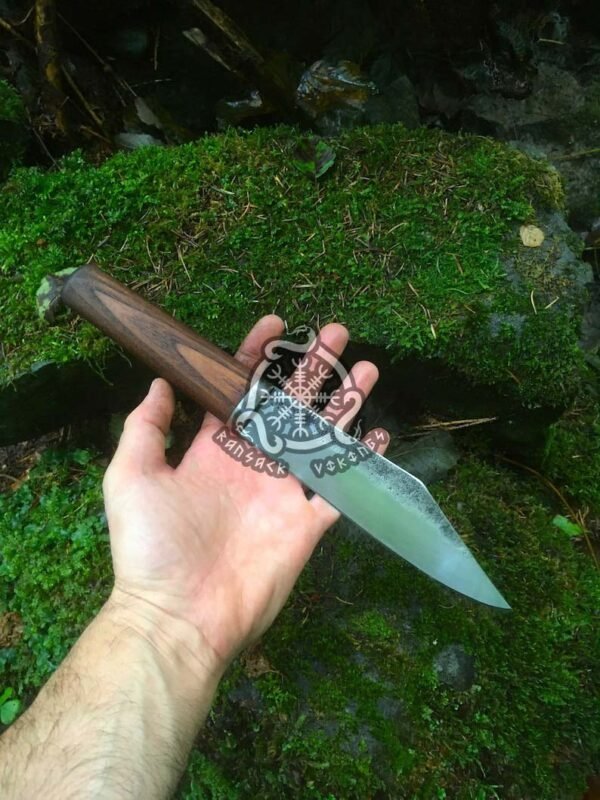
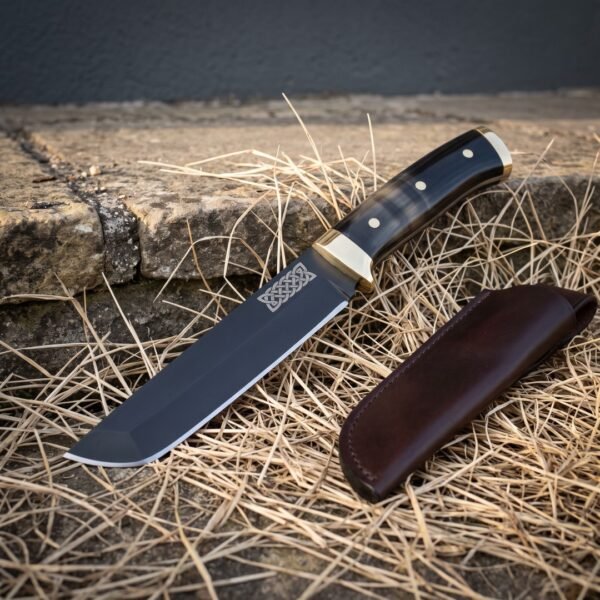
Take the Deepgrove out of the box and the weight tells you what it is. A hand forged high carbon steel blade, deep in section and 5 inches long, an engraved rosewood handle, 10 inches overall, and a wooden cover to keep it in. It is a Viking seax knife that was built to be used rather than admired.
Of the whole seax family, this is the size that actually turns up most often in the ground. The long fighting seaxes get the attention, but excavation after excavation across Anglo-Saxon England, Frankia and Scandinavia produces short seaxes in far greater numbers, in graves of every level of society and worn by men and women alike. They were the universal tool: the knife that ate dinner, cut leather, whittled a peg, trimmed a nail and settled an argument if it came to that. In a good many Anglo-Saxon burials the seax is the only edged object present at all, which is the clearest evidence there is that this was the piece a free person actually owned rather than the one they aspired to.
The Deepgrove is forged and finished in the Czech Republic, and shipping inside the United States is free.
Specifications
| Steel | Hand forged high carbon steel |
|---|
| Hardness | 54 to 58 HRC |
|---|
| Blade shape | Deep single edged seax |
|---|
| Overall length | 10 inches |
|---|
| Blade length | 5 inches |
|---|
| Handle | Engraved rosewood |
|---|
| Sheath | Wooden cover |
|---|
| SKU | RK-609 |
|---|
How a seax was worn, and why it matters to the shape
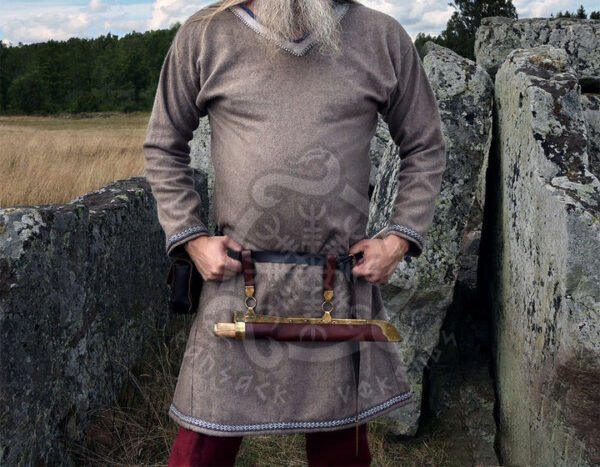
A seax was not carried like a modern belt knife. The evidence from grave finds, from surviving sheath fittings and from manuscript illustration is consistent: it hung horizontally across the front of the belt, lying flat against the stomach, with the edge pointing upward and the handle toward the drawing hand.
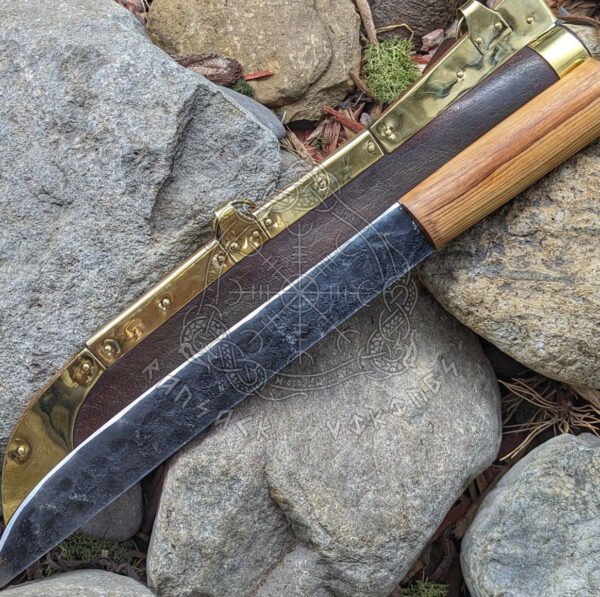
That single fact explains several things about the design. Because the blade lay flat against the body rather than hanging down a thigh, length was limited by waist width rather than by leg length, which is one reason short seaxes are so much commoner than long ones. Because it was worn edge up, the sheath only needed to hold the spine and could be an open backed cover rather than a fully enclosing scabbard, which is exactly why so many surviving seax sheaths are simple leather or timber shells with decorative fittings. And because the handle sat at the front, it could be drawn with either hand while sitting, riding or working, which is the practical requirement for something you use forty times a day.
The deep section on this blade is doing the same job it did then. Depth puts mass behind a short edge, so a five inch seax cuts with more authority than a five inch kitchen knife of the same length, and the thick flat spine gives you something to put a thumb on for controlled work. There is no crossguard because a seax never had one: the grip and the shoulder of the blade do that job.
More on the types and how they developed sits in the seax history and the seax buyer guide.
Why high carbon steel and not stainless
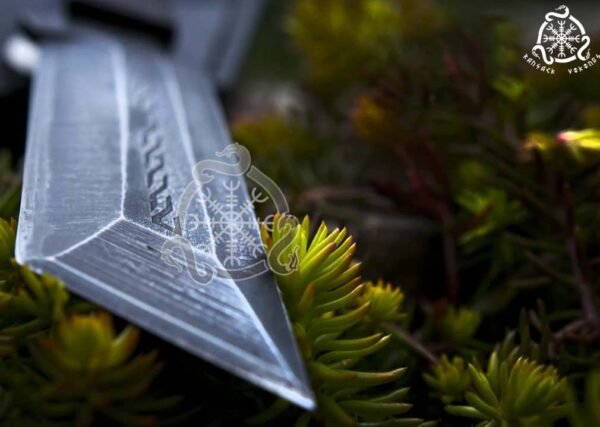
Plain high carbon steel, forged, hardened and tempered by hand and finished at 54 to 58 HRC. Our plain blades are 1095, and on a short working seax that heat treat is deliberately a little softer than we run Damascus, so the edge rolls rather than chips and can be steeled straight rather than needing a stone.
It sharpens faster than stainless, holds an edge longer under load, and will show a patina with use. That patina is protection, not damage: it is a stable oxide layer that slows further corrosion, and every working blade in the early medieval world looked like that. It is also the historically honest choice, because simple carbon steel is what these knives were made from and the way it behaves in the quench is part of why they took the form they did.
The only argument for stainless is neglect tolerance, and it is a real one if the knife is going to live in a damp shed. This wants a wipe and an occasional smear of oil in exchange for a better edge. See how high carbon compares to Damascus and Damascus versus stainless.
The engraved rosewood handle and the wooden cover
The handle is engraved rosewood, shaped and sanded to sit in the palm rather than in a catalogue photograph. Rosewood is dense, naturally oily and closely grained, which is what lets it hold a cut engraved line crisply where an open grained timber would tear out. It also darkens with handling over the years, so the engraving gradually stands out more rather than less.
Wood moves with temperature and moisture, so a light coat of oil once or twice a year keeps it tight and stops it drying out and shrinking away from the tang. That is the entire maintenance routine and it takes two minutes. We show the method in how to oil a wooden handle. Do not soak it, and keep it off radiators and out of hot vehicles.
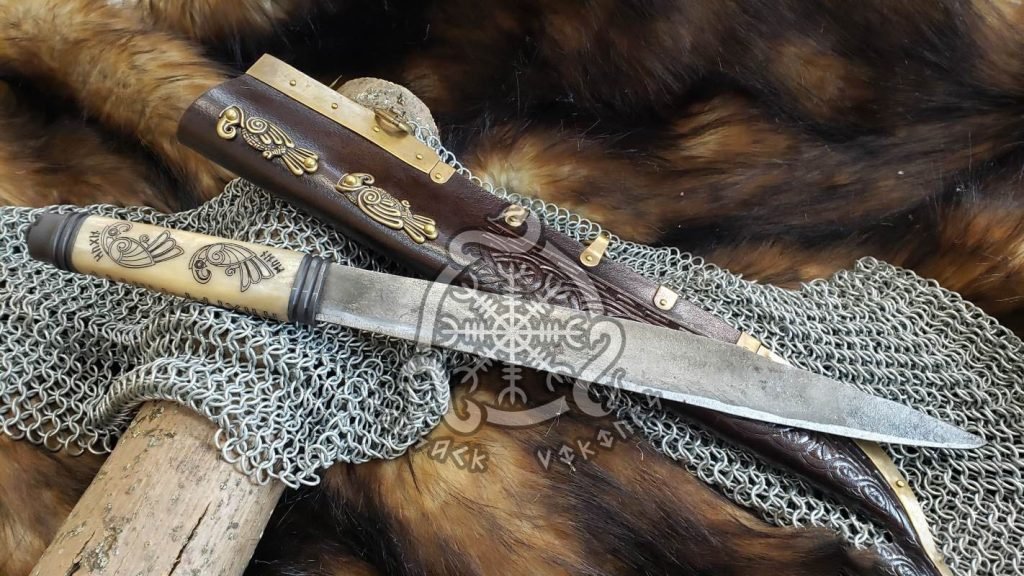
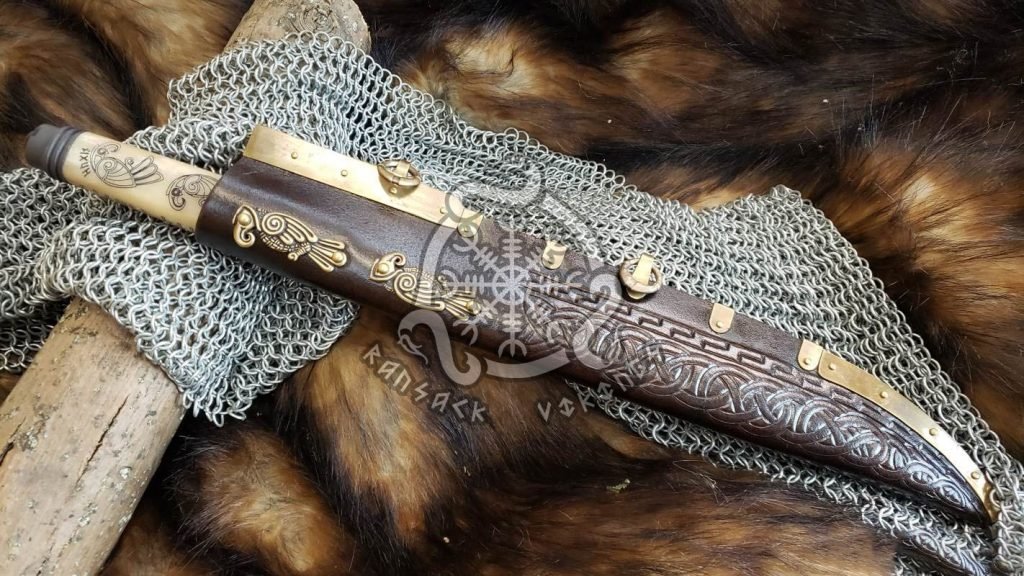
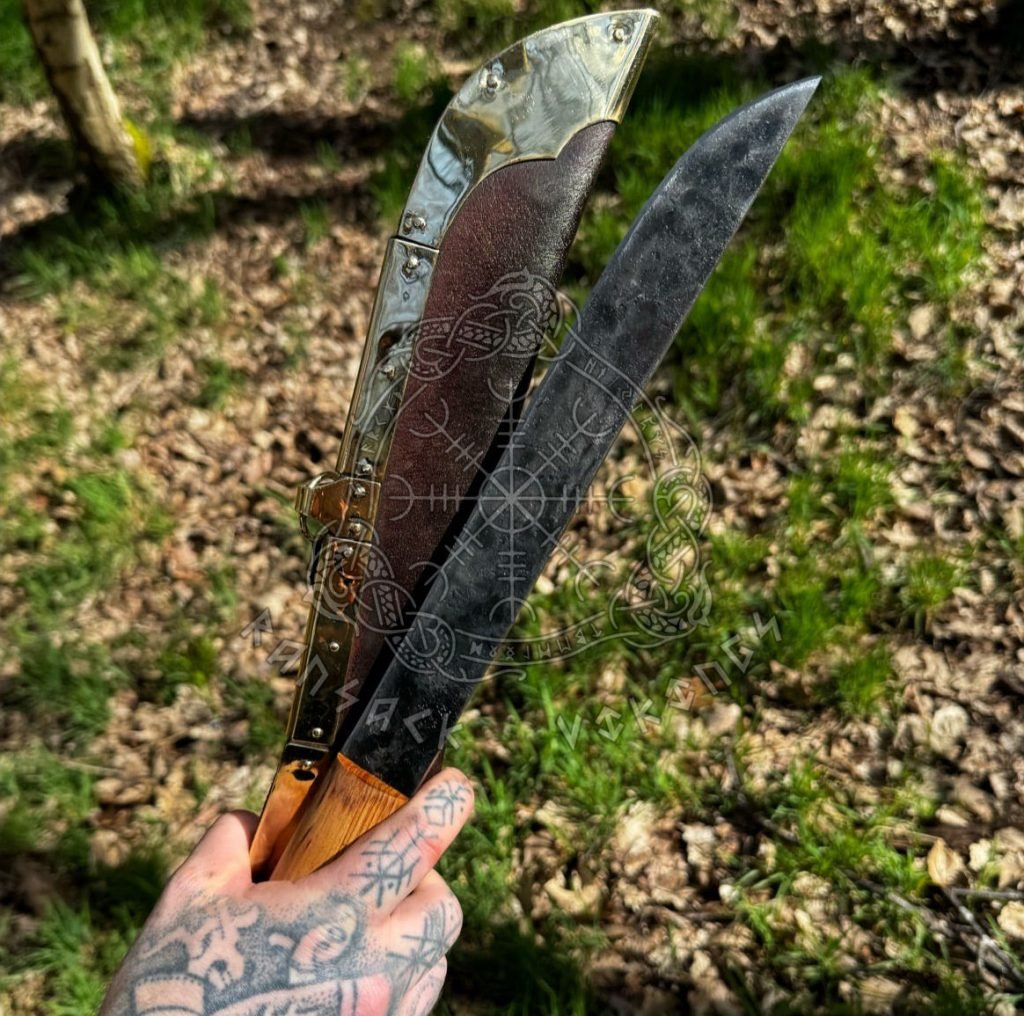
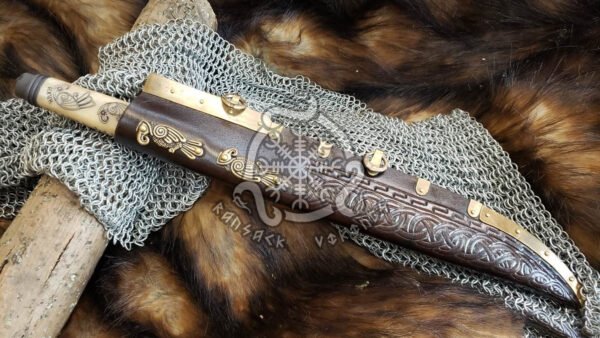
The piece ships in a wooden cover rather than a leather sheath, which is closer to the archaeology than most modern reproductions manage. Timber sheaths and open backed covers appear repeatedly in seax finds, and they have one genuine advantage over leather: timber does not hold acid or moisture against the blade the way vegetable tanned leather does, so a carbon steel blade stored in wood is less likely to spot. Treat the cover with the same annual coat of oil you give the handle.
Engraving, runes and your own design
Use the rune converter on this page to turn a name, a date or a short phrase into Elder Futhark and we will cut it into the steel or the handle. If you would rather have a Viking pattern than a rune line, choose your own design in the engraving option above the add to cart button and tell us whether it goes on the blade or the handle. Where a piece already carries an engraved design, your chosen engraving replaces it rather than sitting alongside it. That applies directly to this model, because the Deepgrove ships with a cut design on the rosewood as standard. Order handle engraving and yours is cut in place of it. Order blade engraving and the standard handle design stays as it is. See the engraving page.
Care and sharpening
Dry it, oil it, and store it out of a damp cover. If a spot of orange rust does appear it lifts off easily, and we show the method in removing rust. Leave the grey patina alone, because it is doing useful work.
Sharpening a five inch single edged blade is the simplest job in the range. The whole edge fits on a bench stone, so hold a consistent angle, match your stroke count on both sides and finish fine, then strop. Because the spine is thick and flat you have a solid reference for your thumb, which makes holding a steady angle freehand noticeably easier than on a thin tapered blade. The method is in sharpening with a whetstone and blade care is in steel care.
Made in the Czech Republic
This piece is made by hand in the Czech Republic, in a workshop that still works the old way. The steel is forged, ground, heat treated and finished by smiths who learned the trade from the people before them, and the wood, horn and leather are cut and fitted by hand rather than pressed out on a line. That is also why no two pieces come out exactly the same.
Ransack Viking is a United States company. We import these pieces ourselves, check every one when it lands and ship from our warehouse in Memphis, Tennessee. Engraving is done here in the United States after the piece arrives, so your runes or your own design go on before it leaves for you.
A note on handmade variation
The Deepgrove is hand forged. It is not machine made and it is not bulk produced, so what arrives will not be a pixel for pixel copy of the photograph. The surface tone comes off the anvil rather than out of a die, the rosewood grain and colour belong to the tree it was cut from, the engraved design is cut by hand and never lands identically twice, and the line of the spine shifts by fractions because a person forged it. The dimensions, the steel and the build are the same every time. The character is not.
Frequently asked questions
Is a five inch seax historically accurate
Very. Short seaxes are the commonest size in the archaeological record by a wide margin, and in many graves they are the only edged object present.
How would this have been carried
Horizontally across the front of the belt, edge upward, with the handle toward the drawing hand. That is what the finds and the sheath fittings show.
The handle is already engraved. Can I still have my own runes
Yes. Handle engraving replaces the standard design rather than sitting beside it. If you want to keep the existing work, choose blade engraving instead.
Why a wooden cover instead of a leather sheath
Timber covers are well attested in the archaeology, and they have a practical advantage: wood does not hold acid and moisture against carbon steel the way vegetable tanned leather does.
Can I use it as an everyday knife
Yes, and that is what the pattern was for. It handles food, cordage, leather and light woodwork. Wash and dry it after food use, because acidic food darkens carbon steel quickly.
Will the rosewood engraving fade
No. It is cut into the timber rather than printed on it, and rosewood darkens with handling, so the line tends to stand out more over the years rather than less.
What is in the box
- One Deepgrove high carbon Viking seax knife
- Wooden cover
- Protective packaging
- Forged and finished in the Czech Republic
Explore the range
Compare it with the rest of Viking Seax, the belt blades in Viking Knives, the wider Norse Arms range and the personalised work in Engraved and Personalized. Norse history and steel background sit in the guides.














This thing is a beast in the best way. The rosewood handle feels amazing and the balance is perfect. Edge retention has been great even after regular use. 10/10 would buy again.
Absolutely blown away by this knife. Ransack Viking’s attention to detail is honestly unmatched. This shop clearly takes pride in their work.
This thing is a beast in the best way. Even the small engravings are crisp and clean. Fit and finish is museum quality. You can tell real craftsmen made this by hand. Leather sheath is thick and well stitched. Not the cheap stuff you usually get. Highly recommend this one.
Photos don’t do this knife justice at all. This is my third order from Ransack Viking and they never disappoint. So worth it.
Got this as a birthday gift and the reaction was priceless. Fit and finish is museum quality. You can tell real craftsmen made this by hand. Weight and balance make it feel like a real functional piece not some cheap replica. Will definitely order again for another gift.