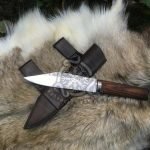
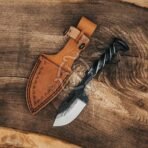
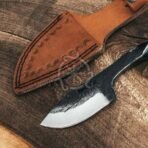
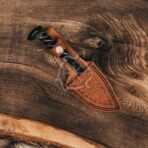
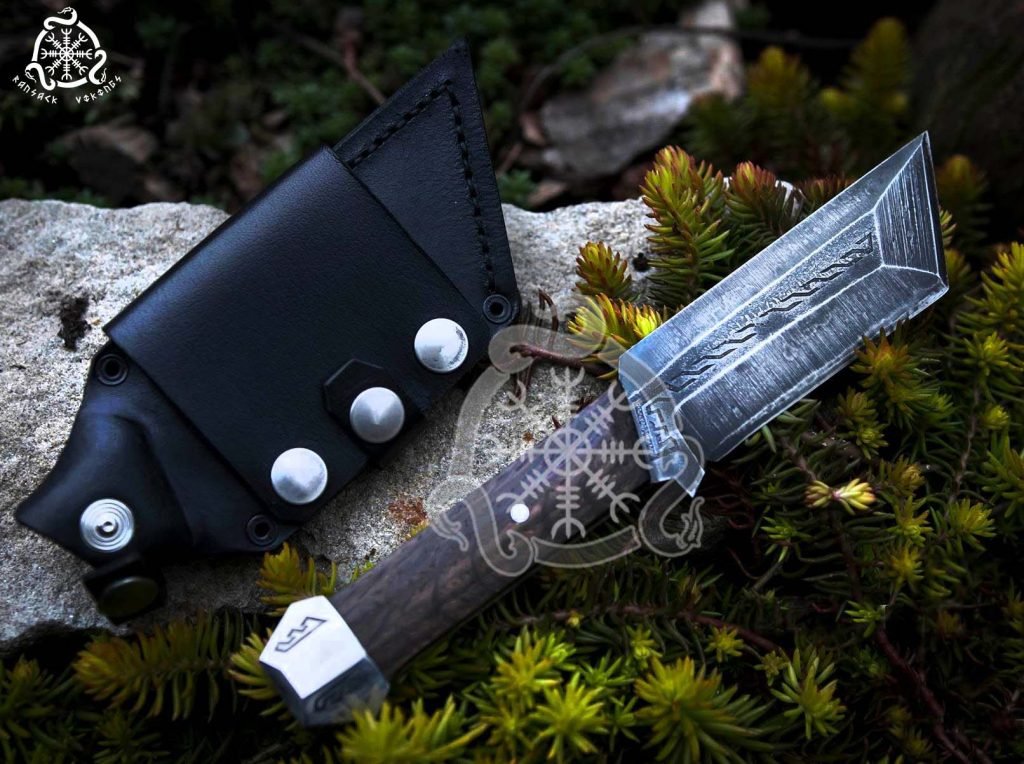
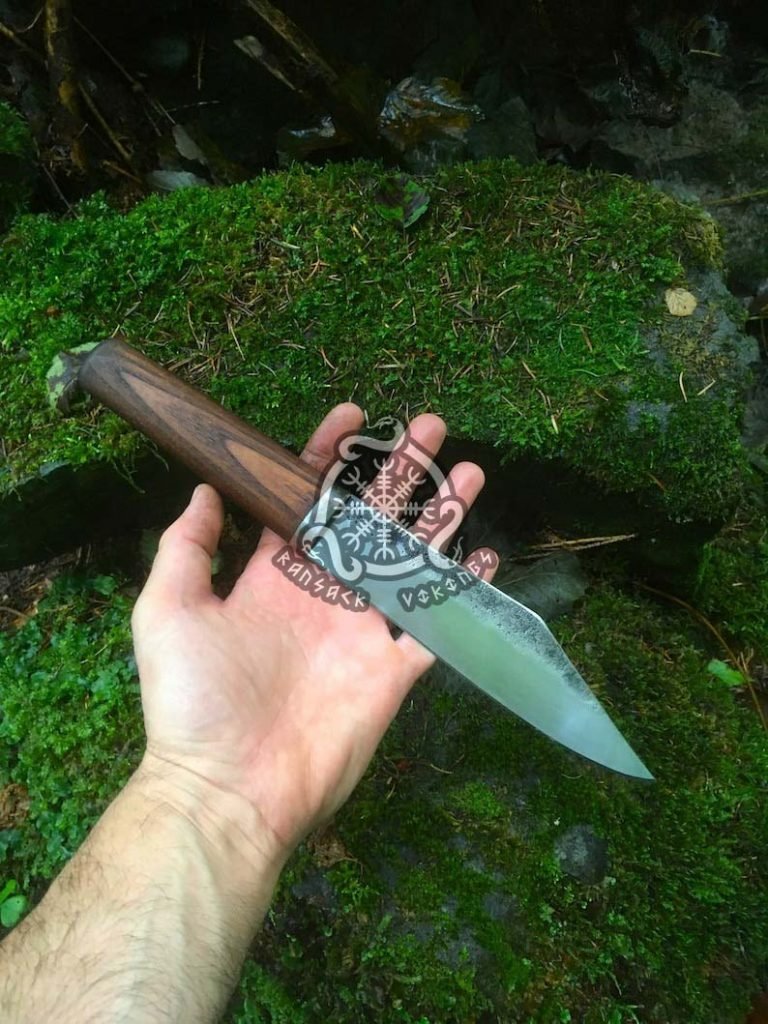
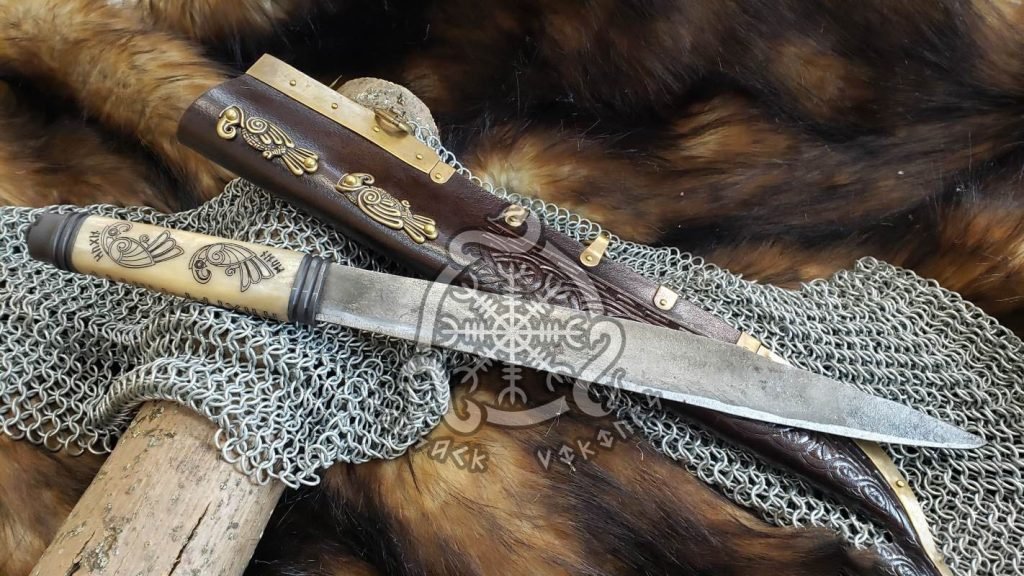
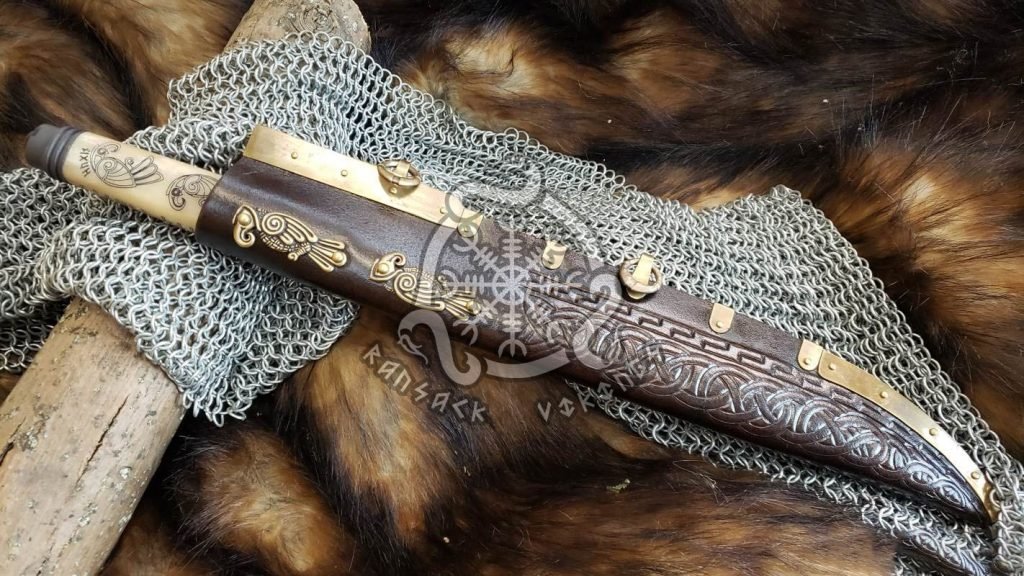
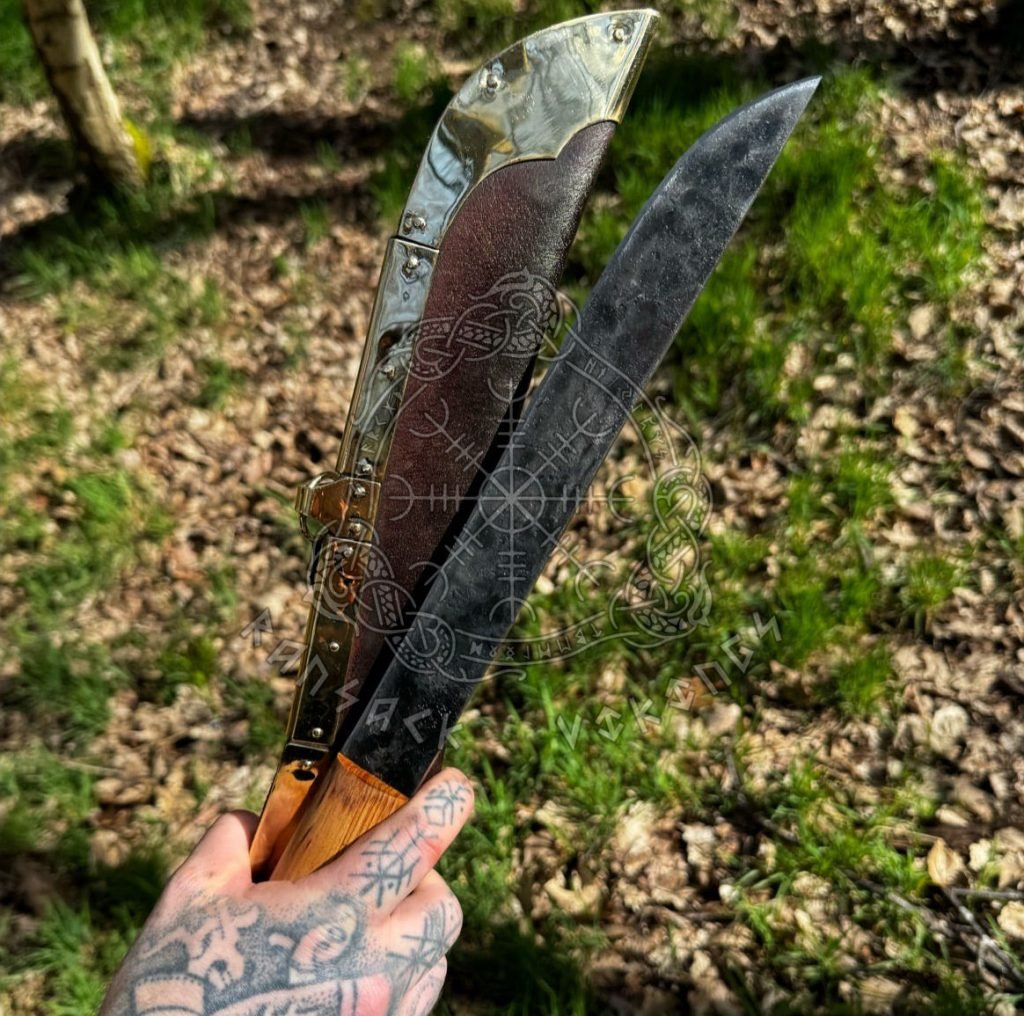
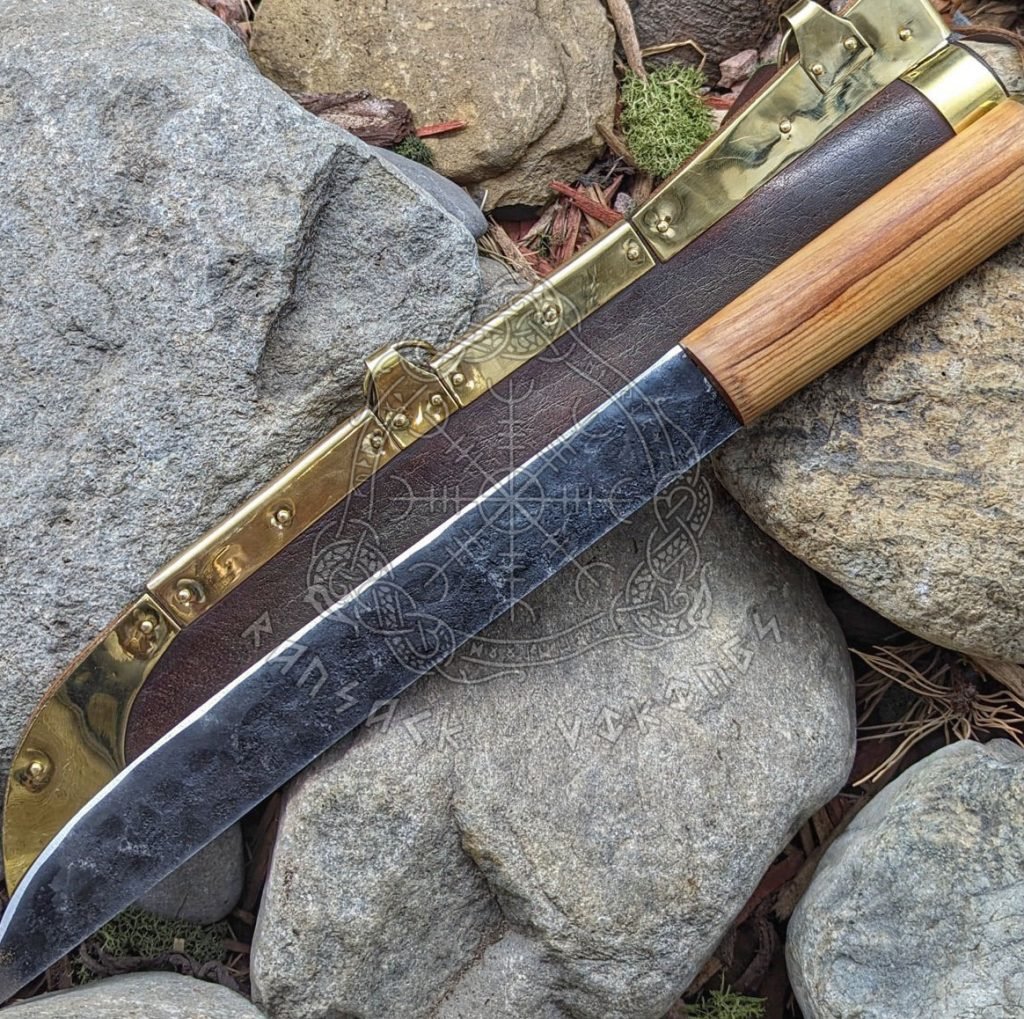
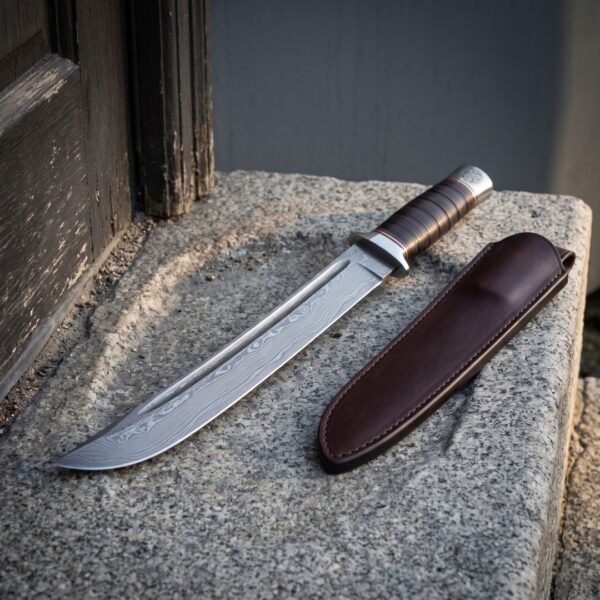
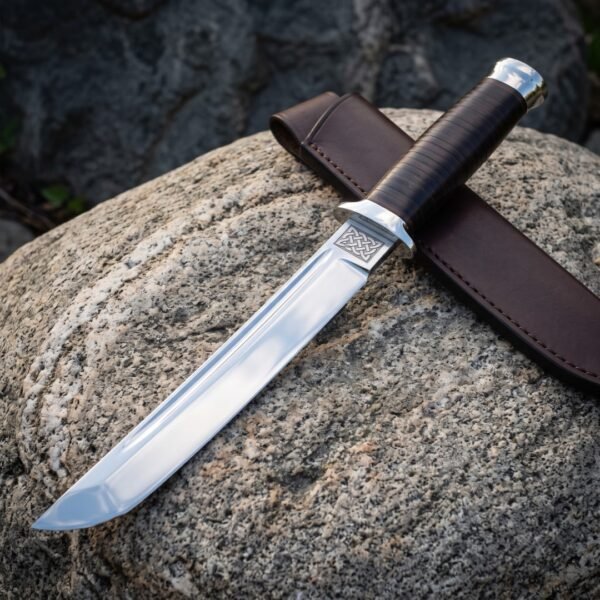
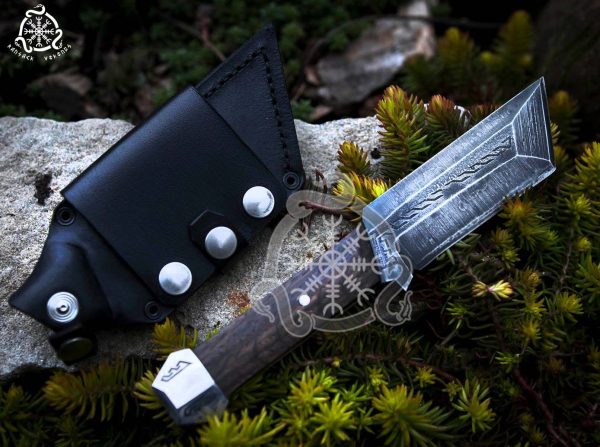
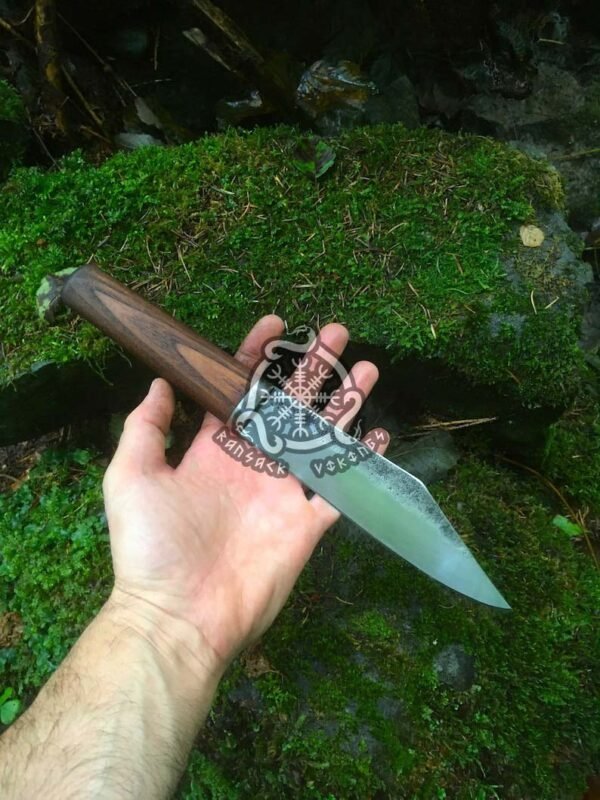
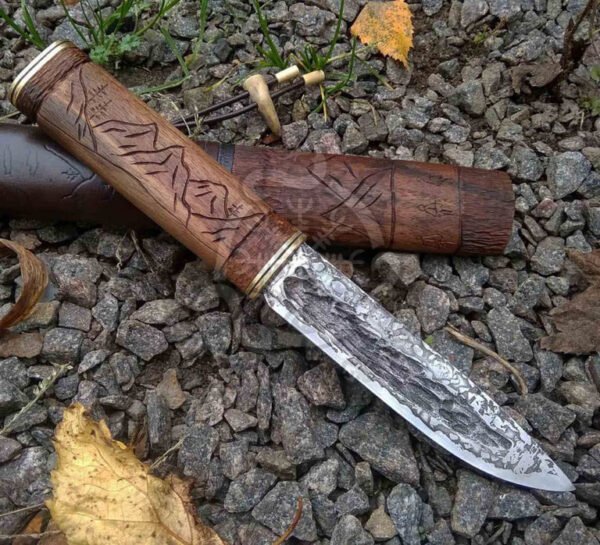
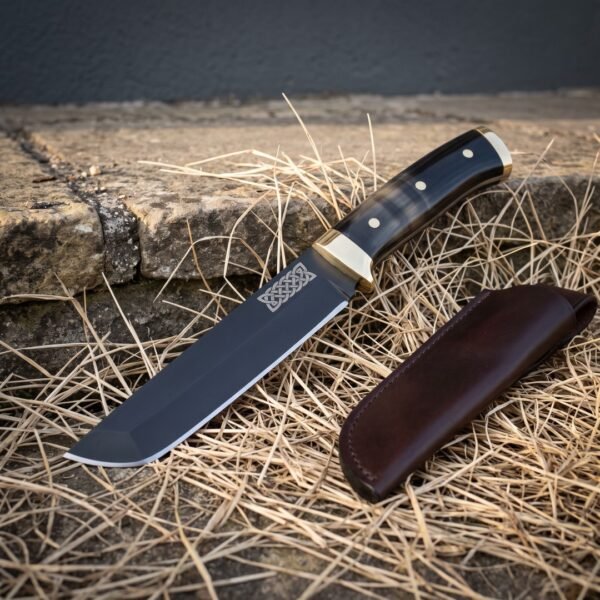
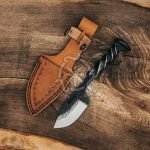
Not every seax was a fighting blade. Most of them were this size. The Beltsax is a compact hand forged high carbon steel Viking seax knife measuring 7.9 inches overall, which is 20 centimetres, with a 3.5 inch blade, which is 9 centimetres. It comes with a premium cowhide sheath and it is the piece in this range that most closely matches what an ordinary person in a Norse settlement would actually have had on their belt. If you are choosing between seax shapes, choosing a seax covers the ground.
That point is worth expanding, because it is one of the more revealing things archaeology tells us about the Viking Age. Knives turn up in almost every excavated grave, in settlement layers, in middens, everywhere. Men, women and children were buried with them. Swords appear in a small minority of male graves and axes in rather more, but a knife is close to universal, and the great majority of those knives are small utility blades between two and four inches. Carrying one was also a marker of legal status. Thralls, the unfree, were restricted from bearing arms, so a free person wearing a knife at the belt was making a visible statement about where they stood. The knife was the tool, the tableware, the workshop and the badge, all at once.
Every Beltsax is forged, heat treated, ground, handled and sheathed in the Czech Republic. Shipping inside the United States is free, processing takes one to two weeks, and returns are accepted within seven days.
Specifications
| Steel | Hand forged 1095 high carbon steel |
|---|
| Hardness | 54 to 58 HRC |
|---|
| Overall length | 7.9 inches, 20 cm |
|---|
| Blade length | 3.5 inches, 9 cm |
|---|
| Handle | Shaped and fitted by hand |
|---|
| Sheath | Premium cowhide leather |
|---|
| SKU | RK-656 |
|---|
Why three and a half inches is the size that survives
There is a reason the everyday knife has settled at roughly this length in almost every culture that has ever had steel, and it is worth thinking about before assuming that longer is better.
A 3.5 inch blade is long enough to do essentially all daily cutting. It will break down food, open packaging, trim rope, cut cord, shave a feather stick, skin a rabbit, whittle a peg and work leather. Past about four inches you gain very little additional capability for ordinary tasks and you start losing control, because the further the tip is from your hand the less precisely you can steer it.
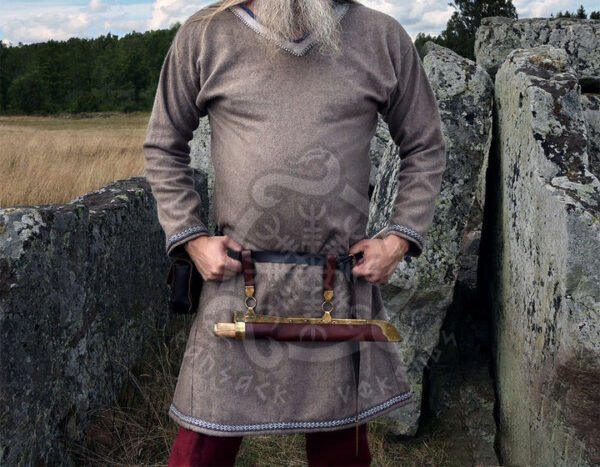
It is also the length that stays comfortable on a belt all day. A ten inch knife announces itself every time you sit down, get into a car or lean against something. A knife this size disappears. That is exactly how the Norse carried theirs, hung from a thong or a loop at the waist, often horizontally, and it is why so many of them ended up lost in the ground for archaeologists to find.
The last advantage is structural. On a short blade the distance between the edge and the tang is small, which means there is almost no leverage available to bend or break it. A short thick knife is very hard to damage. The single edged seax profile adds to that, since the unsharpened back gives you a spine you can push on with a thumb for controlled cuts.
Why high carbon steel and not stainless
The blade is 1095, a simple high carbon steel, brought to 54 to 58 HRC. On a small working knife that combination is close to ideal. It is hard enough to hold an edge through a long day of ordinary cutting and tough enough that it will not chip if you catch a staple or a bone. More importantly, it sharpens quickly, which matters far more on a knife you actually use than a headline hardness figure does. A knife that goes dull and takes forty minutes to bring back gets left in a drawer. A knife that comes back in two minutes on a pocket stone gets carried.
Stainless steel is corrosion resistant because it carries a high chromium content, and that same chromium makes it markedly slower to sharpen. On a small utility knife that is the wrong trade. Carbon steel will spot if it is left wet, especially after cutting acidic food, so it wants drying and a wipe of oil. In return it patinas to a stable grey that protects itself and takes a keener edge than stainless in the same price bracket. The honest version of the argument is in Damascus versus stainless.
The grip and the cowhide sheath
The handle is shaped and fitted by hand to the finished tang rather than pressed onto a machined blank. On a small knife the fit of the grip matters disproportionately, because there is no mass to hide a bad joint. Keep it dry, do not leave the knife standing in water, and never put it in a dishwasher. If the grip is a natural material like wood, horn or bone, a light wipe of oil once or twice a year keeps it tight and stops it drying out, as described in wooden handle care.
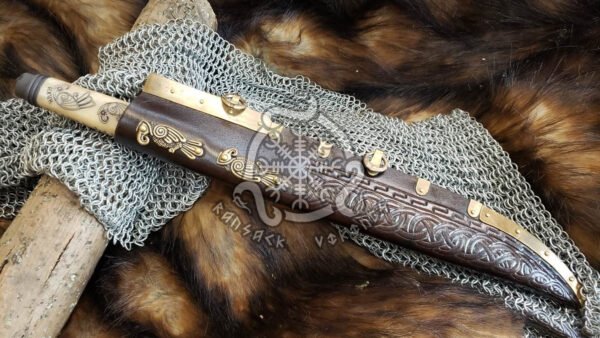
The sheath is cowhide, cut and stitched to the finished knife rather than to a pattern, which is how you get retention that holds the blade without needing a strap. Two things to know about leather. New veg tanned leather is stiff and will feel tight for the first few weeks, and that is correct rather than a fault. It relaxes to the shape of the blade with use. And leather absorbs moisture from the air, so a knife stored in its sheath for months is a knife sitting against something damp. For long storage, take it out.
Engraving, runes and your own design
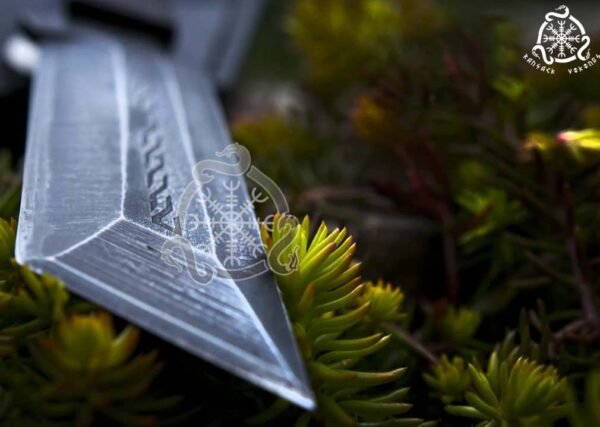
Use the rune converter on this page to turn a name, a date or a short phrase into Elder Futhark and we will cut it into the steel or the handle. If you would rather have a Viking pattern than a rune line, choose your own design in the engraving option above the add to cart button and tell us whether it goes on the blade or the handle. Where a piece already carries an engraved design, your chosen engraving replaces it rather than sitting alongside it. On a 3.5 inch blade keep the line short, since the flat above the edge is the only real space available. Many people put a set of initials or a single word on the handle instead. Detail on the engraving page.
Care and sharpening
Dry the blade after every use, especially after cutting fruit, onions, tomatoes or anything else acidic, because those will mark carbon steel within minutes. Wipe a thin film of oil on the steel before it goes into a drawer. Do not store it long term inside the cowhide sheath. Rust spots lift with fine abrasive and oil and are not permanent. The routine is in steel care.
A short blade is the easiest thing in the world to sharpen, which is one of the quiet pleasures of owning one. A medium stone, the existing angle, half a dozen passes a side, then a strop, and you are done in less time than it takes to find the stone. The technique is in sharpening with a whetstone. Avoid pull through sharpeners, which tear rather than cut and will chew a hand ground bevel apart.
Made in the Czech Republic
Every piece we sell is made by hand in the Czech Republic. The smiths there work the way the trade has been worked for a long time, heating and hammering the steel, taking the bevels down by eye, and fitting the handle and the leather one at a time. There is no automated line anywhere in it, so small differences from one piece to the next are normal and expected.
Ransack Viking is a United States company based in Memphis, Tennessee. We bring the pieces in ourselves, inspect them on arrival and ship them from our own warehouse. If you add engraving, that is carried out here in the United States before your order goes out.
A note on handmade variation
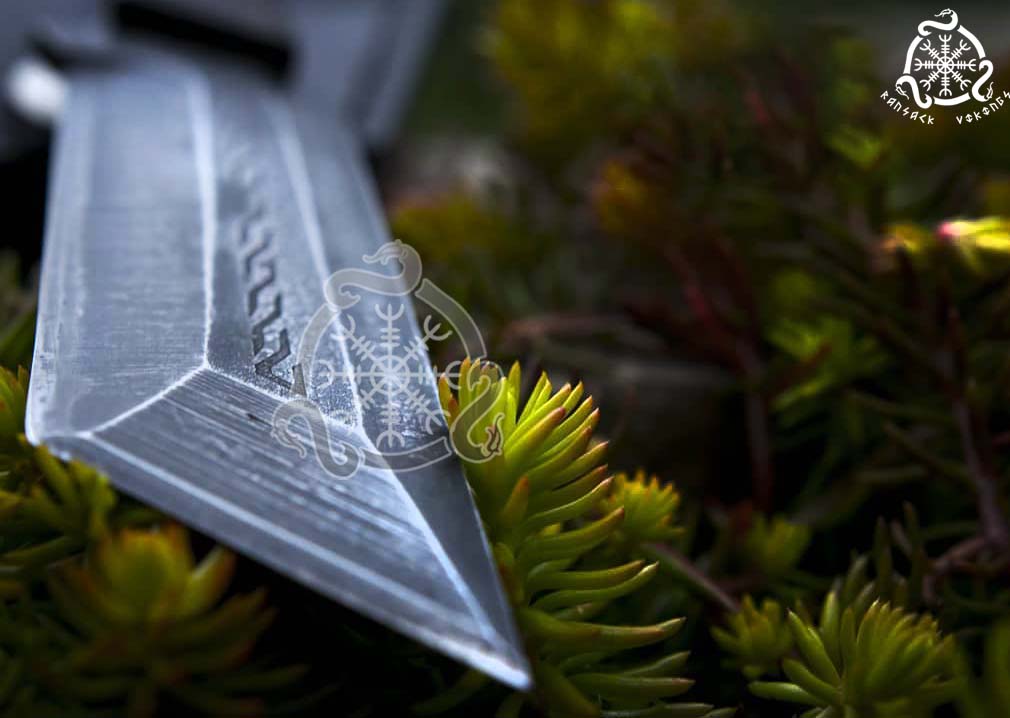
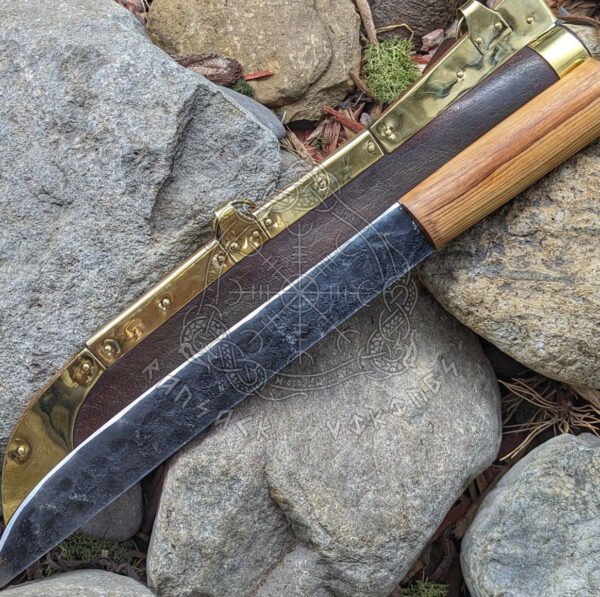
This knife is hand forged. It is not machine made and it is not bulk produced, so what arrives will not be a pixel for pixel copy of the photograph. The finish on the blade, the exact curve of the belly, the grain and colour of the handle and the tone and stitching of the leather all vary from one knife to the next, because each is worked by hand from natural materials. The dimensions, the steel, the hardness and the build are the same every time. The character is not.
Frequently asked questions
Is this big enough to be useful?
Yes, and for daily cutting it is arguably the most useful size there is. A 3.5 inch blade handles food, cordage, packaging, carving and light game work, and it stays comfortable on a belt in a way a long blade does not.
Is the sheath included?
Yes. A premium cowhide sheath is cut and stitched to the finished knife and ships with it.
Why does the sheath feel so tight?
New vegetable tanned leather is stiff by design. It loosens to the shape of your blade over the first few weeks of use. Do not try to stretch it by force.
Will the blade discolour?
It will, and that is expected. Carbon steel greys over into a patina, faster if you cut acidic food. The patina is a protective oxide layer, so leave it. Orange rust is different and should be wiped off and oiled over.
Is it full tang?
The blade and tang are forged from a single piece of steel running into the handle. There is no separate welded on tang.
How does this compare to the larger seaxes in the range?
The bigger seaxes carry six to eleven inches of blade and are aimed at reenactment, display and heavy outdoor work. This one is the everyday knife. If you want something you will genuinely use every week rather than admire, start here.
What is in the box
- One Beltsax hand forged high carbon Viking seax knife
- Premium cowhide sheath
- Protective packaging
- Forged and finished in the Czech Republic
Explore the range
Related collections: Viking Seax, Viking Knives, Hunting Knives and Damascus Steel Jewelry. The steel, the leather and the sharpening are covered in the guides.













Got this as a gift and now I want one for myself too. Already planning my next purchase from this shop.
Showed up right on time and looked even better than the photos. Made overseas in the Czech Republic yet shipped from a US location so no long customs wait. The wood handle feels amazing and the balance is perfect. Already telling my friends to check this out.
Been eyeing this knife for months and it did not disappoint. Leather sheath is thick and well stitched. Not the cheap stuff you usually get. If you’re on the fence just get it. You won’t regret it.