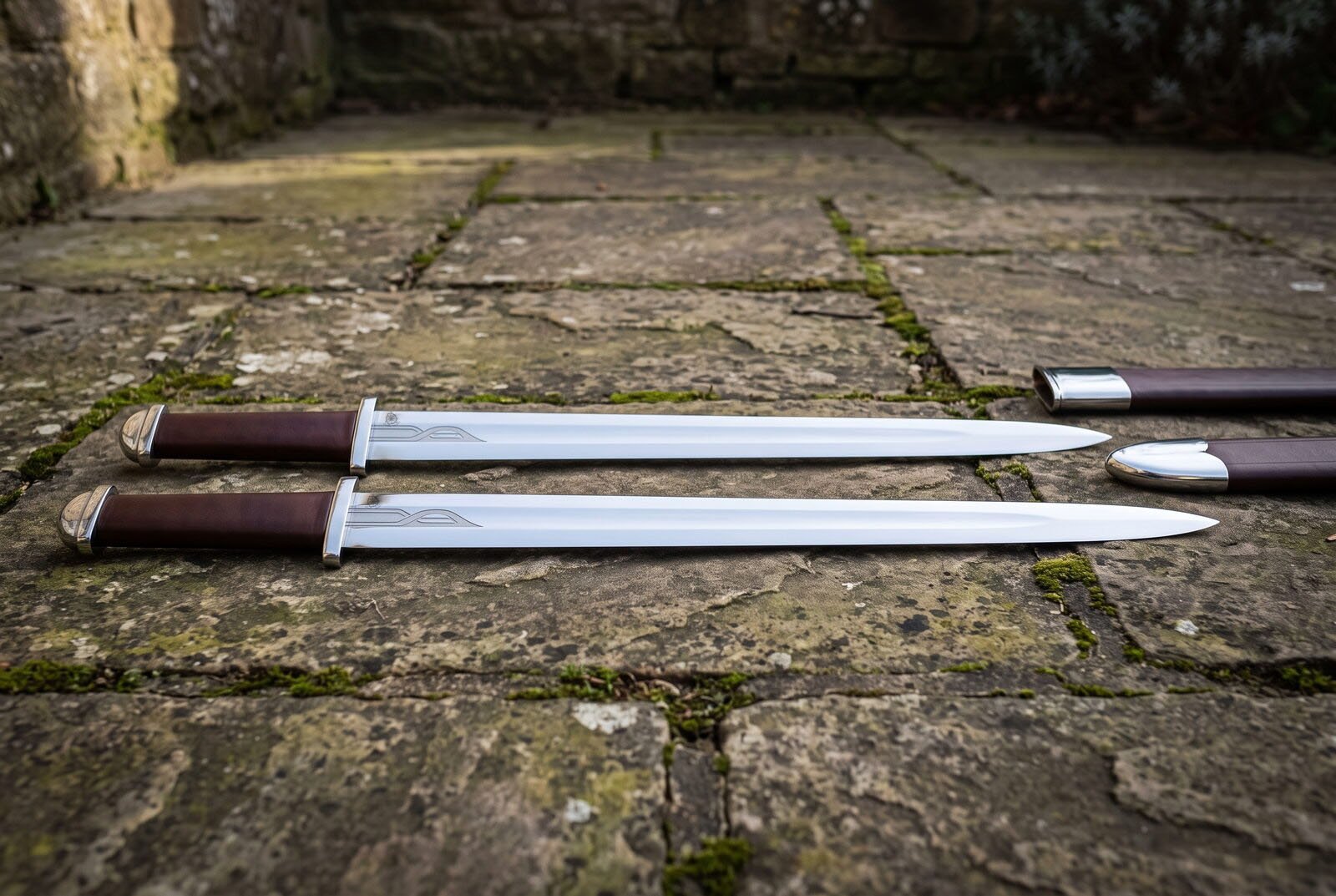
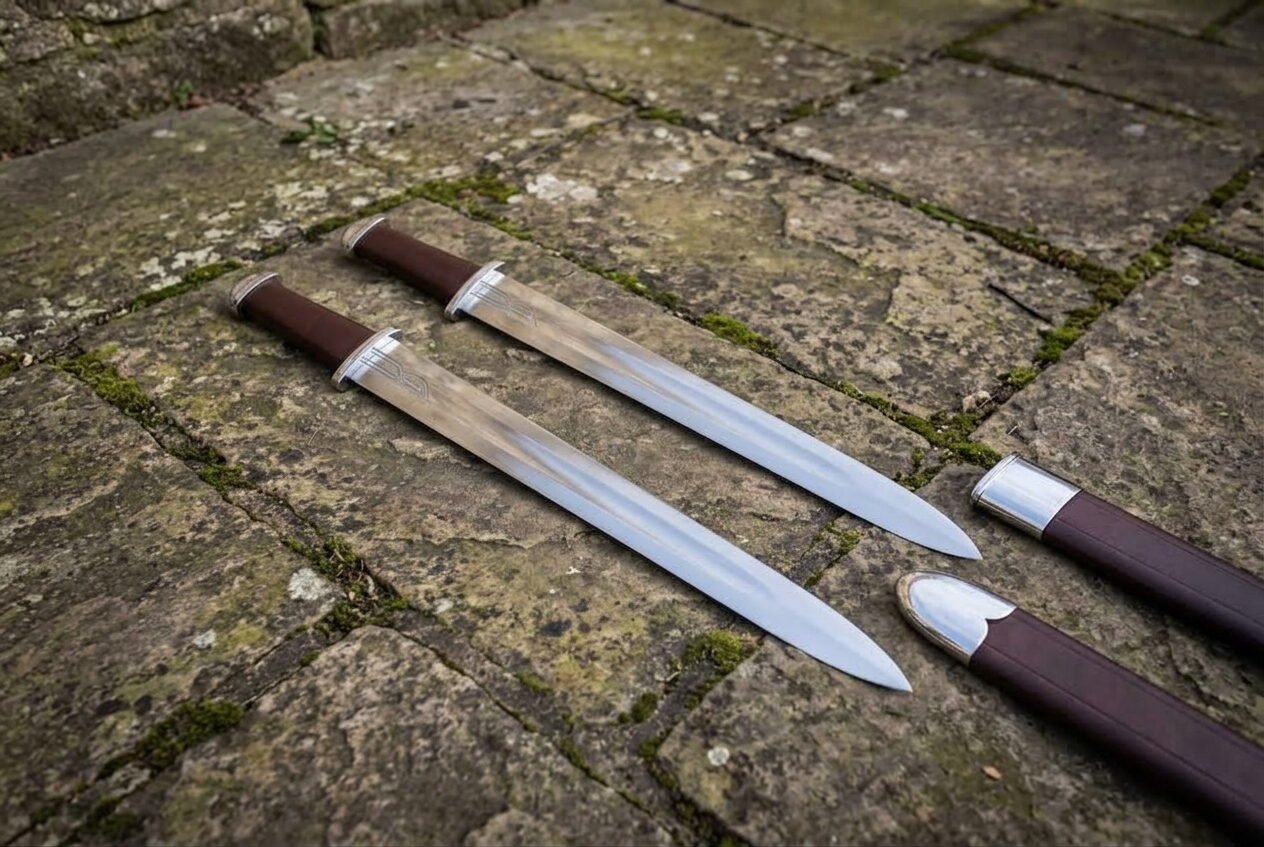
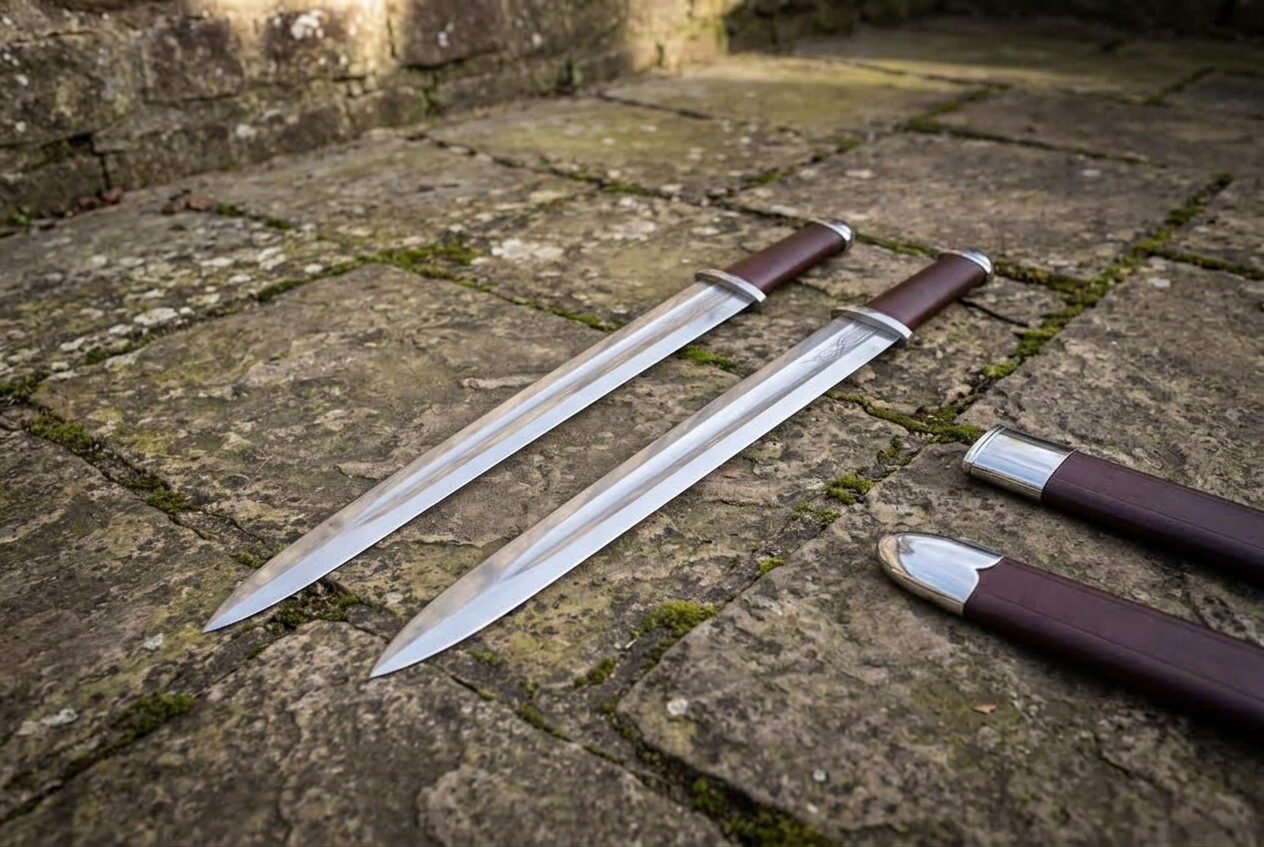
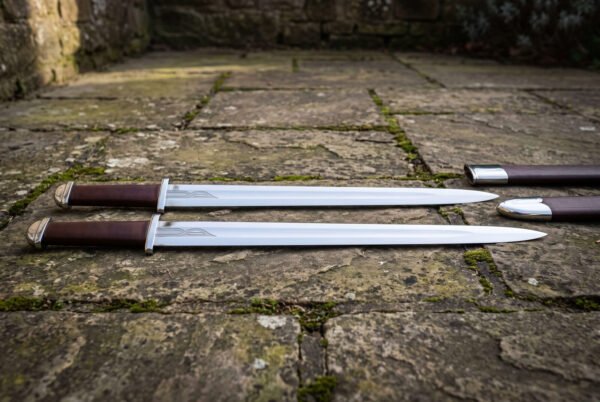
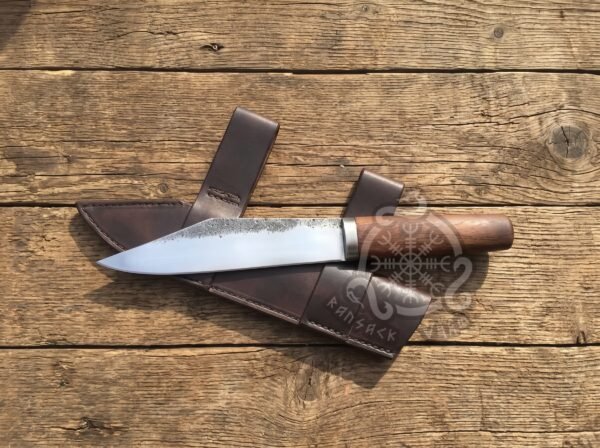
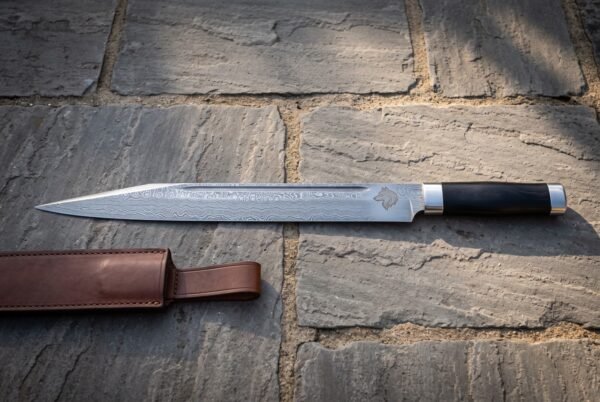
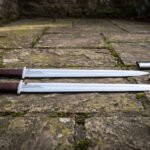
The Langfell is a matched pair of langseax, two long single edged Norse blades made and finished together and sold as one set. Each has a dark brown leather grip between a steel bolster and a steel pommel cap, a polished single edged blade with a shallow etched knot near the ricasso, and its own brown leather scabbard with steel fittings. Two blades, two scabbards, one price.
The seax is the most common blade in the entire Germanic and Norse archaeological record and the one people know least about. It has no crossguard, which looks like an oversight until you realise it was worn horizontally across the front of the belt, edge upward, and drawn across the body with one hand. A guard would have fouled that draw every time. The word itself survives in the name of the Saxons, and in Old English it simply meant a knife. Everything from a three inch eating blade to a thirty inch fighting blade like these carries the same name, and archaeologists separate them by length rather than by any change in form. Forged, ground, heat treated and hilted in the Czech Republic.
A seax is the working knife of the north rather than a fighting blade, and the history of the seax covers how it was carried. For where 1095 sits on the hardness scale and what that buys you, see the steel and hardness page. The bearded axes are the usual companion piece if you are building a Norse kit.
Specifications
| Blade material | 1095 high carbon steel, 54 to 58 HRC |
|---|
| Pieces included | 2 blades and 2 scabbards |
|---|
| Overall length, each | 30 inches |
|---|
| Blade length, each | 23 inches |
|---|
| Blade type | Single edged langseax with a straight spine and an angled point |
|---|
| Grip | Dark brown leather over a shaped core, steel bolster and pommel cap |
|---|
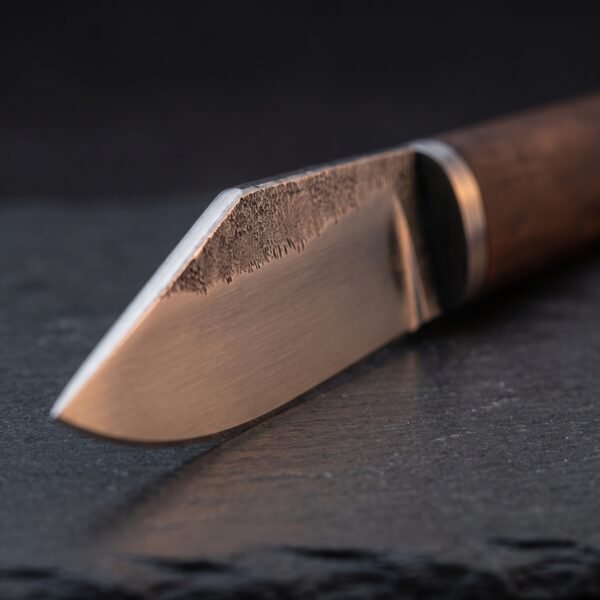
| Blade finish | Satin polished with a shallow etched knot above the bolster |
|---|
| Edge | Both blades sharpened |
|---|
| Weight | Approximately 1 lb 9 oz each |
|---|
| Included | Two seaxes and two fitted brown leather scabbards |
|---|
| SKU | RK-1925 |
|---|
No guard, and why that is correct
The absence of a crossguard on a seax is not a simplification, it is a consequence of how the thing was carried and used. Worn flat across the belly on a horizontal suspension, the seax comes out of its sheath in a sweep that starts as a draw and finishes as a cut. Anything projecting sideways from the hilt catches on the sheath mouth, on the belt or on clothing. The steel bolster on these blades gives the hand a positive stop without adding width, which is exactly what the originals do.
It also changes how you hold one. Without a guard your hand cannot be allowed to slide forward, so the grip is shaped with a slight swell and the pommel cap is proud enough to lock the heel of the hand. Grip a seax the way you would grip a sword and you will find your hand creeping. Grip it the way you would grip a hammer, back against the cap, and it behaves.
Why they are sold as a pair
These two are made from the same bar, ground together, hardened in the same quench and finished side by side, which is the only way to get two blades that genuinely match in profile, colour and hardness. Blades made weeks apart never quite match, however careful the maker is, because the steel, the fire and the day are all slightly different.
A matched pair also has real historical logic behind it. Paired sidearms turn up in the record often enough that it was clearly normal, and for anyone doing reenactment or display a pair reads far better on a wall or a belt than one blade alone. If you want them worn, both scabbards are built to the same pattern so a single horizontal belt setup will carry either.
The steel and the leather
Both blades are 1095 high carbon steel, normalised, quenched and tempered back to 54 to 58 HRC. On a long single edged blade this is the right window: hard enough to hold a working edge through a lot of cutting, soft enough that a thin twenty three inch blade flexes and returns instead of cracking. The spine is left thick and the bevel runs high, which is the classic seax grind and gives a very keen edge on a blade that is still stiff.
The grips are vegetable tanned leather over a shaped core, dyed dark brown and burnished. The bolsters and caps are polished steel, fitted against the tang shoulders and peened so the hilt is mechanically locked rather than glued. Each scabbard is wet formed to its own blade, which is why they are not interchangeable and why we mark them as a pair.
Engraving, runes and your own design
Use the rune converter on this page to turn a name, a date or a short phrase into Elder Futhark and we will cut it into the steel, the leather or the wood. If you would rather have a Viking pattern than a rune line, choose your own design in the engraving option above the add to cart button and tell us where it goes. Where a piece already carries an engraved design, your chosen engraving replaces it rather than sitting alongside it. On a set like this you can have the same line on both blades or a different name on each, and the leather scabbards take stamped runes very well. See the engraving page.
Handling and balance
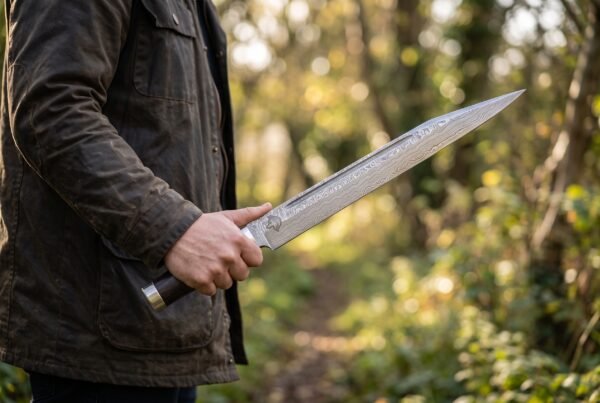
Each blade balances about two inches ahead of the bolster, close to the hand, which makes a thirty inch blade feel far quicker than its length suggests. The thick spine puts weight along the top of the blade rather than out at the tip, so the point stays controllable.
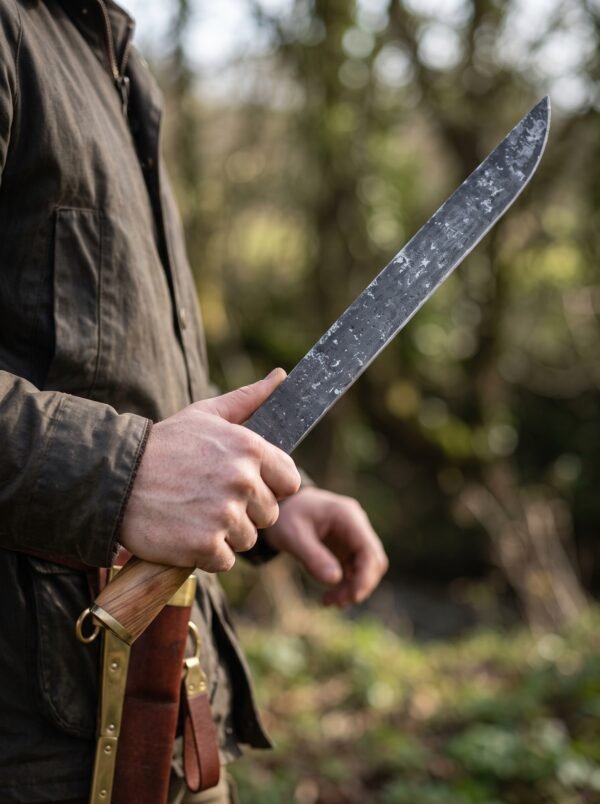
The angled point is designed to thrust. Bring the blade in flat and low rather than swinging it like a sword and you are using it the way it was meant to be used. Both blades arrive sharp. They are collector and display pieces and capable cutting blades, and they are not intended for edge on edge contact or full contact sparring.
Care
Oil both blades after handling. Plain carbon steel with a satin finish will spot from a fingerprint left overnight, especially near the bolster where sweat collects. Wipe from bolster to point with a light blade oil. Feed the leather grips and both scabbards with a neutral balm once or twice a year and let them dry naturally if they get wet. Do not store the blades sheathed for long periods. There is more on steel care on the site.
When the edge goes dull, sharpening on a whetstone covers the angle and the pressure.
Made in the Czech Republic
This is a handmade piece from the Czech Republic, made in a workshop that still forges, grinds and finishes by hand instead of stamping parts out. The smiths there have kept the older way of working, and the wood, horn and leather are shaped and fitted by hand as well. Two pieces of the same design will never be identical, and that is part of what you are buying.
Ransack Viking is a United States company. We handle the import ourselves, look over every piece when it lands and ship from our warehouse in Chicago, Illinois. Engraving is done in the United States after the piece arrives, so your design goes on before we send it out.
A note on handmade variation
This set is hand made rather than machine made or bulk produced, so it will not be a pixel for pixel copy of the photograph. The two blades match each other closely because they are made together, but they will differ from the pair shown in grind line, etch depth and the exact angle of the point. Leather is a natural material and takes dark dye unevenly, so the two grips may sit a shade apart from one another. The dimensions, the material and the build are the same every time. The character is not.
Frequently asked questions
How many blades come in this set?
Two, along with two fitted scabbards. Both are included in the single price shown.
Are the two blades identical?
As close as hand work gets. They are made from the same bar and finished together, so they match in profile, length and hardness. Small differences in grind line and leather colour are normal.
Why is there no crossguard?
Because a seax never had one. A guard fouls the horizontal draw across the belt that the whole design is built around.
Can I buy just one?
Not at this listing. The pair is matched during making and separating them would break the point of the set. Single seaxes appear elsewhere in the range.
Can each blade have a different name in runes?
Yes. Say so in the engraving option and tell us which name goes on which. This is a popular choice for a pair given to two people.
How long does it take?
One to two weeks to forge and finish both, then free shipping within the United States.
What is in the box
- Two Langfell langseax blades, 30 inches overall each
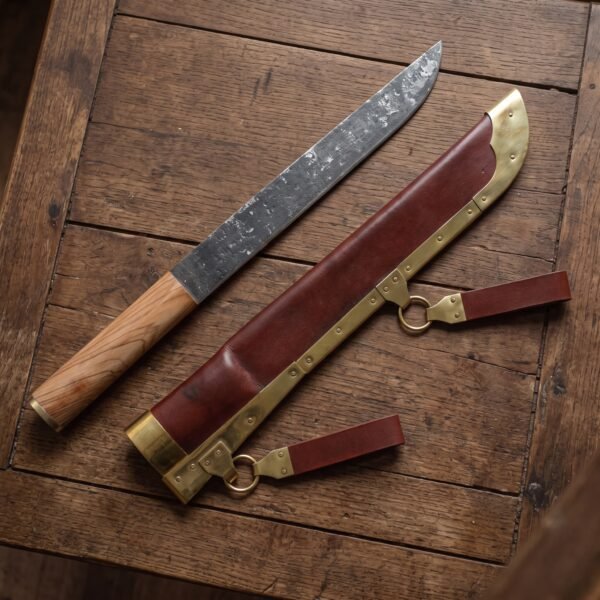
- Two fitted brown leather scabbards with steel throats and chapes
- Care card with oiling and leather feeding instructions
- Lifetime warranty against defects in forging, grind, heat treat and fittings
- Forged and finished in the Czech Republic
Explore the range
See more in Viking seax, Viking knives and scabbards and sheaths, or read the guides.
Also in this part of the catalogue
Worth putting side by side with this is the Broadsax Viking seax, 28 inches overall. In the same category sits the Olivescramasax Viking seax, high carbon steel. A near match for this one is the Huginandmunin Viking seax, high carbon steel.
For a different piece from the same family, look at the Pivotwing Viking knife. Or start from a blank sheet on the custom seax page.

This knife is a genuine work of art. Leather sheath is thick and well stitched. Not the cheap stuff you usually get. This is going straight into my display case.
This knife beat every expectation I had. The wood handle feels amazing and the balance is perfect. Weight and balance make it feel like a real functional piece not some cheap replica. Can’t recommend this enough.
My husband was speechless when he opened this. Edge retention has been great even after regular use. This shop clearly takes pride in their work.
My husband was speechless when he opened this. Edge retention has been great even after regular use. Even the small engravings are crisp and clean. Fit and finish is museum quality. You can tell real craftsmen made this by hand. Beyond happy with how this turned out.
This knife is fine. Just didn’t wow me. Handle material felt a bit different than pictured. Neutral on this one overall.
Did not expect this level of quality for the price. Weight and balance make it feel like a real functional piece not some cheap replica. 1095 Steel blade holds a razor edge right out of the box. Great buy overall.
So happy I finally pulled the trigger on this one. You can tell it’s real Czech blacksmith work and shipping from the States made delivery painless. The wood handle feels amazing and the balance is perfect. Worth every penny.
Knew this knife was special the second I opened the box. Leather sheath is thick and well stitched. Not the cheap stuff you usually get. Great buy overall.
Feels way more premium than the price suggests. Ransack Viking’s attention to detail is honestly unmatched. Leather sheath is thick and well stitched. Not the cheap stuff you usually get. Fit and finish is museum quality. You can tell real craftsmen made this by hand. Can’t recommend this enough.
Showed up right on time and looked even better than the photos. The wood handle feels amazing and the balance is perfect. Came in a nice gift box which made it feel even more special. Beyond happy with how this turned out.