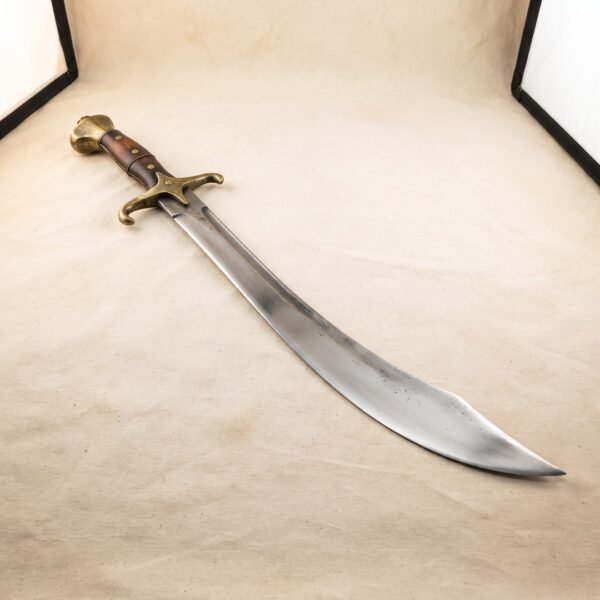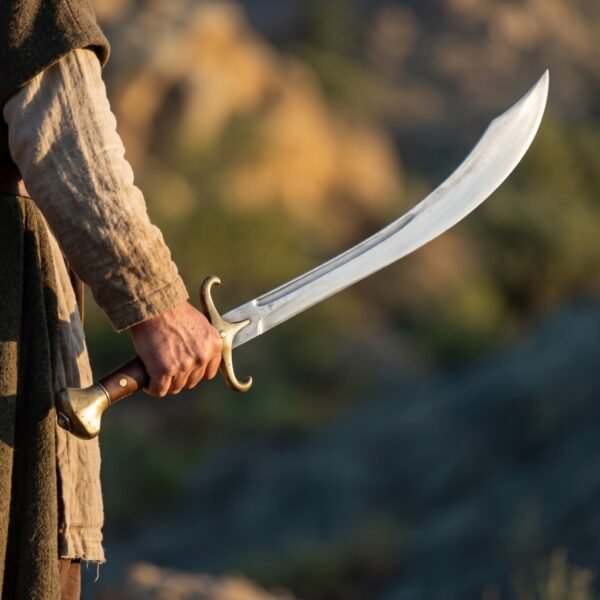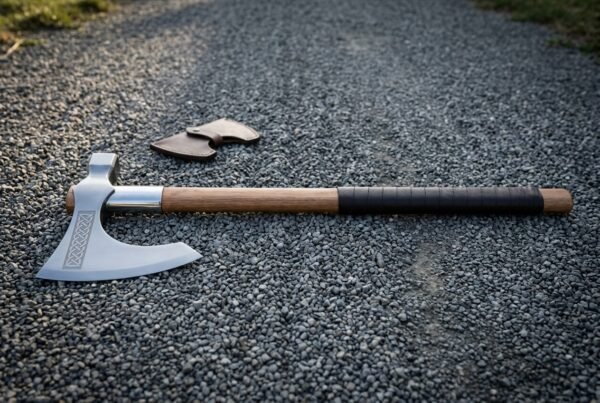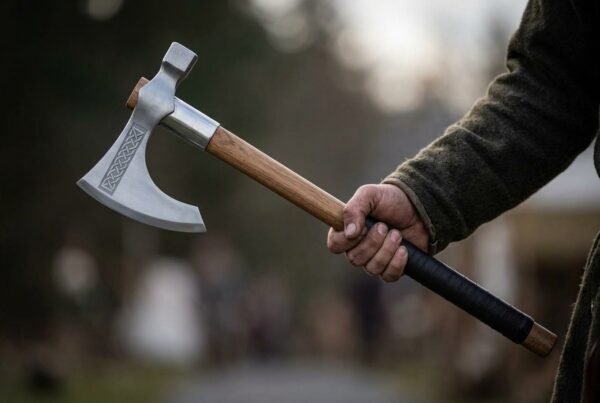
1095 high carbon steel: the plain steel behind most of what we make
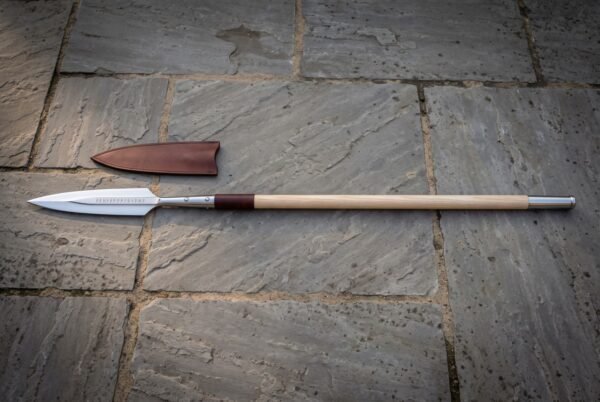
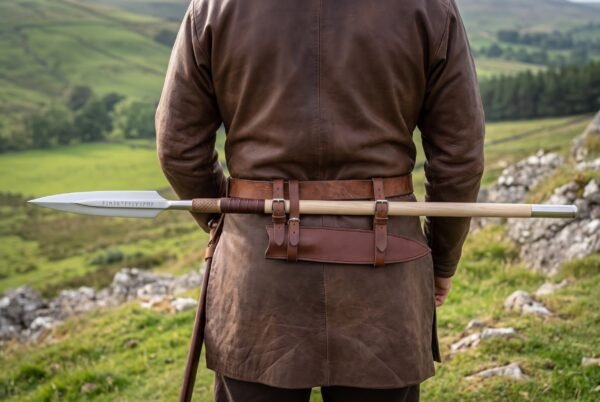
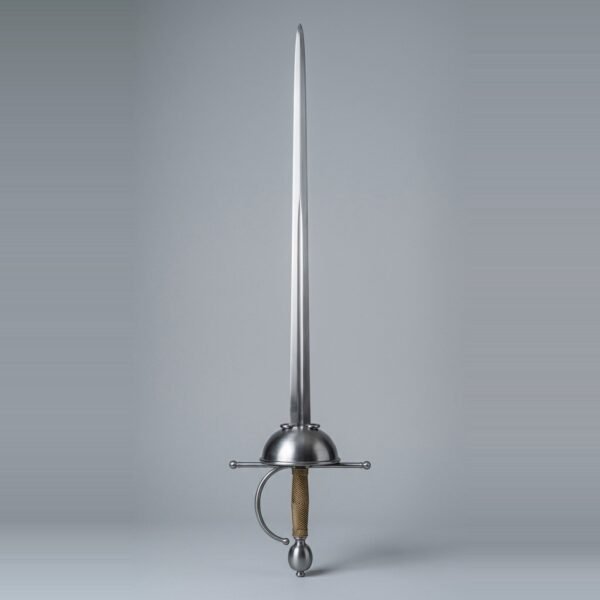
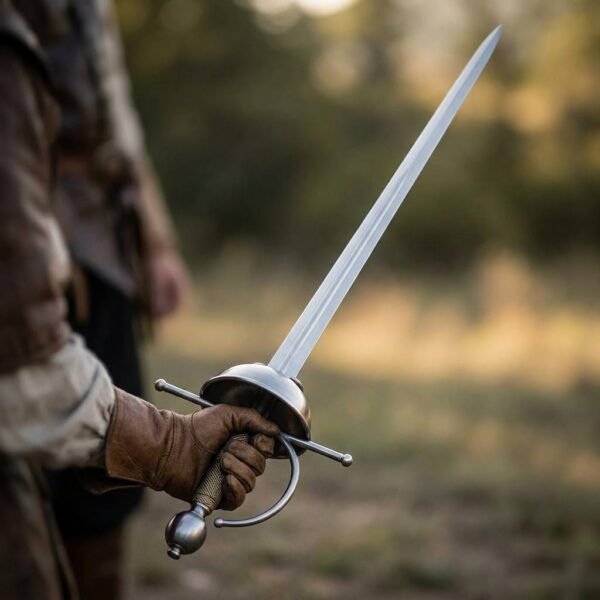
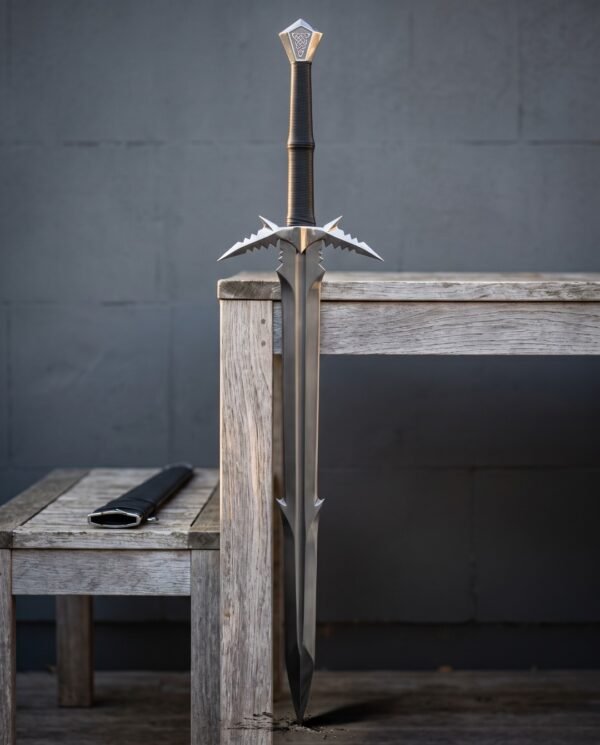
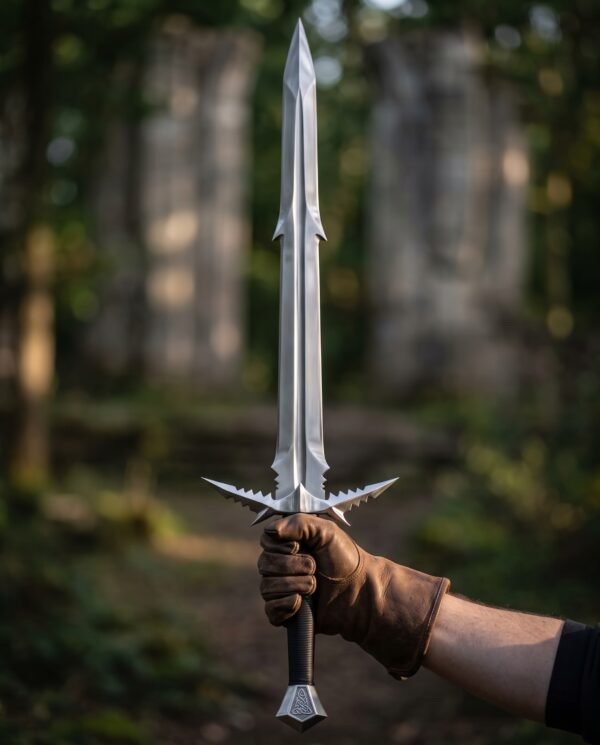
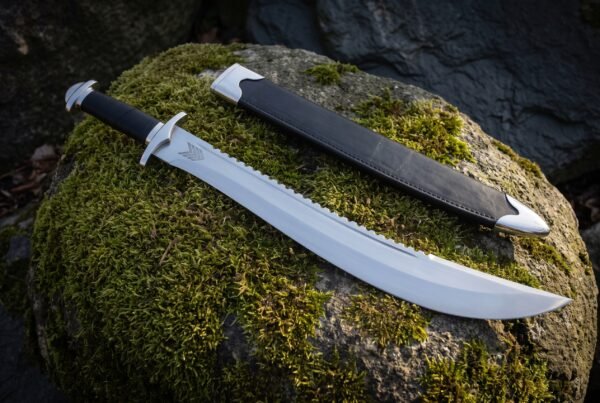
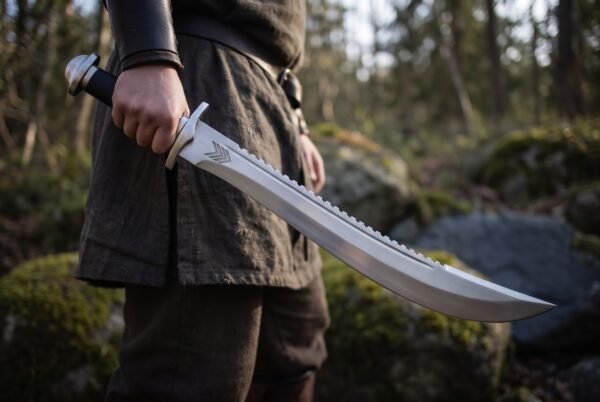
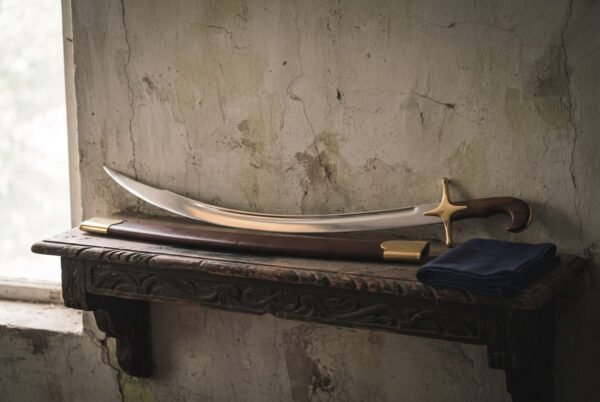
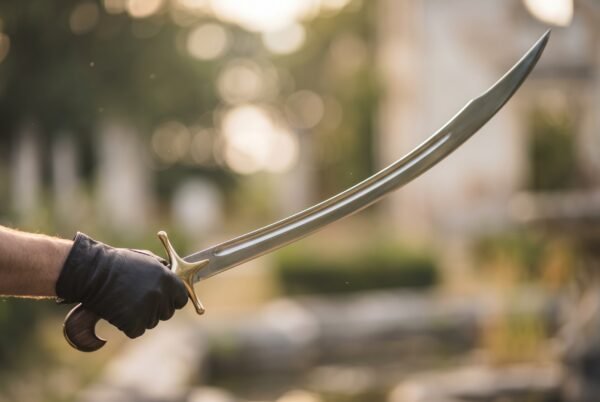
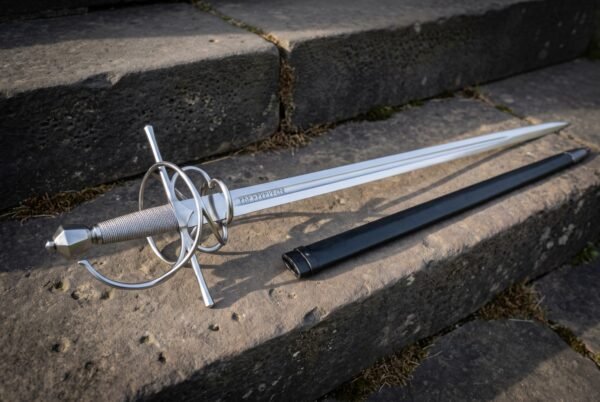
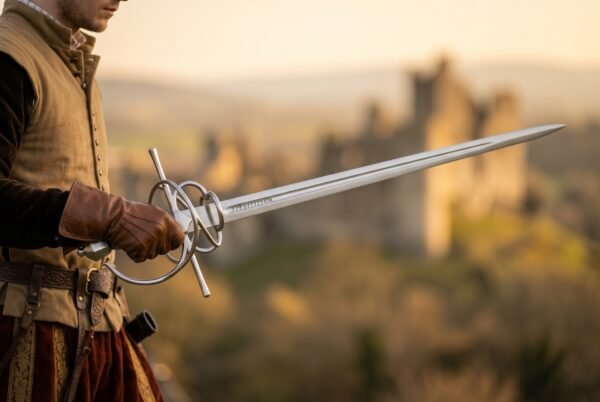
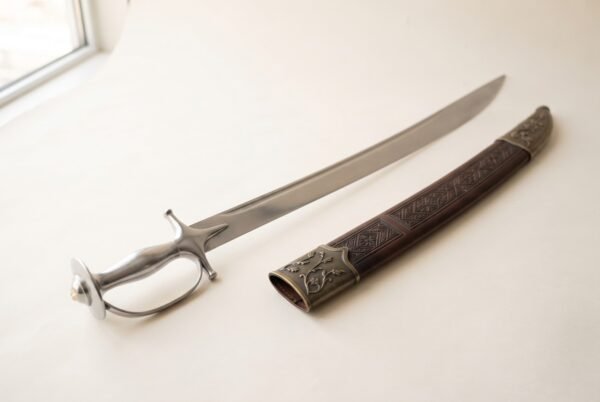
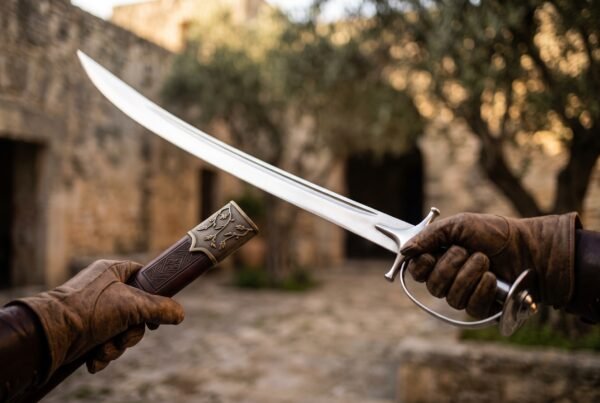
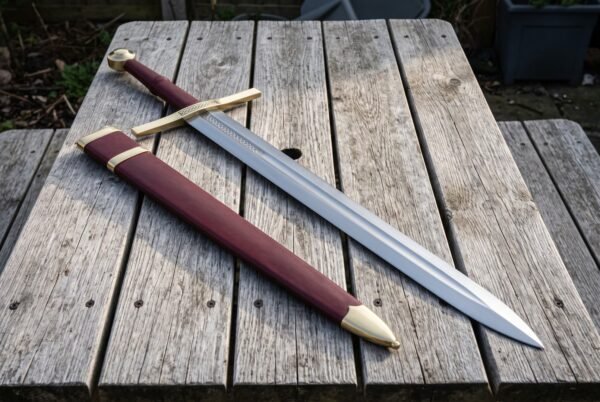
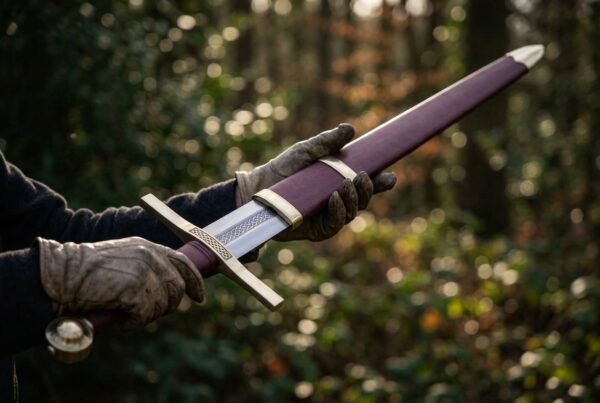
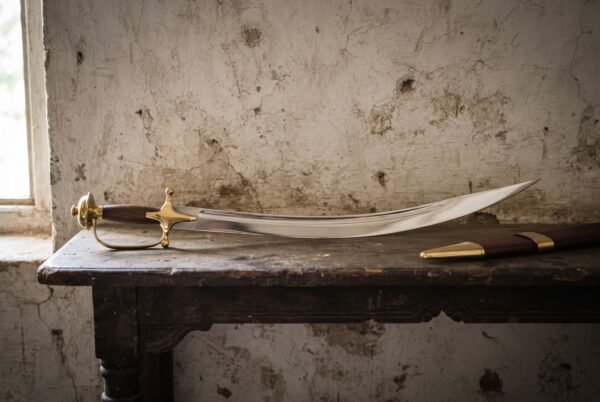
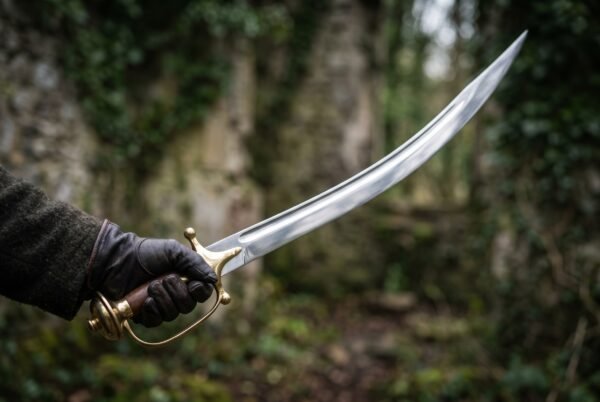
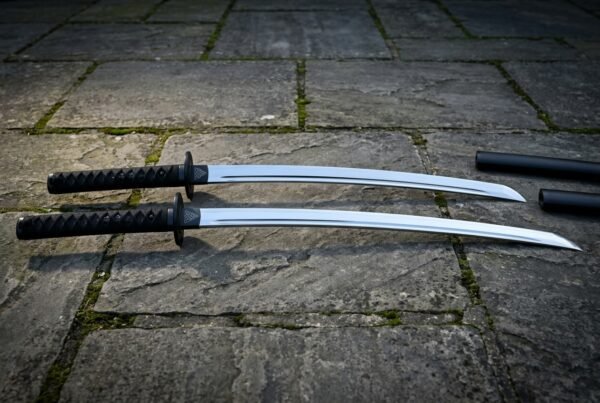
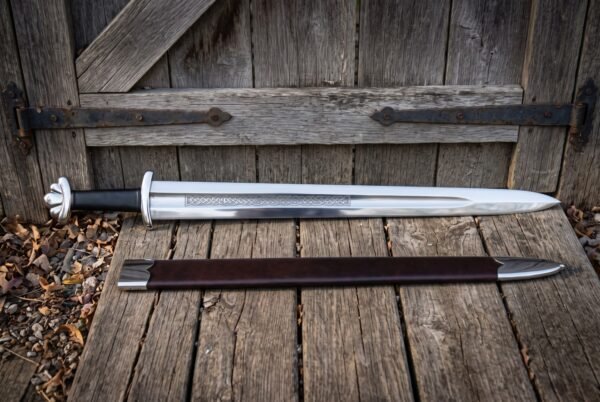
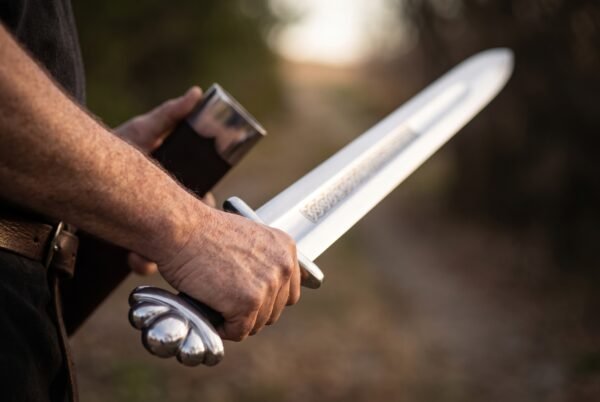
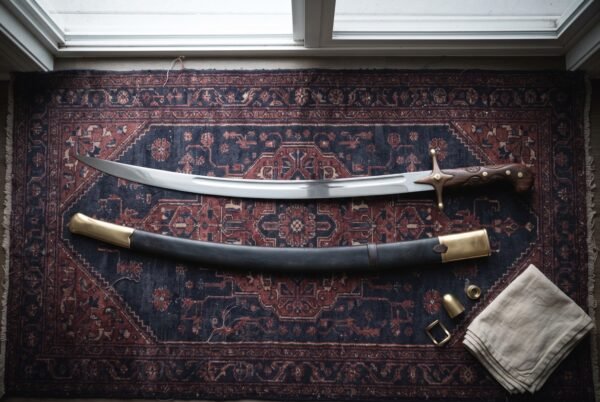
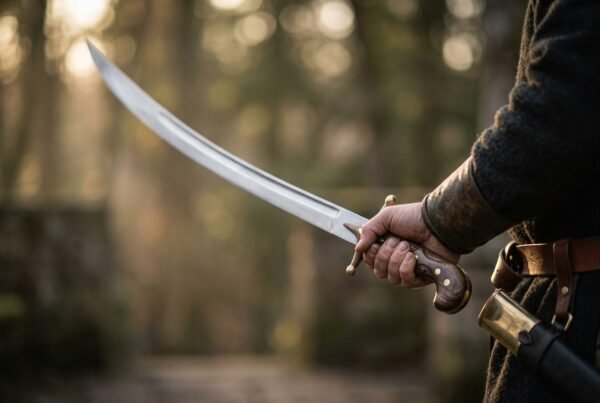
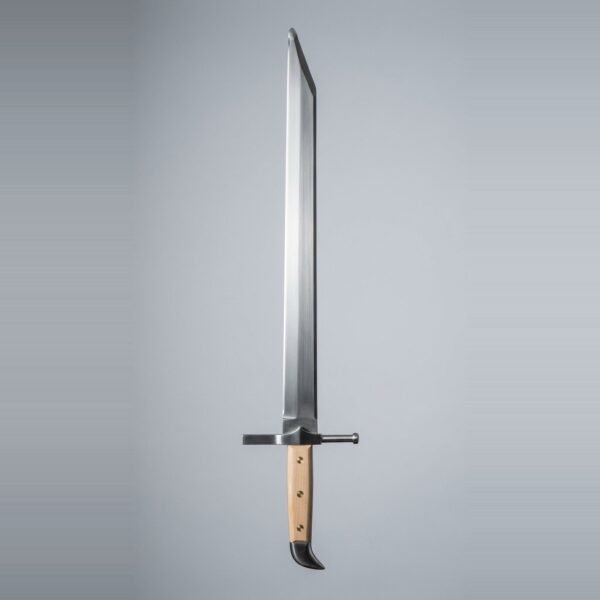
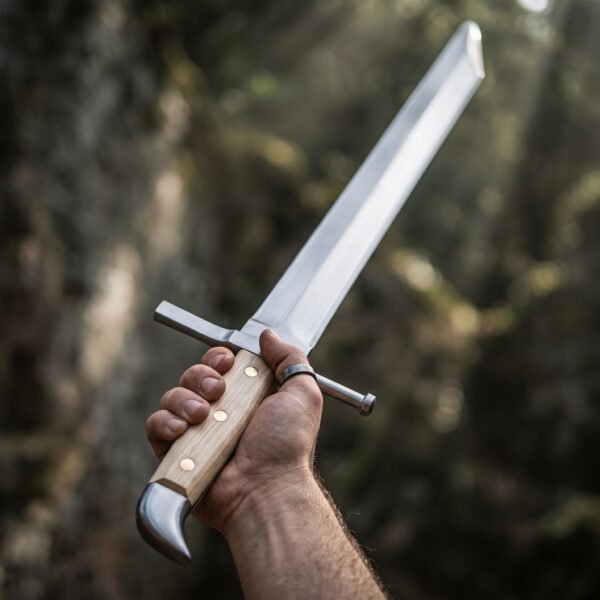
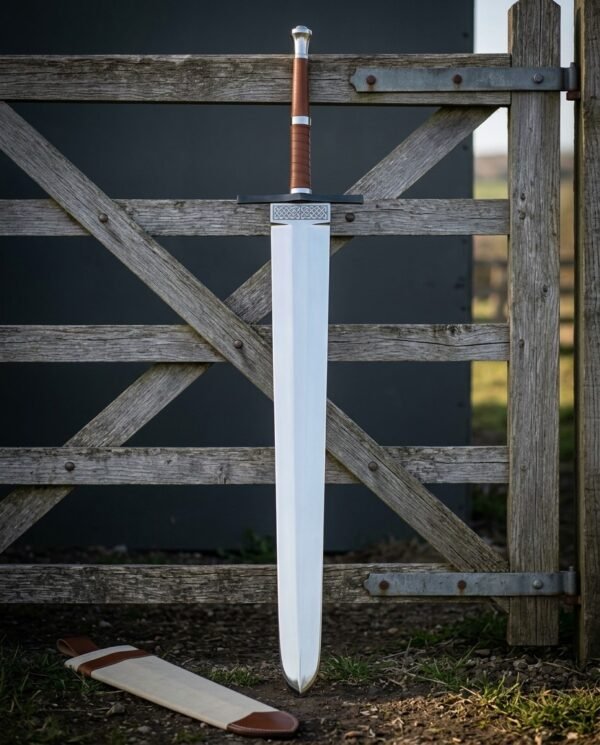
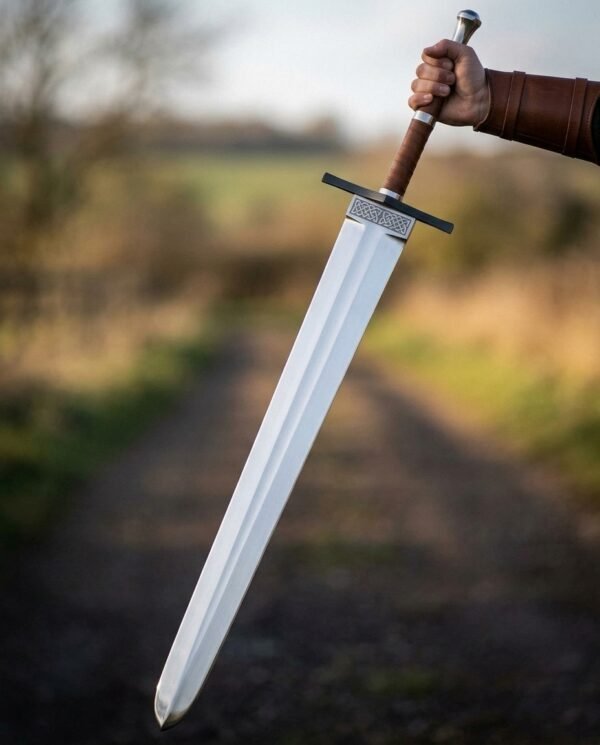
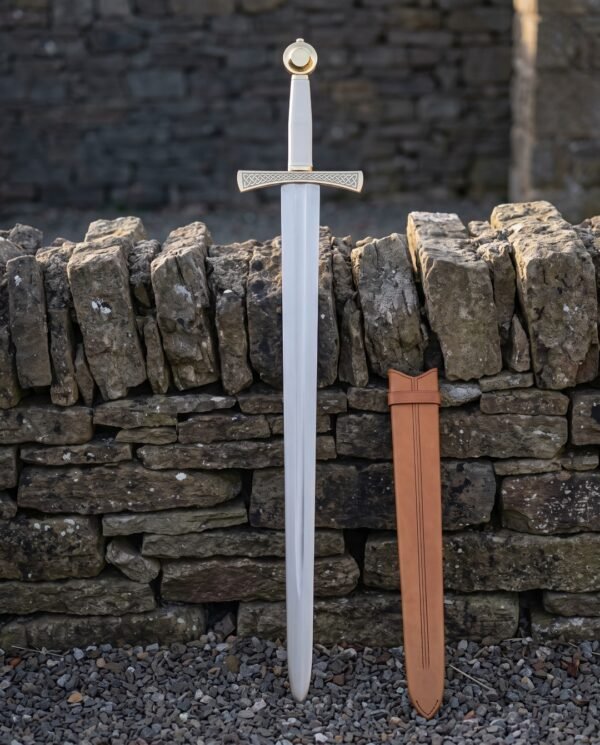
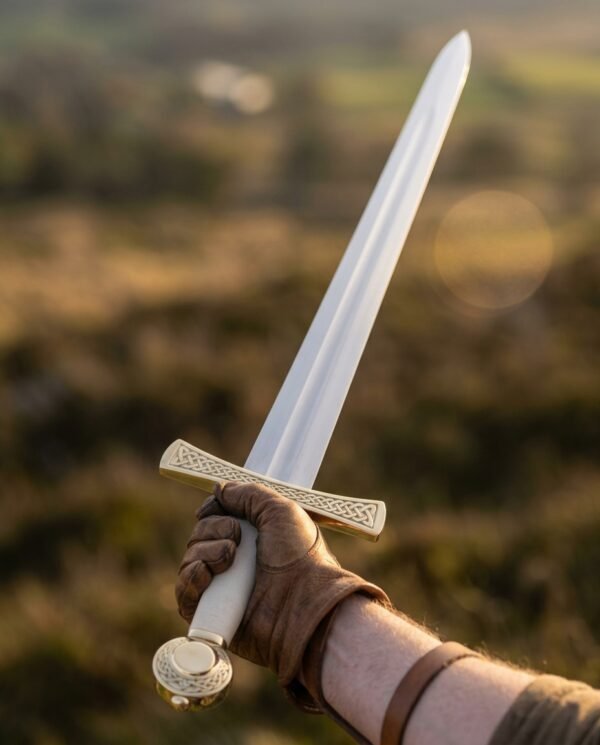
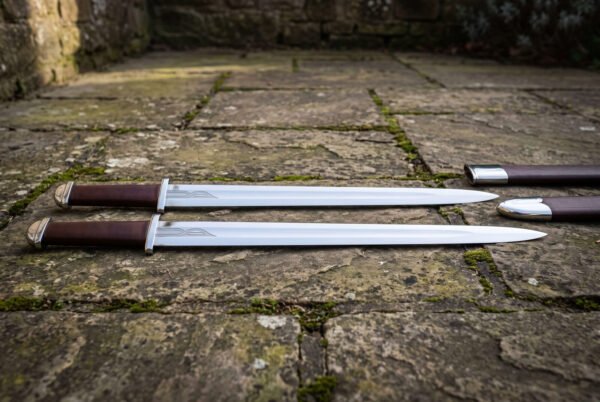
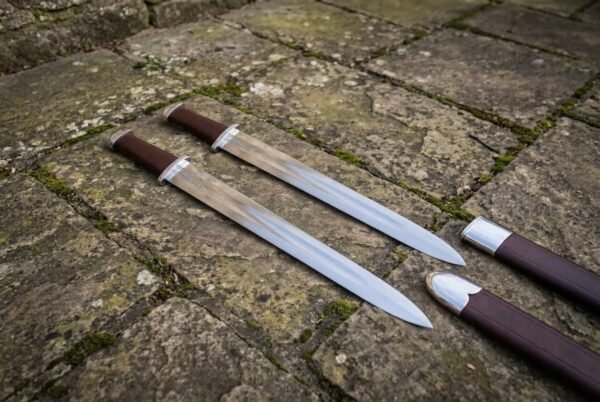
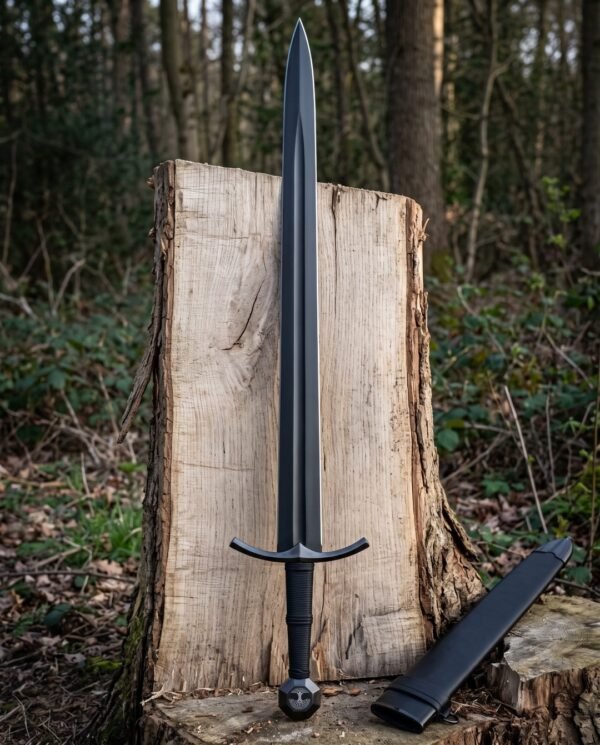
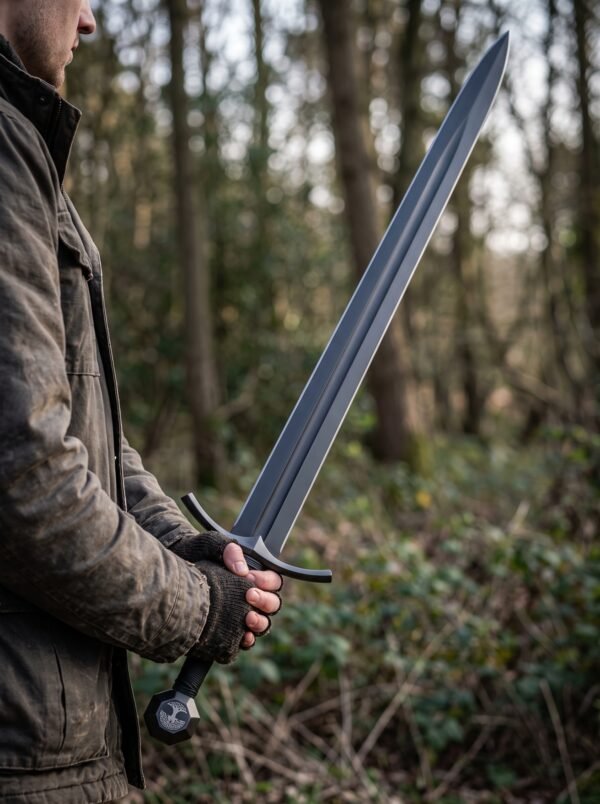
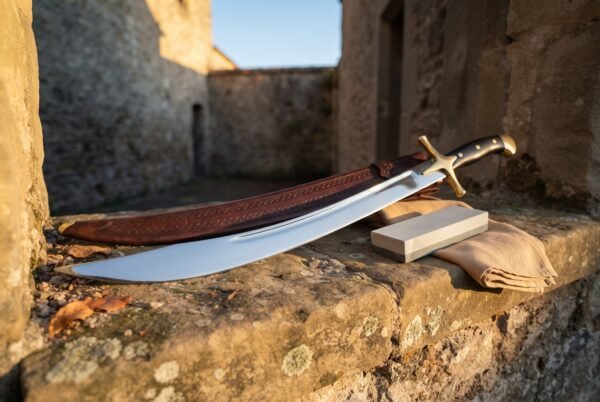
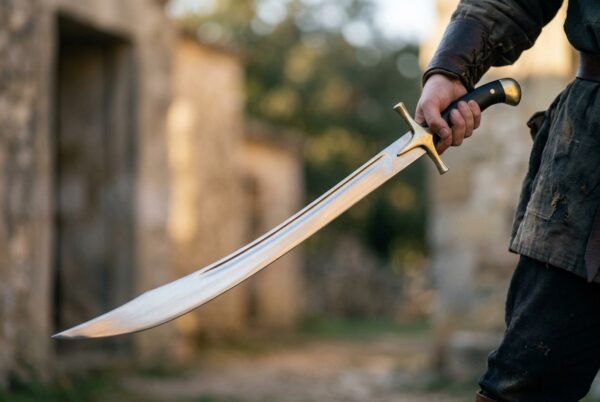
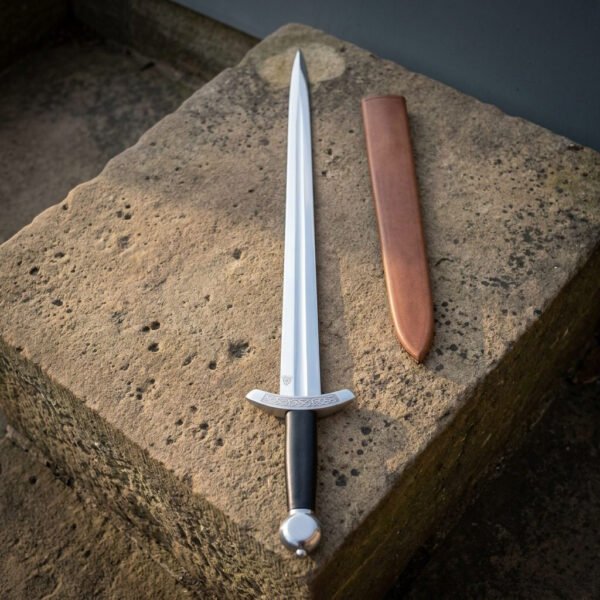
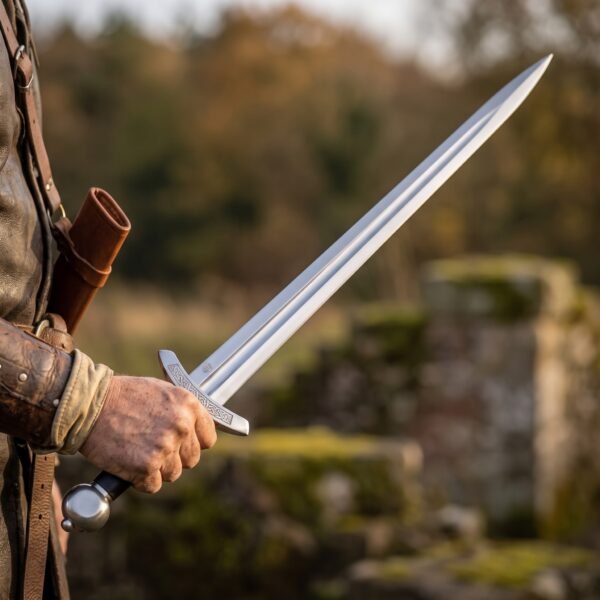
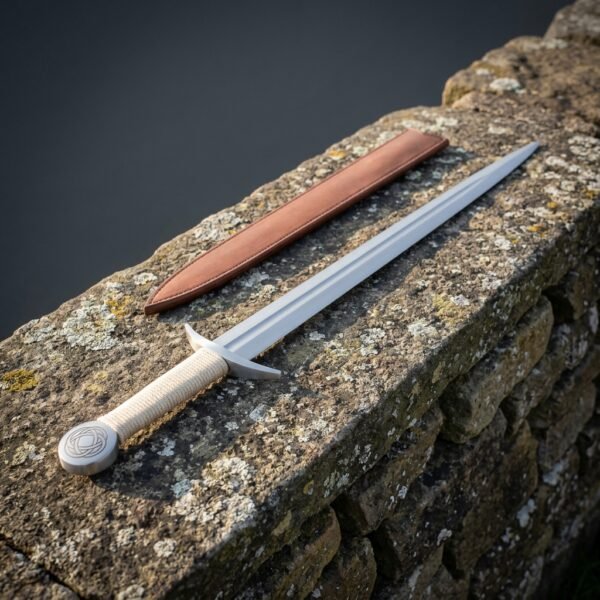
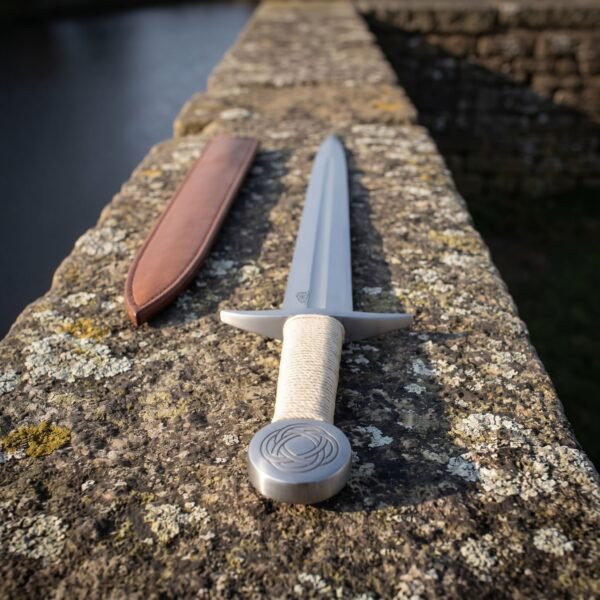
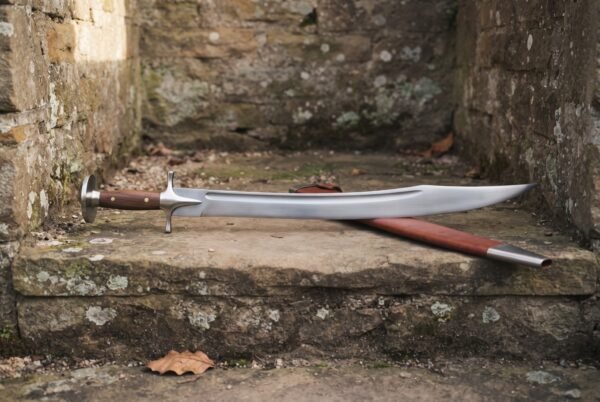
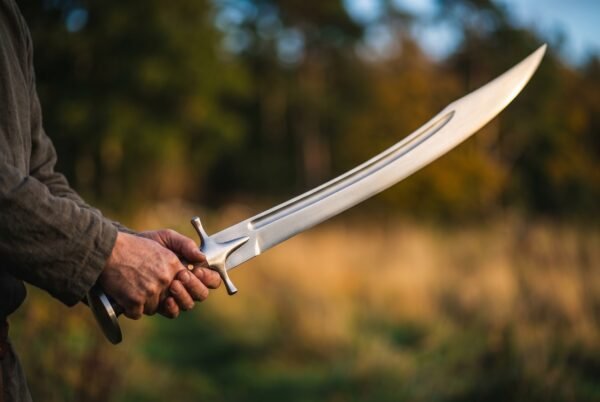
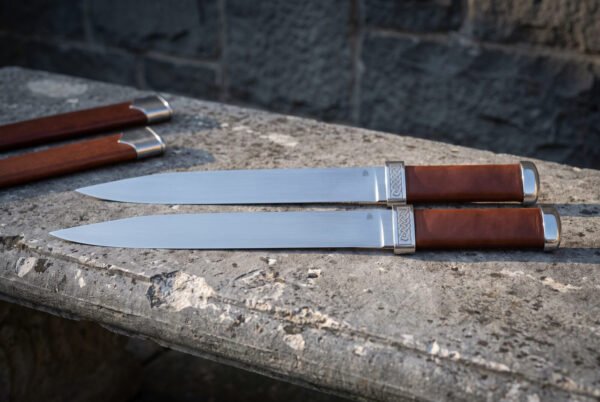
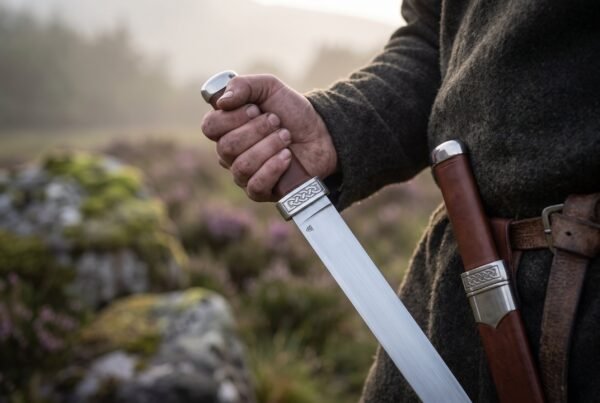
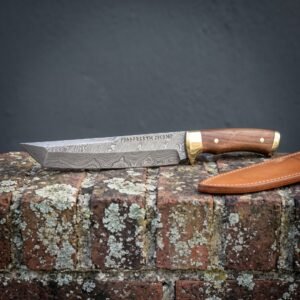
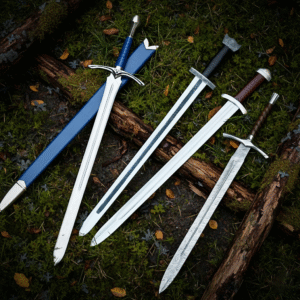
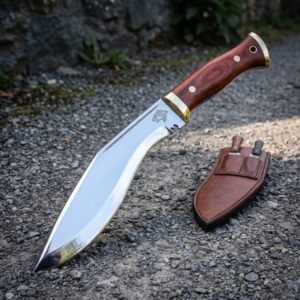
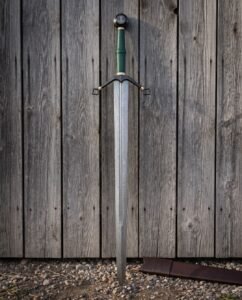
This archive gathers the pieces made from plain 1095 carbon steel without pattern welding: Persian shamshirs and an Indian talwar, knightly arming swords and a rapier, Viking swords with knotwork and Yggdrasil engraving, a sawback short sword, several bearded axes and a few Viking knives. It is the steel of the working blade. Bright when polished, dark when blued, easy to sharpen, tough enough to take a knock.
It is for the buyer who wants a sword or an axe to handle, drill with or use, and who would rather have a tougher plain blade than a harder patterned one. It is also for anyone who wants to understand what 1095 is before deciding between it and Damascus, since the two are the only steels we work with.
What 1095 is and why we use it
1095 is a plain carbon steel with about 0.95 percent carbon and very little else. That high carbon content lets it harden fully and take a keen edge, and the lack of alloying elements means it forges and grinds cleanly by hand. We harden it to 54 to 58 HRC, softer than our Damascus at 58 to 60. That range is deliberate: a sword at 56 HRC flexes and returns where a harder blade would chip, and an axe head at that hardness can be touched up with a file in the field. The cost is that it will rust if neglected, which is why the care note below matters.
How the pieces are made and where
Ransack Viking is a Chicago, Illinois company. Every 1095 piece here is made by hand in the Czech Republic the old way, forged from bar stock, ground, hardened and tempered, then fitted with its hilt, handle or haft in the same workshop. Pieces are imported, inspected at our Chicago warehouse and shipped from Chicago, and engraving is done in the United States before dispatch.
Care is a dry wipe and a thin coat of oil after handling. Store the piece out of leather during long storage so the sheath or scabbard cannot hold moisture against the steel.
Related archives
The plain steel swords sit alongside the Damascus ones in swords, with the curved blades collected in scimitars and the knightly ones in arming swords. The 1095 axe heads are in Viking axes. If the difference between 1095, 15N20, D2 and stainless is still a blur, the steel glossary sets each one out in plain terms.
How this steel compares with a pattern welded billet is covered in Damascus against high carbon, and why the tang matters as much as the blade is explained in full tang against partial tang.
Frequently asked questions
Is 1095 a good steel for a sword?
Yes. It hardens fully, takes a fine edge and, at 54 to 58 HRC, flexes rather than chips. It is a common choice for hand forged swords for good reason.
Does 1095 rust?
It will if left wet. A wipe and a film of oil after handling stops it. A grey patina from use is normal and slows further corrosion.
What is the difference between 1095 and Damascus?
Our Damascus is 1095 layered with 15N20 and hardened to 58 to 60 HRC. Plain 1095 is one steel at 54 to 58 HRC. Damascus holds an edge longer; plain 1095 is tougher.
Is high carbon steel the same as 1095?
1095 is one high carbon steel among several. When we say high carbon on a listing without a number, it is 1095.
Can 1095 steel be engraved?
Yes, and it shows engraving very well because the surface is plain. Lettering and runes are cut in the United States before dispatch.
Free US shipping
On most pieces. Heavier and oversized ones carry a flat charge.
Hand Forged
Heated, hammered and ground by hand.
Engraving available
Names, dates or Norse runes on most pieces.