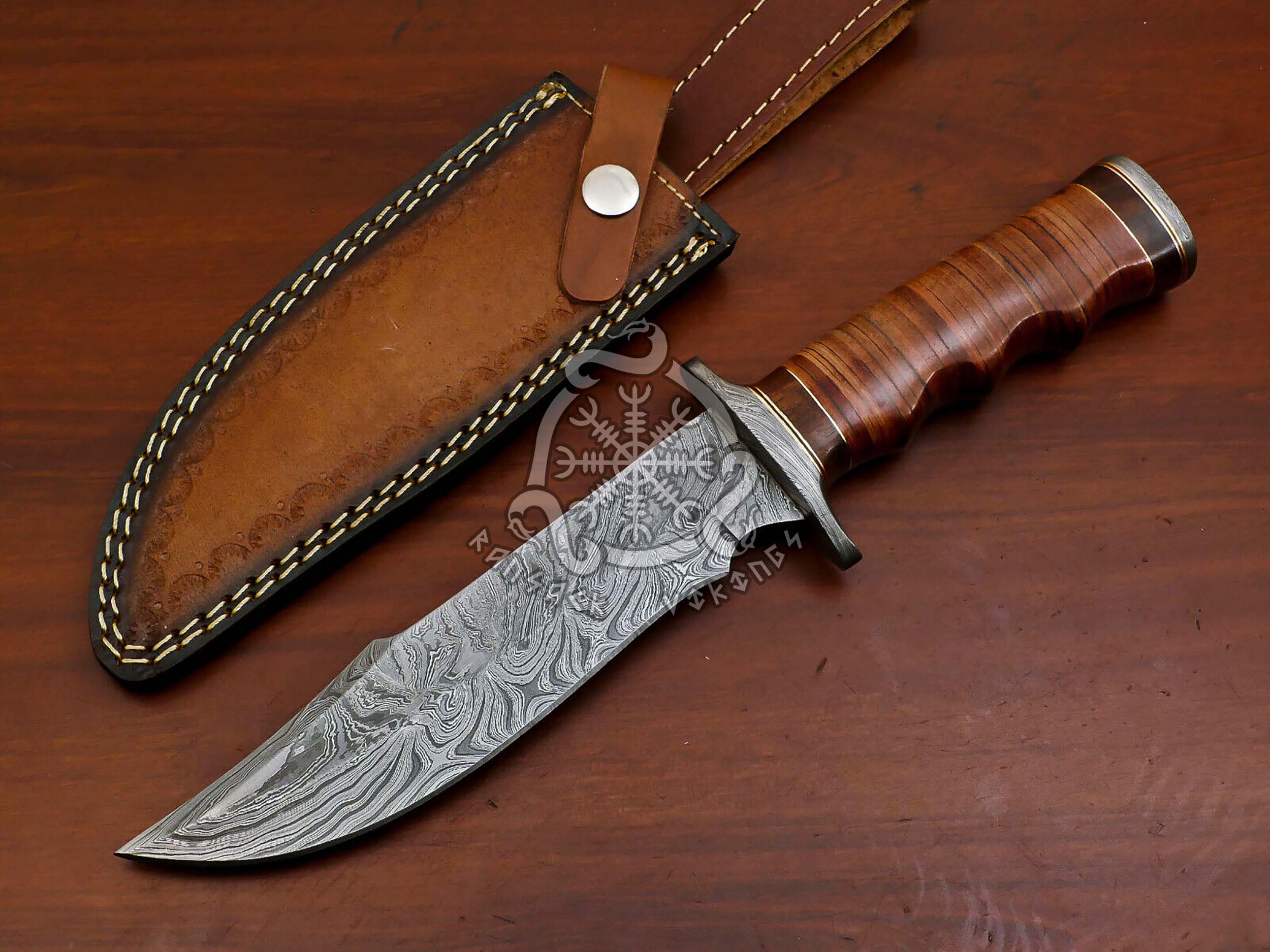
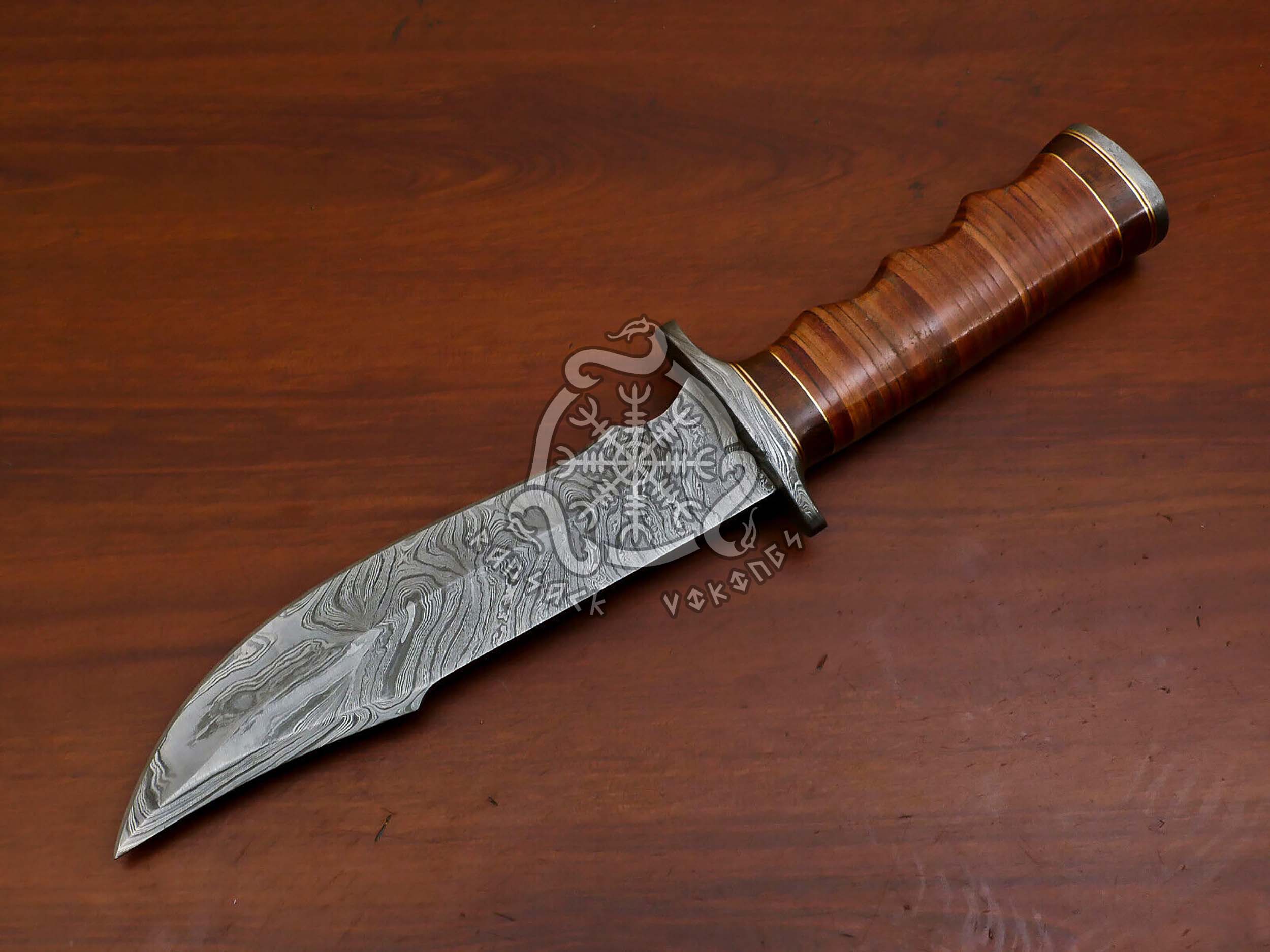
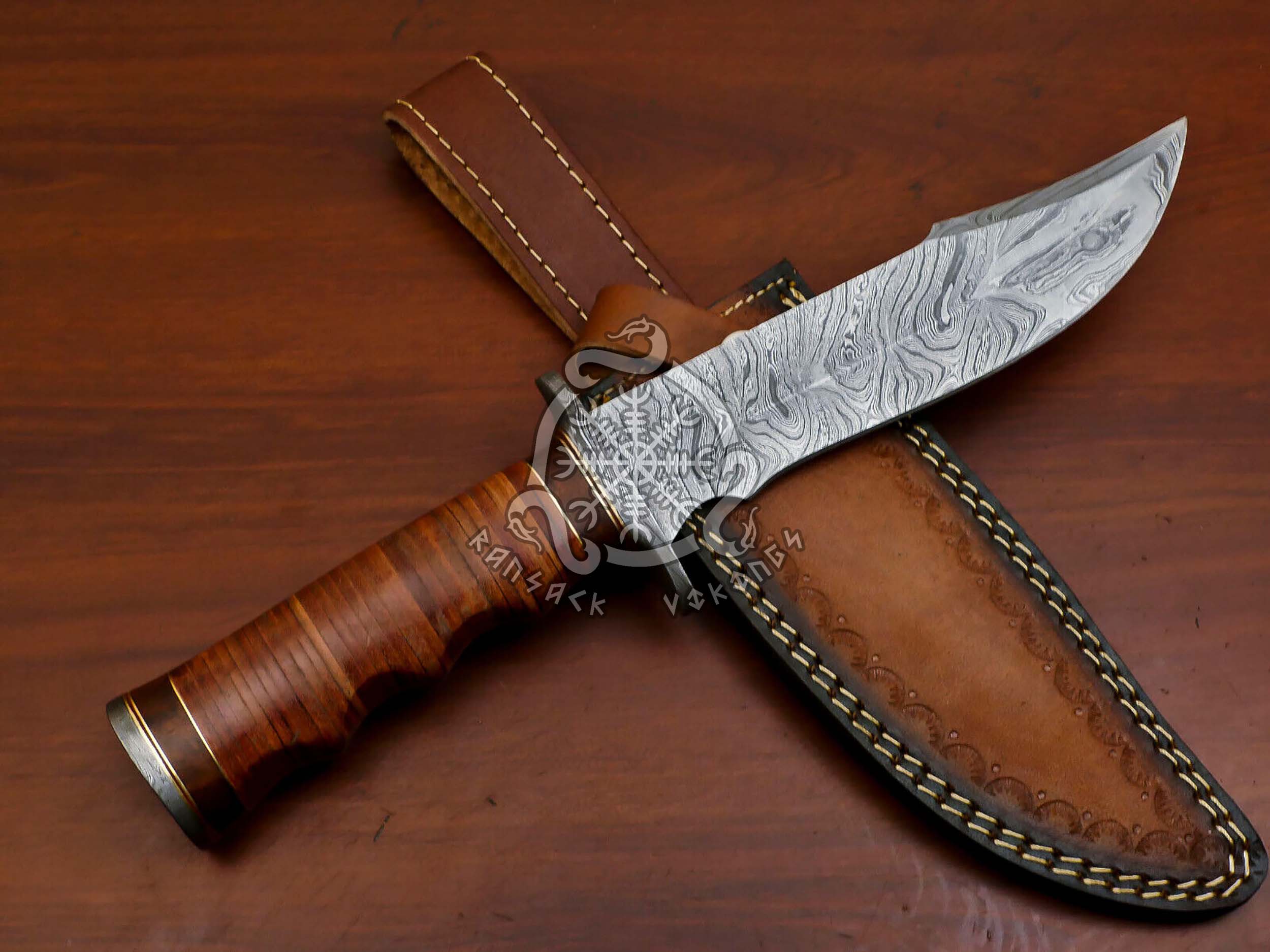
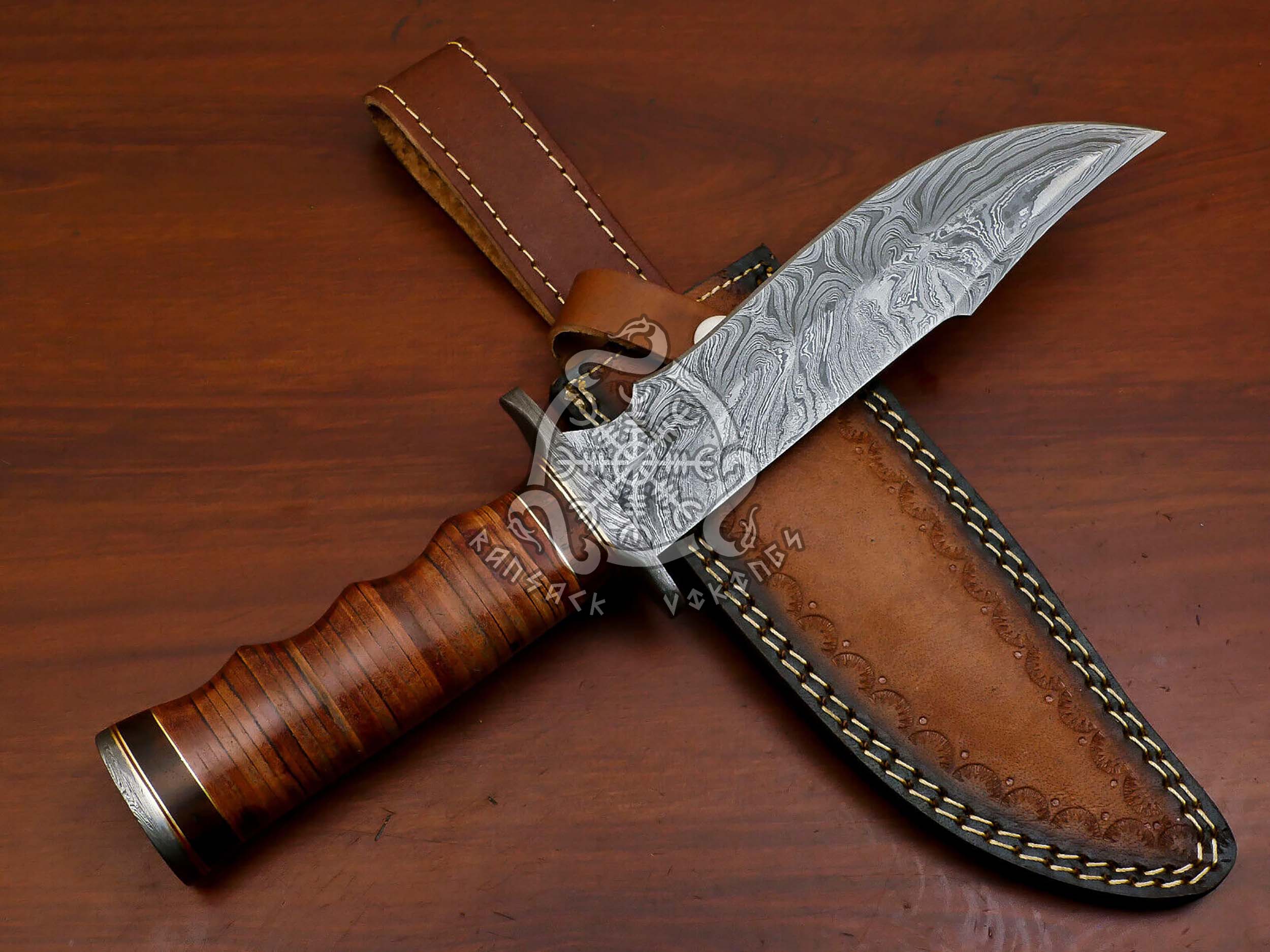
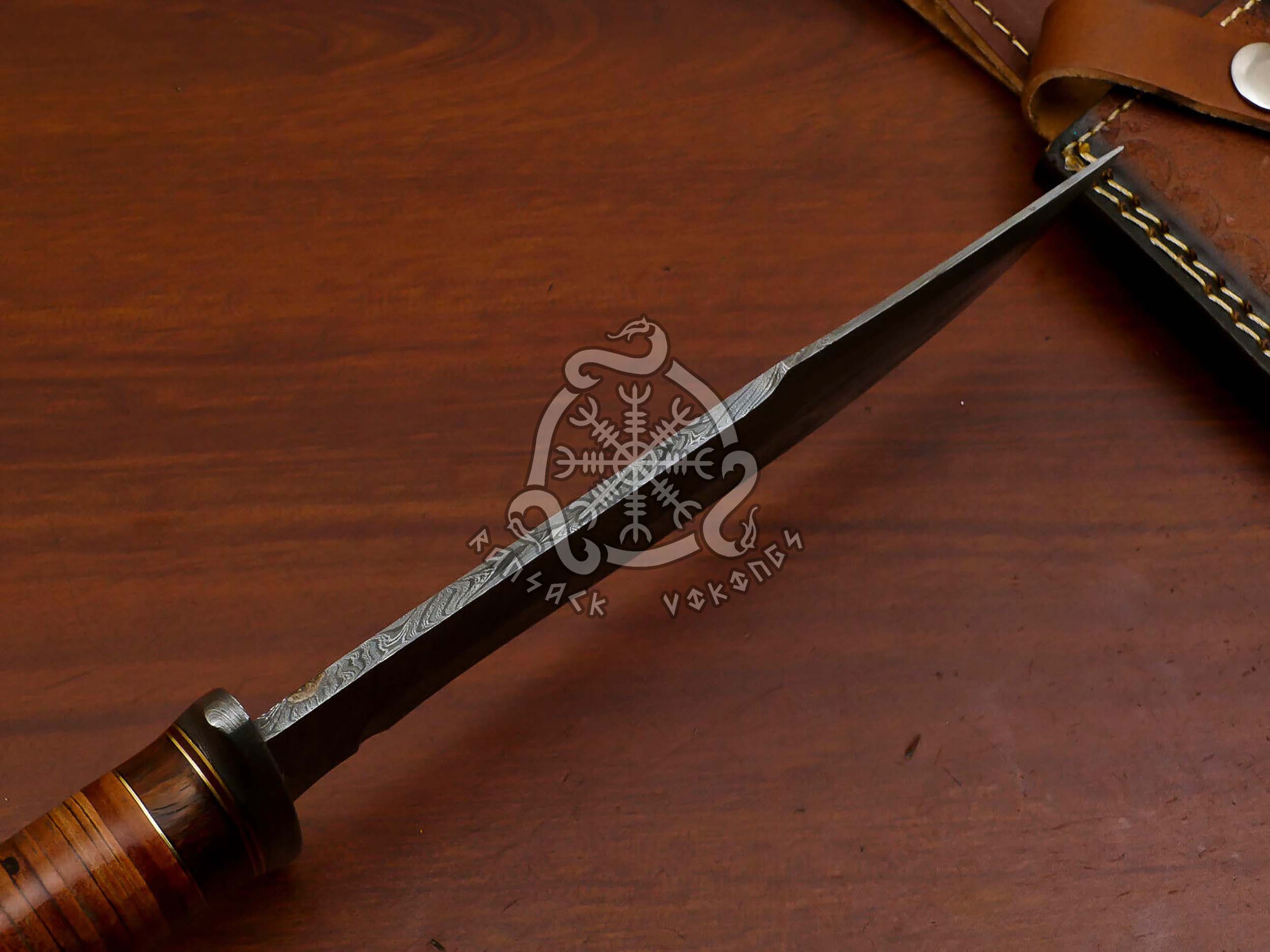
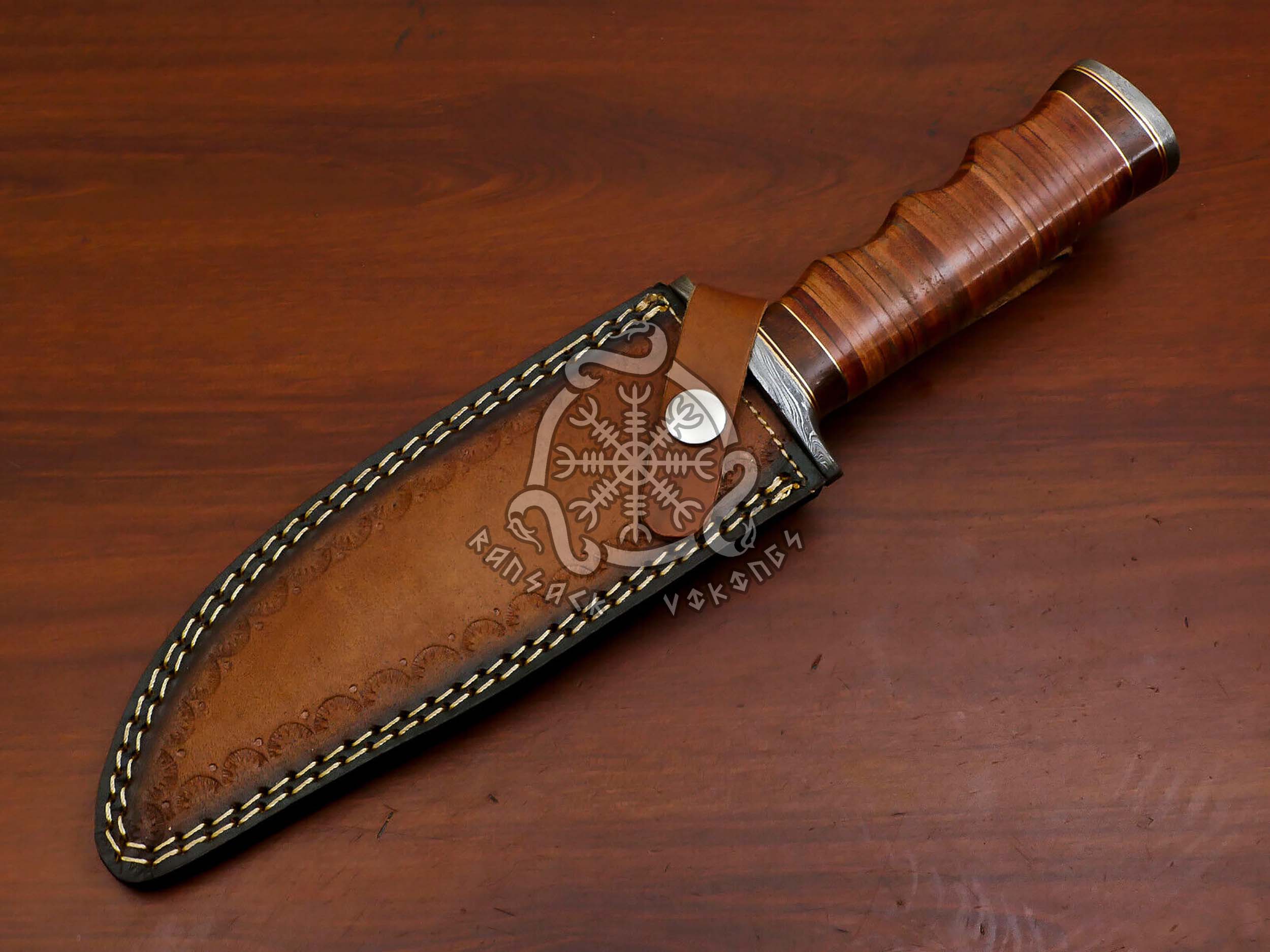
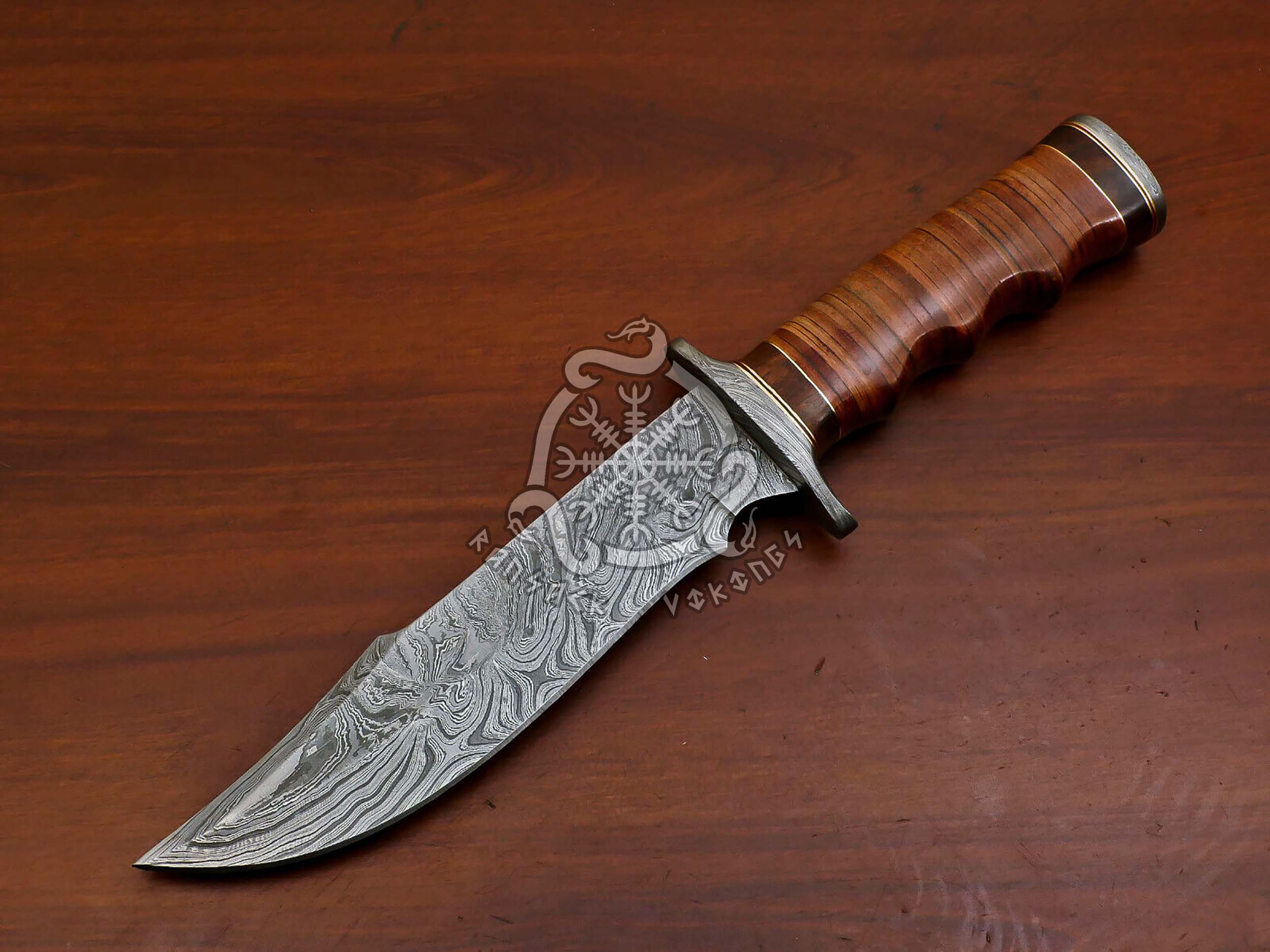
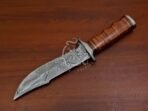
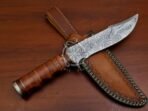
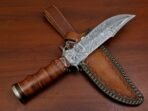
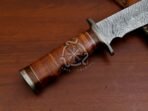
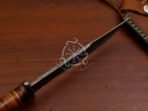
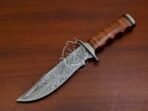
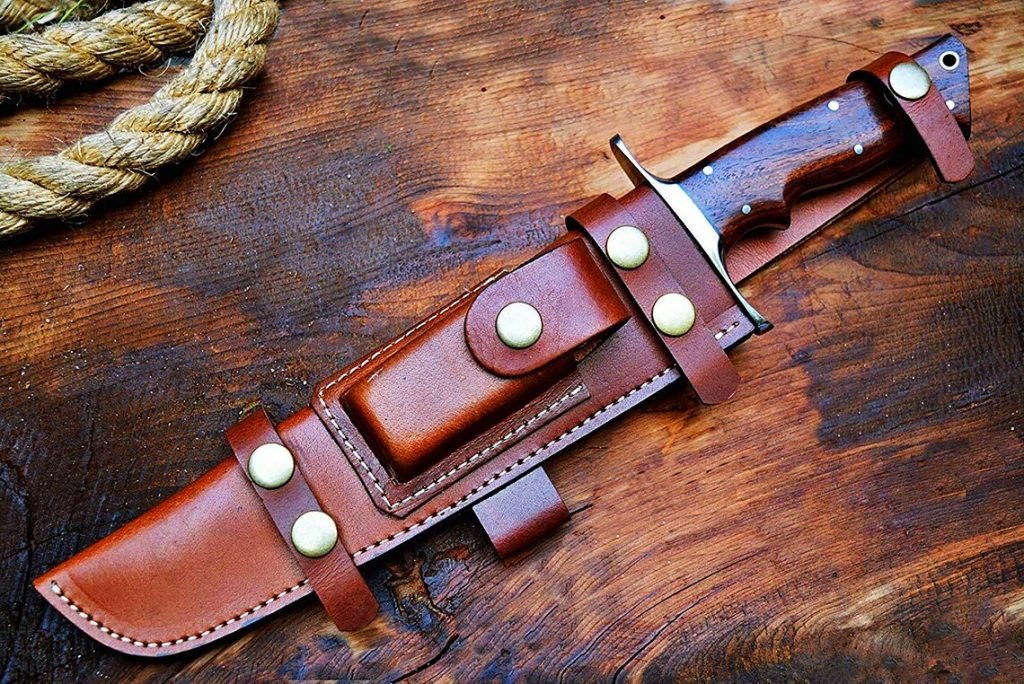
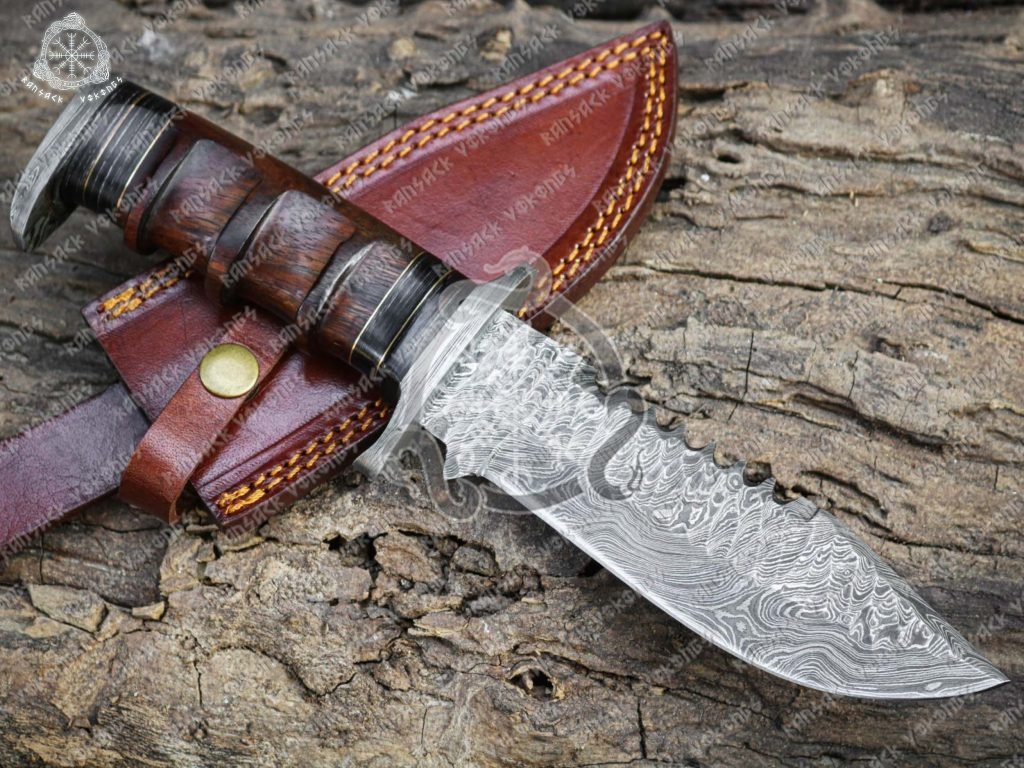
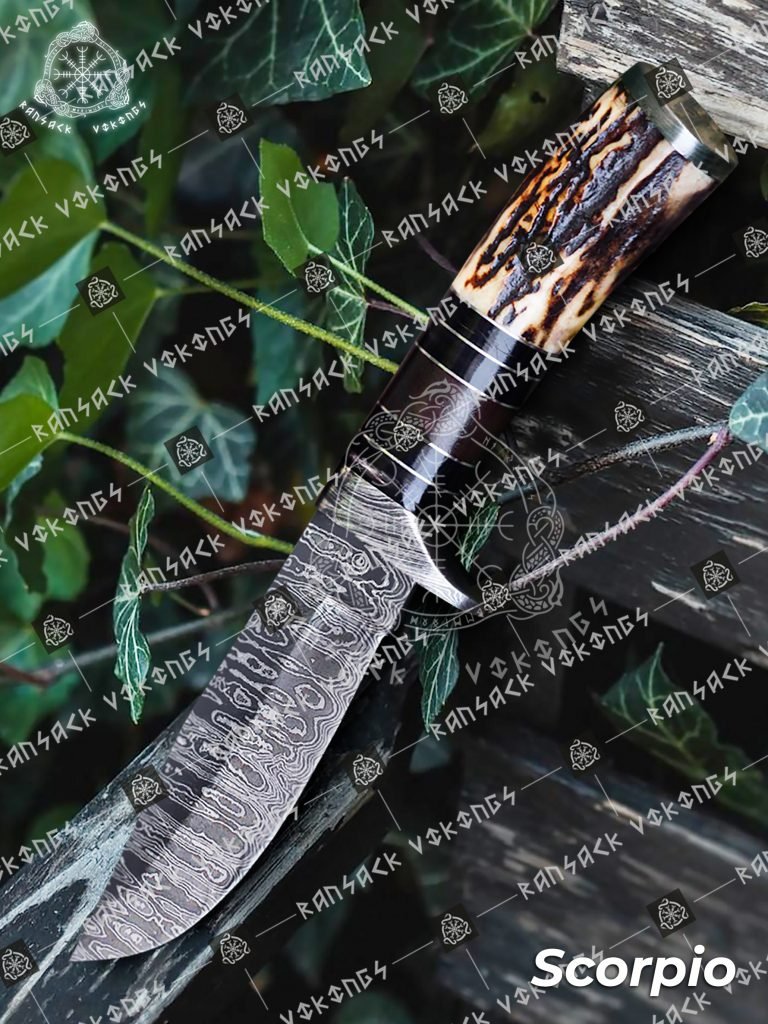
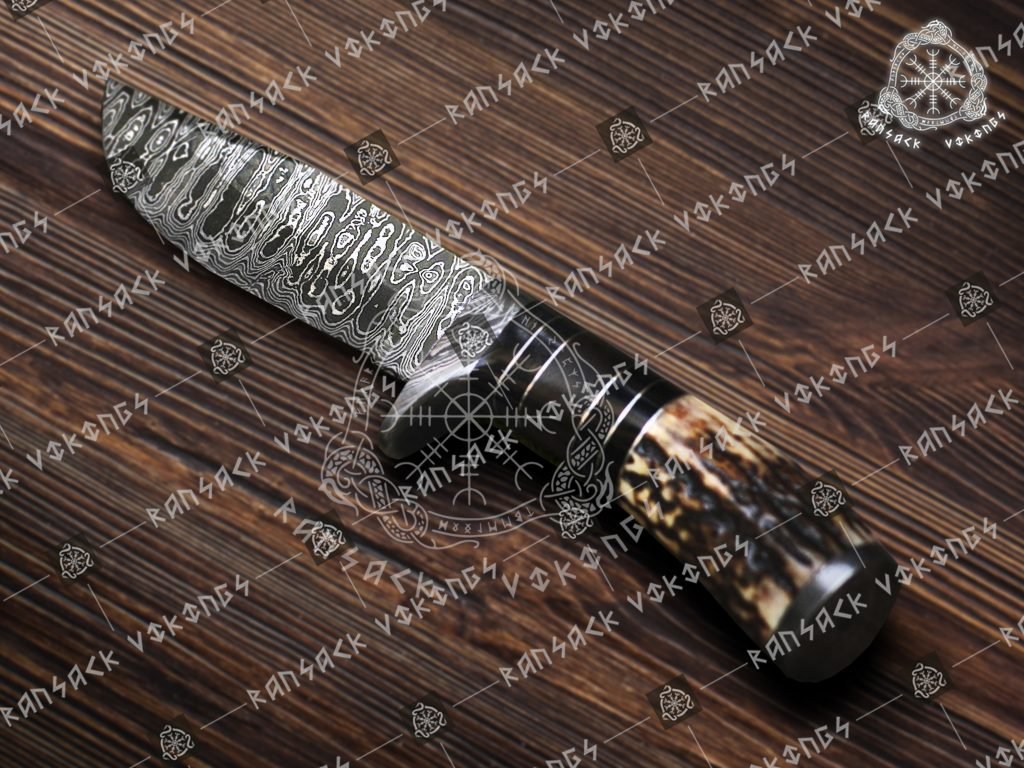
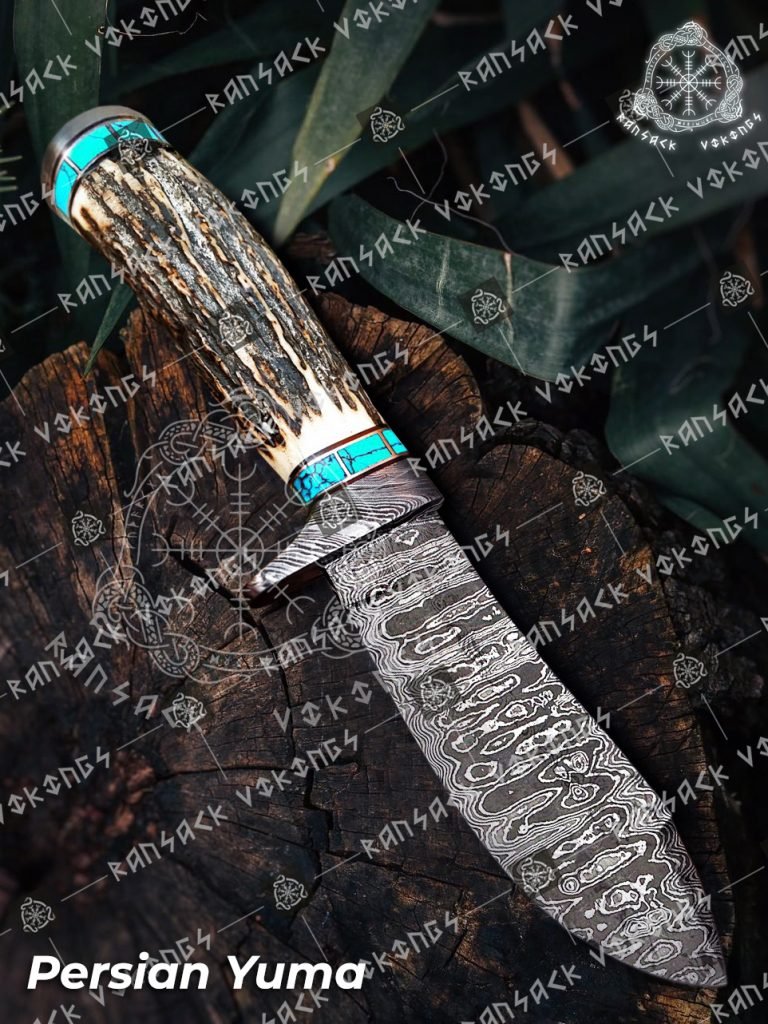
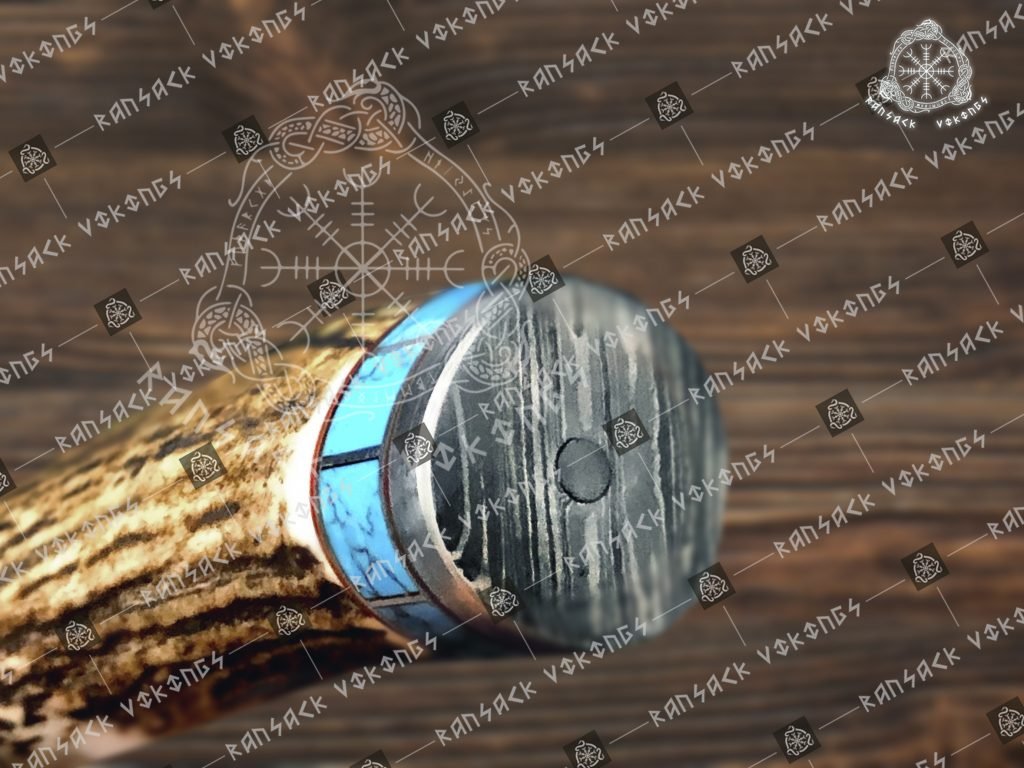
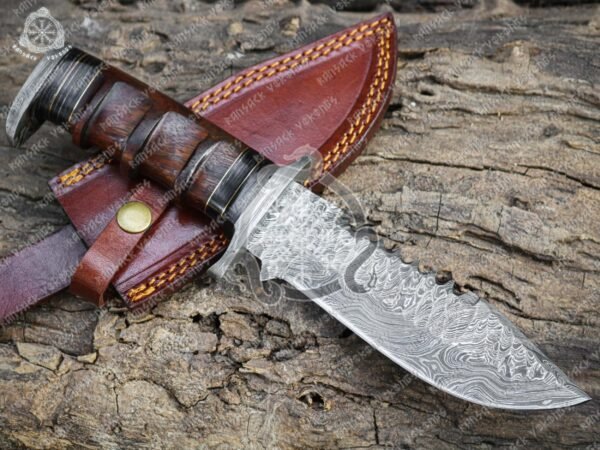
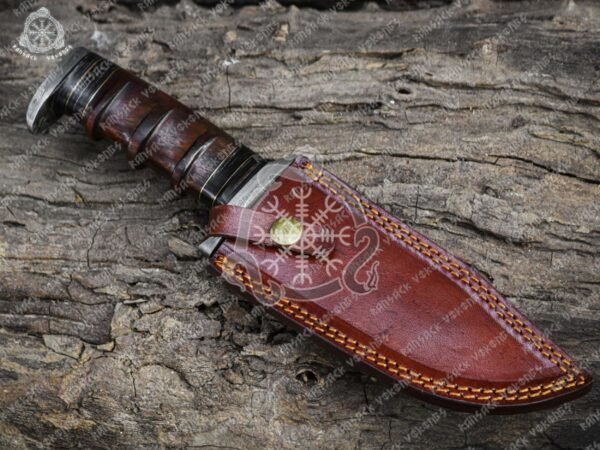
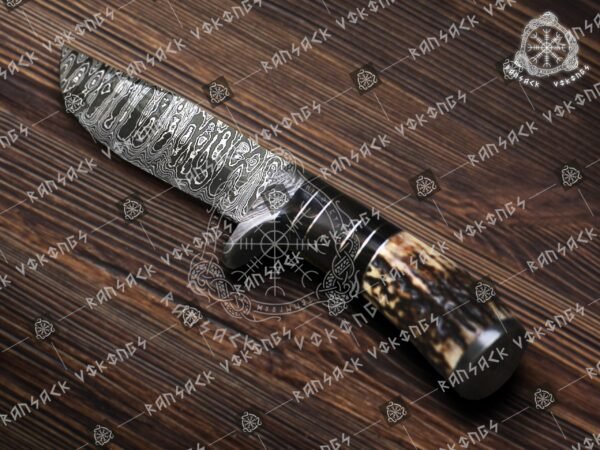
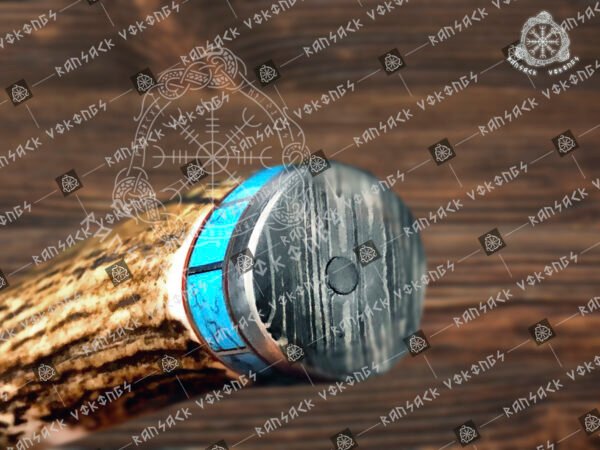
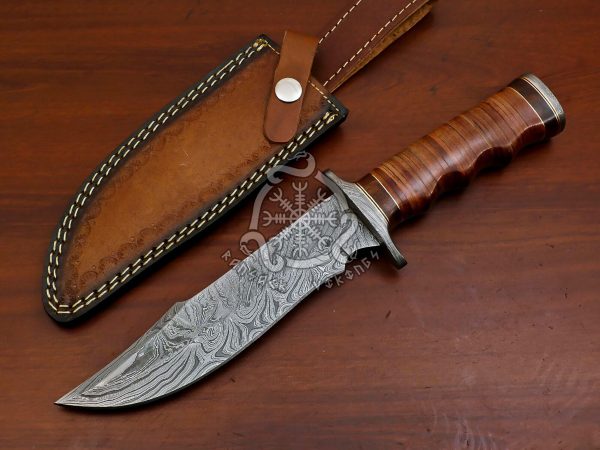
There is nothing stamped about the Campmaster. The Damascus blade is drawn out under the hammer, the stag horn and stacked leather handle is fitted to it, hand forged Damascus makes up the guard and butt cap, and the whole camp knife is finished before it is boxed. It measures 15 inches overall with a 10 inch blade, a 5 inch handle and 4 mm of stock through the spine. The overlap between hunter, skinner and bowie is untangled in which knife you actually need.
A camp knife is a specific thing, not just a big knife. It is the blade that sits between a hunting knife and a hatchet, long enough to split kindling and prepare food in quantity, short enough to control for finer work, and without the exaggerated clip point and false edge that make a Bowie a fighting profile. The pattern goes back to the American trade knives of the nineteenth century, the plain butcher blades that were shipped west by the crate and became the standard tool of anyone living out of a wagon. What has survived is the shape that turned out to be the most generally useful: a long, deep, single edged blade with a working point and enough weight forward to chop.
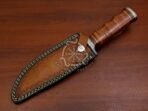
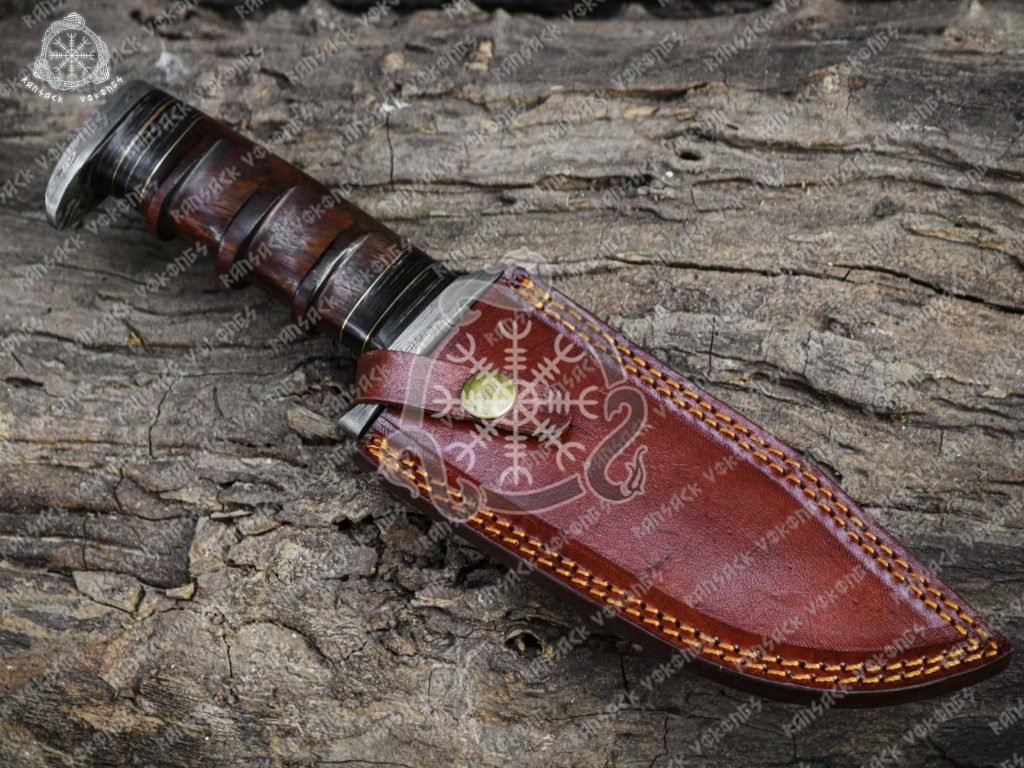
The Campmaster is forged and finished in the Czech Republic and ships with a fitted leather sheath, free inside the United States.
Specifications
| Steel | Hand forged Damascus, 1095 and 15N20 |
|---|
| Hardness | 58 to 60 HRC |
|---|
| Damascus layers | 393 layers |
|---|
| Blade thickness | 4 mm |
|---|
| Overall length | 15 inches |
|---|
| Blade length | 10 inches |
|---|
| Handle length | 5 inches |
|---|
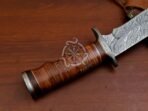
| Handle | Stag horn and stacked leather, Damascus guard and butt cap |
|---|
| Sheath | Leather sheath |
|---|
| SKU | RK-562 |
|---|
What a ten inch camp blade is actually for
Ten inches is a deliberate length. Below about eight inches a blade stops having the reach and the mass to split anything, and you end up wanting an axe. Above about twelve it becomes awkward to use for anything delicate and you end up carrying a machete you only use once a trip. Ten sits in the useful middle, and it is why the length keeps recurring across completely unrelated traditions from the Bowie to the seax to the parang.
In practice the knife gets used in three ways. Held at the back of the handle and swung, the forward third chops and limbs. Held with the thumb on the spine and choked up near the guard, the section behind the belly does food prep and carving with real control. And laid across a round of wood with a stick hammering the spine, it splits kindling cleanly, which is the single most useful thing a camp knife does and the reason the spine on this piece is left square and flat rather than rounded off.
Four millimetres of stock is the right thickness for that work. Thicker and the blade wedges rather than cuts and gets heavy on the belt. Thinner and it flexes under a baton. The guard is not decorative either: on a wet handle with a heavy swing, it is the only thing between your hand and ten inches of sharpened Damascus.
Why Damascus and not stainless
The blade is pattern welded Damascus, made by forge welding 1095 high carbon and 15N20 nickel steel into a single billet, then folding and drawing it out until the layers show as a pattern in the steel. The two steels take etching differently, which is what makes the light and dark bands. It is not a coating and it will not wear off. Hardened to 58 to 60 HRC, it holds an edge through a weekend of camp work where a soft stainless blade would need touching up twice a day.
The case for stainless is that it forgives being put away wet, and on a knife that lives in a pack that is a genuine advantage. The case against it is that stainless soft enough to be cheap is too soft to hold a chopping edge. We set the trade out in Damascus versus stainless, and the long version of how the billet is built is in what Damascus steel is.
Stacked leather and stag horn
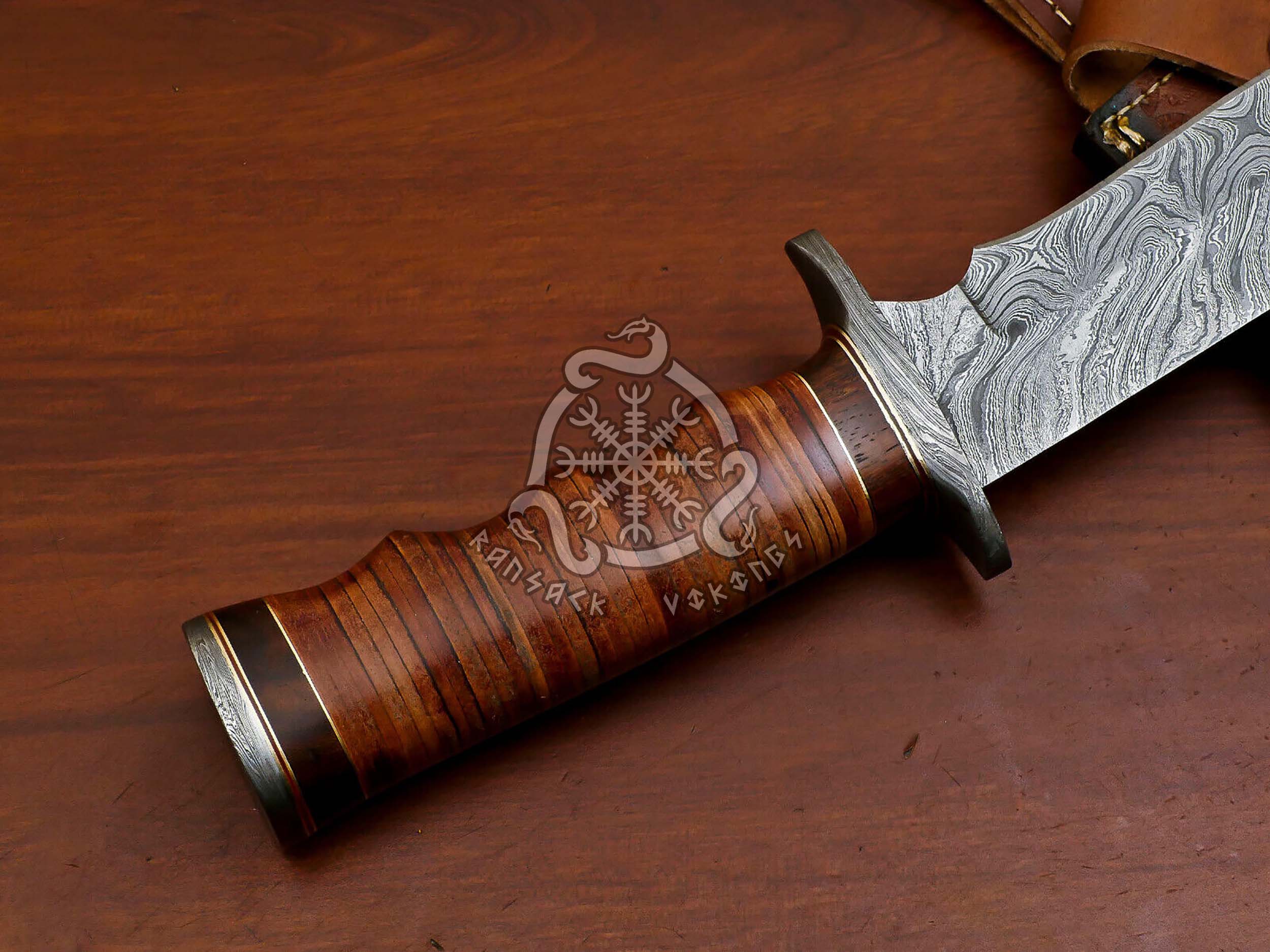
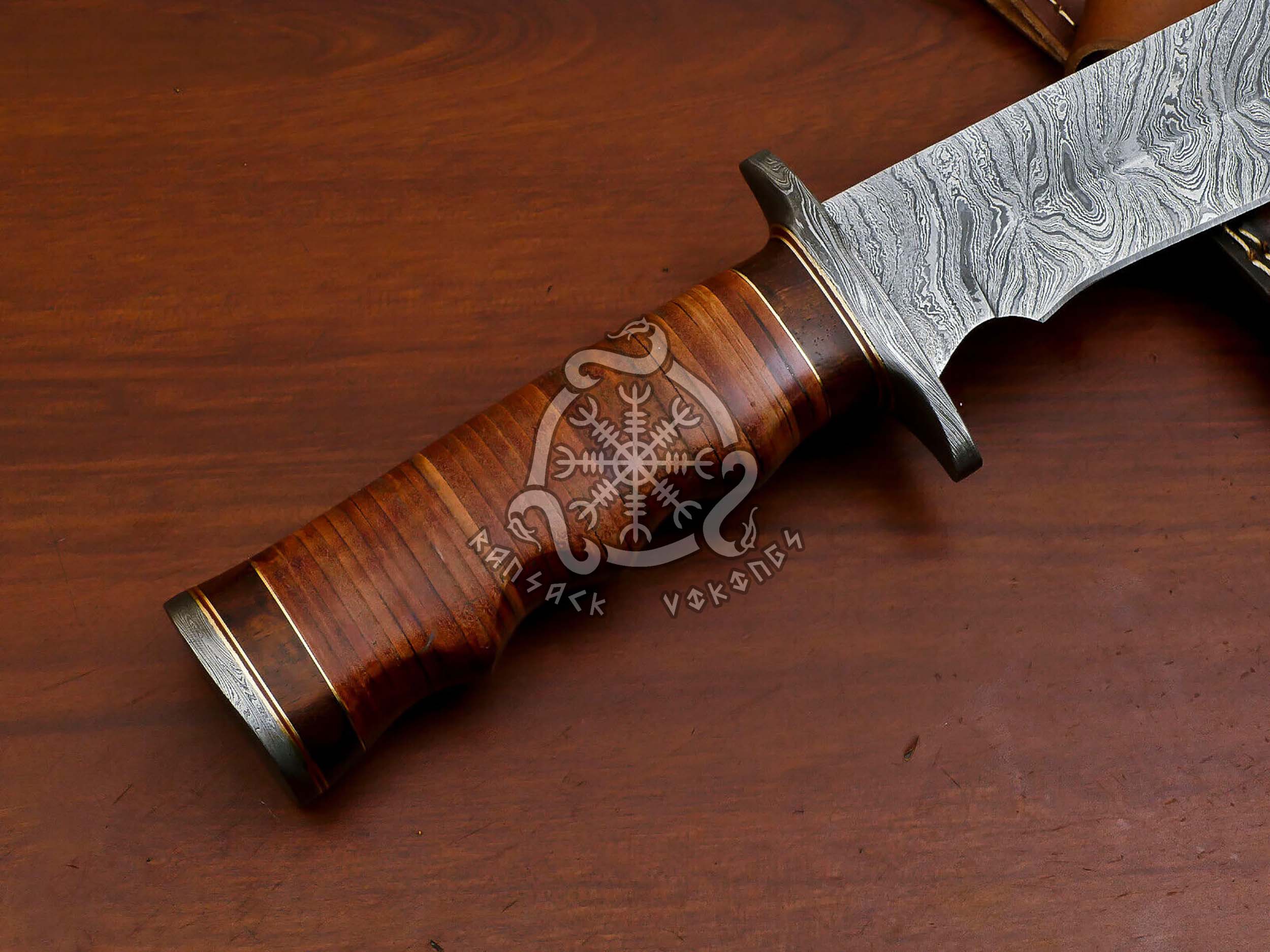
Stacked leather is one of the best handle materials ever put on a working knife and it is barely used any more because it is slow to make. The handle is built from individual leather washers threaded onto the tang, compressed hard, then turned, ground to shape and polished as a single body. It is the construction that went onto American military and field knives from the Second World War onwards, and it stayed there for a reason: leather grips better wet than it does dry, it never gets cold in the hand, and being made of dozens of separate layers it absorbs impact shock better than any solid material.
Here it is paired with stag horn, which brings density and a natural texture at the front of the grip where your fingers sit. Care is slightly different from timber. Stacked leather wants wax or a leather conditioner rather than a soaking of oil, applied thinly and worked in, and it must never be left submerged or dried on a heat source because the washers can shrink and loosen against each other. The stag horn takes the ordinary annual coat of oil we set out in wooden handle care, and the sheath wants the treatment in leather sheath care.
Engraving, runes and your own design
Use the rune converter on this page to turn a name, a date or a short phrase into Elder Futhark and we will cut it into the steel or the handle. If you would rather have a Viking pattern than a rune line, choose your own design in the engraving option above the add to cart button and tell us whether it goes on the blade or the handle. Where a piece already carries an engraved design, your chosen engraving replaces it rather than sitting alongside it. On a ten inch blade there is room for a full name and a date along the flat without the line looking crowded. Stacked leather does not hold a fine engraved line well, so on this piece we would put handle work into the stag rather than the leather. See the engraving page.
Care and sharpening
A minute after use is all the steel asks: wipe, dry, thin film of oil. Leather holds moisture, so store the knife out of the sheath if it is going away for a season, and never dry a wet sheath on a radiator because the leather will harden and crack.
Sharpening a ten inch edge is a matter of working in sections rather than trying to sweep the whole length in one pass. Set the angle at the ricasso, work forward in overlapping stretches, and give the forward chopping third a slightly steeper angle so it survives impact. Detail in steel care and sharpening with a whetstone.
Made in the Czech Republic
This piece is made by hand in the Czech Republic, in a workshop that still works the old way. The steel is forged, ground, heat treated and finished by smiths who learned the trade from the people before them, and the wood, horn and leather are cut and fitted by hand rather than pressed out on a line. That is also why no two pieces come out exactly the same.
Ransack Viking is a United States company. We import these pieces ourselves, check every one when it lands and ship from our warehouse in North Babylon, New York. Engraving is done here in the United States after the piece arrives, so your runes or your own design go on before it leaves for you.
A note on handmade variation
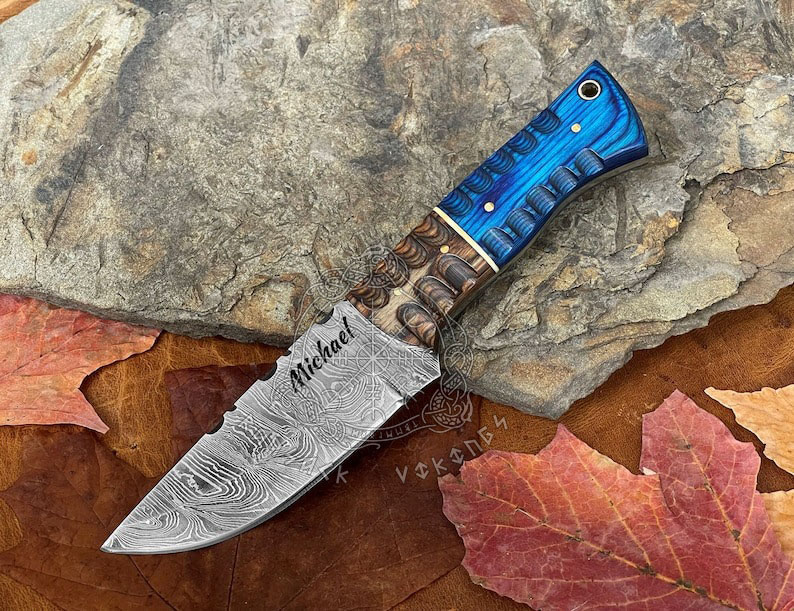
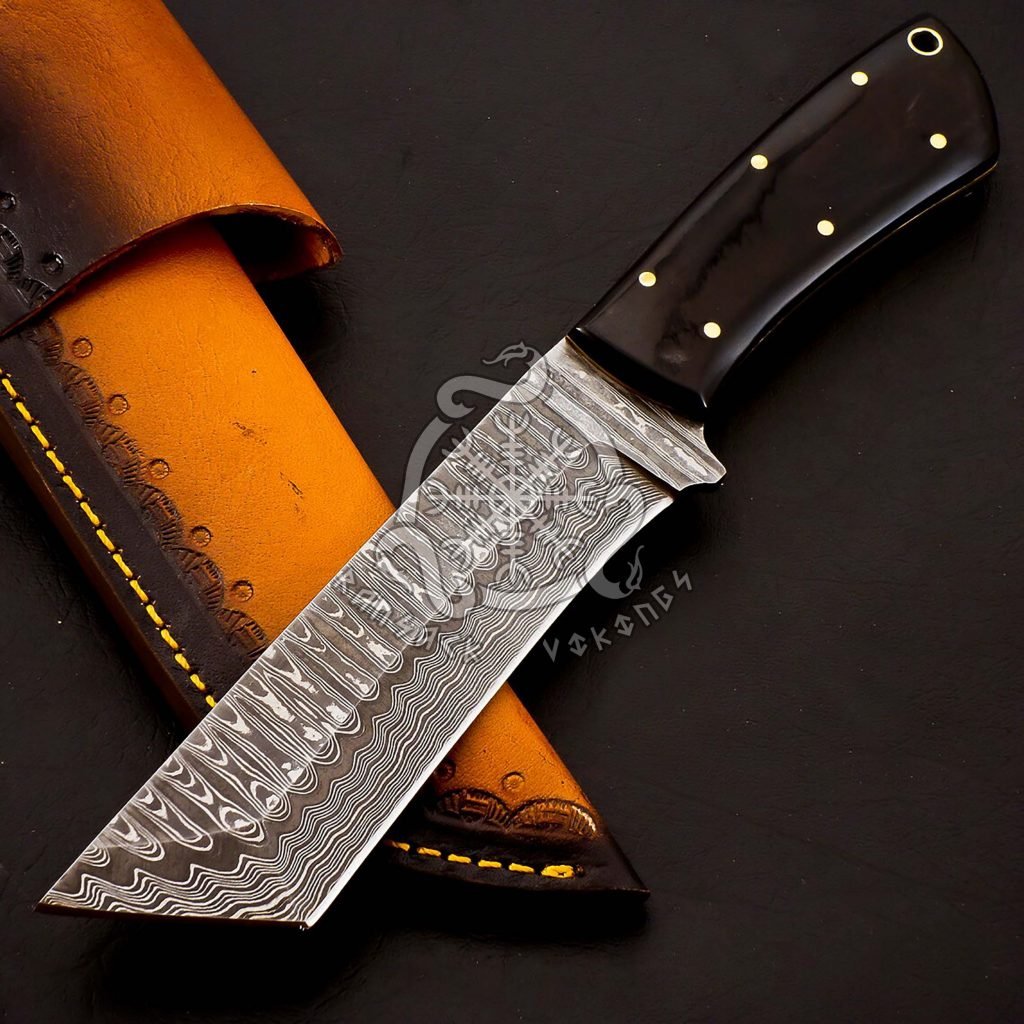
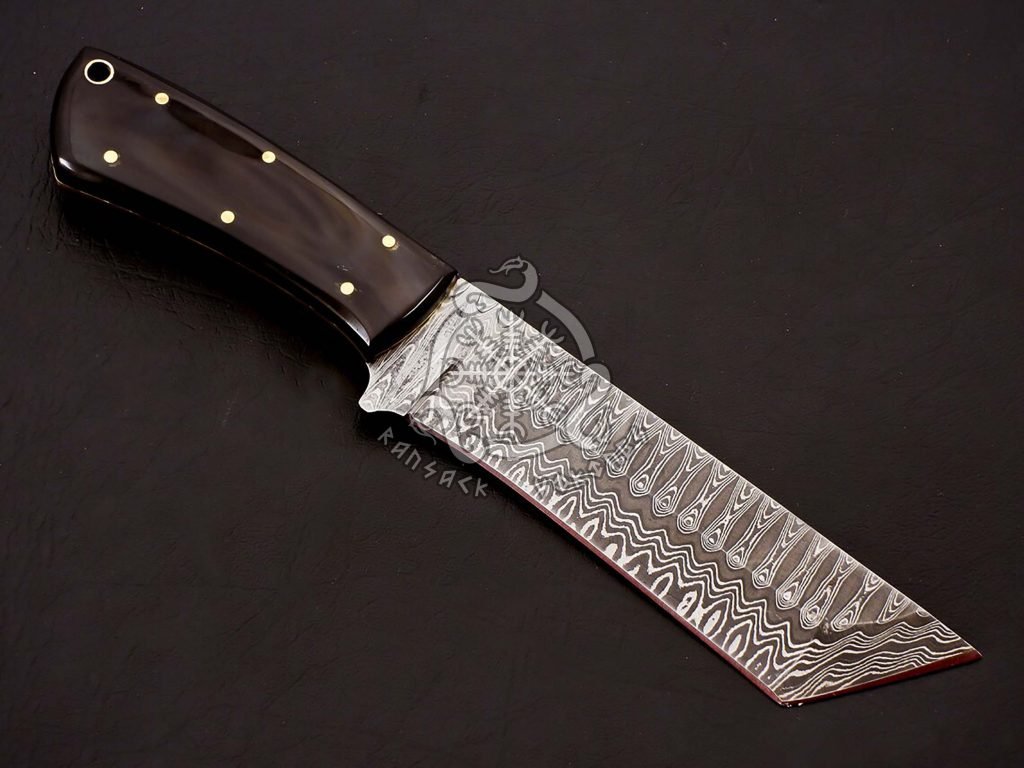
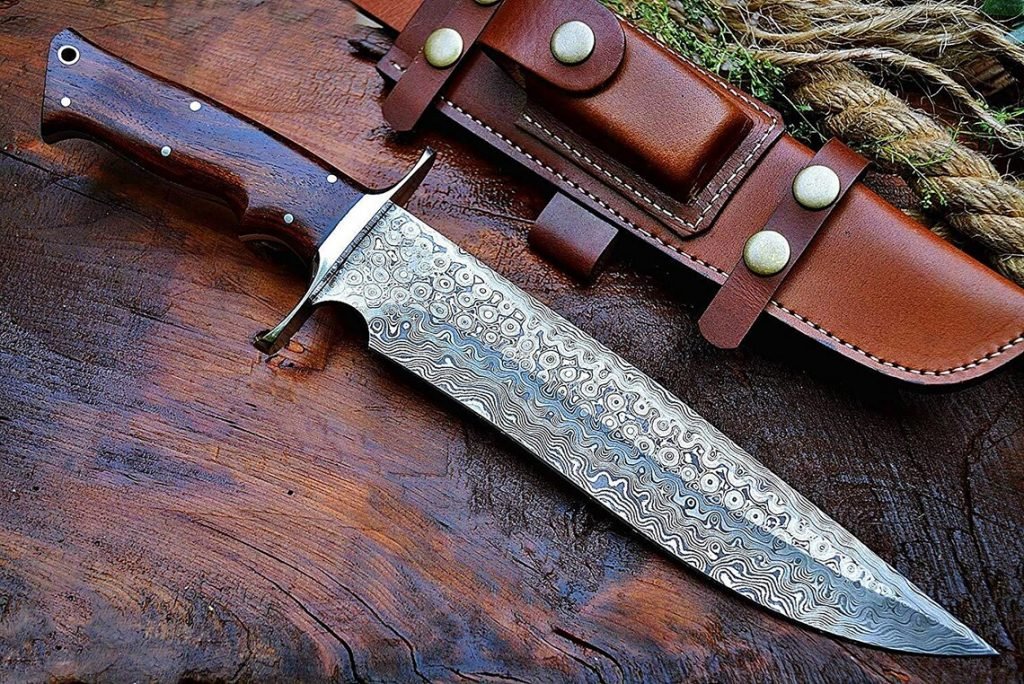
The Campmaster is hand forged. It is not machine made and it is not bulk produced, so what arrives will not be a pixel for pixel copy of the photograph. The Damascus pattern comes out of the billet differently every time, the stag horn is marked by the animal it came from, the stacked leather takes its own tone as it is turned and polished, and the grind shifts by fractions because a person made it. The dimensions, the steel and the build are the same every time. The character is not.
Frequently asked questions
Can I baton firewood with it
Yes. That is one of the jobs it was built for. The spine is left flat and square so a baton lands cleanly, and the tang runs the full length of the handle.
Will the stacked leather handle come loose over time
Not if you keep it out of prolonged water and off heat sources. The washers are compressed hard on assembly and stay tight. Wax it once a year and it will outlive you.
How is a camp knife different from a Bowie
A Bowie carries a clip point with a sharpened or unsharpened false edge, which comes from a fighting tradition. A camp knife keeps a plain working point and puts all its geometry into cutting and chopping.
Is it too big for food preparation
No, as long as you choke up behind the guard. Ten inches of straight edge is actually excellent on a board. It is awkward for detail work, which is where a small knife earns its place alongside it.
Do I oil the leather handle the same way I oil the blade
No. The blade wants a thin mineral or camellia oil. The leather wants a wax or a proper leather conditioner, worked in sparingly. Oil soaked into leather softens it.
How long does an order take
One to two weeks of processing, then transit. Shipping is free inside the United States and returns are open for seven days.
What is in the box
- One Campmaster Damascus camp knife
- Fitted leather sheath
- Protective packaging
- Forged and finished in the Czech Republic
Explore the range
Compare it with the field blades in Hunting Knives, the fighting profiles in Bowie Knives, the multi zone blades in Tracker Knives and the Norse pieces in Viking Knives. Reasoning behind the materials is in the guides.
Other pieces in this group
Also in this group is the Runecast hunting knife, forged from 1095. Sitting beside it in the catalogue is the Wengehunter hunting knife, pattern welded Damascus. Another in the same line is the Pakkacamp hunting knife, pattern welded Damascus.
For a different piece from the same family, look at the Tantostag tanto knife. Nothing here exactly right, build one to your own spec on the custom Damascus knife page.


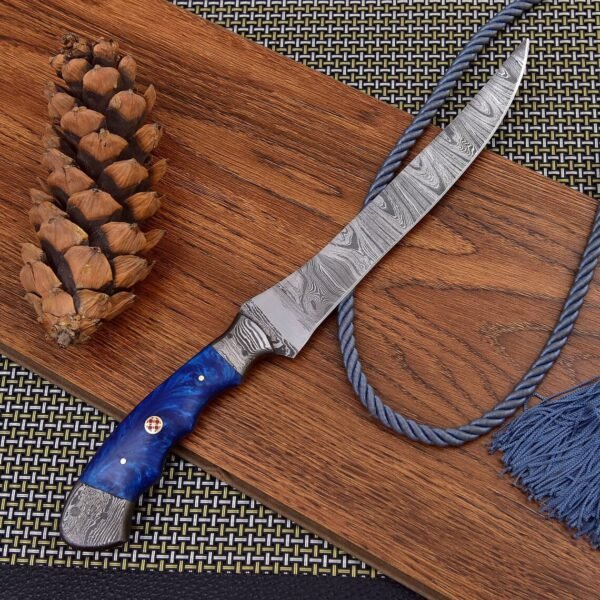

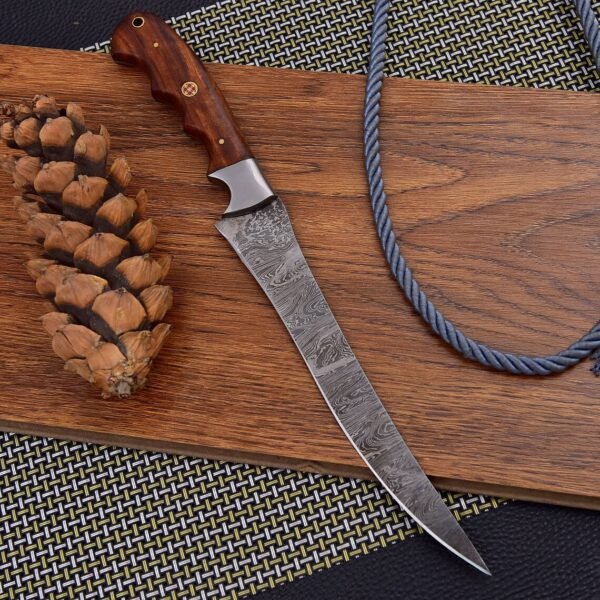
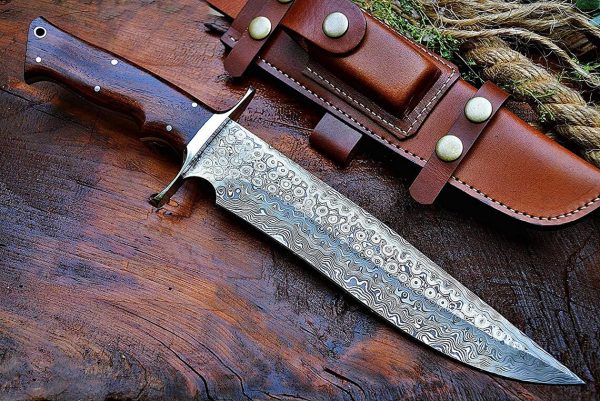
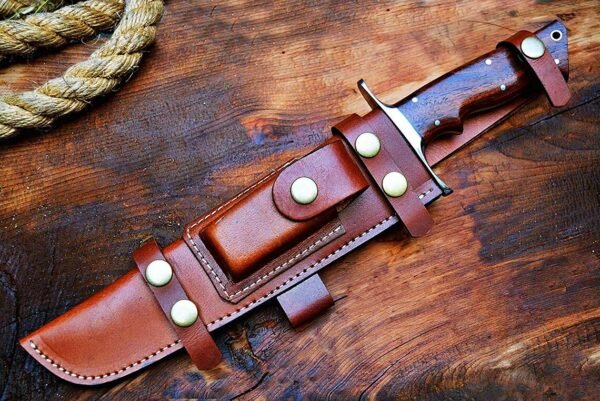


Good quality knife for the price. Sheath is nice. Wish it had more padding but it does the job. Not my first Ransack Viking order and it held up to their usual standard. Would still tell others to give this a try.