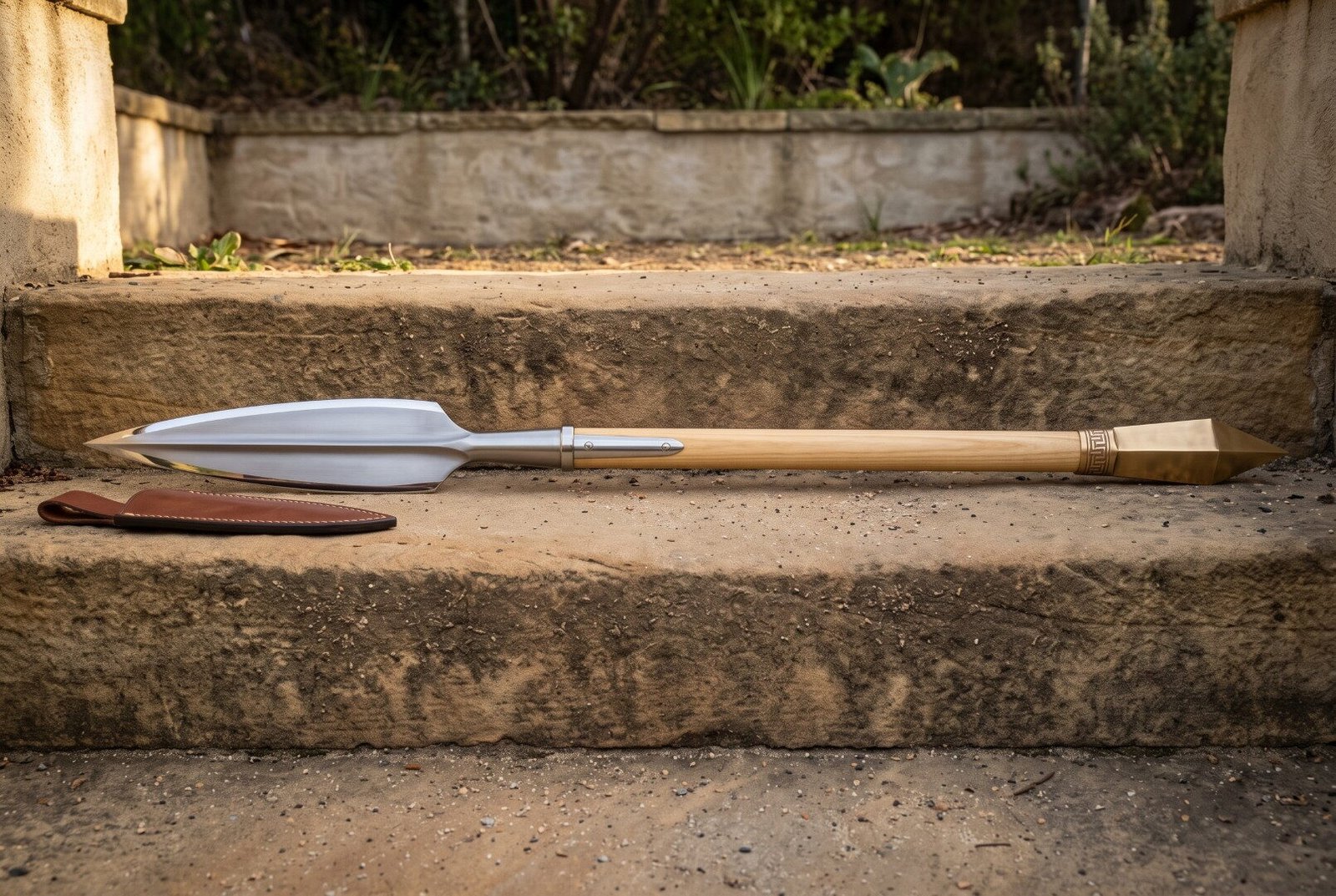
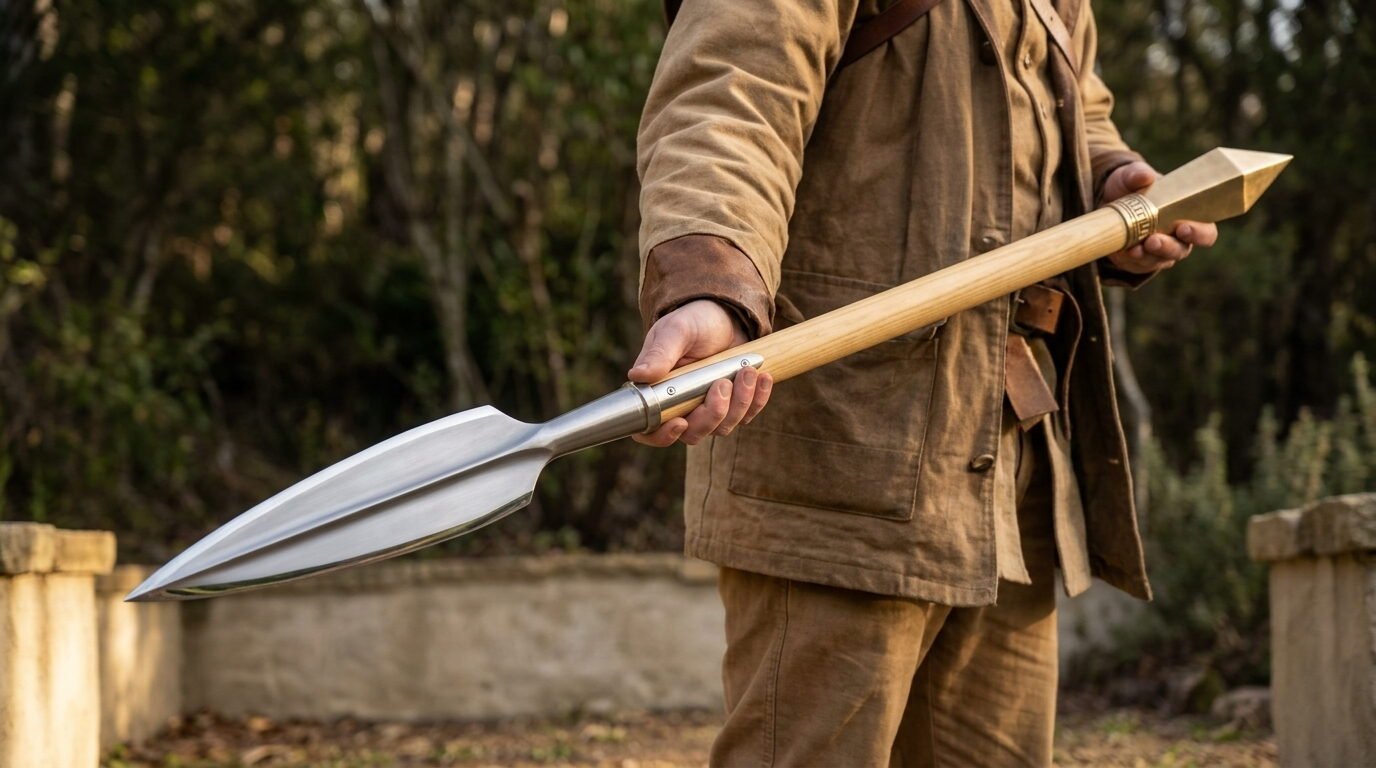
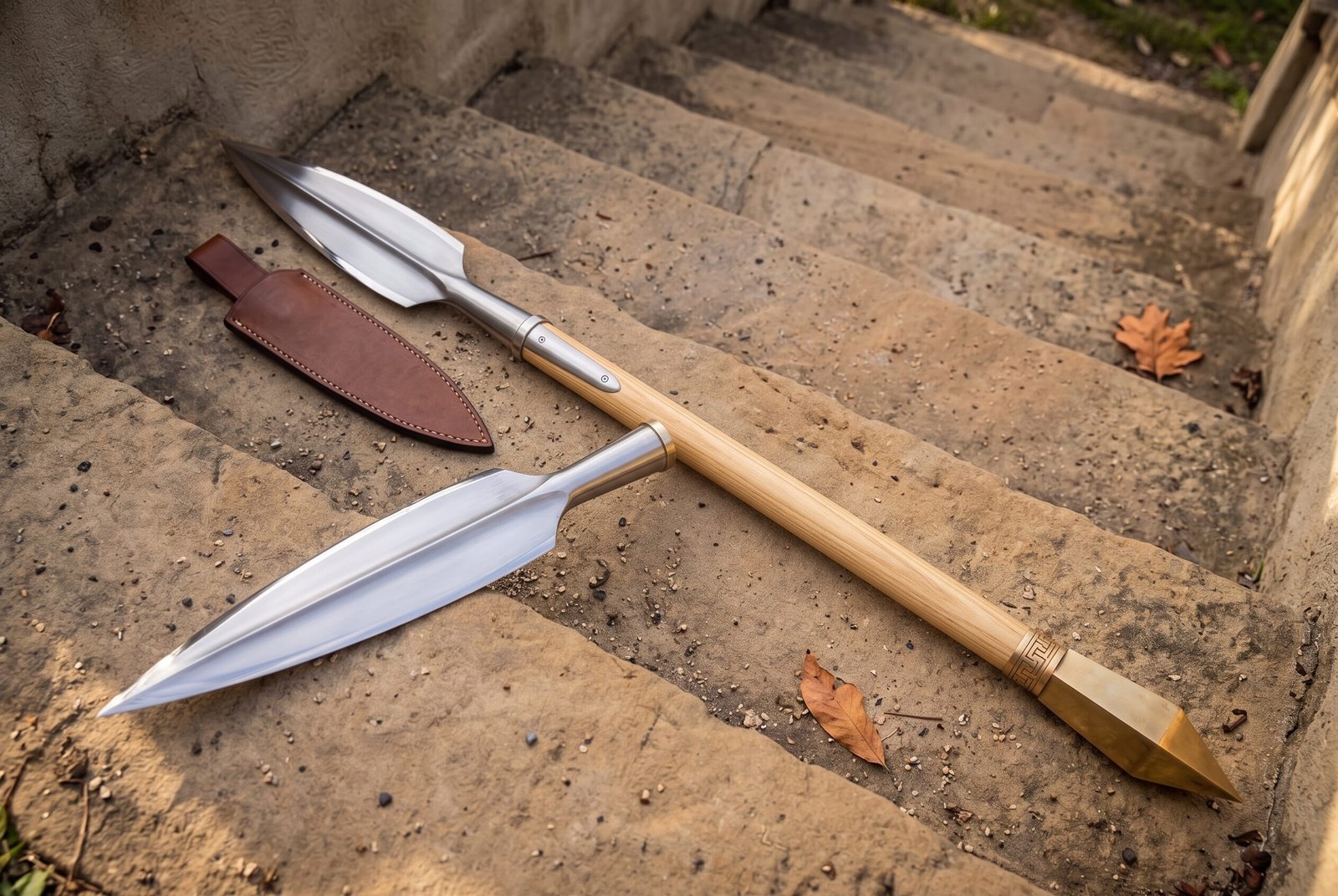
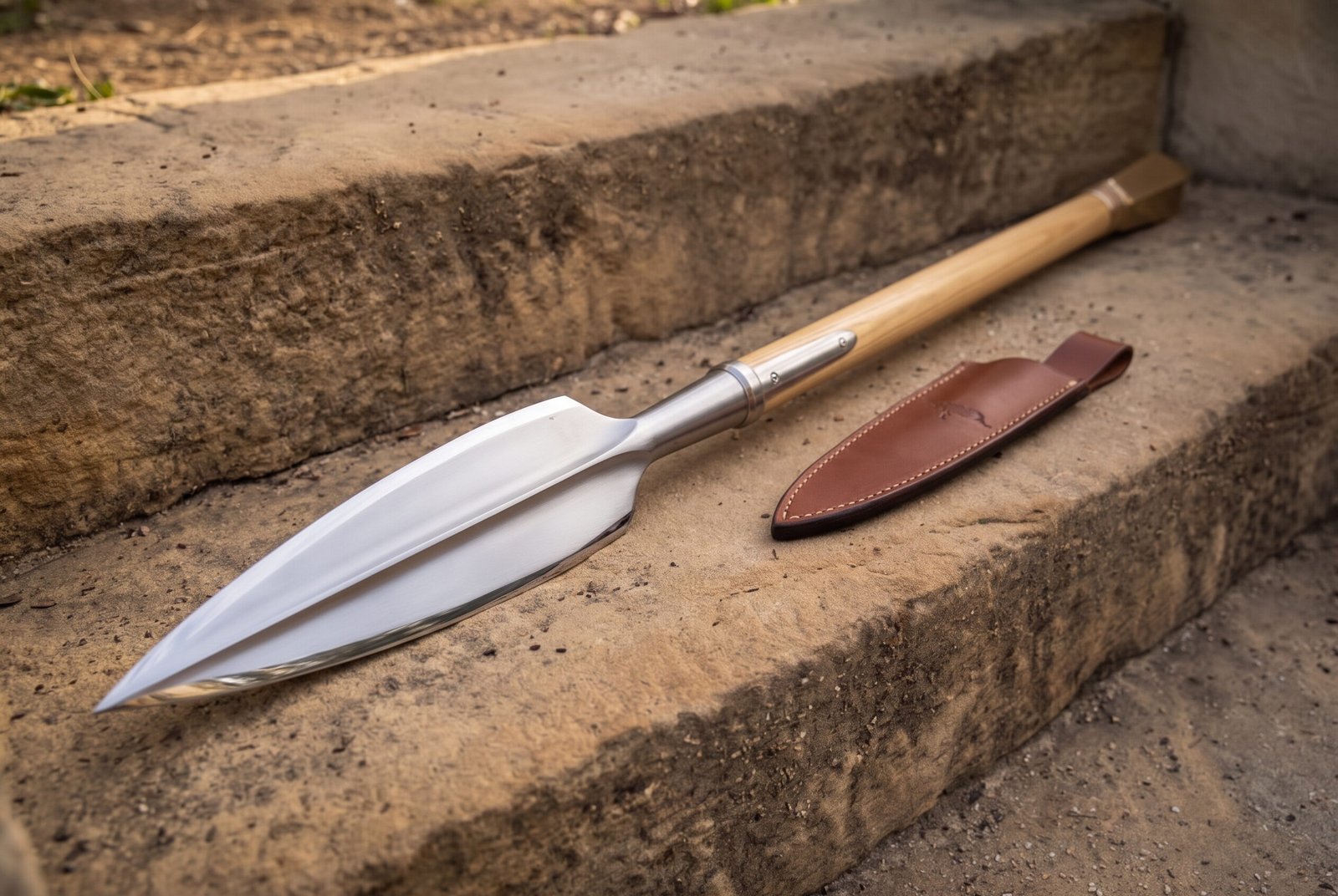
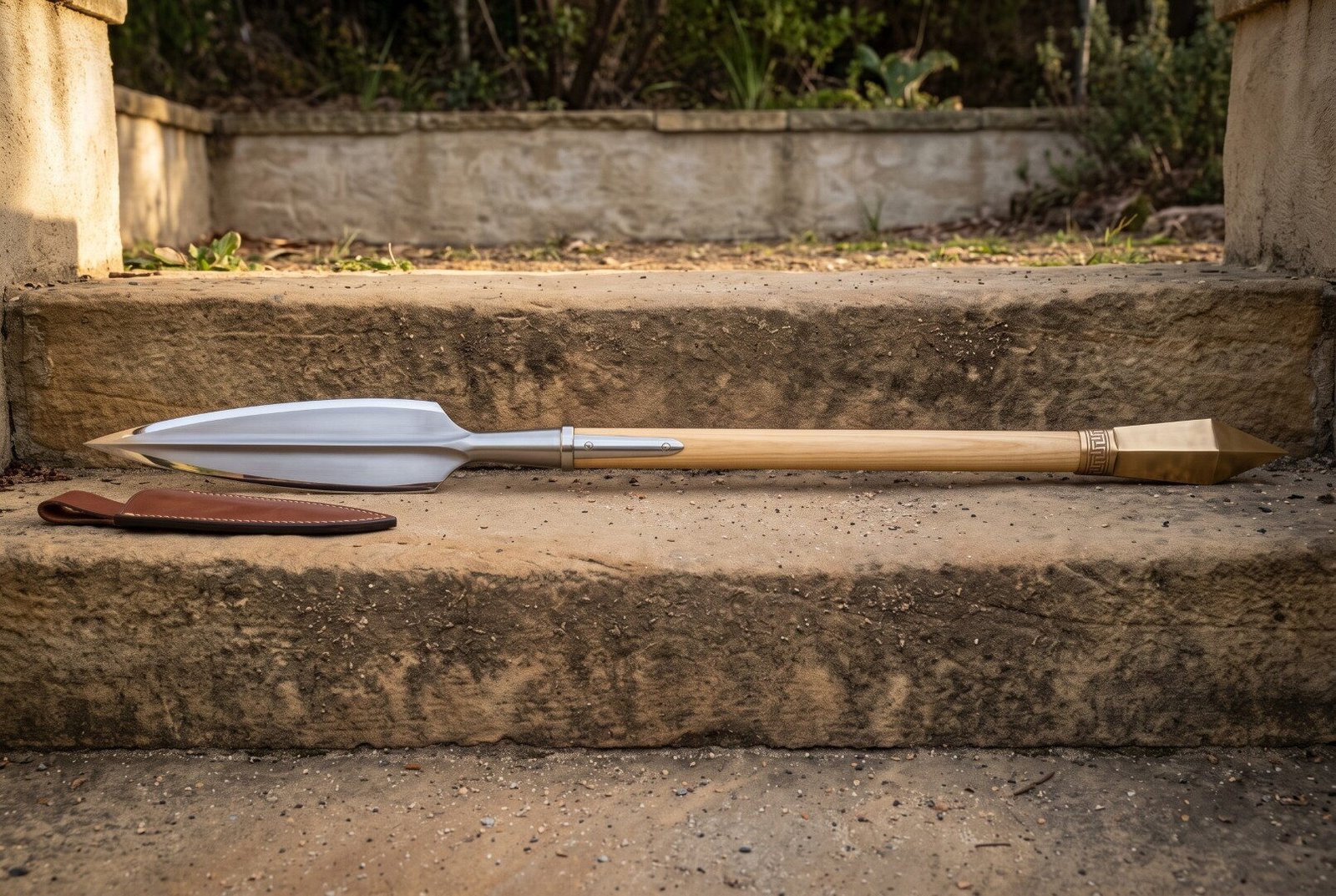
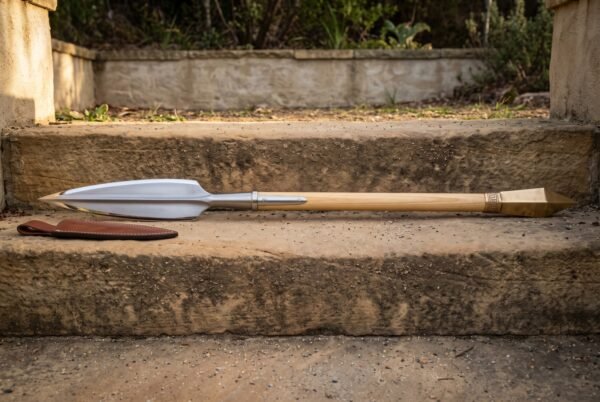
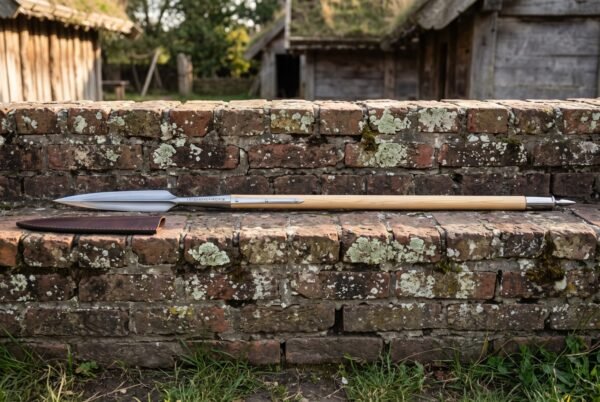
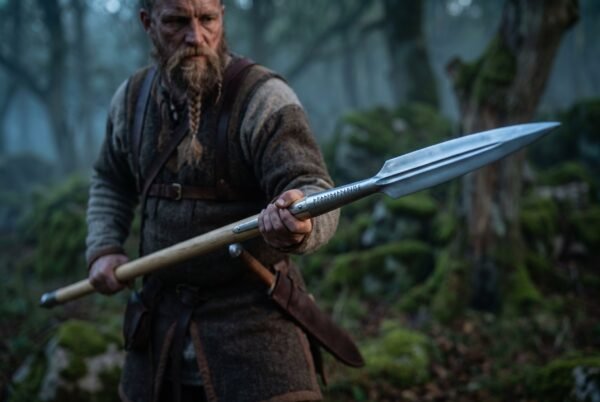
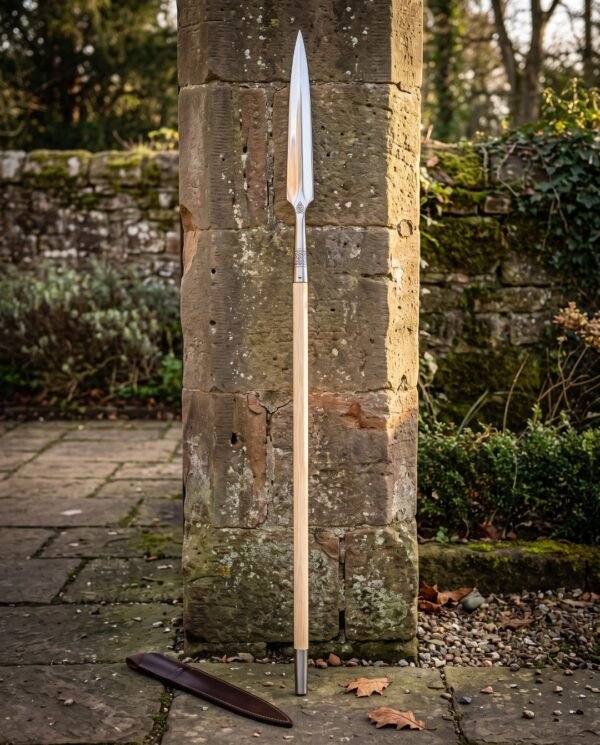
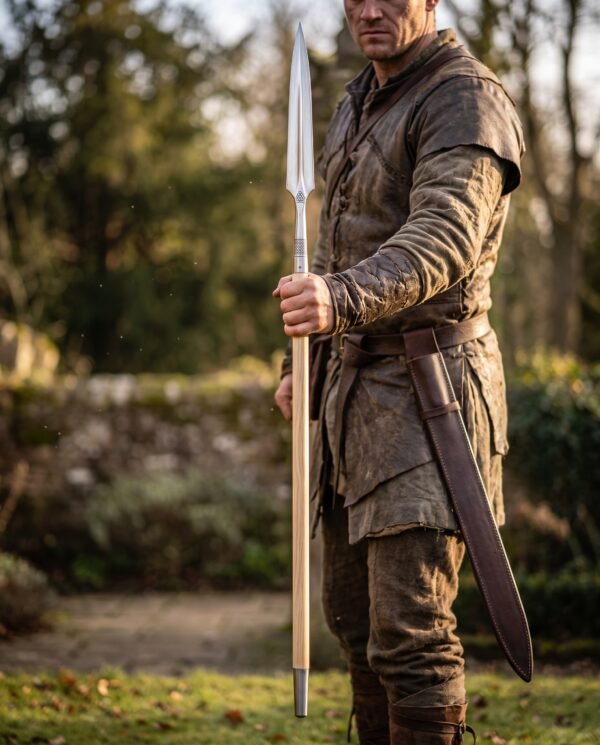
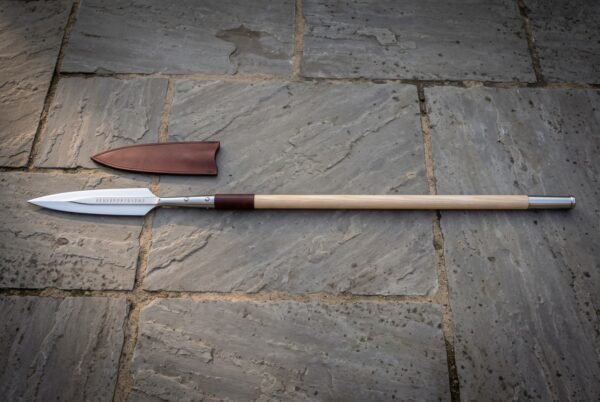
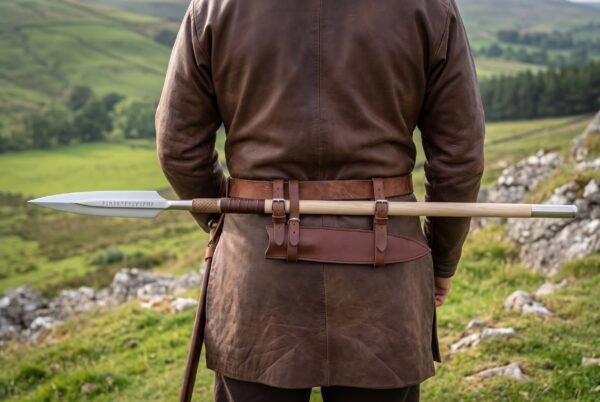
This is a Viking spear built the way the archaeology says they were built. The head is a broad leaf, forged from a single billet, ground with a raised central ridge that runs from the socket to the point, and polished to a soft satin. It sits on a straight ash haft, riveted through the socket, and the far end is capped with a heavy brass butt spike. A brown leather sheath ships with it to cover the head in storage and transport.
People think of the Vikings as axe and sword fighters because that is what the films show. The graves say otherwise. The spear is by a wide margin the most common find in Norse burials, and it is not close. It was cheap, because a spearhead uses a fraction of the steel a sword does and the rest is a stick. It was easy to learn. It outreached everything else on the field. And it belonged to Odin, whose spear Gungnir was said never to miss, which is why the sagas describe a commander throwing a spear over an enemy army to dedicate them to him before the fighting started.
Forged, ground, heat treated and hafted by hand in the Czech Republic, and shipped with its leather head sheath. It lands in the Viking spears, with the Norse arms close enough that people usually look at both.
Specifications
| Head steel | 1095 high carbon, hardened to 54 to 58 HRC |
|---|
| Overall length | 40 inches nominal |
|---|
| Head length | 19 inches nominal including the socket |
|---|
| Head profile | Broad leaf with a raised central ridge and a long tubular socket |
|---|
| Haft | Straight ash, sanded and oiled |
|---|
| Fittings | Steel collar ring and rivet at the socket, faceted cast brass butt spike with an engraved brass collar |
|---|
| Finish | Satin polished head, natural oiled ash, polished brass |
|---|
| Sheath | Brown leather head sheath |
|---|
| SKU | RK-1773 |
|---|
The socket, and why a spear is not a knife on a stick
Look at the throat of the head where it meets the wood. That cone is a socket, and it is the single most important piece of engineering on the whole spear. It is forged by taking the hot rear of the billet, drawing it out flat, and then wrapping it around a tapered mandrel until the two edges meet. On many surviving Viking heads you can still see the seam where those edges came together, sometimes forge welded shut and sometimes left as a clean butt joint.
The alternative would be a tang, a spike driven into the end of the shaft the way a knife blade goes into a handle. Tangs are fine on knives and hopeless on spears. A tang splits the wood, because every thrust drives a wedge deeper into the end grain. A socket does the opposite. It wraps the wood in a steel collar, so the force of a thrust squeezes the shaft inward rather than levering it apart. That is why the socket appears on essentially every serious hafted head in Europe from the Bronze Age onward.
The rivet through the socket is not carrying the thrust. It is there to stop the head pulling off when you draw the spear back, which is the direction the socket cannot help with.
The butt spike and the balance
The brass at the heel is not decoration. A butt cap or butt spike does three jobs. It stops the end grain of the haft splitting when the spear is grounded. It gives you a second working end, so a spearman whose head is caught in a shield can reverse the spear and still be dangerous. And it moves the balance point rearward, back toward the hands, which is what makes a long spear feel controllable instead of nose heavy.
That last one is the reason we use a heavy cast brass here rather than a token ferrule. Pick the spear up at the balance point and you will find it sits well back from the middle, close to where your rear hand naturally goes. That is the difference between a spear you can hold on guard for two minutes and one that drops after twenty seconds.
1095 head and an ash haft
The head is 1095 high carbon steel taken to between 54 and 58 HRC. On a thrusting point you want a hardness that will hold a shape without being brittle, because a point that meets bone or a shield rim takes an impact no knife edge ever sees. The mid fifties is the sweet spot for that. The steel is plain carbon, so it will patina and it will rust if it is left wet.
The haft is ash, and there is no good substitute. Ash has long straight fibres and an unusually high shock absorption for its weight, which is why it is still the wood used for tool handles, oars and hurling sticks. It bends a long way before it breaks, and when it does fail it fails in long splinters that hold together rather than snapping clean. Oak is stiffer and heavier and will jar your hands. Pine is light and useless. Ash was the right answer a thousand years ago and it is still the right answer.
Engraving, runes and your own design
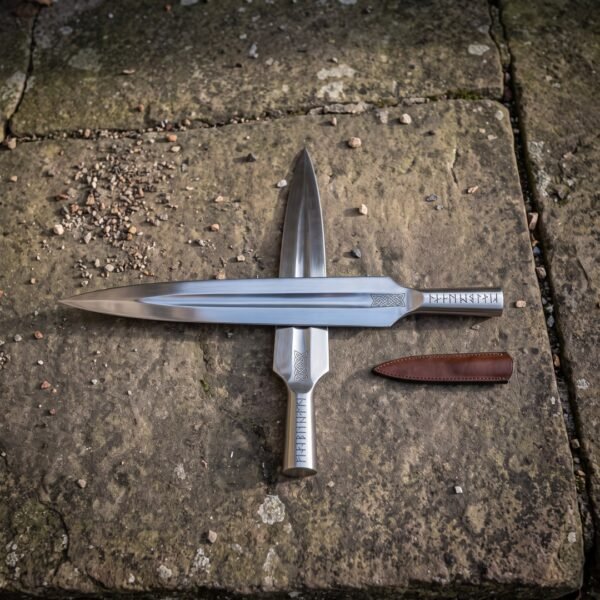
Use the rune converter on this page to turn a name, a date or a short phrase into Elder Futhark and we will cut it into the steel, the leather or the wood. If you would rather have a Viking pattern than a rune line, choose your own design in the engraving option above the add to cart button and tell us where it goes. Where a piece already carries an engraved design, your chosen engraving replaces it rather than sitting alongside it.
On a spear the two places that work are the socket collar, where a short line wraps neatly around, and the haft just below the head, where a longer line can run down the wood. The leather sheath will also take a name. Details on the engraving page.
Handling and balance
A spear this length is used with two hands, front hand loose as a guide and rear hand doing the driving. The front hand should slide rather than grip, so the spear can be fed forward and drawn back without regripping. Most people new to a spear hold both hands far too tight and wear themselves out in a minute.
The head is sharpened. This is a working forged point, not a costume prop, and it should be treated with the same respect as a sword. We do not sell it for full contact sparring or for reenactment combat, both of which require blunted and rebated heads. It is made for collecting, for display, for target work against a safe backstop, and for the kind of careful drill practice that does not involve another person within reach.
If you plan to stand it in a corner, stand it head up on the butt spike. Resting a sharpened head on the floor dulls it and marks the floor.
Care
Wipe the head after handling and keep a thin film of oil on it. Plain carbon steel takes fingerprints as etch marks if they are left for weeks. Our steel care notes cover the routine and apply just as well to a plain 1095 head.
The ash haft wants a wipe and an occasional rub of linseed or any hardwood oil, worked in with a cloth and buffed off. Do not varnish it. A varnished haft is slippery in a warm hand and chips at the socket. The brass will dull to a soft gold over time, which most owners prefer, and a metal polish will bring it back bright if you would rather it stayed that way. Feed the leather sheath once or twice a year and do not store the head sheathed in a damp room.
Made in the Czech Republic
Every piece we sell is made by hand in the Czech Republic. The smiths there work the way the trade has been worked for a long time, heating and hammering the steel, taking the bevels down by eye, and fitting the handle and the leather one at a time. There is no automated line anywhere in it, so small differences from one piece to the next are normal and expected.
Ransack Viking is a United States company based in Chicago, Illinois. We bring the pieces in ourselves, inspect them on arrival and ship them from our own warehouse. If you add engraving, that is carried out here in the United States before your order goes out.
A note on handmade variation
This spear is hand made rather than machine made or bulk produced, so what arrives will not be a pixel for pixel copy of the photograph. Ash is a natural material and the grain, the streaking and the exact pale to honey tone of the haft differ from one stave to the next. The hammer texture on the head, the width of the leaf and the depth of the central ridge vary a little because each head is forged by hand rather than stamped.
The steel, the hardness, the length and the build are the same every time. The character is not. For the detail behind that, see the Norse gods, and how to hang a blade on a wall alongside it.
Frequently asked questions
Does it come in one piece or does it need assembly?
It ships assembled, with the head riveted to the haft. Because of the length it travels in a long box, so measure your door before you have it delivered to an apartment.
Is the head sharp?
Yes. It arrives with a sharpened point and edges. Treat it as sharp from the moment the box opens.
Can I throw it?
We do not recommend it. A thrown spear lands hard and a socketed head on a long ash haft is not designed to survive repeated impacts on stony ground. It is a thrusting spear.
Can the haft be shortened?
Ask us before you order. We can cut the haft to a shorter length and refit the butt spike, which is easier for us to do here than for you to do at home.
Will the brass tarnish?
Yes, slowly, to a soft gold. That is normal for cast brass and many owners prefer it. Metal polish restores the bright finish in a few minutes.
How long does shipping take?
Processing is one to two weeks. United States shipping is free once it leaves us.
What is in the box
- Ashfang Viking spear, assembled and sharpened
- Brown leather head sheath
- Light protective oil coat on the head
- Steel, wood and leather care card
- Forged and finished in the Czech Republic
Explore the range
See the rest of the Viking spears, the glaives and polearms, the wider Norse arms, and the guides.
Near neighbours in the shop
A near match for this one is the Wyrmfang Viking spear, pattern welded Damascus. Closest to this in the range is the Ashpoint Viking spear, forged from 1095. If this one is not quite right, there is the Ashreach Viking spear, pattern welded Damascus.
The Boarhelm polearm covers the other half of the same kit. You can have this made your way instead on the custom Norse arms page.

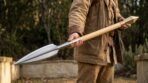
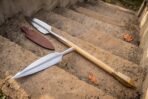
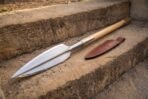
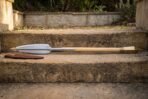
Been eyeing this polearm for months and it did not disappoint. Great for reenactment or just display. Either way it looks amazing. Couldn’t be happier with this.
Pretty impressed. Just a couple minor things I’d tweak. Head is well made. Just wish the wood grain was a bit more even. Haft is solid though a touch shorter than I pictured. Minor nitpicks aside, good quality piece.
Got this as a gift and now I want one for myself too. Haft feels sturdy and well balanced for the size of the head. This will be a family heirloom for sure.