Bulk set discount: 15% off. Buying this set of 6 costs 15% less than buying the same pieces one at a time.
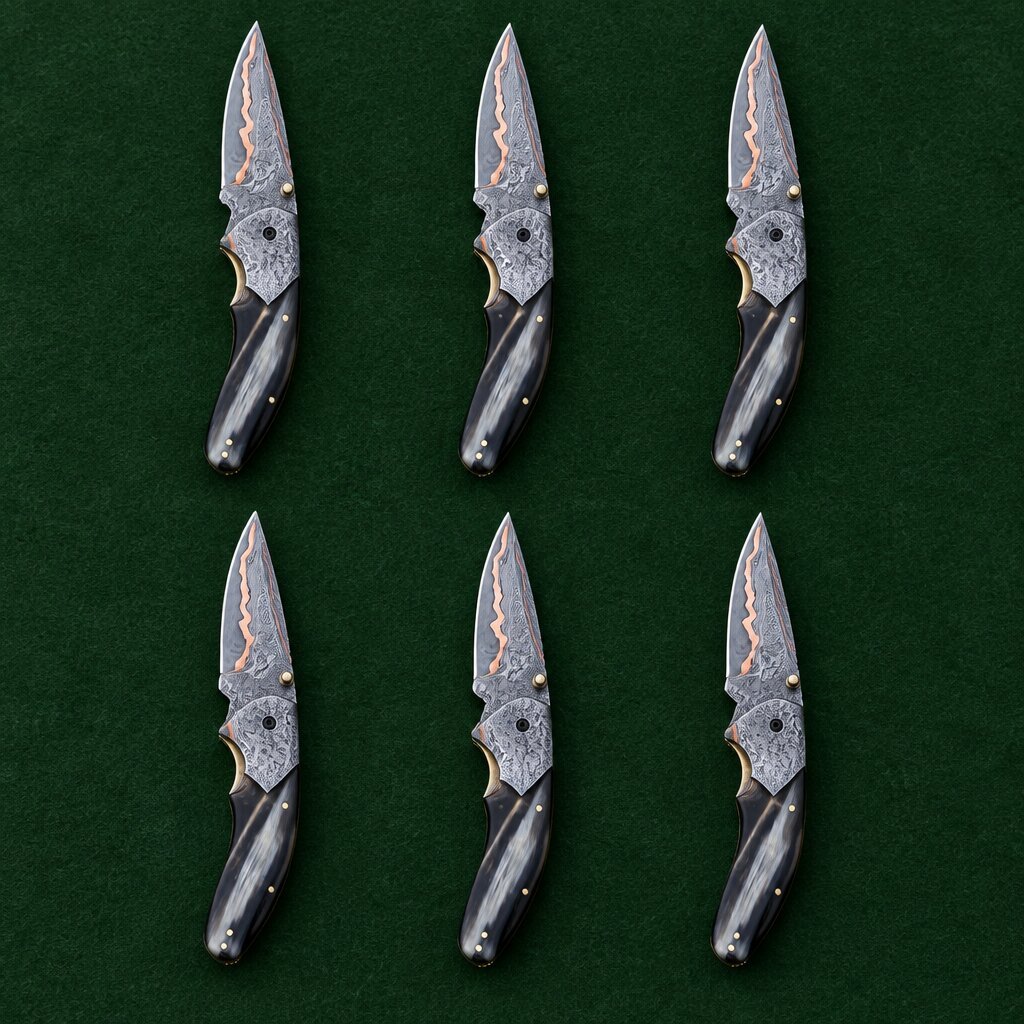
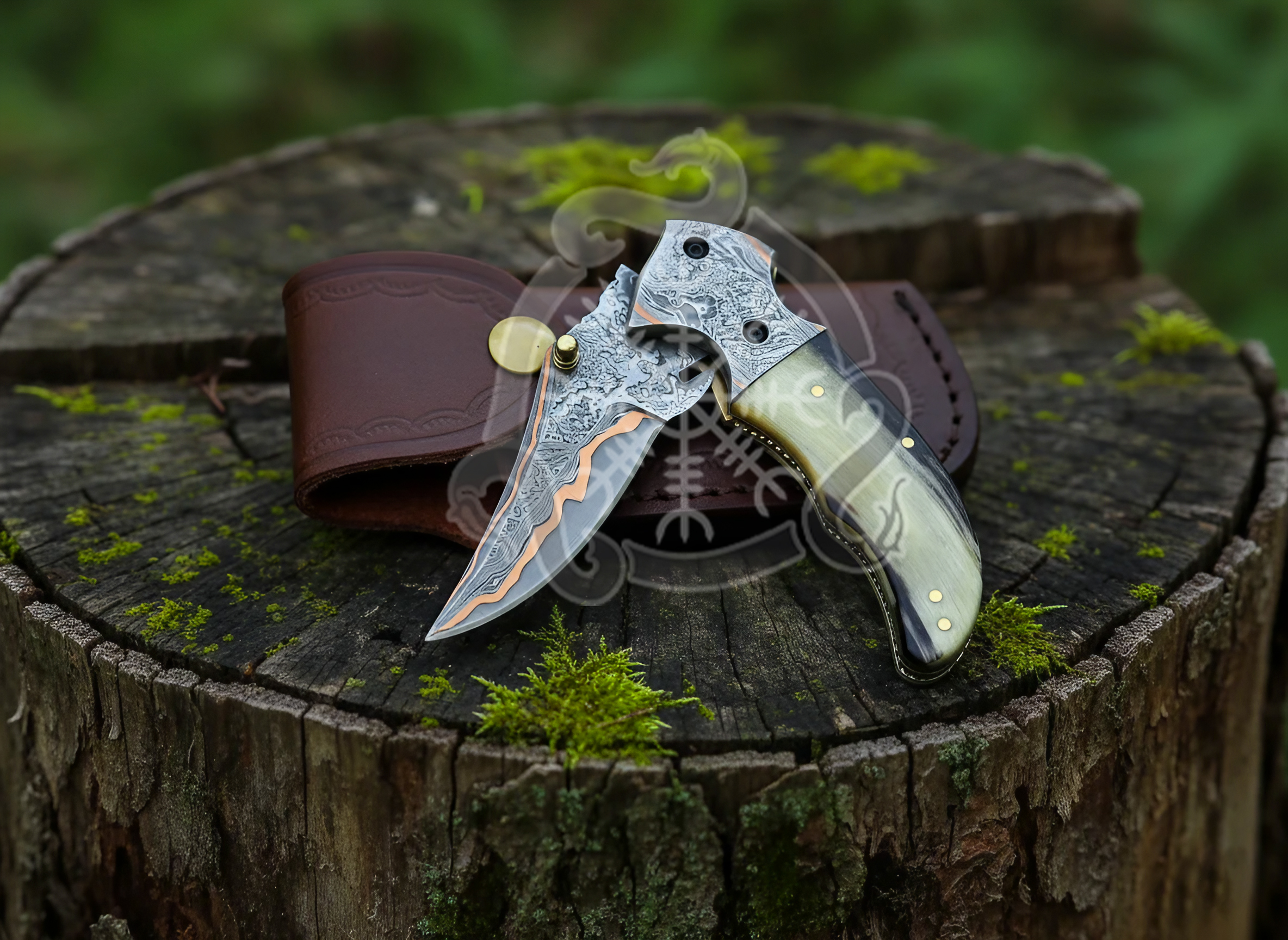
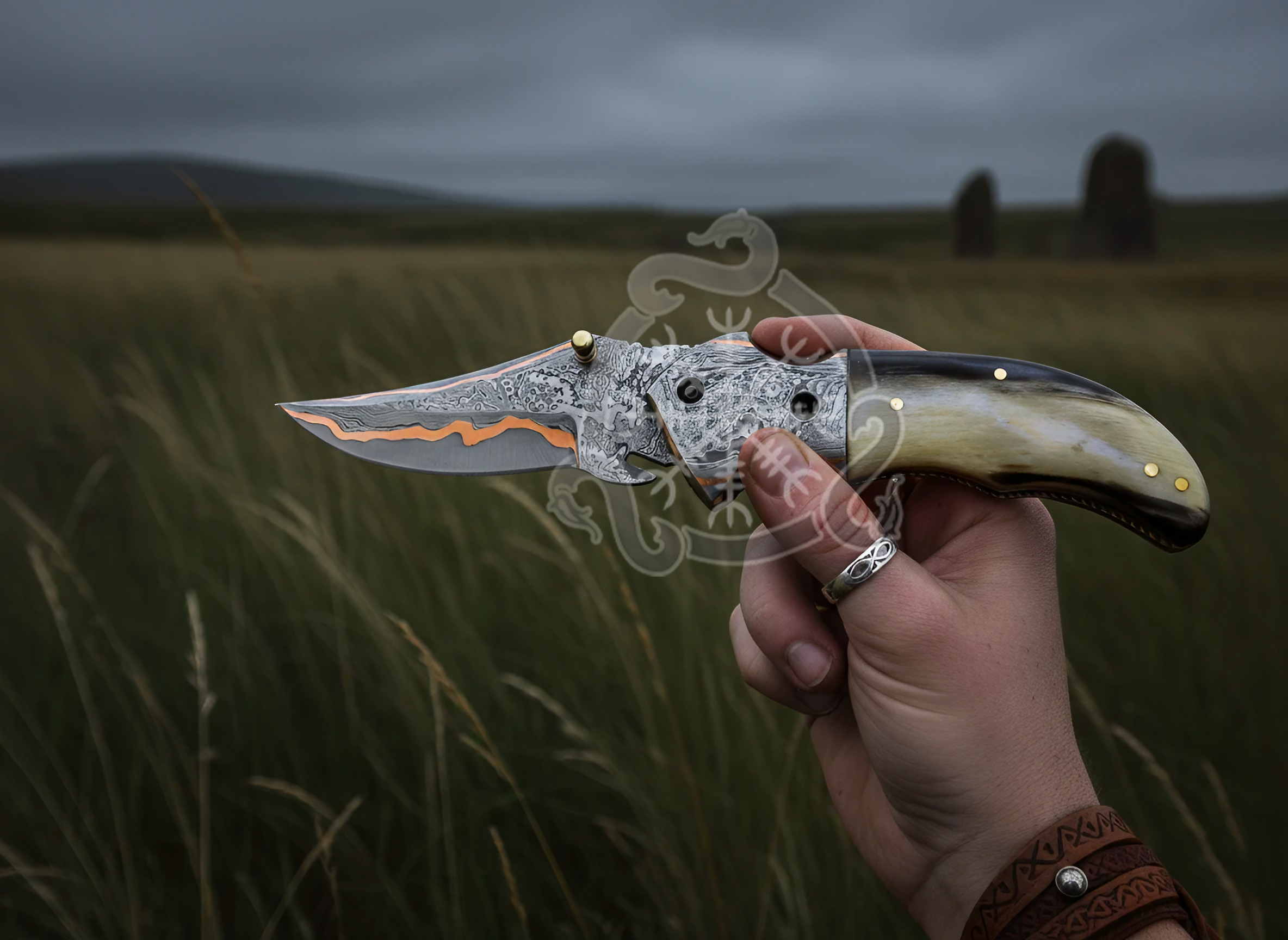
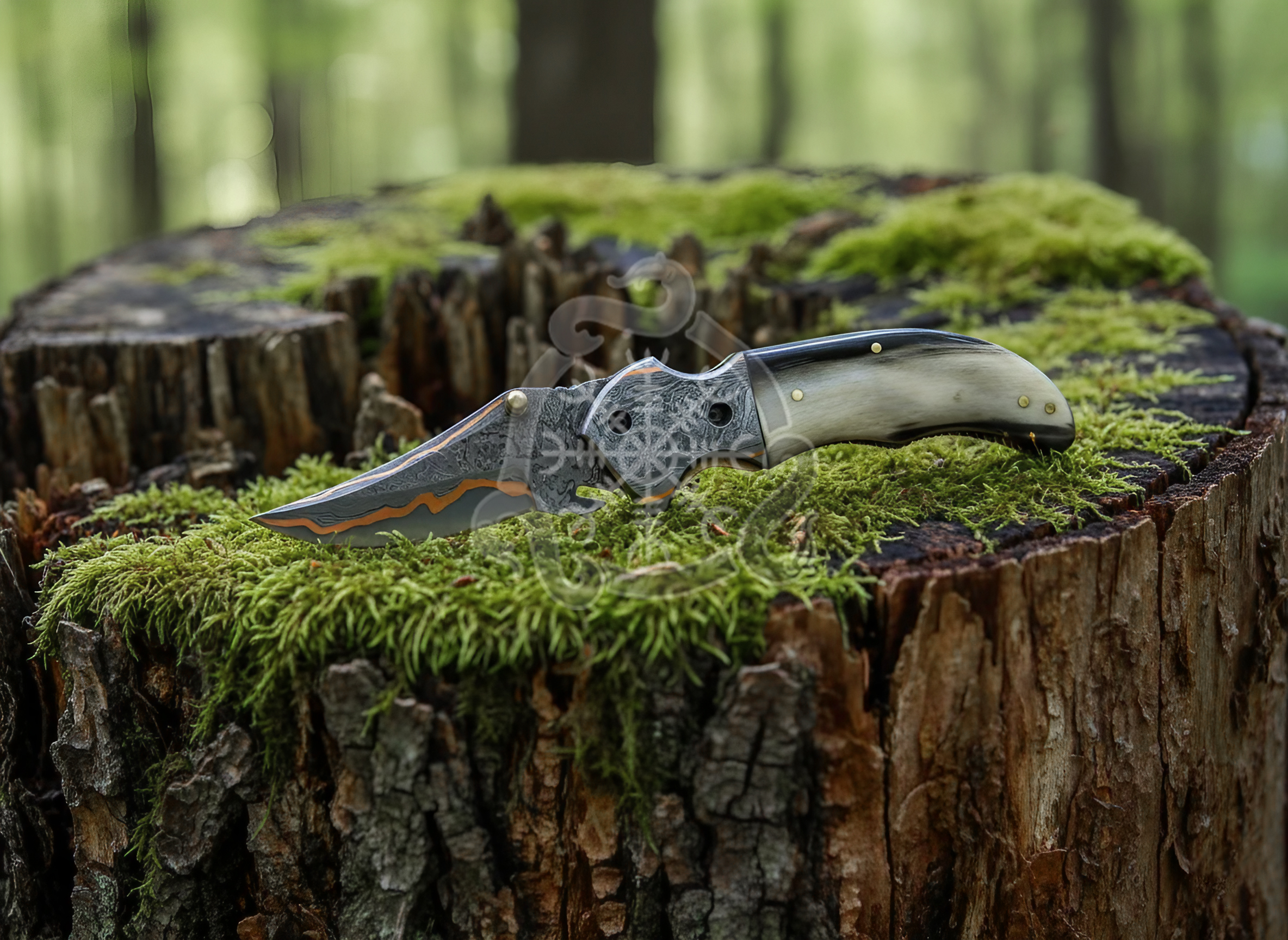
This set is 6 of the same piece: Copperfin Hand Forged Damascus Fish Fillet Knife with Polished Copper. It is the same item sold on its own single listing, packed together for groomsmen or a wedding party. Every piece in the set is the same model. Each one is handmade, so small differences in grain or pattern from one piece to the next are normal.
Buying the set costs 15% less than buying 6 single pieces. For names, choose Text engraving, type one name per line and each name goes on its own piece. Engraving is done here in the United States before the set ships.
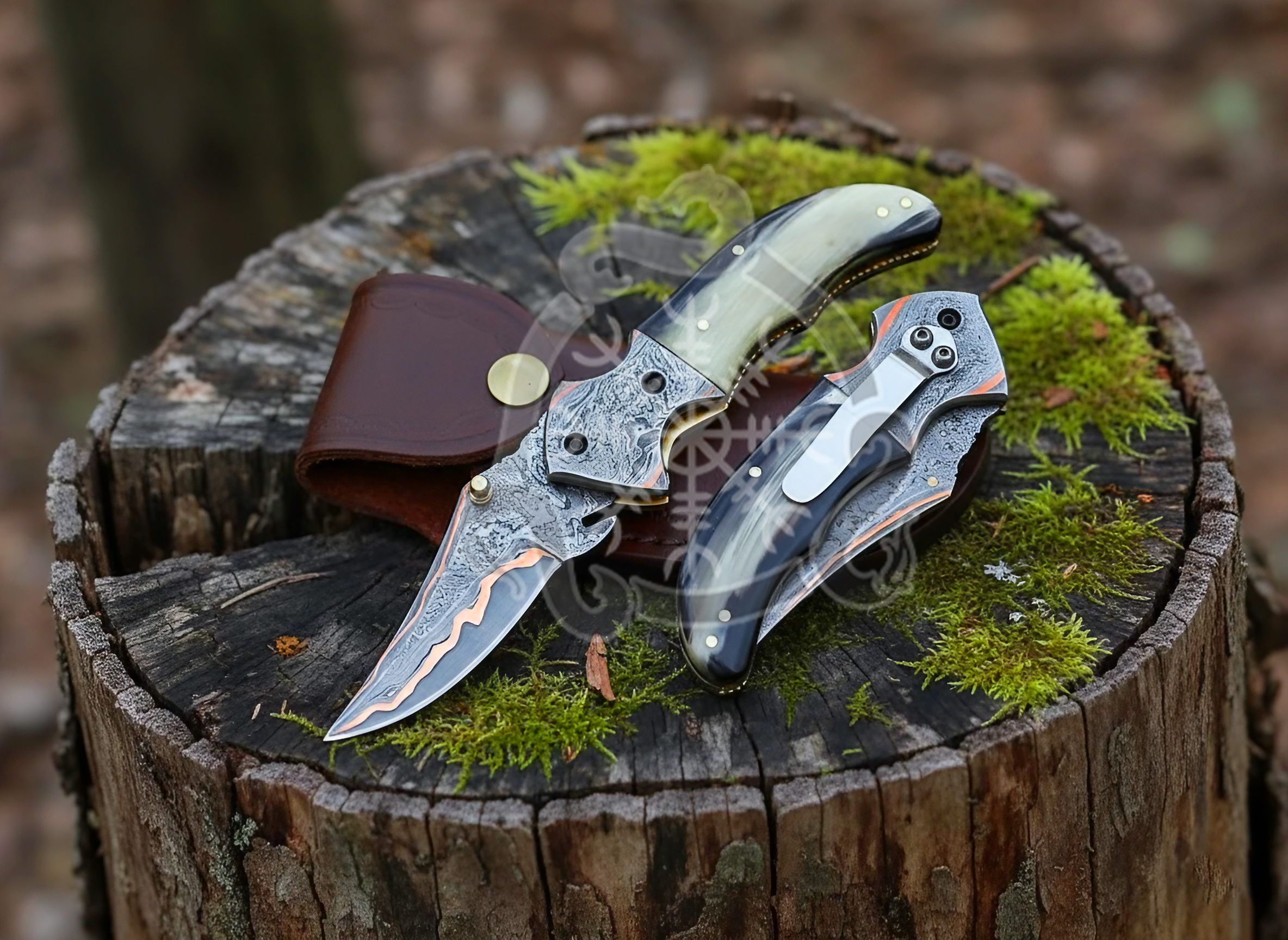
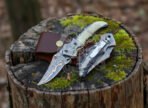
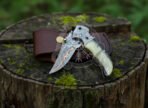
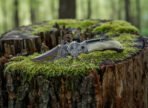
Forged in Damascus and handled in polished copper, the Copperfin is a fixed blade fish fillet knife: three and a half inches of narrow blade, a five inch handle, eight and a half inches overall, and a cowhide leather sheath cut to fit it. It is a specialist, and it is the sort of specialist that changes how a job feels the first time you use the right one. Flex, length and care for a fillet blade are covered in choosing a fillet knife.
A fillet knife is defined by what it is not. It is not stiff. Almost every other knife in a kitchen or a tackle box is built to resist bending, and a fillet blade is built to do the opposite, because its whole job is to follow a shape it cannot see. Run it along a rib cage and the blade has to flex around the curve while the edge stays in contact with bone, so nothing is left behind. Turn a fillet skin side down and the blade has to lie almost flat and bend with the skin while you pull, or you take half the flesh with it. That is why fillet blades are narrow, thin behind the edge and long for their width. Every one of those features exists to let the blade bend and still cut.
The Copperfin is forged and finished in the Czech Republic, from billet welding through heat treat, grinding, handle fitting, sheath making and final sharpening. It ships with its leather sheath and protective packaging.
Specifications
| Steel | Hand forged Damascus, 1095 and 15N20 high carbon |
|---|
| Hardness | 58 to 60 HRC |
|---|
| Overall length | 8.5 inches |
|---|
| Blade length | 3.5 inches |
|---|
| Handle length | 5 inches |
|---|
| Handle | Polished copper |
|---|
| Sheath | Cowhide leather sheath included |
|---|
| SKU | RK-1011 |
|---|
Why a short fillet blade, and how to use it
Fillet knives come long and short, and the length should match the fish. A nine or ten inch blade is for salmon, big lake trout and anything where you want to take a whole side in one pass. Three and a half inches is the panfish and trout end of the range, and it is also the length that suits bird and trout work generally. The advantage of a short blade is control. Everything happens close to your hand, you can steer the tip precisely around a rib or a pin bone, and there is no length of blade waving around behind the cut where you cannot see it.
The technique is the same regardless of size. Start behind the gill plate and cut down to the spine, then turn the blade flat and run it along the backbone towards the tail, letting the spine guide the edge rather than trying to hold a line by eye. Lift the fillet, lay it skin down, angle the blade almost flat, hold the skin tight and push the knife forward while pulling the skin back towards you. The knife barely moves. The skin does. That is the whole trick, and a short blade makes it easier to learn because you can see what the tip is doing.
Because a fillet blade is thin, treat it accordingly. Do not use it as a general camp knife, do not pry with it, and do not use it on frozen fish. Thin steel is what makes it work and thin steel is what breaks if you lever with it.
Why Damascus and not stainless
Damascus here means 1095 and 15N20 forge welded together, which gives a harder edge and a longer working life than a soft stainless blade, at the cost of needing a wipe of oil now and then. On a fillet knife the hardness is doing real work: a thin edge only stays thin if the steel can hold it, and a soft blade rolls its edge the first time it meets a rib.
We should be straightforward about the counter argument, because it is stronger here than on most knives. Fish are wet, fish are salty if you are on the coast, and fillet knives get used at the water and put away damp. Stainless is genuinely easier to live with in that environment. If you want a knife you can rinse and forget, buy stainless. If you want an edge that stays keen through a full day of cleaning and comes back on a stone in a minute, this is the trade, and it is worth it as long as you dry the blade before it goes away. We set the whole comparison out plainly in Damascus versus stainless.
The polished copper handle
Copper is an unusual choice for a handle and a deliberate one. It is dense, so a solid copper grip counterweights a thin blade and keeps the balance in your hand rather than out at the tip, which is exactly what you want when the cutting is done with small controlled movements. It is warm in tone, it takes a mirror polish, and it has genuine antimicrobial properties: copper surfaces kill bacteria on contact through what is called the oligodynamic effect, which is why hospital door furniture and, historically, food preparation vessels were made from it.
Copper does not need oiling and it has no grain to feed. It does patinate. Left alone, a polished copper handle darkens and eventually goes brown or greenish, particularly where a hand touches it most. Some owners like that and let it happen. If you prefer it bright, a copper polish or a cut lemon with salt brings it back in a couple of minutes. Neither is a fault and neither affects the knife. Wash it by hand, dry it fully, and do not put it in a dishwasher, where detergent will stain the copper badly.
Engraving, runes and your own design
Use the rune converter on this page to turn a name, a date or a short phrase into Elder Futhark and we will cut it into the steel or the handle. If you would rather have a Viking pattern than a rune line, choose your own design in the engraving option above the add to cart button and tell us whether it goes on the blade or the handle. Where a piece already carries an engraved design, your chosen engraving replaces it rather than sitting alongside it. Copper is soft compared to steel and it engraves beautifully, holding a crisp cut line that darkens slightly with the patina, so on this knife the handle is usually the better surface. Layout and lettering examples are on the engraving page.
Care and sharpening
Wipe it dry as soon as you have finished, oil the blade lightly before it goes away, and store it out of the sheath for long periods so trapped moisture cannot work on the steel. Leather is tanned with salts and holds damp against a blade, which is why a knife left sheathed all winter comes out marked. Sheath care is its own subject, covered in leather sheath care, and the steel routine is in steel care.
Sharpening a fillet blade wants a light touch. Match the existing bevel, use less pressure than you would on a thicker knife because there is less steel to support the edge, and work one side in overlapping passes until you feel a burr, then match it on the other side and strip the burr. Go to a fine stone: a fillet knife wants a polished edge that glides through flesh rather than a toothy one that tears it. The method is in sharpening with a whetstone.
Made in the Czech Republic
Every piece we sell is made by hand in the Czech Republic. The smiths there work the way the trade has been worked for a long time, heating and hammering the steel, taking the bevels down by eye, and fitting the handle and the leather one at a time. There is no automated line anywhere in it, so small differences from one piece to the next are normal and expected.
Ransack Viking is a United States company based in North Babylon, New York. We bring the pieces in ourselves, inspect them on arrival and ship them from our own warehouse. If you add engraving, that is carried out here in the United States before your order goes out.
A note on handmade variation
Every Copperfin is hand forged, not machine made or bulk produced, so the knife that arrives will not be a pixel for pixel copy of the photograph on this page. The Damascus pattern is set by how that billet folded and where the blade was cut from it, the copper takes its polish and its early patina by hand, and the leather is cut to the individual blade. The dimensions, the steel and the build are the same every time. The character is not.
Frequently asked questions
Is this a folding knife?
No. It is a fixed blade fillet knife with a full length handle and a fitted cowhide sheath. Fillet blades are thin and flexible, and a pivot is the last thing you want in a blade that is designed to bend.
What size fish is it for?
Panfish, trout, perch, bream and bird and trout work generally. Three and a half inches gives you close control around small rib cages. For salmon or large lake fish a longer blade is the right tool, because you want to take a side in one pass.
Will the copper handle turn green?
It will darken with handling and it can develop a patina over time, which is normal for copper and not a defect. If you want it bright, copper polish or half a lemon dipped in salt restores it in a couple of minutes. Keep it out of the dishwasher.
Is copper safe around food?
The handle is copper, not the blade, so it does not contact the flesh you are cutting. Copper surfaces are also naturally antimicrobial, which is one of the reasons it was traditionally used in kitchens and food vessels. Wash and dry it as you would any knife.
Does it come with a sheath?
Yes, a cowhide leather sheath cut and stitched to the finished blade. Use it for carrying and store the knife outside it for long periods, because leather holds moisture against steel.
How do I stop the blade rusting after a day on the water?
Rinse the fish residue off, dry it thoroughly, and wipe a thin film of light oil on before it goes in the bag. Salt water especially should not be left to dry on carbon steel. Two minutes at the end of a trip is all it takes.
What is in the box
- One Copperfin hand forged Damascus fish fillet knife
- One fitted cowhide leather sheath
- Protective packaging
- Forged and finished in the Czech Republic
Explore the range
You may also want to compare it against Fish Fillet Knives, Hunting Knives, Chef Knives and Folding Pocket Knives. The reasoning behind the steel and the leather is in the guides.
Others in the same line
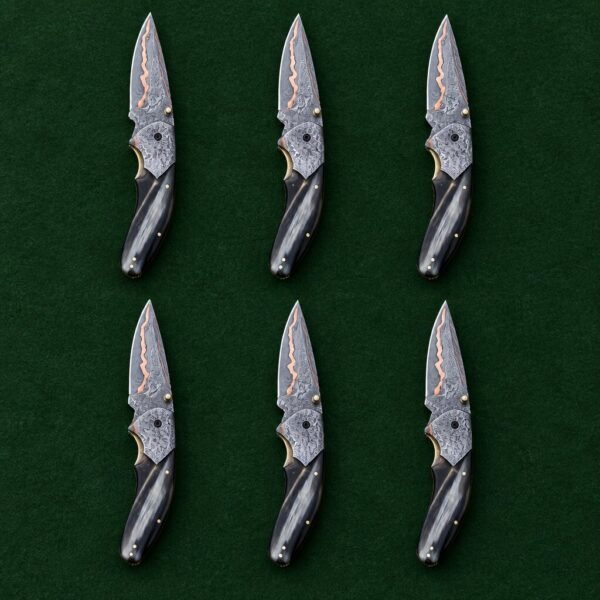
Worth putting side by side with this is the Hornedge folding pocket knife, pattern welded Damascus. In the same category sits the Bonebrass folding pocket knife, pattern welded Damascus. A near match for this one is the Ramfold folding pocket knife, pattern welded Damascus.
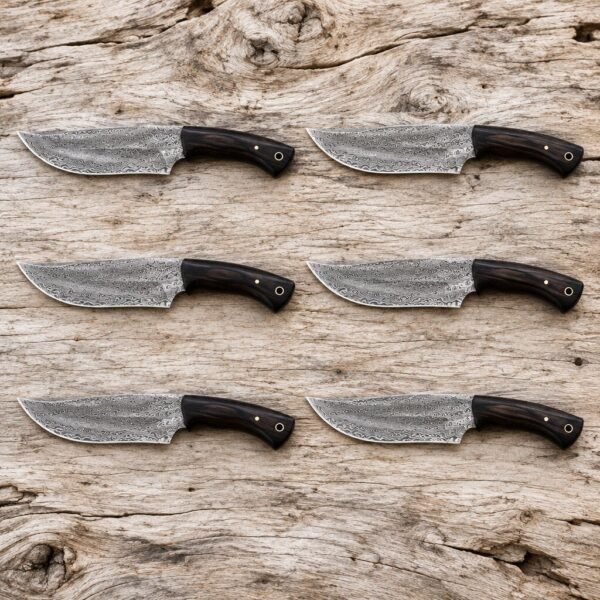
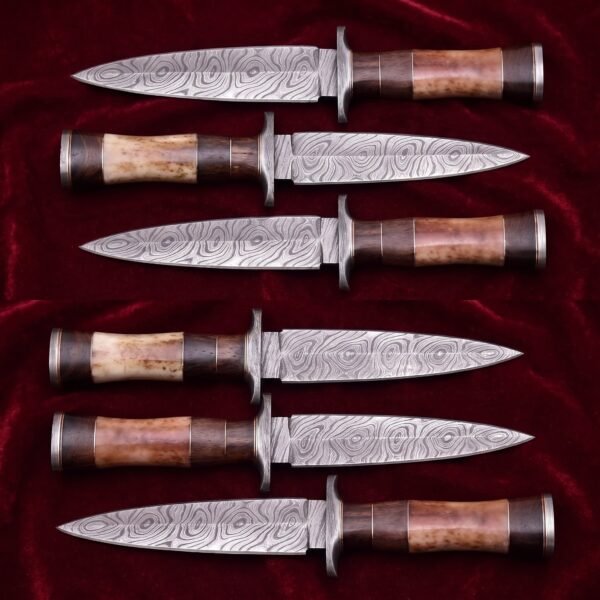
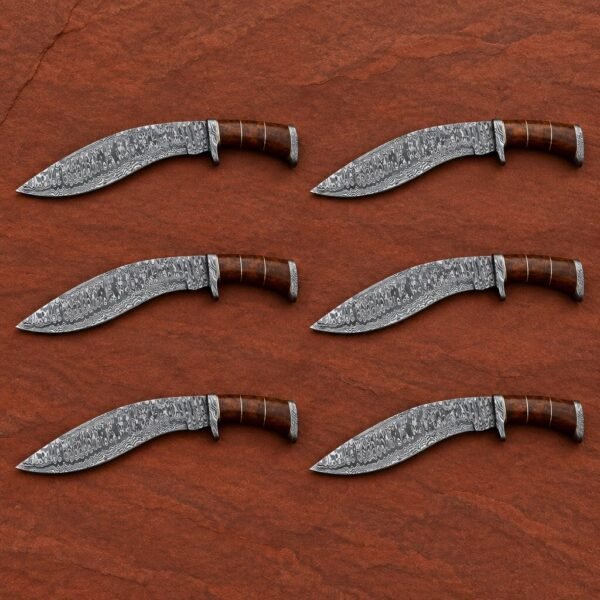
For a different piece from the same family, look at the Pakkaclaw hunting knife. You can have this made your way instead on the custom Damascus knife page.
Matched sets for the whole wedding party are in Wedding & Groomsmen Gifts. Want just one? See the single piece listing.







Reviews
There are no reviews yet