
Blog
Viking Axe vs Tomahawk: Which One Should You Buy?

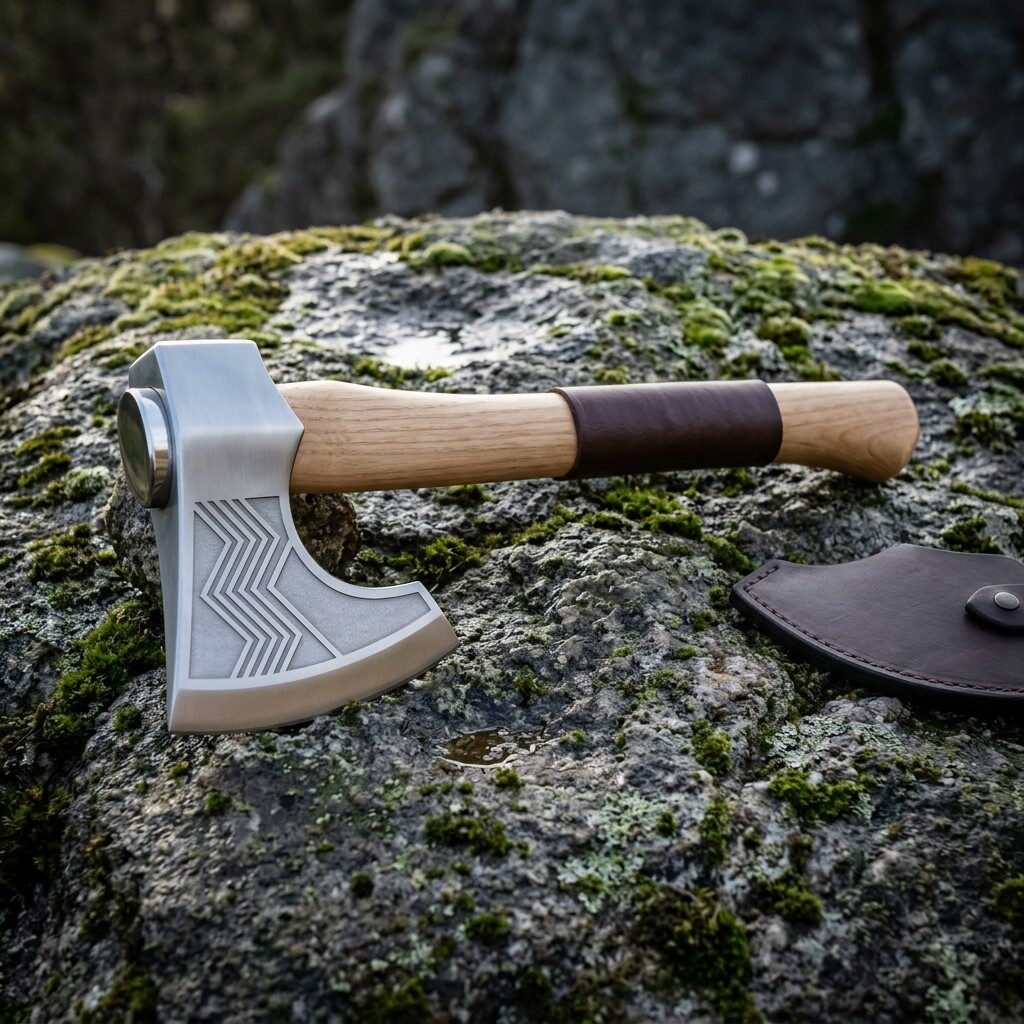
Put a Viking axe and a tomahawk side by side and most people can tell them apart at a glance. Ask which one to buy and it gets harder, because the answer depends on whether you mean to chop with it, throw it, or hang it on a wall. Both are one handed axes with a long history. Both get used for camping, throwing, display and gifts. The differences are in where each came from, how the head is shaped and fixed, how it balances, and what each does best. This guide walks through all of that and ends with a plain recommendation for each kind of buyer. If you are already sure you want the Norse pattern, our Viking axes collection is where to start.
Where each one comes from
The Viking axe is a European tool that grew out of the everyday felling and carpentry axes of the early medieval north. Scandinavian smiths forged heads that, on many surviving examples, carry a harder steel edge welded to a softer body, and over time the shapes split into recognisable families: the small hand axe for the belt, the bearded axe with its dropped lower edge, and the broad two handed Dane axe. The same heads cut firewood, built ships and went to war, and the design was driven by getting a long edge out of a modest amount of metal. Our Viking axe history post goes through the development in more detail.
The tomahawk is a North American tool. The word comes from an Algonquian language, and the earliest versions were stone or bone heads bound to a wooden handle. Once European traders arrived, iron heads became a trade good, and the classic tomahawk shape settled into what it is today: a light, narrow head with a small eye, set on a straight handle, sometimes with a hammer poll or a pipe bowl on the back. It was a hand tool and a belt tool, valued because it was light enough to carry all day and simple enough to rehandle in the field.
Both, then, are practical axes that later picked up a great deal of cultural weight. The Viking axe carries the Norse world with it, and the tomahawk carries the frontier. Which story appeals to you is a fair part of the buying decision, and there is no wrong answer there.
Head shape
This is the biggest visible difference. A Viking axe head is broad relative to the handle. Even the smaller hand axe patterns have a wide cheek, and the bearded patterns drop the heel well below the eye so the edge is long and there is a hollow behind it for your hand. Dane axe heads go further, with a thin flaring blade that can be wider than the haft is thick by a large margin. The steel is concentrated at the edge and around the eye.
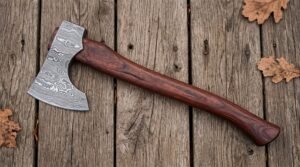 Emberhawk Hand Forged Damascus Bearded Axe | 20 Inch | Rosewood Handle with Leather Blade Cover and Gift Box | Hunting Camping Collector Gift | RK-404
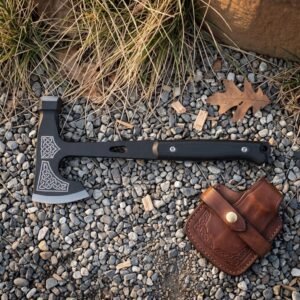 Grimhawk Hand Forged High Carbon Steel Tactical Tomahawk | 14 Inch Overall with 3.5 Inch Cutting Edge | Bushcraft Camping Gift | RK-1202
 Ravenfeast Hand Forged Stainless Steel Rocking Pizza Cutter | 12 Inch Handle | Olive Wood Handle with Veg Tanned Leather Blade Cover | Norse Kitchen and Wedding Gift | RK-315
A tomahawk head is narrow and compact. The blade is usually not much wider than the eye, the edge is short, often two to three inches, and the profile is more like a small hatchet than a Viking pattern. There is rarely any beard to speak of. The poll on the back is where tomahawk designs vary the most: a plain flat poll, a hammer poll for driving stakes, a spike, or a pipe bowl on ceremonial and trade pieces.
For a buyer, this means a Viking axe offers a longer cutting edge and rather more presence on a wall, while a tomahawk offers a smaller, lighter head that is easier to carry and quicker in the hand. Presence on a wall is a real reason to buy an axe, and worth admitting.
Haft and how the head is fixed
The way the head attaches is the difference that surprises people. A Viking axe haft is fitted into the eye, driven tight and then wedged. The head is meant to stay put for years. The haft is usually hardwood, ash or hickory on modern pieces, and it is often shaped with a slight curve or a swell at the end so it does not slip out of a wet hand. Lengths run from the mid teens in inches for a hand axe, through the low twenties for a bearded axe, to thirty inches and more for a Dane axe.
A tomahawk is the opposite. The eye is tapered, wider at the top than the bottom, and the handle is tapered to match. The head slides on from the top of the handle and stops where the taper wedges it. There is no wedge and no pin. Every swing drives the head tighter, and if you want to remove the head you turn the axe upside down and knock the handle out. This is why tomahawks are so easy to rehandle in the field, and it is also why a tomahawk head sometimes slides down a fresh handle in the first few days of use until the fit settles. Tomahawk handles are typically straight, often between eighteen and twenty two inches, though shorter and longer versions exist.
If you want an axe you never think about, the wedged Viking haft is the one to choose. If you like the idea of a handle you can replace with a length of ash and a knife, the tomahawk has the edge.
Weight and balance
Viking axe heads are generally heavier than tomahawk heads of similar handle length. A hand axe or bearded axe head sits in a range you would recognise from a good hatchet, and a Dane axe head is heavier again. That weight is what lets a Viking axe bite deep into a log with a relaxed swing. It is also what makes it feel serious in the hand. Balance sits forward toward the head.
A tomahawk head is light, often lighter than a hatchet head, and the balance point sits closer to the hand. This makes a tomahawk faster to move and less tiring to carry, and it is the reason tomahawks are so popular with throwers: a light head on a straight handle rotates predictably. The trade is that a tomahawk needs more swings to get through the same log, and a very light head can bounce off hardwood rather than bite.
What each one is for
A Viking axe is at its best as a chopping and splitting tool at camp, a carving tool when you choke up under the beard, and a display piece with real weight and history behind it. The bearded patterns are the most versatile, the hand axe patterns are the most packable, and the Dane axe is a reenactment and wall piece.
A tomahawk is at its best as a light carry axe, a throwing axe and a general camp tool where weight matters more than chopping power. It clears brush, splits small kindling, drives stakes with the poll, and rides on a belt loop without dragging you down. As a display piece it reads as frontier rather than Norse, which may be exactly what you want, or exactly what you do not.
Throwing
Both can be thrown, and both are thrown competitively, but they behave differently in the air. A tomahawk is the traditional thrower. The light head and straight handle give a clean, slow rotation, the narrow blade sticks readily, and the friction fit means a hard landing on the handle just reseats the head rather than splitting a wedge. Most throwing leagues grew up around tomahawk and hatchet patterns for exactly these reasons, and not out of any romance about the frontier.
A Viking axe can be thrown, and a small hand axe or bearded axe on a mid length haft is fun to throw at a proper target, but it is heavier, it rotates faster, and the wedged head takes more punishment from repeated missed throws. If throwing is your main interest, either buy a tomahawk or a dedicated throwing axe with a plain head and a replaceable haft, and keep the engraved bearded axe for the wall. Our axe throwing for beginners guide covers stance, distance and target building for either style.
One rule applies to both: never throw an axe with a decorative thin edge, a loose head or a cracked haft. Check the head before every session.
Steel and how ours are made
Whatever the pattern, the steel and the heat treatment matter more than the name on the head. Our plain axes are forged from 1095 high carbon steel and finished at 54 to 58 HRC, which is the range you want for a working edge that can be touched up with a file, and the steel and hardness page gives the reasoning. Damascus pieces are forge welded from 1095 and 15N20 and finished at 58 to 60 HRC, with the layered pattern brought out by etching. Every axe is handmade in the Czech Republic by smiths working the old way, then imported, inspected and shipped from our warehouse in Chicago, Illinois. Engraving is done in the US before the piece ships, at 19 dollars for text. You will find the full Norse line, including the bearded, hand and Dane patterns, in our Norse arms category.
Which to buy
For display, buy the Viking axe. A bearded or Dane axe with an etched or engraved head has far more presence on a wall than a tomahawk, the long edge catches the light, and the Norse pattern is what most visitors will recognise. Choose a bearded axe if you want the classic outline, or a Damascus head if you want the pattern to be the centrepiece.
For camping, it depends on how you travel. If you drive to the site and chop real firewood, a Viking hand axe with a hammer poll is the better tool: more bite, a wedged head that will not creep, and a poll for stakes. If you hike in and count ounces, a tomahawk wins on weight and packs flatter. Either way, choose a plain 1095 head over Damascus for a tool that will get muddy.
For throwing, buy the tomahawk or a dedicated throwing axe. The rotation is easier to learn, the friction fit forgives bad landings, and rehandling is cheap. If you already own a small Viking hand axe, it will throw fine on a soft wood target, but do not throw a bearded axe you care about.
For a gift, the Viking axe is the safer choice for most people. It comes with a story, it can be engraved with a name or a date on the cheek of the head, and it arrives looking like something that was made rather than manufactured. A tomahawk makes a good gift for a thrower, a hunter or anyone who already has a tomahawk and wants a hand forged one, but it is a narrower audience. If you are not sure, a mid length bearded axe with a leather edge cover and a wooden box is the piece that pleases the widest range of people.
Whichever you choose, the edge needs the same attention, covered in sharpening an axe with a file and stone. If you are buying to throw rather than to cut, start with axe throwing for beginners.
Viking axe vs tomahawk FAQ
What is the main difference between a Viking axe and a tomahawk?
Head shape and how the head is fixed. A Viking axe has a broad head, often bearded, wedged permanently onto the haft. A tomahawk has a narrow, light head that friction fits onto a tapered handle and can be knocked off and replaced.
Which is better for throwing?
The tomahawk. Its light head and straight handle rotate slowly and predictably, and the friction fit shrugs off bad landings. A small Viking hand axe can be thrown, but a wedged head takes more abuse, and a decorative bearded axe belongs on the wall it was always heading for.
Which is better for camping?
A Viking hand axe if you chop real firewood and want a hammer poll and a head that never moves. A tomahawk if you hike in and want the lightest axe that will still split kindling and drive stakes.
Is a tomahawk a Native American tool?
Yes. The word is Algonquian in origin and the earliest tomahawks had stone or bone heads. Iron heads arrived with European trade, and the shape most people picture today grew out of those trade axes.
Are Viking axes heavier than tomahawks?
Generally yes, and you feel it immediately. Viking axe heads carry more steel, particularly the bearded and Dane patterns, and they balance forward. Tomahawk heads are lighter and balance closer to the hand, which is why they carry easily and throw well.
What steel are your axes made from?
Plain steel axes are 1095 high carbon steel at 54 to 58 HRC. Damascus axes are forge welded from 1095 and 15N20 at 58 to 60 HRC. Every piece is handmade in the Czech Republic, then imported, inspected and shipped from Chicago, Illinois.
Which makes the better gift?
For most people a Viking axe, ideally a mid length bearded pattern with an engraved head and a wooden box. A tomahawk suits someone who throws or hunts and has already decided they want one, which is a shorter list.
Pieces in the catalogue
In the shop right now, the Hickoryhawk native american tomahawk and the Emberhawk tomahawk axe. The Notchcrown Viking axe and the Stormbeard Viking bearded hatchet sit next to them.
Shop the range
Emberhawk Hand Forged Damascus Bearded Axe | 20 Inch | Rosewood Handle with Leather Blade Cover and Gift Box | Hunting Camping Collector Gift | RK-404Grimhawk Hand Forged High Carbon Steel Tactical Tomahawk | 14 Inch Overall with 3.5 Inch Cutting Edge | Bushcraft Camping Gift | RK-1202Ravenfeast Hand Forged Stainless Steel Rocking Pizza Cutter | 12 Inch Handle | Olive Wood Handle with Veg Tanned Leather Blade Cover | Norse Kitchen and Wedding Gift | RK-315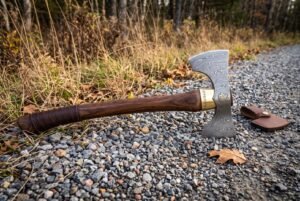 Twinbite Hand Forged Damascus Double Bit Felling Axe | 1095 and 15N20 at 58 to 60 HRC | Walnut Haft, Brass Collar and Leather Edge Cover | Woodsman Gift | RK-1453
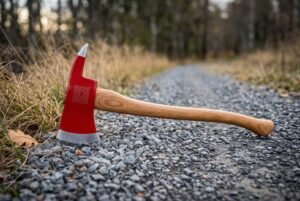 Emberbite Hand Forged 1095 Steel Pick Head Axe | 28 Inch Hickory Handle | Red Enamelled Head with Engraved Knotwork and Polished Bevel | Woodsman Camp Gift | RK-1555
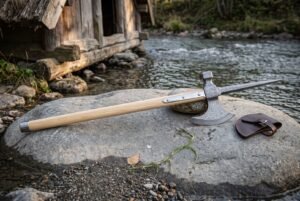 Stormpoll Hand Forged Damascus Steel War Axe | 36 Inch Overall with a 6 Inch Cutting Edge | Reenactment Display Gift | RK-1362
One thought on “Viking Axe vs Tomahawk: Which One Should You Buy?”
Comments are closed.