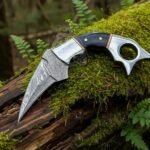
The Ramclaw is a karambit, and a karambit began life as a farm tool rather than a fighting knife. The shape comes from West Sumatra and spread across the Malay archipelago, where a short hooked blade was used to rake roots out of the soil, cut rice stalks, strip thorns and hook the awkward jobs a straight edge does badly. The comparison to a tiger claw came later, once the shape had been carried into the Indonesian and Filipino fighting arts, but the working farm knife is where it starts and it is still the honest description of what the curve is for. The curved blade and the ring have a specific logic, covered in what a karambit is for.
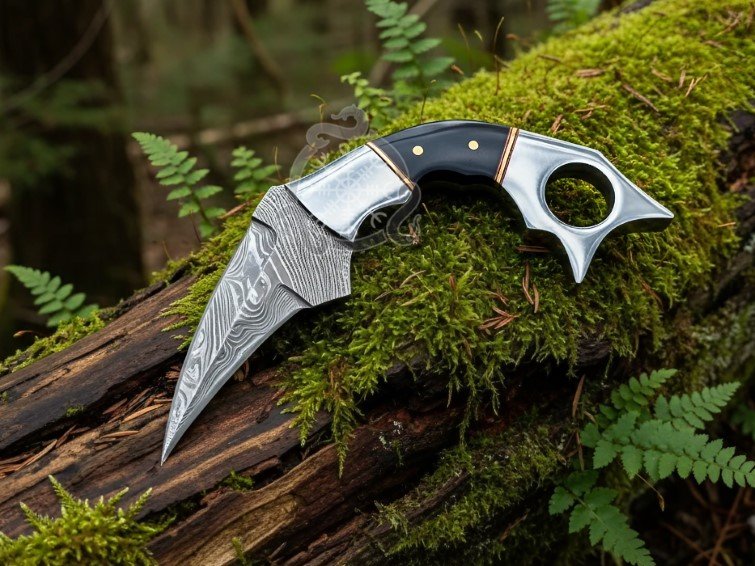
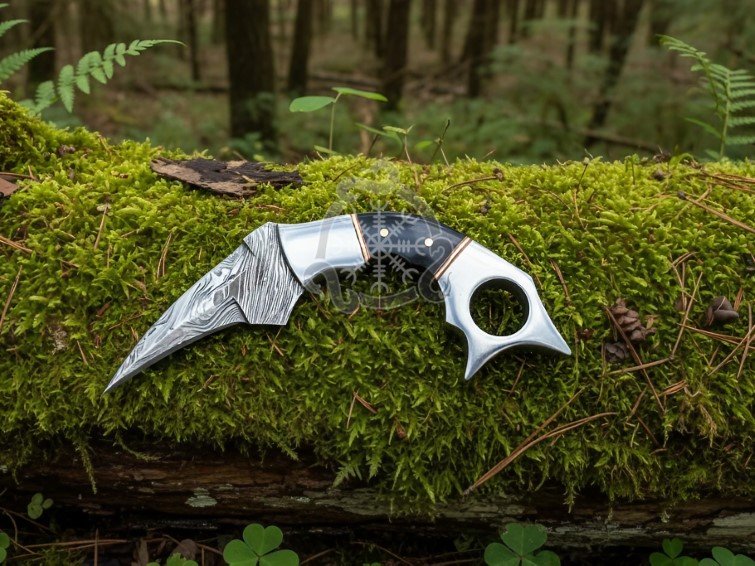
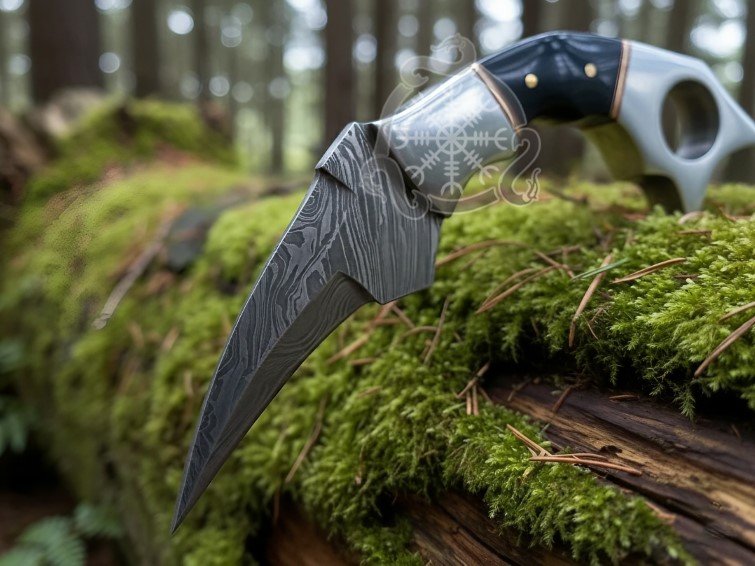
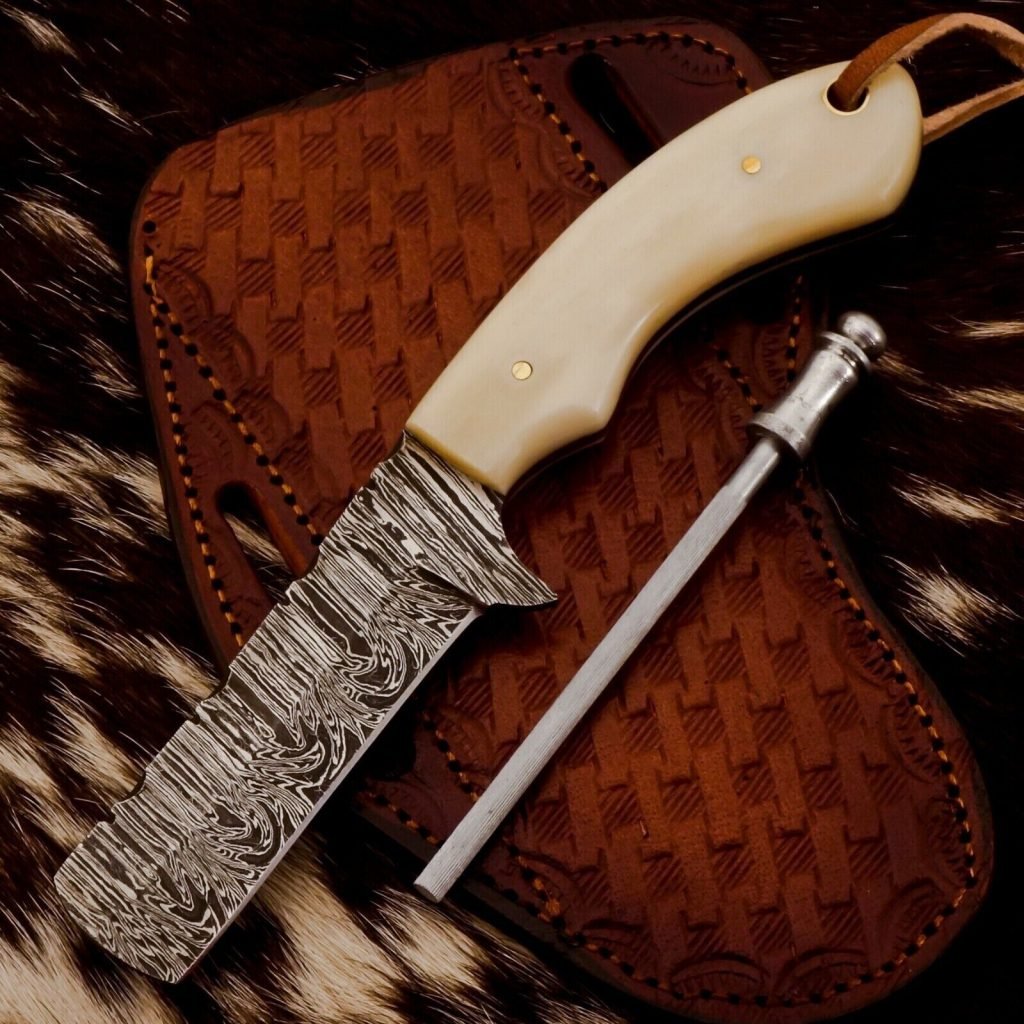
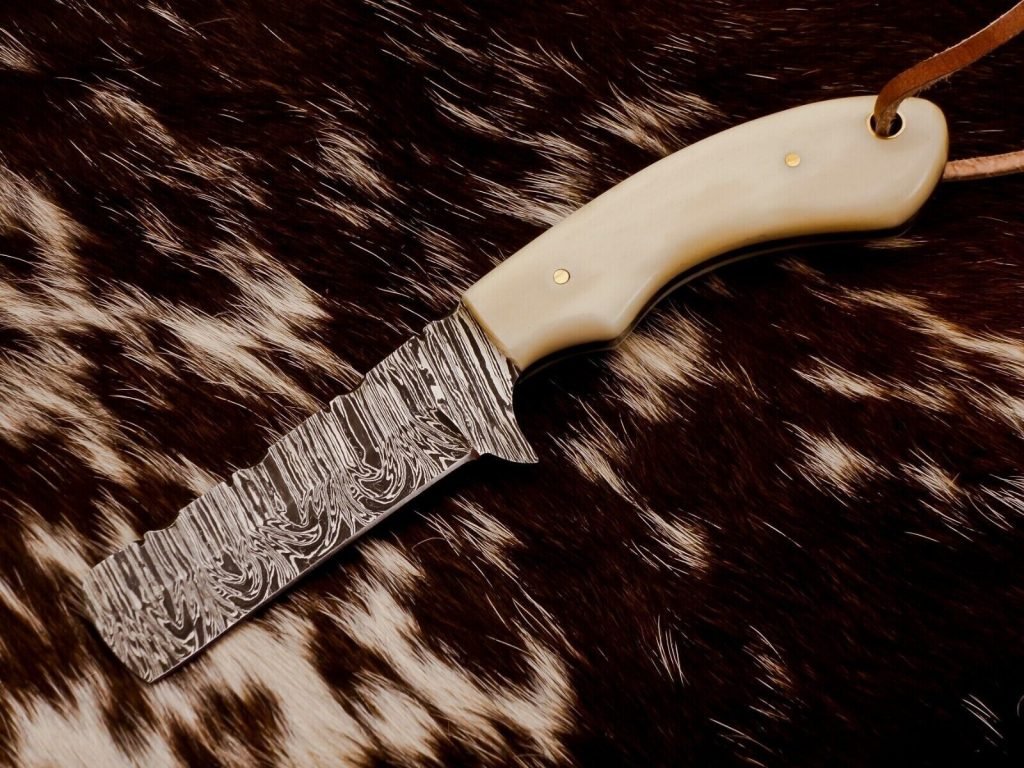
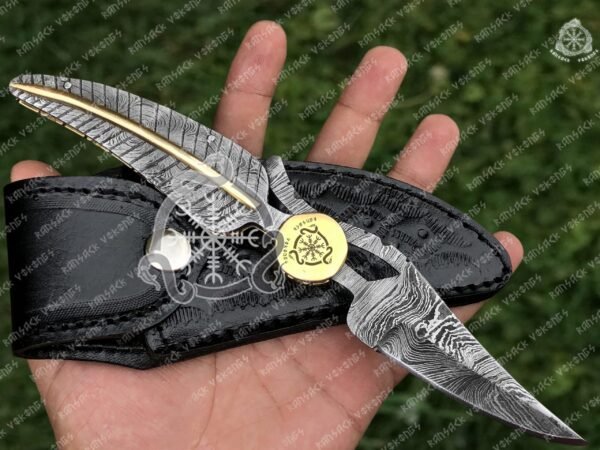
This one is forged from fire pattern Damascus, 1095 and 15N20 folded to 256 layers and hardened to 58 to 60 HRC. The spine measures 4 mm, the blade is 3.5 inches and the knife is 7.5 inches overall on a 4 inch ram horn handle with an engraved brass bolster. That makes it the shortest blade in this part of the catalogue, and short is the point. Close work rewards a blade you can steer with your fingertips.
Everything about it is forged and finished in the Czech Republic. It ships with a hand stitched sheath cut from extra thick cowhide, protective packaging, and an edge already set on the stone, so there is nothing to do before you use it.
Specifications
| Steel | Hand forged fire pattern Damascus, 1095 and 15N20 |
|---|
| Damascus layers | 256 layers |
|---|
| Hardness | 58 to 60 HRC |
|---|
| Overall length | 7.5 inches |
|---|
| Blade length | 3.5 inches |
|---|
| Handle length | 4 inches |
|---|
| Blade thickness | 4 mm |
|---|
| Handle | Ram horn with file work and an engraved brass bolster |
|---|
| Sheath | Hand stitched extra thick cowhide leather |
|---|
| SKU | RK-1026 |
|---|
Why a karambit is curved and what the finger ring actually does
The curve is not decoration. A hooked blade pulls material into the edge instead of pushing it away, so it bites on a first pass where a straight blade skates. That is why it was good at rice stalks and roots, and it is the same reason it works on cordage, webbing, packing strap, hose and anything else that wants to roll away from a knife. The belly of the curve does the cutting, the point stays out of the way, and the work comes to you rather than the other way round.
The ring at the butt of a karambit is worth being honest about. It secures the knife to the hand so it can be carried while the fingers are still doing something else, which is exactly what a farmer needs when he is holding a bundle in one hand. It also makes the knife very hard to drop. What it is not is a general purpose grip. With a finger through the ring you cannot switch quickly between a forward and reverse hold, you cannot choke up on the blade, and detail work like carving or food prep becomes clumsy. It is a specialist arrangement with real advantages and real costs, and anyone telling you it is simply better than a normal handle is selling rather than explaining. Not every karambit carries a ring, so look at the photographs on this page to see how this one is finished.
Why Damascus and not stainless
Damascus here means real forge welded steel. Bars of 1095 high carbon and 15N20 nickel alloy are stacked, brought to welding heat and hammered into one solid billet, then folded and drawn out again until the count reaches 256 layers. The fire pattern is made after that, by cutting shallow grooves across the flats of the billet and then forging them flat again, which drags the deeper layers up to the surface in rising tongues. When the finished blade goes into the etchant the 1095 darkens and the nickel bearing 15N20 stays bright, and those tongues appear as flames running up from the edge. The pattern is a cross section of the steel itself, not a print on top of it, so it cannot wear off.
Against a soft stainless blade the trade is simple. This steel takes a keener edge, holds it longer under load and sharpens faster when it does finally dull. In return it is high carbon at heart and it will spot if you put it away wet. That is a one minute job after use, not a chore. The full comparison is in Damascus versus stainless, and the making of the billet is covered in what Damascus steel is.
The ram horn handle and the brass bolster
Ram horn is keratin, the same material as a fingernail, laid down in dense layers over the life of the animal. It cuts and polishes like a hard plastic but behaves nothing like one in the hand. It warms within seconds of being picked up, it does not go slick when your palm is damp, and it carries the streaking and colour shift of the individual animal, so no two handles are the same shade. The file work along the spine of the scales gives the thumb something to register against.
Horn asks for very little. Keep it out of long soaks and away from direct heat such as a radiator, a car dashboard in summer or a hot wash, because sustained heat is the one thing that will make it lift or check. A rare wipe with a light oil keeps the surface deep rather than chalky. The same approach applies to wood, bone and antler grips, and the method is set out in wooden handle care. The brass bolster is engraved and needs nothing beyond an occasional polish if you want the shine back.
Engraving, runes and your own design
Use the rune converter on this page to turn a name, a date or a short phrase into Elder Futhark and we will cut it into the steel or the handle. If you would rather have a Viking pattern than a rune line, choose your own design in the engraving option above the add to cart button and tell us whether it goes on the blade or the handle. Where a piece already carries an engraved design, your chosen engraving replaces it rather than sitting alongside it. That matters here, because the brass bolster on this karambit arrives engraved as standard. Everything is cut in the same workshop that forged the blade, so nothing is sent out to a third party. More detail sits on the engraving page.
Care and sharpening
Wipe it dry after use and put a thin film of mineral or camellia oil on the flats before it goes away. If it lives in a drawer between outings, keep it out of the sheath for long storage, because vegetable tanned leather holds moisture against steel. That is the whole routine, and it is written up properly in steel care.
Sharpening a curved blade is ordinary work with one adjustment. Rather than dragging the whole edge along the stone in a straight pass, work a short section at a time and rotate the knife as you go so the contact point travels around the curve. A narrower stone or a rod makes this easier than a wide bench stone. The angle and the pressure are the same as any other knife, and the method is in sharpening with a whetstone.
Made in the Czech Republic
This is a handmade piece from the Czech Republic, made in a workshop that still forges, grinds and finishes by hand instead of stamping parts out. The smiths there have kept the older way of working, and the wood, horn and leather are shaped and fitted by hand as well. Two pieces of the same design will never be identical, and that is part of what you are buying.
Ransack Viking is a United States company. We handle the import ourselves, look over every piece when it lands and ship from our warehouse in Memphis, Tennessee. Engraving is done in the United States after the piece arrives, so your design goes on before we send it out.
A note on handmade variation
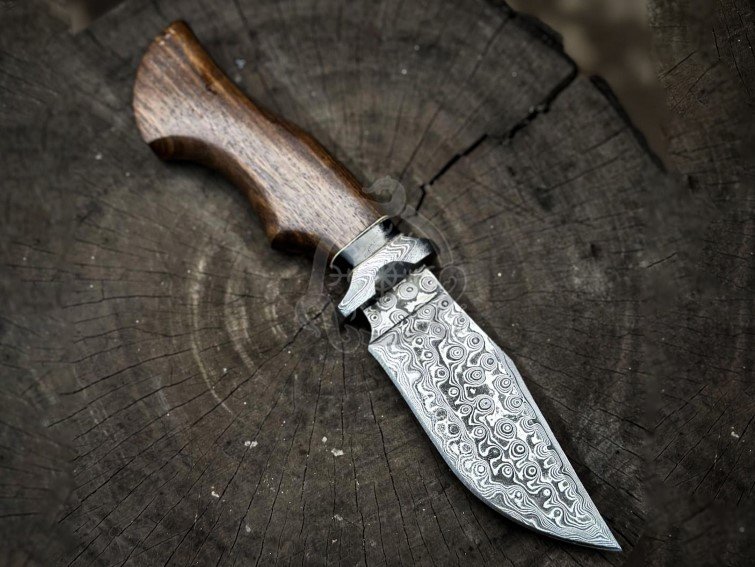
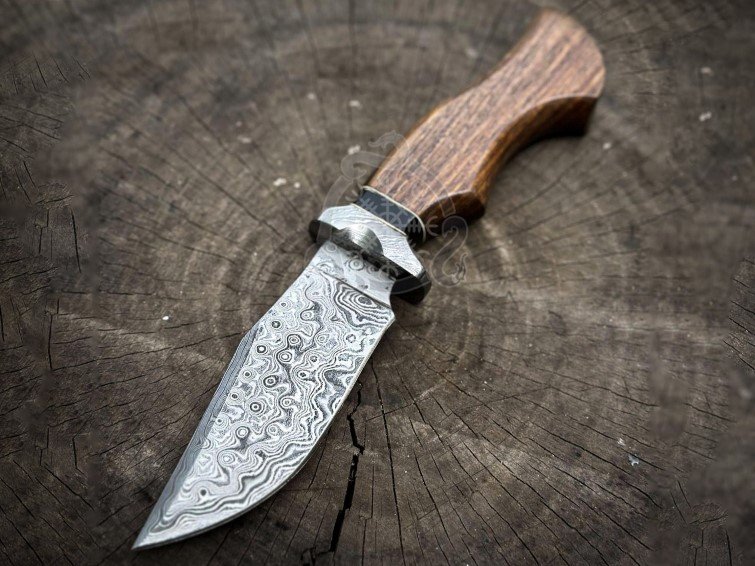
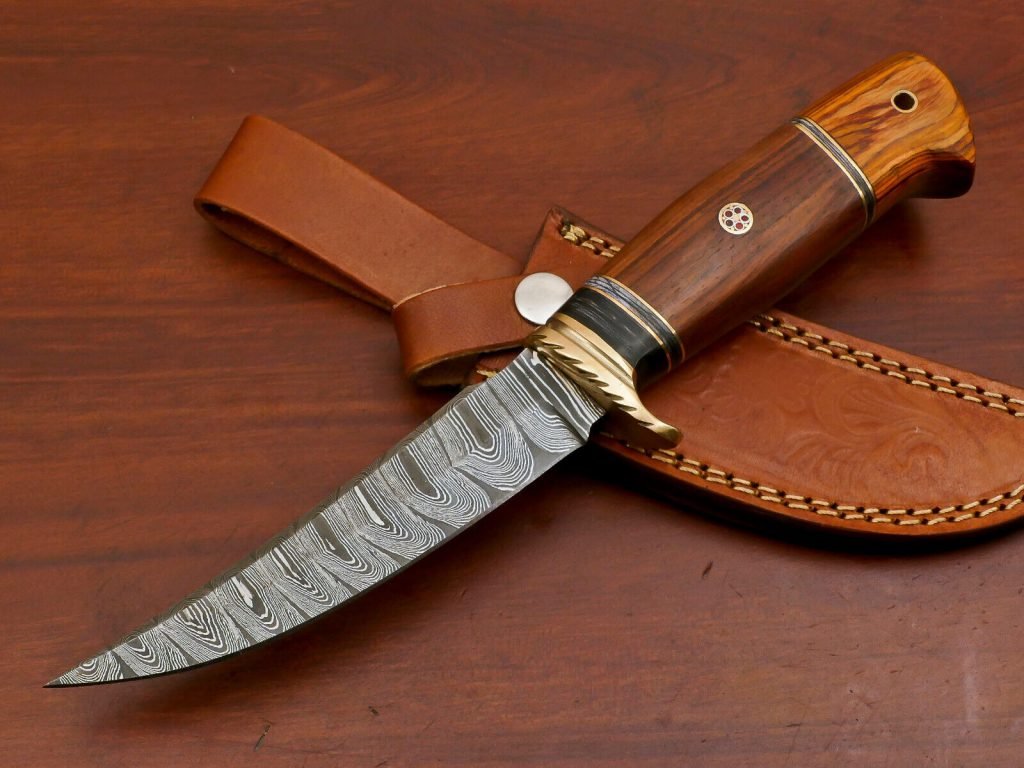
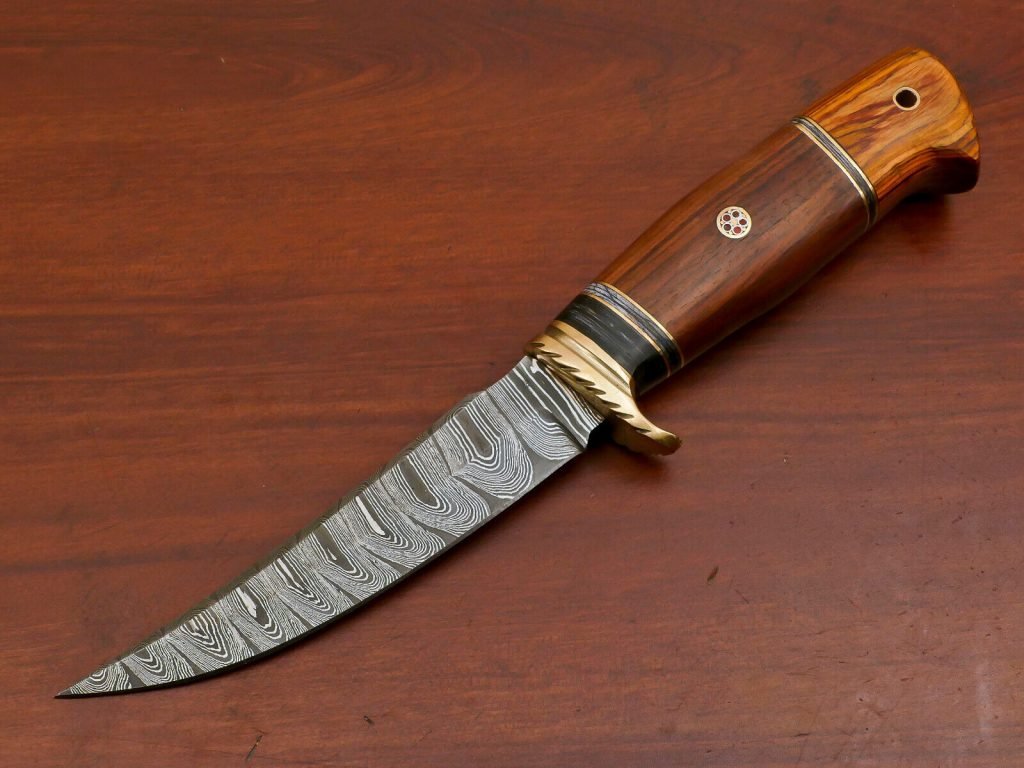
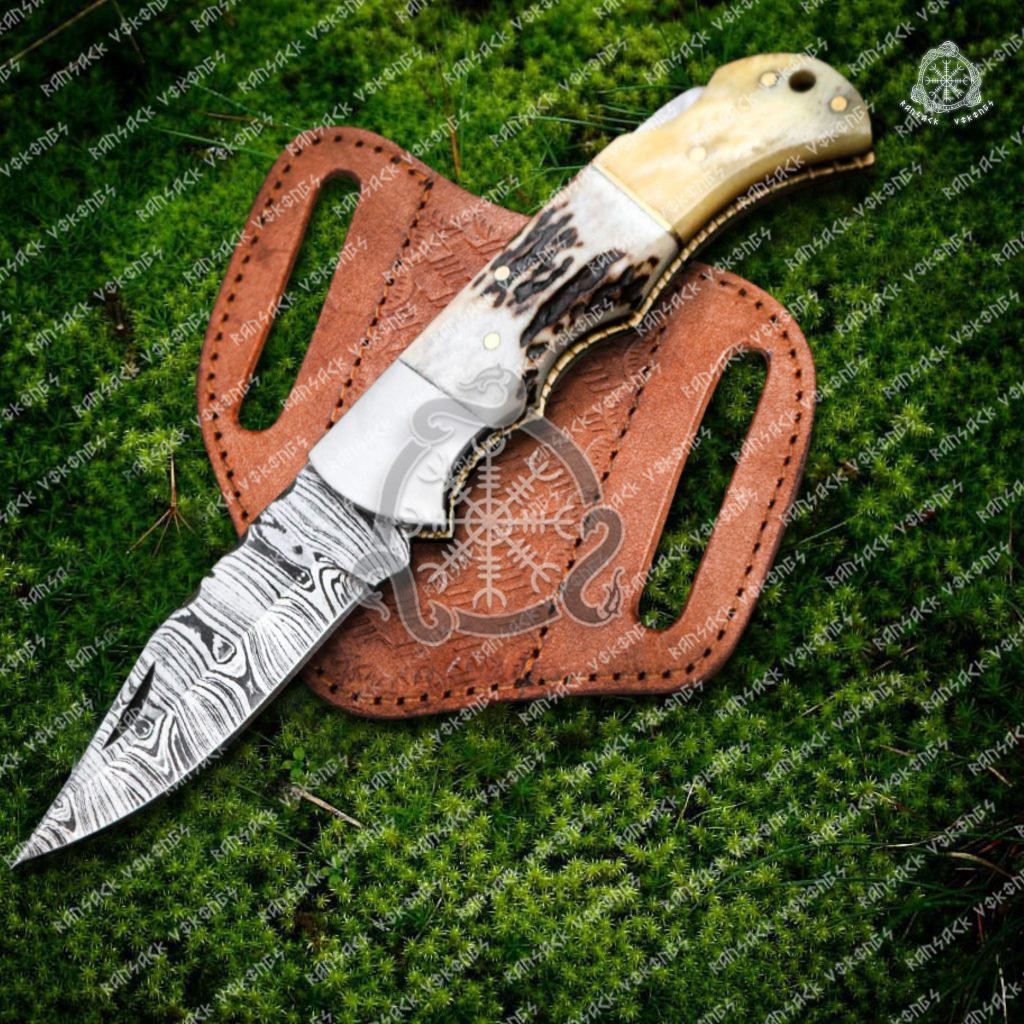
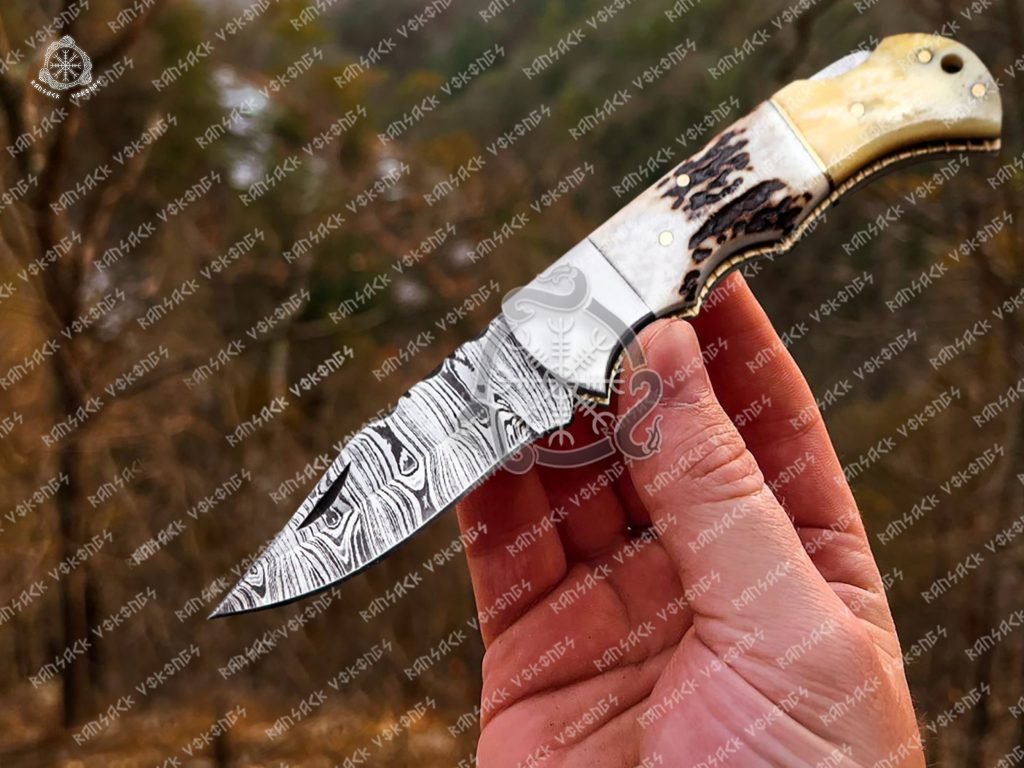
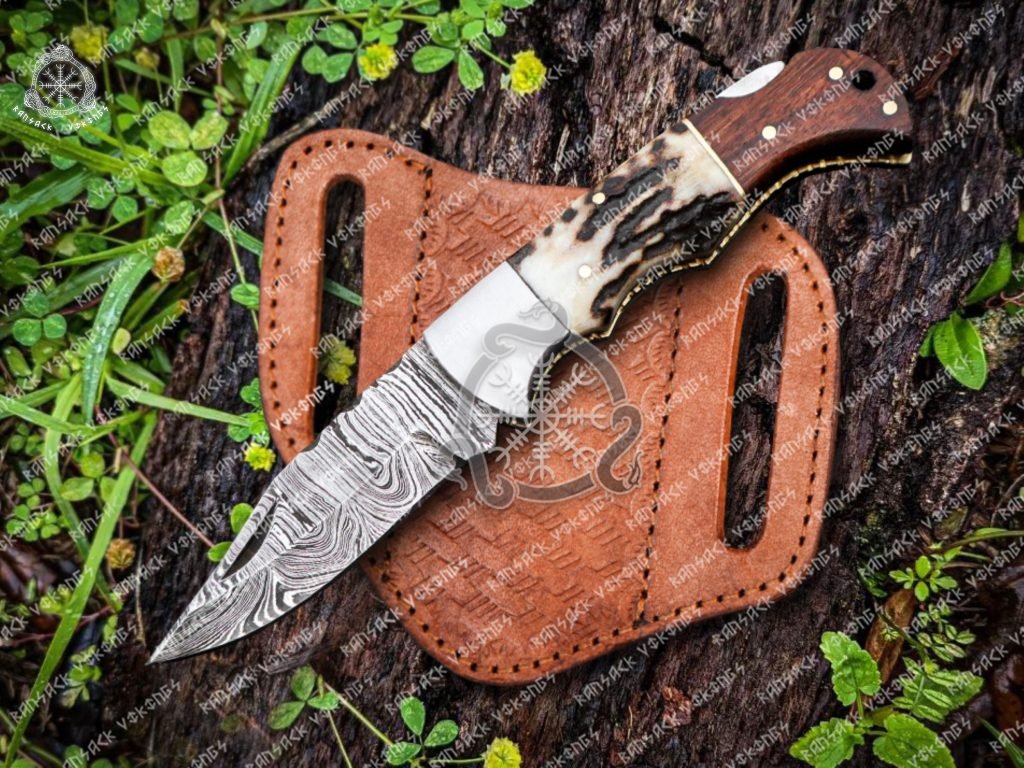
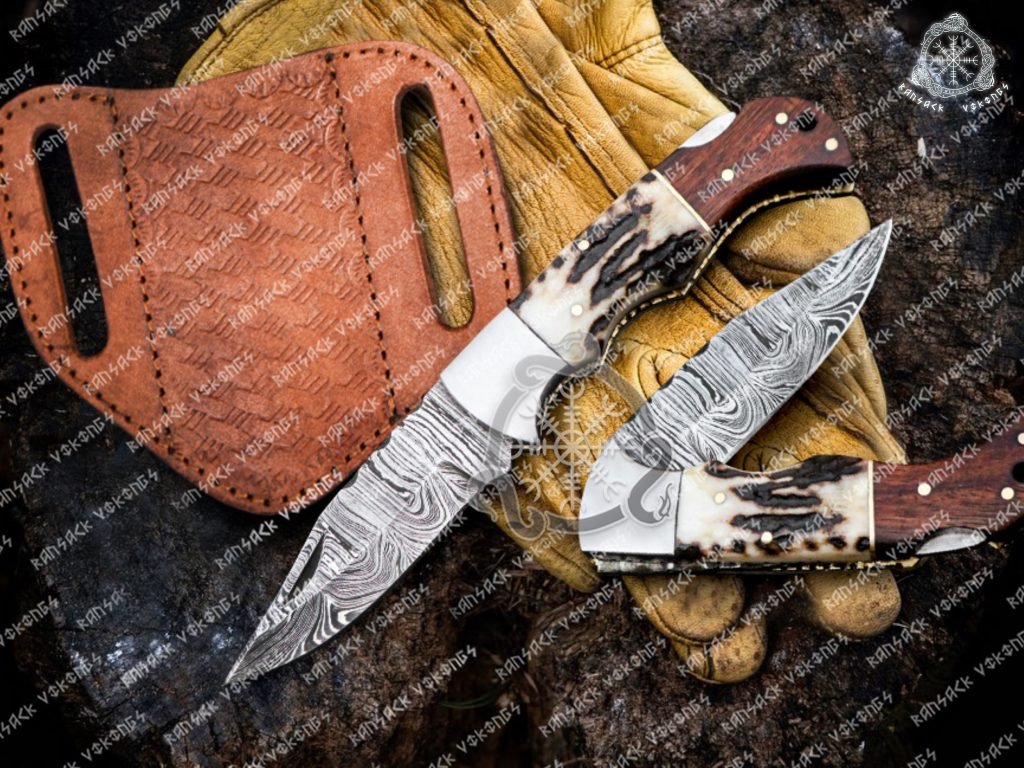
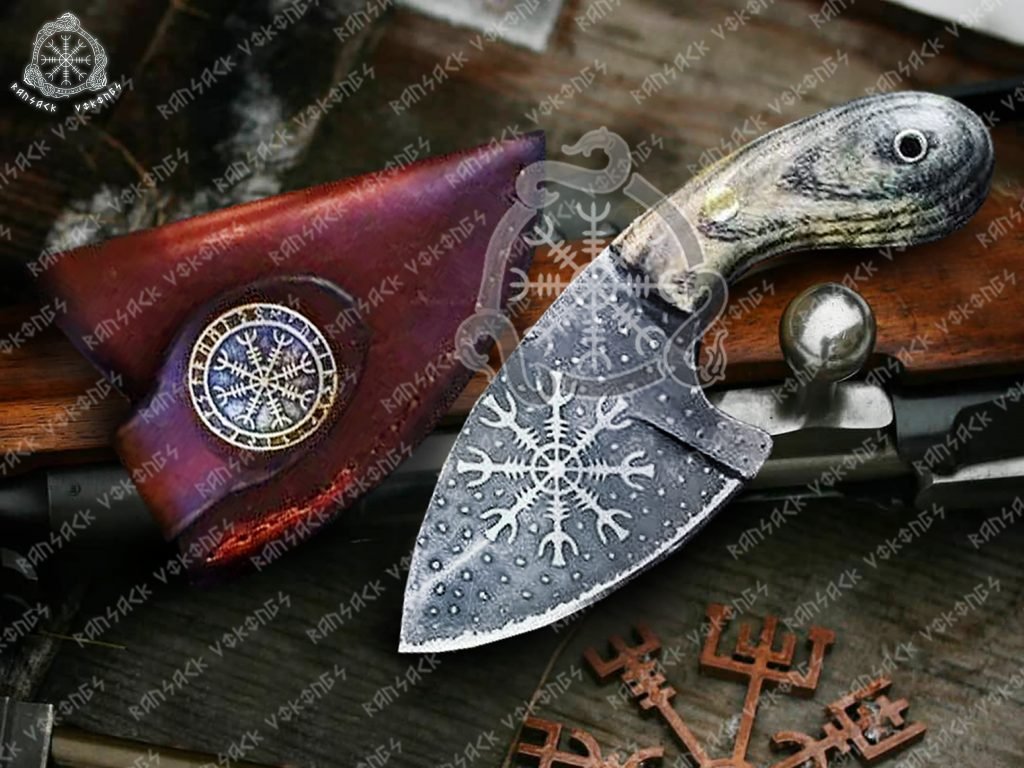
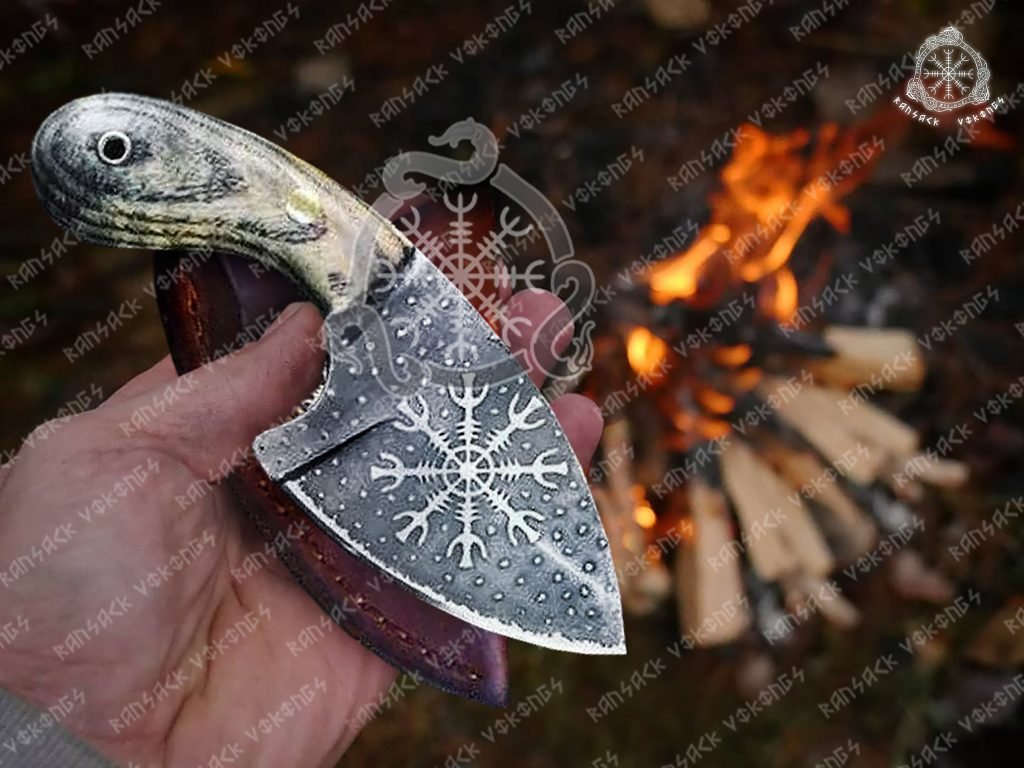
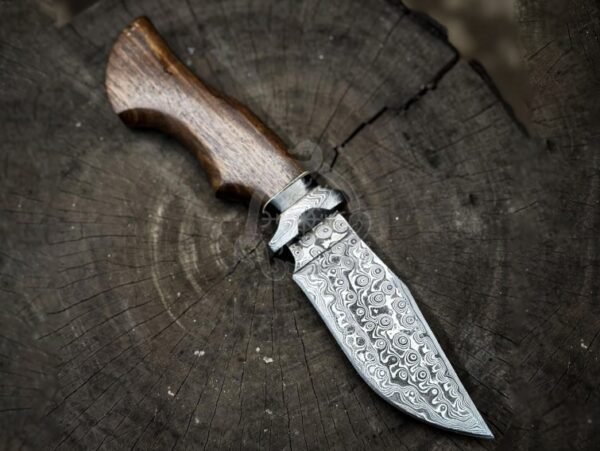
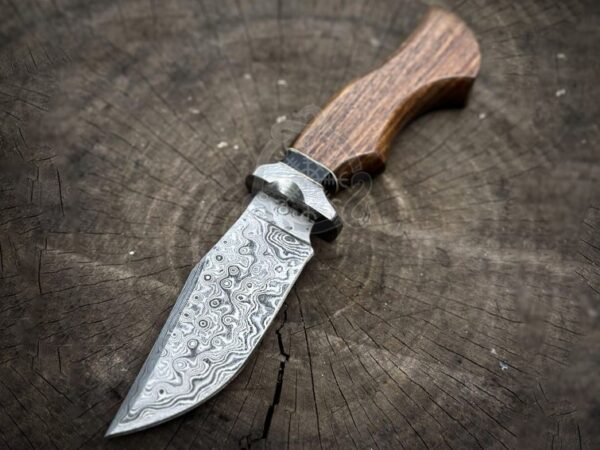
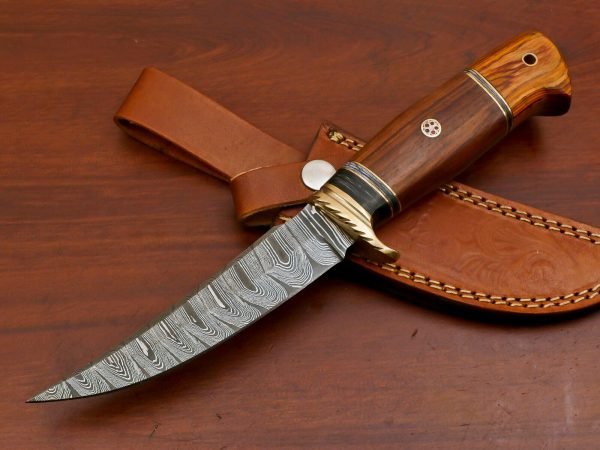
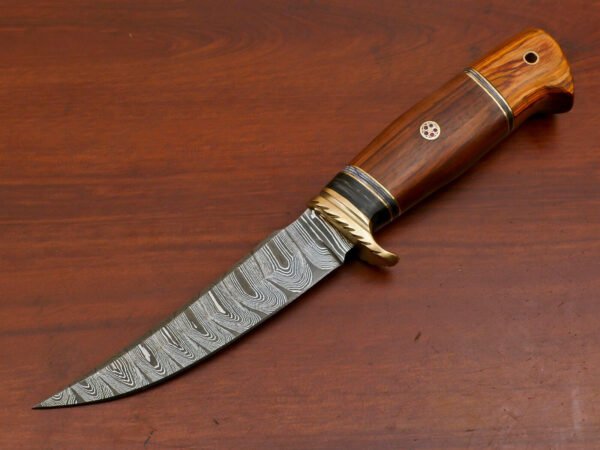
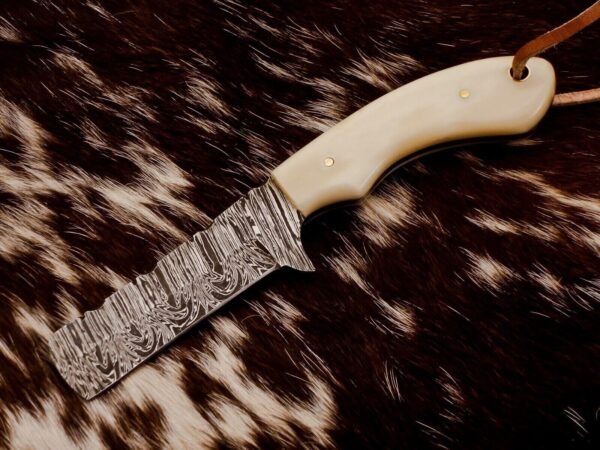
This karambit is hand forged. It is not machine made and it is not bulk produced, so what arrives will not be a pixel for pixel copy of the photograph on this page. The fire pattern is drawn out of a billet under a hammer, which means the flames sit at their own height and spacing on every blade. The ram horn comes off a different animal each time, so the tone runs anywhere from pale amber to near black and the streaking is never repeated. The dimensions, the steel, the hardness and the build are the same every time. The character is not, and that is the difference between a forged knife and a moulded one.
Frequently asked questions
Is the Ramclaw sharp when it arrives?
Yes. It is sharpened on a stone before it is packed and it will cut paper out of the box. It is a working edge rather than a razor bevel, because a slightly more obtuse edge on a 4 mm spine survives real use better than a fragile one.
Does the curve make it awkward for everyday cutting?
For anything you pull through, such as cord, strapping, tape or twine, the curve is an advantage. For pushing cuts, spreading, or anything that wants a flat edge on a board, a straight blade is the better tool. Most owners keep a karambit alongside a straight knife rather than instead of one.
Is it full tang?
Yes. It is a fixed blade with the tang running the length of the handle and the ram horn scales pinned to it, which is why the weight sits back toward the hand rather than out at the tip.
Will the fire pattern on mine look like the photograph?
It will be a fire pattern and it will be clearly the same family, but the individual flames will differ. Each billet is manipulated by hand, so the height and rhythm of the pattern change from blade to blade.
Can a blade this small carry a rune line?
It can. Three to eight characters sit well on a 3.5 inch blade, and longer phrases usually read better on the horn or across the brass bolster. If you are unsure, send the text with your order and we will tell you where it will look right.
How long before it ships?
Processing takes one to two weeks because each piece is made rather than picked off a shelf, and engraved orders sit at the longer end of that. Shipping within the United States is free.
What is in the box
- One Ramclaw Damascus karambit knife
- Hand stitched sheath in extra thick cowhide leather
- Protective packaging for storage or gifting
- Forged and finished in the Czech Republic
Explore the range
More from the forge in Karambit Knives, Dagger Knives, Damascus Skinner Knives and Hunting Knives. The background reading, including blade shapes and steel choices, lives in the guides.









Reviews
There are no reviews yet