Blog
Freya, the Goddess Who Takes Half the Slain

Freya takes half the battle dead. Odin takes the other half, and she chooses first. That single line in Grimnismal quietly rearranges everything most people think they know about the Norse afterlife, and it is sitting there in one of the oldest poems in the collection.
She is also a goddess of gold, of desire, of magic, and of a particular kind of unembarrassed self-possession that the medieval Christian authors writing her down clearly found difficult. This page sets out what the sources say, and separates the parts that are Viking Age from the parts that arrived several centuries later.
The name, which is a title
Freyja means lady, in the older sense of the mistress of a household. Her brother Freyr means lord. Neither is a personal name, which is unusual and has consequences.
She also travels under other names. Snorri lists Gefn, the giver. Mardoll, of uncertain meaning, possibly sea-bright. Horn. Syr, which means sow, and is either a fertility association or an insult depending on which scholar you ask. Vanadis, the lady of the Vanir. Valfreyja, lady of the slain.
Because Freyja is a title rather than a name, some scholars have argued that Freyja and Frigg were originally the same goddess, split into two by the time the material was written down. Both are married to a figure whose name begins with Od, both weep for an absent husband, and their functions overlap in places. Others reject it firmly, pointing out that the sources treat them as entirely separate and that one is Aesir and the other Vanir. It is not settled, and it will not be.
Vanir, and the war
Freya belongs to the Vanir rather than the Aesir. The Vanir are the second family of gods, associated with fertility, wealth, the sea and prophecy, and the two families fought a war that ended in an exchange of hostages. Njord came over to the Aesir with his children Freyr and Freyja, and stayed.
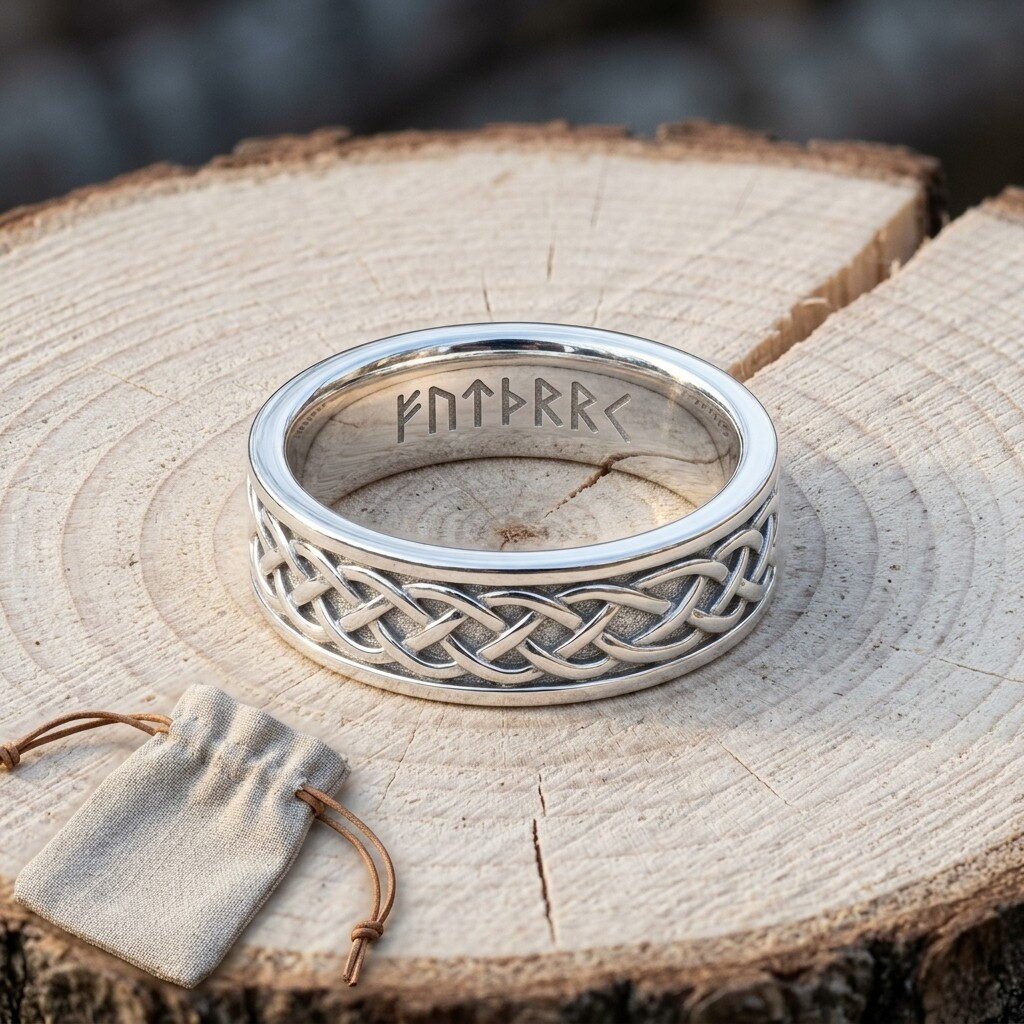
 Ropewind Hand Made Norse Rune Ring with Twisted Rope Borders & Elder Futhark Centre Band | 9mm Wide | Groomsmen Gift | RK-1604
 Everrune Hand Made Viking Rune Ring with Elder Futhark Band & Bevelled Polished Edges | 6mm Wide | Norse Wedding Gift | RK-1603
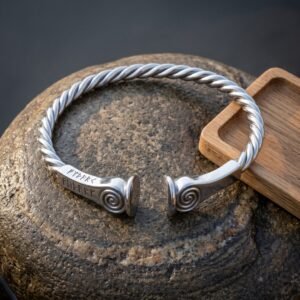 Coilspire Hand Made Twisted Viking Arm Ring with Spiral Terminals & Elder Futhark Runes | Open Cuff Torc | Norse Oath Gift | RK-1761
The Ynglinga saga adds a detail with teeth. Freyja taught the Aesir seidr, the kind of magic that sees and shapes, which had been a Vanir practice. The same source says seidr carried so much shame for men that it was left to women. That gives Freyja a role as the source of a practice her hosts found powerful and slightly disreputable, which sits well with everything else about her. The two families are set out on the page about the Norse gods.
Half the slain
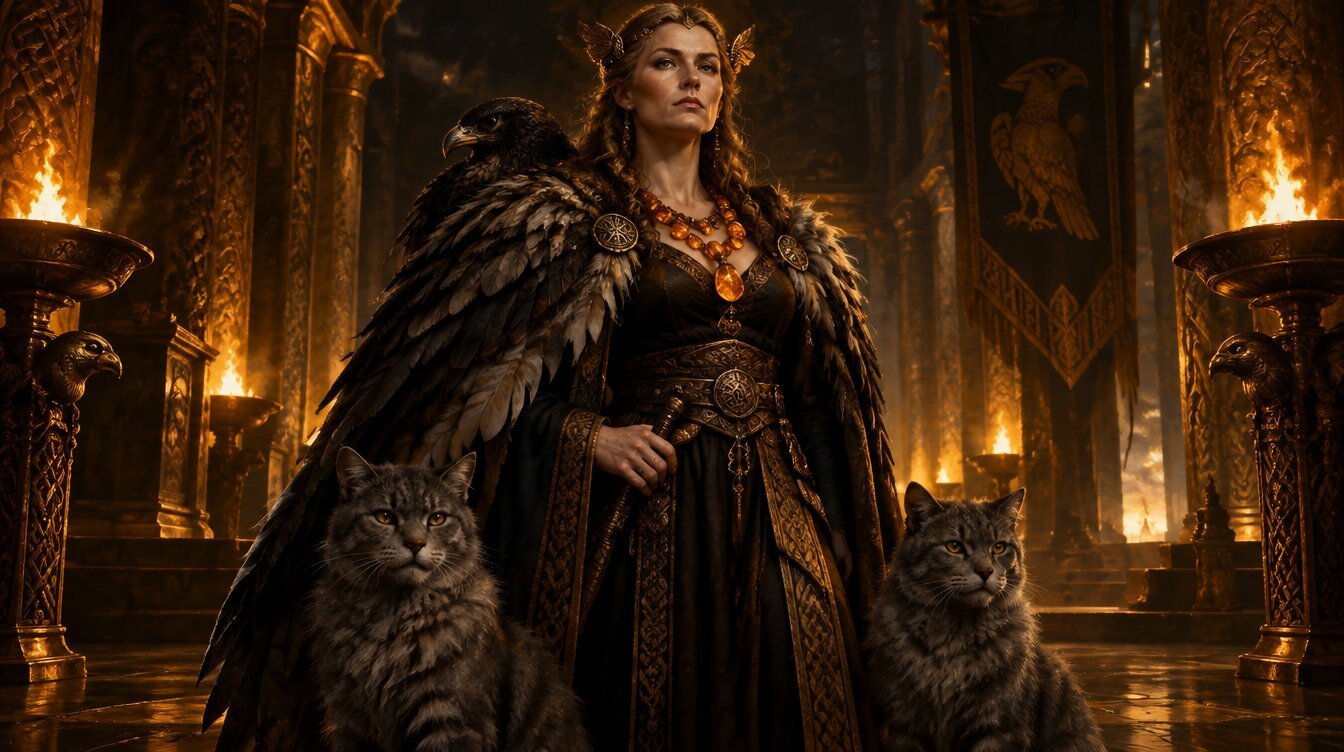
Grimnismal, stanza fourteen, says Folkvang is where Freyja decides who has seats in the hall, and that she chooses half the slain each day while Odin takes the other half. Snorri repeats it in Gylfaginning and adds that her hall in Folkvang is called Sessrumnir, seat-roomy.
Nothing else in the corpus explains it. We are not told how the division works, whether her half go somewhere different in kind, or what they do when they arrive. Valhalla gets pages of description, feasting, fighting and preparation for Ragnarok. Sessrumnir gets a name. The page on Valhalla covers what the other half were doing.
What we can say is that the popular picture of a Norse afterlife with one warrior hall is wrong on the sources’ own terms. There were at least two destinations for the battle dead, and the goddess had first pick.
Her possessions
Brisingamen
The necklace, or possibly the collar or torc, is her defining object. Thrymskvida has it snap off her neck when she is angry, and has Thor wear it as part of his disguise. A poem by the tenth century skald Ulf Uggason refers to Loki and Heimdall fighting over the Brisings’ ornament in the form of seals, which shows the object was known early even though the story around it is lost.
The account everyone repeats, in which Freyja sleeps with four dwarves across four nights to obtain the necklace, comes from Sorla thattr. That is a late fourteenth century text preserved in Flateyjarbok, roughly five hundred years after the Viking Age and written in a Christian literary context that had every reason to make her look bad. It is not evidence of anything Viking Age people believed. It is a good story and it should be labelled as what it is.
The falcon cloak
She owns a feathered cloak that lets the wearer fly in the form of a falcon. Loki borrows it repeatedly, which is one of the few consistent practical details in the mythology. In Thrymskvida he uses it to go looking for Thor’s stolen hammer. In Skaldskaparmal he uses it to fetch Idun back from the giants.
Cats and a boar
Snorri says she drives a chariot pulled by two cats. He does not say what kind, and everything anyone has written about which breed or what they signify is invention.
She also has a boar called Hildisvini, battle-swine. Hyndluljod has her ride it, and then reveals that it is actually her human protege Ottar in disguise, which is either a joke at her expense or a piece of a lost story.
Od, and the weeping
Freyja is married to a figure called Od, who is almost entirely absent. He travels, he stays away, and she weeps for him, and her tears are red gold. That is all we get.
Their daughters are Hnoss and Gersemi, and both names mean treasure. Snorri notes that anything precious is called by their names, which turns the family into a small etymological engine for words about valuables.
The similarity between Od and Odin is obvious and much discussed. Whether Od is a doublet of Odin, a faded separate god, or simply a narrative device to explain the tears is not something the sources allow anyone to decide. The page on Odin covers the other side of that argument.
What Lokasenna says
In Lokasenna, Loki works down the guest list insulting everyone, and accuses Freyja of having slept with every god and elf in the hall, including her own brother. Njord defends her by pointing out that many women take lovers, which is not much of a defence but is at least a period one.
Loki’s accusations in that poem are designed to wound and are not descriptions of doctrine. But the choice of insult tells you what was thought insultable, and the fact that Freyja’s sexuality is the first thing reached for says something about how she was understood by the audience the poem was written for.
Was she worshipped
Yes, and the evidence is better for her than for most goddesses. Place names built on her name occur across Sweden and Norway, though fewer than for Freyr or Thor. She appears in personal names. Late Icelandic sources describe household devotion to Freyr and Freyja together, and Adam of Bremen’s account of the temple at Uppsala describes a fertility figure that most read as Freyr, with the family clearly central to the cult there.
Folklore kept her longer than the church would have liked. In parts of Scandinavia the constellation English speakers call Orion’s Belt was known as Freyja’s distaff into the modern period. Certain plants carried her name until Christian relabelling replaced it with Mary’s. That kind of survival is usually a sign of something that had been very widely embedded.
What she is not
She is not a Valkyrie, though Valfreyja looks like it should mean that, and she is not the leader of the Valkyries in any surviving source. She is not the goddess of love in the tidy Roman sense of a department with a portfolio. And she is not the same as Frigg, however tempting the parallels, unless you are prepared to argue the case rather than assume it. The other goddesses are set out on the page for the Norse goddesses.
Carrying it
Ransack Viking is a US company in Chicago, Illinois. Pieces are handmade in the Czech Republic, then imported, inspected and shipped from Chicago, and engraving is cut here after arrival. Plain 1095 runs 54 to 58 HRC and Damascus of 1095 and 15N20 runs 58 to 60. US orders ship free and tracked with no import duty, and everything carries a lifetime warranty against defects. The ranges most often chosen for Norse work are Norse pendants, Viking rings and arm rings and runestones and rune sets. The rest of the writing is in the guides.
Questions people ask
What is Freya the goddess of?
Love, desire, gold, fertility, seidr magic and a share of the battle dead. The last of those is the most often forgotten. Grimnismal states that she chooses half of those who fall in battle each day and Odin takes the rest, so she is a goddess of the war dead as much as of anything softer.
Does Freya really take half the slain?
Yes, according to Grimnismal and to Snorri’s Prose Edda, which repeats it. Her field is called Folkvang and her hall Sessrumnir. Neither source explains how the division is made or what her half do afterwards, which is a striking gap given how much detail Valhalla receives.
How did Freya get Brisingamen?
The well known version, in which she spends a night with each of four dwarves, comes from Sorla thattr, a text written around the late fourteenth century in a Christian context. It is roughly five centuries later than the Viking Age. Older sources such as Thrymskvida and a tenth century skaldic poem know the necklace but not that story.
Is Freya the same goddess as Frigg?
Some scholars argue they split from a single earlier figure, pointing to husbands whose names both begin with Od, the weeping for an absent husband, and overlapping functions. Others reject it, since the sources treat them as separate and place one among the Aesir and the other among the Vanir. The question is open and likely to stay that way.
Why does Freya have cats?
Snorri says her chariot is drawn by two cats and gives no further detail. Everything else in circulation, including claims about specific breeds or about cats being sacred to her, is later invention. The boar Hildisvini is better attested, appearing in Hyndluljod, where it turns out to be a man in disguise.
Who is Freya’s husband?
A figure called Od, who is barely present in the sources. He travels far and stays away, and Freyja weeps tears of red gold for him. Their daughters are Hnoss and Gersemi, and both names mean treasure. The resemblance between Od and Odin has been noticed for centuries without being resolved.
Was Freya actually worshipped in the Viking Age?
Yes. Place names carrying her name occur across Sweden and Norway, she turns up in personal names, and household devotion to her and her brother Freyr is described in late Icelandic sources. Folk tradition kept her name attached to a constellation and to certain plants long after conversion, which usually indicates something deeply embedded.
Is Freya a Valkyrie?
No, although one of her names is Valfreyja, lady of the slain, and she shares the battle dead with Odin. No surviving source makes her a Valkyrie or the leader of them. The Valkyries are separate figures who serve Odin and select for his hall.
What the shop carries
On the shelf in the same spirit, the Knotbloom Celtic earrings and the Axebloom axe hoop earrings. Next to those, the Coilspire Viking arm ring and the Arrowward handcrafted pendant.
Shop the range
Ropewind Hand Made Norse Rune Ring with Twisted Rope Borders & Elder Futhark Centre Band | 9mm Wide | Groomsmen Gift | RK-1604Everrune Hand Made Viking Rune Ring with Elder Futhark Band & Bevelled Polished Edges | 6mm Wide | Norse Wedding Gift | RK-1603Coilspire Hand Made Twisted Viking Arm Ring with Spiral Terminals & Elder Futhark Runes | Open Cuff Torc | Norse Oath Gift | RK-1761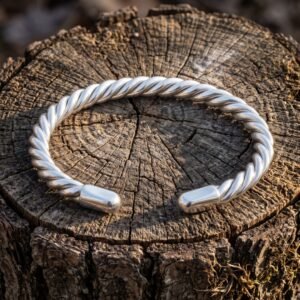 Coilbright Hand Made Twisted Viking Arm Ring with Rope Coil Body & Rounded Terminals | Norse Wedding Gift | RK-1779
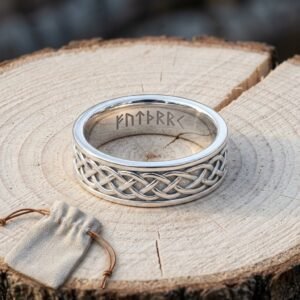 Knotvow Hand Made Viking Rune Ring with a Celtic Knotwork Band & Elder Futhark Cut Inside | Norse Wedding Gift | RK-1658
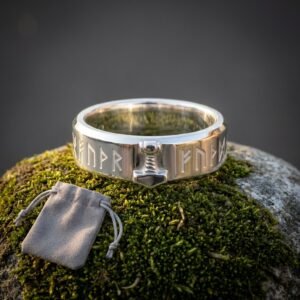 Runeclasp Hand Made Polished Steel Viking Rune Ring with Engraved Elder Futhark Band & Applied Mjolnir Motif | Wedding Gift | RK-1637