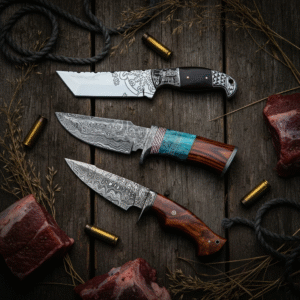
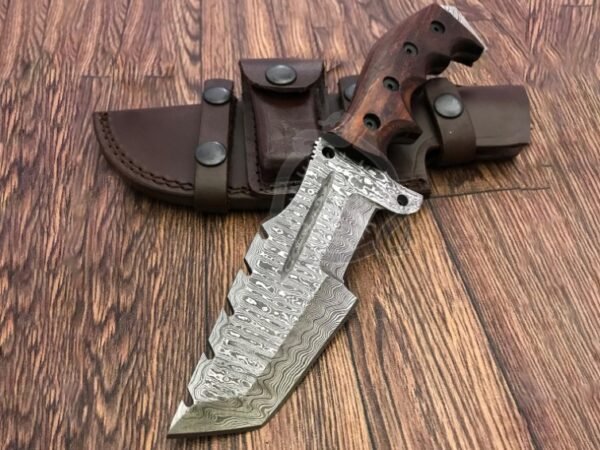
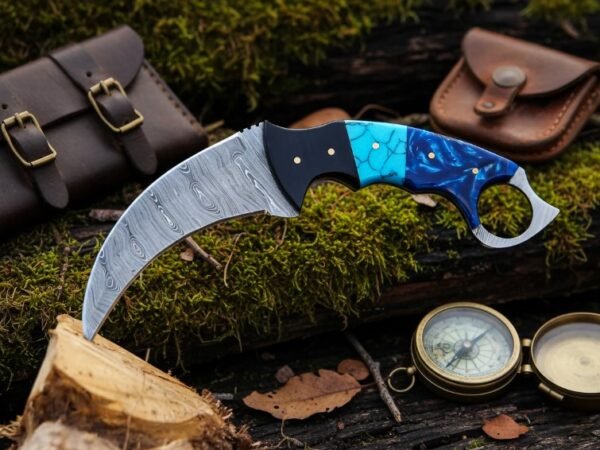
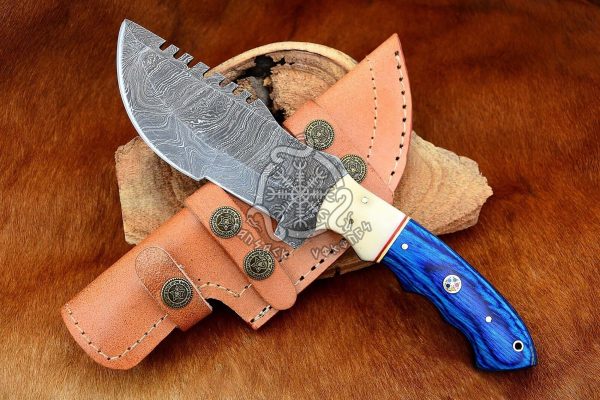
The tracker is the multi-tool of fixed blades: a straight forward edge for carving, a curved rear belly for chopping, and a squared spine for scraping and batoning — one knife designed to replace a small kit. Ours are hand-forged from layered Damascus steel with full-tang construction and wood or bone scales, shipped sharp with a leather sheath.
5 pieces in this collection
Free US shipping
On every order, no minimum.
Hand-forged
Heated, hammered and ground by hand.
Engraving available
Names, dates or Norse runes on most pieces.
Ships from Memphis
Dispatched from our Tennessee facility.
Tracker Knives



What a Tracker Knife Is For
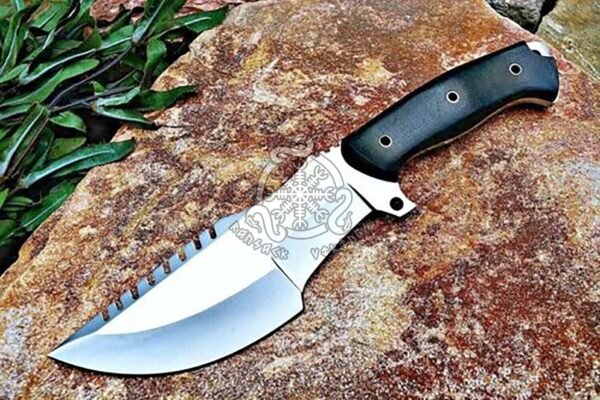
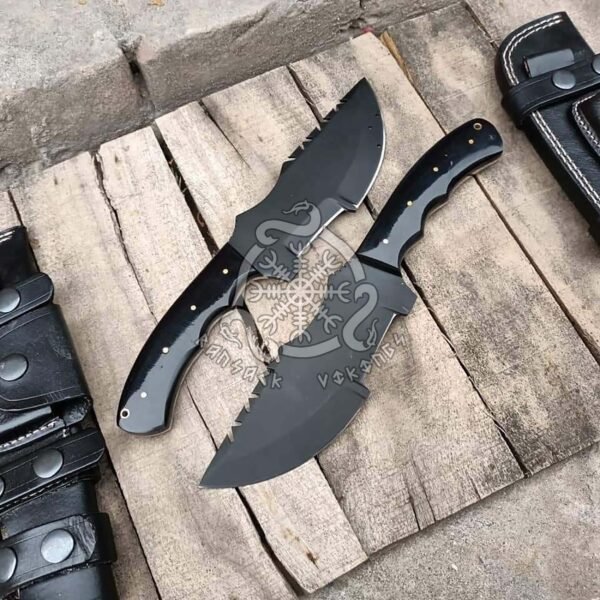
The tracker is a survival pattern — a broad spine, a deep forward belly for chopping, and a straight secondary edge behind it for carving, notching and drawing. One blade covering the jobs that would otherwise need three, which is why it became the archetypal bushcraft knife.
Reading the Blade
The forward curve does the heavy work: batoning, limbing, splitting kindling. The straight section behind it handles fine cuts and feather sticks. The squared spine is deliberate — it throws sparks off a ferro rod and scrapes tinder without dulling the edge.
Build and Carry
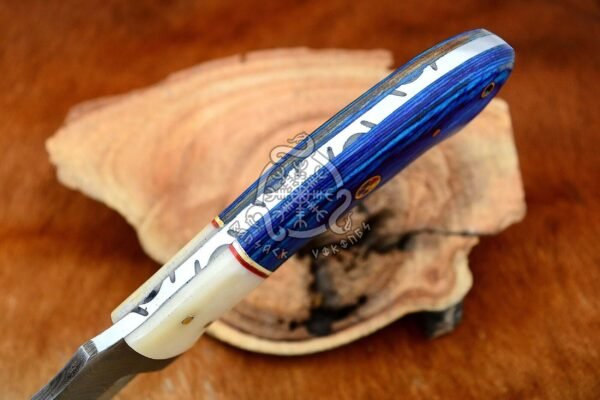
Full tang, no exceptions, in layered Damascus or high-carbon steel heat-treated for toughness rather than maximum hardness — a survival blade should bend before it snaps. Handles are micarta, buffalo horn or stabilised hardwood, and every knife ships in a fitted leather sheath. See also our hunting knives.
Looking for something Norse? The Viking knives collection carries hand-forged seaxes and Viking-styled belt blades.
Tracker Knife FAQ
What is a tracker knife used for?
Bushcraft and survival work — chopping and batoning with the forward belly, carving and notching with the straight edge, and fire-starting off the squared spine.
Why does it have two different edges?
So one knife does the work of several. The curved section is for force, the straight section for control. It is a deliberate compromise, not a decorative shape.
Can I baton with it?
Yes. These are full-tang blades built for it. Strike the spine over the forward belly, not over the handle junction.
Will the spine throw sparks off a ferro rod?
On models with a squared, unfinished spine, yes. Rounded spines will not — check the specification on the product page.
Damascus or high-carbon for hard use?
Both are tough enough. High-carbon is the simpler, cheaper repair if you damage it; Damascus carries the pattern and is the usual choice when the knife is a gift.
How long does delivery take?
Orders are inspected and dispatched from Memphis, TN within 1–2 weeks, with US delivery typically taking a further 3–7 business days.