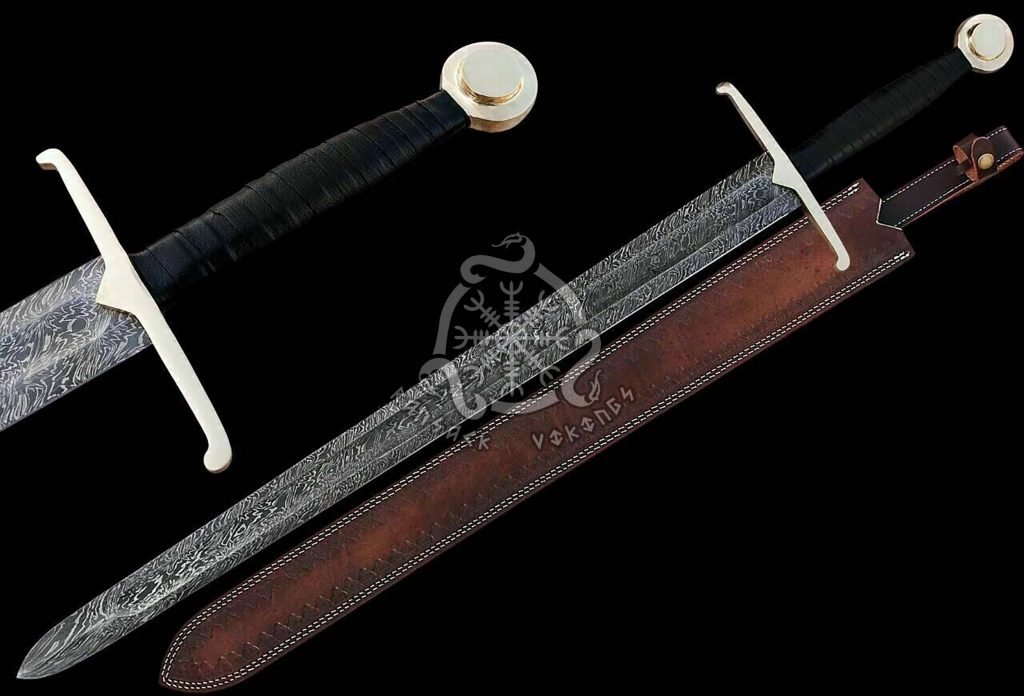
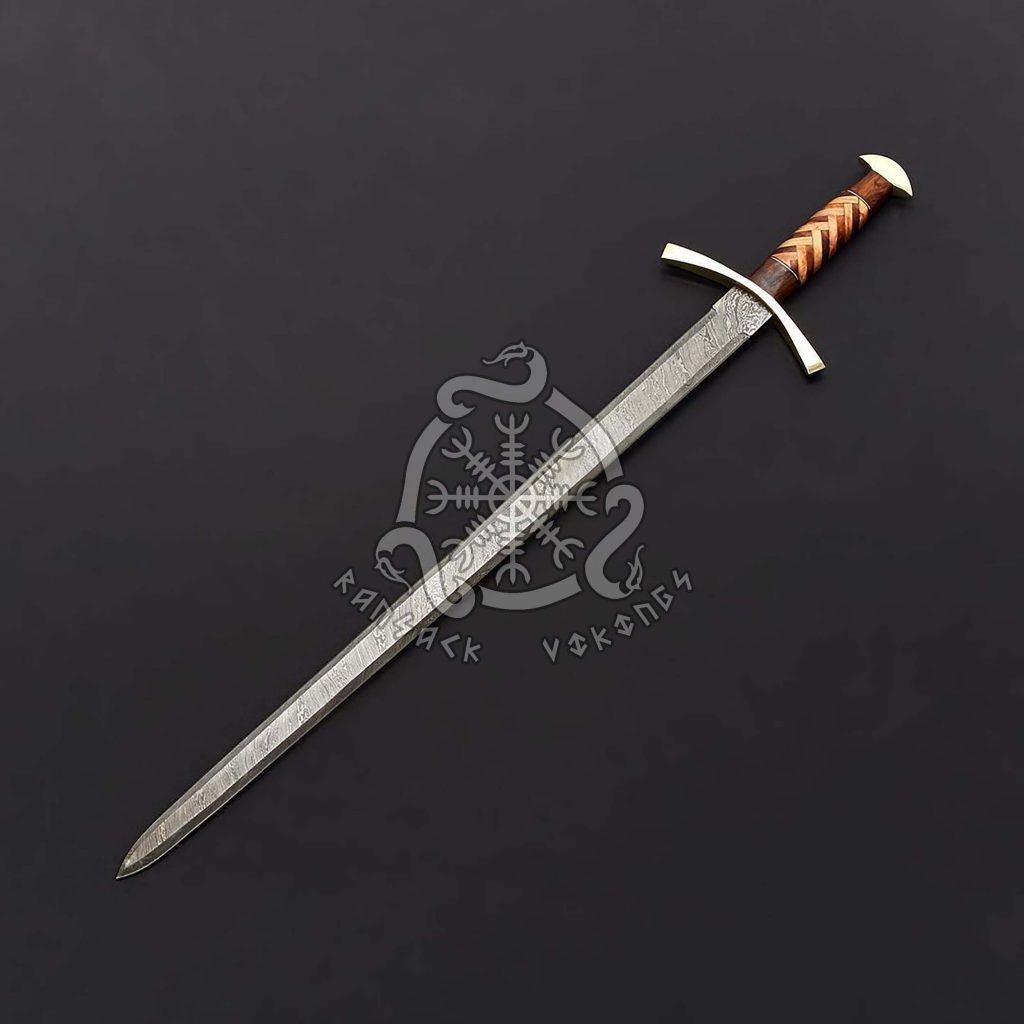
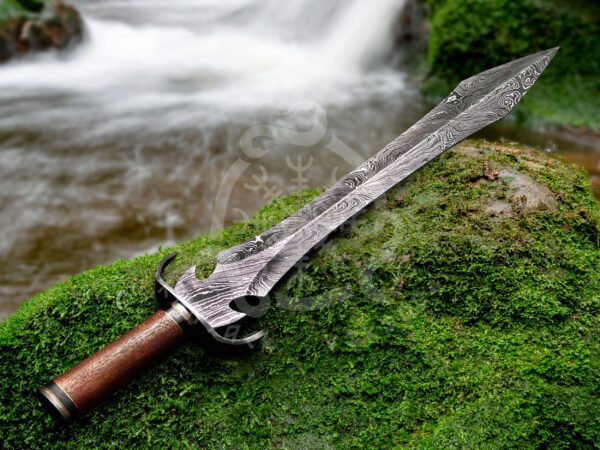
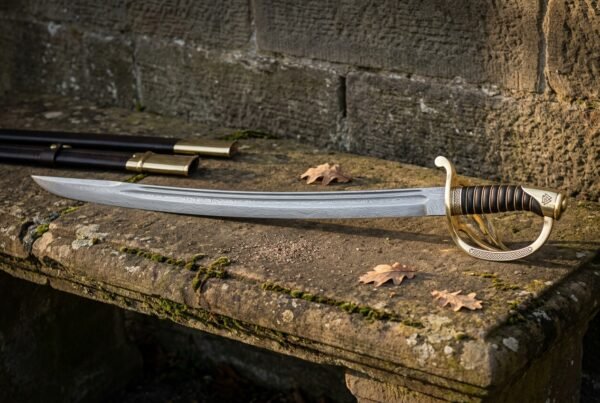
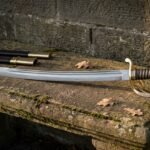
Pattern welded steel was not invented to look good. It was invented because early bloomery iron came out of the furnace in inconsistent lumps, some of it hard and brittle, some of it soft and tough, and the only way to make a long blade that would neither shatter nor bend was to stack the two together and weld them into one bar. The pattern that rises to the surface when you etch that bar is a side effect, a map of the folding. By the time smiths could make uniform steel in quantity the technique had already outlived its necessity, and it survived because a blade with that map on it is worth looking at. This Gildhawk sabre is built the old way for the modern reason.
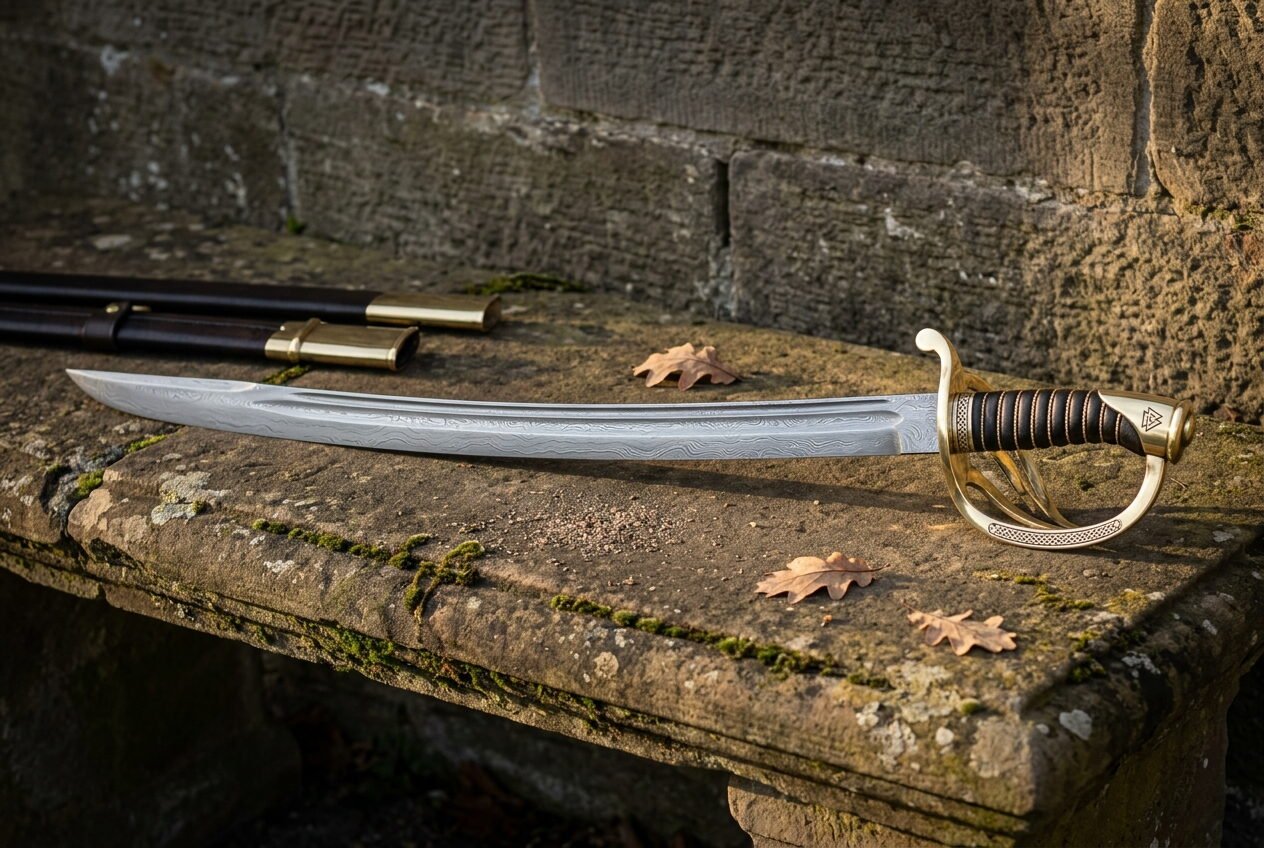
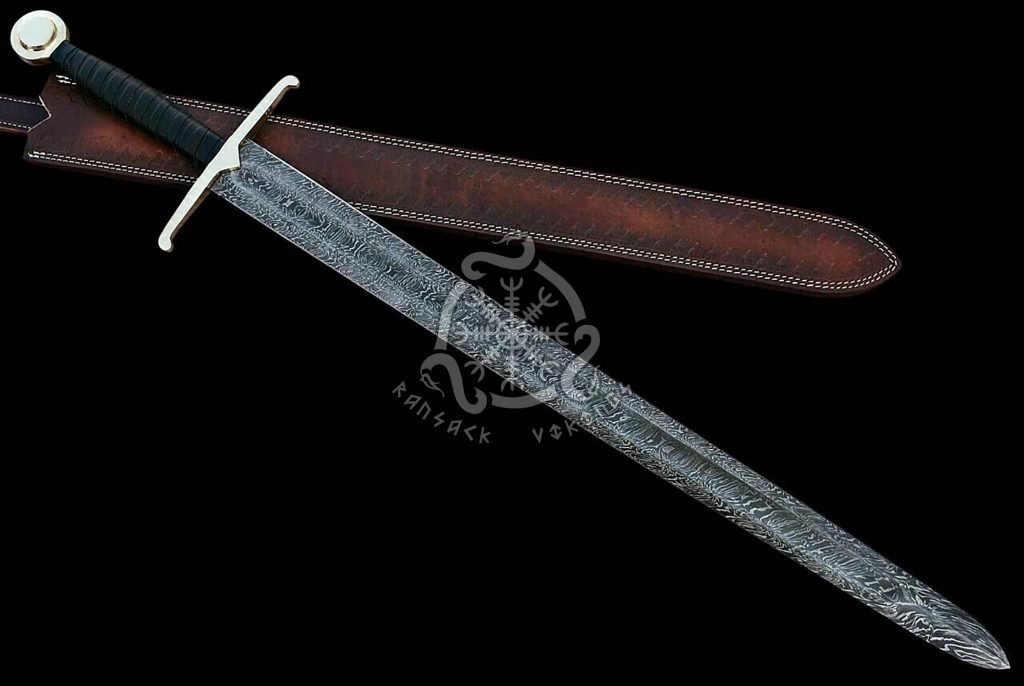
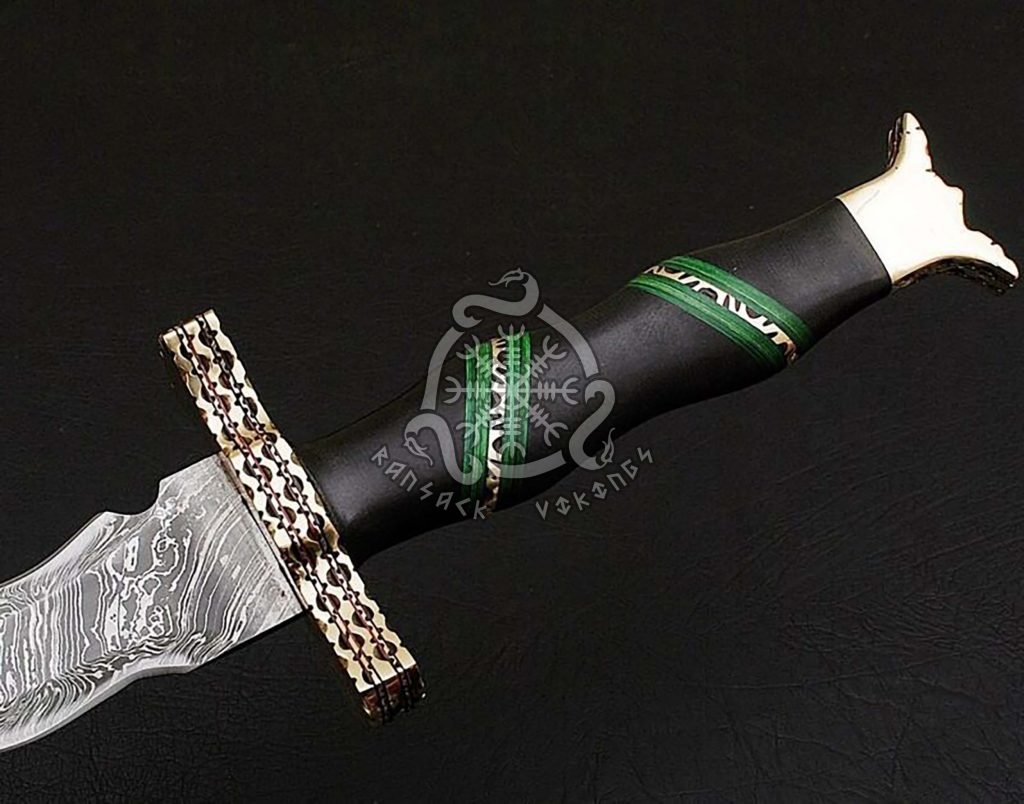
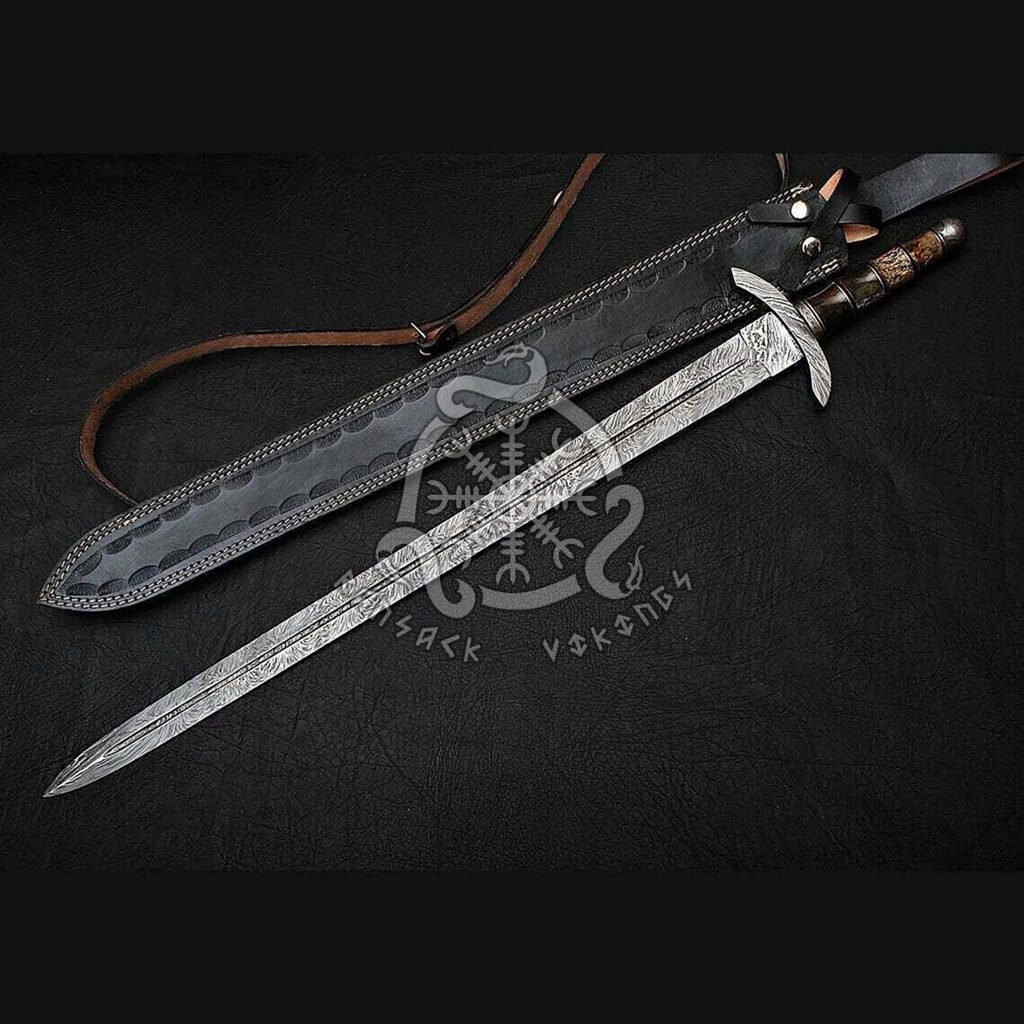
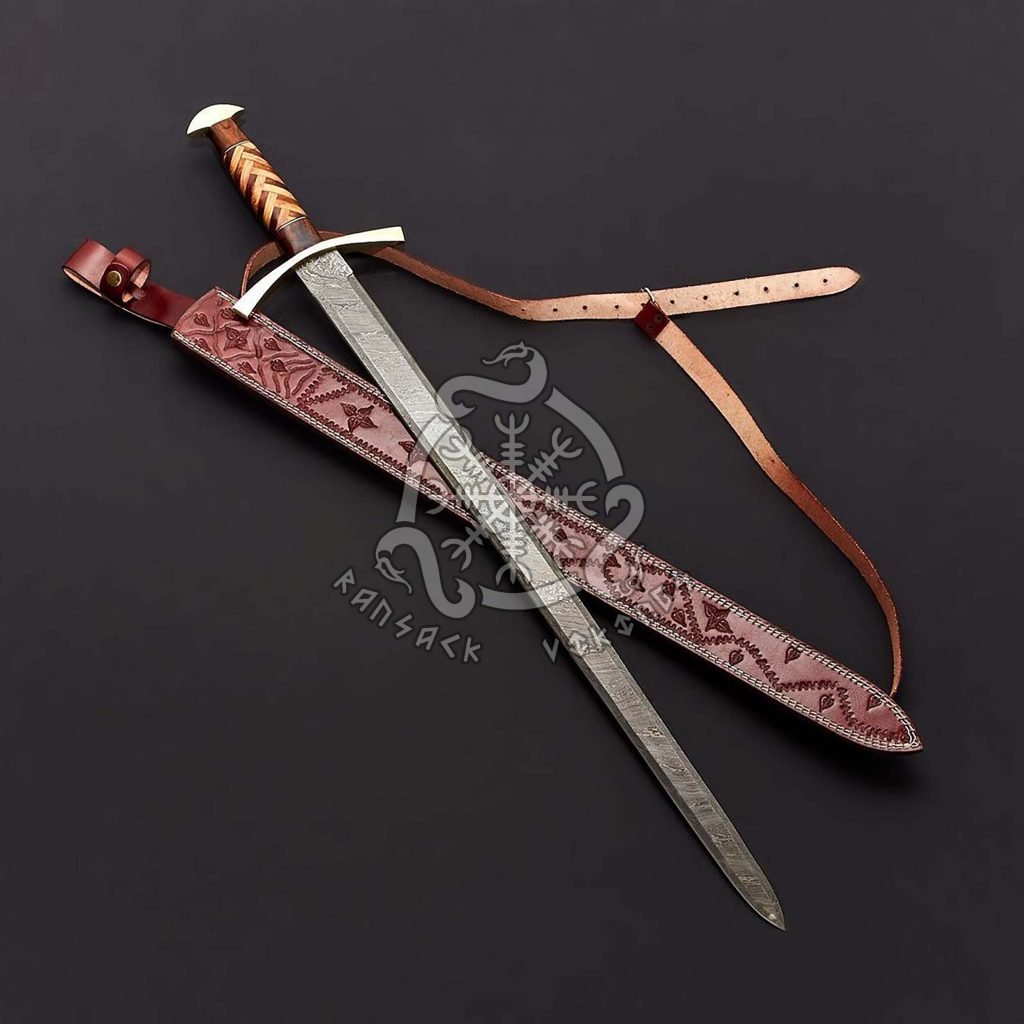
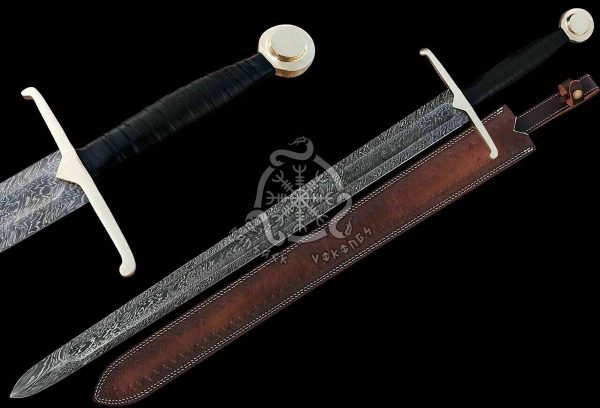
The blade is forge welded from 1095 and 15N20, drawn out under the hammer, curved at the anvil, hardened and tempered, then etched to bring the layers up. It is made in our own shop in Memphis, Tennessee, hilted in cast and filed brass with a three bar guard and a ribbed leather grip bound with brass wire, and it ships with a black leather scabbard mounted in brass. Shipping inside the United States is free.
Specifications
| Steel | 1095 and 15N20 forge welded Damascus, hand etched to raise the pattern |
|---|
| Hardness | 58 to 60 HRC |
|---|
| Overall length | 35 inches |
|---|
| Blade length | 29 inches |
|---|
| Blade finish | Etched layered Damascus with an engraved knotwork band at the ricasso |
|---|
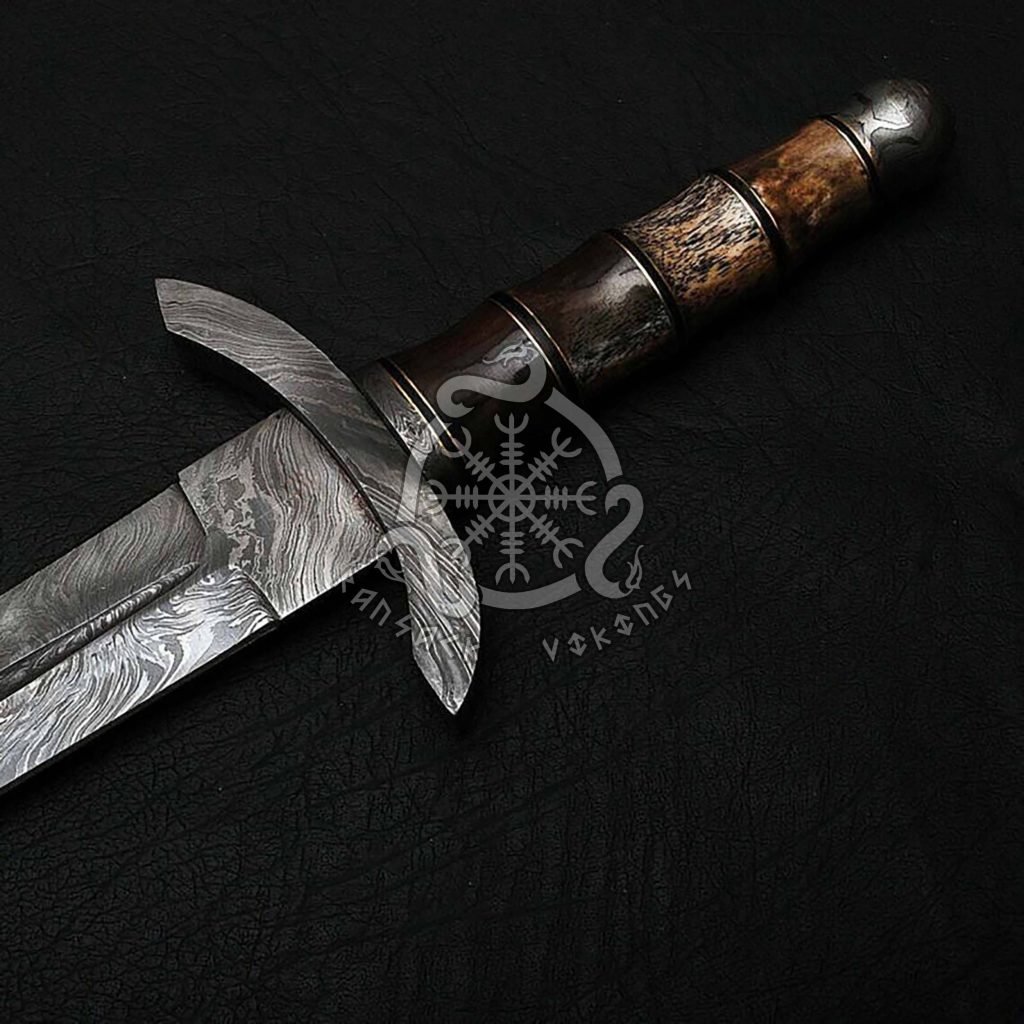
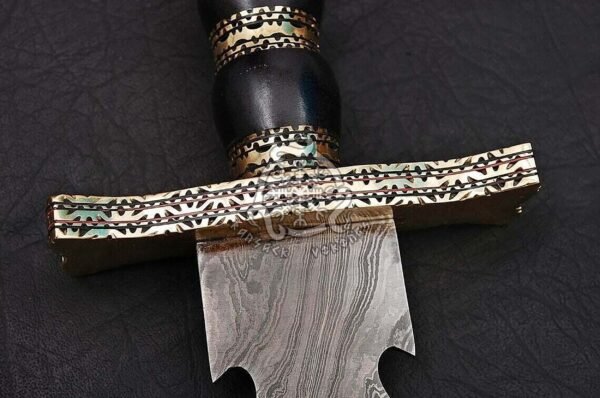
| Guard | Three bar brass knuckle guard with a hooked quillon and knotwork engraving |
|---|
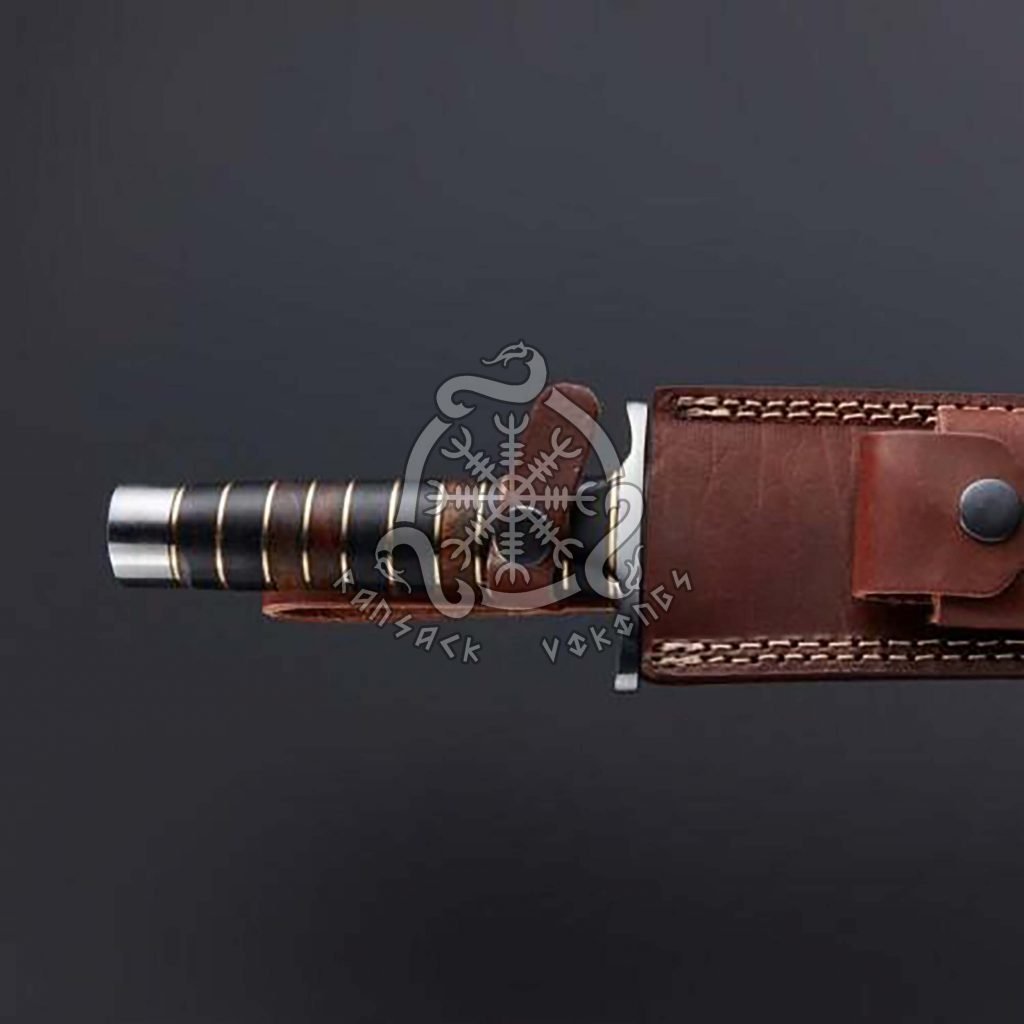
| Handle | Ribbed black leather bound with brass wire, brass ferrule and brass pommel cap cut with a valknut |
|---|
| Scabbard | Black leather scabbard with a brass throat and chape |
|---|
| Edge | Shipped with a working edge, sharpened on request at no charge |
|---|
| SKU | RK-1311 |
|---|
How the Damascus pattern is made
Two steels go into this blade. 1095 is a plain high carbon steel that hardens hard and etches dark. 15N20 carries about two percent nickel, which barely changes how it behaves in the fire but changes completely how it reacts to acid: it stays bright where the 1095 goes grey. Stack alternating layers of the two, bring the whole billet to welding heat, and hammer it until the layers fuse into a single solid bar. Draw that bar out, cut it, fold it back on itself and weld again, and the layer count doubles every time. Manipulate the bar while you do it, by twisting it or by cutting grooves into the flats and forging them shut, and the pattern stops being straight lines and starts to flow.
All of that happens before the blade exists. Only when the billet is finished does it get forged into a sabre, which means every hammer blow that shapes the curve also moves the pattern, stretching it along the spine and compressing it into the belly. That is why the figure on a real forge welded blade follows the geometry of the sword instead of sitting on top of it like a print.
The three bar brass hilt
The guard is three brass bars sweeping from the langet to the pommel: the knuckle bow and two branches falling to the outside of the hand. A rider carries the sword with the back of the hand forward, so that is the surface that needs covering, and three open bars cover it without trapping the hand the way a closed basket does. Brass was the standard material for these hilts for two reasons that still hold. It casts and files easily, so a complicated guard can be made without forging every branch by hand, and it does not rust, so the part of the sword that lives against a wet saddle and a wet glove stays serviceable. It also work hardens rather than cracking, which means a bar that takes a blow bends and can be bent back.
The pommel cap on this sabre is cut with a valknut, the three interlocked triangles that appear on Gotland picture stones and on the Oseberg ship burial. Nobody knows with certainty what it meant. It is one of our own touches rather than a period detail on a cavalry sword, and it is the part most people notice second, after the blade.
Why Damascus and not stainless
Both steels in this blade are carbon steels, which is what makes the weld possible in the first place. Stainless steels cannot be pattern welded in a coal or gas forge in any practical way, because the chromium that makes them stainless forms an oxide skin at welding heat and that skin stops the layers from bonding. Beyond the technical problem there is a mechanical one: at 35 inches, a stainless blade with enough chromium to resist rust is brittle enough to be a genuine hazard. The 1095 and 15N20 combination gives you 58 to 60 HRC at the edge with a spine that still flexes. You pay for that in maintenance, because carbon steel will spot if you leave it wet. We lay out the whole comparison on our page covering Damascus versus stainless.
The leather and brass wire grip
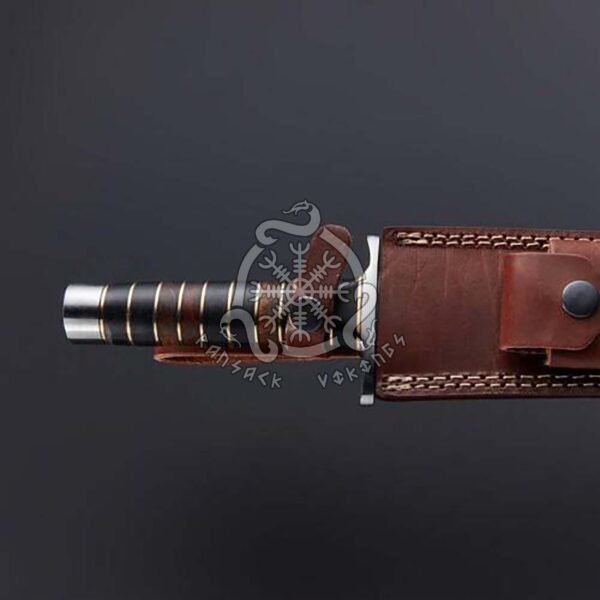
The grip is leather laid over a shaped core, bound into raised ribs, and wired with brass in the grooves between them. The wire is functional. It locks the leather down so it cannot creep under load, and it gives the fingers a harder edge to register against than leather alone. The brass ferrule and the pommel cap are peened over the tang, so the hilt is held together by metal moving into metal rather than by glue.
Engraving, runes and your own design
Use the rune converter on this page to turn a name, a date or a short phrase into Elder Futhark and we will cut it into the steel or the handle. If you would rather have a Viking pattern than a rune line, choose your own design in the engraving option above the add to cart button and tell us whether it goes on the blade or the handle. Where a piece already carries an engraved design, your chosen engraving replaces it rather than sitting alongside it. On this sabre that means the knotwork band at the ricasso is the space your engraving will occupy. Everything we can cut, and the few things we cannot, are listed on the engraving page.
Care and sharpening
An etched Damascus blade needs the same care as any carbon steel blade, with one extra consideration. The pattern is a shallow relief, a few thousandths of an inch deep, so heavy abrasive polishing will flatten it out. Clean with a soft cloth, never with a scouring pad, and keep a thin film of oil on the steel. Fingerprints are the main enemy, because skin acid etches the surface further and leaves marks that stand out badly against the pattern. Full instructions are on our steel care page.
For the edge, work the curve across the stone rather than trying to hold the sword still, keeping the angle constant while the contact point travels along the belly. Our walkthrough of sharpening with a whetstone covers the technique in detail.
Forged in Memphis
The billet for this blade is welded in our own shop in Memphis, Tennessee, and so is everything after it. Nothing here is drop shipped from an importer catalogue with our name attached. Damascus takes longer than plain steel because the billet has to be built before the sword can be started, and a failed weld means starting over. Finished pieces ship in two to four business days. If we are between billets, or if you have ordered engraving, allow three to four weeks, and we will tell you which it is when the order comes in.
A note on handmade variation
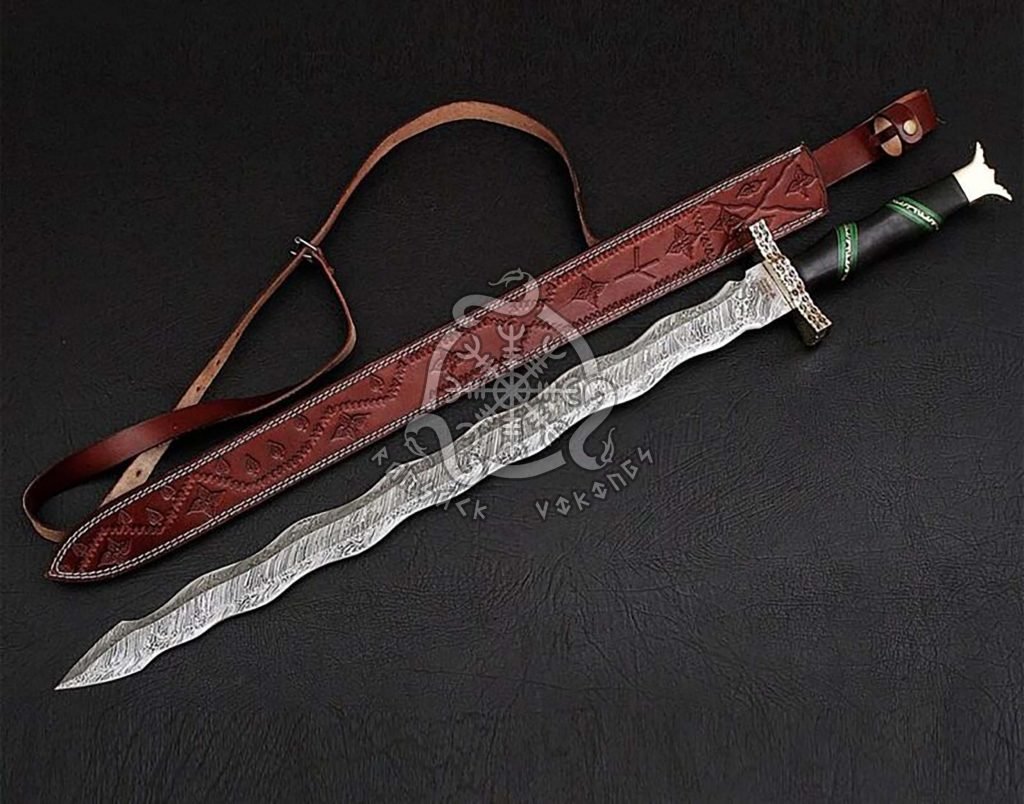
This sabre is hand forged. It is not machine made and it is not bulk produced, so what arrives will not be a pixel for pixel copy of the photograph on this page. Damascus in particular is never repeatable: the layer pattern depends on how that specific billet was drawn, folded and cut, so the figure on your blade will be its own. Brass will have taken the file slightly differently, the leather will sit a shade lighter or darker, and the curve will carry the hand of the smith who set it. Length, steel, hardness and build are the same every time. The character is not.
Frequently asked questions
Is the pattern real Damascus or is it etched on?
It is real. The blade is forge welded from alternating layers of 1095 and 15N20 and the pattern goes all the way through the steel. Grind the blade thinner and a different section of the same pattern appears. Acid etched surface printing would disappear the moment you took a stone to it.
Does it arrive sharp?
It comes with a working edge, keen enough to cut paper but not shaved to a razor. Ask in the order notes and we will take it to a full cutting edge before it ships at no extra charge.
Can I cut with it or is it for display?
It is a functional sword with a full tang and a peened pommel, and it will handle tatami, bottles and light target cutting. It is not a sparring sword and should never be used against another blade or against a person.
Can I have runes engraved on it?
Yes. Use the rune converter on this page for Elder Futhark, or choose your own Viking design. Your engraving takes the place of the knotwork band already at the ricasso rather than being added beside it.
What is the difference between this and the plain steel cavalry sabre?
Build and hardness. The plain steel sabre is 1095 at 54 to 58 HRC with a bright polish and a steel hilt. This one is forge welded 1095 and 15N20 at 58 to 60 HRC with a brass hilt, so it holds an edge a little longer, carries the layered pattern, and takes considerably more shop time to make. That time is most of the price difference.
How long does shipping take?
Free inside the United States. Finished stock leaves in two to four business days. Damascus made to order or engraved pieces take three to four weeks before they ship.
What is in the box
- One Gildhawk hand forged Damascus cavalry sabre in 1095 and 15N20, 35 inches overall
- Black leather scabbard with a brass throat and chape
- Care card covering oiling, etched surfaces and storage
- Certificate of hand forging with the SKU and layer count recorded
- Forged and finished in Memphis, Tennessee
Explore the range
Browse the rest of the damascus swords, the full sabres collection, the short and heavy cutlasses, and the wider swords range. Background on pattern welding, edges and care is in the guides.








Reviews
There are no reviews yet