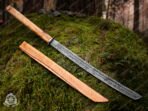
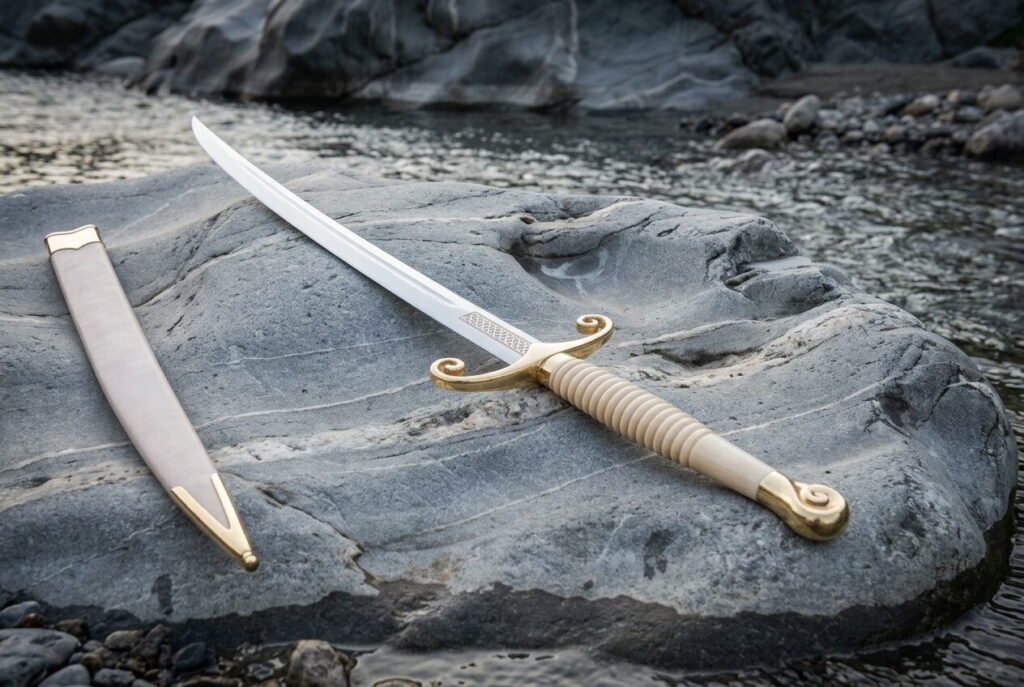
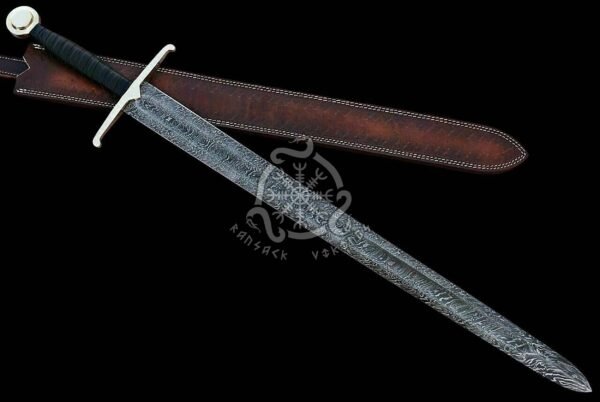
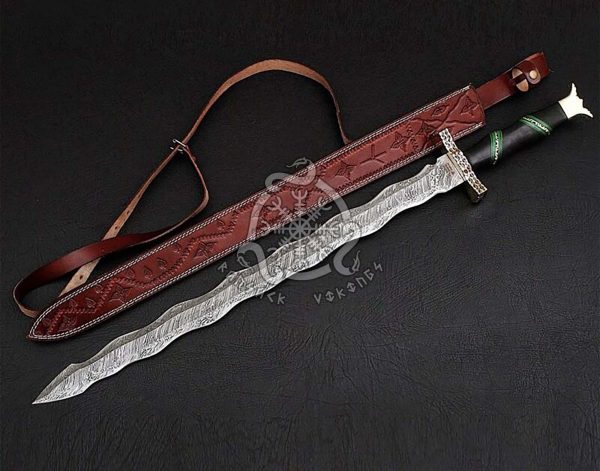
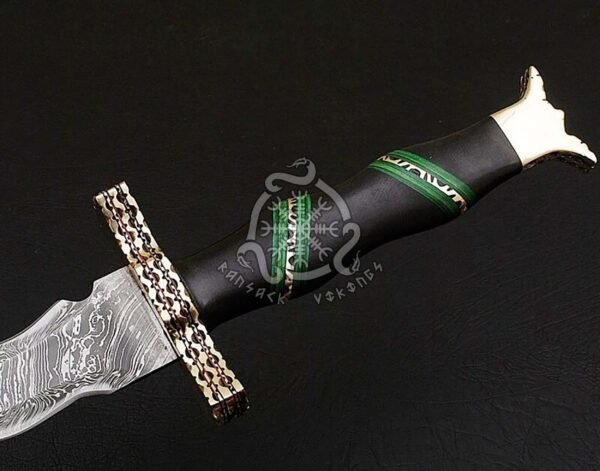
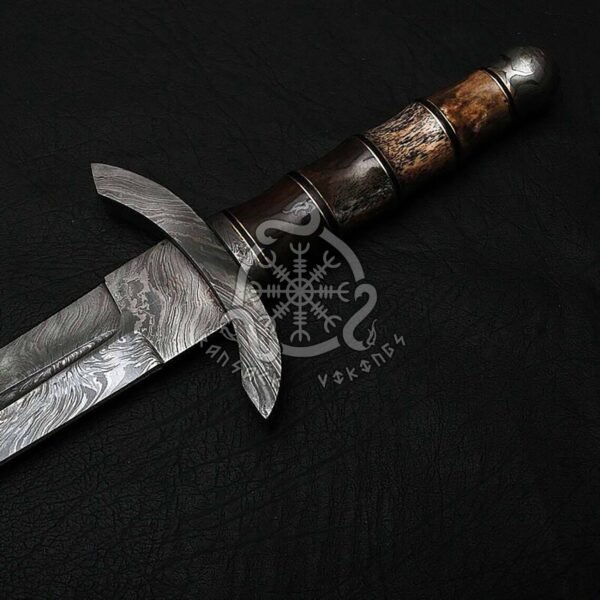
Drakefang is a hand forged Damascus katana with a 352 layer blade oil tempered to 58 to 60 HRC, an olive burl wood grip, a brass guard and a mosaic pin, carried in a matching olive burl wooden sheath. It runs 32 inches overall with a 22 inch blade and a 10 inch handle, and weighs 35 oz. It is built as a collector and display sword, and it is balanced so it does not feel dead when you pick it up. The construction, the curve and the names of the parts are set out in what a katana actually is.
The curve on a Japanese sword has a name, sori, and the interesting part is that traditionally it was not forged in. It appeared during the quench. A Japanese smith coated the blade in clay, thin along the edge and thick along the spine, and when the hot blade went into the water the thinly coated edge cooled first and hardened into martensite, which occupies more volume than the softer steel behind it. As the spine cooled and contracted afterwards, the whole blade bent backwards into its curve on its own. The smith set the shape by controlling how the clay was laid on. Very few objects are shaped by their own heat treatment, and it is one of the reasons the katana became the most studied sword in the world.
Everything here is forged, ground, fitted and finished in the Czech Republic, and it ships free within the United States in its wooden sheath.
Specifications
| Steel | Hand forged Damascus, 1095 and 15N20 forge welded |
|---|
| Damascus layers | 352 layers |
|---|
| Hardness | Oil tempered to 58 to 60 HRC |
|---|
| Overall length | 32 inches |
|---|
| Blade length | 22 inches |
|---|
| Handle length | 10 inches |
|---|
| Weight | 35 oz |
|---|
| Handle | Olive burl wood with brass guard and mosaic pin |
|---|
| Sheath | Olive burl wooden sheath included |
|---|
| SKU | RK-345 |
|---|
Why the curve, and what this blade is and is not
The curve is not decoration and it is not about looking fast. A curved edge cuts by drawing. When a straight blade meets a target it has to push the edge through the material, so all the work is done by the force behind it. A curved blade presents only a short section of edge at a time and, as the arc continues, that contact point travels along the edge, so the blade slices along its own length while it advances. The effect is the same one you use when you draw a kitchen knife back through a tomato instead of pressing straight down. Everything else about the traditional Japanese sword follows from that: the long two handed grip that lets the blade be pulled through the cut, the single edge, the thick spine carrying the mass.
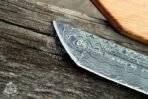
Now the honest part, because collectors deserve it. This blade is forge welded Damascus, oil tempered through its section to 58 to 60 HRC. It is not a clay quenched tamahagane blade with a differentially hardened edge, and the line you can see in the steel is a pattern welded layer structure, not a hamon. A through hardened blade is more uniform and considerably more forgiving of being handled and displayed than a differentially hardened one, and it will not have the soft spine that lets a traditional blade bend rather than break. It is also worth noting the proportions: at 22 inches the blade sits at the short end for a katana and closer to the length a Japanese collector would call a wakizashi, which makes it easier to handle indoors and easier to display than a full 28 inch blade. Buy it as what it is, a hand forged patterned display and collector sword, and it is an honest piece of work.
Why Damascus and not stainless
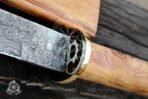
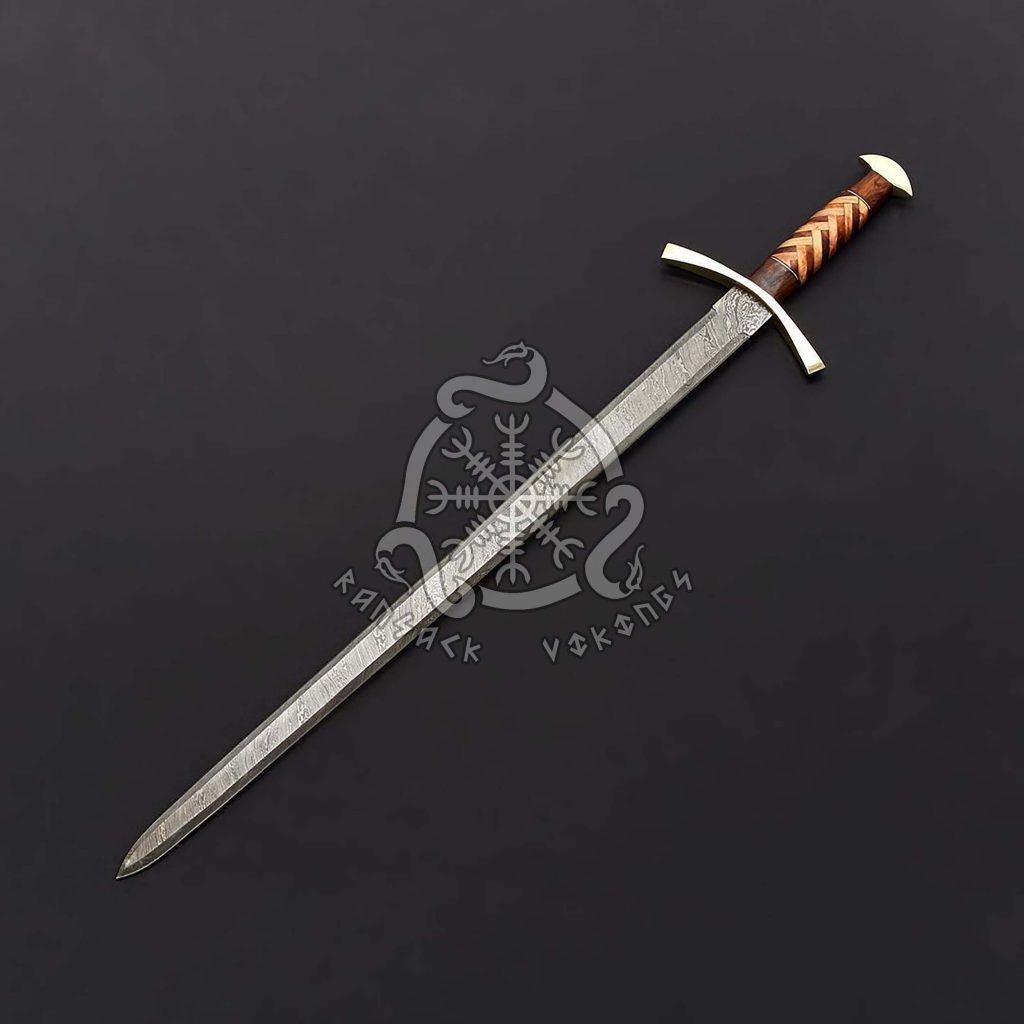
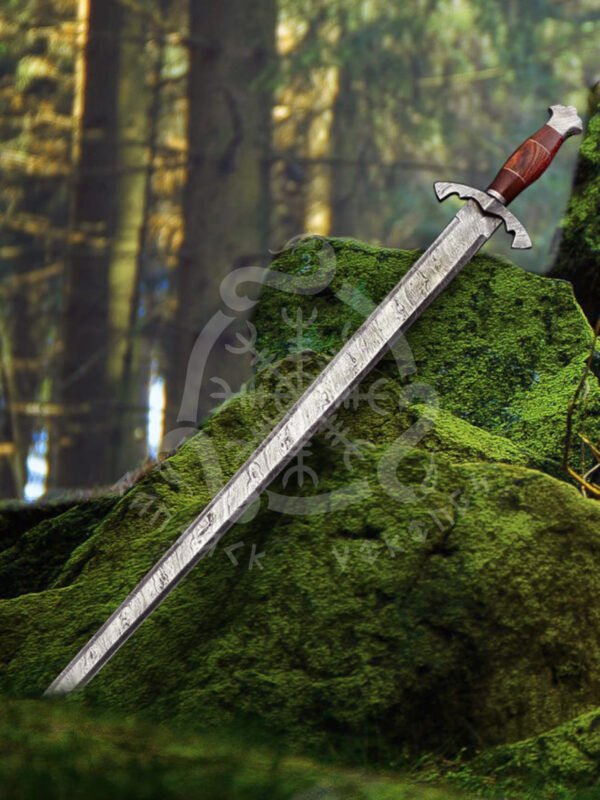
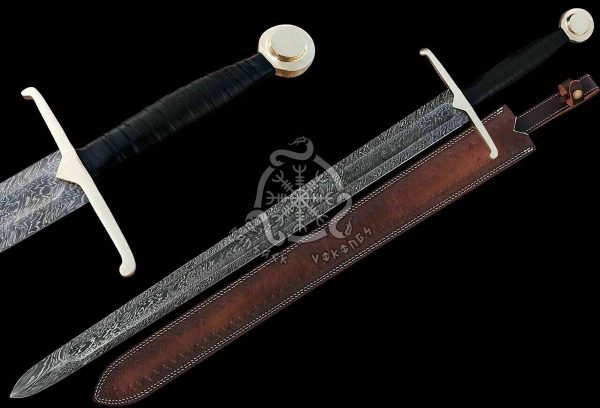
The blade is built from alternating layers of 1095 high carbon and 15N20 nickel steel, forge welded into one bar and folded down to 352 layers before the shape is cut from it. Because the layers run through the steel rather than across the surface, grinding the bevel reveals the pattern instead of removing it, and no amount of polishing will take it off.
Stainless would be the low maintenance choice, and on a sword that spends its life on a wall that argument has some force. It is still the wrong choice here for two reasons. Stainless of the kind used in decorative swords is generally left soft, because hard stainless in a long thin section is brittle, and a soft blade holds no edge and dents easily. And a stainless blade cannot carry a real forge welded pattern, so what you get instead is usually an etched or printed imitation. Carbon Damascus asks for a wipe of oil two or three times a year and gives you a hard edge and a pattern that is structural. The comparison is set out in Damascus versus stainless, and the reasoning behind pairing those two steels is in 1095 and 15N20.
The olive burl handle and sheath
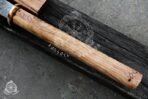
Burl is not a species, it is a growth. It forms where a tree has responded to injury, infection or stress by producing a dense knotted mass of dormant buds, and when that mass is cut and finished the grain runs in every direction at once, which is what produces the swirling figure. Because it is disordered, burl is harder to work and more likely to move than straight grained timber, and it is also the reason no two pieces look remotely alike. Olive adds warm yellows and browns with dark veining running through the swirl.
Both the grip and the sheath here are cut from olive burl, with a brass guard and a mosaic pin through the handle. Burl wants stable conditions more than most timber, so keep the sword out of direct sun and away from a radiator or an air conditioning vent, and give both grip and sheath a light coat of mineral or tung oil once or twice a year to keep them from drying and checking. The routine is in wooden handle care.
Engraving, runes and your own design
Use the rune converter on this page to turn a name, a date or a short phrase into Elder Futhark and we will cut it into the steel or the handle. If you would rather have a Viking pattern than a rune line, choose your own design in the engraving option above the add to cart button and tell us whether it goes on the blade or the handle. Where a piece already carries an engraved design, your chosen engraving replaces it rather than sitting alongside it. On a blade this long there is more room than on any other piece we make, so a full rune line along the flat above the edge is possible, and dates and names are commonly cut near the guard. Placement and lettering sizes are on the engraving page.
Care and sharpening
Left wet this blade will spot. Dried and lightly oiled it will look the same in twenty years. Wipe the blade down with a clean cloth and a thin film of mineral or camellia oil two or three times a year, more often if you handle it regularly, because skin leaves salt and moisture on steel. Do not store it long term in a tight wooden sheath in a humid room, since wood holds moisture against the blade. Pull it out occasionally and let both breathe.
Sharpening a long blade is the same work as sharpening a short one, done in sections with a consistent angle and light pressure. Work from the guard towards the tip in overlapping passes and keep the stone wet. Method in sharpening with a whetstone, and rust, patina and oils in steel care.
Made in the Czech Republic
Every piece we sell is made by hand in the Czech Republic. The smiths there work the way the trade has been worked for a long time, heating and hammering the steel, taking the bevels down by eye, and fitting the handle and the leather one at a time. There is no automated line anywhere in it, so small differences from one piece to the next are normal and expected.
Ransack Viking is a United States company based in Memphis, Tennessee. We bring the pieces in ourselves, inspect them on arrival and ship them from our own warehouse. If you add engraving, that is carried out here in the United States before your order goes out.
A note on handmade variation
This sword is hand forged. It is not machine made and it is not bulk produced, so the piece that arrives will not be a pixel for pixel copy of the photograph on this page. A 352 layer billet moves under the hammer in a way that cannot be repeated, so the pattern along your blade is unique to it. Olive burl is about as variable as a natural material gets, and the grip and sheath on your sword will carry their own swirl, their own colour and their own dark veining. The mosaic pin is set by hand, and the polish on the brass guard is worked by hand.
What does not vary is the specification. The dimensions are the same every time, the steel is the same every time, the heat treat is the same every time and the build is the same every time. Only the character changes, which on a collector piece is the entire point.
Frequently asked questions
Is this a functional sword or a display piece?
It is built for collectors, display and reenactment. The steel is real forge welded Damascus, hardened and sharpened, and the proportions follow the originals, but it is not sold as a cutting practice sword and we would not recommend using it for tameshigiri or against hard targets.
Does it have a real hamon?
No, and we would rather say so. The line in the steel is the pattern welded layer structure of the Damascus. A hamon comes from clay coating and differential quenching, which is a different process. This blade is oil tempered through its section to 58 to 60 HRC.
Why is the blade 22 inches rather than a full length katana blade?
It sits at the short end of the range, closer to the length a Japanese collector would call a wakizashi. In practice that makes it much easier to handle indoors and to display on a stand or a wall, which is what most buyers of this piece want.
Is the wooden sheath a tight fit?
It is cut to the individual blade, so it holds without rattling. Because both are wood and steel in a natural material, do not store it sheathed in a damp room for months at a time.
Can a name and date be engraved near the guard?
Yes, and it is one of the most common requests on this sword. The flat above the edge will also take a full Elder Futhark line, which there is not room for on a shorter blade.
How long does it take to arrive and can it be returned?
Processing is one to two weeks plus transit, free within the United States, and returns are open for 7 days from delivery.
What is in the box
- One Drakefang Damascus katana, 32 inches overall
- Matching olive burl wooden sheath
- Protective packaging
- Forged and finished in the Czech Republic
Explore the range
Related swords sit in katana and Japanese swords, Damascus swords, wakizashi and swords. The steel, the heat treat and the fittings are explained in the guides.








Reviews
There are no reviews yet