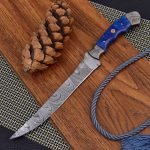
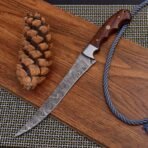
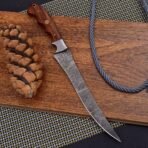
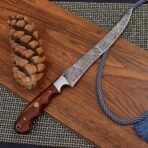
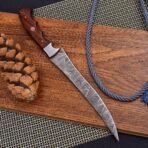
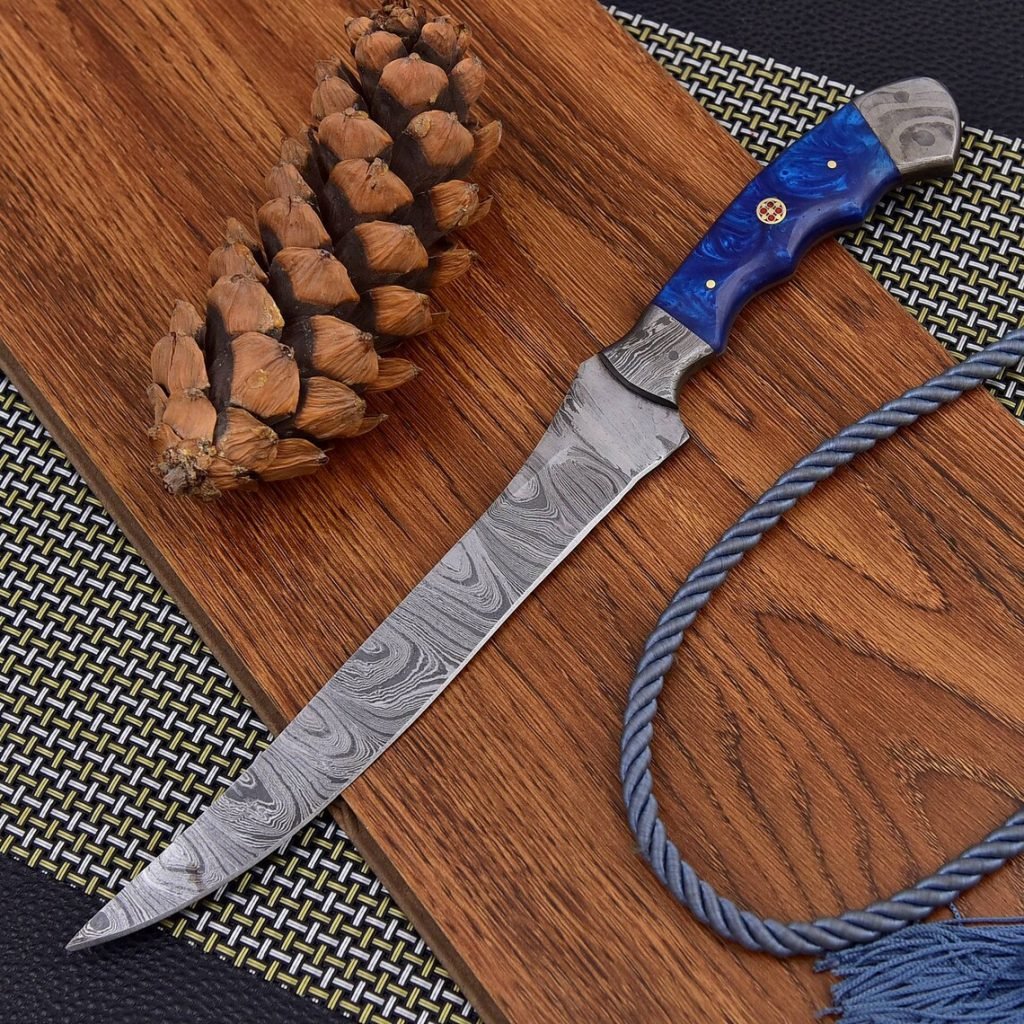
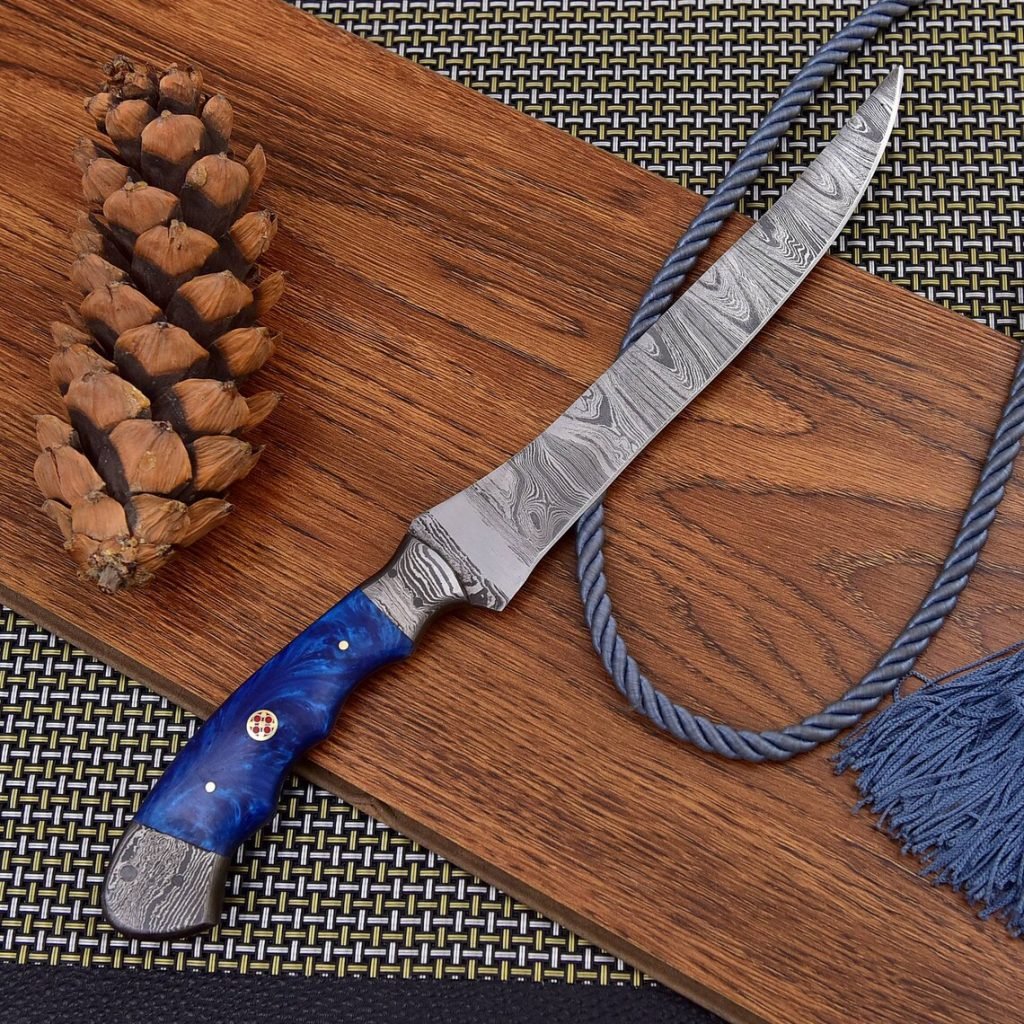
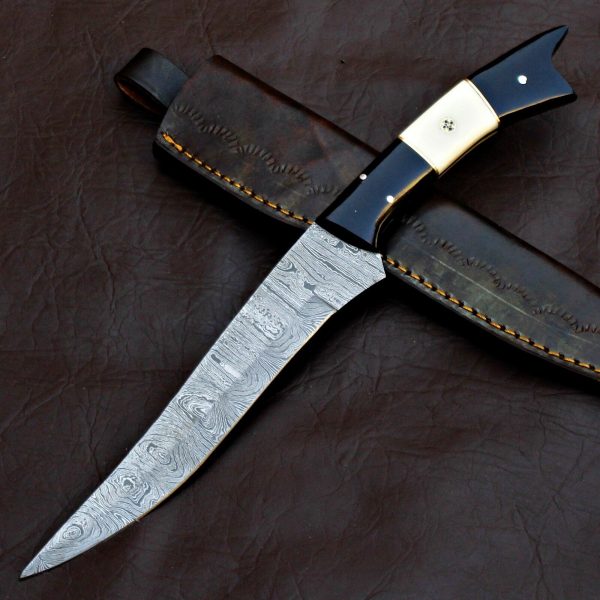
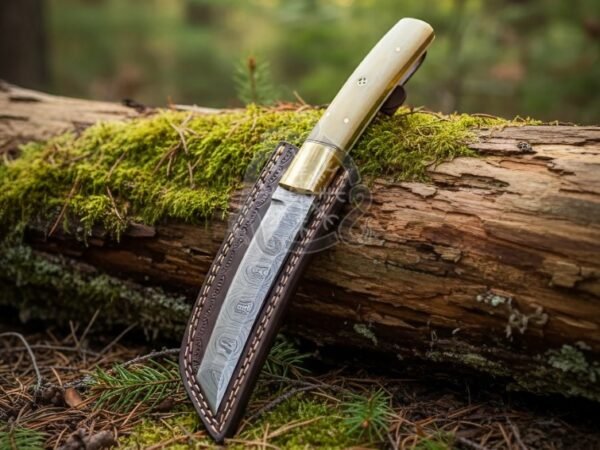
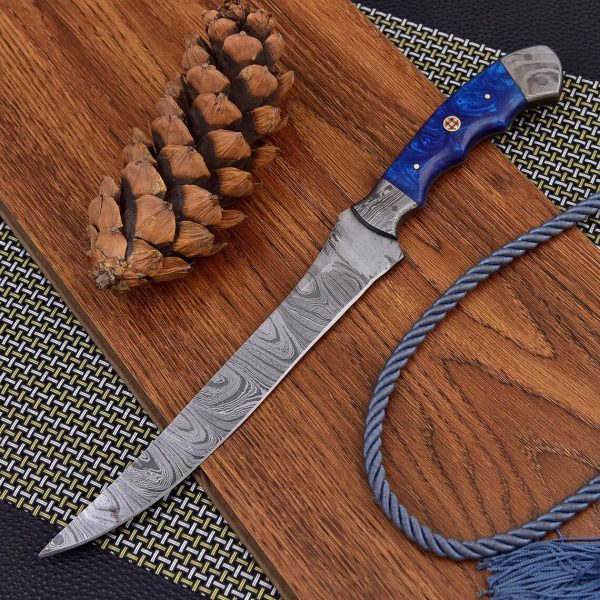
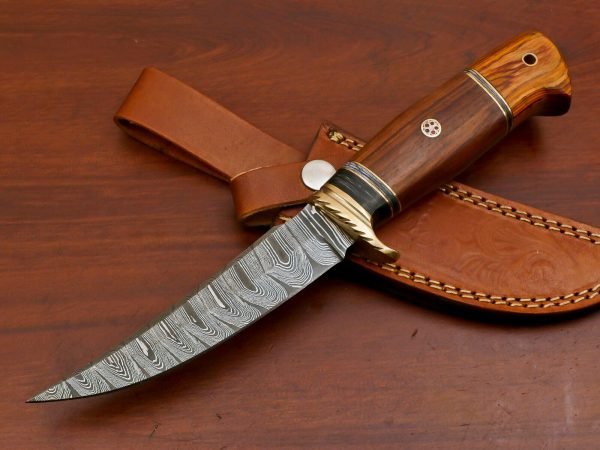
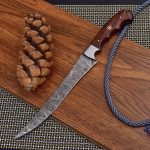
A fillet knife is judged on one thing above all others, and that is how it bends. The Streamwood carries an 8.0 inch flexible fire pattern Damascus blade, 393 layers deep, on a 5.0 inch wood handle, for 13.0 inches overall. Narrow, thin behind the edge, and ground so the blade follows a rib cage instead of arguing with it.
The dedicated fillet knife is a surprisingly recent thing. For most of history fish were cut with whatever short blade was to hand, and the long thin flexible blade only became standard as commercial fishing and restaurant kitchens turned filleting into a repeated production task where seconds and yield mattered. The moment somebody counted how much flesh a stiff knife leaves behind on the frame, the flexible blade became inevitable. That is the whole logic of the shape: it exists to waste less fish.
This one is forged, hardened, ground and fitted in Memphis, Tennessee, and it ships sharpened in a fitted leather sheath, with free shipping inside the United States.
Specifications
| Steel | Hand forged Damascus, 1095 and 15N20 forge welded |
|---|
| Hardness | 58 to 60 HRC |
|---|
| Damascus layers | 393 layers |
|---|
| Pattern | Wind and mix twist fire pattern, flexible blade |
|---|
| Overall length | 13.0 inches |
|---|
| Blade length | 8.0 inches |
|---|
| Handle length | 5.0 inches |
|---|
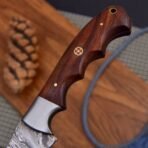
| Handle | Wood |
|---|
| Sheath | Leather sheath |
|---|
| SKU | RK 480 |
|---|
Flex, and why it is the whole point of the shape
Filleting is a tracing job. You put the edge against the backbone and run it out to the tail, and every fraction of an inch you leave behind stays on the frame and goes in the bin. A stiff blade cannot follow the curve of a rib cage, so it either rides high and wastes flesh or digs low and cuts bone. A blade with the right amount of flex bends around the skeleton under light pressure and comes back straight.
The word that matters is right. Too little flex and you are back to a boning knife. Too much and the blade wanders, because a floppy blade goes where the fish pushes it rather than where you steer it. The balance comes from three things working together: a narrow profile, a thin cross section, and a steel tough enough to be ground thin without becoming fragile. Get all three and the blade is springy in the last few inches and progressively stiffer as you move back toward the handle, which is exactly what you want. Your hand controls the direction near the heel, the tip does the tracing.
Eight inches suits medium and large fish, salmon, big lake trout, striped bass, redfish and anything else where the run from gill to tail is longer than a small knife can cover in one stroke. Skinning a fillet is where the length pays off most obviously, because a single unbroken pass leaves a much cleaner surface than three short ones. The same blade doubles as a boning knife for poultry.
Why Damascus and not stainless
This is forge welded Damascus, two carbon steels bonded at welding heat and worked down together to 393 layers. The pattern is structural, not printed, and it survives every sharpening the knife will ever get.
A fillet blade has to be thin, and thin steel has nowhere to hide. That is where the pairing earns its keep. The 1095 gets hard at 58 to 60 HRC, which is what lets a thin edge stay sharp through the abrasive skin and scales that kill soft blades quickly. The 15N20 brings nickel and toughness, which is what allows the blade to be ground thin enough to flex without becoming a piece of glass. The honest cost is corrosion resistance, and this matters more on a fishing knife than anywhere else in the catalogue, because salt water and fish blood are both aggressive. Rinse it in fresh water and dry it before you leave the dock and you will have no trouble at all. The full comparison is in Damascus versus stainless.
The wooden handle
A fillet knife is used with wet, cold, slippery hands more consistently than any other knife anybody owns, so the handle matters as much as the blade. Wood is the right answer for the same reasons it has always been the right answer. It does not pull heat out of your palm the way steel or a cold synthetic does, and when it is damp it develops a slight tack rather than going glassy.
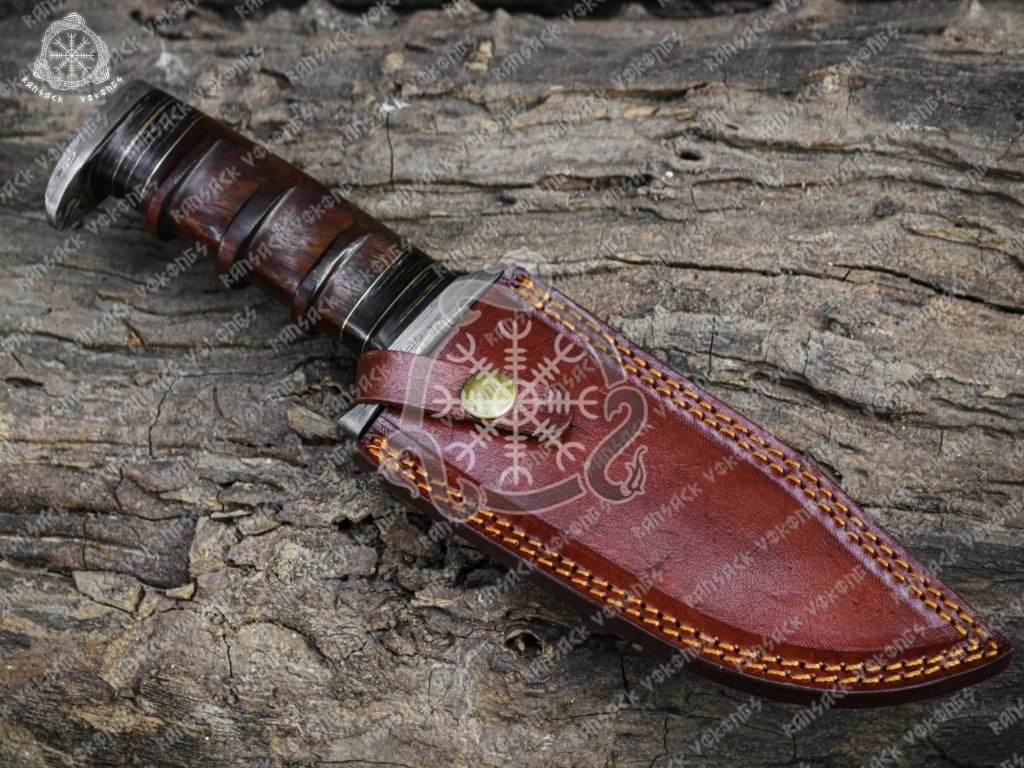
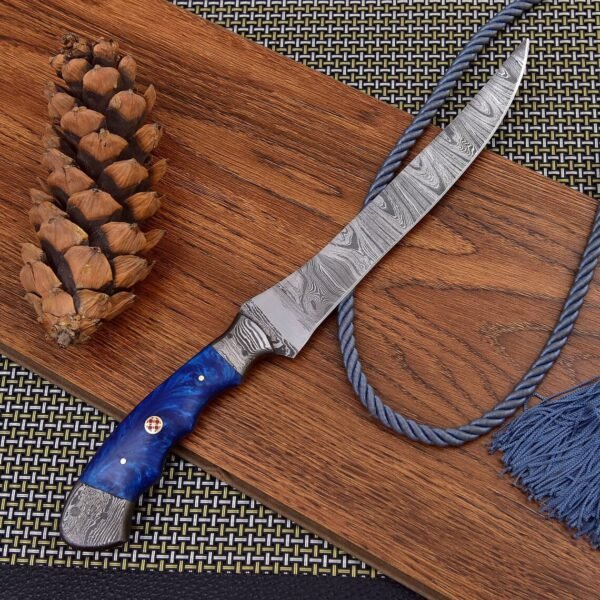
Every handle is shaped from a different piece of timber, so the grain, the figure and the colour vary from one knife to the next. Keep it out of prolonged soaking, wash and dry it rather than leaving it in a sink, and feed it with a wipe of food safe mineral oil once or twice a year so it stays sealed against water. The routine is written up in wooden handle care.
Engraving, runes and your own design
Use the rune converter on this page to turn a name, a date or a short phrase into Elder Futhark and we will cut it into the steel or the handle. If you would rather have a Viking pattern than a rune line, choose your own design in the engraving option above the add to cart button and tell us whether it goes on the blade or the handle. Where a piece already carries an engraved design, your chosen engraving replaces it rather than sitting alongside it.
On a narrow fillet blade a short rune line runs neatly along the flat above the grind, and longer text usually reads better on the wood. This is a common retirement and anniversary gift for anglers, which is why most of these leave the shop with something cut into them. All engraving is done here before packing. See the engraving page.
Care and sharpening
The rule for a fishing knife is stricter than for the rest of the range. Rinse it in fresh water after every session, especially after salt, dry it completely including the area right at the guard, and put a thin film of food safe mineral oil on the steel before it goes away. Never leave it in a closed sheath wet.
Sharpen at a shallow angle, around fifteen degrees per side, because a fillet blade lives or dies on how thin the edge is. Support the flexible section with your fingers as you work so the blade does not spring away from the stone, use light pressure, and finish on a strop. A 1000 grit stone is plenty. Full method in steel care and sharpening with a whetstone.
Forged in Memphis
This was made in our Memphis, Tennessee workshop. One smith takes it from bar stock through forge welding, quench, temper, grinding, handle fitting and sharpening, and the sheath is cut and stitched to this finished blade. Nothing is drop shipped from an importer catalogue.
Processing runs one to two weeks because each piece is genuinely made, engraved orders sit at the longer end, shipping inside the United States is free, and returns are open for seven days from delivery.
A note on handmade variation
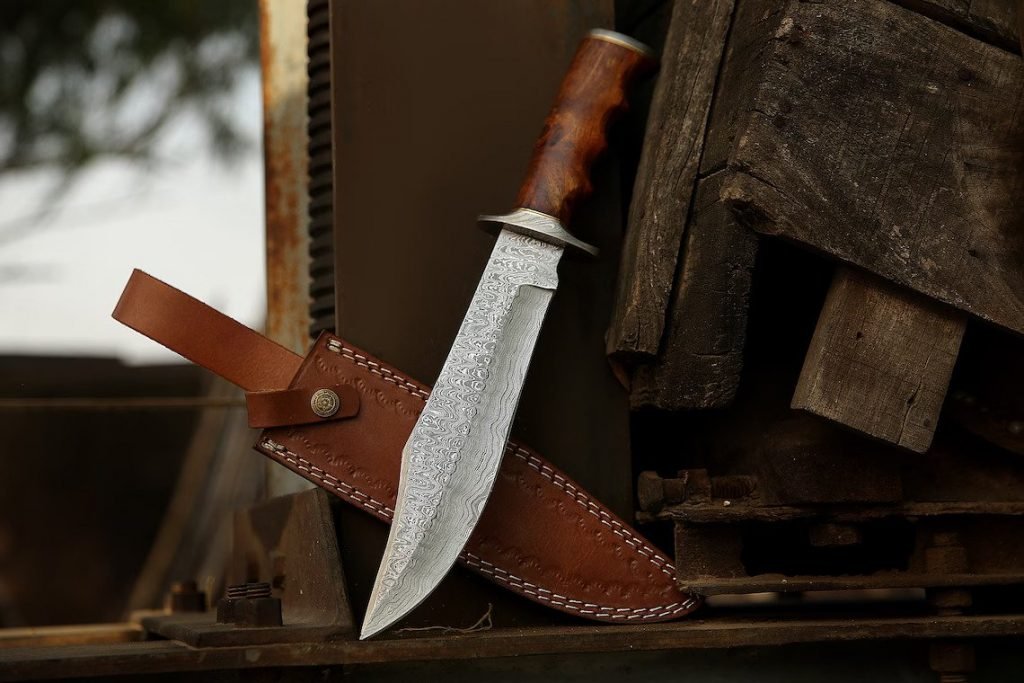
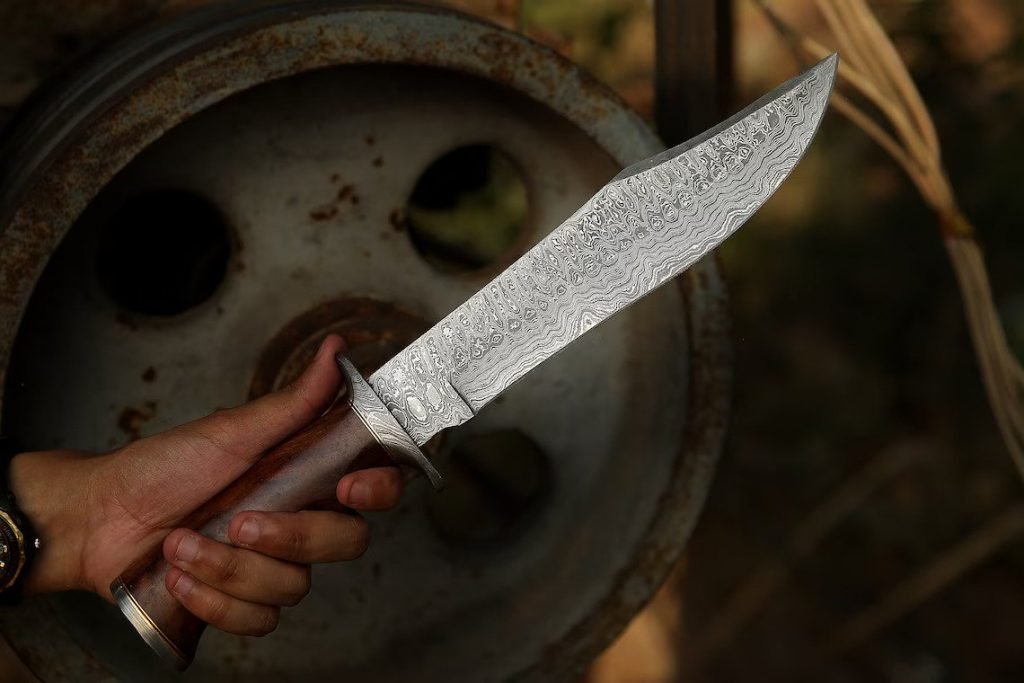
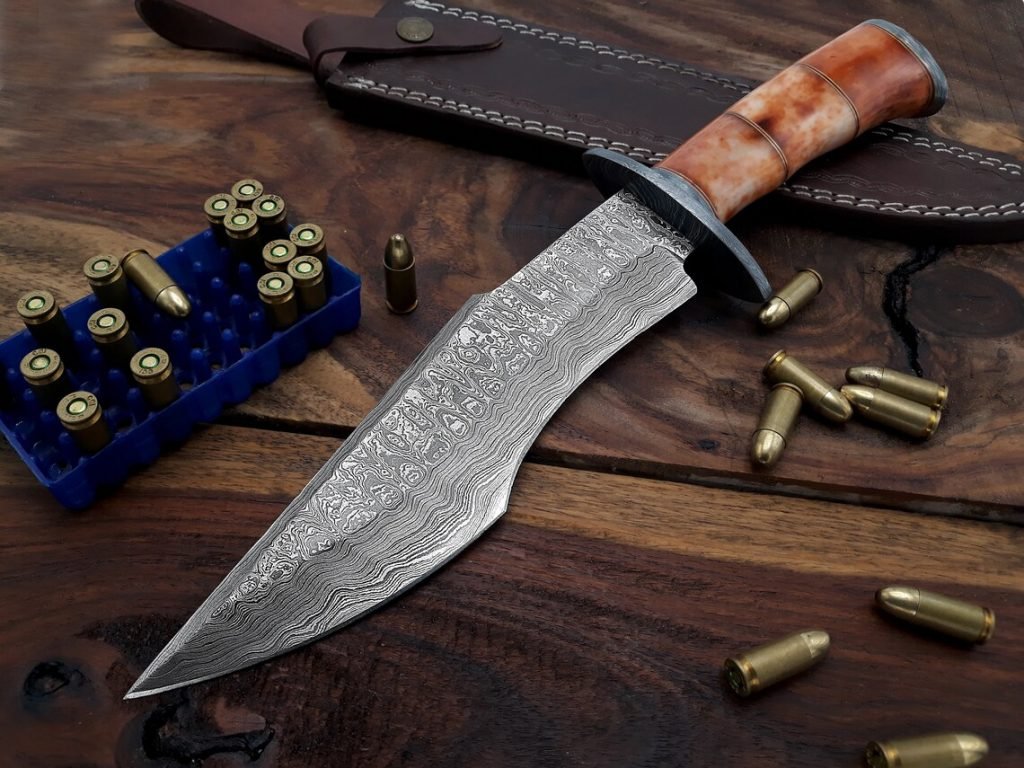
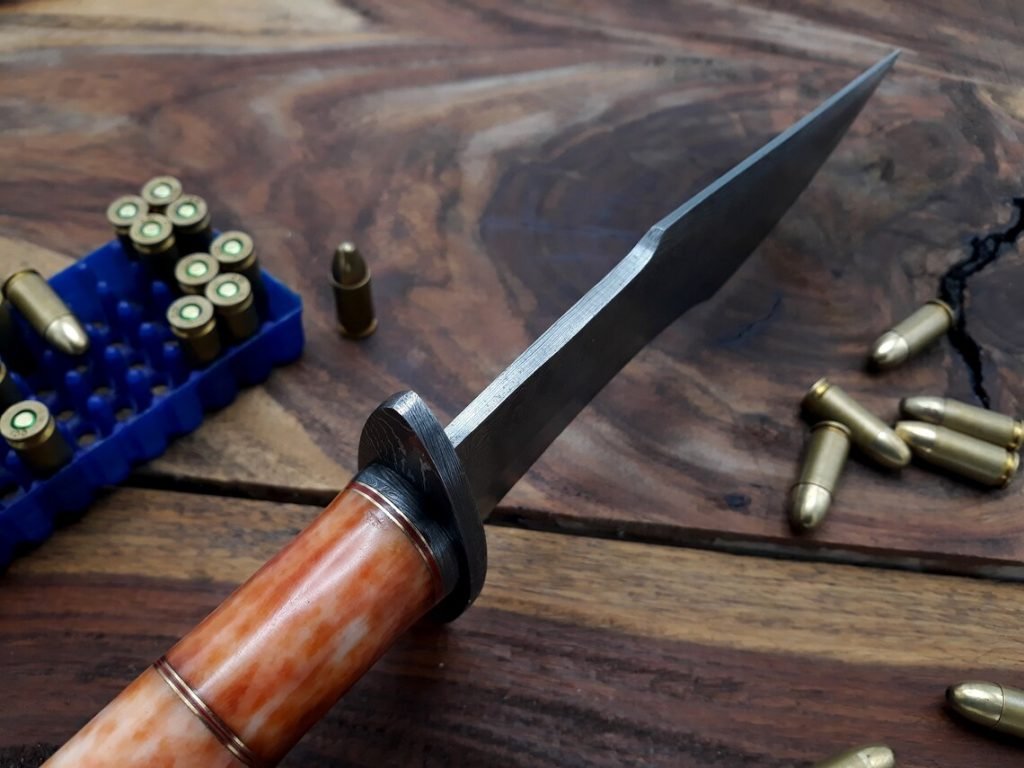
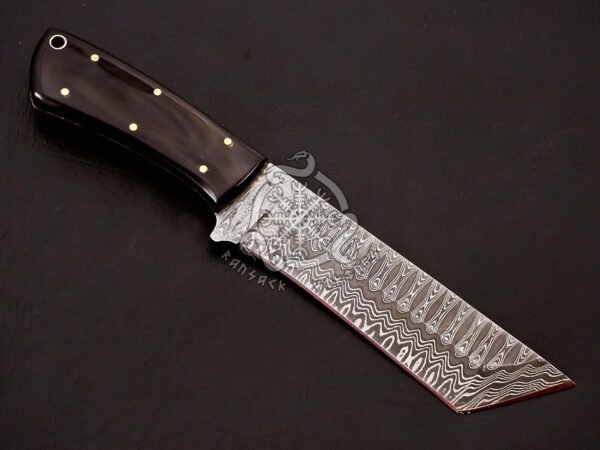
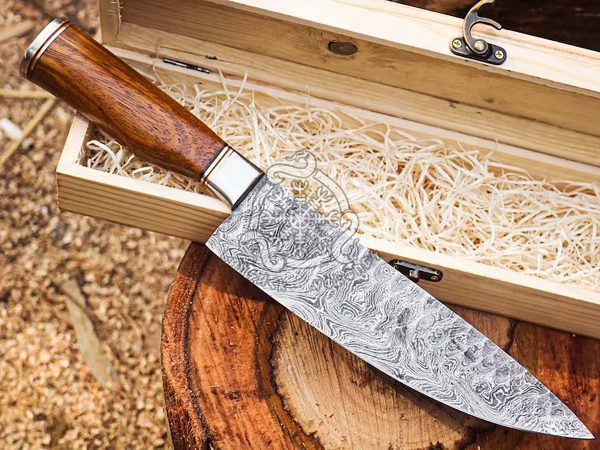
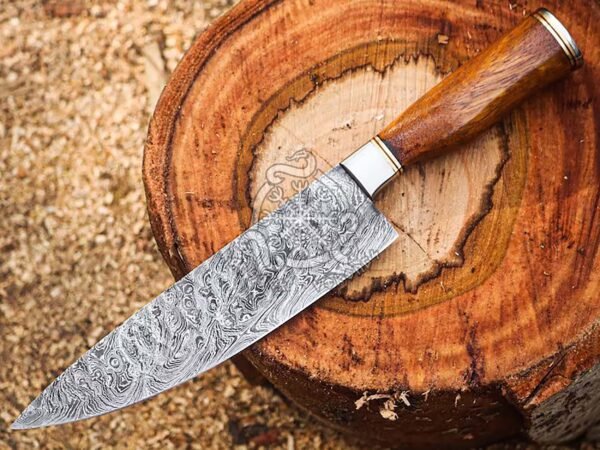
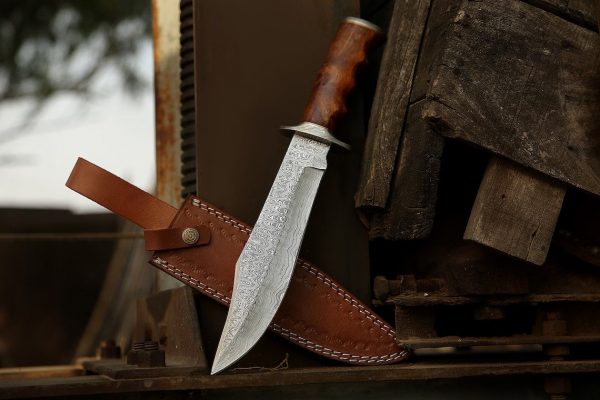
This fillet knife is hand forged. It is not machine made and it is not bulk produced, so the piece that arrives will not be a pixel for pixel copy of the photograph on this page. The Damascus figure is different in every billet and the handle is cut from a different piece of timber, so the grain, the tone and the exact profile of the grind will be their own.
The dimensions, the steel, the layer count, the hardness and the build are the same on every one. The character is not, because each is worked by hand from natural materials. A factory can promise identical. A forge can only promise consistent.
Frequently asked questions
How much does the blade flex
Enough to bend around a rib cage under light hand pressure and spring straight again, with most of the movement in the front half of the blade. It is not a wire thin filleting blade that whips about, and it is not a stiff boning knife. It sits where a fillet blade should.
Can I use it on saltwater fish
Yes, provided you rinse it in fresh water and dry it before it goes away. Carbon steel and salt do not get on, and no amount of oil will fix a knife left wet with brine overnight. Treated properly it will handle saltwater work for decades.
Is 8 inches the right length for me
It suits medium to large fish and long clean skinning passes. If you mostly work panfish, crappie and small trout, a shorter blade will feel more controllable. If you are filleting salmon, bass and big lake fish, this length saves you strokes and yields cleaner fillets.
Is it full tang
Yes. The tang runs the full profile of the handle with the wood fitted either side. On a flexible blade this matters more than usual, because the handle joint is where the load concentrates when the blade bends.
Will the patina spoil it
No. Carbon steel used on fish will grey over time, and that patina is stable and mildly protective. Active orange rust is a different thing and only appears if the blade is stored wet. If you want to keep the pattern bright, dry and oil it every time.
How soon will it arrive
Processing is one to two weeks while the piece is forged and finished by hand, plus transit, with engraved orders at the longer end. Shipping inside the United States is free and returns are open for seven days after delivery.
What is in the box
- One Streamwood Damascus fish fillet knife
- Leather sheath
- Protective packaging
- Forged and finished in Memphis, Tennessee
Explore the range
Look through Fish Fillet Knives, Chef Knives and Hunting Knives. Deeper reading sits in the guides.









Reviews
There are no reviews yet