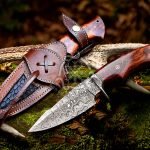
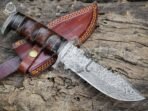
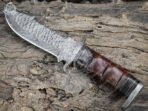
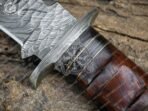
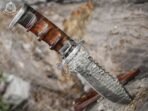
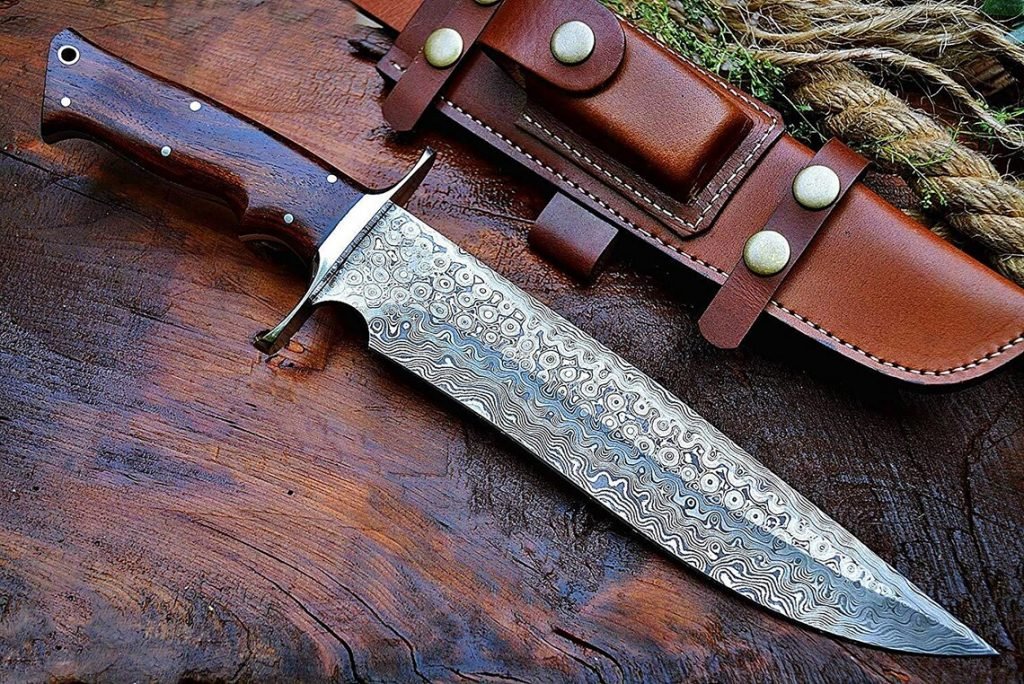
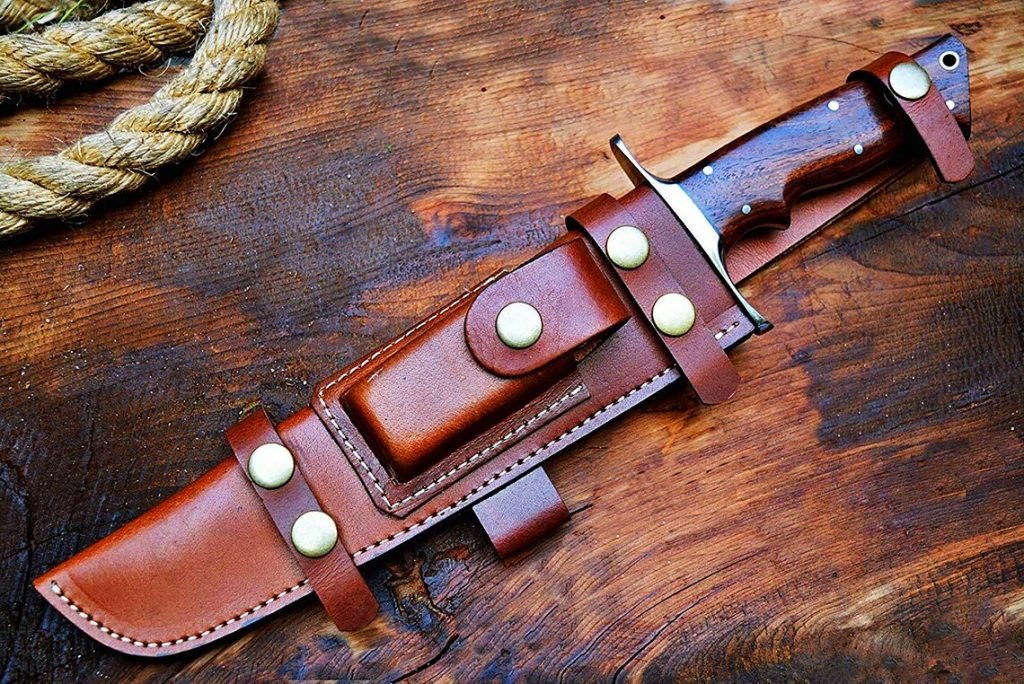
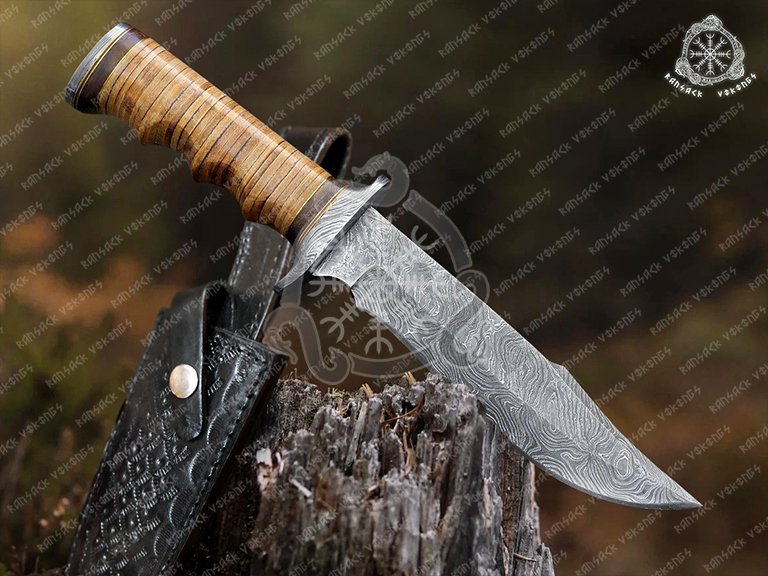
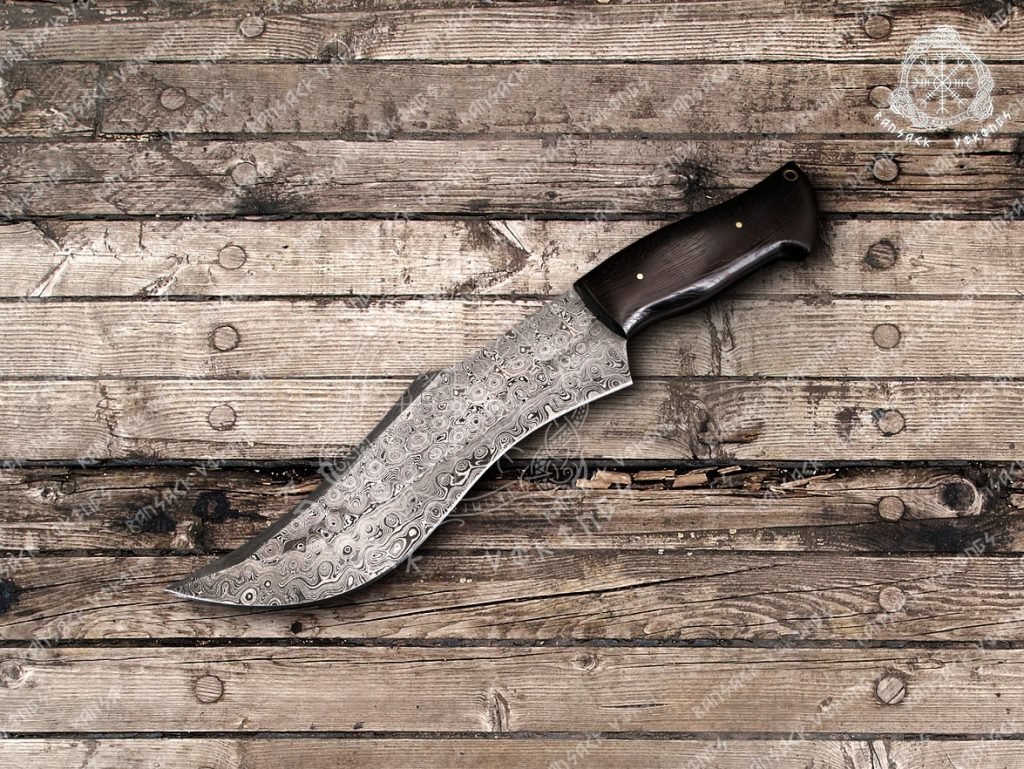
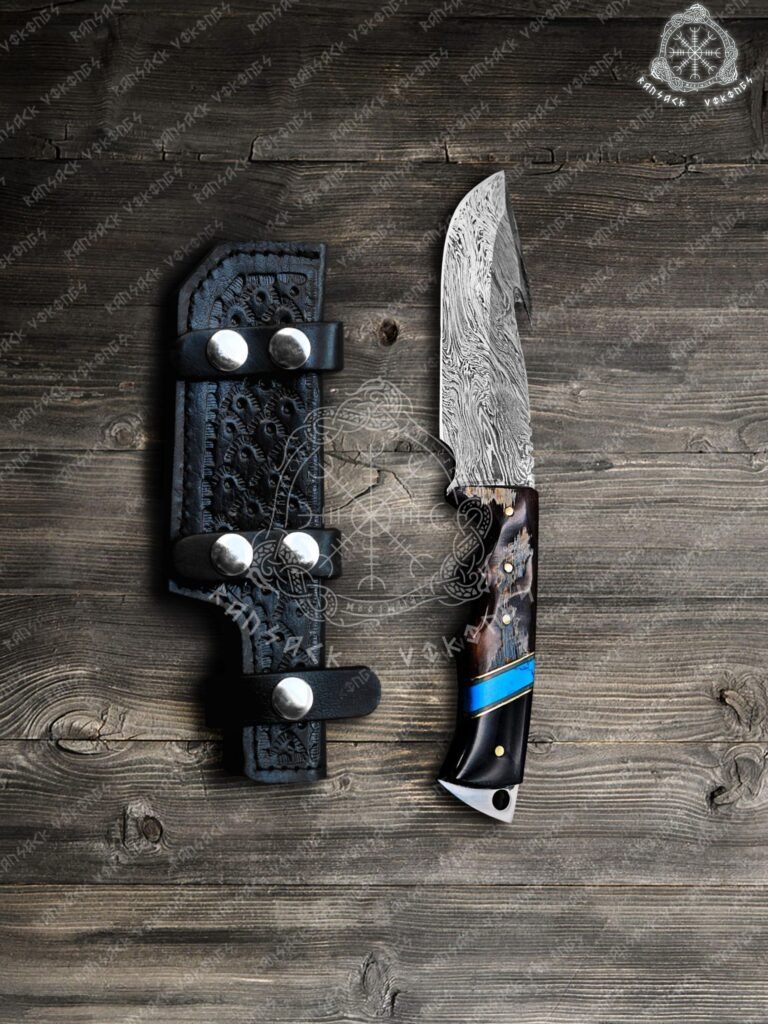
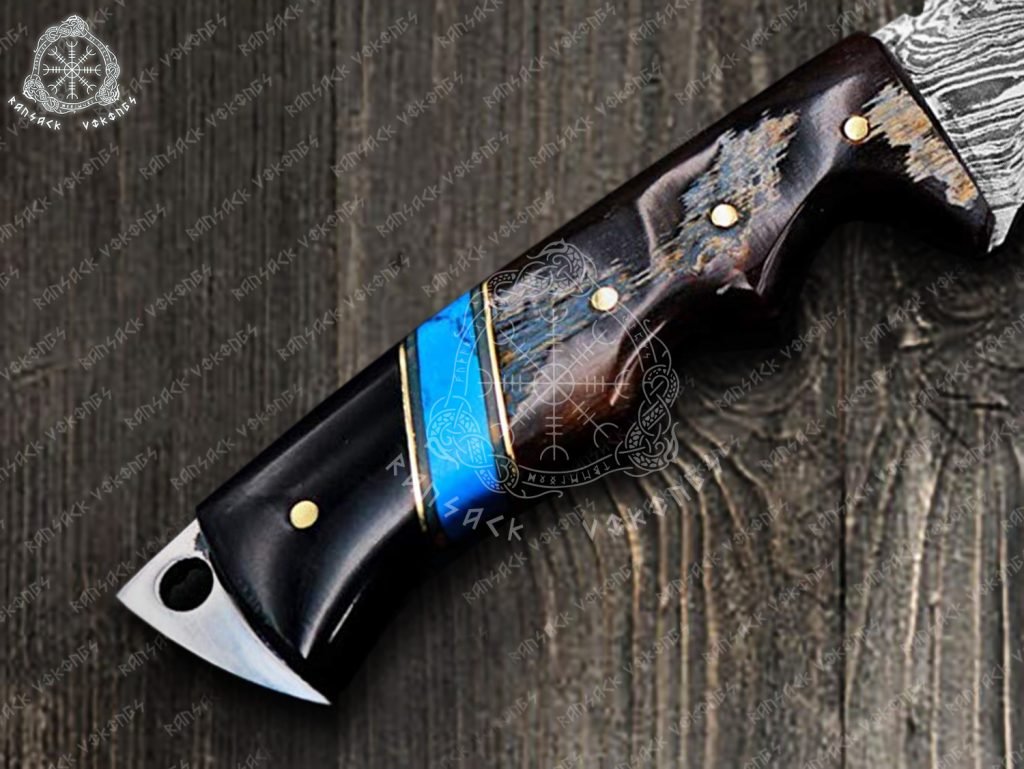
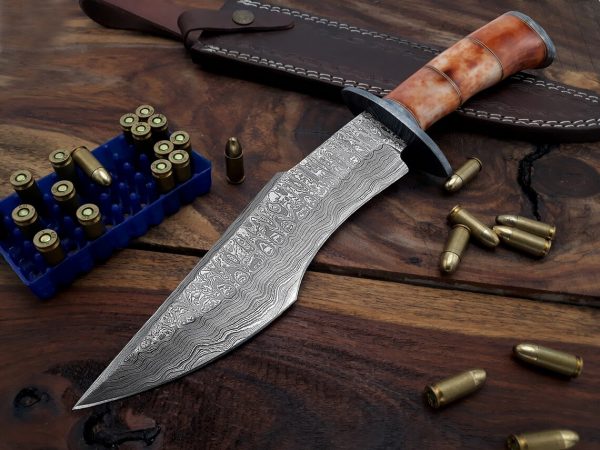
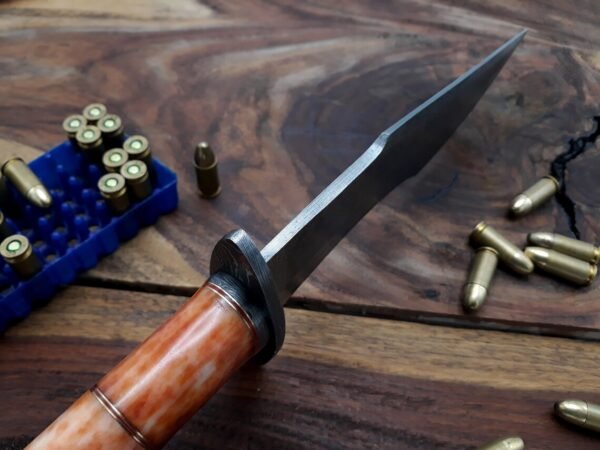
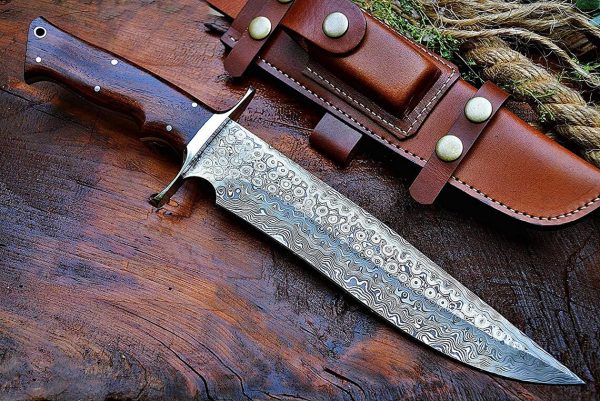
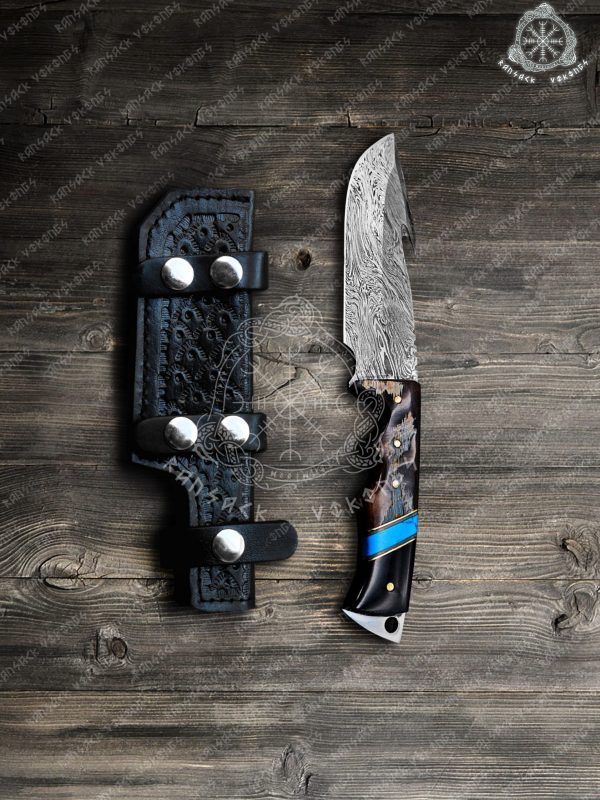
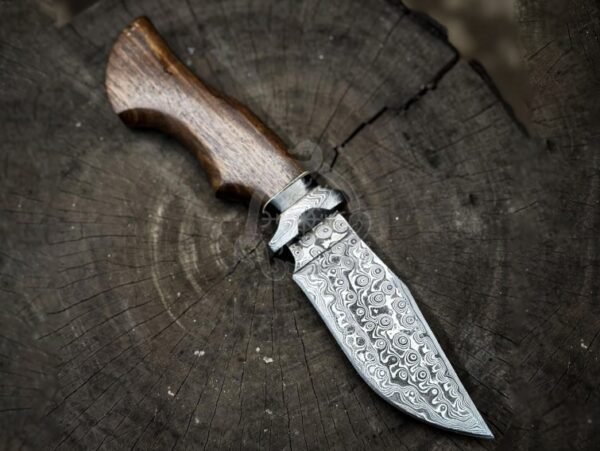
There is nothing stamped about the Vampire. The Damascus blade is drawn out under the hammer, the stabilized wood handle is fitted to a full tang with fibre and brass spacers, and the knife is finished before it is boxed. It measures 11 inches overall with a 6 inch blade and a 5 inch grip, and weighs 9.5 oz.
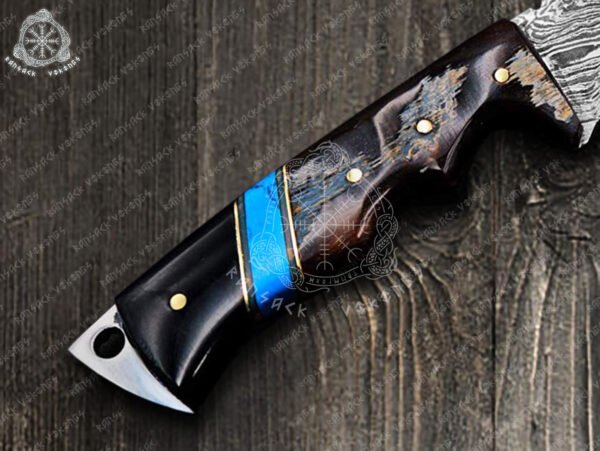
Stabilized wood is worth understanding, because the word gets used loosely and here it means something specific. A dry timber blank is put into a chamber, the air is pulled out of it under vacuum so the cell structure is emptied, and a thin liquid acrylic resin is then forced into those cells under pressure. The blank is heat cured and the resin sets inside the wood. What comes out is a hybrid: it still has the grain and the figure of the original timber, but it no longer swells, shrinks, absorbs water or moves with humidity, and it is considerably harder than it was. It can also be dyed during the process, which is where the deep colours come from. For a knife that will get wet and then dry out repeatedly, that is not a cosmetic upgrade, it is the difference between scales that stay flush with the tang and scales that eventually proud up at the edges.
The knife is forged, ground and handled in Memphis, Tennessee, and ships free within the United States with the edge already set.
Specifications
| Steel | Hand forged layered Damascus, 1095 and 15N20 forge welded |
|---|
| Hardness | 58 to 60 HRC |
|---|
| Overall length | 11 inches |
|---|
| Blade length | 6 inches |
|---|
| Handle length | 5 inches |
|---|
| Weight | 9.5 oz |
|---|
| Handle | Stabilized wood with fibre and brass spacers, full tang |
|---|
| SKU | RK 330 |
|---|
Where a 6 inch skinner sits, and what it does better
Skinning knives are usually short, and there is a good reason for it. Most of the work is close, controlled and done with the belly of the blade rolled against the underside of a hide. So a 6 inch skinner is a deliberate choice at the large end of the type, and it changes what the knife is good at.
What the extra length buys you is sweep. On a large animal, an elk, a big hog, a cow, the hide runs in long panels and the releasing cuts are long. A 4 inch blade makes those in a series of overlapping strokes. A 6 inch blade makes them in one, and every time you stop and reposition is a chance to nick the hide or lose the plane you were working in. Length also helps when you move from the hide to the carcass, because separating large muscle groups and working around a hip or a shoulder joint is exactly the job a long belly does well.
What it costs you is fine control. Caping around a head, working the feet and cleaning up around the tail all want a short blade, because you can feel what the tip is touching. Nobody caps a deer with 6 inches of steel by choice.
The other place this length earns its keep is in camp. With 6 inches of hardened Damascus and a full tang, it does the food prep, the cordage and the general heavy cutting that a short specialist skinner is too small for. That is why it is listed as a hunting and camping knife rather than a pure hide tool.
The full tang is not a marketing line on a blade this size. Skinning and camp work both load a knife sideways rather than straight down the spine, and a partial tang glued into a block is at its weakest in that direction. Here the steel runs the full length and width of the handle with the scales pinned to either side, and the brass and fibre spacers sit between the scales and the bolster area, so the load is carried by steel throughout.
Why Damascus and not stainless
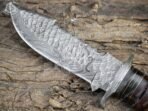
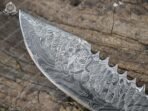
Forge welded from 1095 and 15N20, this blade carries a pattern that goes all the way through the steel. Printed and laser etched blades look similar in a photograph and vanish under a file. The two steels are paired because they harden compatibly and because they take an acid etch differently, which is what makes the light and dark layers show.
Hardened to 58 to 60 HRC, it holds an edge through more work than a soft stainless blade and it takes a finer edge off the stone in the first place. Hide is abrasive, camp work is unpredictable, and both reward a harder edge. The price is rust: under the pattern this is high carbon steel, so it needs drying and a wipe of oil rather than being thrown wet into a pack. If that sounds like too much, stainless is the honest answer and the comparison is set out fairly in Damascus versus stainless. If you want to be sure any Damascus you buy is genuine, the checks are in real versus fake Damascus.
The stabilized wood handle
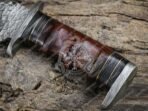
Because the resin fills the cell structure, this handle behaves differently from a plain oiled wood one. It will not swell when it gets wet or shrink back in a dry heated house, so the scales stay flush against the tang and the pins stay level with the surface. It does not need feeding with oil the way plain walnut or rosewood does, and it will not lift if it gets washed. It also takes a much higher polish, which is why stabilized blanks are usually finished glossy rather than satin.
The care it does want is minimal. Wash the blade rather than soaking the whole knife, dry it, and if the shine dulls after years of use a light buff with a fine automotive polish will bring it back. Avoid a dishwasher, not for the wood but for the steel and the adhesive. The general routine for wood, horn and antler handles is in wooden handle care, and the fibre and brass spacers between the scales are there to break up the grip visually and to put slightly harder lines under the fingers.
Engraving, runes and your own design
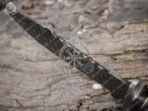
Use the rune converter on this page to turn a name, a date or a short phrase into Elder Futhark and we will cut it into the steel or the handle. If you would rather have a Viking pattern than a rune line, choose your own design in the engraving option above the add to cart button and tell us whether it goes on the blade or the handle. Where a piece already carries an engraved design, your chosen engraving replaces it rather than sitting alongside it. This is a common anniversary piece, and on a 6 inch blade there is room for a full name and date along the flat above the edge rather than the initials a shorter blade limits you to. Placement and sizing are on the engraving page.
Care and sharpening
Wipe it dry, oil it lightly, and store it somewhere it can breathe rather than sealed in a damp pack. A grey patina will form on the blade with use and that is a protective layer rather than damage. Orange rust is a different thing and should be taken off with a soft abrasive and oil before it has a chance to pit.
For the edge, work with the curve rather than against it. Draw the blade back along the stone while sweeping the handle upwards, so the contact point travels around the belly to the tip and the angle stays constant. A medium stone to set the edge and a fine one to refine it is enough for almost all use, and a strop puts the last of it on. Full method in sharpening with a whetstone, and rust, oils and patina in steel care.
Forged in Memphis
We forge in Memphis, Tennessee. The billet is welded here, the steel is worked hot, quenched, tempered and ground here, and the stabilized scales, spacers and pins are fitted to the finished blade here rather than to a template. Nothing on this page is drop shipped from an importer catalogue with our name printed over somebody else’s work.
That is why we quote the lead time honestly rather than promising next day. Processing is one to two weeks before the knife ships, and longer if engraving is part of the order. Shipping within the United States is free and returns are open for 7 days from delivery.
A note on handmade variation
This knife is hand forged. It is not machine made and it is not bulk produced, so the knife that arrives will not be a pixel for pixel copy of the photograph on this page. The layered pattern is a property of the individual billet, and no two billets move the same way under the hammer, so the swirl and spacing on your blade are its own. Stabilized wood keeps the figure of the natural timber it started as, which means the grain, the depth of colour and the way the dye has taken differ between one pair of scales and the next. The brass and fibre spacers vary in thickness by a hair because they are cut and fitted by hand, and the grind lines shift slightly because they are ground by eye.
The dimensions, the steel and the build are the same on every one. Only the character changes, and that is what separates a forged knife from a moulded one.
Frequently asked questions
Is 6 inches too long for a skinner?
It is at the large end on purpose. The extra length gives you long uninterrupted releasing cuts on big animals and makes the knife useful for camp work, and it costs you fine control for caping. If you mostly work small game, a 4 to 5 inch skinner is the better tool.
What does stabilized wood actually mean?
The blank is vacuum impregnated with acrylic resin under pressure and then heat cured, so the resin sets inside the cell structure of the wood. It keeps the grain and gains dimensional stability, water resistance and hardness.
Does the handle need oiling?
No. Unlike plain wood, stabilized scales are sealed all the way through and do not need feeding. Wash the blade, dry it, and buff the handle occasionally if the shine dulls.
Is it full tang?
Yes. The steel runs the full length and width of the handle with the scales pinned either side, which is what a knife used with sideways loads needs.
Can it be engraved for an anniversary?
Yes, and it is one of the more common requests on this model. A 6 inch blade will take two names and a date along the flat, which will not fit on a short knife.
How long does it take to arrive?
One to two weeks of processing plus transit. Shipping inside the United States is free and returns are accepted within 7 days of delivery.
What is in the box
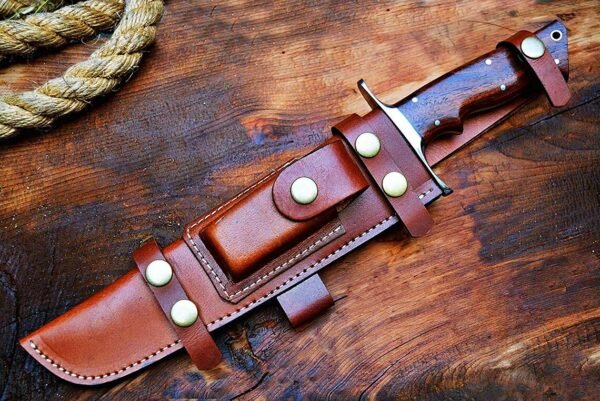
- One Vampire Damascus skinner knife, 11 inches overall
- Protective packaging
- Forged and finished in Memphis, Tennessee
Explore the range
Related knives sit in Damascus skinner knives, hunting knives, Bowie knives and Viking knives. The steel, the tang and the handle materials are covered in the guides.













Reviews
There are no reviews yet