Every Viking axe in this collection is hand-forged — heated, hammered and ground by our artisans from high-carbon or Damascus steel, then fitted with rosewood, ash, birch or olive wood handles. Whether you want a bearded axe for camp work, a Ragnar-style display axe for your collection, or an engraved axe as a gift, each piece ships sharpened with a leather blade cover from our Memphis, TN facility. Most axes can be personalized with names, dates or Norse runes.
Viking Axe History
The axe was the everyday weapon of the Viking Age. Across the roughly three centuries from the raid on Lindisfarne in 793 to the end of Norse expansion in the 1060s, far more Scandinavians carried an axe than carried a sword — and the reason was economic rather than sentimental. A sword swallowed a large quantity of scarce, expensive steel and demanded weeks of a skilled smith’s time. An axe needed a fraction of both. A farmer who already owned one for splitting timber could take that same tool on a raid.
Most of that iron began as bog iron — nodules gathered from marshes and peat bogs, then smelted in small clay bloomery furnaces. The resulting metal was soft and uneven, so smiths worked around it: the body of the axe head was forged from wrought iron, and a thin strip of harder, higher-carbon steel was forge-welded along the cutting edge, where it actually mattered. That construction is visible in surviving heads today, and it is why an original Viking axe is lighter in the hand than people expect — often well under two pounds.
Two shapes dominate the archaeological record. The skeggøx, or bearded axe, drops its cutting edge below the eye of the head, creating a hook of steel and a gap that lets a hand choke up directly behind the blade for carving and fine work. The breiðøx, or broad axe — later called the Dane axe — grew through the tenth and eleventh centuries into a long-hafted, two-handed weapon with a wide, thin, crescent edge. Housecarls wielding these appear in the Bayeux Tapestry.
The axe was never only a weapon. The clinker-built longship was shaped almost entirely with axes rather than saws, splitting oak along the grain to produce planks that stayed strong and flexible. The same tool cleared land, framed halls and cut firewood. And it could carry real status: the Mammen axe, recovered from a Danish chamber grave dated to the 970s, is inlaid with silver in a dense interlace of animal and plant ornament — a working shape turned into a statement of rank.
17 pieces in this collection
Free US shipping
On every order, no minimum.
Hand-forged
Heated, hammered and ground by hand.
Engraving available
Names, dates or Norse runes on most pieces.
Ships from Memphis
Dispatched from our Tennessee facility.
Viking Axes
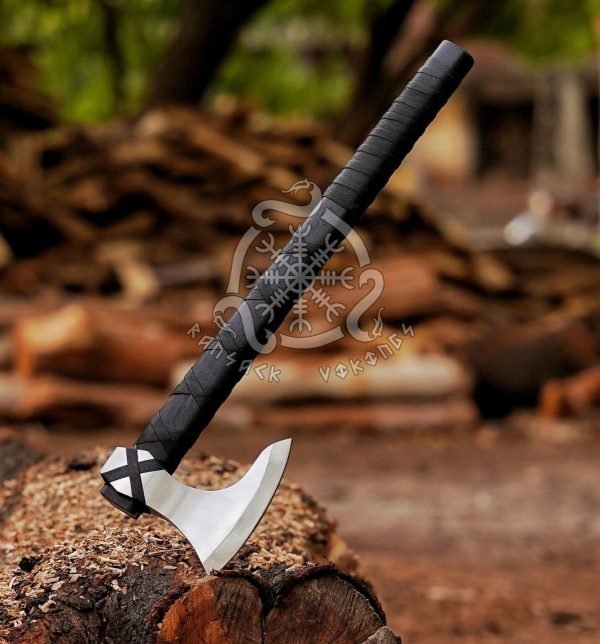
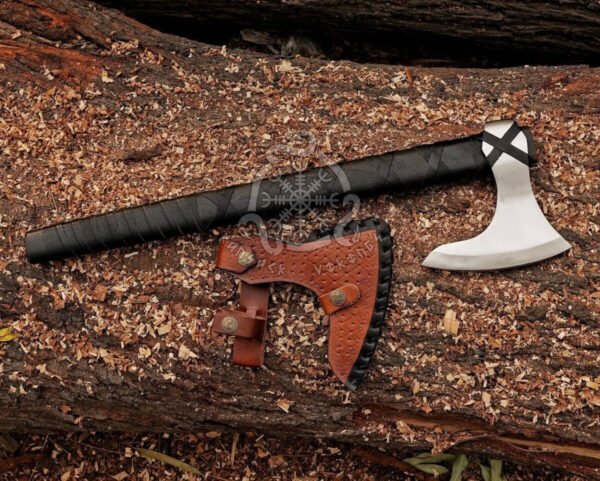
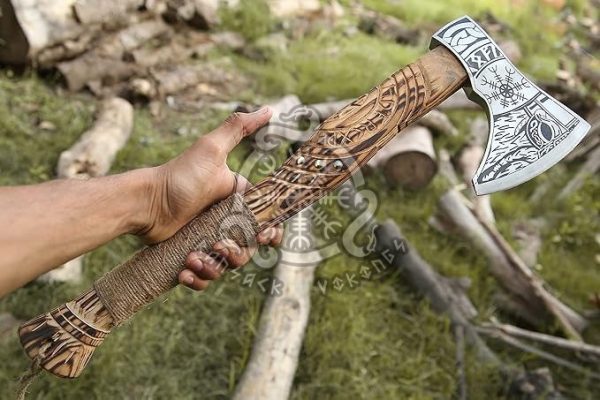
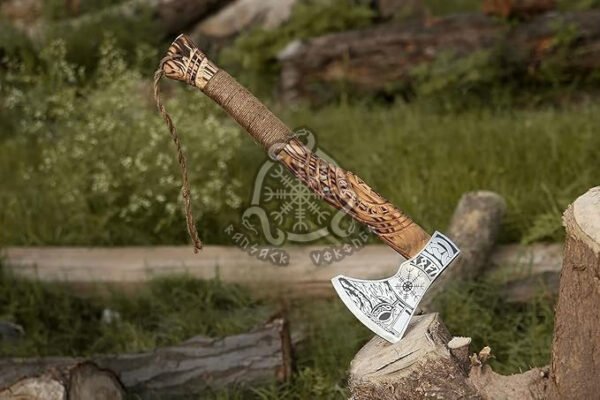

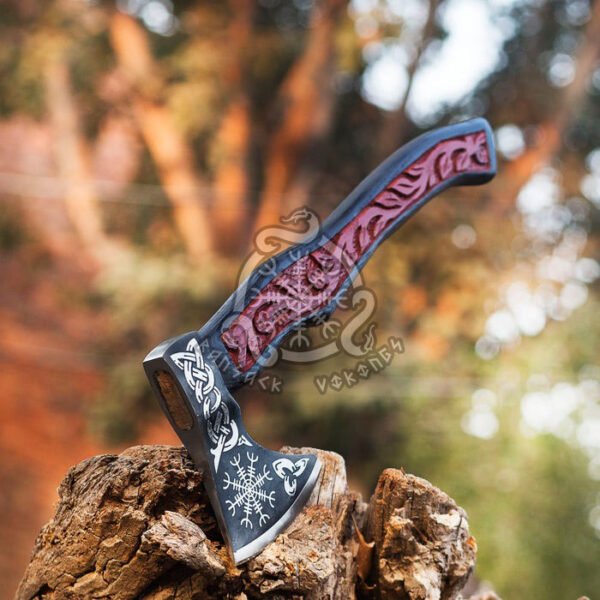

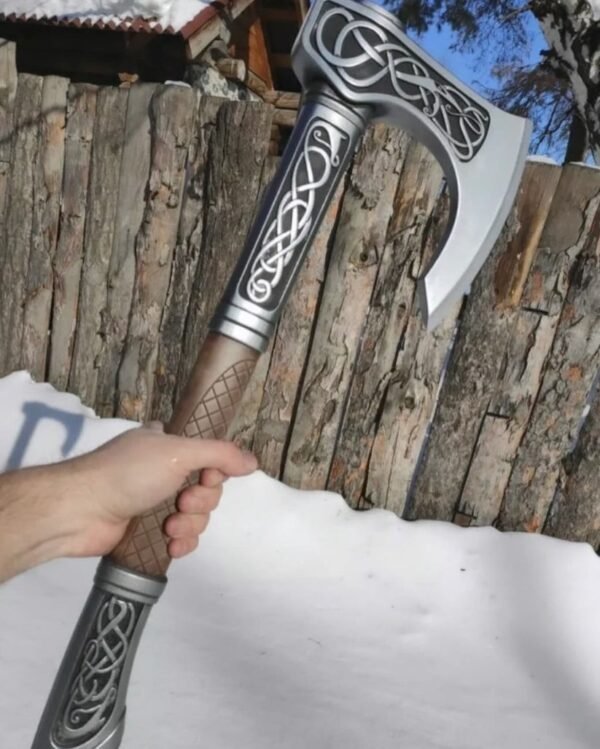

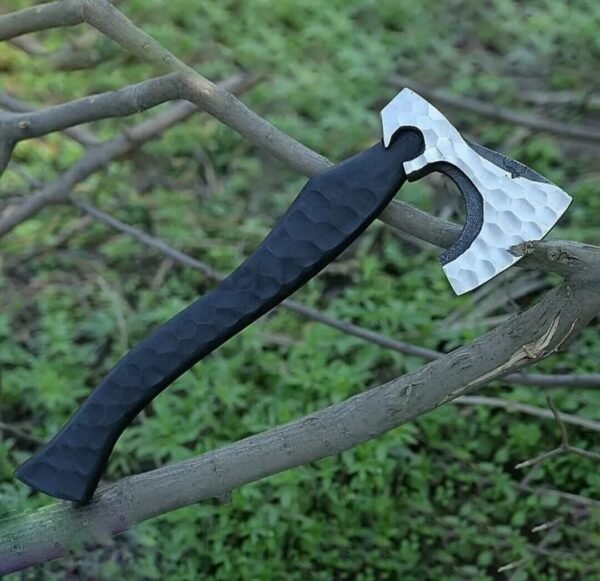
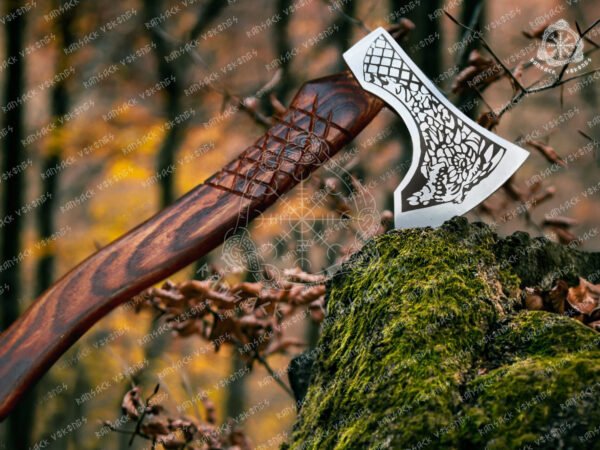
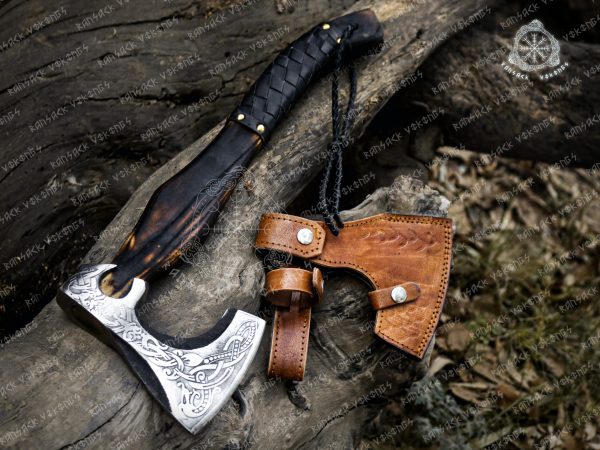
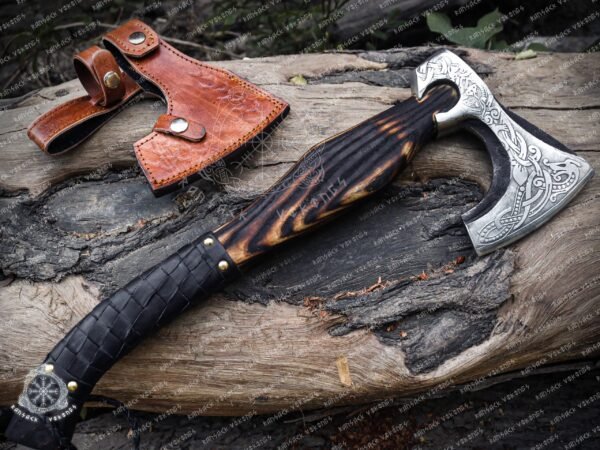
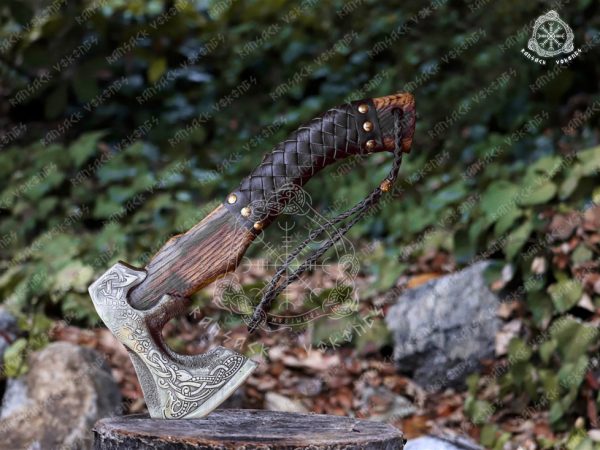
Viking Bearded Axe — Hand-Forged High-Carbon Steel, 19″ Overall, Wood Handle, Leather Blade Cover — Pattern 2 (RK-405)
Price range: $117.00 through $560.00


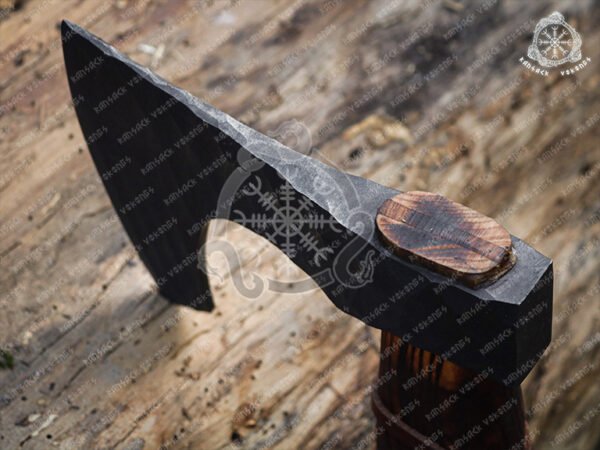
Norse Viking Bearded Axe — Hand-Forged High-Carbon Steel, 17″ Overall, Rosewood Handle
Price range: $99.00 through $111.00
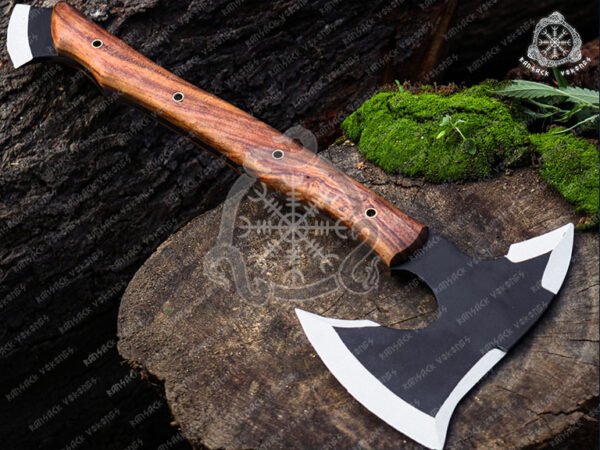
Ragnar Lothbrok Viking Bearded Axe — Hand-Forged High-Carbon Steel, 19″ Overall, Rosewood Handle
Price range: $99.00 through $138.00
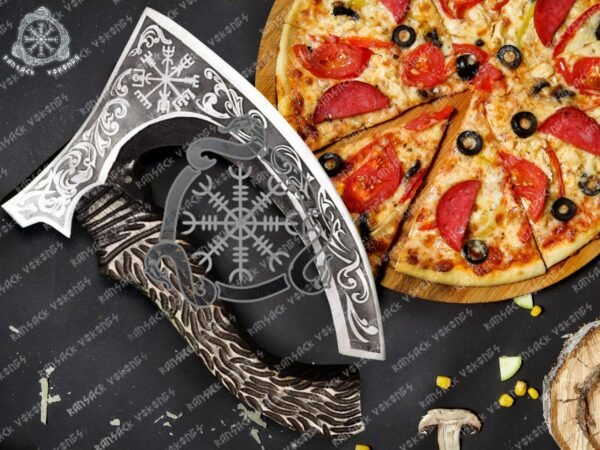

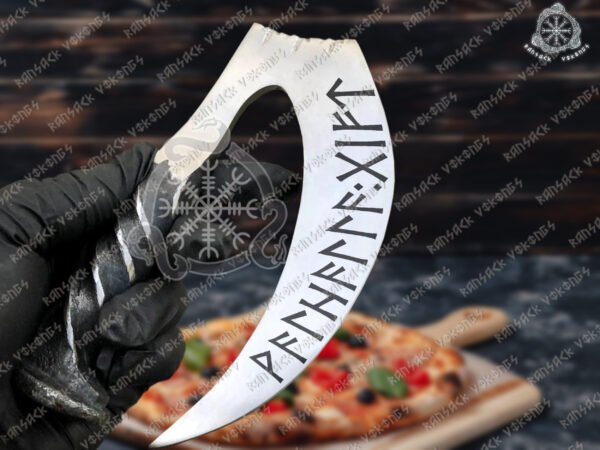
Pizza Axe — Hand-Forged Stainless Steel, Olive Wood Handle, Leather Blade Cover | Engraving Available — Pattern 2 (RK-316)
Price range: $87.00 through $93.00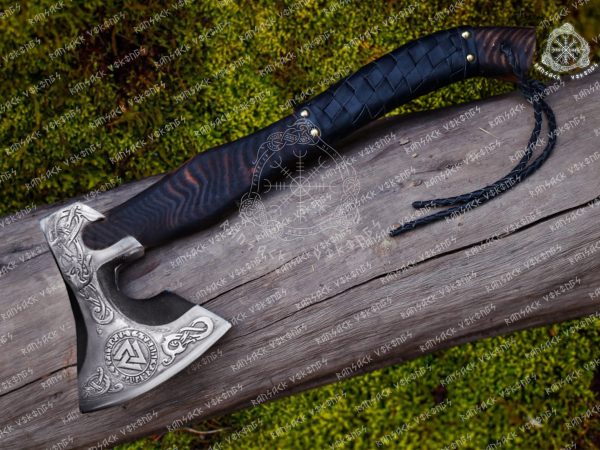
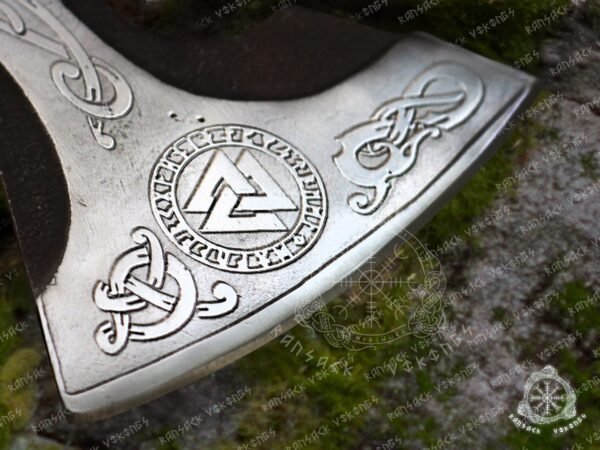
Viking Bearded Axe — Hand-Forged Damascus, 19″ Overall, Birch Wood Handle, Leather Blade Cover — Pattern 9 (RK-351)
Price range: $99.00 through $118.80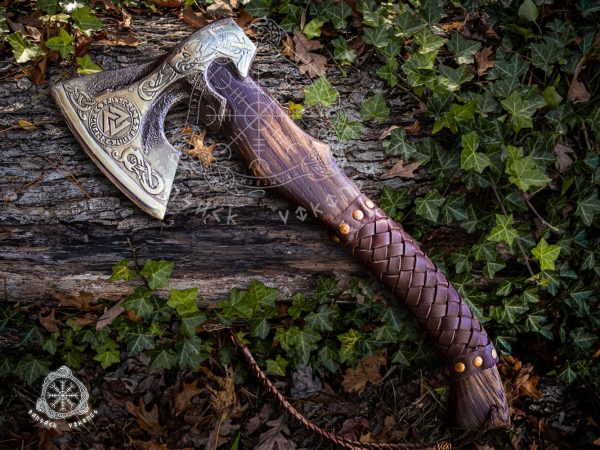
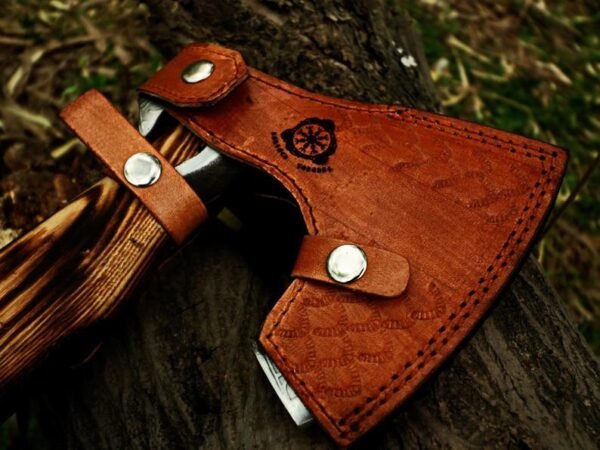
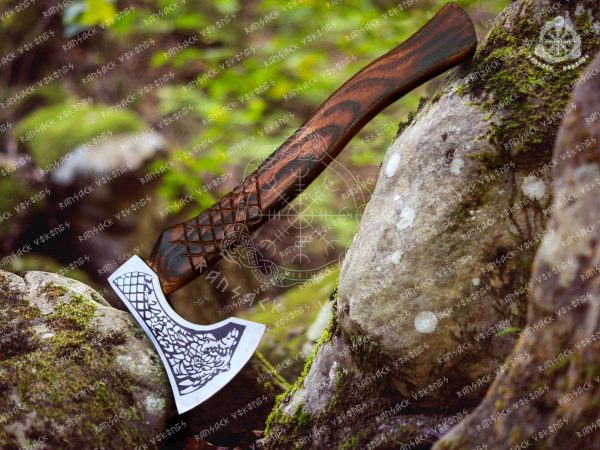

Types of Viking Axes We Forge
The Bearded Axe (Skeggøx)
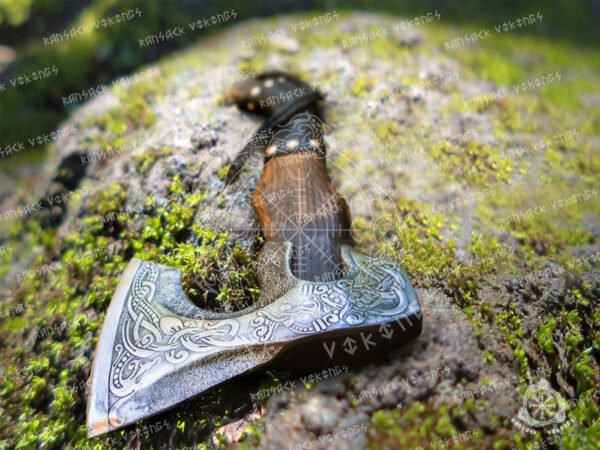
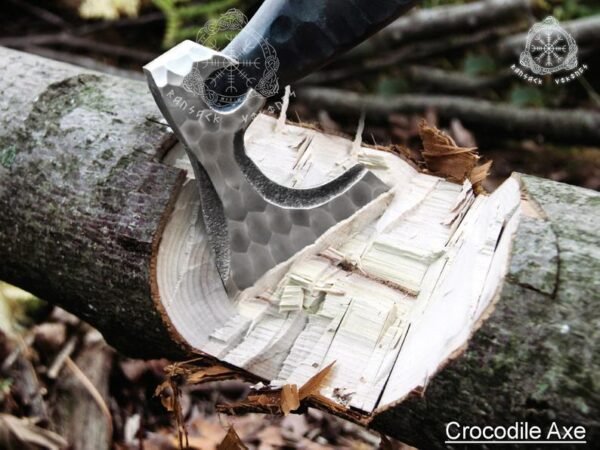
The most historically common Norse design, and the one most people picture. The cutting edge extends below the eye of the head, forming the "beard" — a hook of steel that adds edge length without adding weight, and leaves a gap you can put a hand into. That grip, choked right up behind the blade, is what makes a bearded axe good for carving, shaping and detail work as well as splitting. Ours run 18–19 inches overall in high-carbon or Damascus steel, on rosewood, birch or ash.
The Battle Axe and Dane Axe
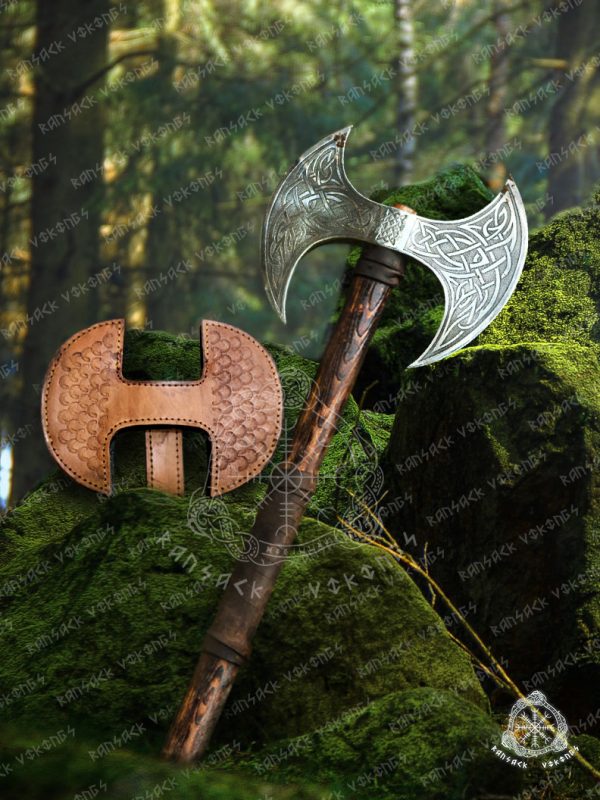
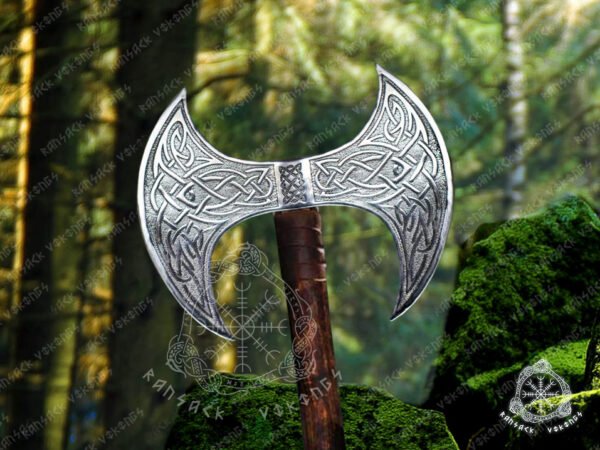
A broader, symmetrical crescent edge built for reach and power rather than close control. The long-hafted two-handed version — the breiðøx or Dane axe — was the weapon of eleventh-century housecarls. Our battle axes run 19–22 inches, the longest heads in the collection, and are the ones customers most often buy for display, reenactment and wall mounting.
Viking Hatchets and Camp Axes
A Viking hatchet is simply the short end of the same family — an 18-inch head-and-haft you can carry on a belt or pack and actually use. If you want a Norse axe for bushcraft, campsite firewood, kindling and tent stakes rather than a display piece, this is the size to buy. High-carbon steel holds a working edge and sharpens back easily in the field; the leather blade cover makes it safe to pack. Heavier splitting is better served by one of the longer battle axes.
Tomahawk and Throwing Axes
A narrower head on a straighter 20-inch haft, balanced for throwing and light chopping. Not strictly a Viking form — the shape is North American — but it is the profile people ask for when they want a target axe rather than a battle piece.
Themed and Display Axes
The same forged heads, finished with etched and engraved motifs: Ragnar Lothbrok, Odin, Thor, the Yggdrasil tree, the Valknut and Elder Futhark runes. Functional steel underneath, but bought almost entirely as gifts and collection pieces.
Pizza Axes
A stainless-steel rocker blade on an olive wood handle — a Viking axe silhouette that cuts pizza. Consistently one of our best sellers as a groomsman, housewarming and Father's Day gift.
Viking Axe Specifications
Every axe in this collection is made by hand, so dimensions vary slightly between individual pieces. The ranges below are what we actually forge and ship.
| Type | Overall length | Steel | Handle | Blade cover | From |
|---|---|---|---|---|---|
| Bearded axe (Skeggøx) | 18–19″ | Damascus or high-carbon | Rosewood, birch, ash | Leather, included | $99 |
| Battle / Dane-style axe | 19–22″ | Damascus or high-carbon | Rosewood, ash, wood | Leather, included | $117 |
| Hatchet / camp axe | 18″ | High-carbon | Rosewood, wood | Leather, included | $99 |
| Tomahawk / throwing axe | 20″ | Damascus | Rosewood | Not included | $117 |
| Themed / display axe | 19–20″ | Damascus or high-carbon | Rosewood, wood | Leather, included | $99 |
| Pizza axe | Compact | Stainless | Olive wood | Leather, included | $87 |
Steel hardness on our high-carbon axes is heat-treated to 56–60 HRC. Damascus heads are forged from layered 1095 and 15N20. Every axe is sharpened by hand and inspected in Memphis, TN before it ships.
Choosing Your Steel: High-Carbon vs Damascus
Our high-carbon steel axes are heat-treated to 56–60 HRC — a hard, durable edge that sharpens easily and handles real work. Damascus axes are forged from layered 1095/15N20 steel, showing the signature flowing pattern; equally functional, with a look collectors love. Both need a light coat of oil after use to prevent rust.
Pair It With a Blade
An axe and a belt knife is the historically normal pairing — browse the Viking knives collection for seaxes and Norse utility blades that suit the same kit, or the Viking seax range for the longer single-edged blades a Norse axeman would have carried alongside.
Personalize Your Axe
Most axes offer custom engraving — a name on the handle, a date on the blade, or Elder Futhark runes. Engraved axes are our most popular groomsmen and anniversary gifts. Pair one with a Viking beer mug or Norse hammer for a full Viking gift set.
Viking Axe FAQ
What is a Viking axe called?
Two Old Norse names cover most of them. A bearded axe is a skeggøx — literally "beard axe" — named for the cutting edge that hangs below the head. A broad axe is a breiðøx, the long two-handed form later known in English as the Dane axe.
What is the difference between a Viking axe and a hatchet?
Size and intent. A hatchet is short — around 18 inches — light enough to carry on a belt and meant for one-handed camp work: kindling, tent stakes, trimming. A Viking battle axe runs 19 to 22 inches with a broader head, built for reach and power, and is usually bought for display or reenactment rather than daily use.
Do your Viking axes come sharpened?
Yes. Every axe is sharpened by hand before final inspection at our Memphis, TN facility and ships with a fitted leather blade cover.
Are these axes battle ready?
Our high-carbon and Damascus axes are fully functional forged steel, not cast decorations — they chop, split and hold an edge. We build them as working tools and collection pieces. We do not certify any axe for combat or contact reenactment, and we do not recommend striking another weapon or shield with one.
What is the difference between a bearded axe and a battle axe?
A bearded axe has a lower blade edge extending below the axe head, allowing a grip right behind the head for carving and close work. A battle axe has a broader, symmetrical cutting edge built for reach and power.
Can I use a Viking axe for camping or splitting wood?
Yes — our high-carbon axes are functional tools, not just wall-hangers. For heavy splitting we recommend the larger battle axes; for camp tasks a bearded axe or hatchet is ideal.
Can I get a name or runes engraved?
Yes. Most axes offer custom engraving on the blade or handle — select the engraving option on the product page.
How long does delivery take?
Orders are inspected and dispatched from Memphis, TN within 1–2 weeks, with US delivery typically taking a further 3–7 business days.