Medieval sword replicas from the Norman conquest to the Renaissance
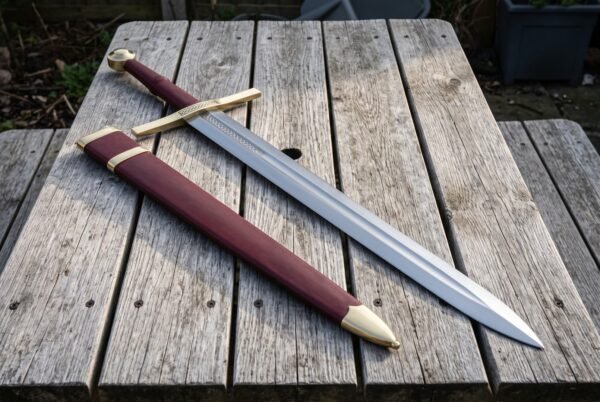
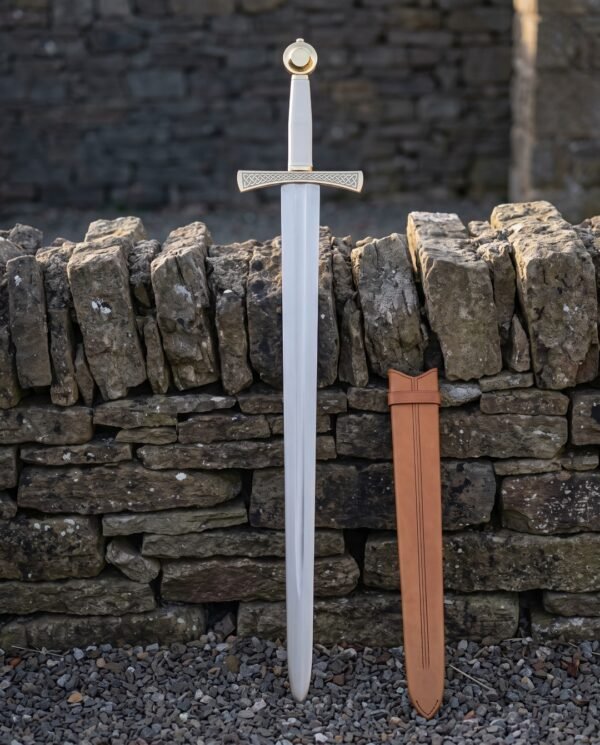
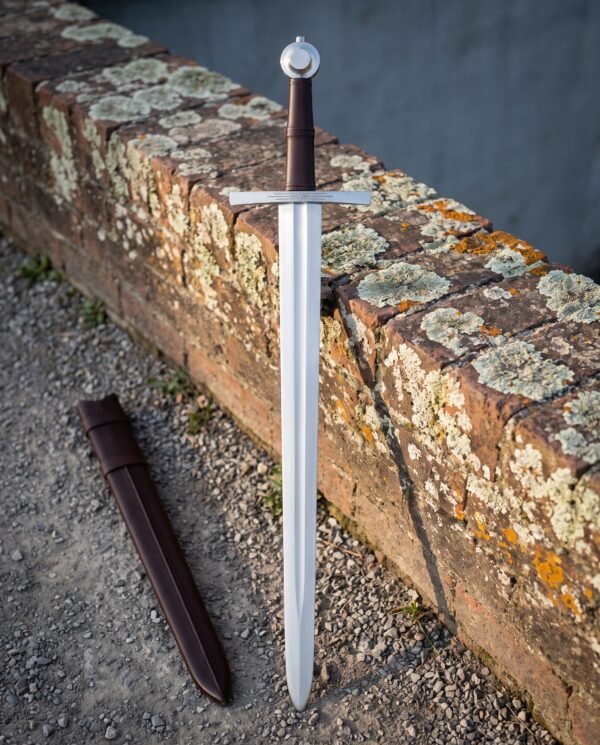
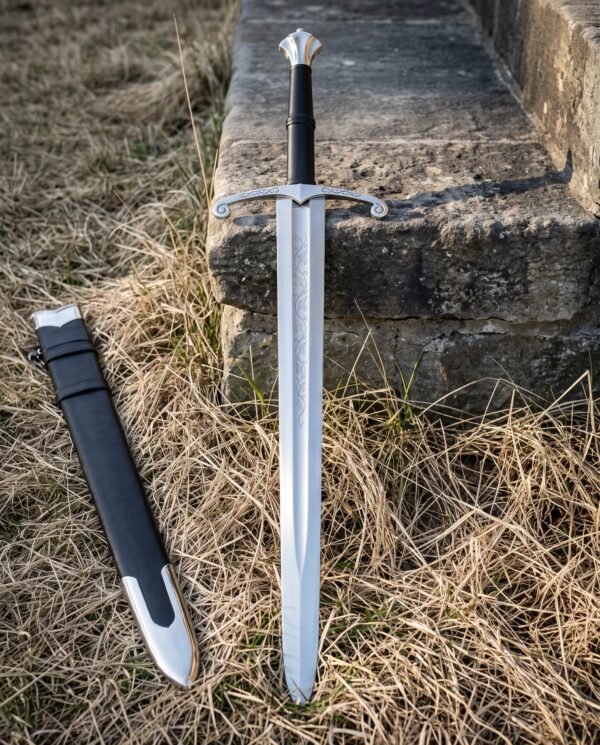
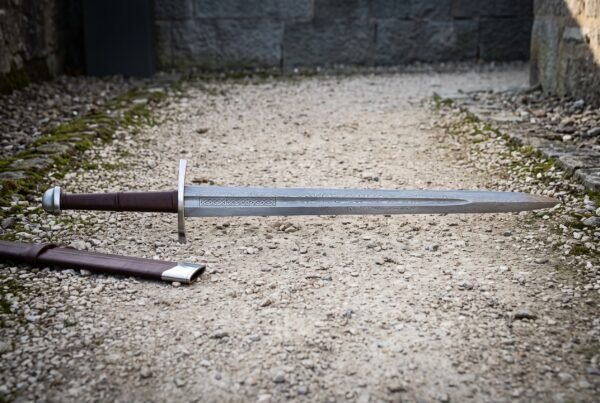
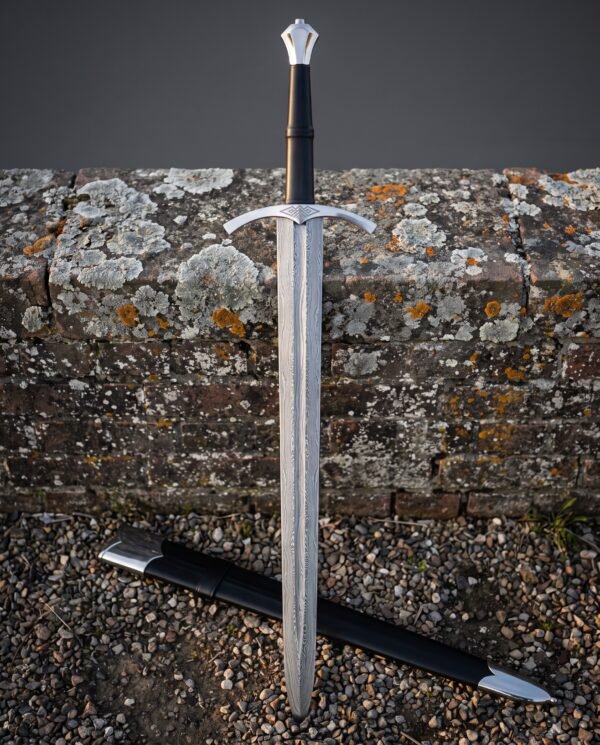
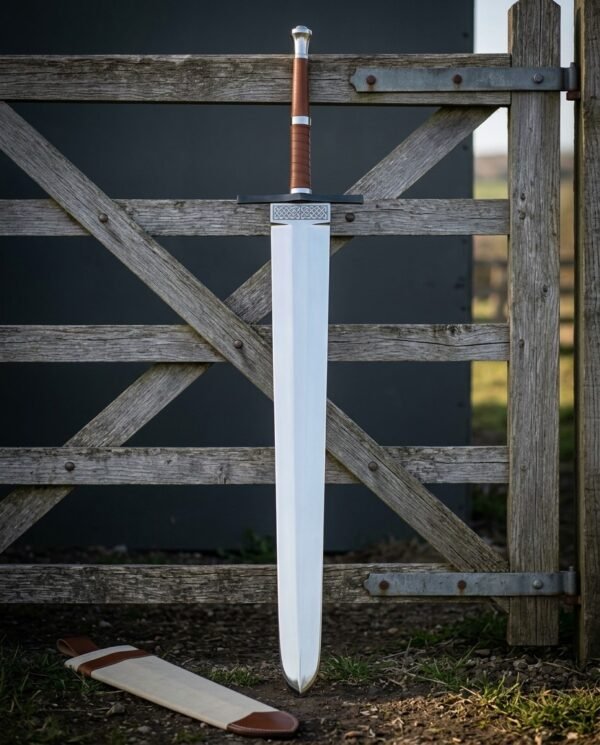
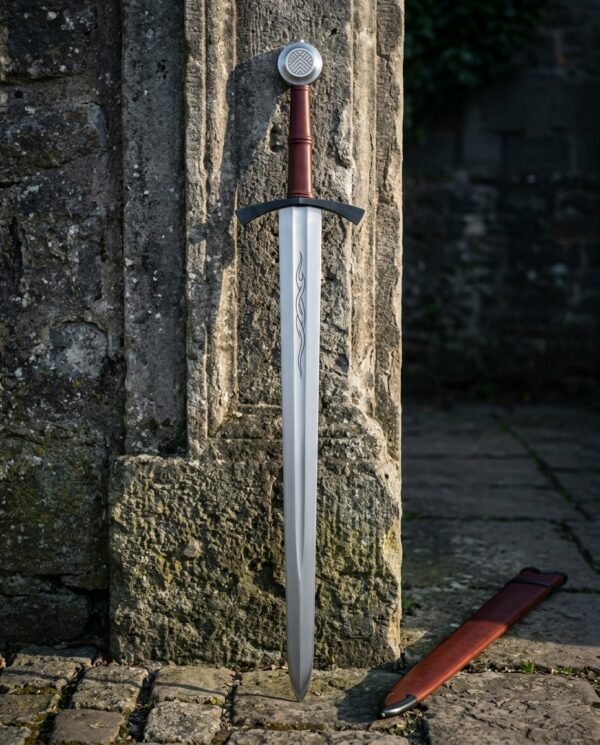
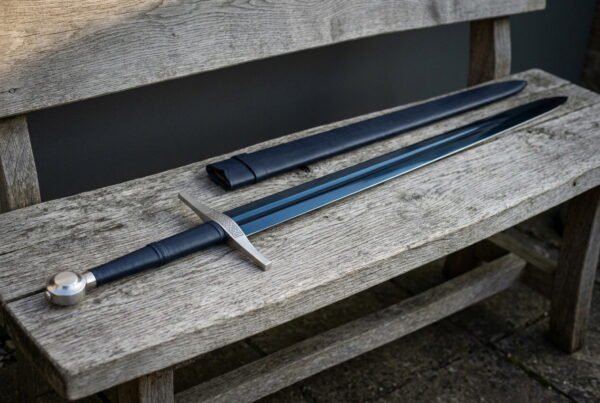
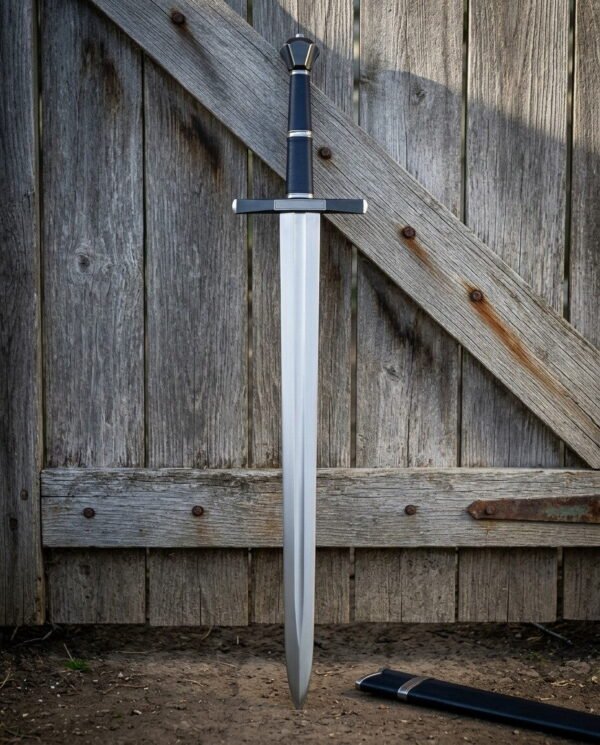
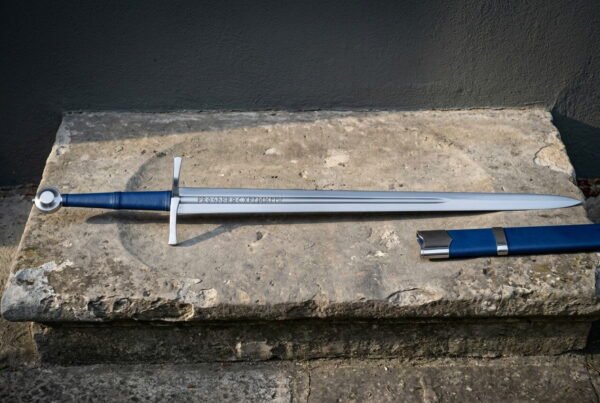
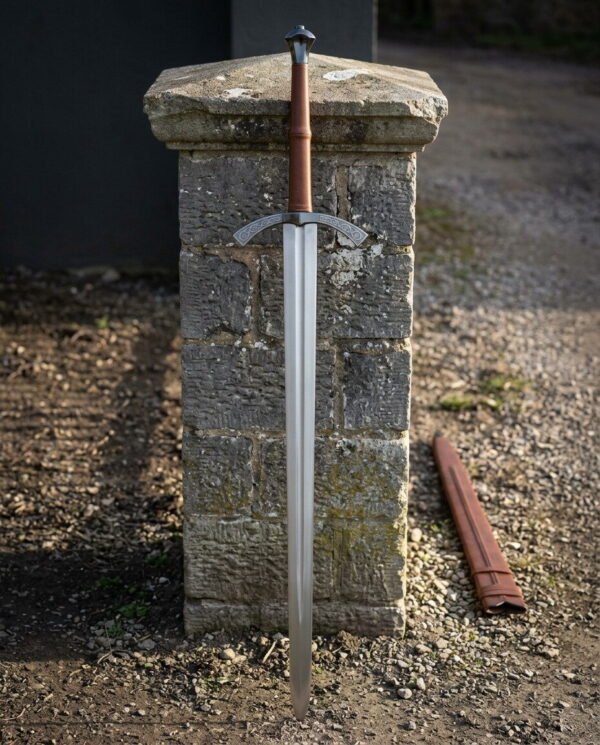
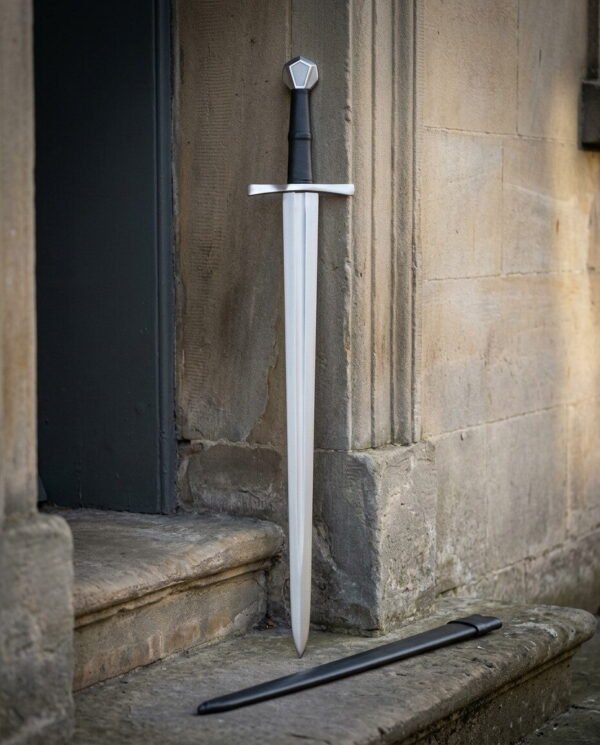
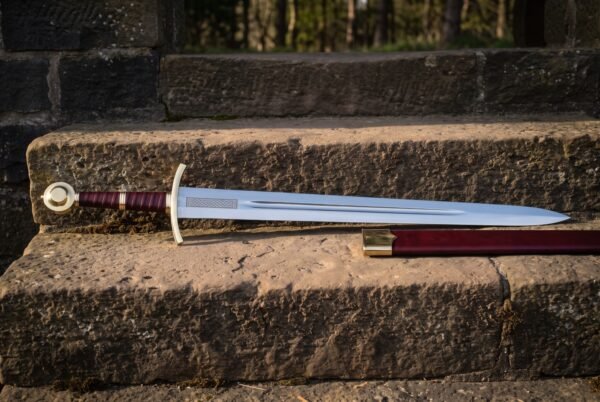
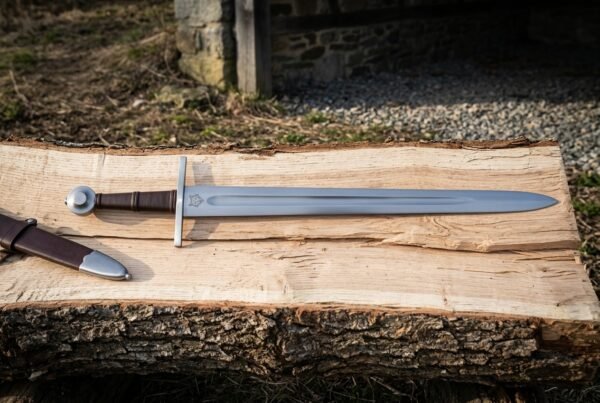
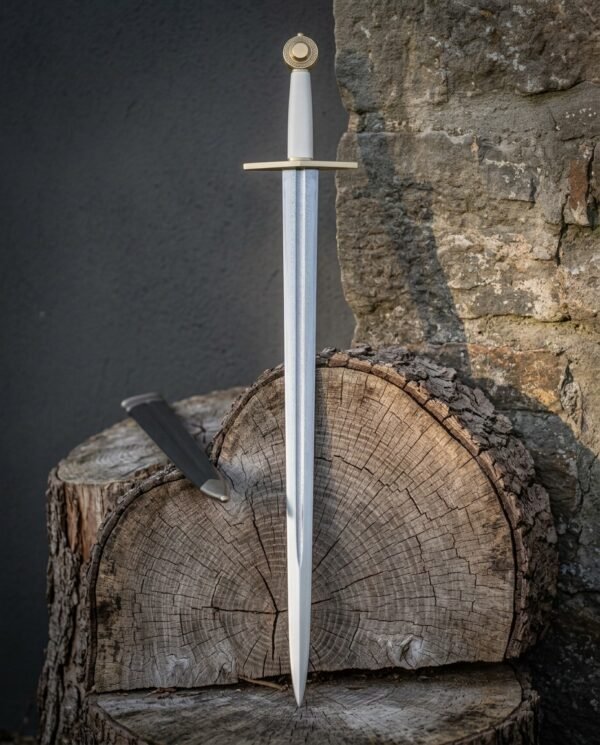
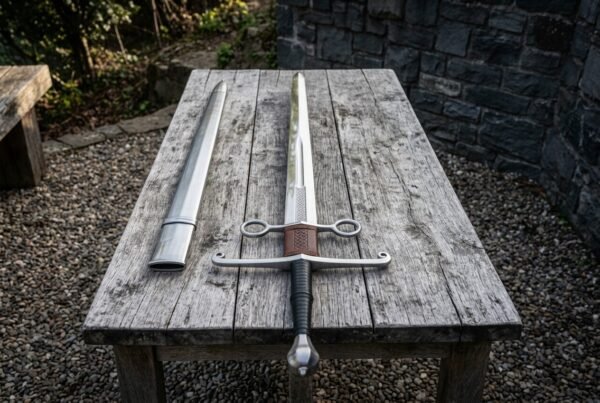
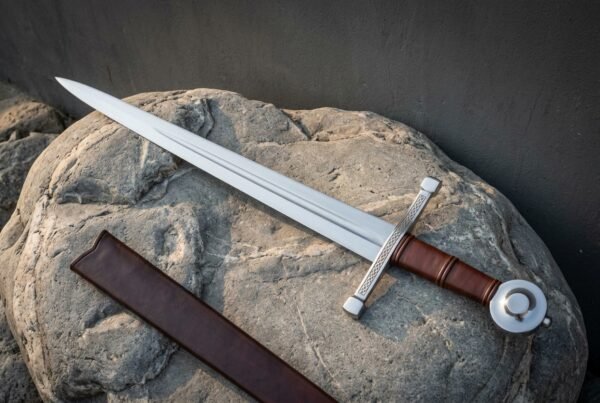
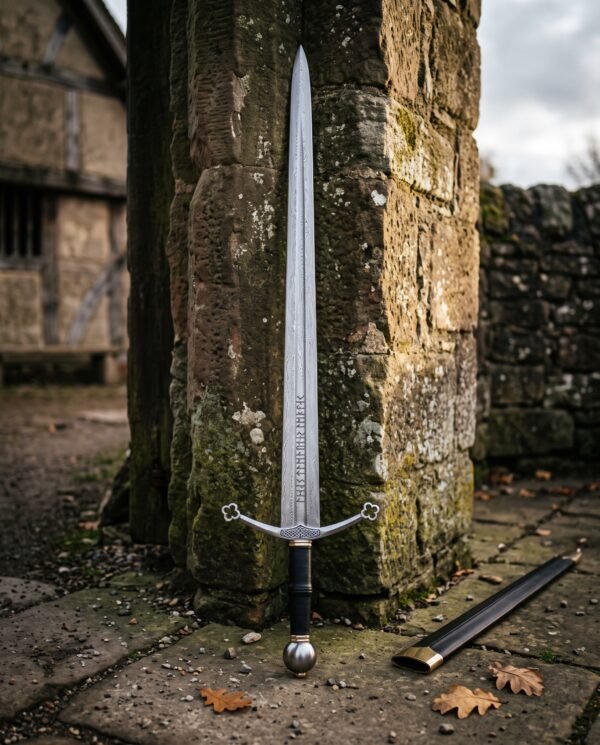
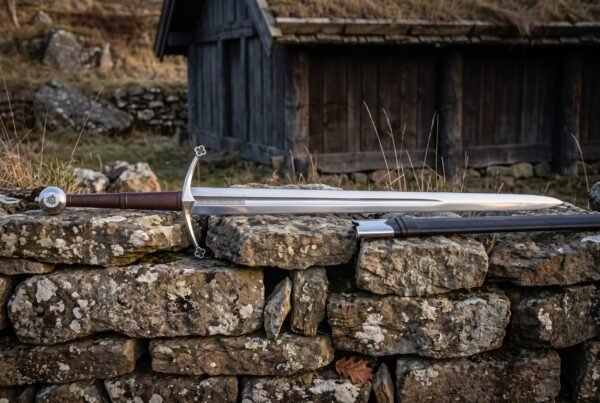
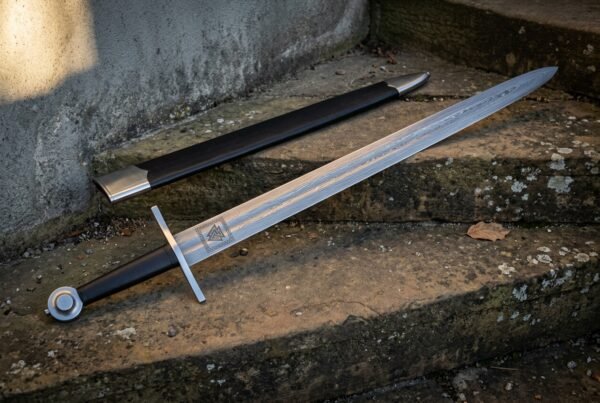
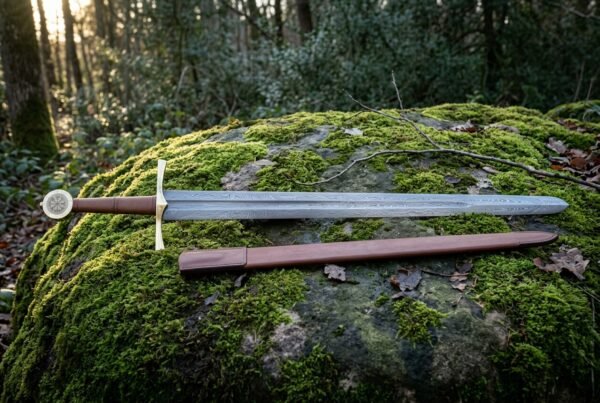
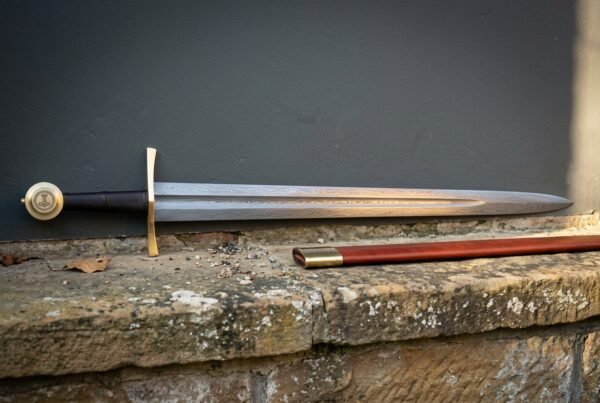
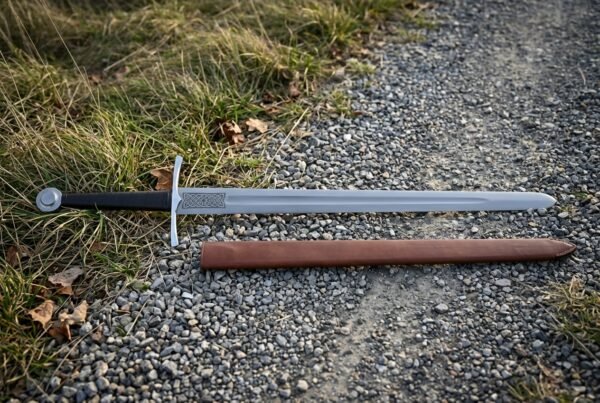
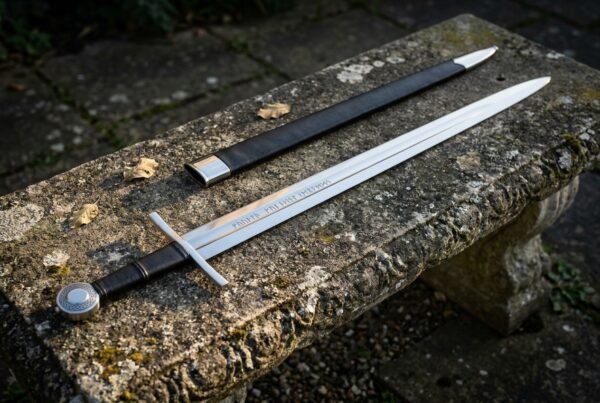
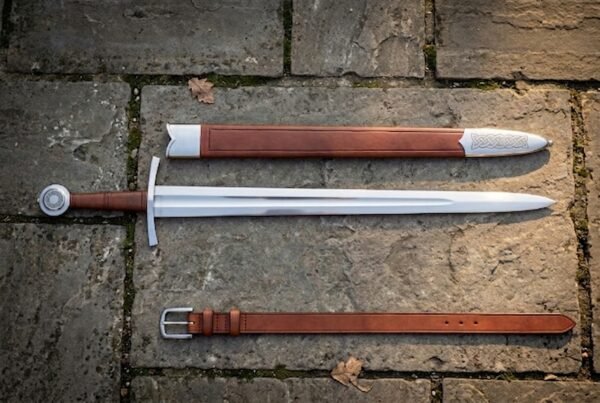
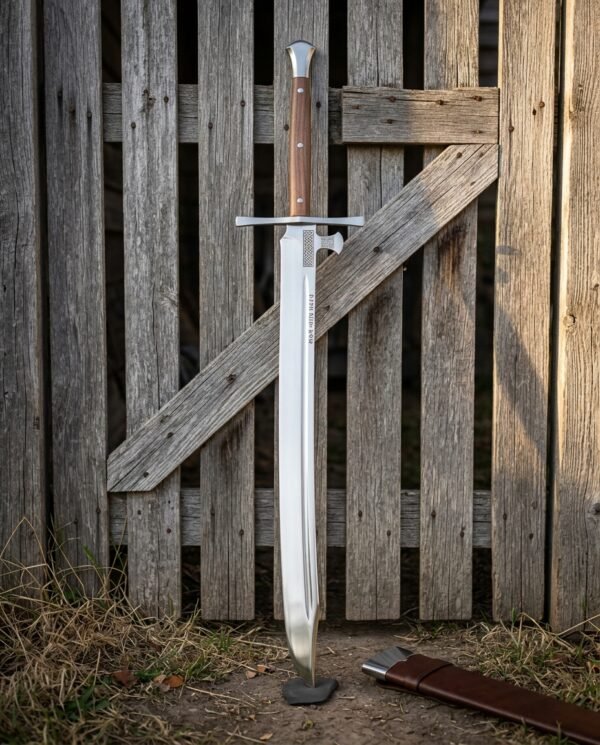
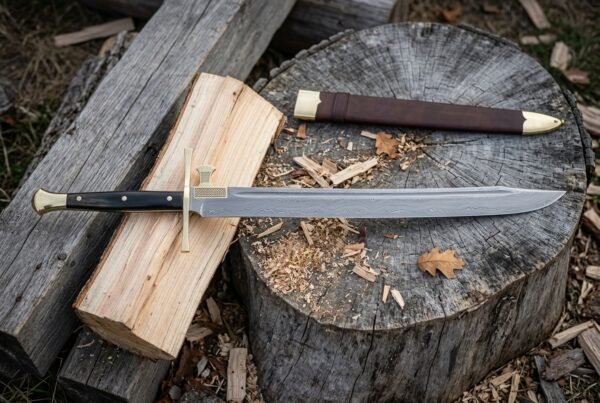
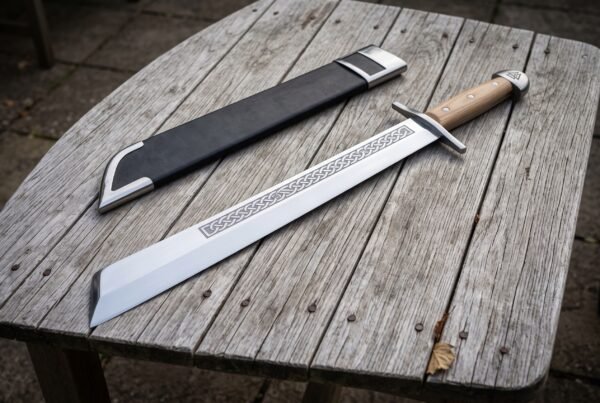
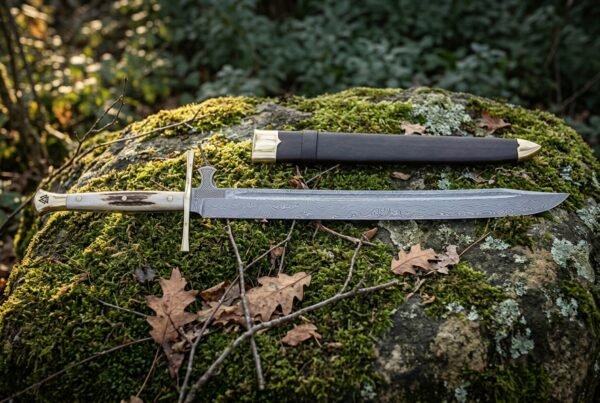
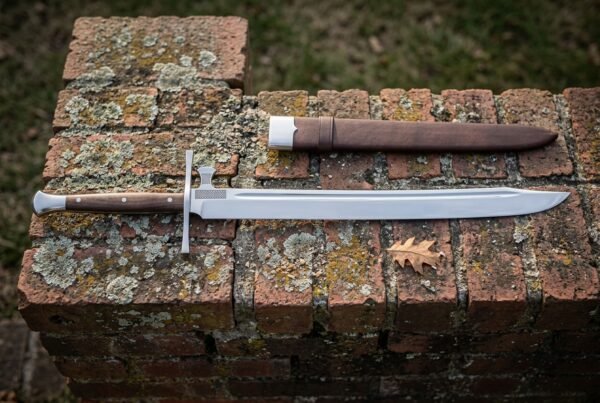
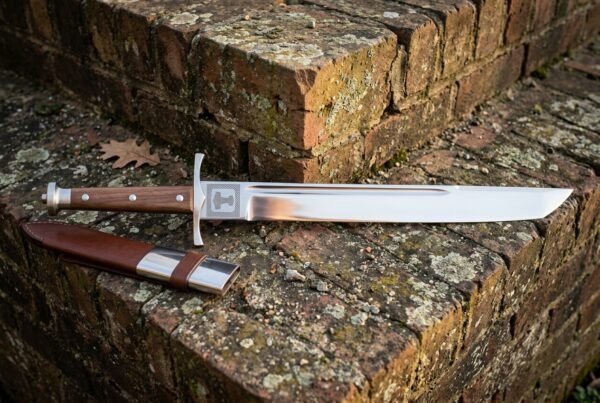
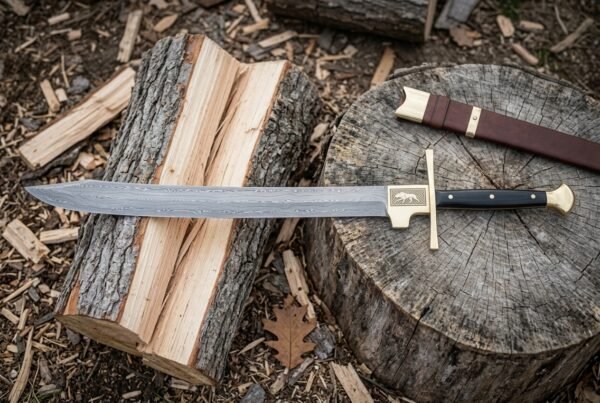
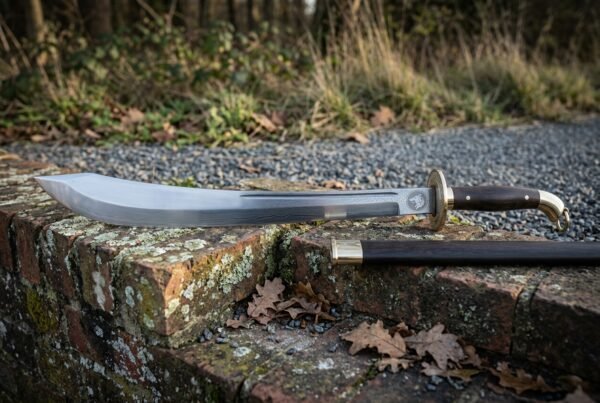
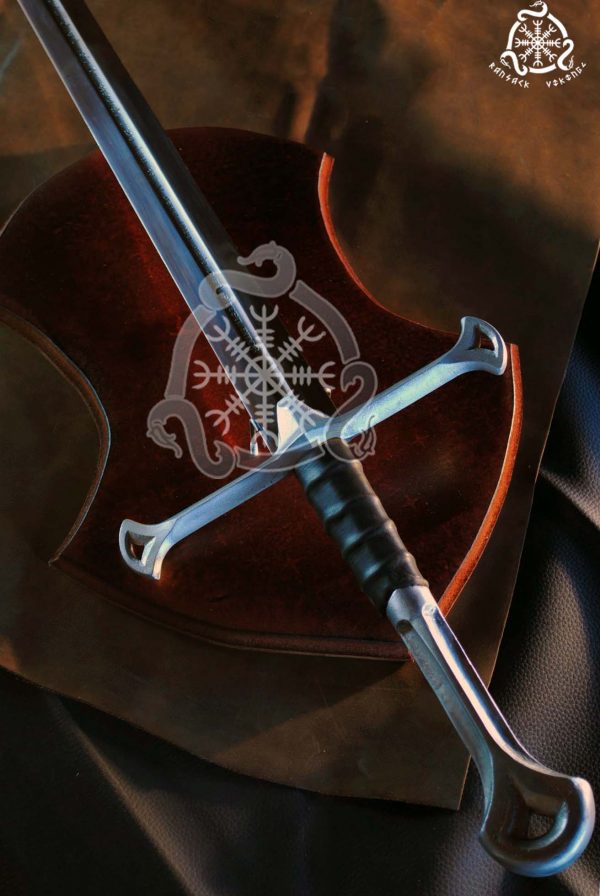
The swords in this archive cover the long European period after the Viking Age: the knightly arming sword with its cruciform guard and wheel pommel, the hand and a half longsword, the single edged messer and grosse messer of the German towns, and a handful of Damascus versions of each. A few name the Oakeshott type they follow, the typology collectors use to describe medieval blades. Overall lengths run from around 31 inches for a messer to 45 inches for a longsword.
It suits the collector filling a wall by century, the reenactor who needs a sword that matches a twelfth or fourteenth century kit, and the person buying a groomsman gift for someone who would rather have a sword than cufflinks. Everything here has a full tang and a real heat treatment.
What to look for
Start with the blade form. A wide, flat, fullered blade is a cutting sword from the earlier period. A narrower blade with a stiff diamond section is a later thrusting sword built for mail and plate. A messer has one edge and a knife style hilt with a nagel, and it is the sword of the townsman rather than the knight. Then check length against where it will live: a 45 inch longsword needs a wall, an arming sword sits well on a stand. Decide between plain 1095 at 54 to 58 HRC, which is the tougher choice for handling, and forge welded 1095 and 15N20 Damascus at 58 to 60 HRC for the pattern and the harder edge.
How the swords are made and where
Ransack Viking is a Memphis, Tennessee company. Each of these swords is made by hand in the Czech Republic the old way, forged from bar stock, ground and heat treated, then hilted with its guard, grip and pommel in the same workshop. They are imported into the United States, inspected at our Memphis warehouse and shipped from Memphis. Engraving on a blade, guard or pommel is done in the United States. Unless a listing says otherwise the blade steel is one of the two we use, plain 1095 or Damascus of 1095 and 15N20, and the fittings are steel or brass.
Care is a wipe with a dry cloth and a thin coat of mineral oil after handling. Store the sword out of its scabbard for long spells so the leather does not trap damp against the blade.
Where to browse next
The knightly one handed swords are collected in arming swords, the two handers in longswords, and the single edged German blades in messers. A helmet from the same century is in medieval helmets. If you are choosing between the plain and the pattern welded blades, our steel glossary explains what 1095, 15N20 and HRC actually mean.
Frequently asked questions
Are these replicas of real swords?
They are hand forged swords made in the historical forms, not copies of one specific museum piece. Where a listing names an Oakeshott type, that is the blade and hilt family it follows.
Are they battle ready?
They are forged, tempered, full tang steel with a sharpened edge, so they are functional. They are not certified for contact sparring or for any reenactment society’s blunt standard, and you should check your group’s rules before using one at an event.
What is the difference between an arming sword and a longsword?
An arming sword is used in one hand, usually with a shield, and is around 35 to 38 inches overall. A longsword has a grip long enough for two hands and runs to 45 inches or more.
Which steel is better for a medieval sword?
Plain 1095 if you will handle or drill with it. Damascus if you want the folded pattern on display. Both are hand forged and heat treated to the ranges given above.
Can I engrave a family name or a motto?
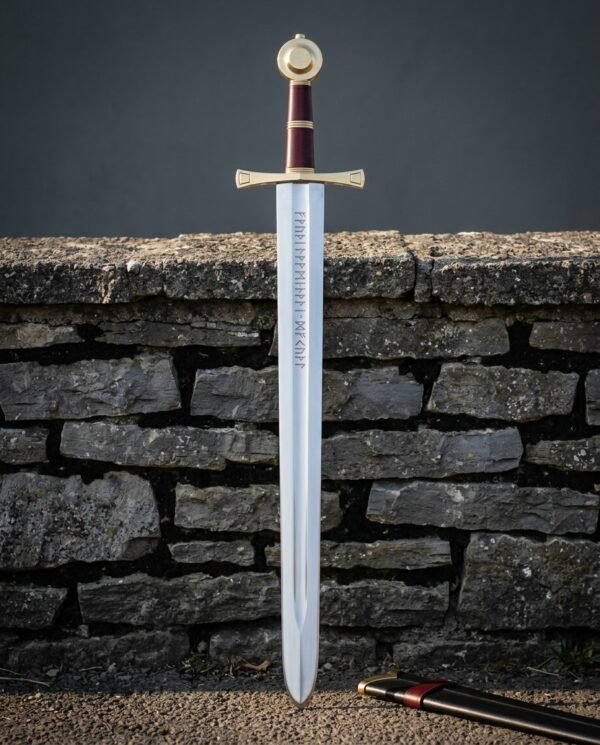
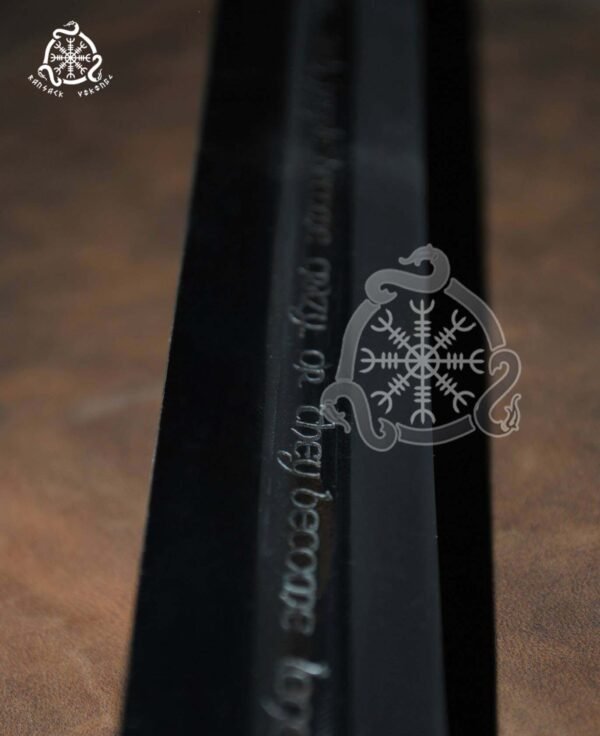
Yes. Names, dates, mottos and heraldic lettering are cut in the United States before the sword ships. The custom engraving page has the details.
44 matching pieces
Free US shipping
On every order, no minimum.
Hand Forged
Heated, hammered and ground by hand.
Engraving available
Names, dates or Norse runes on most pieces.