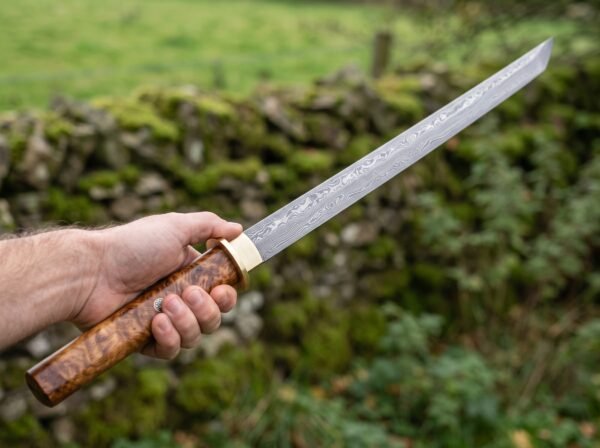
Pattern welding was not invented to look good. Early smiths worked with iron of wildly inconsistent quality, and stacking, welding and folding bars together was the only reliable way to average out the bad spots and get a blade that would not fail. By the time falchions appeared in the thirteenth century, steel making had improved enough that the technique was no longer necessary, and it survived because of what it looked like. That is the honest story behind every Damascus blade sold today, including this one. What you are buying is a genuinely forge welded billet, not an etched print, and the pattern goes all the way through the steel rather than sitting on the surface. The honest comparison between the two steels is in the two steels compared.
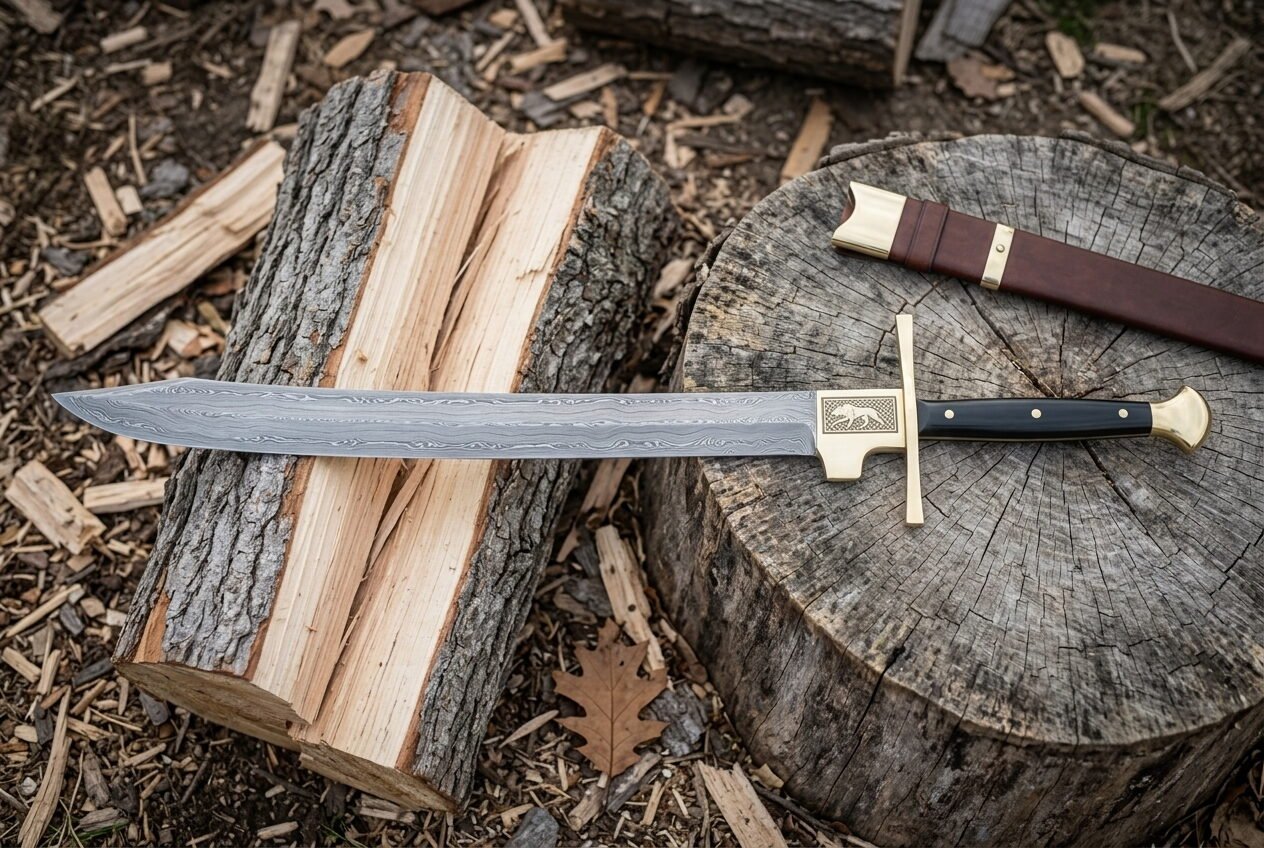
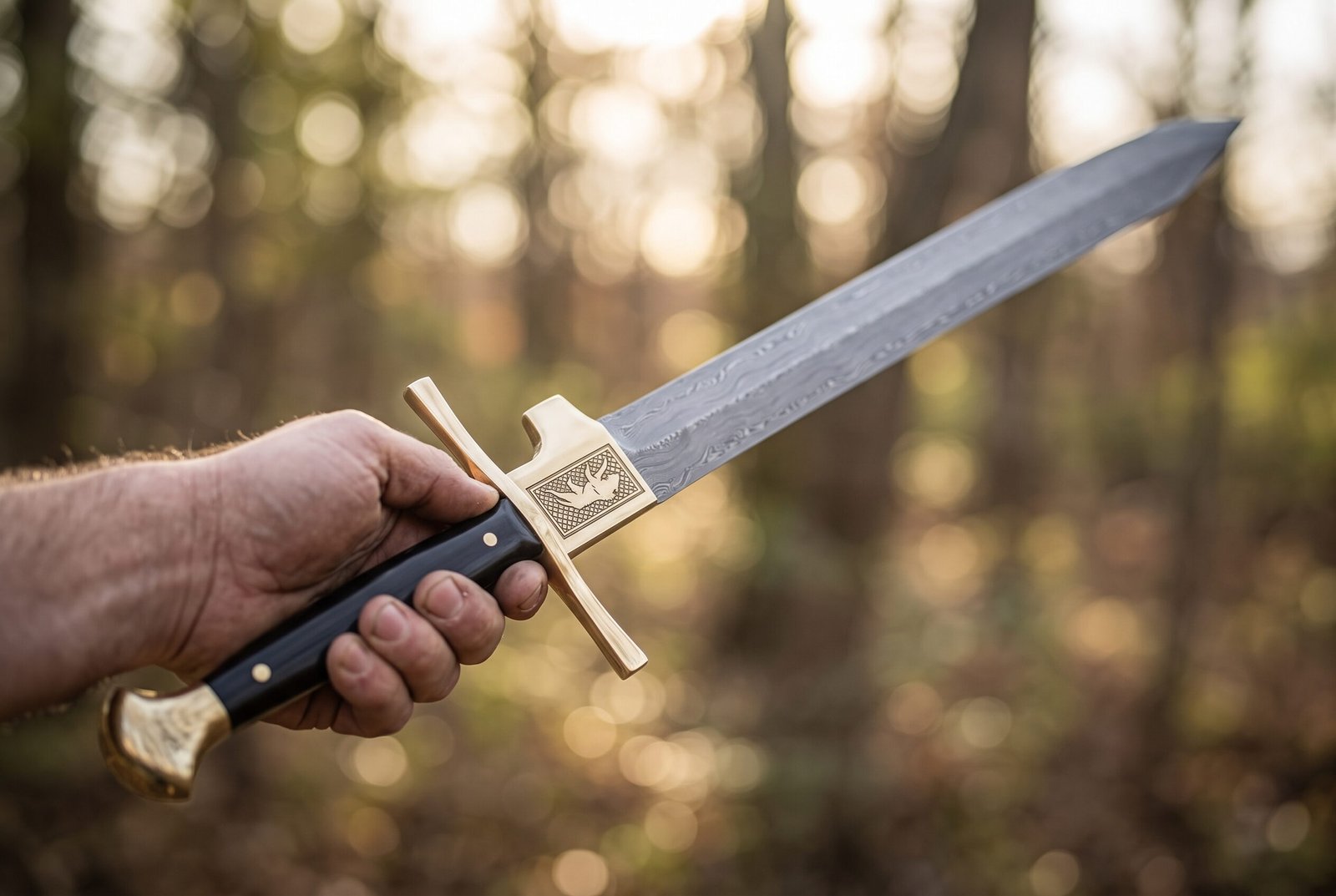
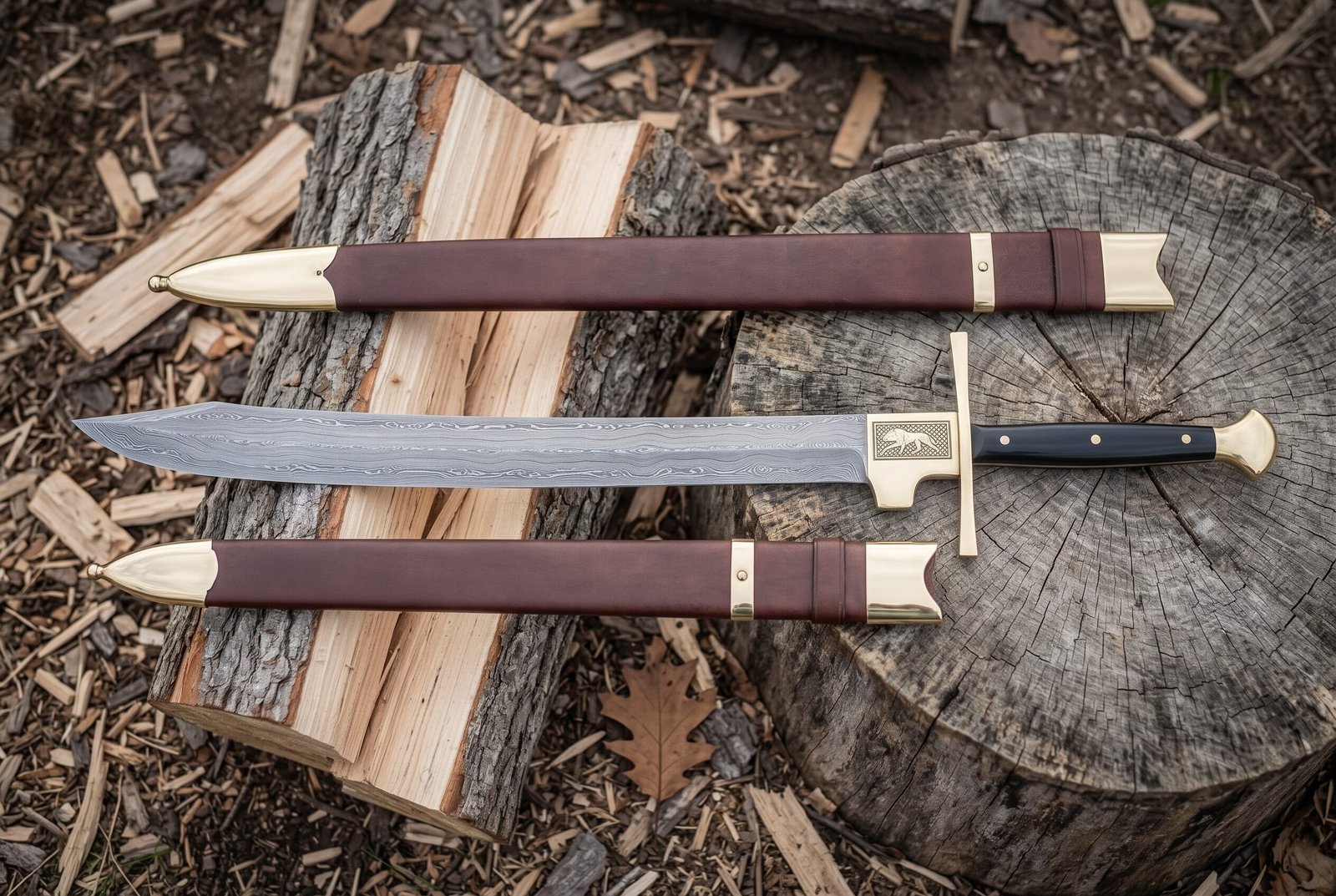
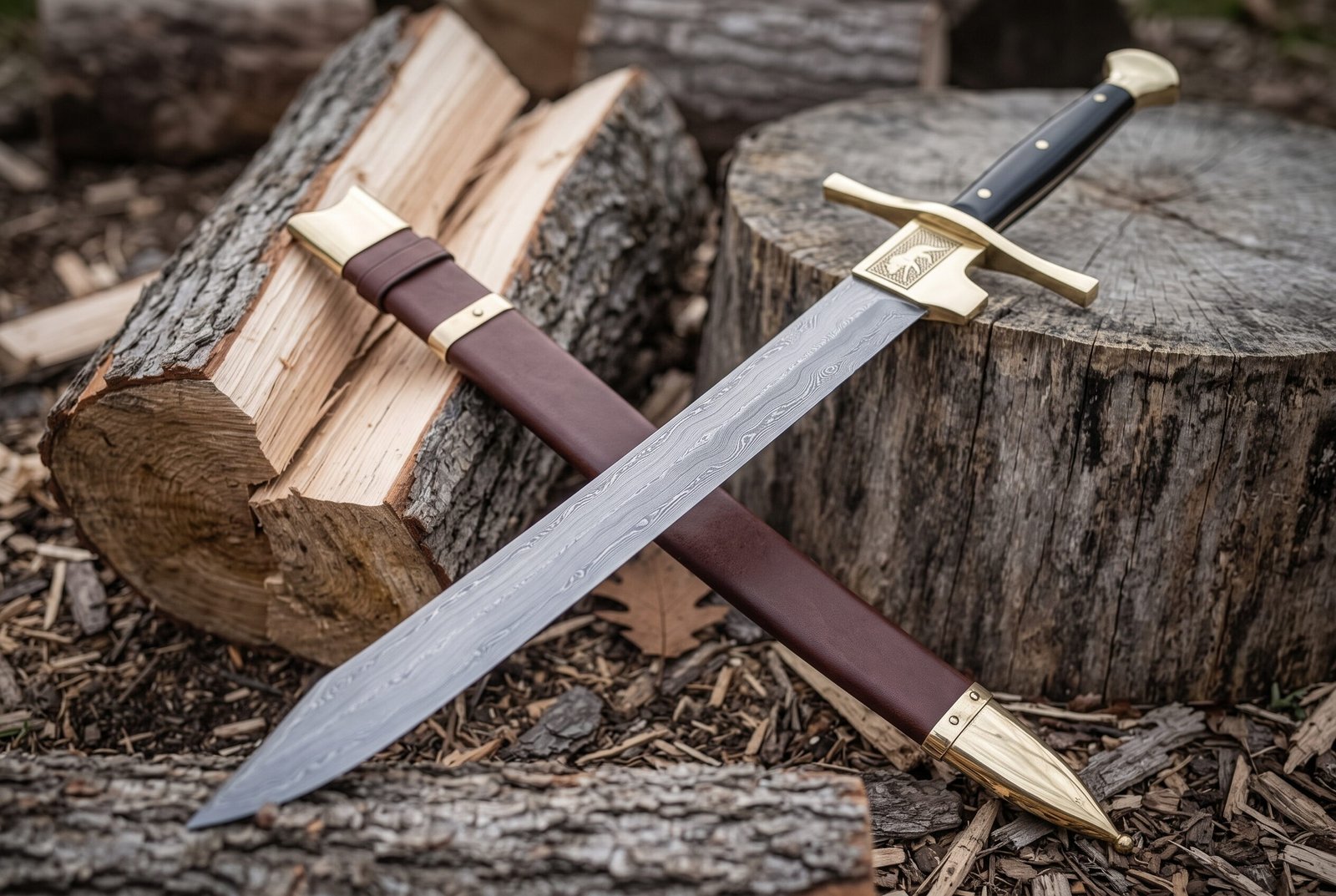
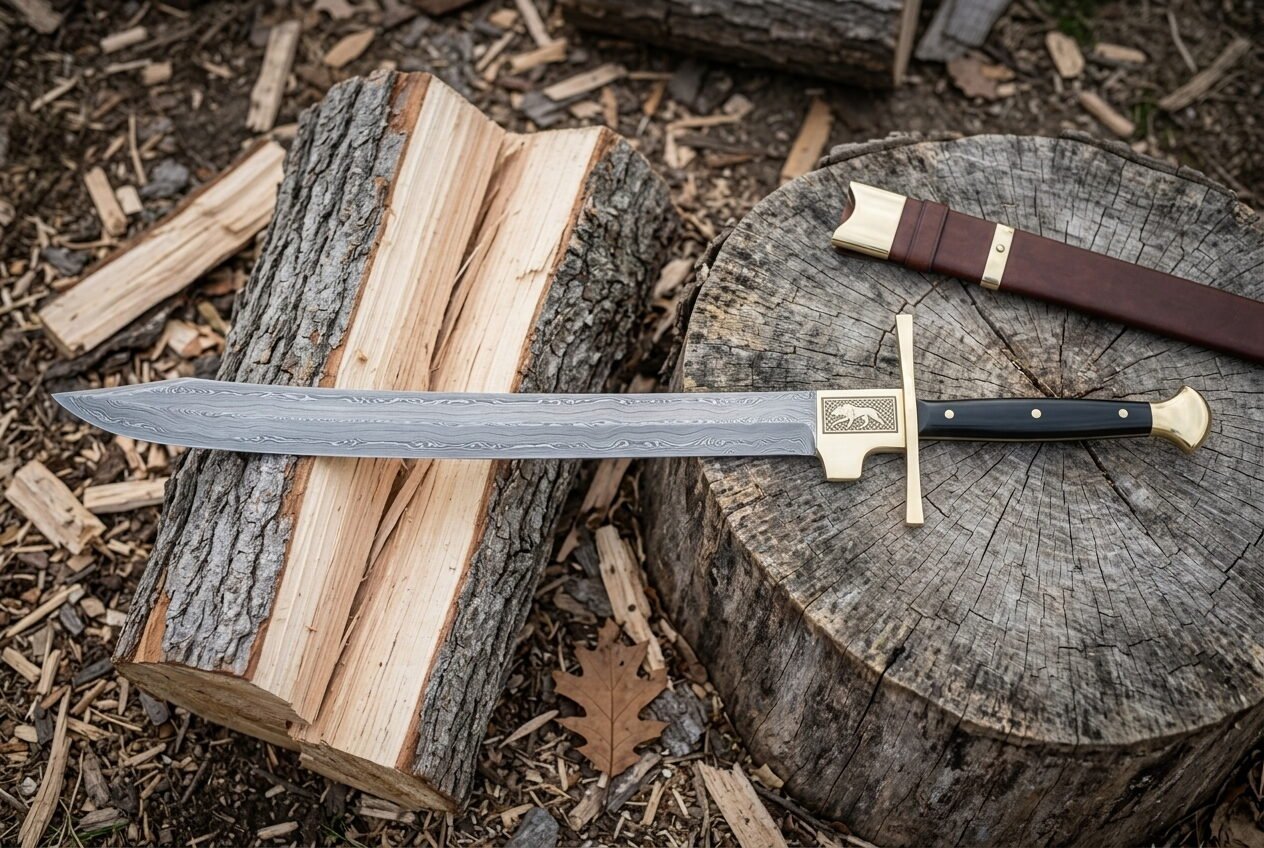
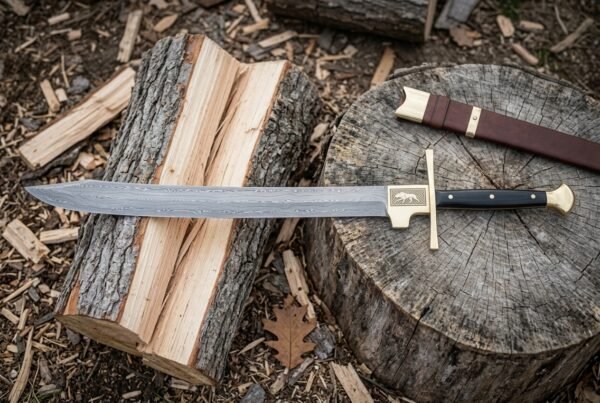
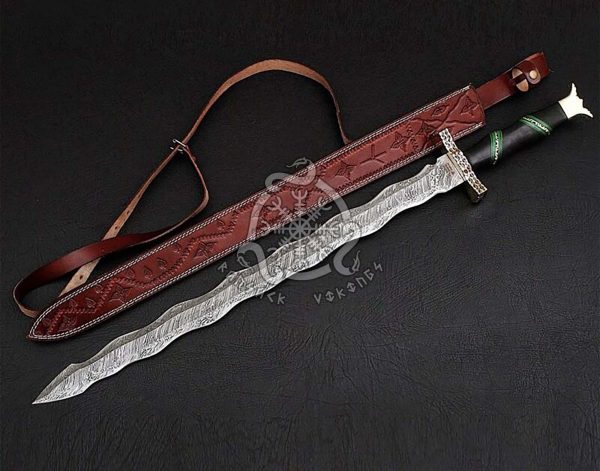
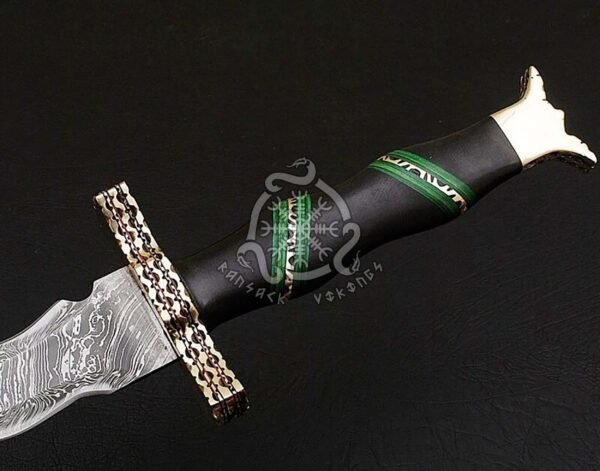
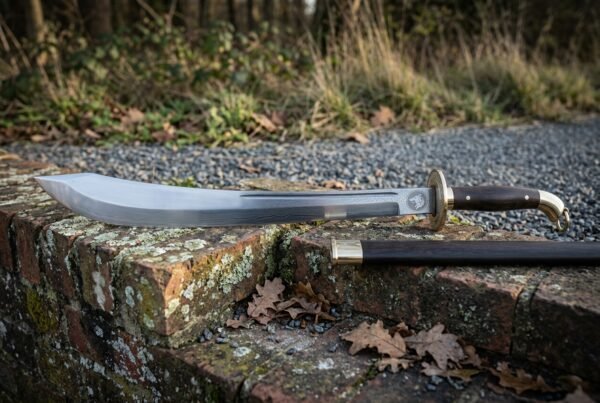
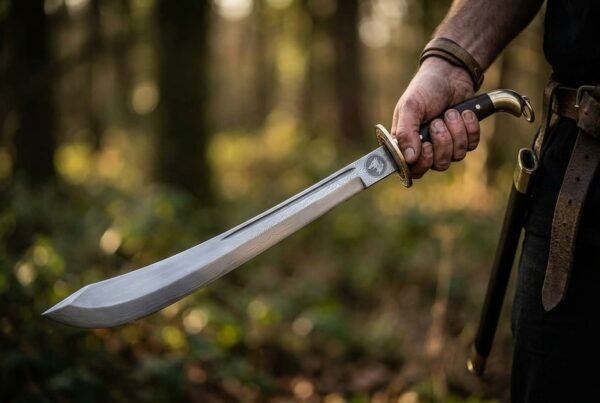
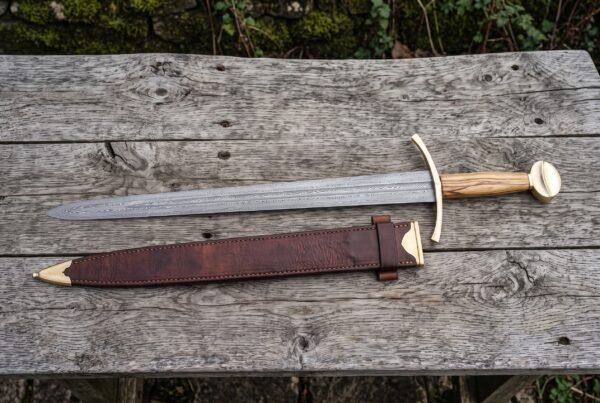
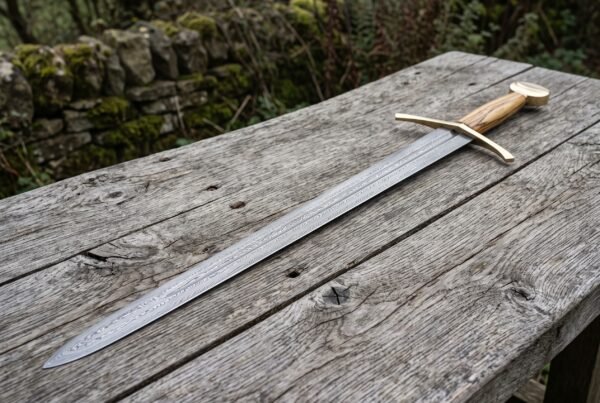
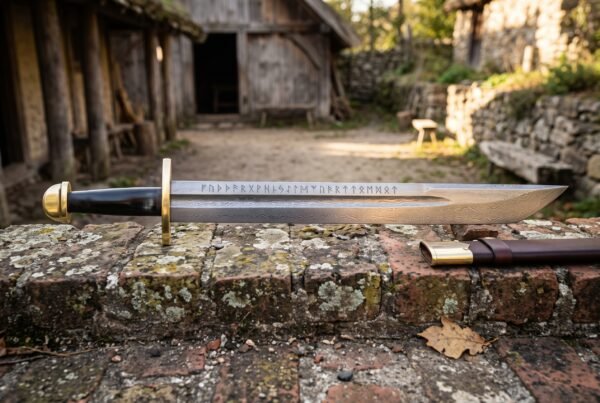
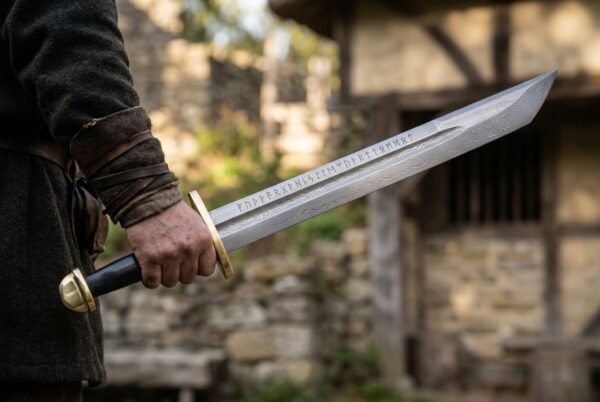
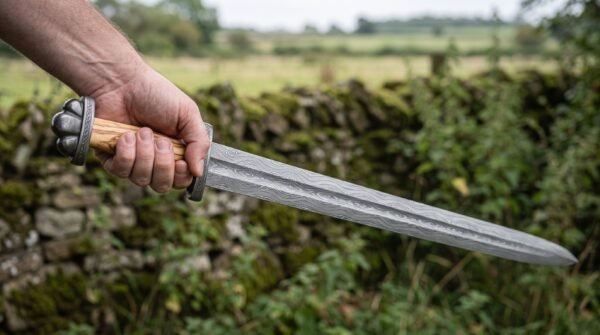
This Damascus falchion is forged and finished by hand in the Czech Republic. The blade is 1095 and 15N20 forge welded in alternating layers, hardened to 58 to 60 HRC and etched to bring the pattern up. The hilt is gilt brass with a straight cross guard, an engraved beast panel on the langet and a matching pommel, with a black hardwood grip between them. It ships in a brown leather scabbard with brass furniture, and shipping inside the United States is free.
Specifications
| Steel | 1095 and 15N20 forge welded Damascus |
|---|
| Hardness | 58 to 60 HRC |
|---|
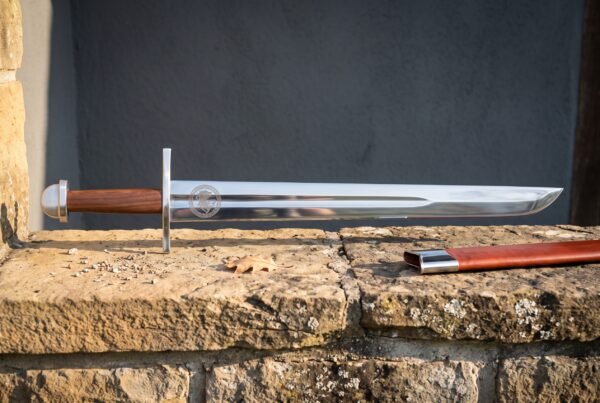
| Blade | Single edged falchion blade, slight swell towards the clipped point, etched Damascus pattern |
|---|
| Overall length | 30 inches |
|---|
| Blade length | 24 inches |
|---|
| Blade width | 2.2 inches at the widest point |
|---|
| Guard | Straight gilt brass cross guard with a langet carrying an engraved beast panel |
|---|
| Grip | Black hardwood grip with three brass pins, 6 inches |
|---|
| Pommel | Flared gilt brass cap pommel |
|---|
| Scabbard | Brown leather with brass throat, brass band and pointed brass chape |
|---|
| Weight | Approximately 2 pounds 8 ounces |
|---|
| SKU | RK-1292 |
|---|
Why a falchion belly is shaped the way it is
Hold this blade at the guard and look down the spine. The back is nearly straight for the first half, then the edge swells outward into a pronounced belly before both lines converge at a clipped point. That belly is where a falchion does its work. Moving steel forward raises the point of percussion and puts more mass behind the part of the edge that actually meets the target, which is why a falchion of modest weight cuts far harder than its numbers suggest.
The single edge lets the smith be generous with the spine. Where a double edged sword has to be thin on both sides, a falchion keeps a heavy back that resists bending and takes shock without complaint. The straight gilt cross guard on this piece is the plain period form seen on most falchions, with a short langet over the blade that carries an engraved beast panel.
Why Damascus and not stainless
Two steels are used in this workshop. Plain blades are 1095 high carbon steel at 54 to 58 HRC. Damascus blades like this one are 1095 and 15N20 forge welded together and taken to 58 to 60 HRC. Nothing else is used.
The pairing is deliberate. 1095 is a plain high carbon steel that hardens hard. 15N20 carries about two percent nickel, which does two useful things. It resists the acid etch, so it stays bright while the 1095 darkens and the layers show as light and dark bands, and it adds toughness to the finished billet. The result is a blade that is harder than our plain 1095 pieces and still resilient. Stainless steel cannot do this. Its chromium content prevents a clean forge weld, it will not etch into a pattern, and at sword lengths the chromium carbides make it brittle. Read our comparison of Damascus versus stainless for the full argument.
The hardwood grip and gilt brass furniture
The grip is black hardwood held with brass pins, shaped to an oval so the edge is always where your hand thinks it is, and finished smooth rather than lacquered. The guard and pommel are brass with a gilt finish, chosen because the warm gold tone sets off the light and dark banding of the Damascus far better than plain steel would. The tang runs the length of the grip and is peened over the pommel.
Keep the wood out of strong sun and away from dry heat, and oil it once or twice a year to stop the grain shrinking away from the guard. Our wooden handle care guide has the details.
Engraving, runes and your own design
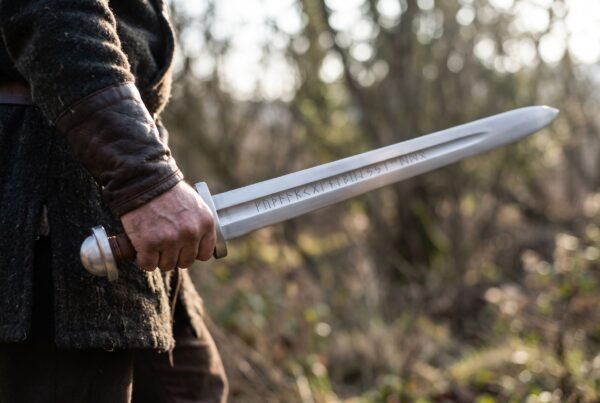
Use the rune converter on this page to turn a name, a date or a short phrase into Elder Futhark and we will cut it into the steel or the handle. If you would rather have a Viking pattern than a rune line, choose your own design in the engraving option above the add to cart button and tell us whether it goes on the blade or the handle. Where a piece already carries an engraved design, your chosen engraving replaces it rather than sitting alongside it. On a Damascus blade the cut line reads against the pattern rather than through it, and there are photographs showing exactly how that looks on the engraving page.
Care and sharpening
Damascus needs slightly more attention than plain steel, because the etch that reveals the pattern also opens the surface a little. Wipe the blade after handling and keep a light film of oil on it. Never use an abrasive polish or a rust eraser on the flats, because you will lift the etch and flatten the contrast. Our steel care page explains how to remove spotting without losing the pattern.
Sharpening is straightforward. The bevel is on one side, the curve is generous, and a medium stone followed by a fine one will restore the edge in a few minutes. Keep the existing angle, work slowly along the belly where the curve is tightest, and finish by removing the burr on the back. See sharpening with a whetstone.
Made in the Czech Republic
Every piece we sell is made by hand in the Czech Republic. The smiths there work the way the trade has been worked for a long time, heating and hammering the steel, taking the bevels down by eye, and fitting the handle and the leather one at a time. There is no automated line anywhere in it, so small differences from one piece to the next are normal and expected.
Ransack Viking is a United States company based in Chicago, Illinois. We bring the pieces in ourselves, inspect them on arrival and ship them from our own warehouse. If you add engraving, that is carried out here in the United States before your order goes out.
A note on handmade variation
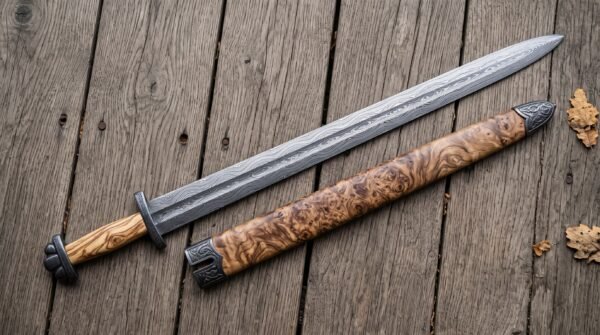
This falchion is hand forged. It is not machine made and it is not bulk produced, so what arrives will not be a pixel for pixel copy of the photograph. Damascus pattern is the clearest example of this. No two billets fold the same way, so the swirls, bands and eyes on your blade will be yours alone. The wood grain, the tone of the gilding and the exact sweep of the belly vary as well, because every part is worked by hand from natural materials. Dimensions, steel and build stay the same. The character does not.
Frequently asked questions
Is the Damascus pattern real or printed?
It is real. The blade is forged from a billet of 1095 and 15N20 welded together, drawn out and folded, so the pattern runs through the full thickness of the steel. Grinding into the blade would reveal more of the same pattern, not a plain core.
Is it sharp, and can I cut with it?
It arrives sharp and it is a working sword. Full tang, hardened to 58 to 60 HRC and peened at the pommel, it will handle tatami, bottles and light green wood. It is not intended for steel to steel sparring.
Can I have runes engraved on a Damascus blade?
Yes. Use the rune converter above for Elder Futhark or choose your own Viking pattern in the engraving option. Cut lines show clearly against the etched pattern.
Will my Damascus look like the photograph?
It will be the same style of pattern at the same contrast, but the exact figure is unique to each billet. Layer count, dimensions and hardness are the same every time.
What is the difference between this and the plain steel falchion?
The plain falchion is 1095 at 54 to 58 HRC with a bright polish. This one is forge welded 1095 and 15N20 at 58 to 60 HRC with an etched pattern, gilt brass furniture and a harder edge. It also takes longer to make, which is reflected in the price.
How long does shipping take?
Shipping is free within the United States. Stock swords arrive five to seven business days after dispatch. Damascus takes three to four weeks in the shop, and engraving adds a little more.
What is in the box
- One hand forged 1095 and 15N20 Damascus falchion, 30 inches overall
- One brown leather scabbard with brass throat and chape
- Care card written for etched Damascus rather than plain steel
- Your Elder Futhark rune line or chosen pattern, if engraving was ordered
- Forged and finished in the Czech Republic
Explore the range
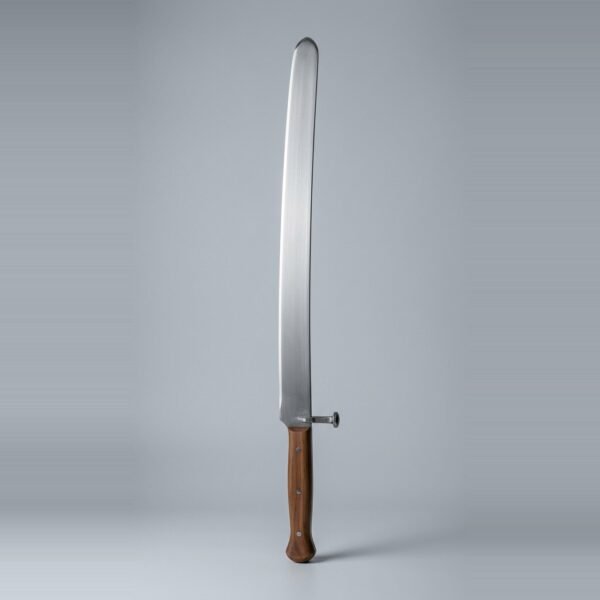
See the rest of the Damascus swords, the plain steel falchions, the single edged messers and the full sword range, or read the guides.
Others in the same line
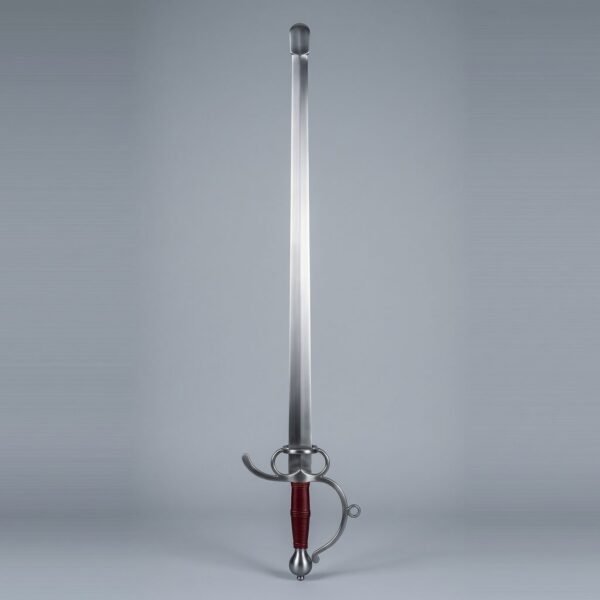
If this one is not quite right, there is the Knotcrown arming sword, pattern welded Damascus. Also in this group is the Rootspire arming sword, pattern welded Damascus. Sitting beside it in the catalogue is the Shellgrain rapier, 45 inches overall.
From the same corner of the shop, there is the Jadeholt Chinese sword. You can have this made your way instead on the custom Viking sword page.
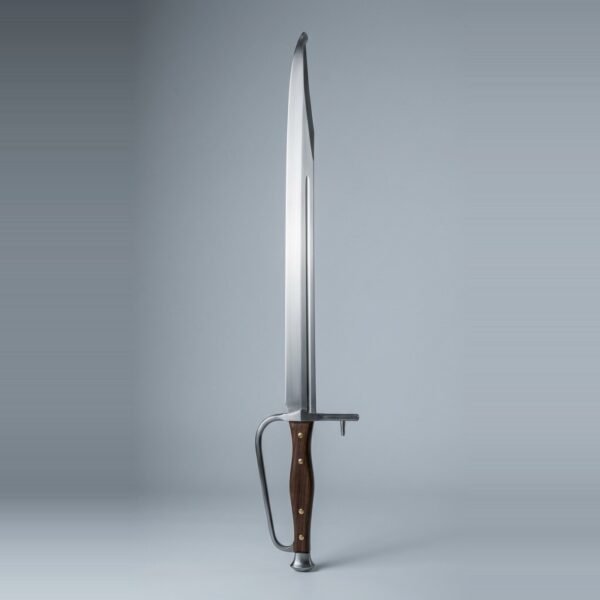
For a sharp historical pattern, see the Jarnfeld langes messer from our HEMA line, which is not made for sparring, and check our messer guide too.

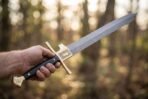
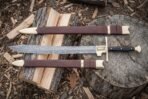
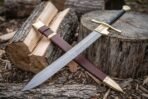
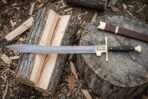
Best sword I’ve ever owned. Weight and balance make it feel like a real functional piece not some cheap replica. Even the small engravings are crisp and clean. Leather sheath is thick and well stitched. Not the cheap stuff you usually get. If you’re on the fence just get it. You won’t regret it.
Pretty impressed. Just a couple minor things I’d tweak. Second time ordering from Ransack Viking and still happy overall. Wood handle looks great though it’s a little smaller than I imagined. Sheath is nice. Wish it had more padding but it does the job. Still very happy with it and would recommend.
Can’t stop showing this off to everyone who comes over. Even the small engravings are crisp and clean. So worth it.
So happy I finally pulled the trigger on this one. So worth it.
Best sword I’ve ever owned. Already telling my friends to check this out.