
This is the full sword collection, a little over 350 hand forged blades sorted into more than twenty categories. It covers the medieval sword in all its forms, from single hand arming swords at 36 inches to two hand zweihanders at 50, and it runs well past Europe into katana, wakizashi, gladius, scimitars, jian and dao. If you know the type you want, use the category links below the grid. If you do not, the guide to buying a first sword starts with length and how many hands you want on the grip.
Blades are forged in plain 1095 high carbon, hardened to 54 to 58 HRC on most pieces and a little softer on the longer ones, or in 1095 and 15N20 Damascus, forge welded and acid etched, hardened to 58 to 60 HRC. Grips are leather, cord or twisted wire over a shaped wooden core, with steel or brass guards and pommels.
For a first sword, an arming sword or a Viking sword between 30 and 37 inches is easier to live with, easier to hang and easier to hold than anything longer. If you want the history behind the Norse end of the range, start with the people behind the sagas, then read what Valhalla actually was.
Free US shipping
On most pieces. Heavier and oversized ones carry a flat charge.
Hand Forged
Heated, hammered and ground by hand.
Engraving available
Names, dates or Norse runes on most pieces.
Ships from Memphis
Inspected and dispatched from our Tennessee warehouse. No import duty, no customs delay on US orders.
Swords
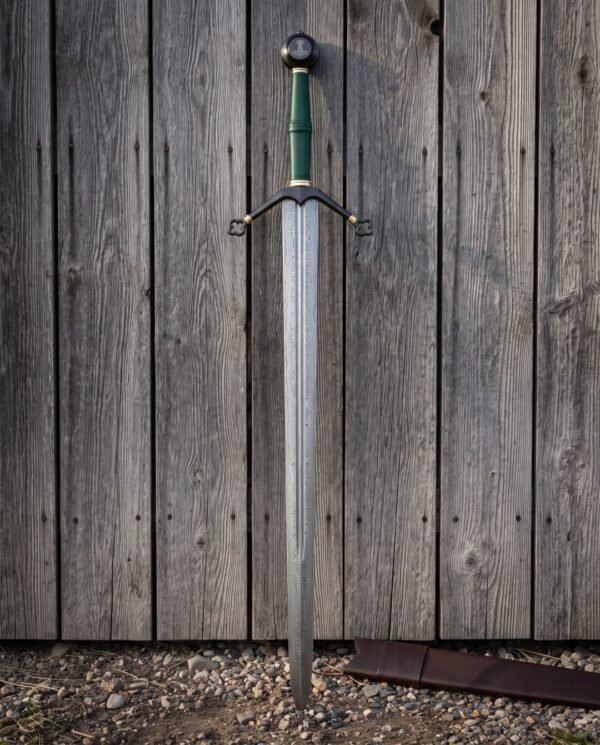
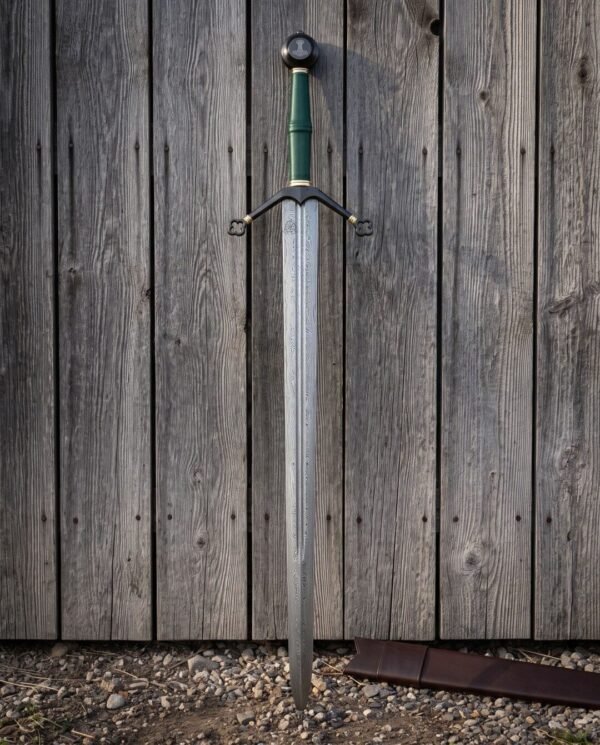
Stormvine Hand Forged Damascus Viking Sword with Mjolnir Pommel & Scrolled Blackened Guard | About 38 Inches Overall | Green Wrapped Grip and Leather Scabbard | Display Gift | RK-2208
Original price was: $525.00.$446.25Current price is: $446.25.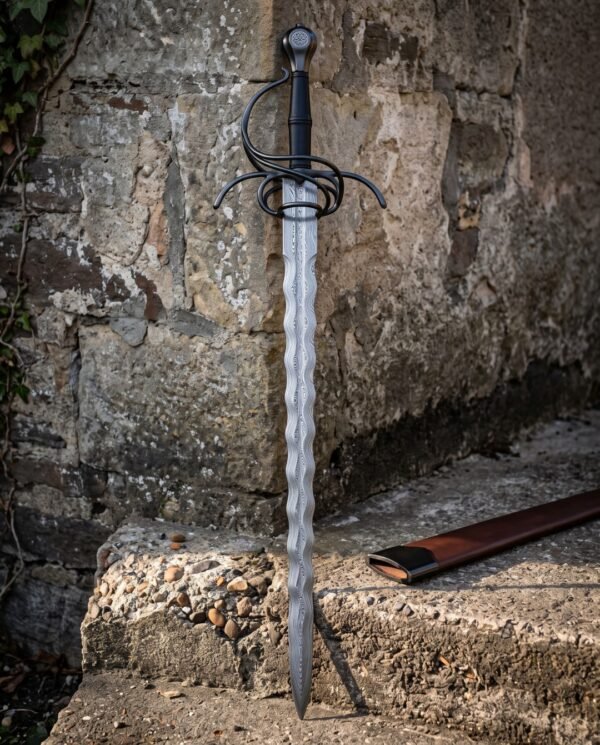
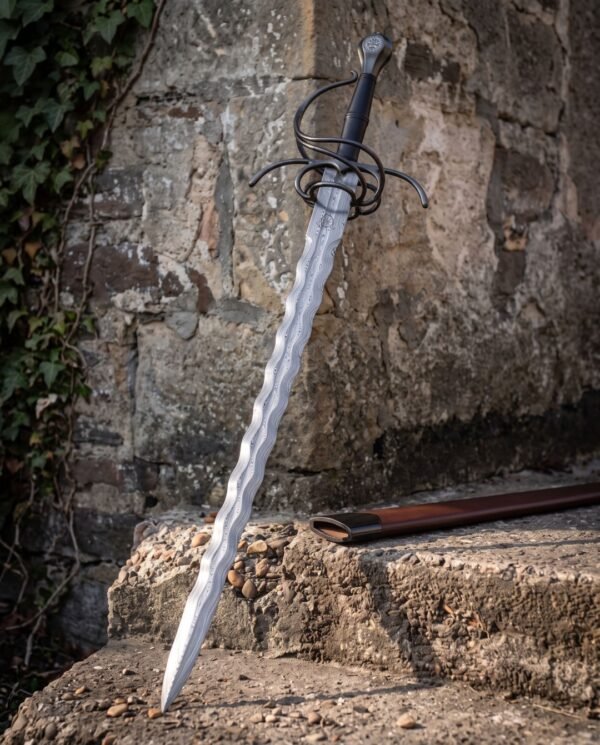
Nightflame Hand Forged Damascus Flame Bladed Sword with Blackened Swept Hilt & Knuckle Bow | About 40 Inches Overall | Ribbed Grip and Brown Scabbard | Display Gift | RK-2206
Original price was: $615.00.$522.75Current price is: $522.75.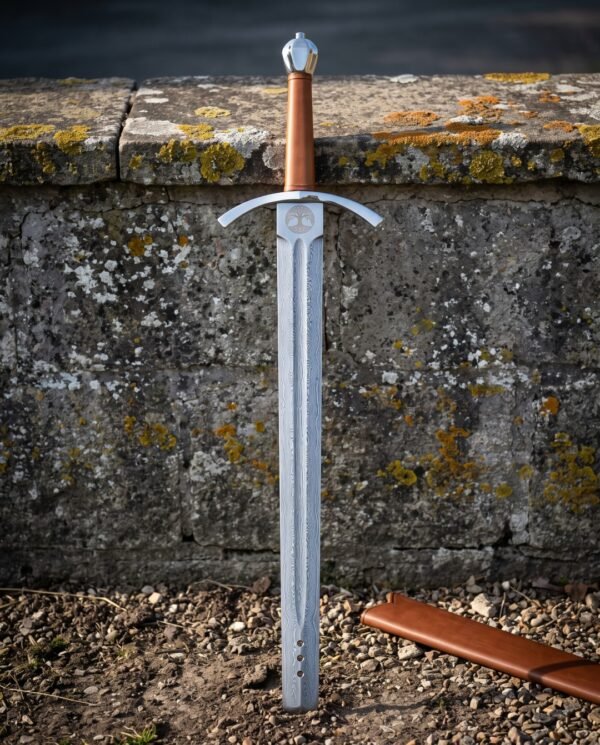
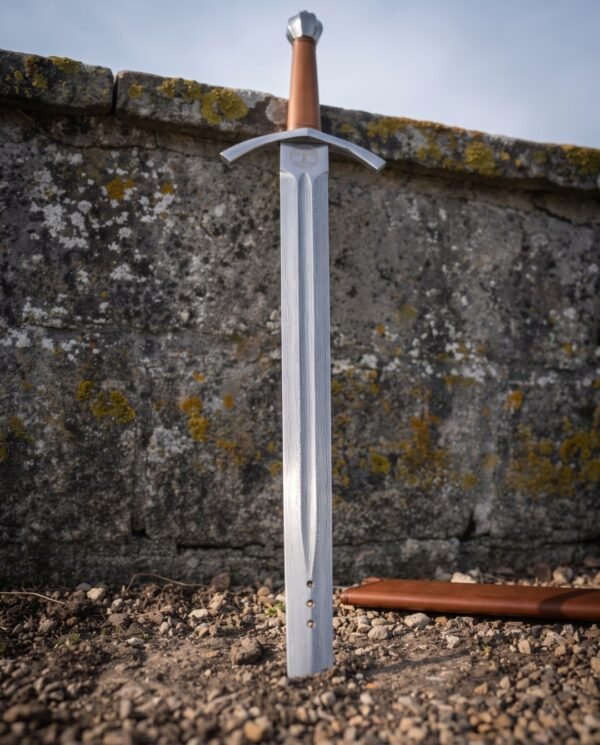
Rootspire Hand Forged Damascus Sword with Engraved Tree of Life Roundel & Faceted Pommel | About 38 Inches Overall | Leather Grip and Tan Scabbard | Display Gift | RK-2205
Original price was: $579.00.$492.15Current price is: $492.15.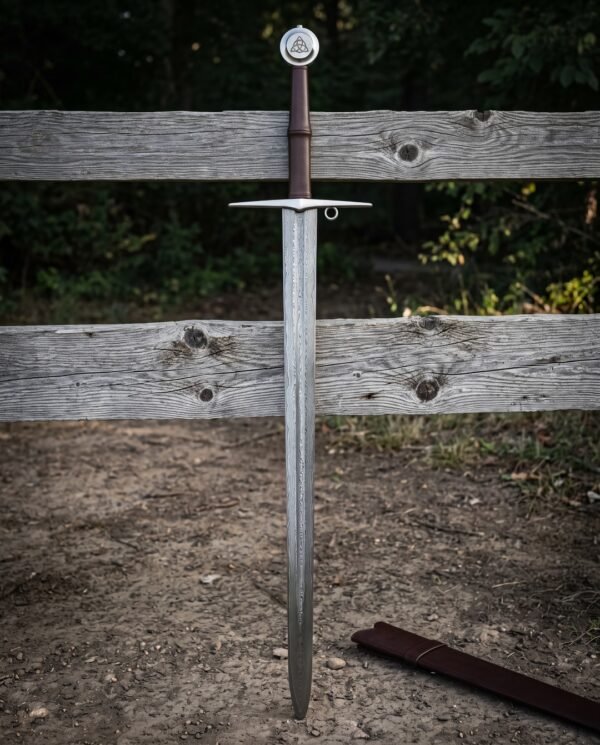
Knotcrown Hand Forged Damascus Arming Sword with Triquetra Disc Pommel & Ring Quillon | About 38 Inches Overall | Leather Grip and Brown Scabbard | Display Gift | RK-2200
Original price was: $549.00.$466.65Current price is: $466.65.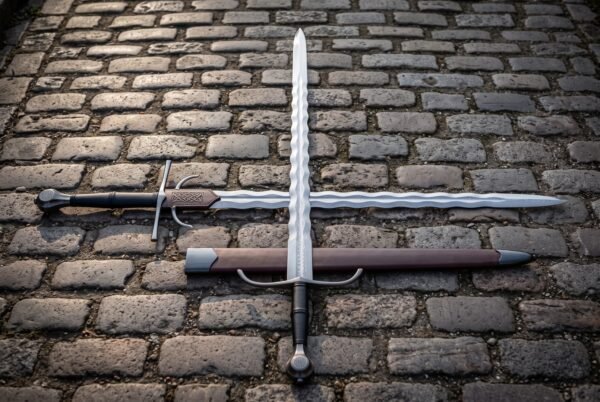
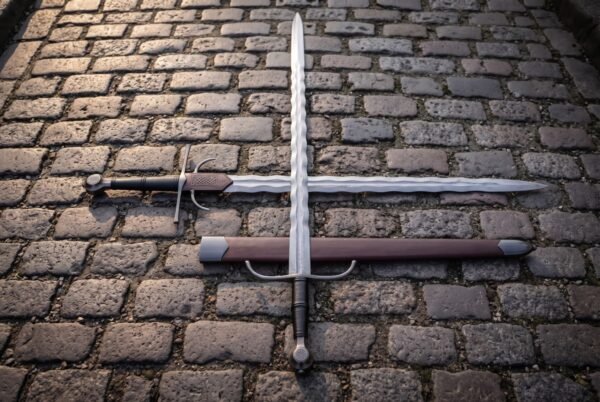
Flamewake Hand Forged Flame Bladed Longsword with S Curved Crossguard & Engraved Pommel | About 42 Inches Overall | Leather Grip and Brown Scabbard | Display Gift | RK-2199
Original price was: $459.00.$390.15Current price is: $390.15.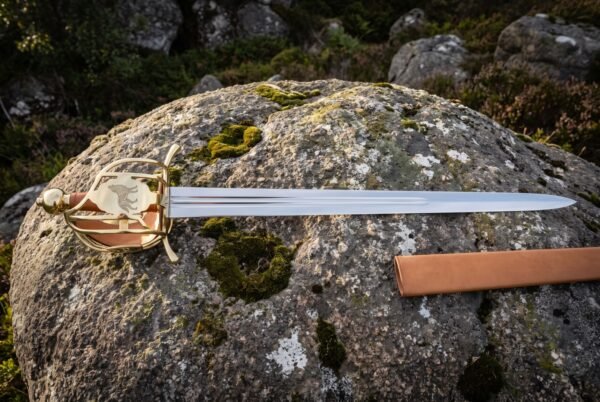
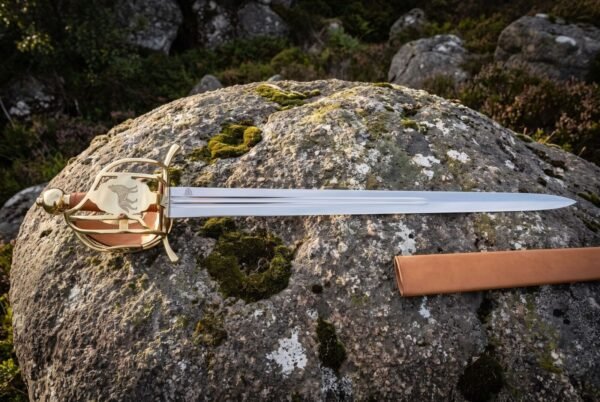
Gildwolf Hand Forged Hunting Hanger Short Sword with Engraved Brass Shell Guard & Wolf Motif | About 28 Inches Overall | Leather Grip and Tan Scabbard | Display Gift | RK-2197
Original price was: $349.00.$296.65Current price is: $296.65.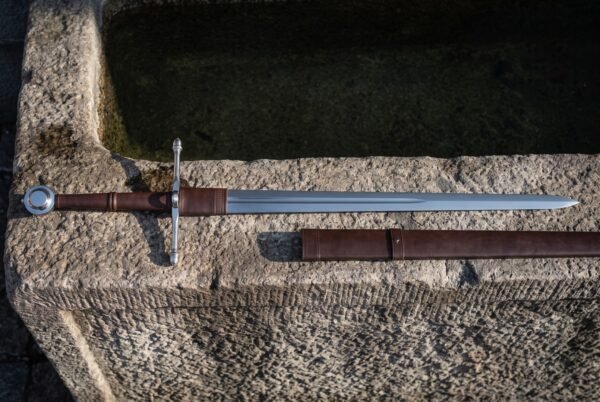
Loopwarden Hand Forged High Carbon Hand and a Half Sword with Open Ring Pommel | Brown Leather Grip and Guard | Belt Hung Leather Scabbard | Medieval Gift | RK-2182
Original price was: $439.00.$373.15Current price is: $373.15.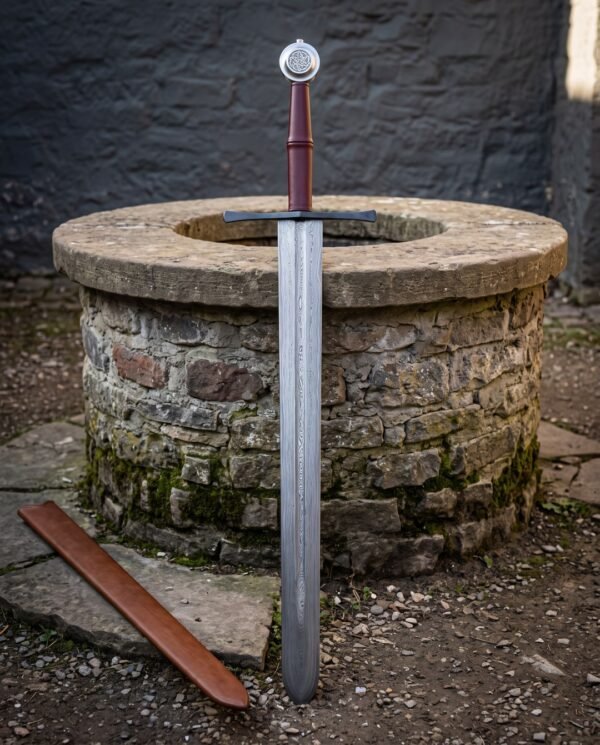
Knotwheel Hand Forged Damascus Arming Sword with Celtic Knot Wheel Pommel | Banded Burgundy Leather Grip | Rounded Display Point and Leather Scabbard | Norse Gift | RK-2179
Original price was: $469.00.$398.65Current price is: $398.65.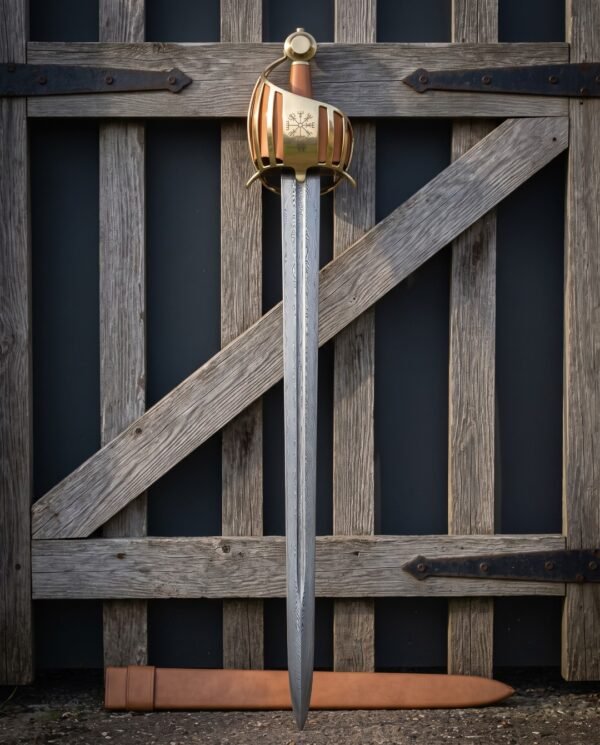
Vegcage Hand Forged Damascus Basket Hilt Short Sword with Vegvisir Engraved Brass Cage | Tan Leather Grip | Leather Scabbard Included | Norse Collector Gift | RK-2177
Original price was: $549.00.$466.65Current price is: $466.65.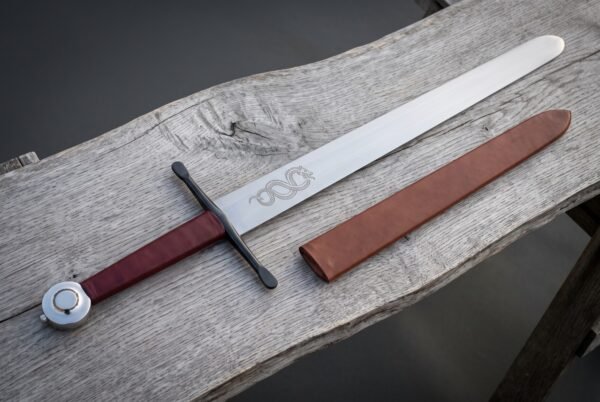
Serpentward Hand Forged High Carbon Display Sword with Serpent Etched Blade | Rounded Unsharpened Point | Wheel Pommel and Burgundy Leather Grip | Wall Display Gift | RK-2176
Original price was: $349.00.$296.65Current price is: $296.65.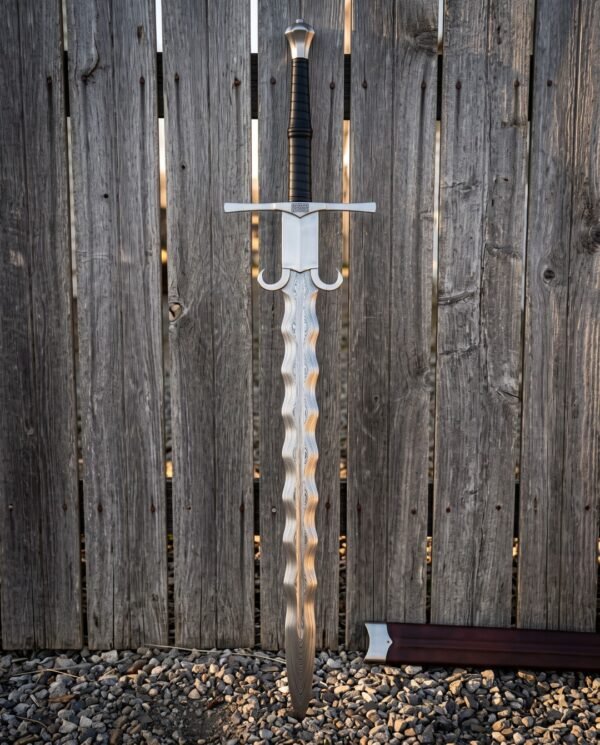
Flamewave Hand Forged Damascus Flamberge Longsword with Wave Cut Blade | Parrying Hook Guard | Leather Wrapped Grip and Wooden Scabbard | Display Collector Gift | RK-2174
Original price was: $669.00.$568.65Current price is: $568.65.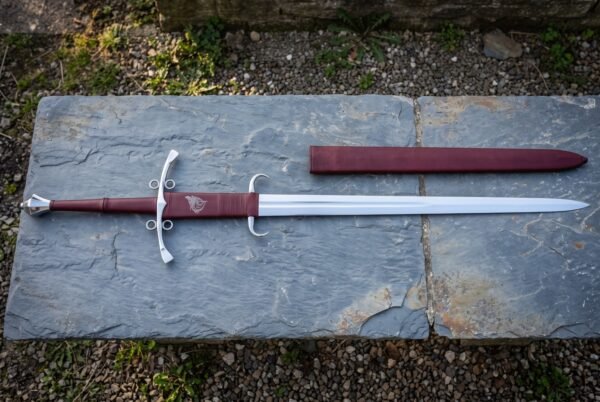
Crimsonring Hand Forged High Carbon Side Ring Sword with Raven Stamped Burgundy Grip | Polished Steel Ring Guard | Matching Leather Scabbard | Reenactor Gift | RK-2173
Original price was: $449.00.$381.65Current price is: $381.65.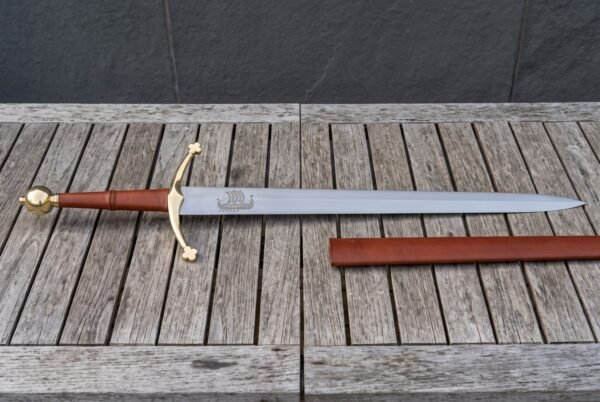
Keelbrand Hand Forged High Carbon Arming Sword with Longship Etched Blade | Brass Ball Pommel and Trefoil Guard | Leather Grip and Scabbard | Norse Collector Gift | RK-2172
Original price was: $419.00.$356.15Current price is: $356.15.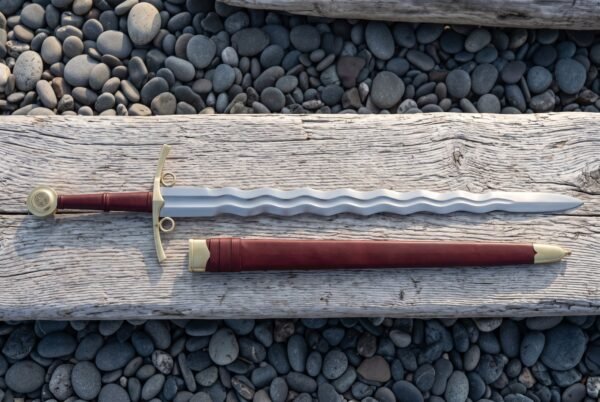
Ringflame Hand Forged High Carbon Steel Flamberge Sword | 35 Inch Overall Length | Brass Side Ring Hilt with Celtic Cross Pommel | Norse Collector Gift | RK-2160
Original price was: $469.00.$398.65Current price is: $398.65.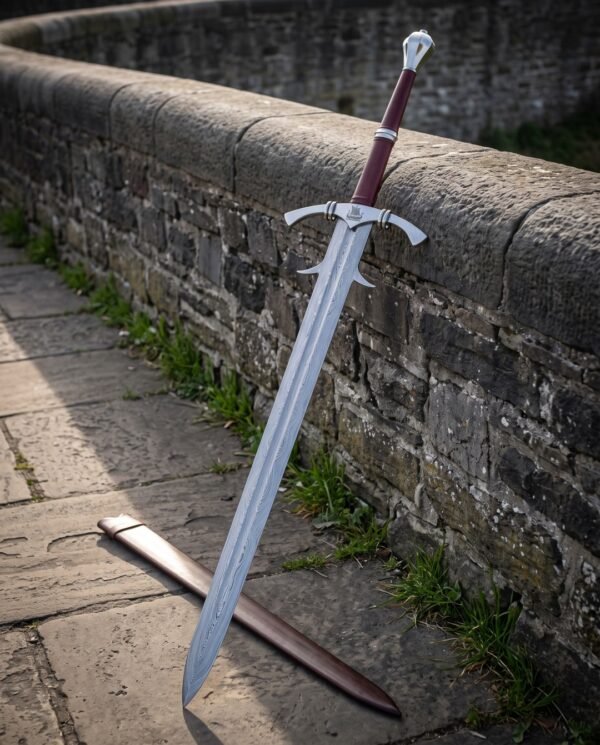

Prowcrown Hand Forged Damascus Steel Longsword | 44 Inch Overall Length | Barbed Guard with Longship Engraving and Crown Pommel | Fantasy Collector Gift | RK-2159
Original price was: $649.00.$551.65Current price is: $551.65.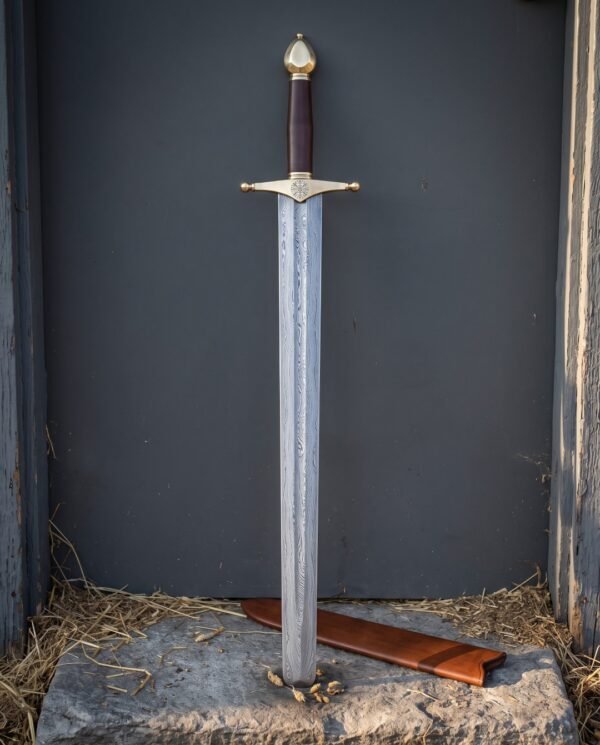
Awecrown Hand Forged Damascus Steel Arming Sword | 36 Inch Overall Length | Brass Hilt with Helm of Awe Engraved Guard and Acorn Pommel | Norse Gift | RK-2156
Original price was: $529.00.$449.65Current price is: $449.65.
Ripplehook Hand Forged High Carbon Steel Flamberge Sword | 35 Inch Overall Length | Blackened Hooked Guard with Knotwork Etched Wave Blade | Fantasy Gift | RK-2155
Original price was: $429.00.$364.65Current price is: $364.65.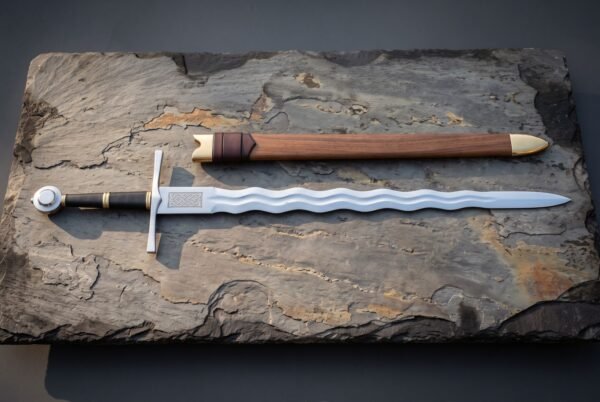
Wavecrown Hand Forged High Carbon Steel Flamberge Sword | 35 Inch Overall Length | Wave Bladed Sword with Disc Pommel and Timber Scabbard | Collector Gift | RK-2154
Original price was: $449.00.$381.65Current price is: $381.65.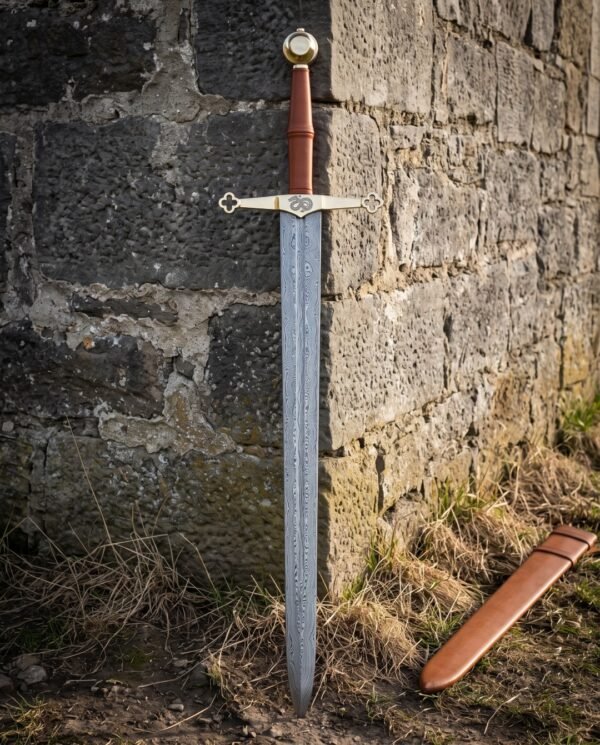
Serpentgleam Hand Forged Damascus Steel Arming Sword | 36 Inch Overall Length | Brass Quatrefoil Guard with Serpent and Set Cabochon Pommel | Norse Gift | RK-2153
Original price was: $549.00.$466.65Current price is: $466.65.
Hammerlight Hand Forged High Carbon Steel Viking Arming Sword | 36 Inch Overall Length | Brass Hilt with Oxblood Leather Grip | Mjolnir Etched Gift | RK-2150
Original price was: $349.00.$296.65Current price is: $296.65.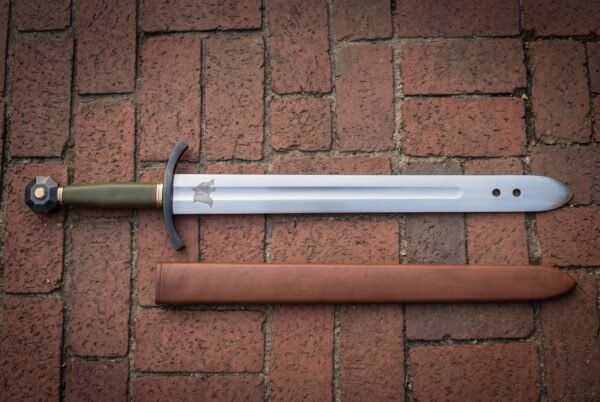
Wolfbrand Hand Forged High Carbon Steel Arming Sword | 36 Inch Overall Length | Olive Leather Grip with Blackened Guard and Faceted Pommel | Wolf Etched Gift | RK-2149
Original price was: $329.00.$279.65Current price is: $279.65.
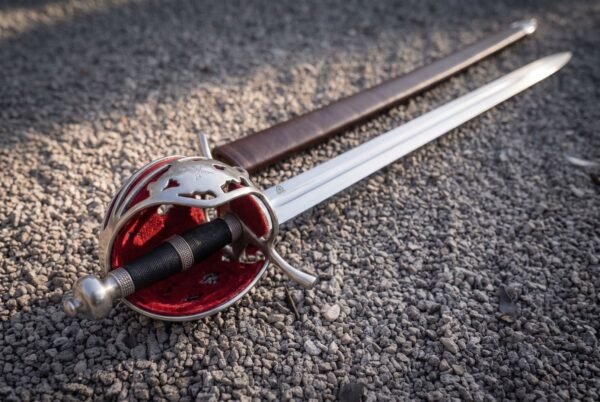
Emberguard Hand Forged 1095 Steel Broadsword with Pierced Shell Guard | 37 Inch Overall and 31 Inch Blade | Helm of Awe Cut Shell and Red Panels and Knuckle Bow | Collector Gift | RK-2135
Original price was: $389.00.$330.65Current price is: $330.65.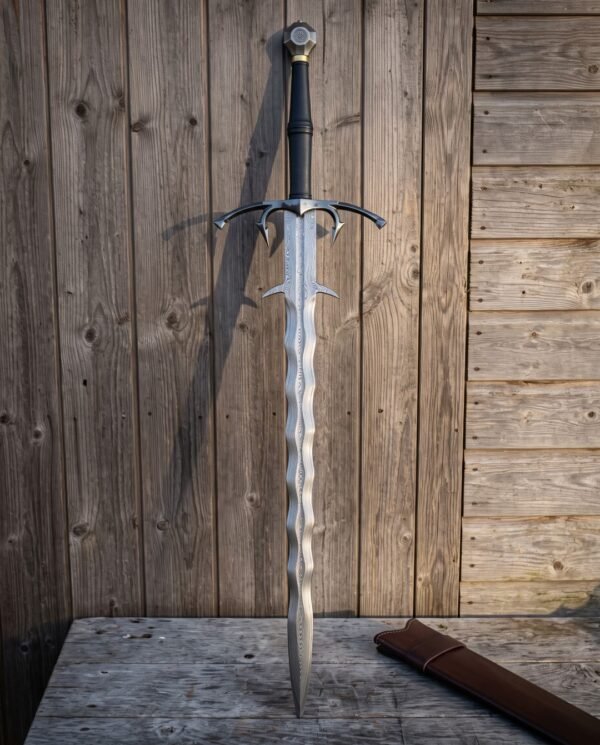
Thornbite Hand Forged Damascus Fantasy Sword with Barbed Guard | 40 Inch Overall and 32 Inch Blade | Wave Blade and Blackened Fittings and Faceted Pommel | Collector Gift | RK-2132
Original price was: $669.00.$568.65Current price is: $568.65.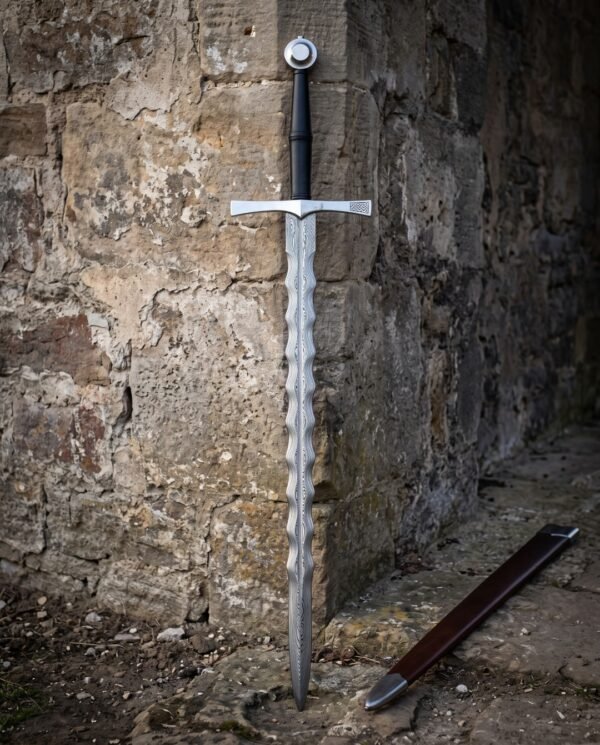
Knotflame Hand Forged Damascus Flamberge Sword with Knotwork Cut Guard | 38 Inch Overall and 31 Inch Blade | Flame Blade and Black Grip and Steel Tipped Scabbard | Collector Gift | RK-2130
Original price was: $599.00.$509.15Current price is: $509.15.How this collection is arranged
Sword names are a mess, because most were invented by collectors and curators centuries after the blades were made. Nobody in 1350 asked for an arming sword. They asked for a sword. The labels still describe real differences in length, edge geometry and how many hands go on the grip, but they are a filing system rather than a historical fact.
The categories below the grid split on those differences. Straight double edged European blades sit together, single edged cutting blades sit together, and thrusting, Japanese and Chinese blades each have their own group. Two categories cut across the rest: Damascus swords is sorted by steel, and fantasy and movie swords by where the design came from. A blade can appear in more than one, so a pattern welded Viking sword shows up in both Viking swords and Damascus swords.
Straight, double edged and European
The core of any medieval sword collection. All double edged with a cross guard and pommel, differing mainly in length and in how many hands the grip takes.
Arming swords
The single hand sword of the high middle ages, and one of the largest groups here. Sizes cluster around 36 inches overall with a 29 to 30 inch double edged blade, usually with a wide fuller, and a 4 to 4.5 inch grip in leather or cord over a shaped wooden core. Bare weight runs near 2 lb 10 oz. The most useful starting point in the collection.
Longswords
Two hand blades running 43 to 46 inches overall with 33 to 35 inch blades and 8 to 9 inch grips. Steel is 1095, drawn softer to 52 to 54 HRC on one long spring blade, or Damascus at 58 to 60. Grips are cord wrapped under leather over a ribbed core, with straight steel crosses and disc or wheel pommels. Expect around 3 lb 4 oz.
Bastard swords
The hand and a half type, between an arming sword and a full longsword. These run 37 to 43 inches overall with 30 to 33 inch blades and 7 to 9 inch grips, in 1095 at 54 to 58 HRC or Damascus at 58 to 60, weighing 2 lb 14 oz to 3 lb 6 oz. Pick one for two hand reach without a wall sized blade.
Zweihanders
The largest swords on the site, 48 to 50 inches overall with 36 to 39 inch blades and 9 to 10 inch grips in bound leather over a timber core, in 1095 at 54 to 58 HRC. Display pieces first. Measure your wall before ordering and buy a bracket at the same time.
Claymores
The Scottish two hander, defined by forward sloping quillons ending in quatrefoils rather than by length. A small category, so check it early rather than assuming stock.
Single edged and curved
Cutting blades. One edge, mass towards the point, and a bias to drawing cuts rather than thrusts.
Falchions
Short, broad and heavy at the tip. These run 29 to 31 inches overall with 23 to 25 inch blades and 6 inch hardwood or rosewood grips, in 1095 at 54 to 58 HRC or Damascus at 58 to 60, with brass or steel fittings, at 2 lb 4 oz to 2 lb 8 oz. A falchion feels like a heavy tool rather than a longsword, which is the point of it.
Messers
The German big knife, built with slab scales riveted to a full tang rather than a tang peened through a pommel. One hand versions run 32 inches overall with 25 inch blades. The two hand kriegsmesser reaches 44 inches with a 33 inch blade at about 3 lb 12 oz.
Sabres
Curved single edged cavalry blades, 33 to 36 inches overall with 27 to 29 inch blades, in 1095 at 54 to 58 HRC or Damascus at 58 to 60. Grips are ribbed leather over a shaped core with steel or brass fittings, one bound in brass wire, one in horn slab scales. About 2 lb 2 oz keeps them quick.
Cutlasses
The short naval blade, 30 to 31 inches overall with 24 to 25 inch blades in 1095 at 54 to 58 HRC or Damascus at 58 to 60. Grips are walnut slab scales riveted through the tang, or ribbed leather with a brass or steel ferrule and a peened pommel.
Scimitars
A group name covering talwar, shamshir and kilij rather than one design. These run 34 to 37 inches overall with 28 to 31 inch curved edges in 1095 at 54 to 58 HRC, with rosewood grips, brass cross guards, drooping quillons and hooked pommels. The deep curve makes them the strongest drawing cutters here.
Norse and Roman blades
Shorter, broader and older than the medieval types above, and the group most of our customers arrive for.
Viking swords
Broad double edged blades with short grips and thick pommels, 30 to 37 inches overall with 23 to 30 inch blades, in 1095 at 54 to 58 HRC or Damascus at 58 to 60, which is the closer match to the pattern welded Norse originals. Grips are leather over a wooden core, sometimes bound with brass rings or coiled wire.
Short swords
Anything under about 31 inches overall, with 19 to 25 inch blades and 4 inch grips of leather or cord over a shaped hardwood core. Weights start near 1 lb 15 oz, which makes these the easiest swords here to handle and the sensible choice for indoor display.
Gladius
The Roman short sword, consistent at 26 to 27 inches overall with 19 to 20 inch leaf shaped blades running to a long triangular point. Several are Damascus at 58 to 60 HRC with brass fittings and turned hardwood grips cut with finger ribs, at about 2 lb 2 oz.
Thrusting and wave bladed
Two small groups outside the cut and thrust middle ground.
Rapiers
The longest thin blades here, 44 to 47 inches overall with 36.5 to 39.5 inch blades in 1095 at 54 to 58 HRC or Damascus at 58 to 60. Grips are twisted wire or bound leather over a wooden core with spherical, oval or faceted pommels. A rapier reads very differently on a wall from a medieval sword, since almost all its visual weight sits in the swept hilt.
Flamberges
Wave bladed swords in an arming length at 36 inches overall with a 29 inch edge, and a two hand version at 43 inches with a 33 inch blade. Both are 1095 at 54 to 58 HRC with leather over a wood core. The undulating edge is awkward to sharpen, so treat these as wall pieces.
Japanese and Chinese swords
Forged the same way as everything else here, in the same two steels, in eastern shapes.
Katana and Japanese swords
Curved single edged blades of about 40 inches overall in the saya with a 27 inch blade, in Damascus at 58 to 60 HRC or 1095 at 54 to 58. The tsuka runs about 11 inches, cord wrapped over pale rayskin, with a steel butt cap. Bare weight sits near 2 lb 10 oz, or 3 lb 4 oz sheathed.
Wakizashi
The shorter companion blade, about 28 inches overall with a 20 inch blade and an 8 inch cord wrapped grip over a hardwood core, in 1095 at 54 to 58 HRC. Some sell as matched pairs with a katana. A wakizashi is far easier to display in a normal room than a full katana.
Jian and dao Chinese swords
Straight double edged jian and curved single edged dao, 34 to 36 inches overall with 26 to 27 inch blades and long 7.5 to 8.5 inch grips, in 1095 at 54 to 58 HRC or Damascus at 58 to 60, at about 2 lb to 2 lb 6 oz. The long grip is the giveaway, since Chinese sword work uses far more two hand support than European single hand technique.
Damascus swords and fantasy swords
Two categories sorted by something other than shape.
Damascus swords
Every blade forge welded from 1095 and 15N20, hardened to 58 to 60 HRC and acid etched so the layers show as light and dark bands. The largest single category here, spanning katana, arming swords and gladius alike. Buy from here if the pattern is the point, from a shape category if the shape is.
Fantasy and movie swords
Designs from screen and print, forged in real steel rather than cast. Sizes vary widely, from 30 inches overall with a 21 inch blade up to a 42 inch two hander with a 33 inch differentially tempered blade, 54 to 56 HRC at the edge with a softer spine, at about 3 lb 1 oz.
Lengths and weights across the collection
Every figure below comes from the specification panel of a product in that category. Blades are forged and ground by hand, so treat these as ranges.
| Type | Overall length | Blade length | Steel and hardness | Grip | Best for |
|---|---|---|---|---|---|
| Arming sword | 36 in | 29 to 30 in | 1095 at 54 to 58 HRC | 4 to 4.5 in, leather or cord over wood | Single hand medieval kit |
| Longsword | 43 to 46 in | 33 to 35 in | 1095 at 52 to 58 HRC, or Damascus at 58 to 60 | 8 to 9 in, leather over a ribbed core | Two hand display |
| Bastard sword | 37 to 43 in | 30 to 33 in | 1095 at 54 to 58 HRC, or Damascus at 58 to 60 | 7 to 9 in, hardwood or leather | Hand and a half reach |
| Zweihander | 48 to 50 in | 36 to 39 in | 1095 at 54 to 58 HRC | 9 to 10 in, bound leather over timber | Large wall display |
| Viking sword | 30 to 37 in | 23 to 30 in | 1095 at 54 to 58 HRC, or Damascus at 58 to 60 | Leather or coiled wire over wood | Norse collections |
| Short sword and gladius | 26 to 31 in | 19 to 25 in | 1095 at 54 to 58 HRC, or Damascus at 58 to 60 | 4 in, leather or turned hardwood | Compact display, Roman kit |
| Falchion and messer | 29 to 44 in | 23 to 33 in | 1095 at 54 to 58 HRC, or Damascus at 58 to 60 | 6 to 11 in, hardwood or rosewood | Cutting focused medieval |
| Sabre and cutlass | 30 to 36 in | 24 to 29 in | 1095 at 54 to 58 HRC, or Damascus at 58 to 60 | Ribbed leather, brass or steel fittings | Naval and cavalry styles |
| Rapier | 44 to 47 in | 36.5 to 39.5 in | 1095 at 54 to 58 HRC, or Damascus at 58 to 60 | Twisted wire or bound leather | Renaissance display |
| Katana and wakizashi | 28 to 40 in | 20 to 27 in | 1095 at 54 to 58 HRC, or Damascus at 58 to 60 | 8 to 11 in tsuka, cord over rayskin | Japanese collections |
Bare weights run from about 1 lb 15 oz on a short sword to 3 lb 12 oz on a two hand messer. Length is the figure people check and weight is the one they should. A 36 inch arming sword at 2 lb 10 oz feels light and lively. A 44 inch blade at 3 lb 12 oz does not, and it needs a proper bracket rather than a pair of hooks.
Steel, hardness, and what battle ready means
Two steels run through the whole site. Plain 1095 high carbon is hardened to 54 to 58 HRC on most swords here, and a few long blades are drawn softer to 52 to 54 HRC, because a long blade needs to flex and return rather than sit rigid and snap. Damascus is 1095 and 15N20 forge welded and acid etched at 58 to 60 HRC, giving better edge retention and the visible pattern. A small number of older listings state a different grade in their own spec table, and where they do, that table is the correct answer for that piece.
Battle ready is a marketing phrase with no standard behind it. What it usually means is a blade of properly heat treated carbon steel, full tang, with the tang peened or bolted rather than welded, so the sword will not come apart when swung. Every hand forged sword here meets that description. What it does not mean is that a sword has been tested for contact against another blade or against armour. Ransack Viking does not certify any piece for sparring or contact use, and steel on steel contact chips edges and bends blades regardless of maker.
For a wall, buy on shape and pattern. For cutting practice on soft targets, buy plain 1095 in a shorter length so it stays manageable and easy to resharpen. For reenactment, check your group's rules on edge thickness and tip geometry first, since most require blunted and rolled edges that these blades do not come with.
Care is the same for both steels, since Damascus here is mostly 1095. Wipe the blade dry, keep a light film of oil on it, and never store a carbon steel blade in a damp scabbard for months. Store swords horizontally or point down on a stand, not point up in a corner, and keep them off outside walls where condensation forms. Grey patina is harmless. Orange spotting comes off with fine abrasive and oil.
Browse every sword category
- Arming swords, the single hand medieval standard
- Longswords for two hands with 33 to 35 inch blades
- Bastard swords in the hand and a half length
- Zweihanders, the largest two hand blades here
- Claymores with forward sloping Scottish quillons
- Viking swords with broad blades and short grips
- Short swords under 31 inches overall
- Gladius, the Roman leaf bladed short sword
- Falchions, short broad cleaving blades
- Messers with riveted slab scale grips
- Sabres, curved single edged cavalry blades
- Cutlasses, the short naval cutting sword
- Scimitars, talwar, shamshir and kilij shapes
- Rapiers with swept hilts and long thin blades
- Flamberge swords with wave shaped edges
- Katana and Japanese swords
- Wakizashi, the short companion blade
- Jian and dao Chinese swords
- Damascus swords in forge welded 1095 and 15N20
- Fantasy and movie swords forged in real steel
- Norse arms, including axes, spears and polearms
- Viking axes from hatchets to Dane axes
- Viking armour, mail and helmets
- Sword stands and wall displays
- Scabbards and sheaths
Guides worth reading first
- How to buy your first sword without wasting money
- Display sword vs battle ready: what the words mean
- Best Viking swords for collectors: what to look for
- Ulfberht swords: the mystery of the best Viking blades
- What is a katana? Construction, curve and the parts named
- Famous Vikings, the people behind the sagas
- Valhalla, what the sources actually say
Frequently asked questions
What counts as a medieval sword?
In practice, a straight double edged European blade with a cross guard and a pommel, made between roughly 1000 and 1500. That covers arming swords, longswords, bastard swords and the large two handers. Viking swords sit just before that window and rapiers just after, though collectors shelve both alongside medieval blades.
Are these swords battle ready?
They are hand forged from heat treated carbon steel with full tangs, so they are functional blades rather than cast wall copies. Battle ready is not a certified standard. Ransack Viking does not test or approve any piece for contact against another blade or against a person, and steel on steel contact damages edges whatever the maker.
What is the difference between 1095 and Damascus?
Plain 1095 is a single high carbon steel at 54 to 58 HRC, easy to sharpen and quick to bring back on a stone. Damascus is 1095 and 15N20 forge welded in layers and acid etched at 58 to 60 HRC, so it holds an edge longer and shows a pattern. Both rust and both need the same oil and wipe down.
What length sword should I buy first?
Something between 30 and 37 inches overall. An arming sword at 36 inches or a Viking sword at 34 is easy to hold, easy to hang and fits a normal wall. Blades past 44 inches need a proper bracket and a lot of clear space.
Do the swords come with a scabbard?
Some do and some do not, and it varies by piece rather than by category. Included items are listed in each product's own specification table, so check there before ordering. Separate scabbards and stands are available if a blade arrives bare.
Are they sharp when they arrive?
Most arrive with a working edge rather than a razor edge, which is normal for a long blade. If you need one blunted for reenactment or taken further for cutting practice, arrange that locally, since edge requirements vary by group.
How should I hang a sword on a wall?
Use a stand or bracket rated for the weight, fixed into a stud or with proper anchors, and hang the blade horizontally or point down. Never rest a sword point up in a corner, since the tip takes the whole weight and the blade slides. Keep it off damp outside walls and away from a radiator.
Where are these swords made?
They are made by hand in the Czech Republic, then imported, inspected and shipped by Ransack Viking from Memphis, Tennessee, with engraving added in the United States after arrival.
Featured pieces
 Ironreach Hand Forged Damascus Longsword
Price range: $271.15 through $279.65
 Sealord Hand Forged Damascus Viking Sword
Price range: $245.65 through $271.15
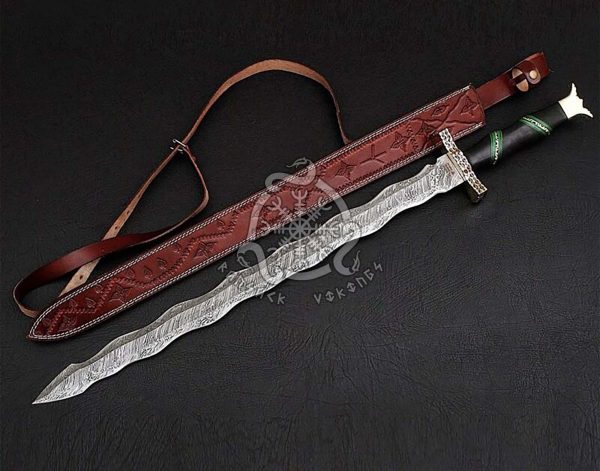 Brassguard Hand Forged Damascus Sword
Original price was: $399.00.$339.15Current price is: $339.15.
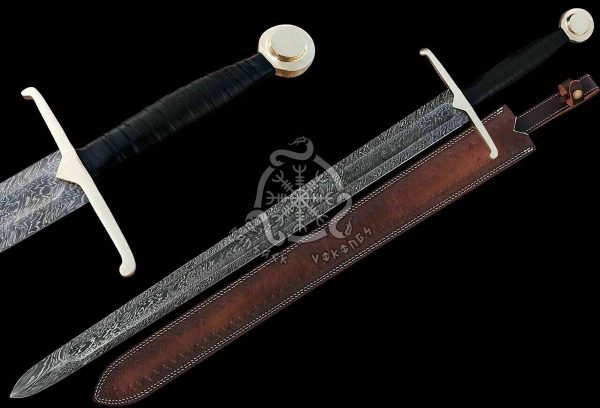 Leatherspine Hand Forged Damascus Dagger Sword
Price range: $254.15 through $381.65