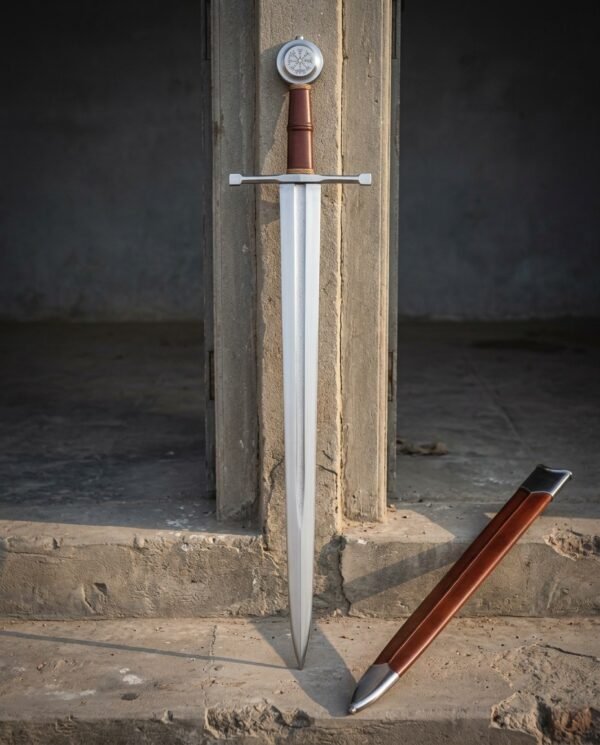
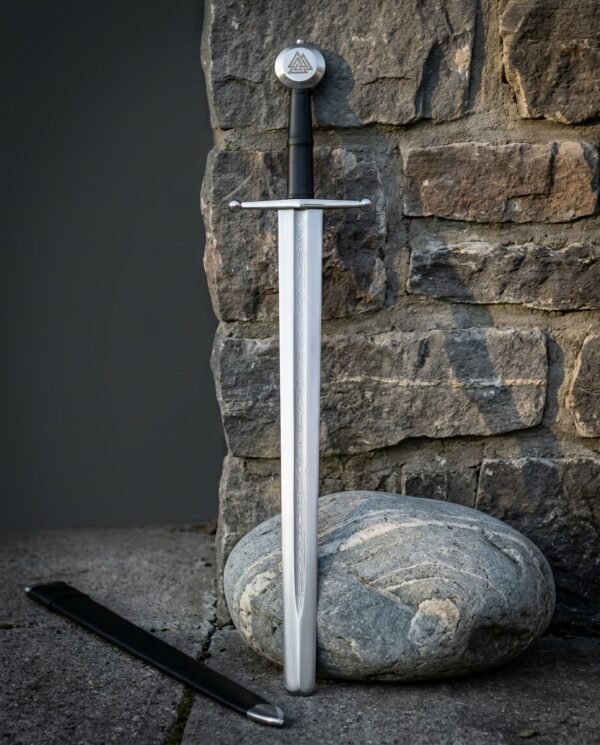
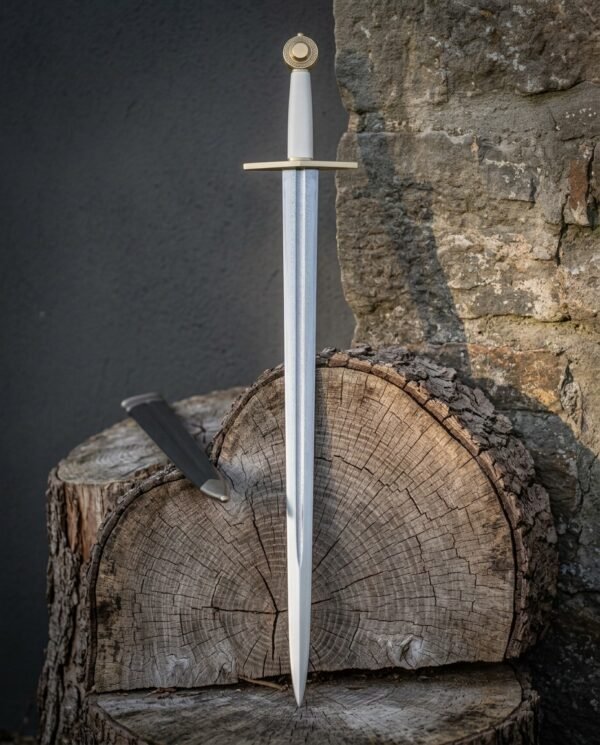
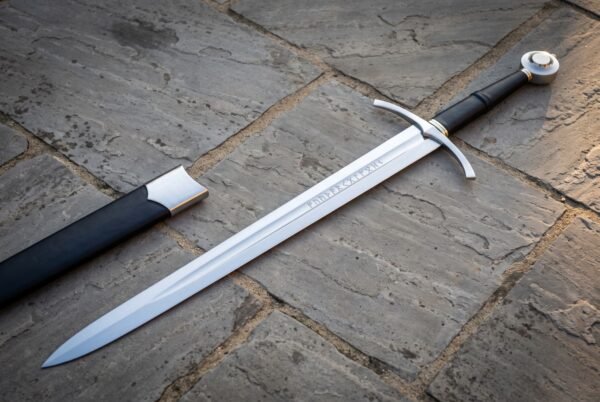
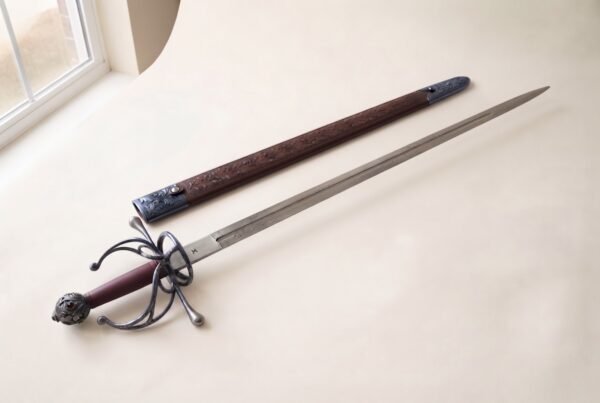
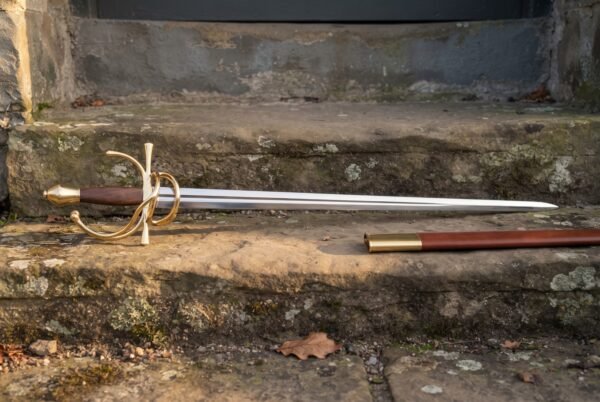
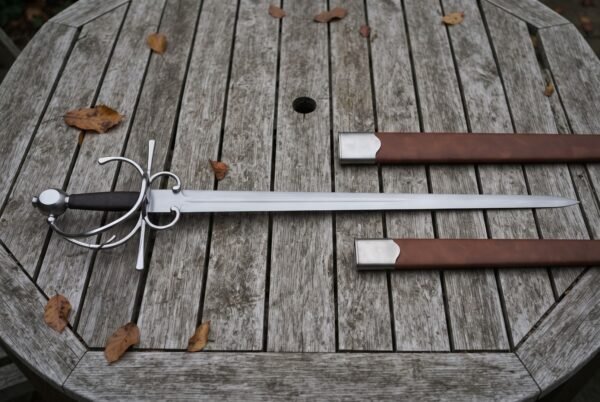
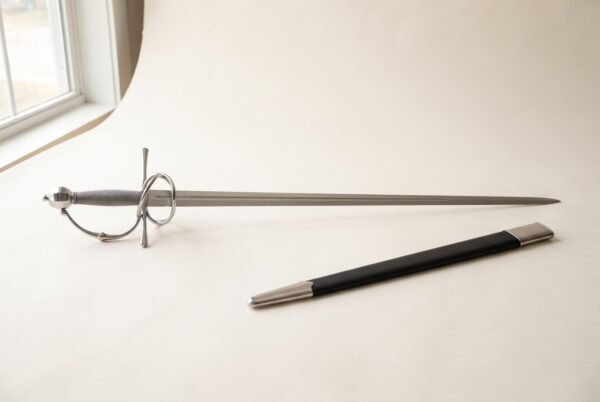
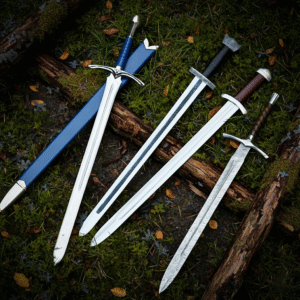
Display swords for a wall, a stand or a desk
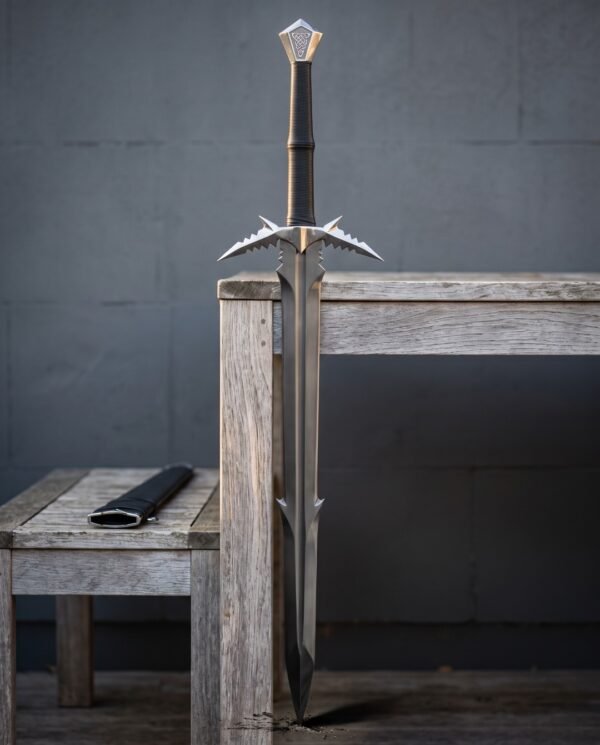
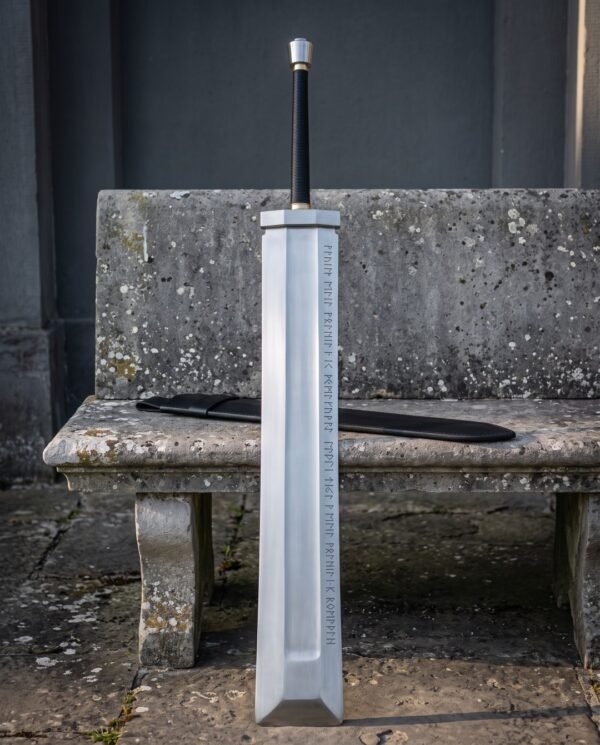
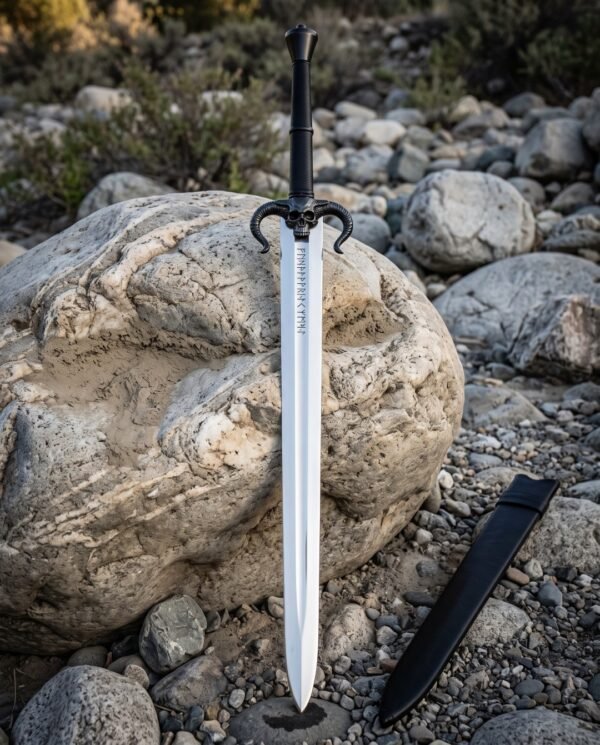
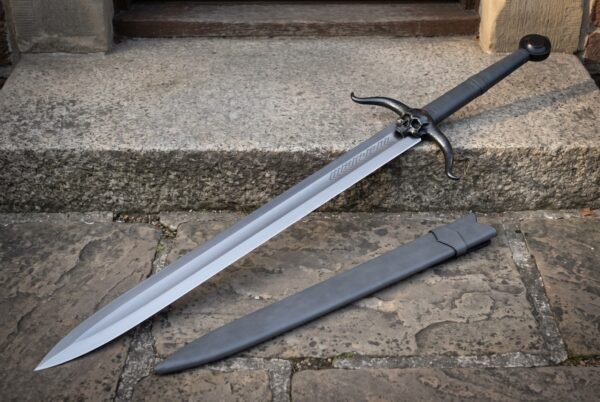
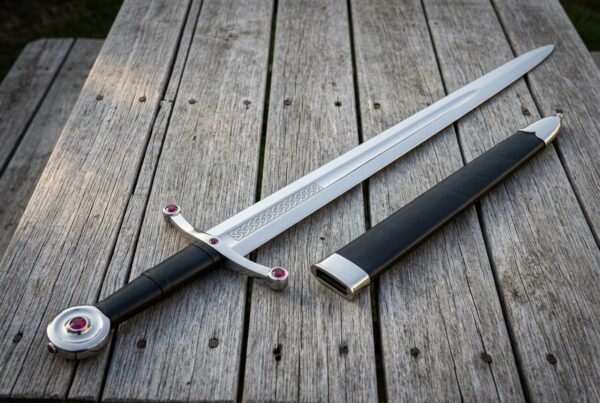
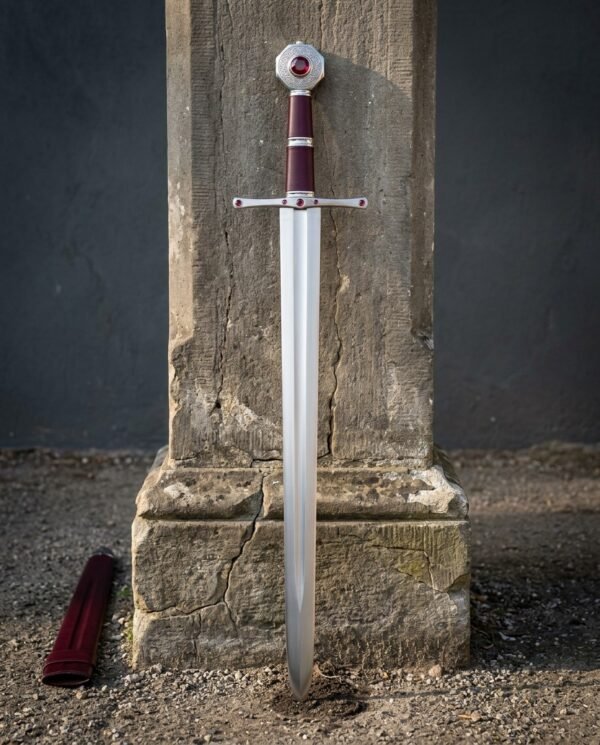
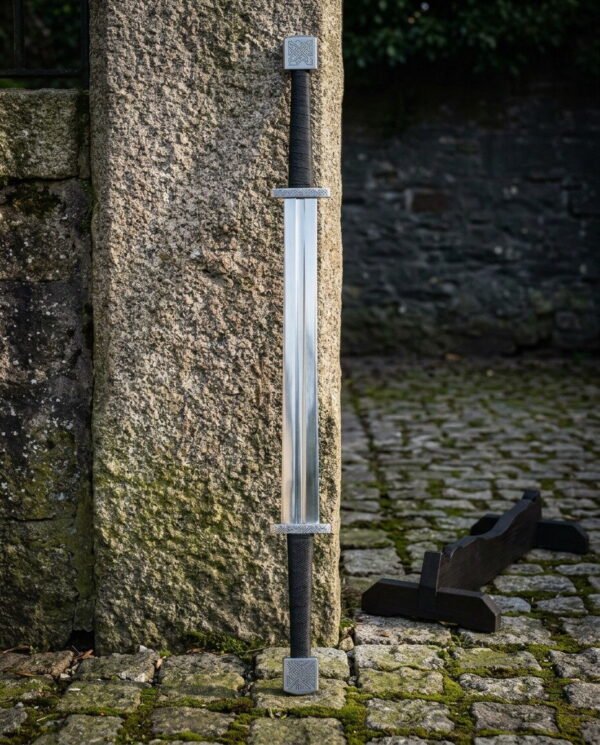
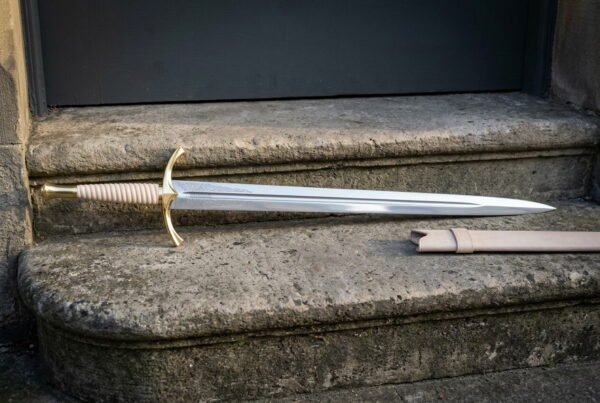
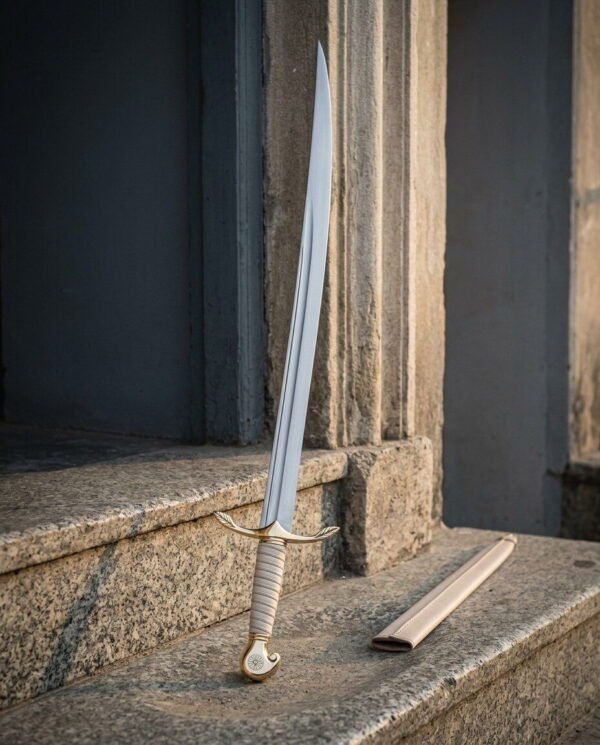
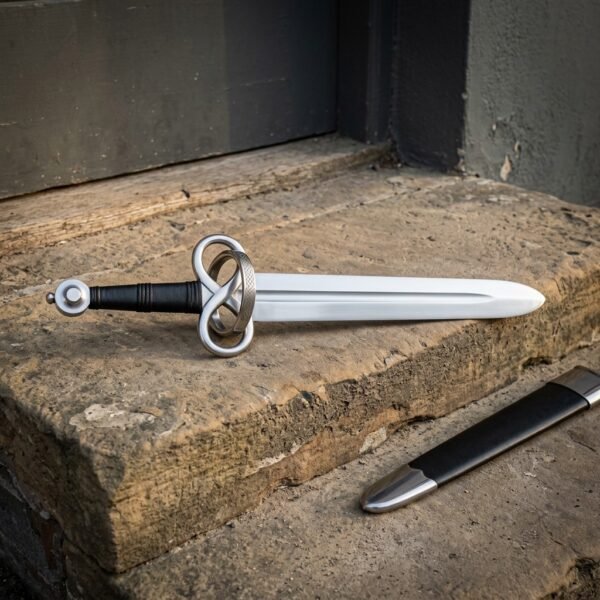
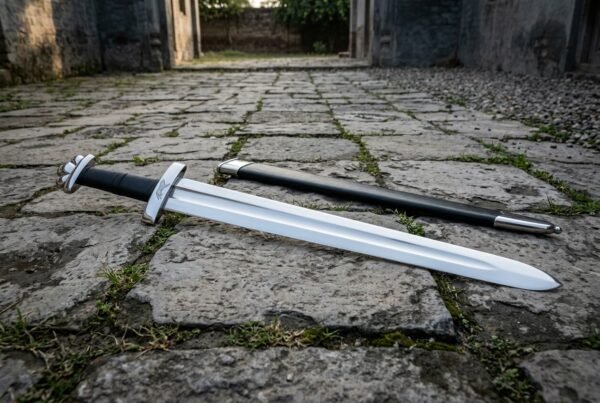
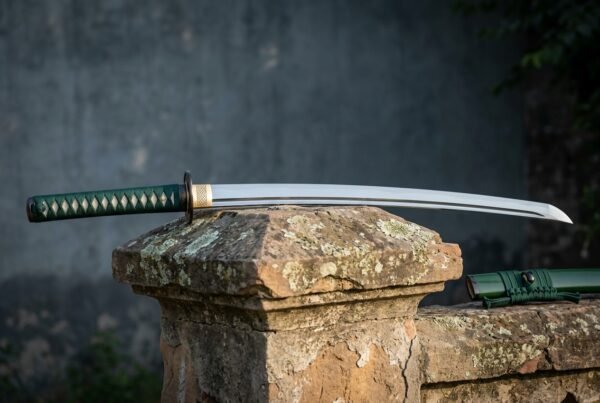
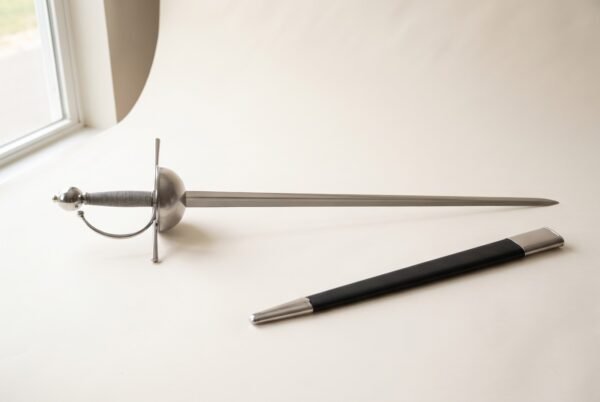
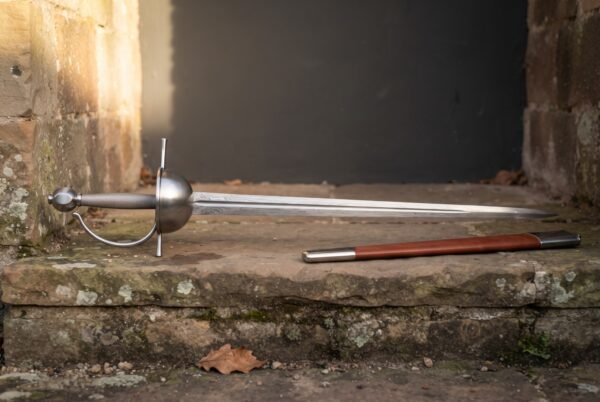
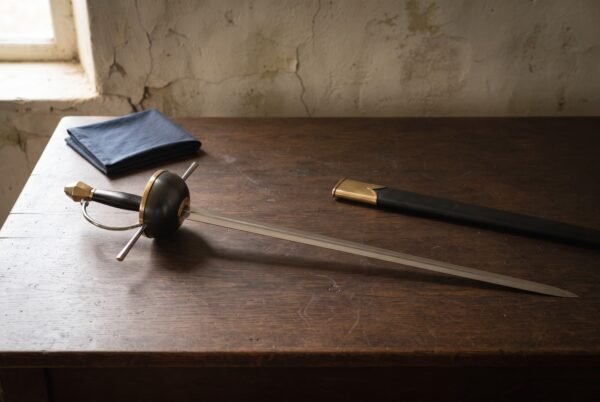
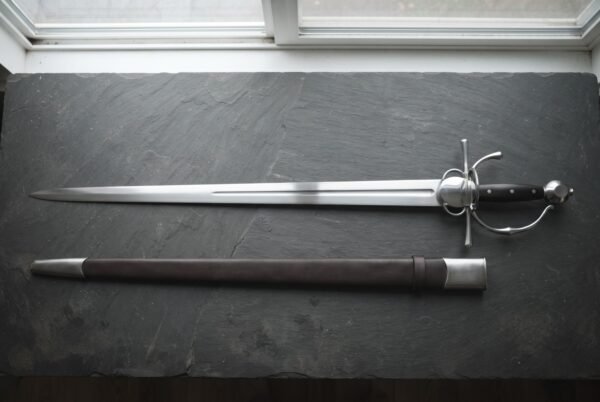
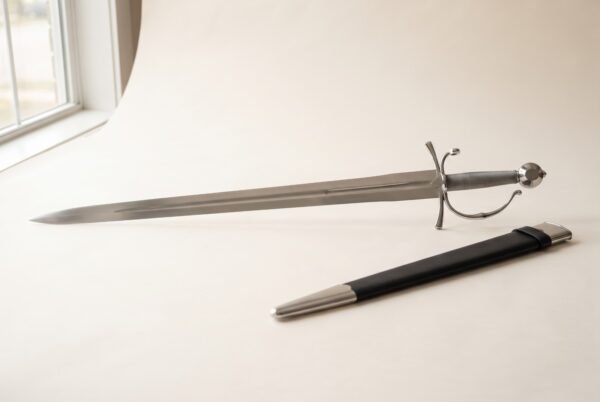
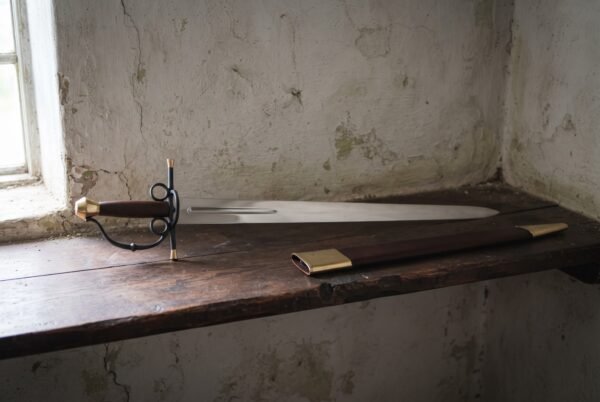
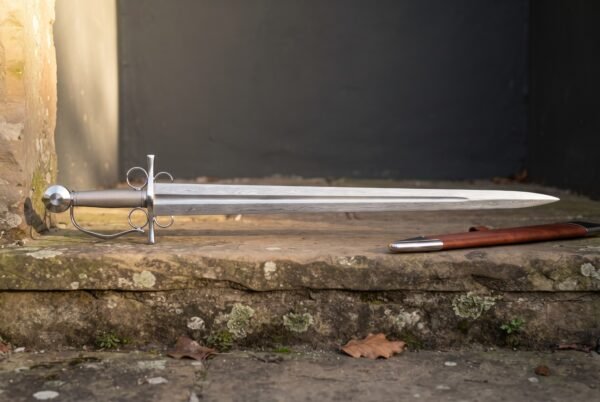
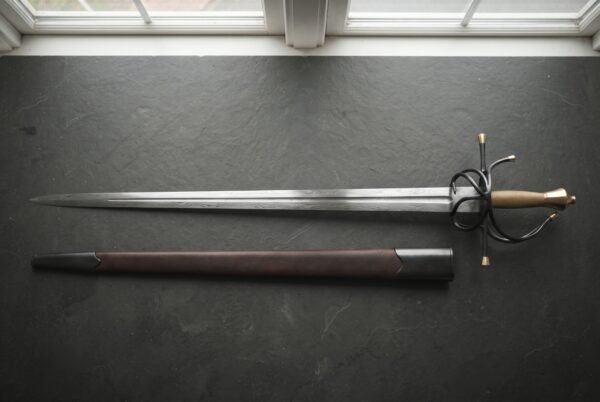
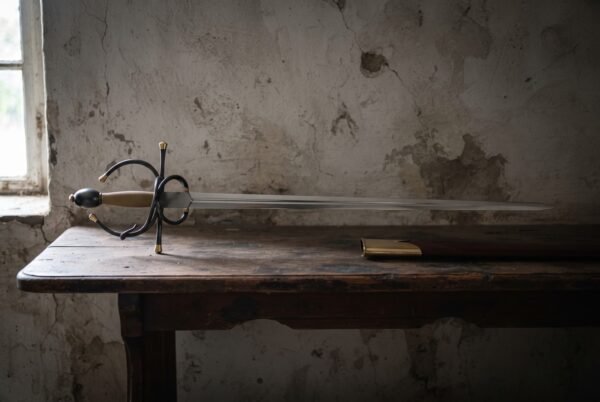
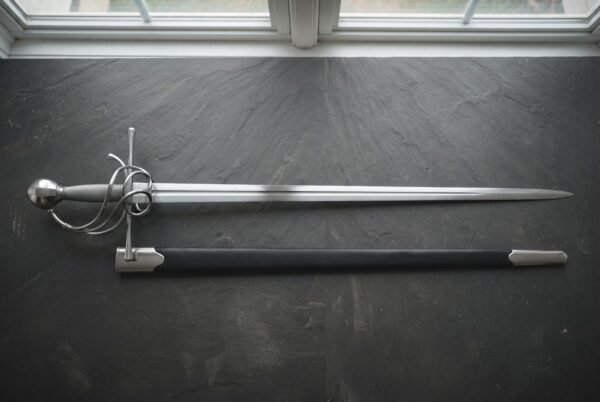
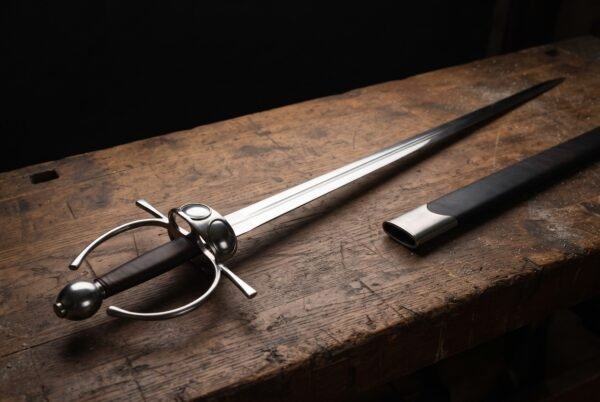
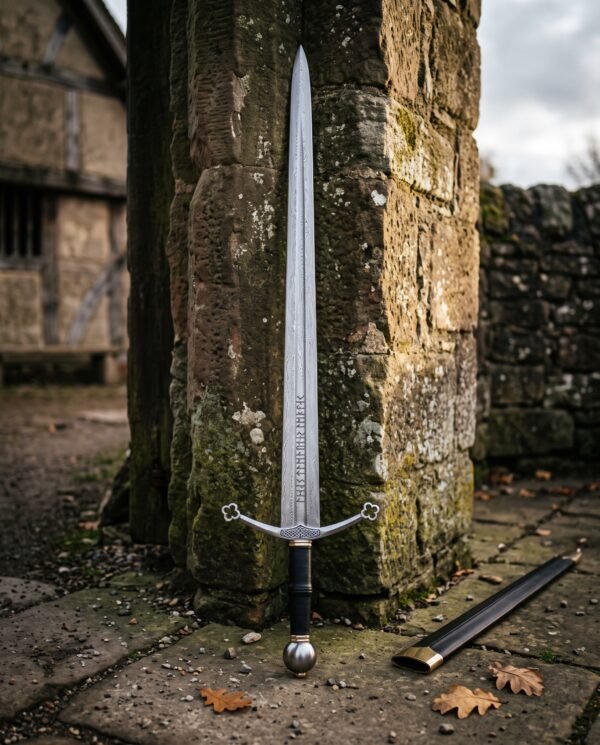
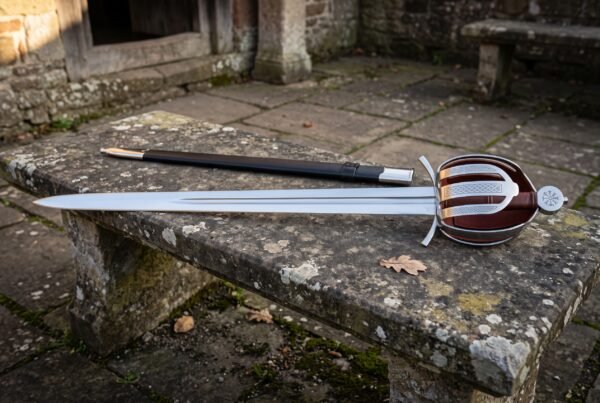
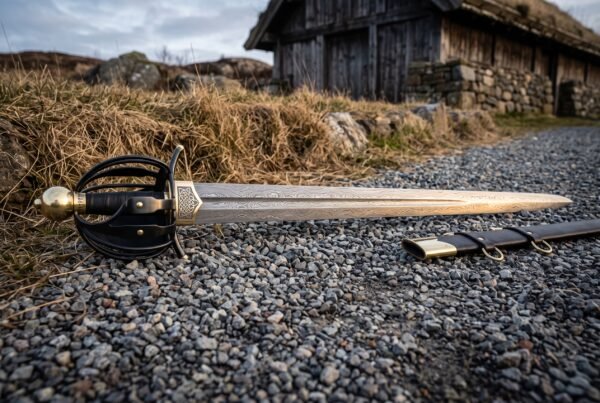
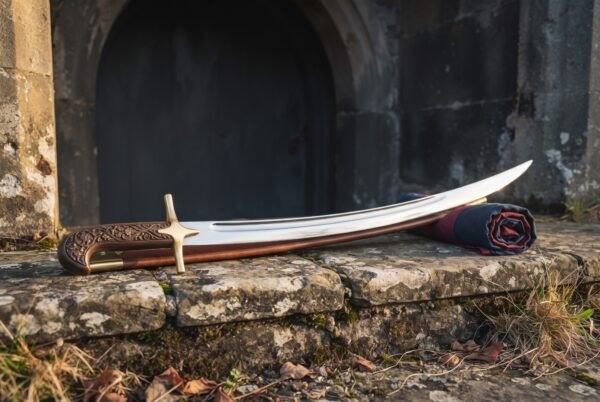
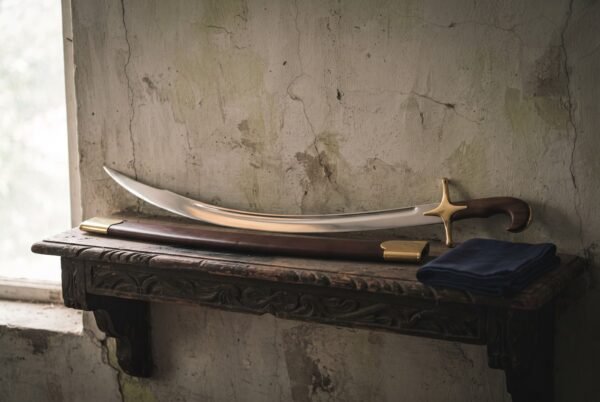
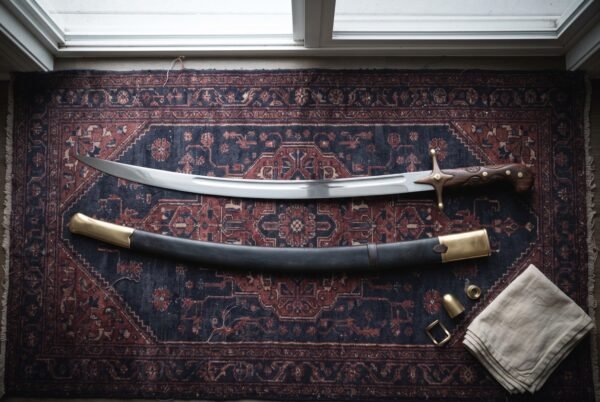
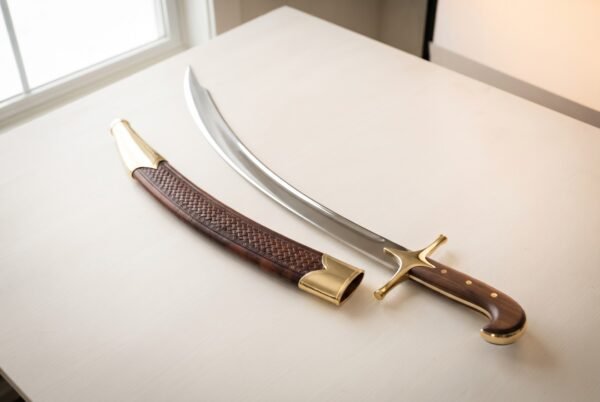
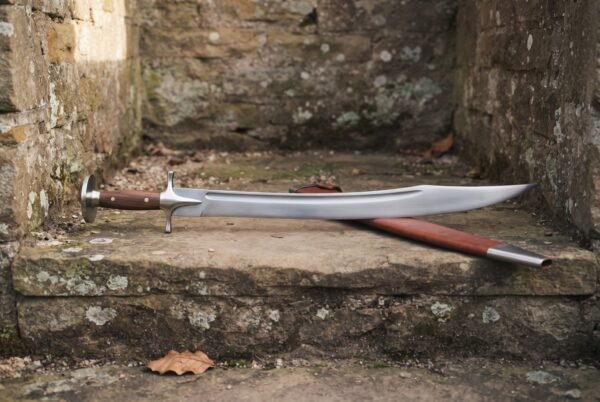
This is the widest sword archive on the site. It holds the pieces people buy to look at: rapiers and side swords with swept hilts, Persian shamshirs and Indian talwars with their deep curves, a Chinese jian, knightly and runic broadswords, a handful of fantasy and film inspired replicas, and short swords for a smaller space. Steel is plain 1095 or 1095 and 15N20 Damascus unless a listing says otherwise, and hilts are steel or brass with leather, cord or hardwood grips. What ties the archive together is not a period but a purpose: a sword that will be seen more than it will be swung.
It is for the collector filling a wall by region or by century, the office or study that needs one piece with presence, and the buyer looking for a retirement, promotion or groomsman gift that is not a watch. Everything here is a real forged sword with a full tang, so a display sword from us can come off the wall and be handled without worry.
What to look for
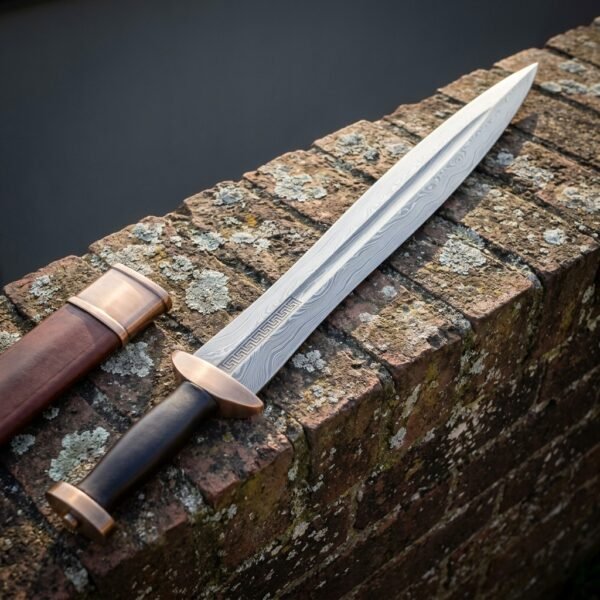
Decide where it will hang before you choose the length. A 43 inch rapier needs a full wall; a 30 inch short sword sits on a shelf stand. Think about the finish under your lighting: a bright polished 1095 blade throws light, a blued blade sits darker and shows engraving better, and a Damascus blade is at its best under a single warm lamp that picks out the layers. Brass hilts warm a room, steel hilts read cooler. If the sword will be handled at parties, a sword with a scabbard is the sensible choice.
How the swords are made and where
Ransack Viking is a Memphis, Tennessee company. Every sword in this archive is made by hand in the Czech Republic the old way, forged from bar stock or a welded Damascus billet, ground, hardened and hilted in the same workshop. The swords are imported, inspected at our Memphis warehouse and shipped from Memphis, and engraving is done in the United States before dispatch. Plain 1095 is hardened to 54 to 58 HRC, Damascus of 1095 and 15N20 to 58 to 60 HRC.
Care for a wall sword is a dry wipe every month or so and a thin coat of mineral oil twice a year. Keep it out of a scabbard for long term hanging and away from a window where damp and sun cycle daily.
Related archives
Stands and wall mounts are in sword stands and displays. The swept hilt pieces are collected in rapiers, the film and fantasy replicas in fantasy and movie swords, and every sword on the site regardless of purpose in swords. If you are deciding between plain and pattern welded steel for a piece that will mostly be looked at, what is Damascus steel explains what you are paying for.
Frequently asked questions
Are display swords sharp?
Yes. Ours are ground and sharpened like any other sword we make, because they are the same forged blades. Hang them out of reach of children and handle them as sharp.
What is the difference between a display sword and a functional sword?
Nothing, on this site. The tag describes what people buy them for, not how they are built. Every sword here is full tang, heat treated steel.
How should I hang a sword on a wall?
Use a two point mount into studs or proper anchors, blade edge away from the room, and support the sword under the guard and near the point rather than by the grip alone.
Do the replicas come with a licence?
No. The fantasy and film inspired pieces are our own hand made replicas and are not official or licensed items. The listings say so.
Can a display sword be engraved?
Yes. A name, a date, a motto or a rune line is cut in the United States before the sword ships. Blade flats and some guards and pommels take lettering.
63 matching pieces
Free US shipping
On every order, no minimum.
Hand Forged
Heated, hammered and ground by hand.
Engraving available
Names, dates or Norse runes on most pieces.