The Nightgild is a hand forged Italian rapier, built long and lean in the manner of the Bolognese and Neapolitan schools that dominated European swordplay from the middle of the sixteenth century. Italy exported fencing the way it exported painting. Masters left Bologna, Rome and Naples for the courts of France, Spain, Germany and England, taking their books with them, and within two generations the Italian rapier and its terminology had colonised the continent. English writers of the 1590s complained bitterly about it. The old school of the cutting sword and buckler was being pushed aside by foreign masters teaching young men to stand sideways and poke.
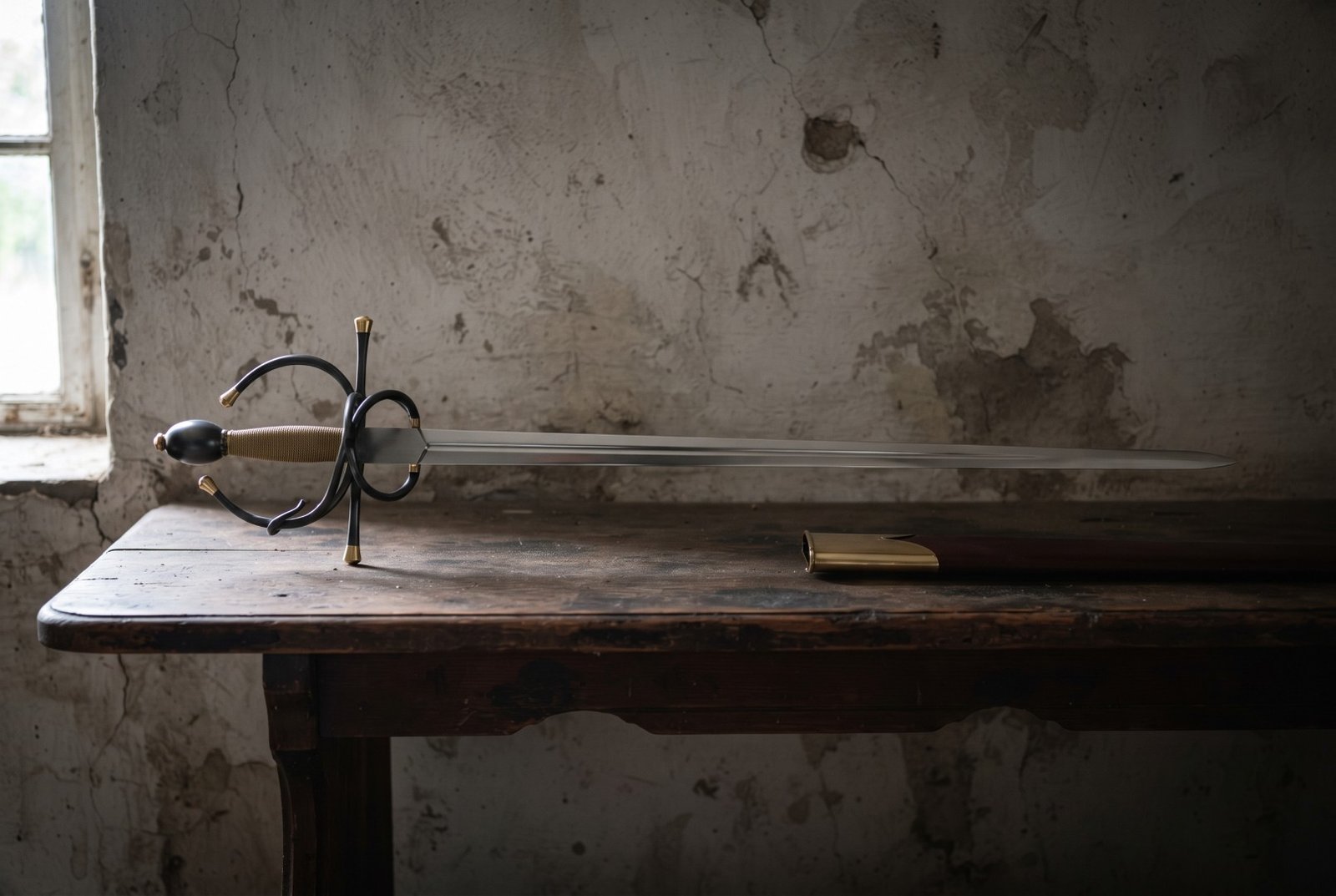
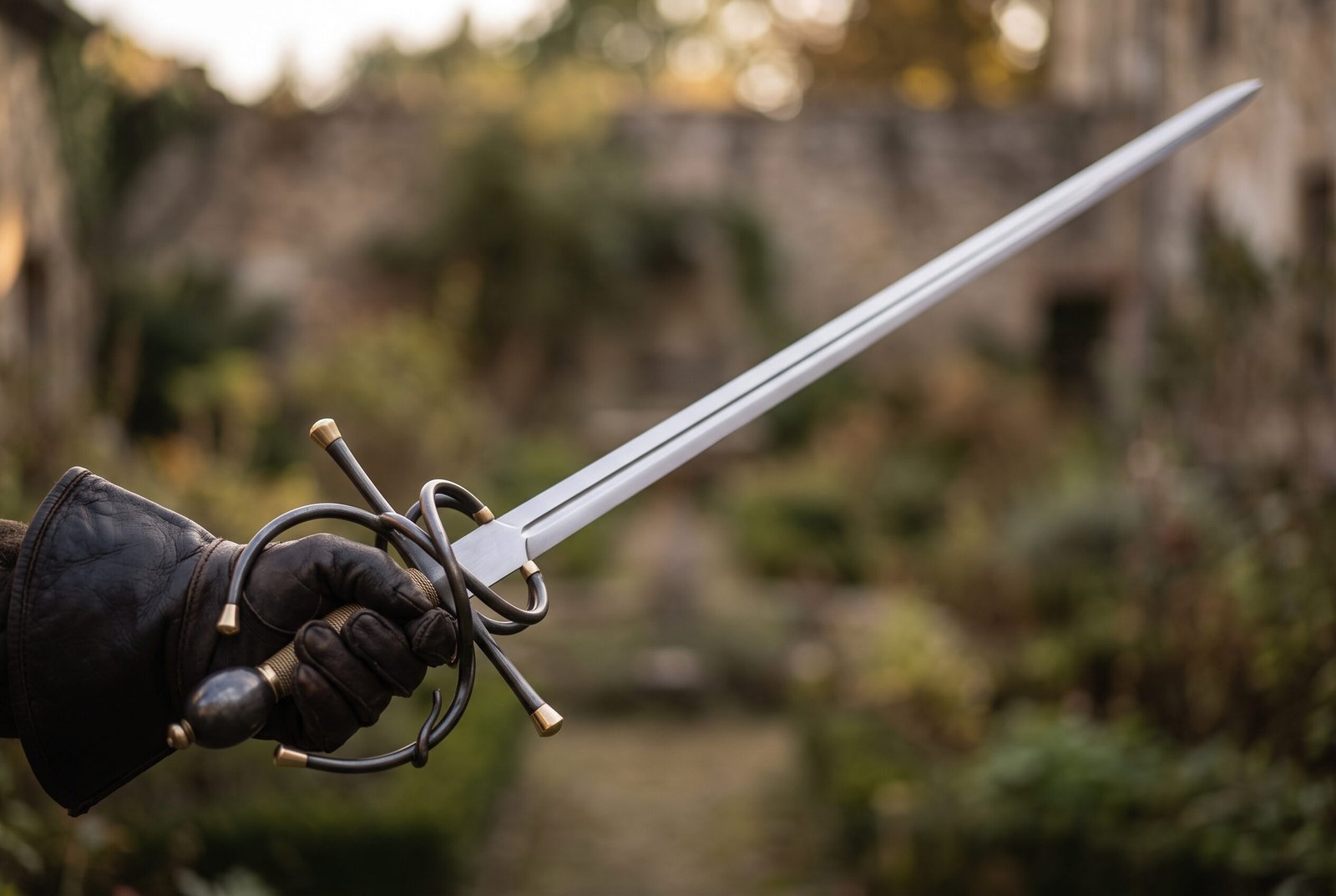
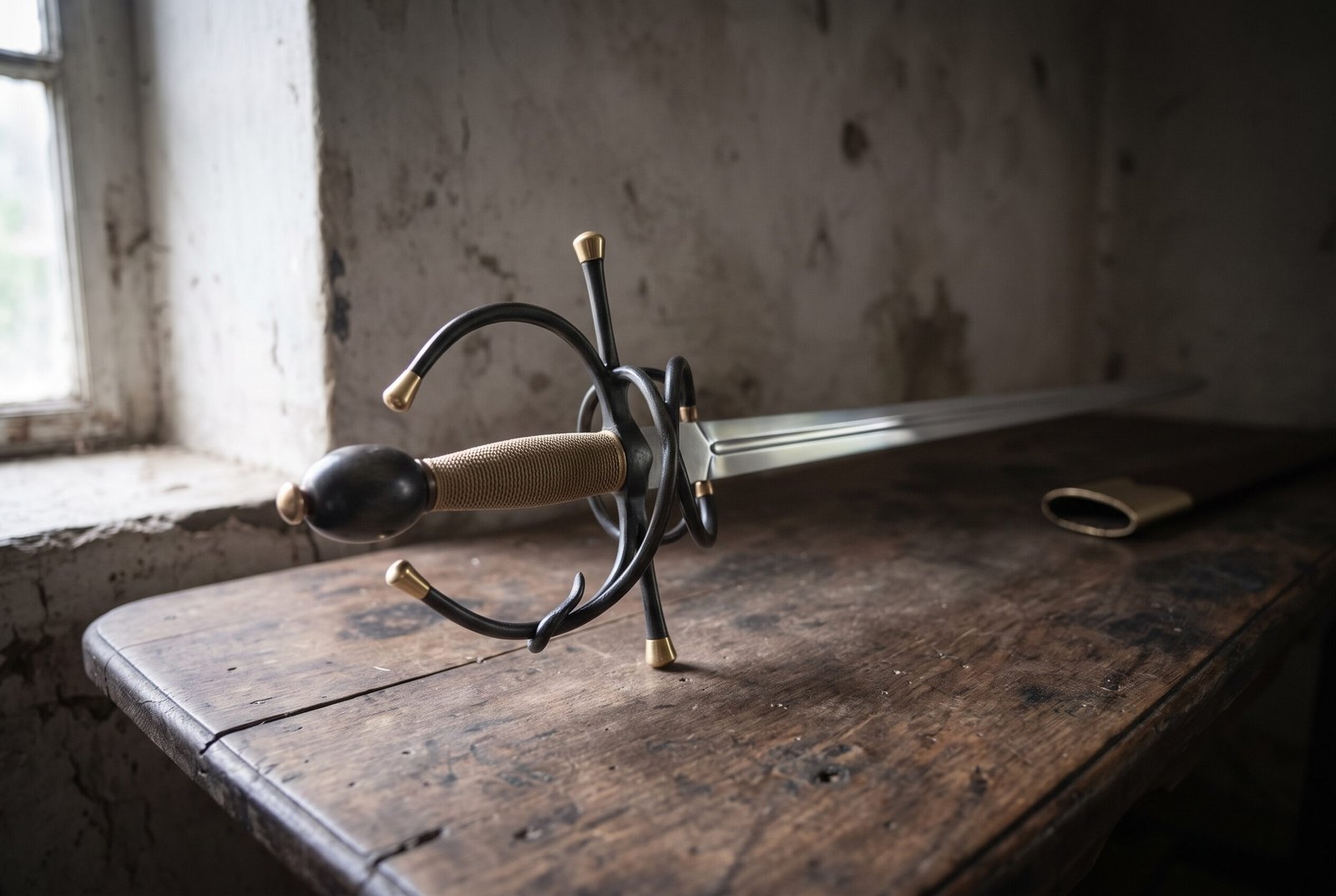
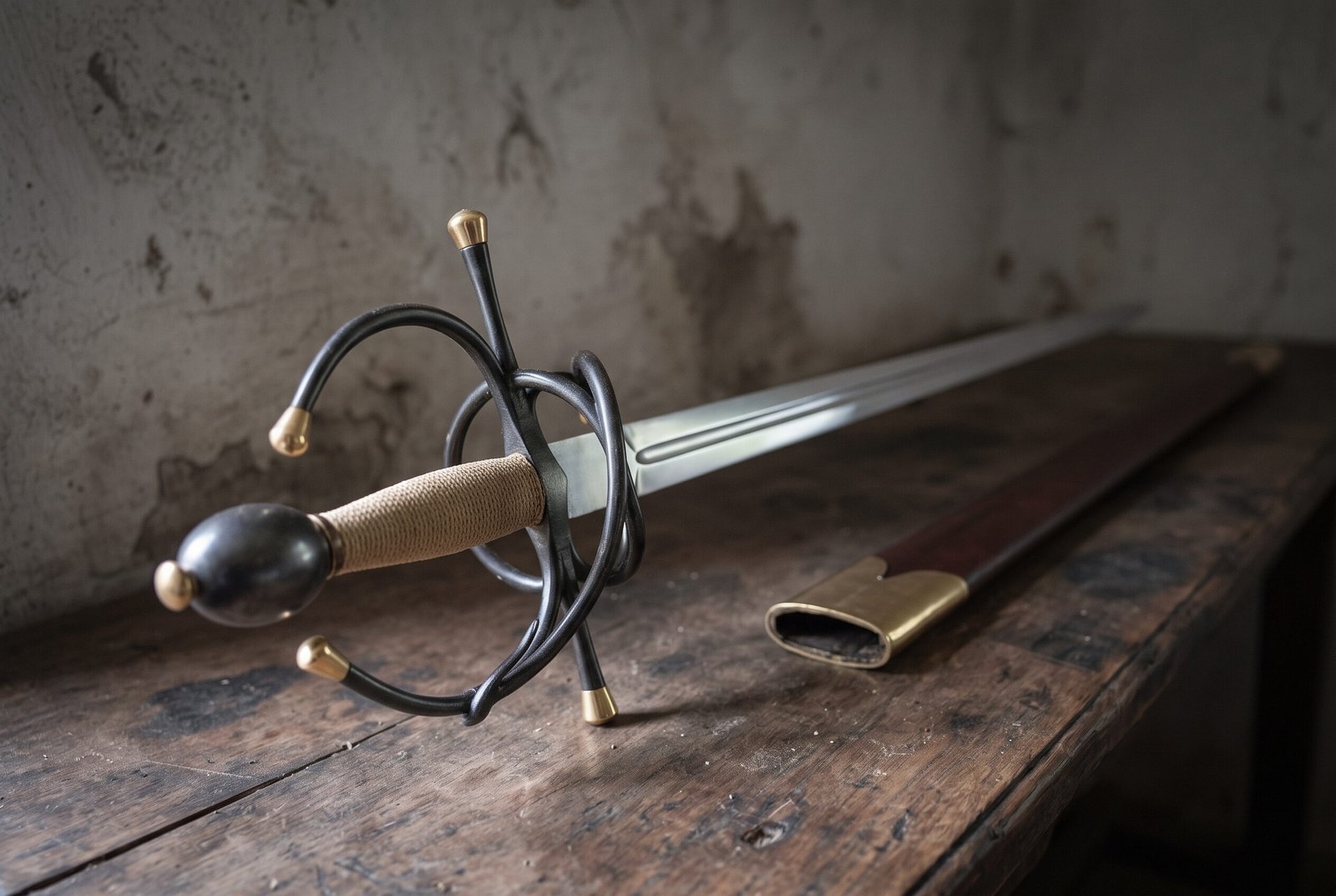
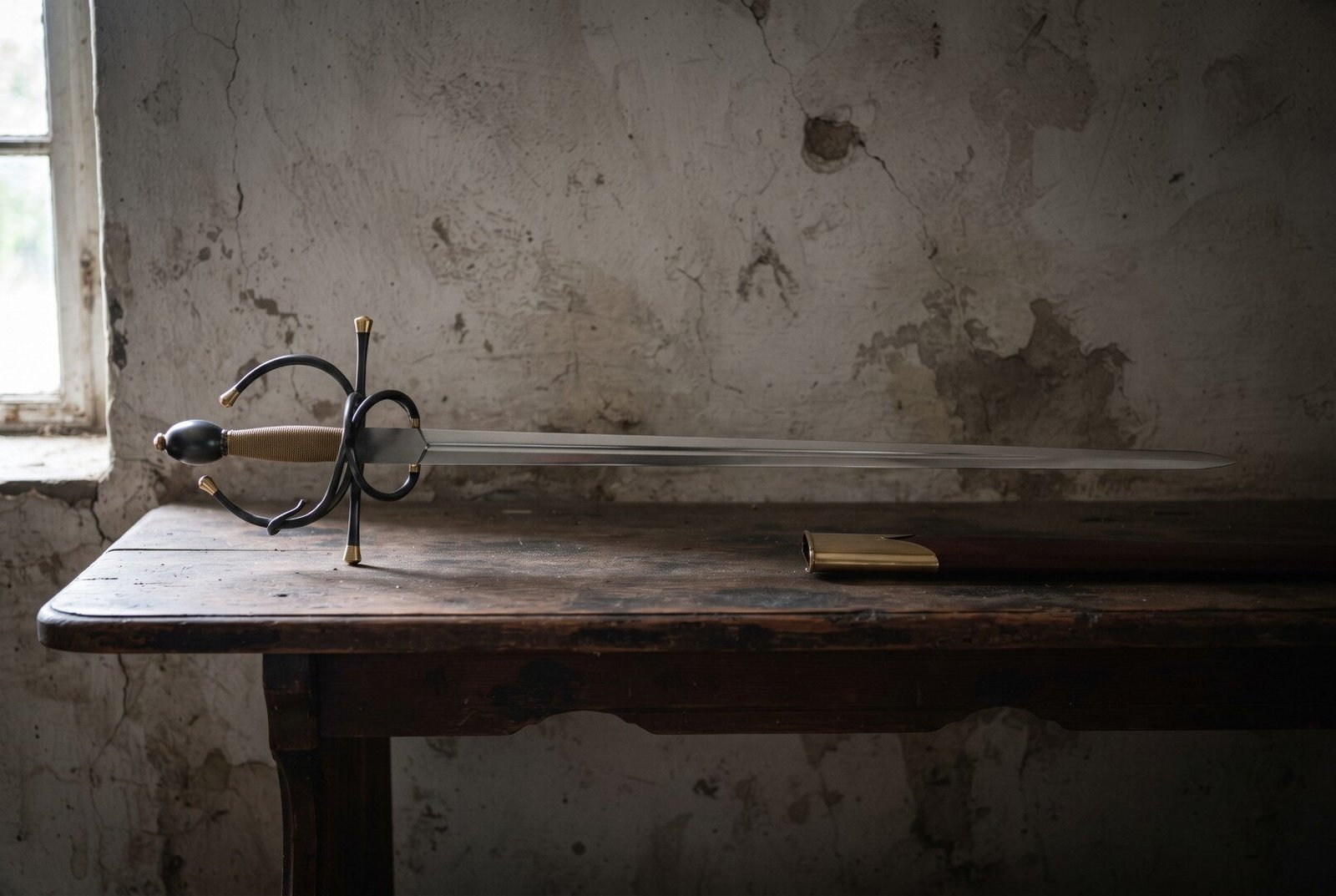
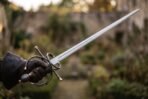
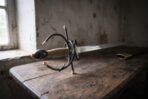
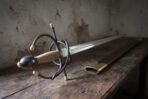
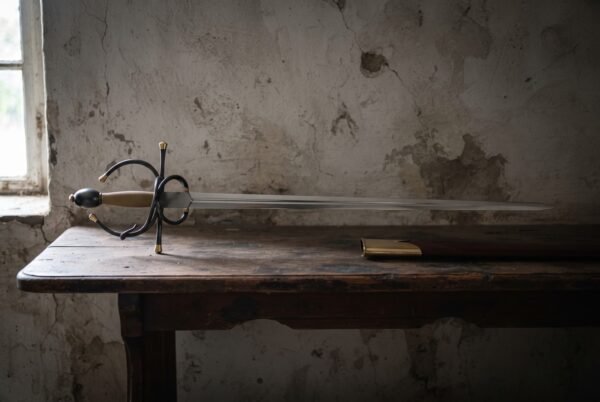
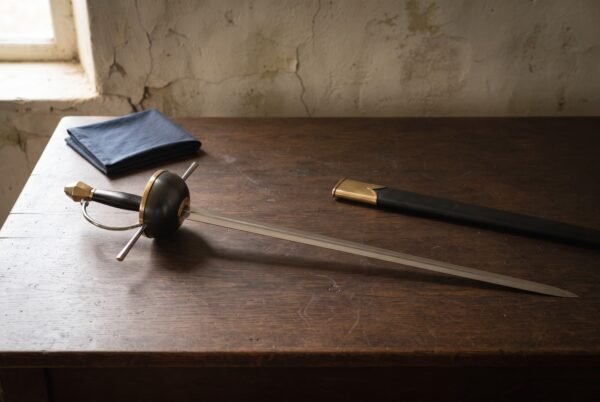
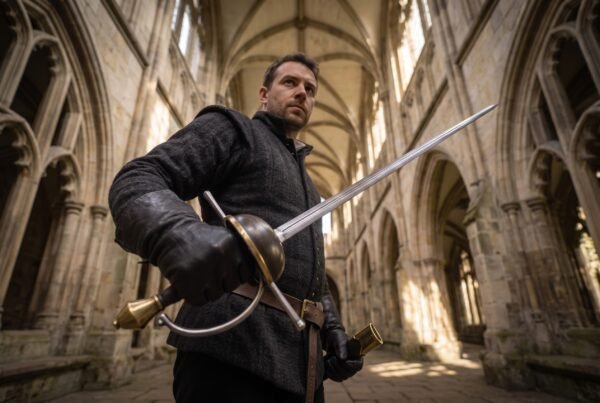
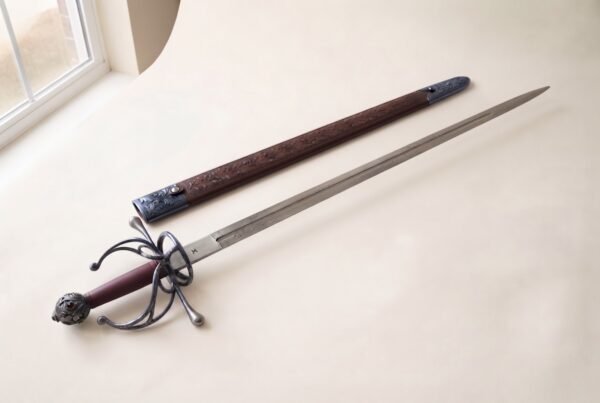
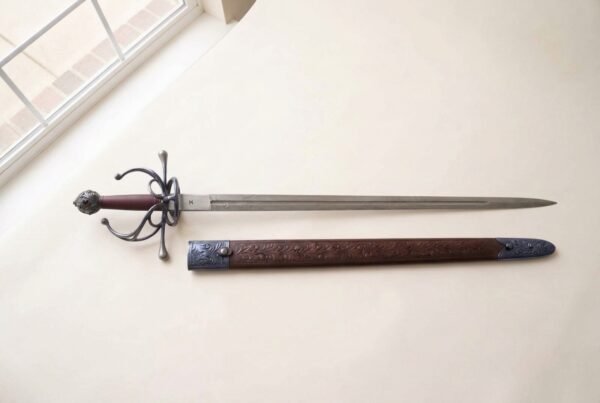
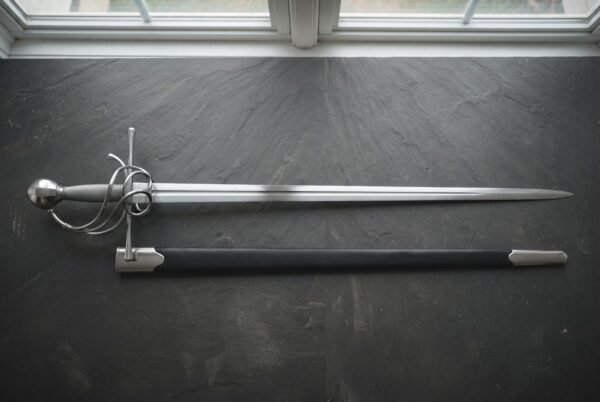
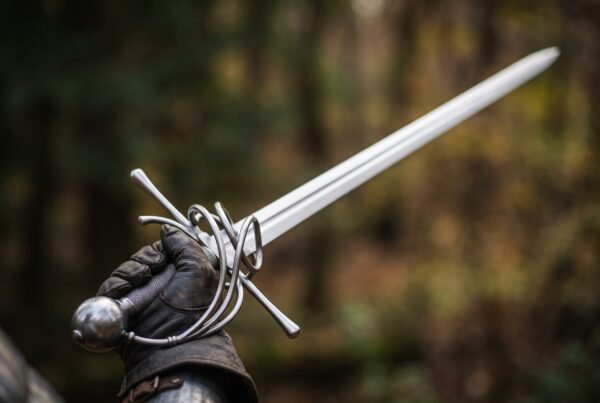
This one is forged and finished in the Czech Republic. The blade is 1095 high carbon steel, hardened, tempered, ground to a long tapering thrusting section with a flat hexagonal ricasso, then mirror polished. The hilt is blackened steel swept into loops around the hand, with gilt brass finials on the quillon and bar ends and a blackened oval pommel with a brass button. The grip is bound in tan twisted cord. It ships with the fitted dark leather scabbard shown, mounted with a brass throat.
Specifications
| Steel | 1095 high carbon steel |
|---|
| Hardness | 54 to 58 HRC |
|---|
| Overall length | 47 inches |
|---|
| Blade length | 39.5 inches |
|---|
| Blade profile | Long tapering thrusting blade with a flat ricasso and a short central fuller, mirror polished |
|---|
| Guard | Blackened steel swept hilt with knuckle bow, side rings and straight quillons, every bar end tipped with a gilt brass finial |
|---|
| Grip | Tan twisted cord wrap with a small blackened ferrule |
|---|
| Pommel | Blackened steel oval pommel with a brass button |
|---|
| Scabbard | Dark leather with brass throat |
|---|
| SKU | RK-1415 |
|---|
The ricasso, and why the blade is flat there
Look at the first three inches of blade above the guard and you will see it is not edged and not diamond sectioned. It is a flat sided rectangle with the corners taken off, wider than the blade behind it and completely blunt. That is the ricasso, and it is one of the clearest pieces of evidence that a rapier was designed around a specific way of holding it.
The rapier grip puts the forefinger over the quillon block and onto the flat of the blade. That single change shortens the effective lever between the hand and the point by two or three inches, which is an enormous gain in tip control on a blade nearly forty inches long. You cannot do it on a blade that is sharp all the way to the guard, so smiths left that section unsharpened, widened it slightly so the finger had a bearing surface, and flattened the sides so it would not cut into the pad of the finger under pressure.
Everything else follows from it. The rings and arms of a swept hilt exist to cover the finger that is now sitting outside the guard. The blade can be longer than a man could otherwise control because the finger has bought back the control that length cost. Later smallswords kept a vestigial ricasso and the twin rings, called pas d ane, long after fencers had stopped putting a finger through them, which is how you can date a hilt style by looking for features that no longer do anything.
Why 1095 high carbon steel and not stainless
Forty inches of blade an inch wide at the base and a quarter of that at the tip is an extreme thing to ask of any steel. It must bend and return true, hold a fine point, and take a lateral knock without cracking. Stainless cannot deliver that. Its chromium content, which is what stops it rusting, forms coarse carbides through the matrix, and in a slender section those are exactly where a crack starts. Stainless blades of this length are either soft enough to keep a bend or hard enough to snap.
1095 is plain high carbon steel, iron with just under one percent carbon and very little else. It hardens deeply, tempers to a figure you can trust, and at 54 to 58 HRC gives this blade the elasticity a rapier lives on. It rusts if you neglect it, and a wipe with an oiled cloth is the whole answer. There is more at Damascus versus stainless.
The cord grip, the brass and the blackened steel
The grip is bound in tan twisted cord laid in tight turns over the core. Cord suits a rapier because the sword is held lightly and steered rather than gripped, and the texture keeps edge alignment without any real force from the hand. A small blackened ferrule closes the winding at the pommel end so it cannot work loose.
The contrast between blackened steel and gilt brass is a period combination rather than a modern styling choice. Blackening a hilt was practical, since a dark finish shows less and needs less polishing than bright steel, and it made a perfect background for gilded highlights on the quillon ends and pommel cap. Keep the brass as it comes and it will warm into a soft patina. Polish it if you prefer it bright, using the mildest product you can find and very little of it.
Engraving, runes and your own design
Use the rune converter on this page to turn a name, a date or a short phrase into Elder Futhark and we will cut it into the steel or the handle. If you would rather have a Viking pattern than a rune line, choose your own design in the engraving option above the add to cart button and tell us whether it goes on the blade or the handle. Where a piece already carries an engraved design, your chosen engraving replaces it rather than sitting alongside it. On the Nightgild the flat ricasso is an unusually good panel, because it is genuinely flat, sits at eye level in a display and is where period makers put their own marks. See the engraving page.
Care and sharpening
Two finishes on one sword. The mirror polished blade wants wiping after every handling and a thin film of mineral or camellia oil, because fingerprints etch a polish within days. The blackened hilt is more forgiving but should not be scrubbed, since abrasives will cut straight through the finish and leave bright patches. Use a dry cloth on the hilt and keep oil off the brass. Do not store the sword in the scabbard for months at a time. The routine is on the steel care page.
The edges arrive sharp enough to respect. To refresh them use a whetstone, follow the existing bevel and work lightly, stopping short of the ricasso, which is deliberately blunt and should stay that way. Take particular care at the point. See sharpening with a whetstone.
Made in the Czech Republic
Every piece we sell is made by hand in the Czech Republic. The smiths there work the way the trade has been worked for a long time, heating and hammering the steel, taking the bevels down by eye, and fitting the handle and the leather one at a time. There is no automated line anywhere in it, so small differences from one piece to the next are normal and expected.
Ransack Viking is a United States company based in Chicago, Illinois. We bring the pieces in ourselves, inspect them on arrival and ship them from our own warehouse. If you add engraving, that is carried out here in the United States before your order goes out.
A note on handmade variation
This piece is hand forged, not machine made or bulk produced, so what arrives will not be a pixel for pixel copy of the photograph. The blackening takes differently on every hilt and produces its own depth and mottling, the brass castings are filed by hand, the cord pitch varies with the winding and the leather of the scabbard takes dye its own way. The dimensions, the steel and the build are the same every time. The character is not.
Frequently asked questions
Why is part of the blade near the guard not sharp
That is the ricasso and it is meant to be blunt. The rapier grip hooks a finger over the guard onto that flat, so it is left unsharpened deliberately. It is a feature of the design, not an unfinished edge.
Is the rest of the blade sharp
Yes, the edges arrive with a working sharpness and the point is a real point. Handle it as you would any sharp sword.
Can I use it for historical fencing
No. This is a sharp sword, not a blunt trainer. Fencing needs purpose built blunt blades with rolled tips and full protective equipment.
Will the blackened finish wear off
Not in normal display and handling. It will soften at the high points over many years, which most collectors like. Avoid abrasive polish, which will strip it in seconds.
What makes this an Italian rapier rather than a Spanish one
Proportion and hilt style more than nationality of manufacture. Italian rapiers of this period run long and narrow on swept hilts of curved bars. The Spanish tradition moved towards the deep cup hilt and a stiffer, shorter blade, and developed its own geometric fencing theory to go with it.
How long does shipping take
Free shipping in the United States. In stock pieces leave within a few days. It takes three to five weeks in the shop, and engraved work a little longer.
What is in the box
- Nightgild hand forged 1095 high carbon steel Italian rapier
- Fitted dark leather scabbard with brass throat
- Care card covering oiling, blackened finish and brass upkeep
- Elder Futhark rune engraving or your own Viking design if selected at checkout
- Forged and finished in the Czech Republic
Explore the range
See the rapiers, the arming swords, the short swords and the full sword range, or read the guides.
Near neighbours in the shop
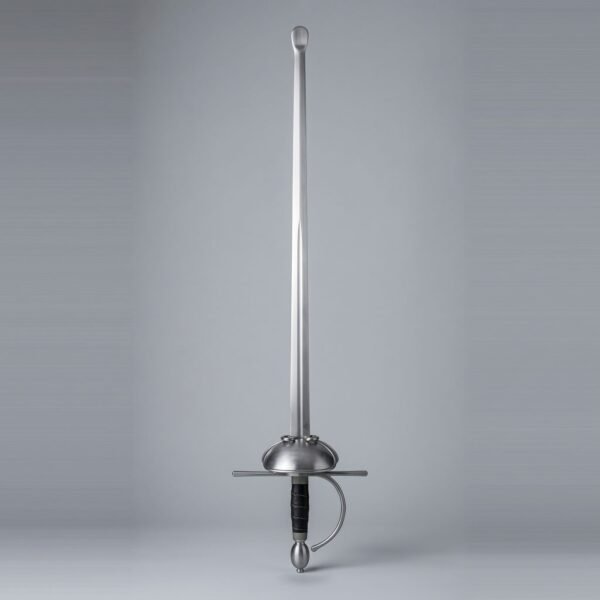
If this one is not quite right, there is the Bellcourt rapier, 5 inches overall. Also in this group is the Gildthorn rapier, 5 inches overall. Sitting beside it in the catalogue is the Emberleaf rapier, 44 inches overall.
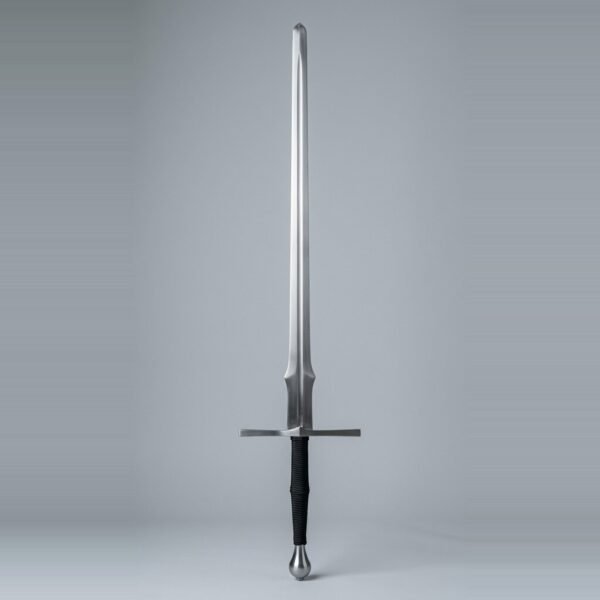
From the same corner of the shop, there is the Elmshade longsword. You can have this made your way instead on the design your own page.
Anyone moving from display pieces to sparring can start with the Hrafnstede smallsword trainer, and our smallsword guide fills in the rest.

Five stars isn’t even enough honestly. Ransack Viking’s attention to detail is honestly unmatched. You can tell it’s real Czech blacksmith work and shipping from the States made delivery painless.
Got this as a birthday gift and the reaction was priceless. Leather sheath is thick and well stitched. Not the cheap stuff you usually get. High Carbon Steel blade holds a razor edge right out of the box. Even the small engravings are crisp and clean. Great buy overall.
My husband was speechless when he opened this. Came in a nice gift box which made it feel even more special. Weight and balance make it feel like a real functional piece not some cheap replica. This shop clearly takes pride in their work.