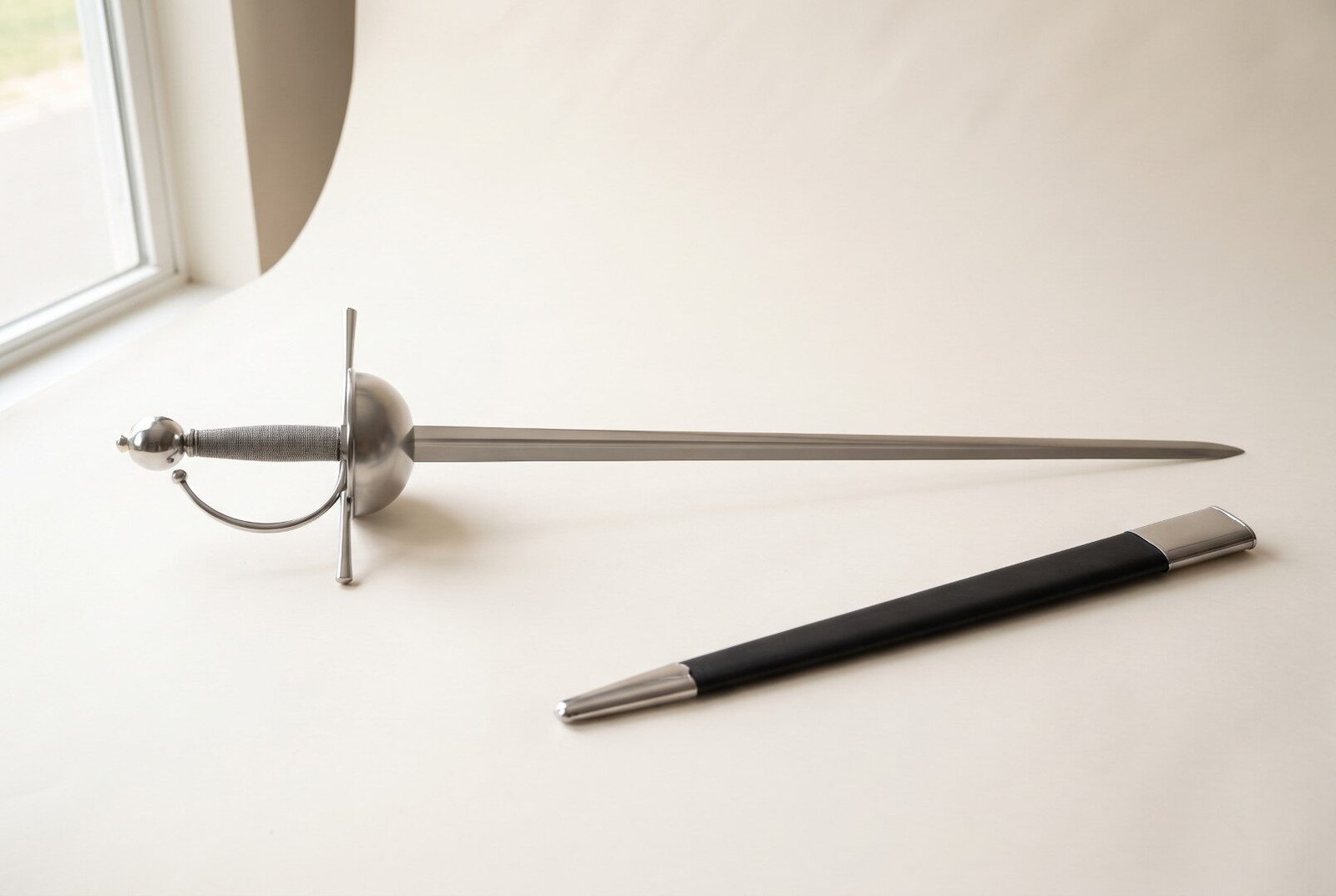
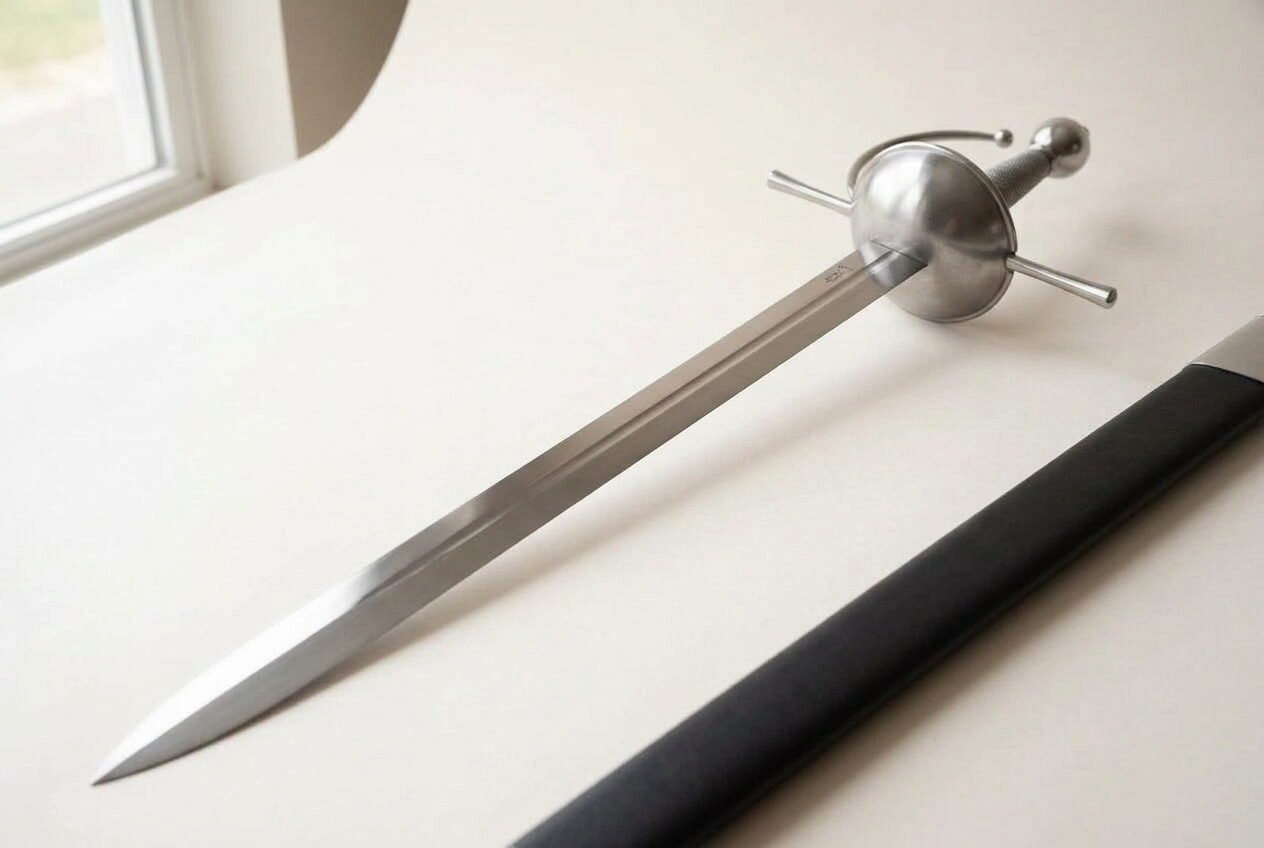
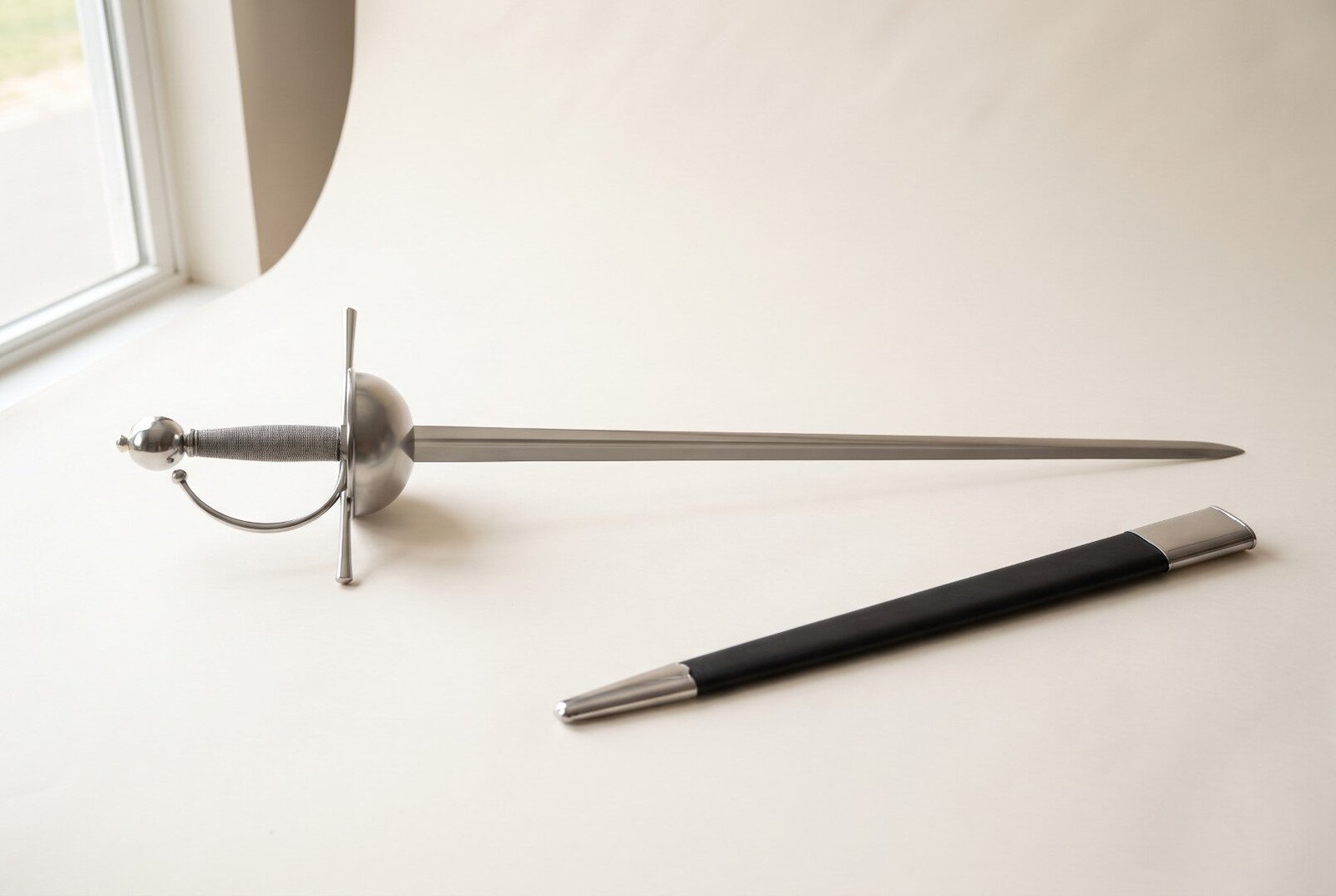
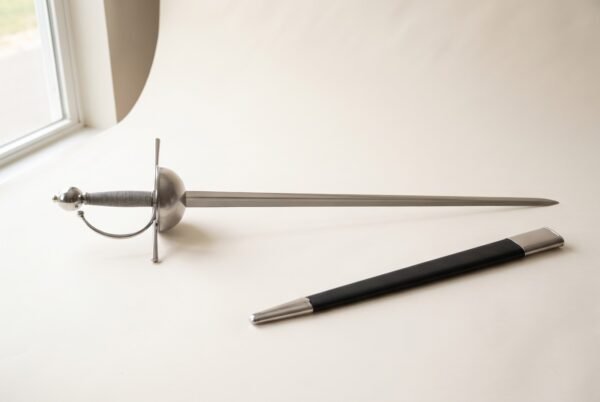
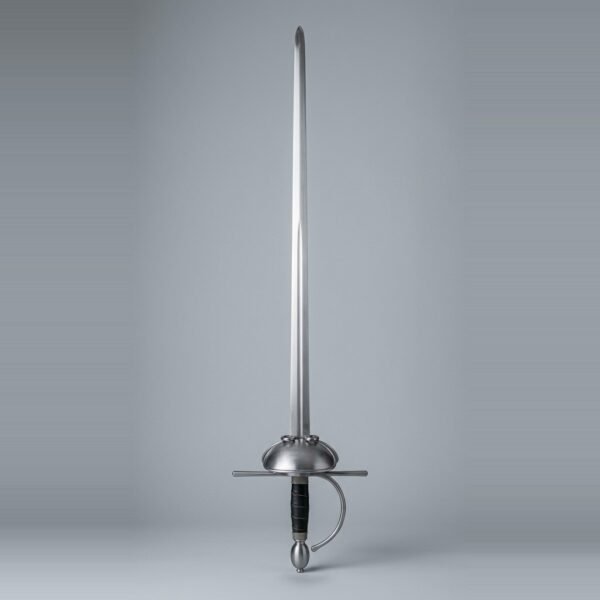
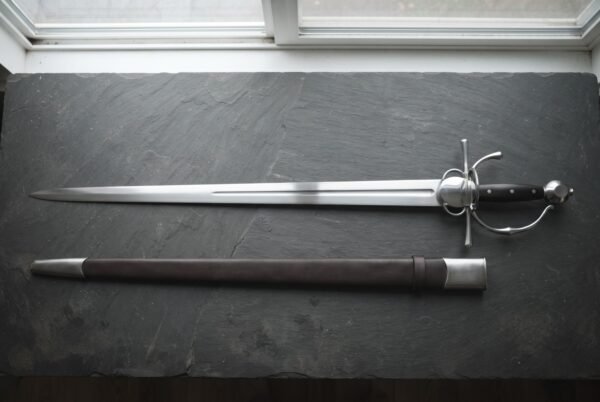
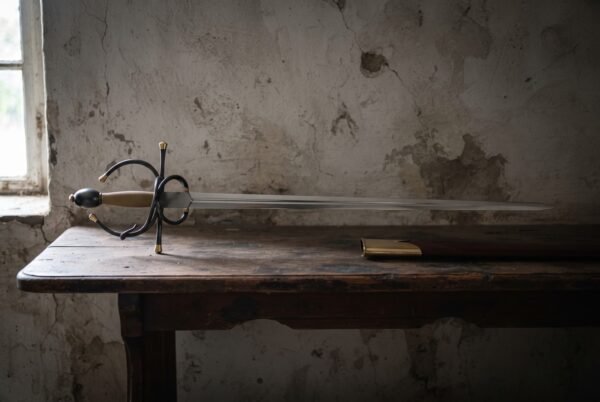
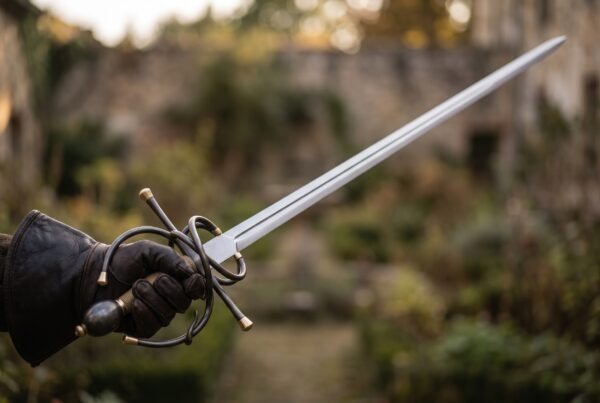
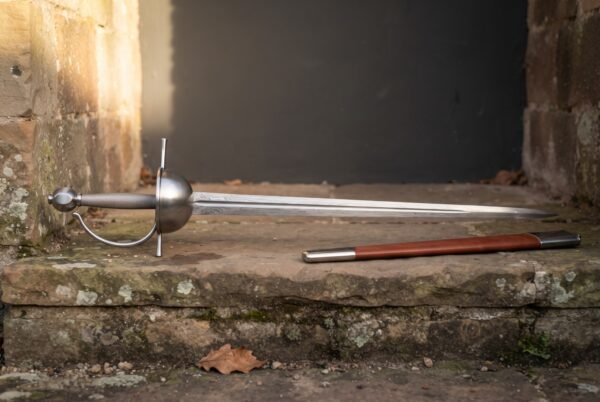
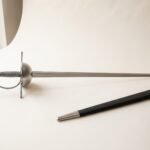
The Cupwarden is a hand forged cup hilt rapier in plain polished steel, the form stripped back to its structure with no brass, no blackening and no ornament to hide behind. A cup hilt looks simple and is not. The bowl is raised by hammer from a flat disc, the blade is nearly forty inches of slender diamond section, and with nothing applied to the surfaces every line has to be right. This is the version we would put in front of someone who wants to see how a rapier is actually built.
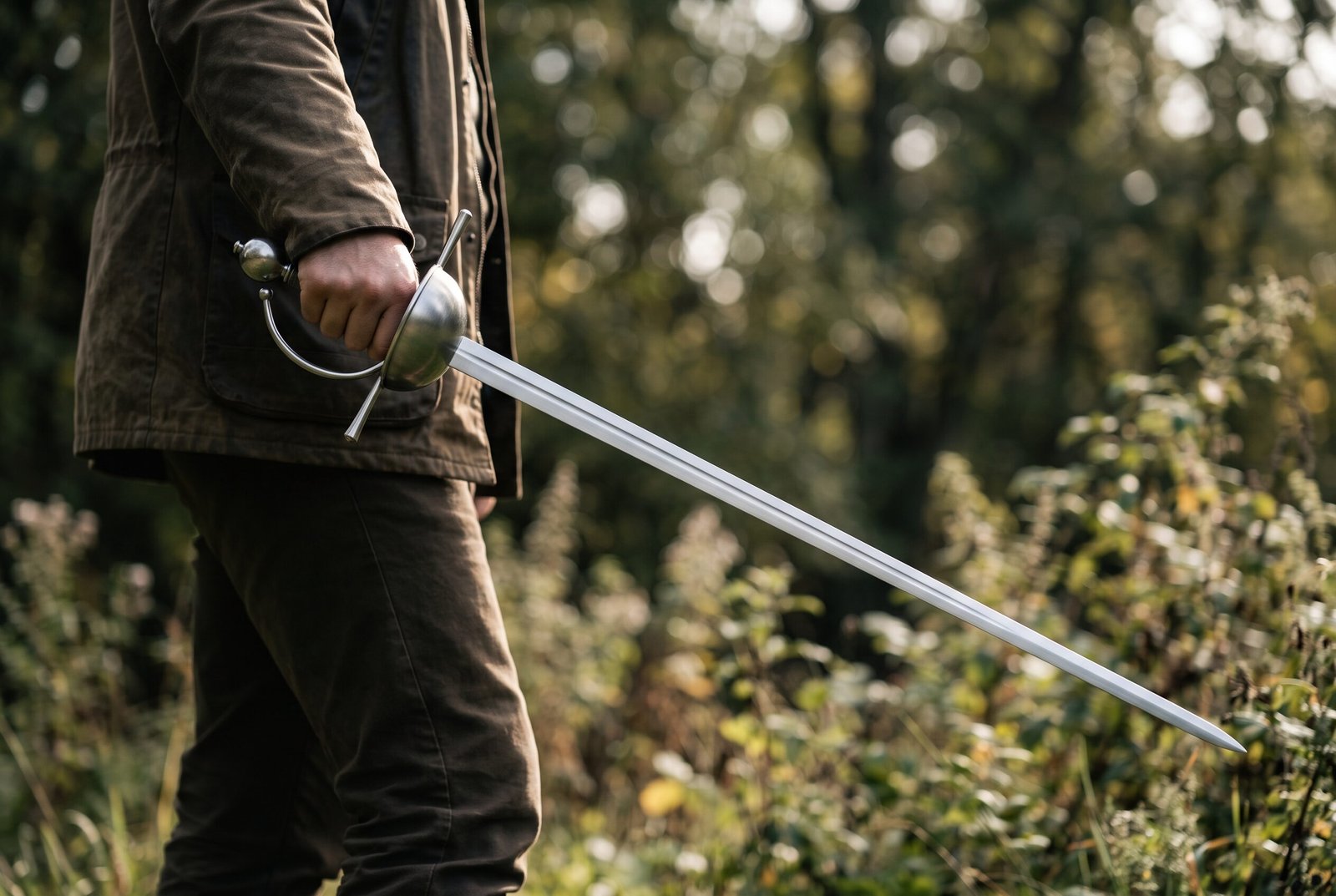
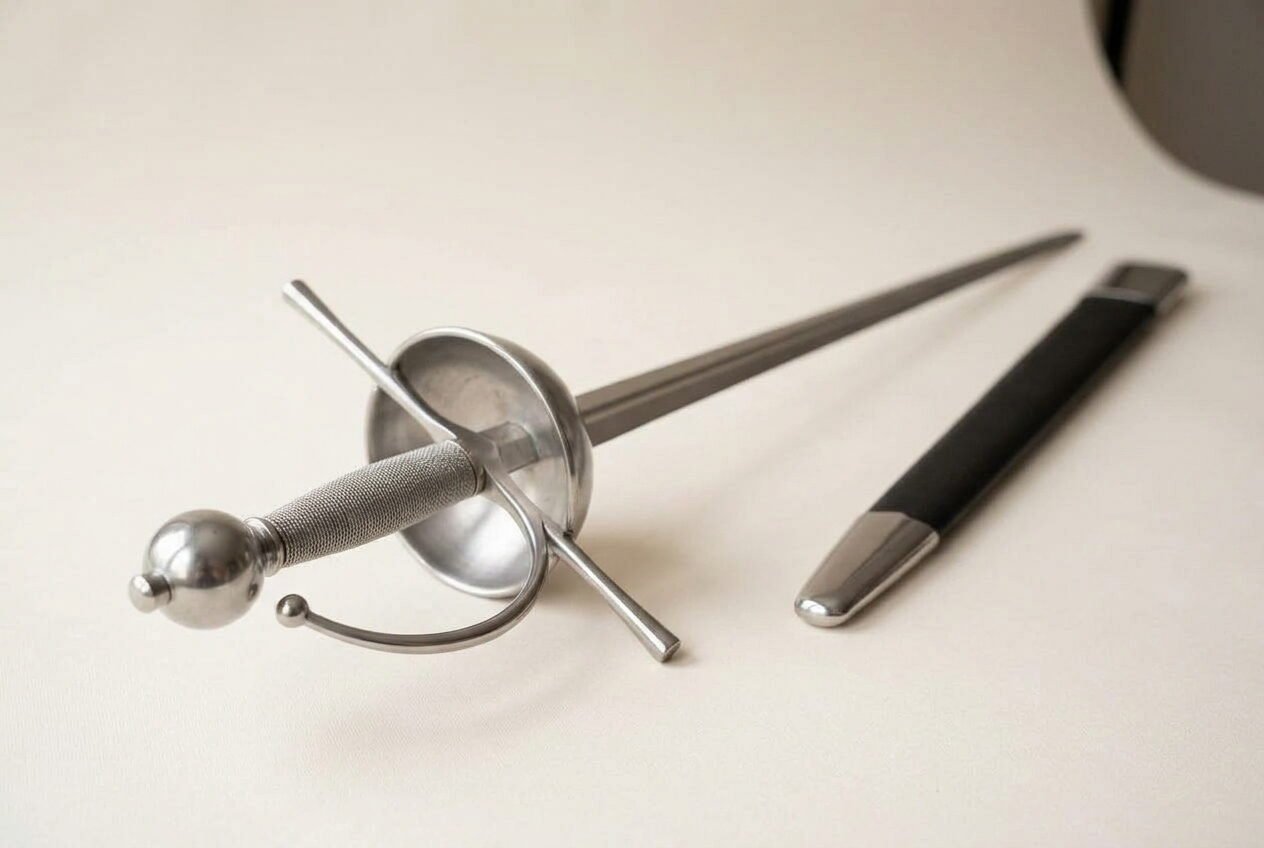
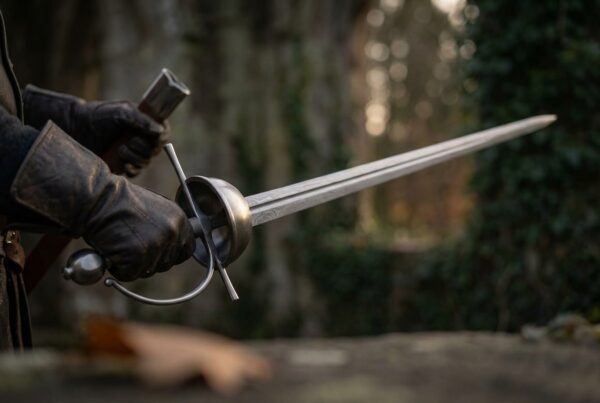
It is forged and finished in the Czech Republic. The blade is 1095 high carbon steel, hardened, tempered, ground to a stiff diamond section that carries its thickness far down towards the point, and brought to a mirror polish. The hilt is a deep polished steel cup with straight quillons, a knuckle bow and a spherical pommel over a twisted wire grip. It ships with the fitted black leather scabbard shown, mounted with a polished steel throat and chape.
Specifications
| Steel | 1095 high carbon steel |
|---|
| Hardness | 54 to 58 HRC |
|---|
| Overall length | 47 inches |
|---|
| Blade length | 39.5 inches |
|---|
| Hilt length | 7.5 inches |
|---|
| Blade profile | Slender diamond section thrusting blade, mirror polished |
|---|
| Guard | Deep polished steel cup with long straight quillons either side and a knuckle bow |
|---|
| Grip | Twisted steel wire wrap |
|---|
| Pommel | Spherical polished steel pommel with a top button |
|---|
| Scabbard | Black leather with polished steel throat and chape |
|---|
| SKU | RK-1423 |
|---|
Why a cup hilt rapier was almost never used alone
A cup hilt rapier is only half of a system, and once you know what the other half was the design makes a great deal more sense. The rapier was normally paired with a dagger held in the left hand, called the main gauche in French sources and the daga de mano izquierda in Spanish ones. Two blades, two jobs. The rapier holds the line and threatens at long range. The dagger covers everything that gets inside that range, where a forty inch blade is far too long to be useful.
Once you accept that division of labour, several things about the sword follow. The rapier blade does not need to be quick to recover from a parry, because parrying is largely the dagger job, and that is why the blade can afford to be so long. The cup does not need gaps to see through, because the fencer is looking over the top of an extended arm at a target he intends to hit with the point, not watching for cuts. The blade can be stiff rather than agile, because it is being aimed rather than swung.
The cup also does something for the left hand that is easy to miss. In a bind, where the two blades cross and press, a solid bowl gives the fencer a hard edge to trap the opposing blade against while the dagger comes in. Cage hilts can catch a blade, but a cup does it predictably every time, and predictability is what a system built on geometry needs. Fencing treatises of the middle seventeenth century treat the paired rapier and dagger as the default, and the sword forms of that period only fully make sense in that context.
Why 1095 high carbon steel and not stainless
Nearly forty inches of narrow blade is an extreme thing to ask of steel. It must bow deeply under a thrust and come back dead straight, over and over, hold a fine point, and survive a lateral knock without a crack starting anywhere along its length. Stainless is not the material. The chromium that makes it resist rust also forms coarse carbides through the metal, and in a slender section those are the places a crack begins. Manufacturers avoid it by leaving stainless blades soft, which is why they take a permanent set the first time they flex.
1095 is plain iron and carbon and almost nothing else. It hardens right through, it tempers to a figure you can trust, and at 54 to 58 HRC it gives this blade the combination a rapier needs: enough hardness to keep a point and enough elasticity to return to true. It rusts if left wet or fingerprinted, which is the honest cost, and a cloth with a little oil is the whole cure. There is more at Damascus versus stainless.
The wire grip and the spherical pommel
The grip is bound in twisted steel wire over a shaped core. Wire is the historically correct binding for a rapier and the practical one. The sword is steered lightly through the thumb and forefinger rather than gripped in a fist, and a ridged surface holds the blade square without any real pressure. Leather absorbs sweat, stretches and eventually needs replacing. A properly terminated wire wrap will look the same in thirty years.
The spherical pommel is the counterweight, and on a cup hilt it works alongside the cup rather than against it. The bowl adds mass just ahead of the hand and the sphere adds mass just behind it, and between them they concentrate weight around the grip so that the long blade can be moved by the fingers rather than the arm. Pick the sword up and it will feel lighter and more alive than the length suggests, which is the whole trick of a well proportioned rapier.
Engraving, runes and your own design
Use the rune converter on this page to turn a name, a date or a short phrase into Elder Futhark and we will cut it into the steel or the handle. If you would rather have a Viking pattern than a rune line, choose your own design in the engraving option above the add to cart button and tell us whether it goes on the blade or the handle. Where a piece already carries an engraved design, your chosen engraving replaces it rather than sitting alongside it. The Cupwarden carries nothing at all, which makes it the cleanest canvas in this range. The outer face of the cup is the largest single engraving surface we can offer on any sword. See the engraving page.
Care and sharpening
An entirely polished sword shows everything, which is the price of this finish. Wipe the blade and the cup down after handling and keep a thin film of mineral, camellia or light gun oil on the steel, because a fingerprint left for a week or two will etch a permanent ghost into a mirror surface. The inside of the bowl collects dust and is awkward to reach once the sword is mounted, so clean it before you display it rather than after. Do not store the sword sheathed for long periods, since leather holds moisture against steel. The routine is on the steel care page.
The edges are secondary to the point on a rapier and arrive sharp enough to respect. To refresh them use a whetstone and follow the existing bevel with light passes, being careful at the tip where a few heavy strokes will round a fine point. See sharpening with a whetstone.
Made in the Czech Republic
Every piece we sell is made by hand in the Czech Republic. The smiths there work the way the trade has been worked for a long time, heating and hammering the steel, taking the bevels down by eye, and fitting the handle and the leather one at a time. There is no automated line anywhere in it, so small differences from one piece to the next are normal and expected.
Ransack Viking is a United States company based in Chicago, Illinois. We bring the pieces in ourselves, inspect them on arrival and ship them from our own warehouse. If you add engraving, that is carried out here in the United States before your order goes out.
A note on handmade variation
This piece is hand forged. It is not machine made or bulk produced, so what arrives will not be a pixel for pixel copy of the photograph. A raised cup is never twice exactly the same depth or curve, the pitch of the wire winding varies, the profile of the pommel is filed by eye and a mirror polish reads differently under every light it meets. The dimensions, the steel and the build are the same every time. The character is not, and that is what separates a forged sword from one pressed out on a die.
Frequently asked questions
Is the cup cast or hammered
Hammered. It is raised from a flat disc of steel over a stake, annealed between stages, then polished inside and out. A cast cup is quicker to make, heavier and more brittle.
Is the rapier sharp when it arrives
The edges have a working sharpness and the point is a real point. A rapier is a thrusting sword first, so treat the tip with respect.
Can I fence or spar with it
No. This is a sharp sword, not a blunt trainer. Historical fencing requires purpose made blunt blades with rolled tips and proper protective equipment.
Do you make this in Damascus
Yes. The Damascus version of a cup hilt rapier is listed separately with its own name, its own dimensions and a 1095 and 15N20 pattern welded blade at 58 to 60 HRC. It costs more because the billet is a job in itself.
What is the difference between a cup hilt and a swept hilt rapier
A swept hilt guards the hand with a cage of curved bars and leaves gaps between them. A cup replaces the whole cage with one solid raised bowl, which is heavier and completely closed. The swept hilt came first, the cup answered its one weakness, and both were carried at the same time for decades.
How long does shipping take
Free shipping in the United States. Stock pieces leave within a few days. It takes three to five weeks in the shop because of the cup raising and polishing, and engraved work a little longer.
What is in the box
- Cupwarden hand forged 1095 high carbon steel cup hilt rapier
- Fitted black leather scabbard with polished steel throat and chape
- Care card covering oiling, polish upkeep and wire grip care
- Elder Futhark rune engraving or your own Viking design if selected at checkout
- Forged and finished in the Czech Republic
Explore the range
See the rapiers, the Damascus swords, the short swords and the full sword range, or read the guides.
Near neighbours in the shop
Worth putting side by side with this is the Emberleaf rapier, 44 inches overall. In the same category sits the Ebonguard rapier, 40 inches overall. A near match for this one is the Shellgrain rapier, 45 inches overall.
For a different piece from the same family, look at the Everknot movie sword. You can have this made your way instead on the design your own page.
Training at a HEMA club? Look at the Hrafnstede smallsword trainer for drills and free play, and check our smallsword guide as well.


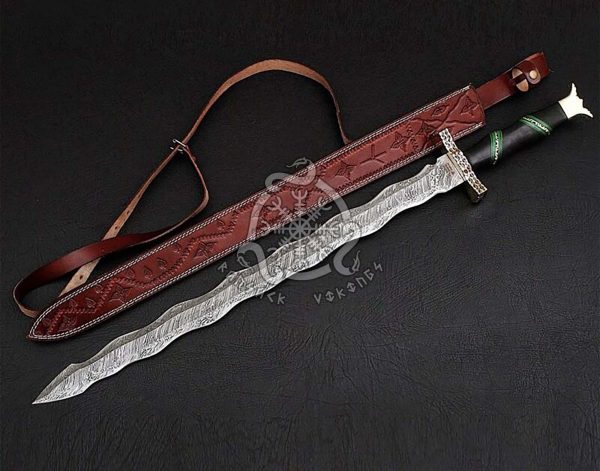
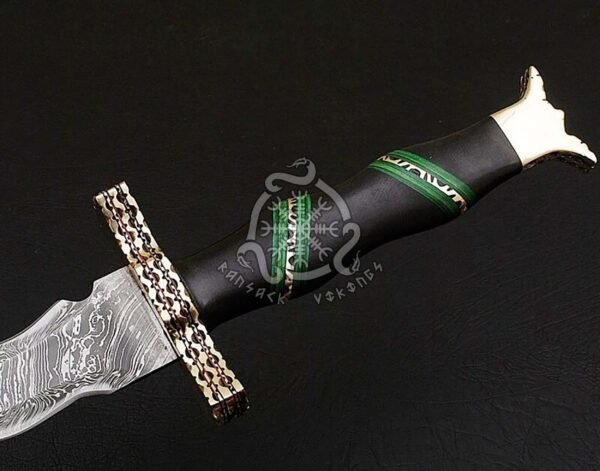
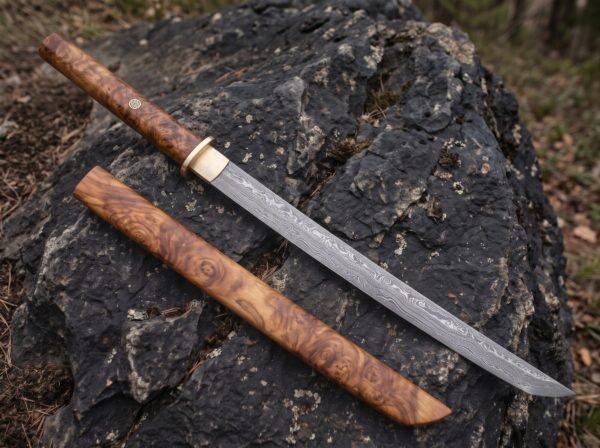
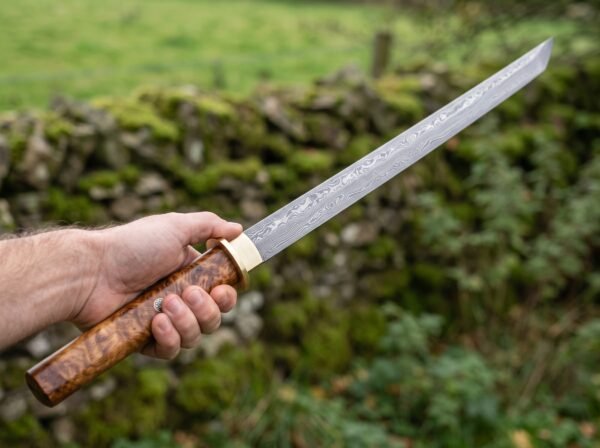
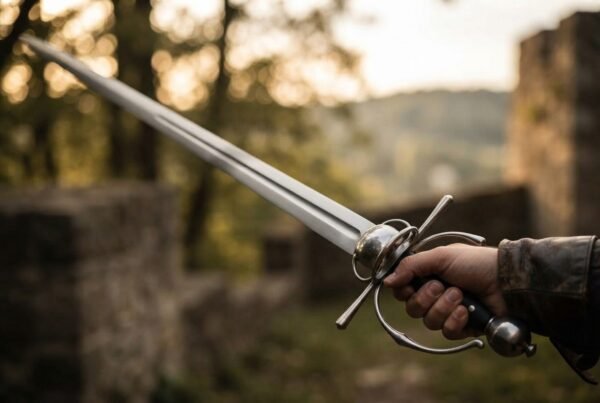
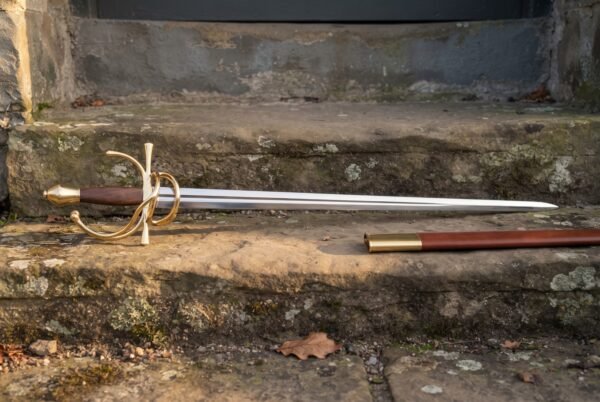
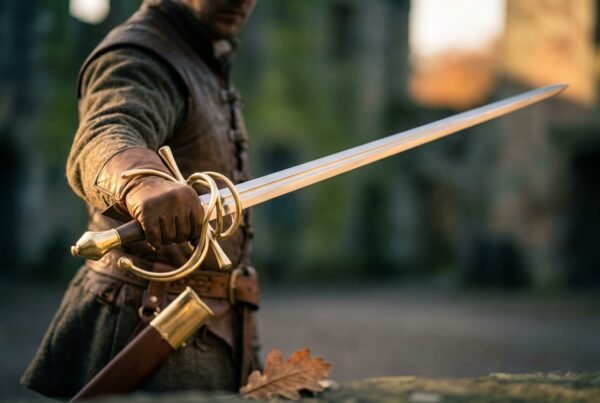
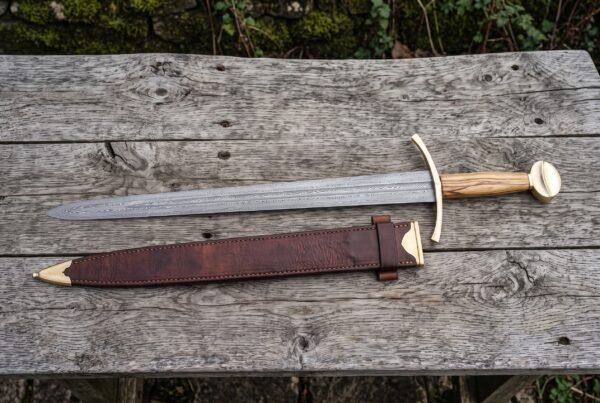
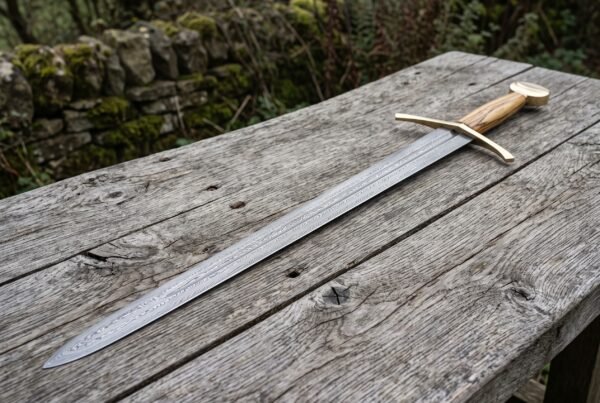
Feels way more premium than the price suggests. Came in a nice gift box which made it feel even more special. Leather sheath is thick and well stitched. Not the cheap stuff you usually get. Weight and balance make it feel like a real functional piece not some cheap replica. Shipping was fast and everything arrived well packaged.
Photos don’t do this sword justice at all. Will definitely order again for another gift. Nice touch that it ships from within the US even though it’s crafted in the Czech Republic.
No regrets on this purchase at all. Fit and finish is museum quality. You can tell real craftsmen made this by hand. High Carbon Steel blade holds a razor edge right out of the box. Will definitely order again for another gift.