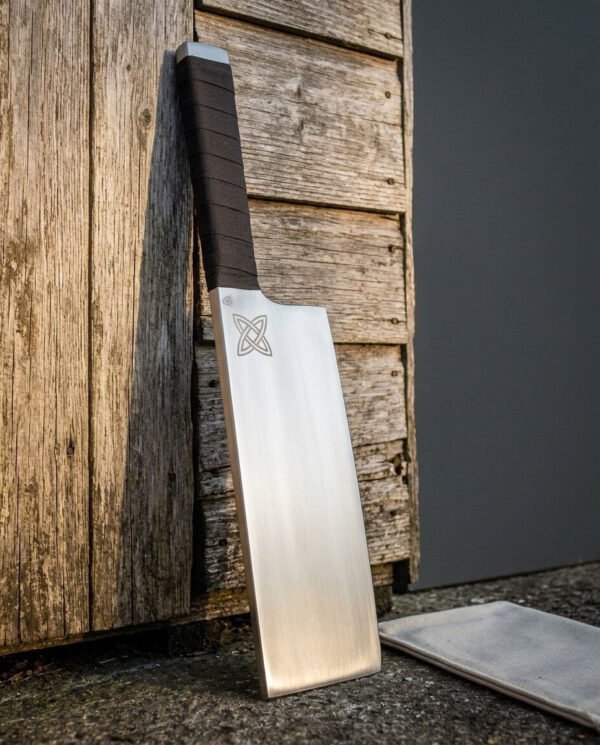
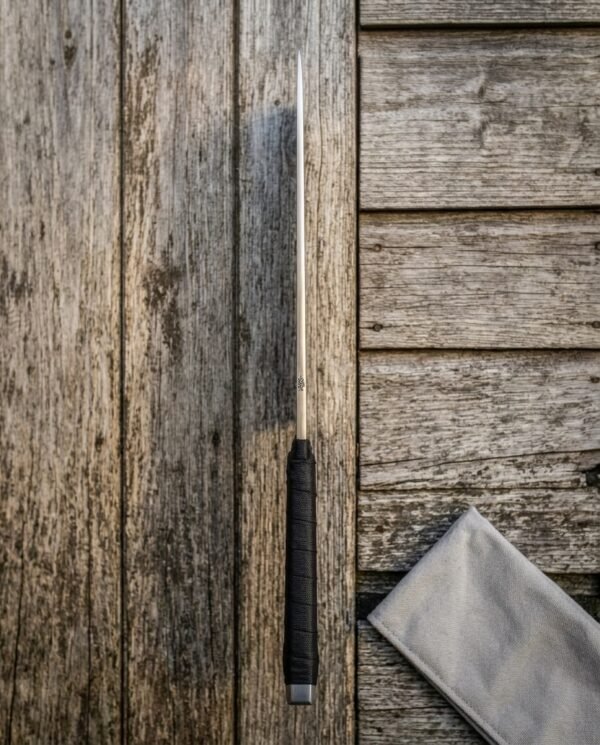
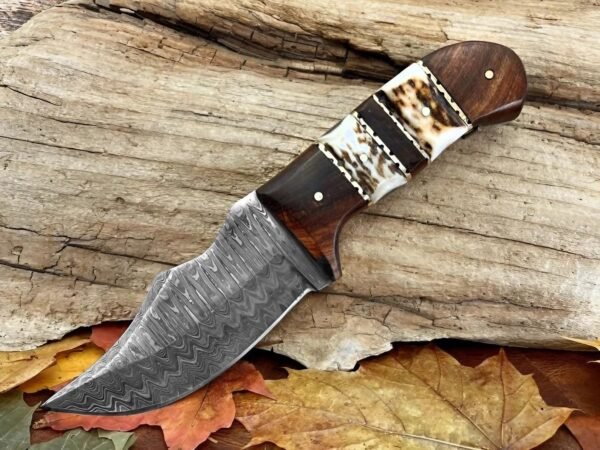
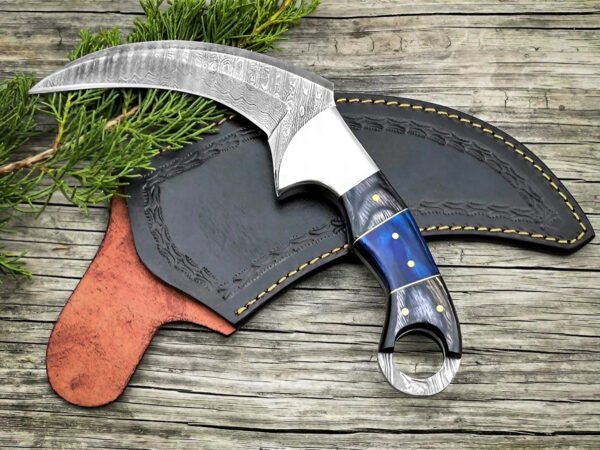
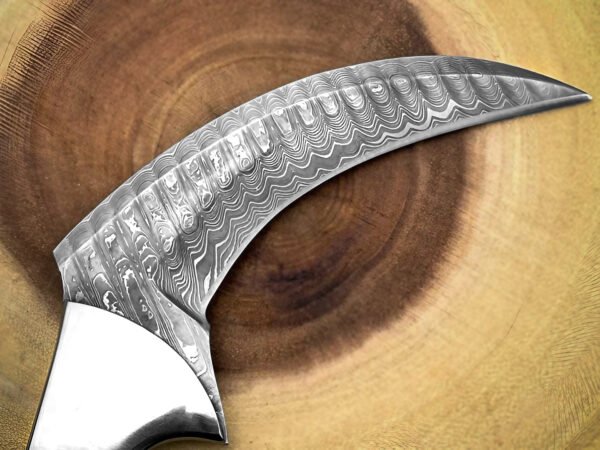
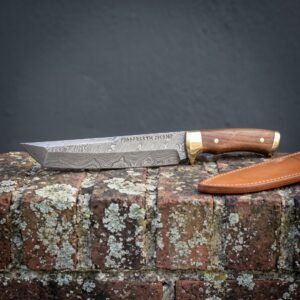
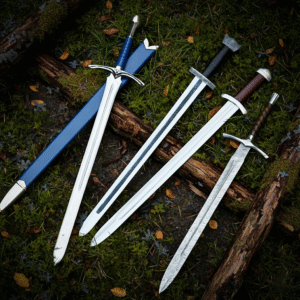
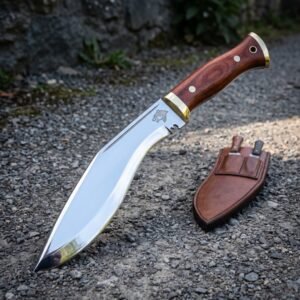
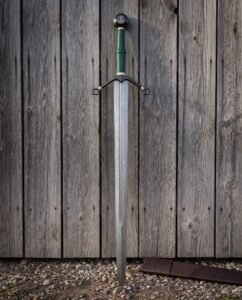
Hand made means the blade was shaped under a hammer and finished by a person rather than punched out of sheet and belt ground to a profile. That difference shows up in a few specific places. A spine that tapers toward the tip. Grind lines that meet a little differently on each piece. A handle shaped to a hand instead of to a jig. And the honest consequence, which is that no two are identical.
What is on this tag
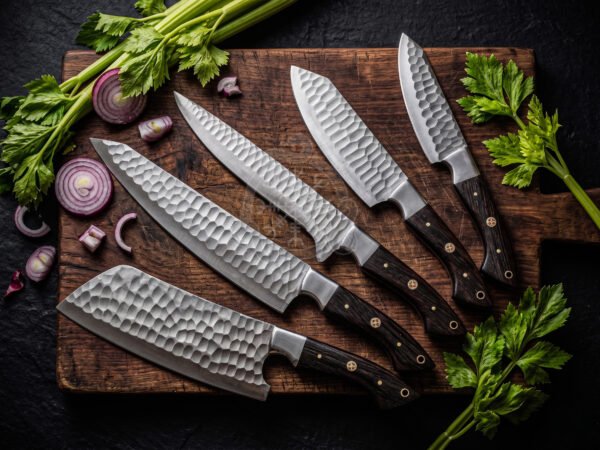
Skinners, karambits and chef knives. Blade lengths run 3.5, 4 and 7 inches with overall lengths from about 7.5 to 12. Steel is hand forged Damascus of 1095 and 15N20, forge welded and acid etched, at 58 to 60 HRC. Handles are rosewood, pakka wood and stabilized hardwood, with steel bolsters and stag accents on some pieces. All are full tang and each ships in a stitched cowhide sheath cut for the blade.
Where the work is done
Worth stating plainly rather than leaving to inference. Ransack Viking is a US company based in North Babylon, New York. Pieces are handmade in the Czech Republic, then imported, inspected and shipped from New York. Engraving is done in the US after arrival. The full statement is on the country of origin page, and the exact steel specification behind every blade is on the steel we use and how hard it is.
What variation actually means for a buyer
Listed dimensions are the piece as measured. Damascus patterns differ on every blade because a folded billet never repeats. Natural handle material differs in grain and tone. What does not vary is the steel, the heat treat and the tang, which are the three things that decide whether a knife lasts. Everything is checked after import and anything that fails does not get listed. Browse the Damascus knives or the new arrivals.
Sheath and edge
Every fixed blade arrives with a stitched cowhide sheath cut for that blade and an edge already on it. At 58 to 60 HRC the edge holds a long time and wants a proper stone rather than a pull through sharpener, which tears hard steel. Carbon steel patinas with use, which is normal and mildly protective rather than damage.
Forged against stock removal
Stock removal means grinding a blade out of flat bar, which is a legitimate way to make a knife and how most factory blades are produced. Forging moves the steel instead, refining the grain and letting the smith put thickness where it is needed and take it away where it is not. Neither method guarantees a good knife. The heat treat does that, and it is the step nobody photographs.
Free US shipping
On most pieces. Heavier and oversized ones carry a flat charge.
Hand Forged
Heated, hammered and ground by hand.
Engraving available
Names, dates or Norse runes on most pieces.