Etching cuts the pattern below the surface with acid rather than laying it on top with a printer. On a broad fuller or a flat axe cheek there is enough room for a full interlaced band, and because the mark sits in the steel it survives handling, polishing and a wet weekend outdoors. That is the whole argument for it.
Blades, an axe and a pair of gauntlets
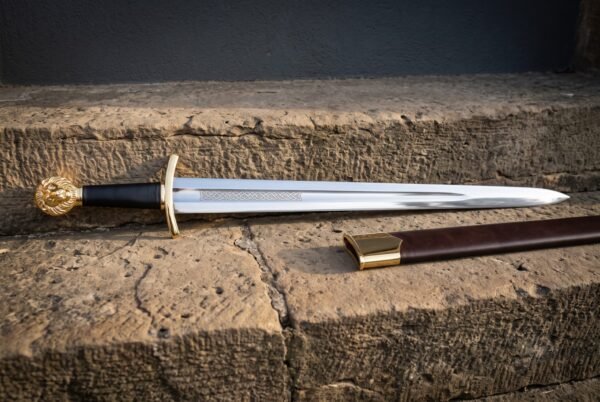
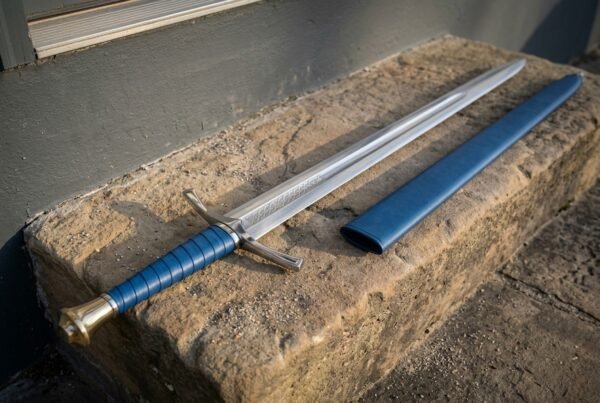
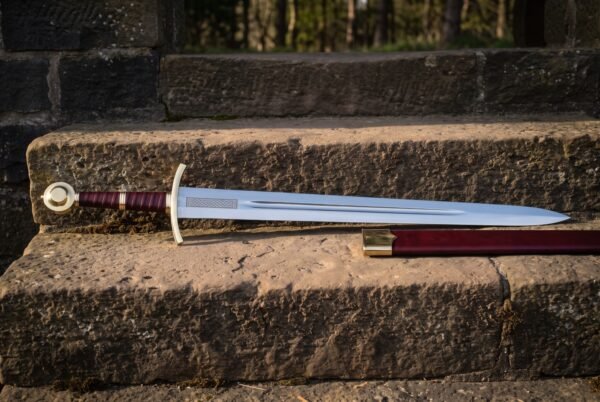
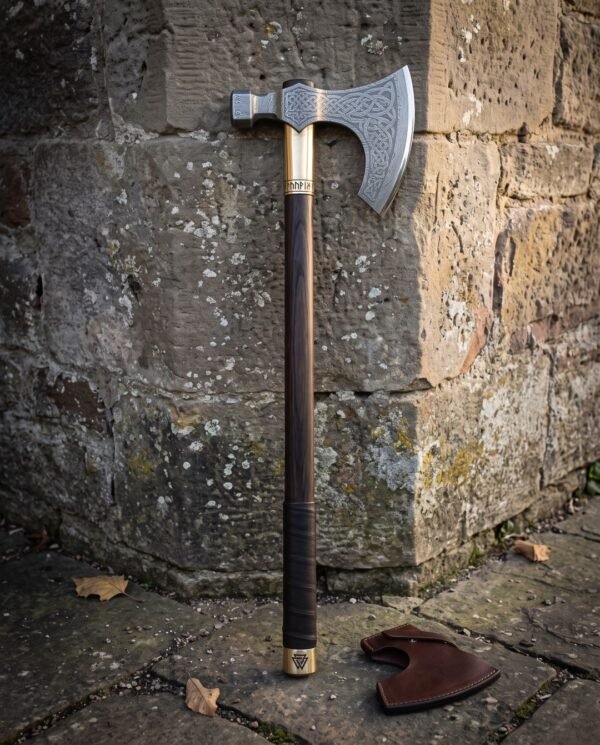
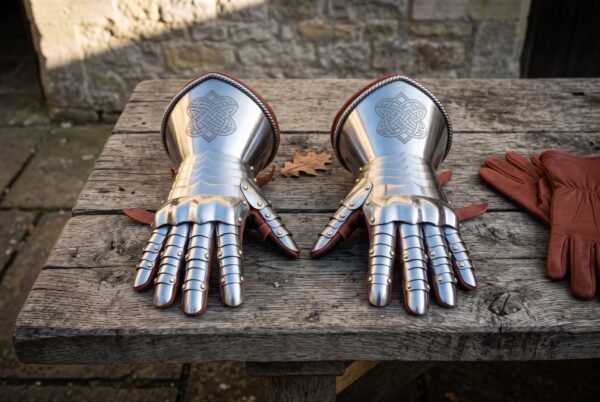
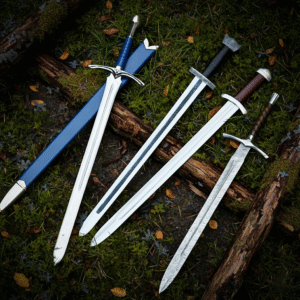
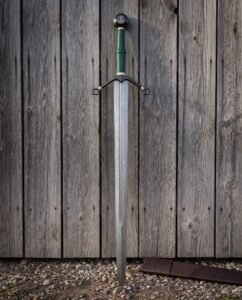
Brasswake is the clearest example, a thirty one inch etched knotwork blade under a brass wheel pommel, with an oxblood leather grip and a brass mounted scabbard. Manecrest is the short one at twenty six inches overall with a twenty inch fullered blade, a brass lion head guard and pommel and knotwork etching. Azurehewn is thirty seven inches overall with a brass faceted pommel, a blue leather grip and a matching blue scabbard. Knotbeard takes the pattern onto an axe, a long hafted bearded head with an etched knotwork brass collar and a leather mask. Handwarden is the outlier, a pair of forged plate gauntlets with articulated finger lames and knotwork etched cuffs.
The insular pieces sit in Anglo Saxon and Celtic and the Norse blades in Viking swords. Read Viking symbols and their meanings for what the interlace meant.
Free US shipping
On most pieces. Heavier and oversized ones carry a flat charge.
Hand Forged
Heated, hammered and ground by hand.
Engraving available
Names, dates or Norse runes on most pieces.