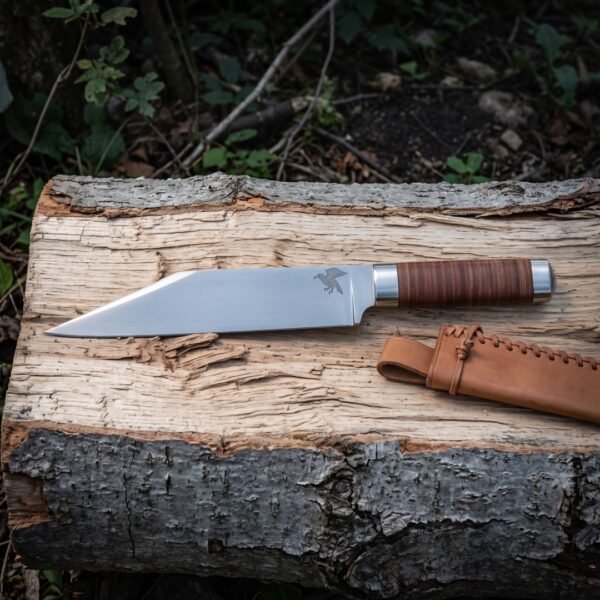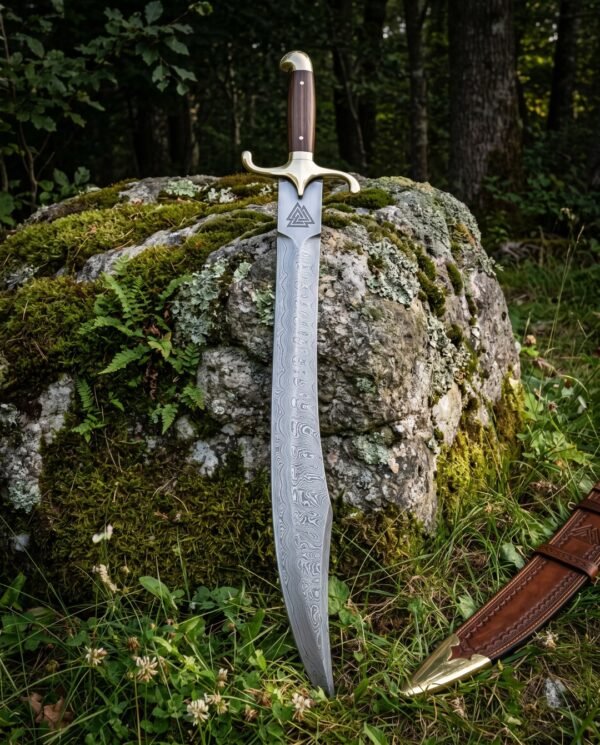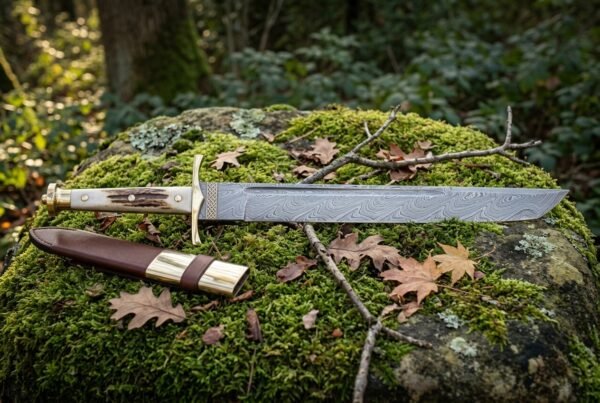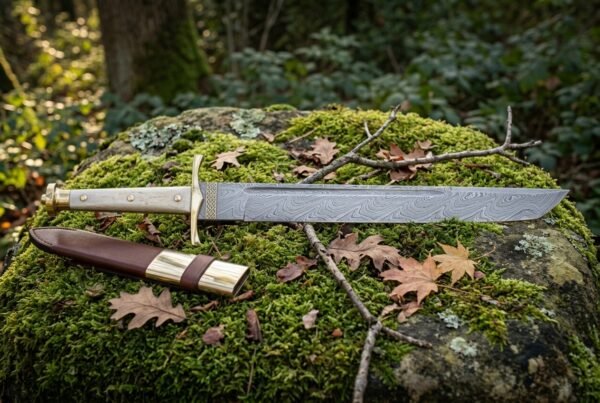
A broken back seax has a spine that runs straight and then drops at a sharp angle to meet the point. It is the shape pulled out of Anglo Saxon and Norse graves across England and Scandinavia, and the reason the seax is recognisable at a glance rather than looking like every other belt knife. People search for it when the profile matters as much as the steel.
The range of sizes
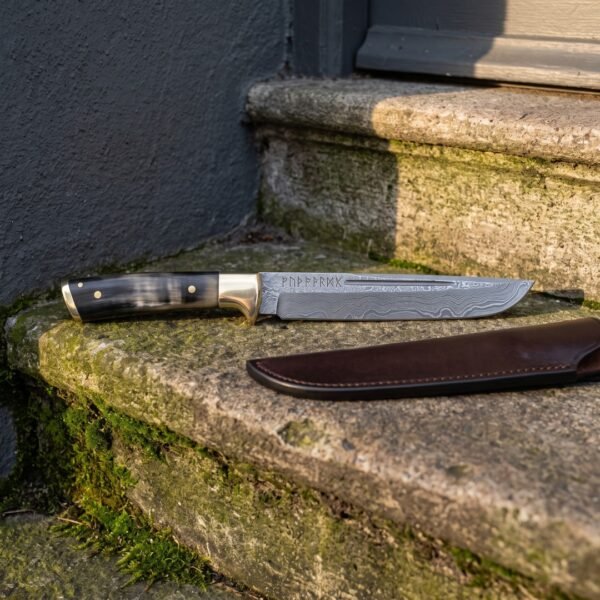
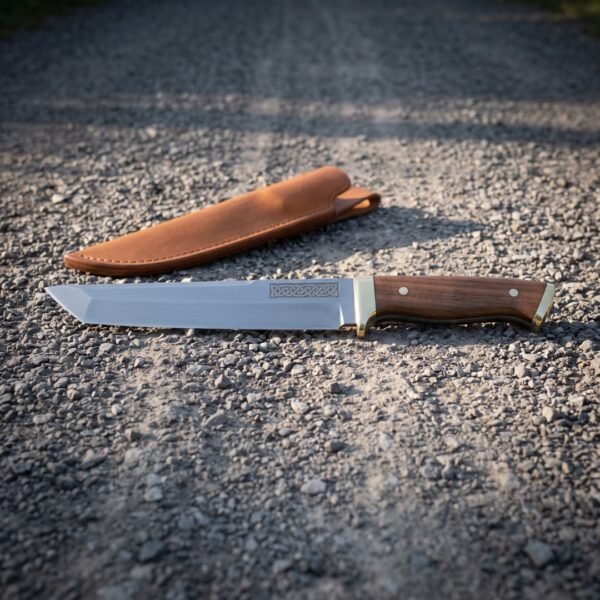
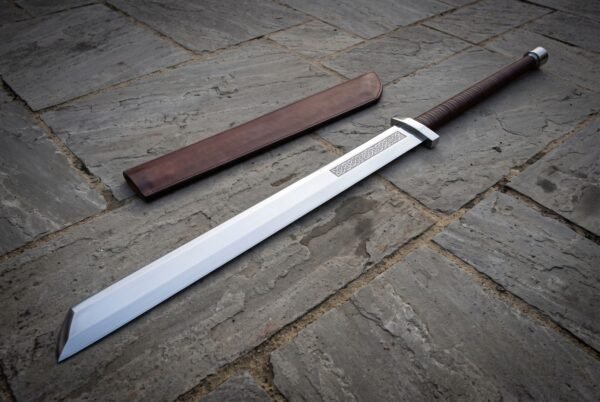
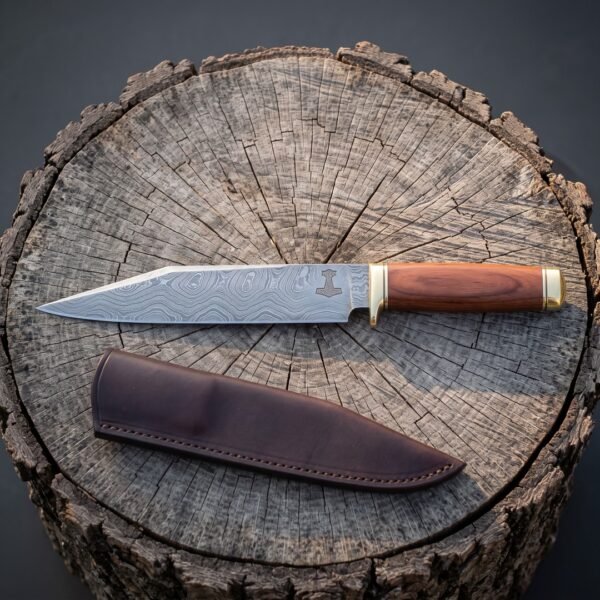
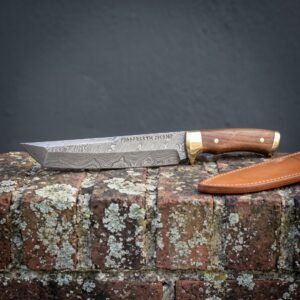
They run from belt knife to short sword. Hornsax is the small one at 12 inches overall with a horn handle, a rune etched blade and brass fittings. Emberfang is 13 inches with an 8 inch Damascus blade, rosewood handle and brass bolsters. Knotsax is 14 inches in 1095 with rosewood scales, a brass bolster and an etched knotwork panel in a tan sheath. Then it gets serious. Bonewarden and Stagwarden are both around 24 inches overall with 18 inch Damascus blades. Wolfnotch is a long seax with a rosewood grip, a Valknut etch and a tooled leather sheath. Broadsax is the biggest, a 28 inch langseax with a 22 inch blade, a leather wrapped grip and a fitted scabbard.
All of them sit in Viking seax. For where the shape came from, read Viking seax history, and if you are weighing it against an American classic, seax against bowie settles it.
Free US shipping
On most pieces. Heavier and oversized ones carry a flat charge.
Hand Forged
Heated, hammered and ground by hand.
Engraving available
Names, dates or Norse runes on most pieces.