
Blog
War Hammer and Mace: How Blunt Arms Beat Armour

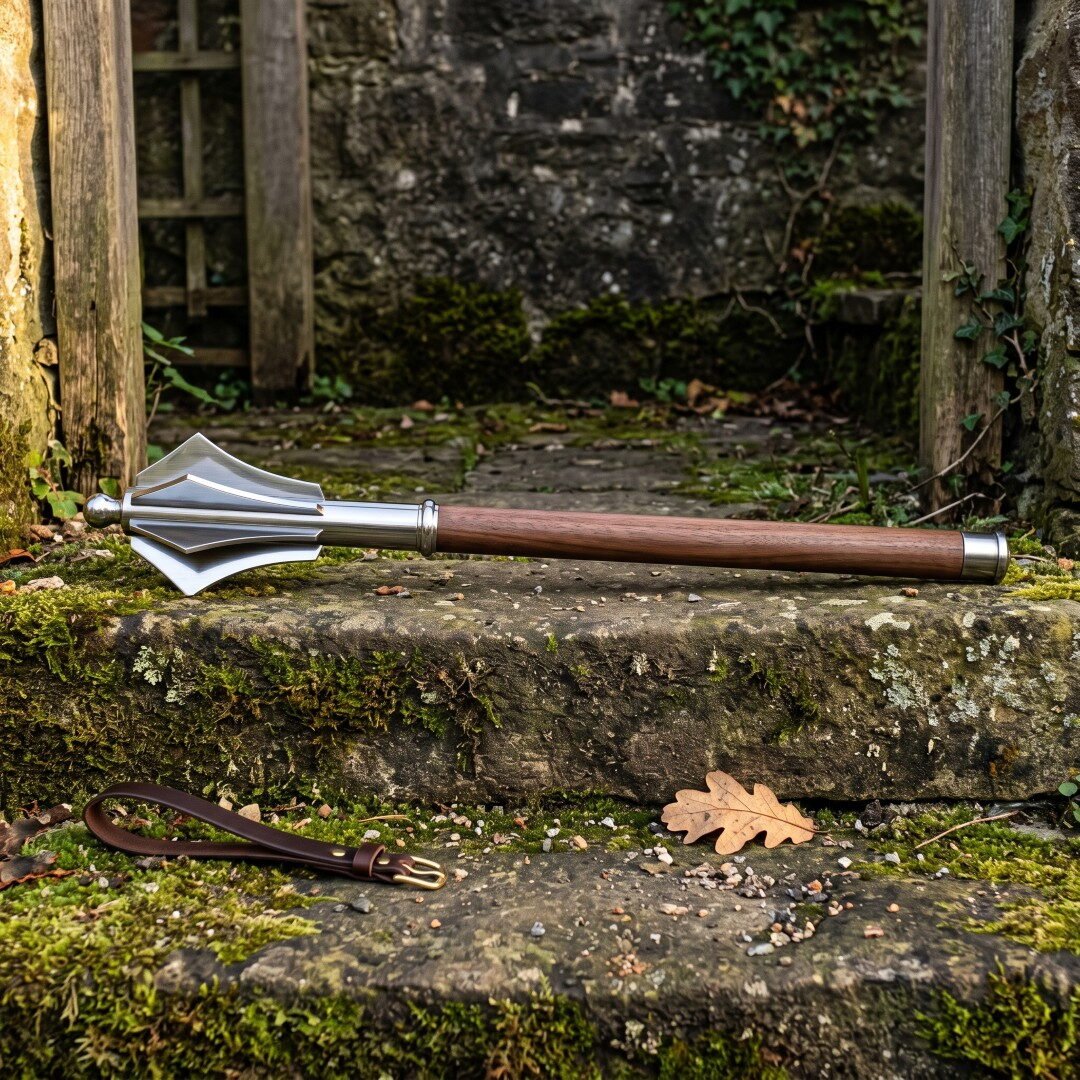
Blunt arms beat armour by ignoring it. A sword edge has to cut something to do damage, and mail will not let it. A mace head does not care. It arrives as a few pounds of iron moving fast, the force goes straight through rings and padding and plate, and the man inside takes the shock in his bones. That is the whole idea. It is a crude answer to an expensive problem, and it is why the mace and the war hammer outlived the periods that produced them.
Why armour created the mace
Follow the arms race in order. Fighters put on mail. Mail turns cuts, so cuts stop working. The answer is not a better edge, it is a heavier blow delivered to a small area. Concentrate the mass of the head into a narrow flange or a square face and every joule of the swing lands on a few square centimetres of helmet.
Mail does nothing about that. Even plate, which is far better at spreading impact, transmits enough of it to break a collarbone or knock a man senseless. Our post on Viking armour goes through what mail actually stops and what it does not, and the gap it leaves is exactly the gap a mace fills.
The mace
What it is
A weight on a stick, refined. The head sits on the end of a short haft, usually somewhere between 50 and 80 centimetres in the surviving and reconstructed examples, and the balance is deliberately head heavy. You are not fencing with it. You are swinging a controlled weight and using the haft as a lever, which is less glamorous and a great deal more effective.
Three head shapes cover most of what you will meet. The bar or knopped mace is a plain cylinder or a lobed lump, the oldest and simplest form. The flanged mace carries vertical blades standing out from a central core, usually six or eight of them, so the force lands on an edge rather than a face. The spiked mace and the morning star add points, which look fearsome and were less common in serious use than film suggests, because points catch and stick.
Where the record sits
Be careful with the Viking label here. Iron and bronze mace heads are well attested in the Rus lands, on the steppe and in the Byzantine world, and Scandinavians who travelled east would have seen them. The Norse homelands themselves give up axes and spears in quantity and blunt heads in very small numbers. Anyone selling you a mace as standard Viking kit is stretching the evidence until it squeaks.
Western Europe takes to the mace later. The Bayeux Tapestry, embroidered within a generation of 1066, shows mounted figures carrying short clubs or batons, Bishop Odo among them, and scholars still argue over whether those are arms, command batons or both. From the twelfth century onward maces are common in manuscripts, in inventories and in the ground, and by the fifteenth they are standard cavalry kit. The ceremonial mace carried before a mayor or a speaker today is the direct descendant of that object, a fact nobody in the procession seems keen to dwell on.
The war hammer
Built for plate
The war hammer is the later answer to the harder problem. Plate armour spreads a mace blow across a curved surface, so the fifteenth century response was to put a hammer face on one side of the head and a curved spike, the beak or fluke, on the other. The face delivers the concussion. The beak concentrates everything into a point that can punch a hole, catch a rim, or hook a rider off a horse.
Short versions with a haft of 40 to 60 centimetres were carried at the belt or on the saddle. Long versions on a haft of a metre and a half or more are the polehammer and its relatives, including the forms usually named the bec de corbin and the Lucerne hammer. Those are two handed and they are as much a hooking tool as a striking one.
How the head was made
The eye comes first. A smith punches a hole through a heated block and drifts it to shape with a tapered tool, which pushes the metal aside rather than removing it and leaves the grain running around the eye where it does the most good. The face is then drawn out on one side and the beak on the other, and on a flanged mace the flanges are either forged from the same block or welded on and cleaned up.
Hafting matters as much as the head. On a fighting piece the head is wedged or riveted to the haft, and steel straps called langets run down two or four sides of the wood from the head, pinned in place. Those straps stop a blade from cutting the haft through and stop the head from working loose. A hammer without langets is a display piece.
How they were used
Short, direct, from the shoulder and the hips rather than the wrist. The target is the head, the shoulders, the hands and the knees, because those are the places where armour is either thin or where a broken bone ends the fight. Mounted, a mace is swung down and across at whatever passes, which is why cavalry liked it: it needs no edge alignment, it does not bind in a shield, and it survives being smashed against steel all day.
On foot, the trade is reach for effect. A man with a mace has to get inside a spear and past a shield, which is hard, so blunt arms tend to appear as a side arm rather than a first choice, whatever the cover art suggests. Our piece on Viking axe history covers the arm that filled the same slot in the north, and an axe is really a blunt arm with an edge on it: the weight is out at the head, the damage is impact plus cut, and the haft does the same lever work.
A word on flails
The two piece military flail, a spiked ball on a chain, is far more common in fantasy art than in the archaeological record or in period manuals. Some examples exist and some regions clearly used them, notably in central Europe, but the picture of every medieval soldier swinging a chain is a modern invention. Buy one because you like it, not because you think it was standard issue.
What to look for when you buy
Head weight and balance
A head somewhere between 500 grams and a kilogram on a haft of 60 to 70 centimetres gives you something that feels like the historical object: heavy enough to have authority, light enough to control. Much beyond that and you have an ornament that will tire your wrist in thirty seconds. Ask for the head weight rather than the total weight, because that number tells you how the piece will handle.
The haft joint
Look at how the head is attached. A pinned or riveted head on a shaped haft is right. A head glued onto a dowel will loosen. Langets are a good sign of a maker who has thought about the object rather than the photograph, and steel ferrules at the butt keep the end of the haft from splitting.
Wood
Ash, hickory and walnut are the sensible choices, all of them tough and springy under shock. Rosewood and other dense hardwoods look beautiful and are usually chosen for pieces that will spend their whole lives on a wall. Check that the grain runs straight down the haft rather than crossing it, because a haft with runout is a haft that snaps.
Finish and care
Steel heads want a wipe of oil and a dry place. Blackened finishes hide fingerprints and hold up well. If a piece is going on a wall in a room that gets damp, oil it more often than you think you need to, and keep the wood fed with a light coat once or twice a year.
The blunt arms we make
Our mace and war hammer range covers the shapes above: flanged maces with six blade heads on walnut hafts, plain bar maces on ash, gothic spiked heads, morning stars with brass collars, and war hammers with a square face and a curved beak on a langeted haft. Overall lengths in the range run from around 26 inches for a one handed mace to 58 inches for a two handed polehammer, and each product page lists the head size and the haft material so you can judge the balance before you buy. Damascus headed pieces are forge welded from 1095 and 15N20 at 58 to 60 HRC, and the plain heads are 1095 at 54 to 58 HRC, so if the pattern is what draws you our guide to Damascus steel explains what those layers really are. The wider Norse arms range holds the spears and pole arms that go with them, and if you are building a kit that these are meant to defeat, the medieval helmet range and the chainmail range are the other half of the story. Ransack Viking is a US company in Memphis, Tennessee. Every piece is handmade in the Czech Republic the old way, then imported, inspected and shipped from Memphis. Engraving is done in the US after arrival.
All three heavy heads are set side by side in the mace, hammer and flail comparison, and the pole arm most Norse fighters actually carried is covered in the Viking spear.
Questions people ask
Did Vikings use maces?
Very rarely, on the evidence we have, whatever the market stalls suggest. Scandinavian graves give up axes and spears in large numbers and blunt heads in tiny ones. Mace heads are well attested further east, in the Rus lands, on the steppe and in the Byzantine world, so Norsemen who travelled the eastern rivers would have seen them. Sold as standard Viking kit, a mace is marketing rather than archaeology.
What is the difference between a mace and a war hammer?
A mace has a symmetrical head built to deliver blunt force, whether that head is a plain bar, a lobed knop or a set of flanges. A war hammer has a striking face on one side and a curved spike on the other, so it can concentrate force into a point, catch an armour rim or hook a rider down. Hammers came later, once armour had improved to the point where simple bludgeoning had become optimistic.
Are flanges better than a plain mace head?
They concentrate the same swing onto a much smaller area, which means more damage through armour for the same effort. That is why flanged heads largely replaced plain ones in late medieval Europe. A plain bar head is simpler, cheaper to make and less likely to catch on what it hits, which has its own advantages.
How heavy should a mace be?
Lighter than most people expect. Historical and well made modern heads sit roughly between 500 grams and a kilogram on a haft of 60 to 70 centimetres, giving a total in the region of one to two kilograms. Anything much heavier stops being controllable after a few swings, however impressive it looks on a stand. Ask the seller for the head weight, since that is what determines how the piece handles.
What are langets and do I need them?
Langets are steel straps running down the haft from the head, pinned into the wood. They stop a blade from cutting through the shaft and keep the head from working loose under repeated impact. If a piece is going on a wall you can live without them. If it will be handled or used in drill, look for them.
Were flails really used in battle?
Some were, particularly in central Europe, and a handful of period examples survive. The picture of chained flails as common battlefield kit comes from later art and modern fiction rather than from manuals or excavations. They are awkward, they endanger the user, and the written sources say far less about them than you would expect from their fame.
Shop the range
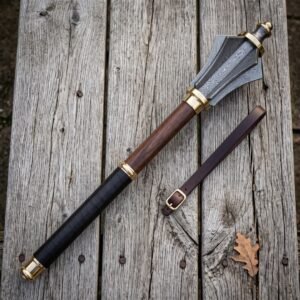 Emberflange Hand Forged Damascus Steel Flanged Mace | 27 Inch Overall with 6 Inch Head | Rosewood Haft and Leather Wrapped Grip and Brass Butt Cap | Reenactment Collector Gift | RK-1351
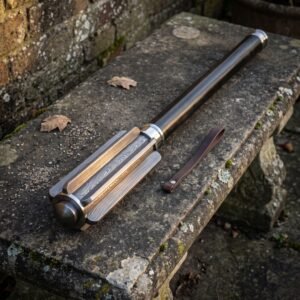 Stormflute Hand Forged Damascus Steel Bar Mace | 28 Inch Overall with 7 Inch Head | All Steel Blackened Haft and Polished Collars | Reenactment Collector Gift | RK-1353
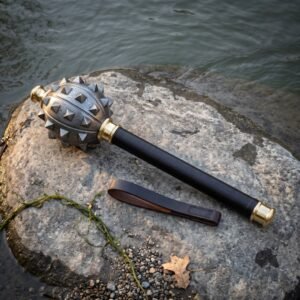 Nightthorn Hand Forged Damascus Steel Morning Star Mace | 26 Inch Overall with 5 Inch Head | Dark Hardwood Haft and Turned Brass Collars and Butt Cap | Reenactment Collector Gift | RK-1355
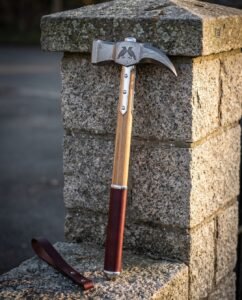 Ravenbeak Hand Forged Damascus Steel War Hammer | 1095 and 15N20 Head | Ash Haft with Steel Langets Leather Grip and Raven Etch | Norse Display Gift | RK-1563
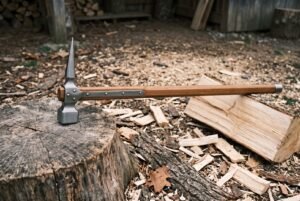 Rookbeak Hand Forged High Carbon Steel Medieval War Hammer | 33 Inch Overall with a 10 Inch Head | Reenactment Display Gift | RK-1360
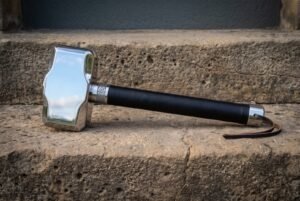 Emberfall Hand Forged Steel Blacksmith Hammer with Mjolnir Shaped Head & Wrapped Leather Grip | Forge and Anvil Gift | RK-1454