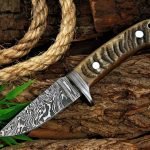
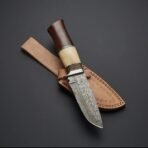
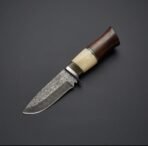
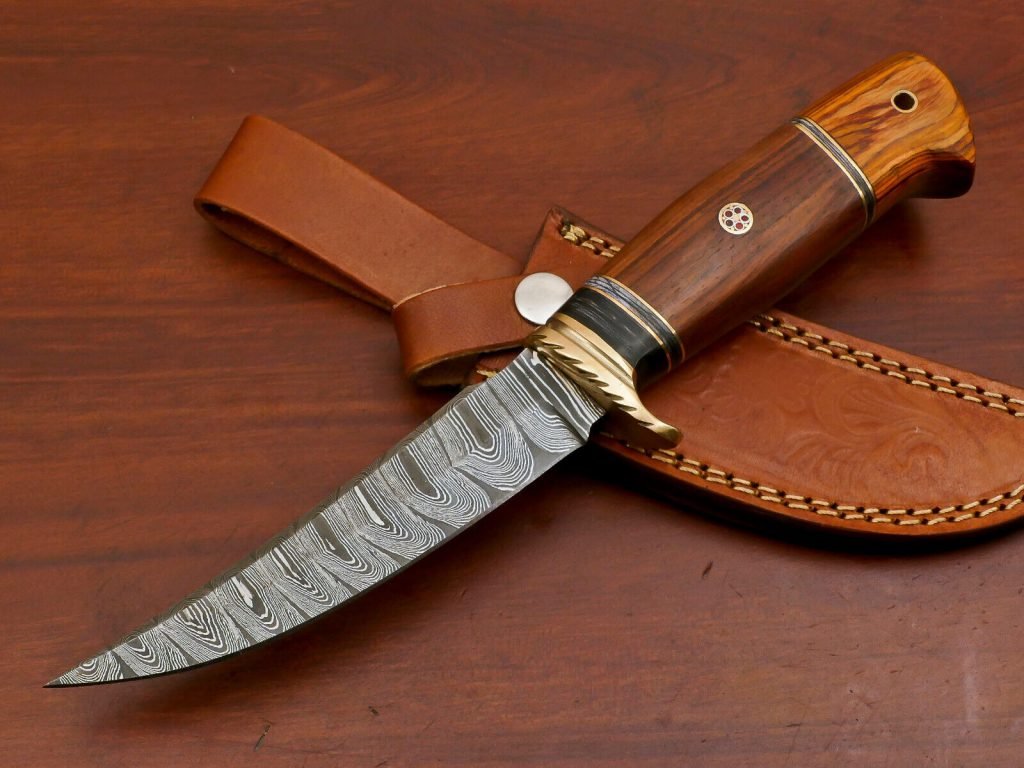
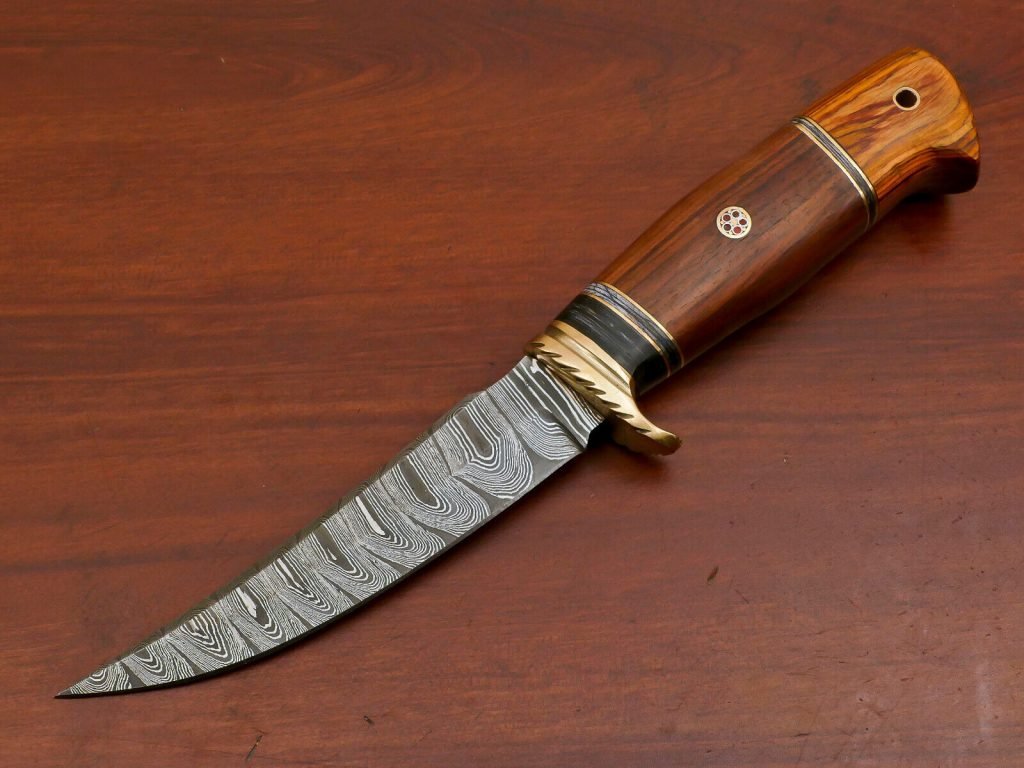
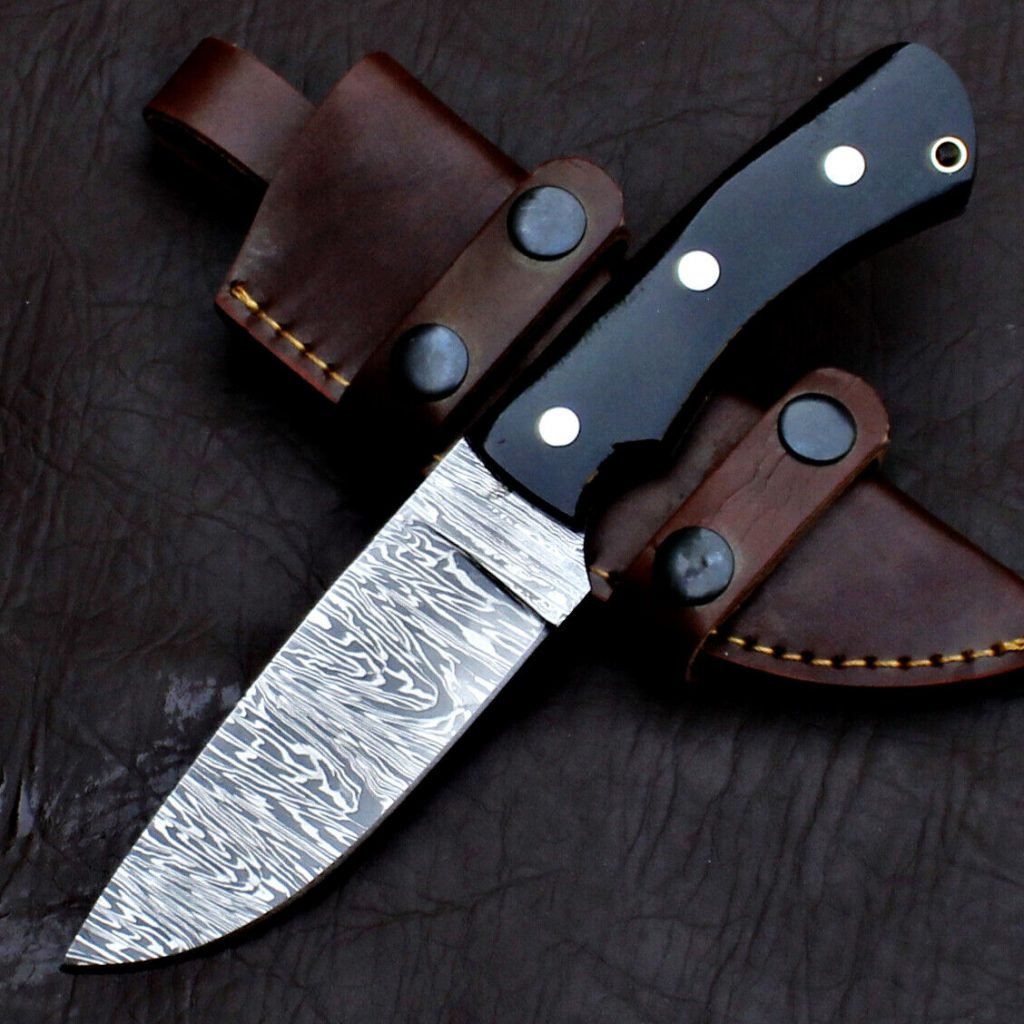
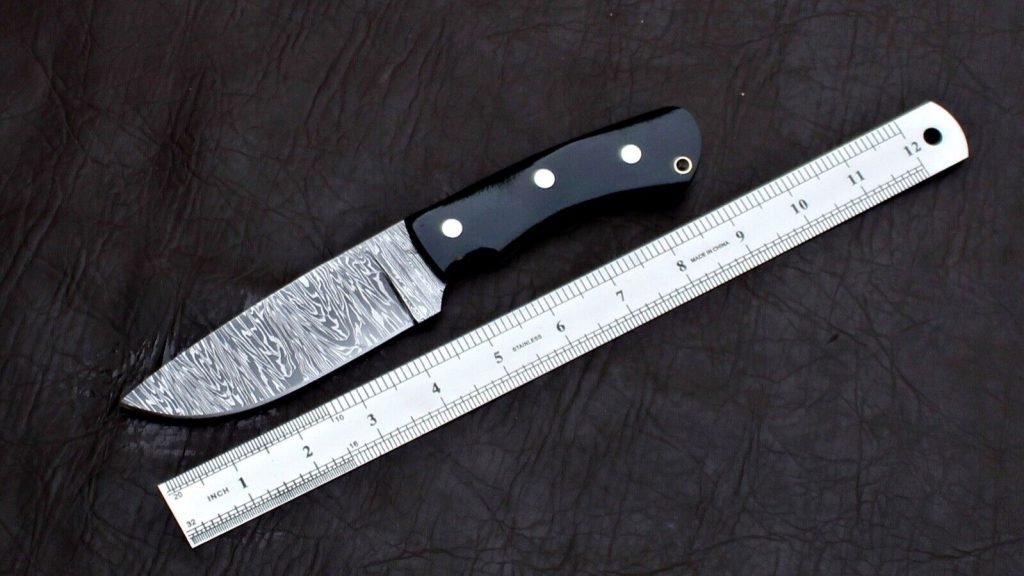
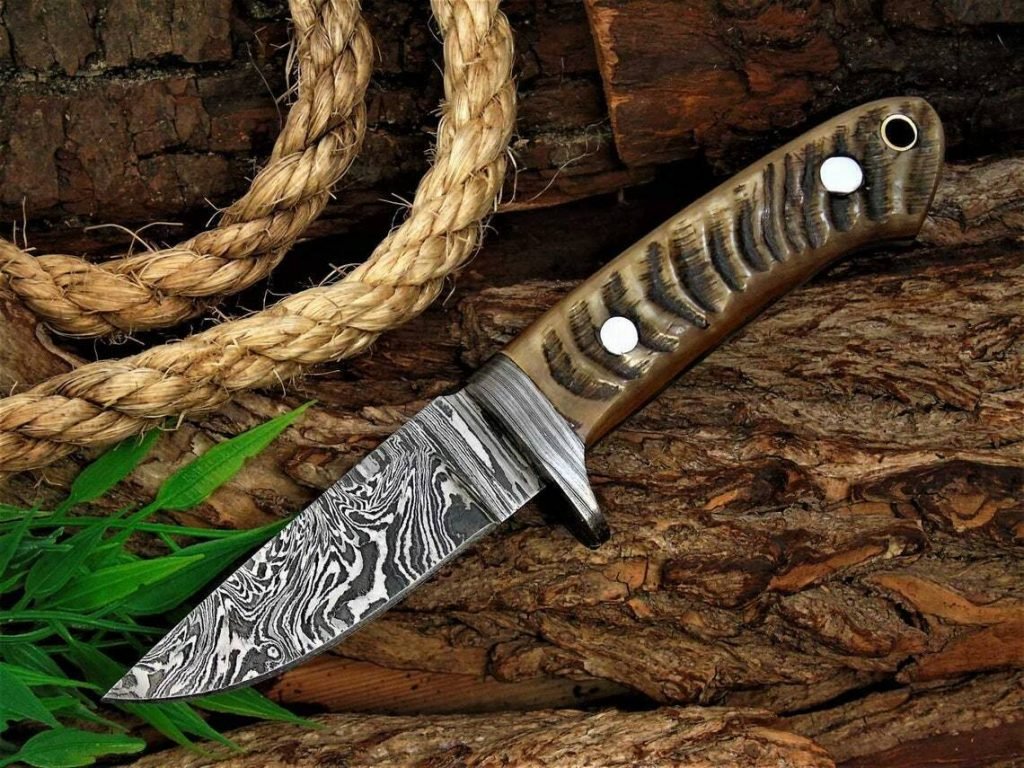
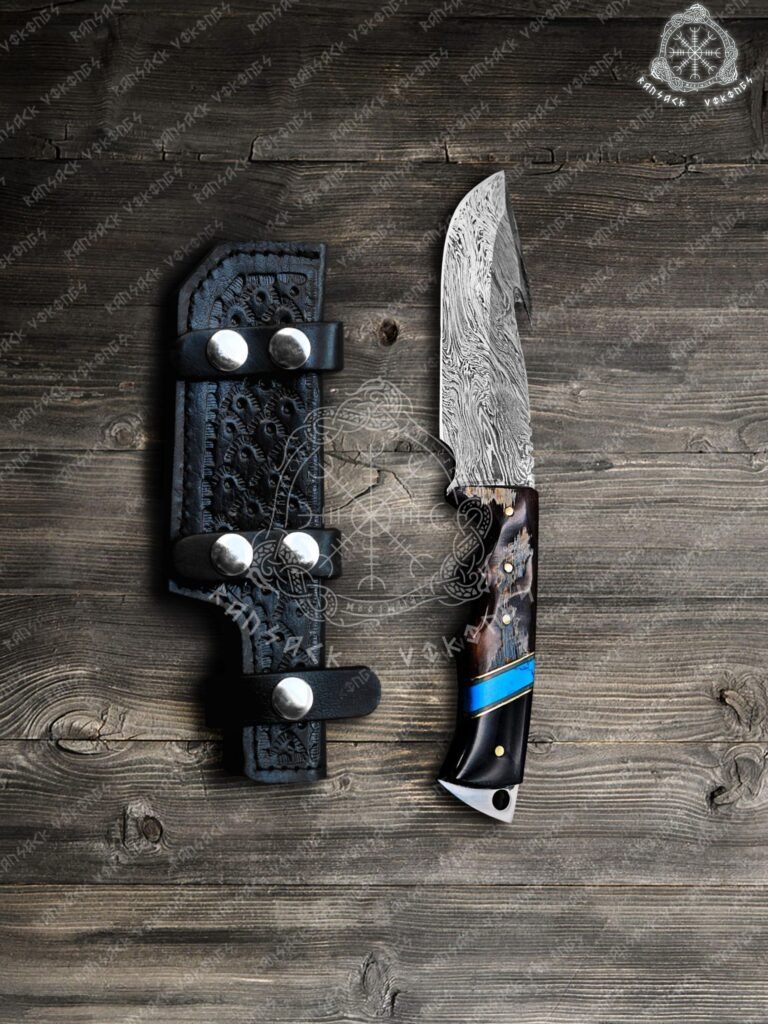
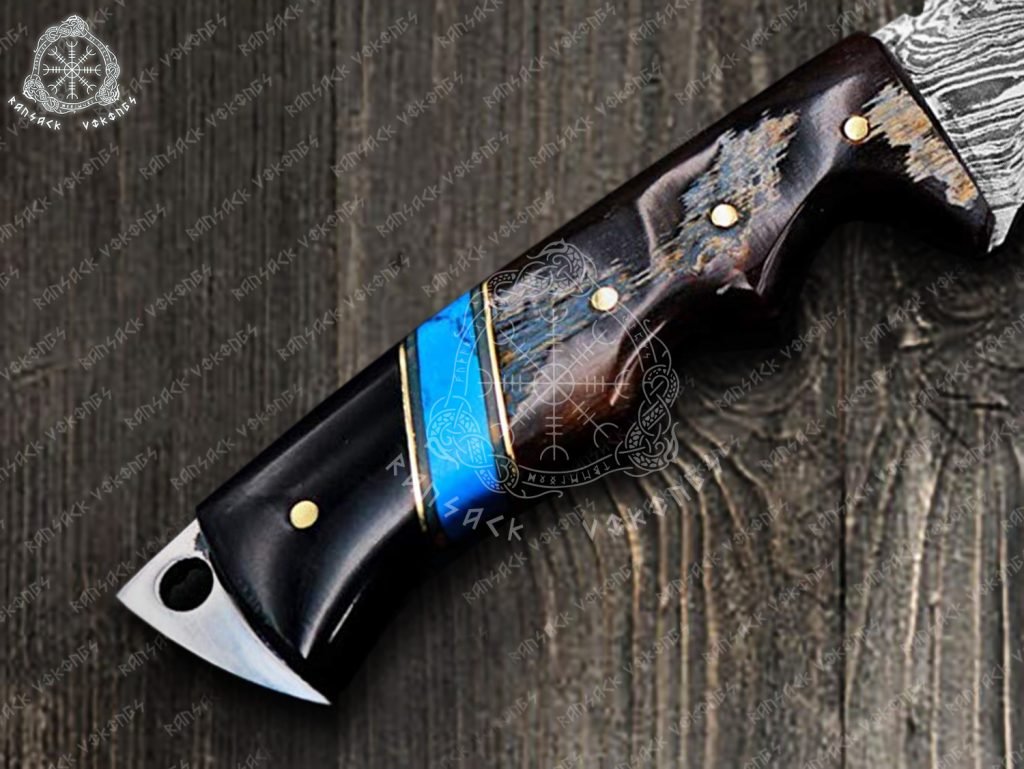
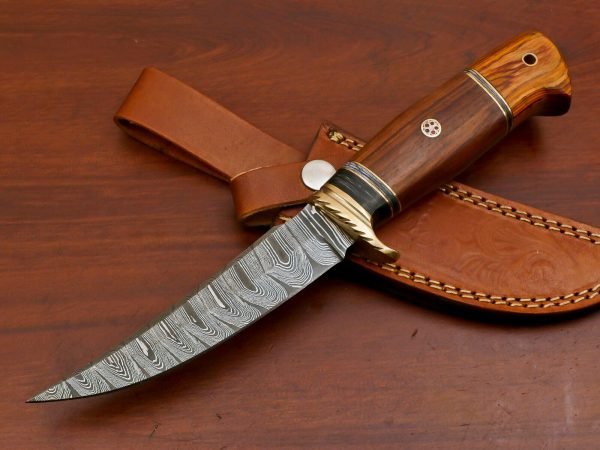
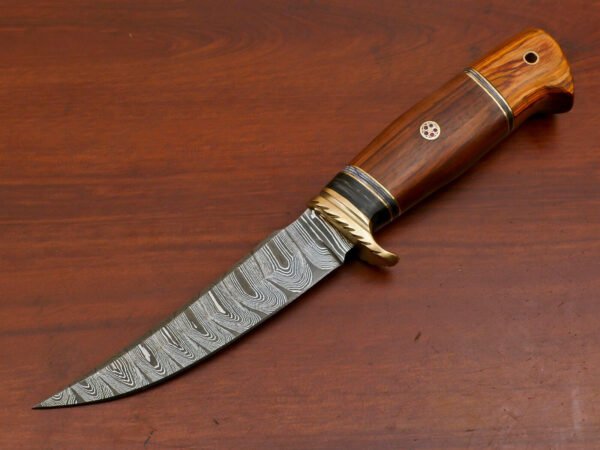
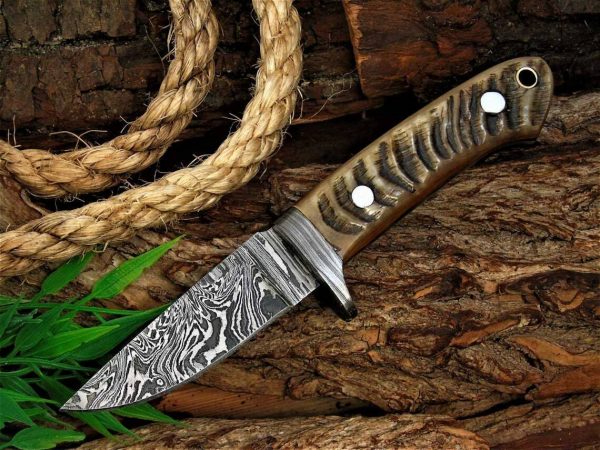
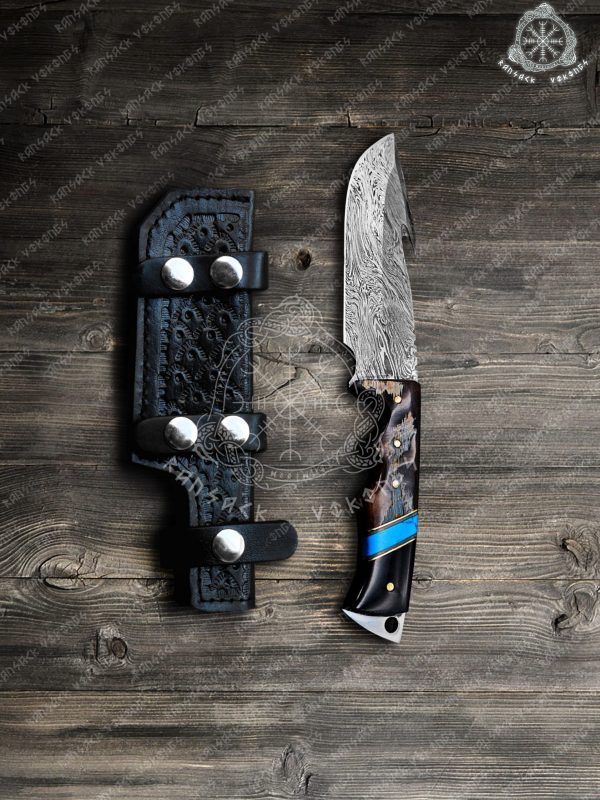
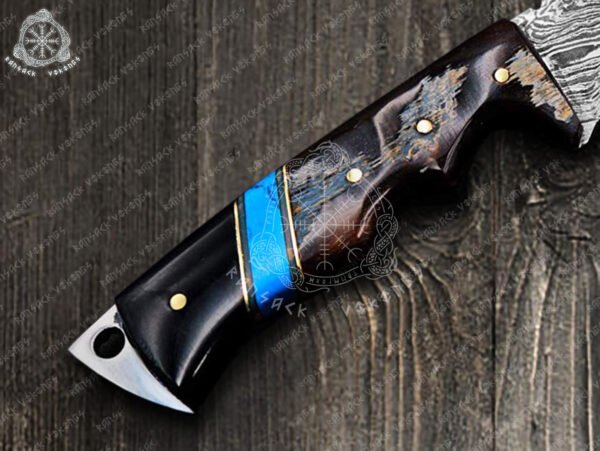
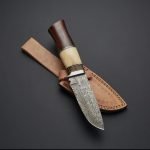
Camel bone is the reason this one looks the way it does. The Camelbone is a hand forged Damascus skinner with a 5 inch blade, 10.5 inches overall, weighing ten and a half ounces, with a handle of camel bone and hardwood over a 393 layer Damascus blade. It is made one at a time, so the grind, the pattern and the fit belong to this knife and no other. Blade shape and steel matter more here than length, as choosing a skinner explains.
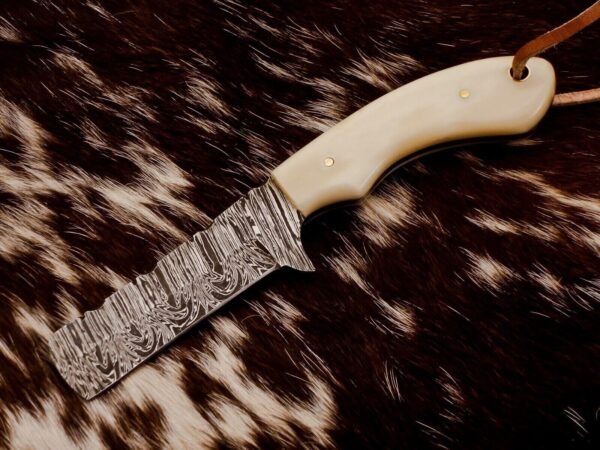
Camel bone has been a standard cutlery handle material across the Middle East and South Asia for centuries, and cutlers there chose it over cow bone deliberately. Camel bone is denser and less porous, with a tighter internal structure, which means it polishes to a harder, glassier surface, takes a dye more evenly and is far less inclined to absorb moisture and stain. It also comes in usefully large sections. Western knife makers only really discovered it in the last few decades, largely through the trade in traditional patterns, and it has since become one of the most sought after natural handle materials for exactly the reasons Damascus and Lahore cutlers already knew.
Forged and finished in the Czech Republic. It ships with a leather sheath, protective packaging and an edge that is ready to work.
Specifications
| Steel | Hand forged Damascus, 1095 and 15N20 |
|---|
| Hardness | 58 to 60 HRC |
|---|
| Damascus layers | 393 layers |
|---|
| Overall length | 10.5 inches |
|---|
| Blade length | 5 inches |
|---|
| Handle length | 5.5 inches |
|---|
| Weight | 10.5 oz |
|---|
| Handle | Camel bone and hardwood |
|---|
| Sheath | Leather sheath |
|---|
| SKU | RK-407 |
|---|
Choosing a skinner by the animal, not by the catalogue
The sweeping belly is what makes a skinner a skinner. It keeps a long arc of edge against the hide and the point clear of the meat, so you can pull the blade rather than saw with it. What most buyers get wrong is not the shape but the length.
The instinct is to buy long, and for skinning that is usually backwards. The first cut on any animal is the one that opens the hide, and the risk on that cut is going too deep and opening the paunch, which contaminates the meat and turns a clean job into a bad afternoon. A shorter blade is easier to control at shallow depth. Working around joints, shoulder blades and the inside of a leg also asks the blade to turn tightly, and a long blade fights you there.
At 5 inches this sits in the middle of the useful range and is a sensible single choice. It has enough edge to cover ground quickly on a deer or a hog, where a three inch blade would have you taking twice as many strokes, and it is still short enough to steer accurately at the ends. On something the size of an elk, longer pays. On small game, shorter does. If you only ever process whitetail, five inches will not let you down, and pairing it with a drop point for general camp work is a better answer than asking one blade to do both jobs.
Why Damascus and not stainless
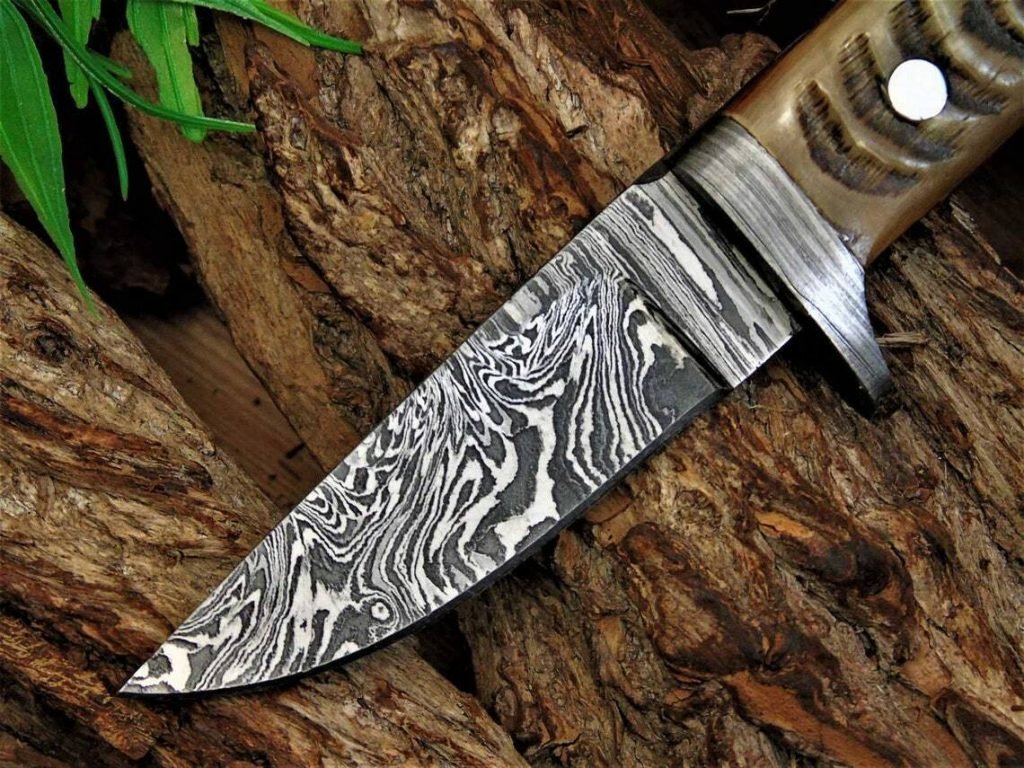
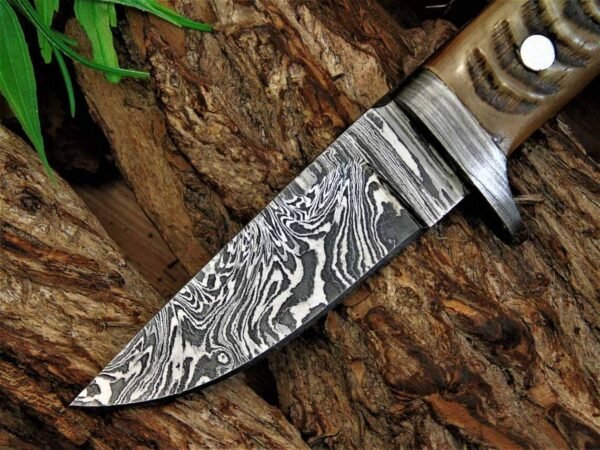
The blade is pattern welded Damascus, made by forge welding 1095 and 15N20 into a single billet and then folding and drawing it out to 393 layers until the layers show as a pattern in the steel. The two steels take etching differently, which is what makes the light and dark bands. It is not a coating and it will not wear off with sharpening.
For skinning, the hardness is the argument. At 58 to 60 HRC this edge stays keen through an entire animal, where soft stainless starts to drag partway through and leaves you stopping to strop with your hands wet. The counterweight is corrosion: blood, fat and salt will mark carbon steel if they are left sitting on it, so this is a blade that gets wiped in the field rather than at the end of the day. That is the whole cost, and the comparison is in Damascus versus stainless.
Camel bone, hardwood and grip when your hands are wet
The handle pairs camel bone with hardwood. Bone was chosen for the same reason it has always been used on working knives: it keeps its grip when your hands are wet or greasy, where a polished synthetic gets slick, and it warms to hand temperature within a few seconds instead of staying cold like steel.
The hardwood section balances it and gives the handle some give under the palm. Both are natural materials, so colour, streaking and grain shift from one knife to the next and yours will not match the photograph exactly. Neither likes being soaked or left near a heat source. Keep the handle out of long immersion, dry it after wet work, and give both the bone and the timber a light coat of mineral oil once or twice a year so they do not dry, shrink and loosen around the pins. The routine is in wooden handle care.
Engraving, runes and your own design
Use the rune converter on this page to turn a name, a date or a short phrase into Elder Futhark and we will cut it into the steel or the handle. If you would rather have a Viking pattern than a rune line, choose your own design in the engraving option above the add to cart button and tell us whether it goes on the blade or the handle. Where a piece already carries an engraved design, your chosen engraving replaces it rather than sitting alongside it. A hunting knife given for a first season or a retirement is the most common reason people ask, and a name with a date is the most common request. See the engraving page.
Care and sharpening
Damascus is carbon steel underneath the pattern, so treat it like carbon steel. Wipe the blade as you work rather than letting blood dry on it, wash with warm water and mild soap afterwards, dry it completely including where the blade meets the handle, and put a thin film of mineral or camellia oil on the steel before it goes away.
Sharpen along the belly with a rolling motion that follows the curve, rather than dragging a curved edge straight across a stone, which flattens it over time. A 1000 grit stone does the cutting and a 3000 refines; keep the angle already on the blade. Store the knife out of the leather sheath for long spells, since vegetable tanned leather holds moisture and tanning salts against steel. Both jobs are covered in steel care and sharpening with a whetstone.
Made in the Czech Republic
This piece is made by hand in the Czech Republic, in a workshop that still works the old way. The steel is forged, ground, heat treated and finished by smiths who learned the trade from the people before them, and the wood, horn and leather are cut and fitted by hand rather than pressed out on a line. That is also why no two pieces come out exactly the same.
Ransack Viking is a United States company. We import these pieces ourselves, check every one when it lands and ship from our warehouse in Memphis, Tennessee. Engraving is done here in the United States after the piece arrives, so your runes or your own design go on before it leaves for you.
A note on handmade variation
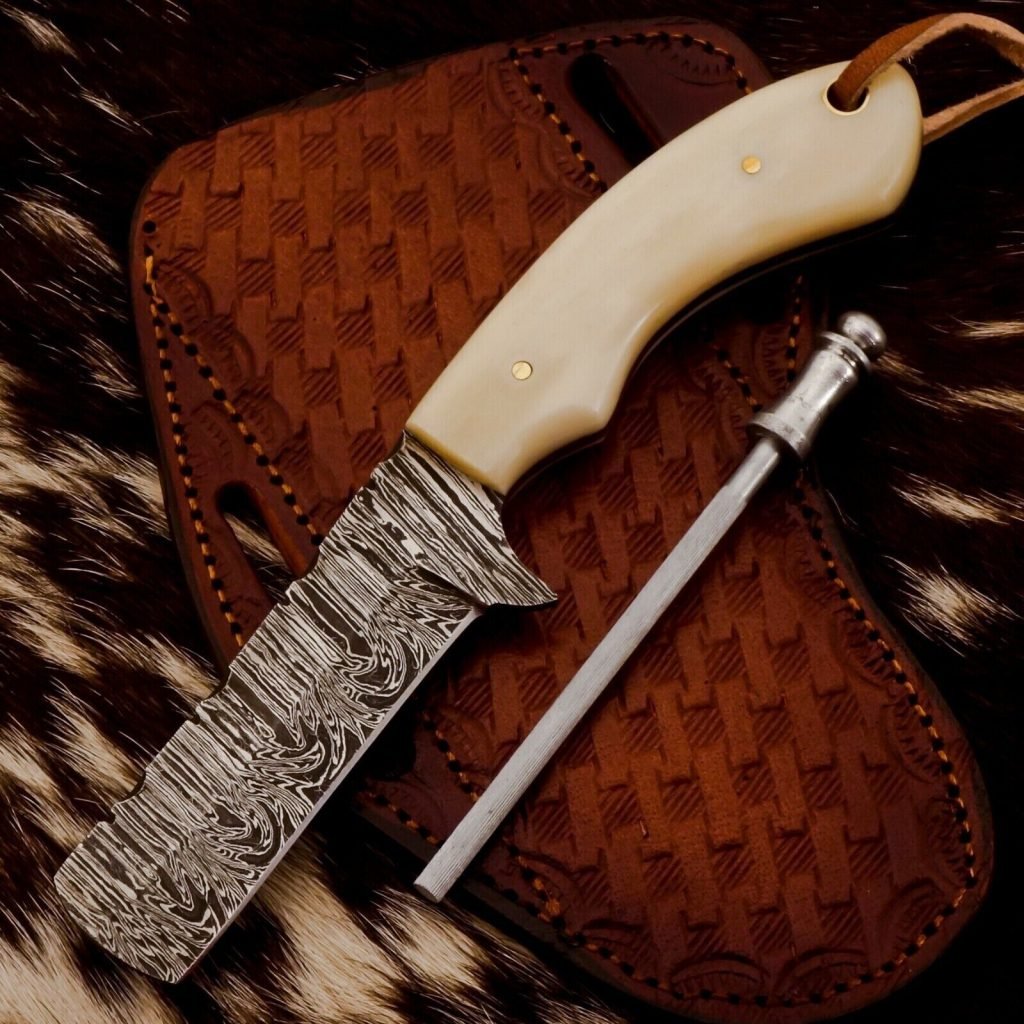
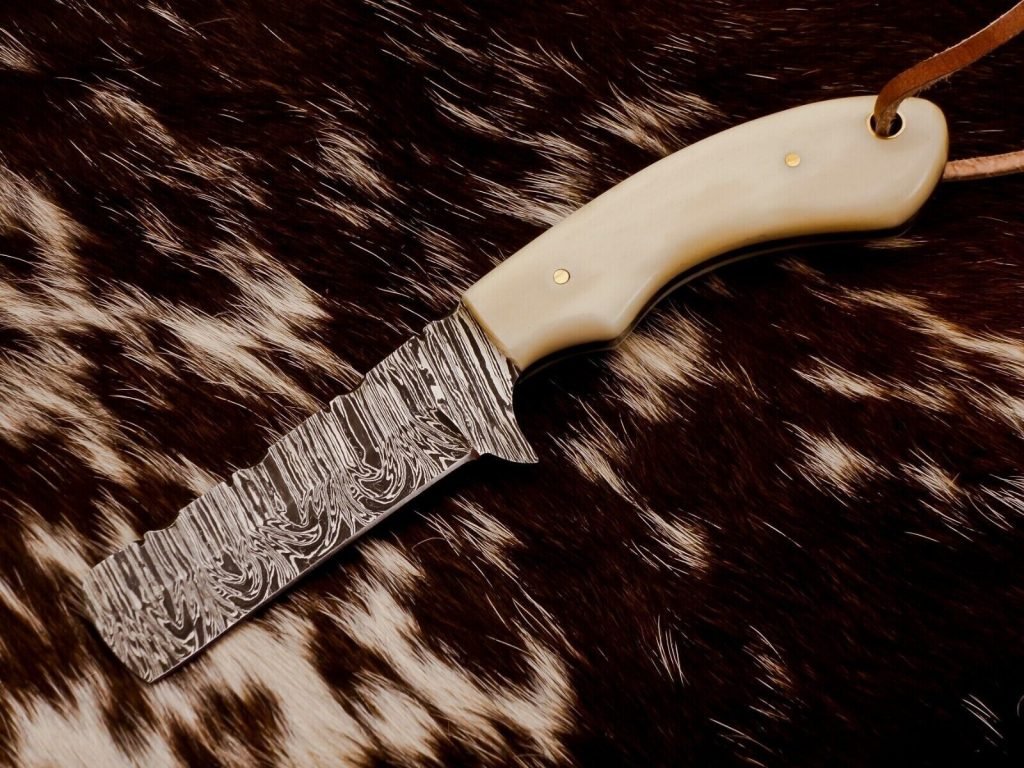
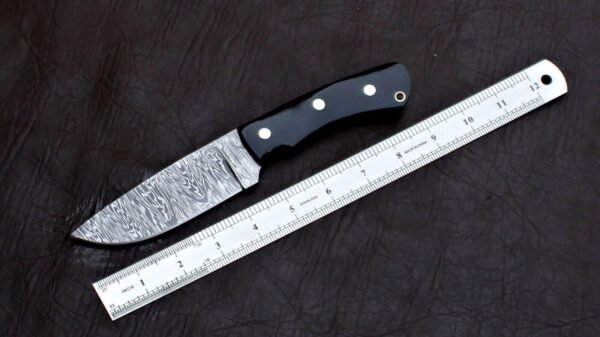
This knife is hand forged. It is not machine made and it is not bulk produced, so what arrives will not be a pixel for pixel copy of the photograph on this page. Camel bone varies in tone from near white through to warm cream, with its own streaking and grain, and the hardwood beside it has its own figure. At 393 layers the Damascus pattern is fine and dense, and exactly how it lands is decided by the hammer and the etch rather than by a template.
The dimensions, the steel, the hardness and the build are identical from one knife to the next. The character is not, because each one is worked by hand from natural materials.
Frequently asked questions
Is the Camelbone full tang
Yes. The tang runs the full length of the handle between the scales and is pinned through, which is the only construction that reliably survives the twisting loads skinning puts on a blade.
Is camel bone stronger than cow bone
It is denser and less porous, which makes it harder, less prone to staining and better at taking a polish. Both are natural materials and both need to be kept from drying out completely.
Can I use this as a general camp knife too
Within reason. The belly and the raised point that make it good on hide make it less convenient for carving, drilling or fine point work. Most hunters carry this plus a drop point rather than asking one blade to do both.
What does 393 layers change
It changes the look, not the performance. Layer count controls how fine and dense the pattern is; hardness and edge holding come from the alloys and the heat treat, which are the same regardless.
Will it hold an edge through a whole deer
Yes, comfortably, on a clean animal. Hitting hair, grit or bone is what dulls a skinner rather than the hide itself, so keeping the blade off the ground and off bone is what keeps it sharp.
How soon will it ship
Processing is one to two weeks while the knife is forged and finished, then free shipping inside the US. Adding engraving does not normally extend that window.
What is in the box
- One Camelbone Damascus skinner knife
- Leather sheath
- Protective packaging
- Care notes for carbon steel, camel bone and hardwood
- Forged and finished in the Czech Republic
Explore the range
Compare it with the rest of the Damascus skinner knives, the hunting knives and the Bowie knives if you want more blade for camp work. Field technique and steel background sit in the guides.











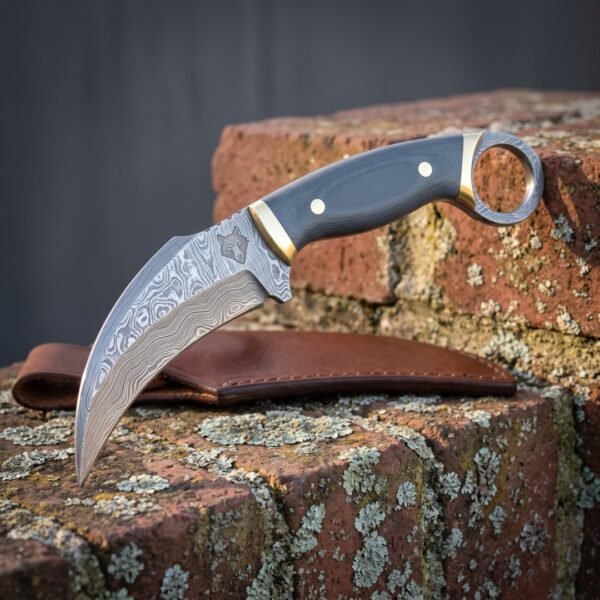
No regrets on this purchase at all. Weight and balance make it feel like a real functional piece not some cheap replica. This is going straight into my display case.