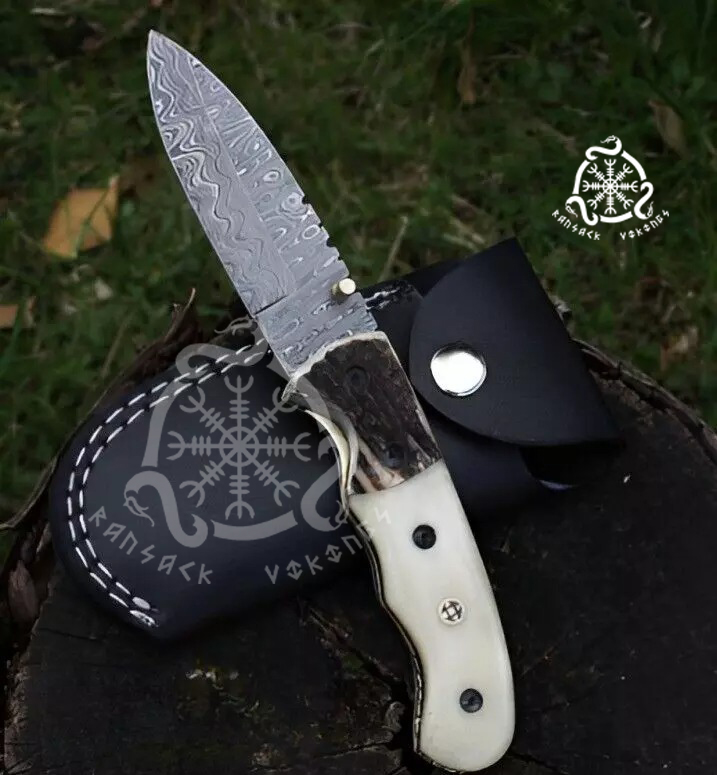
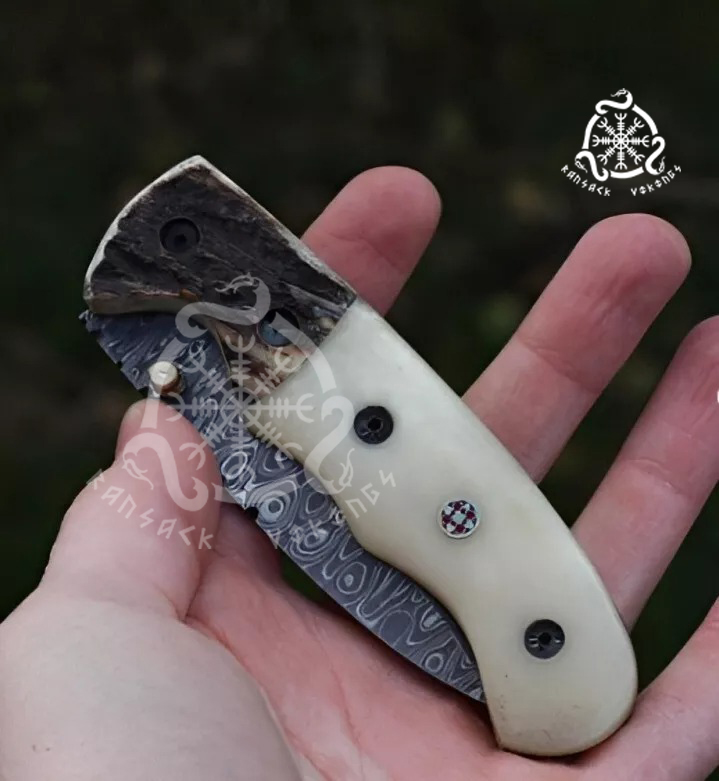
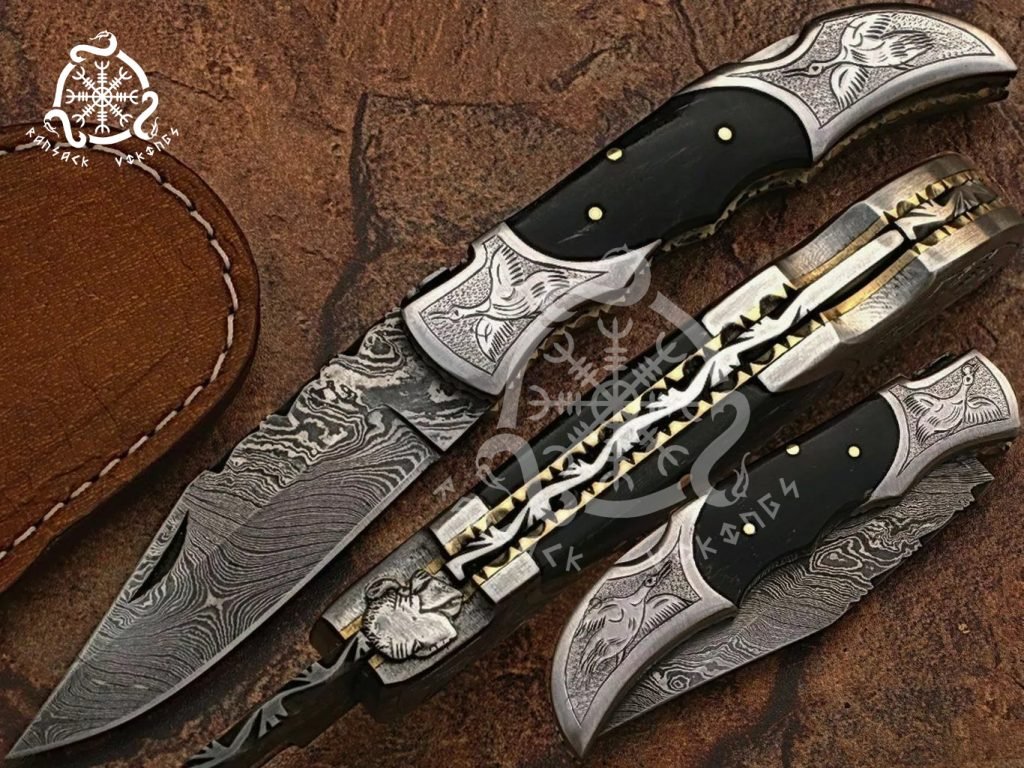
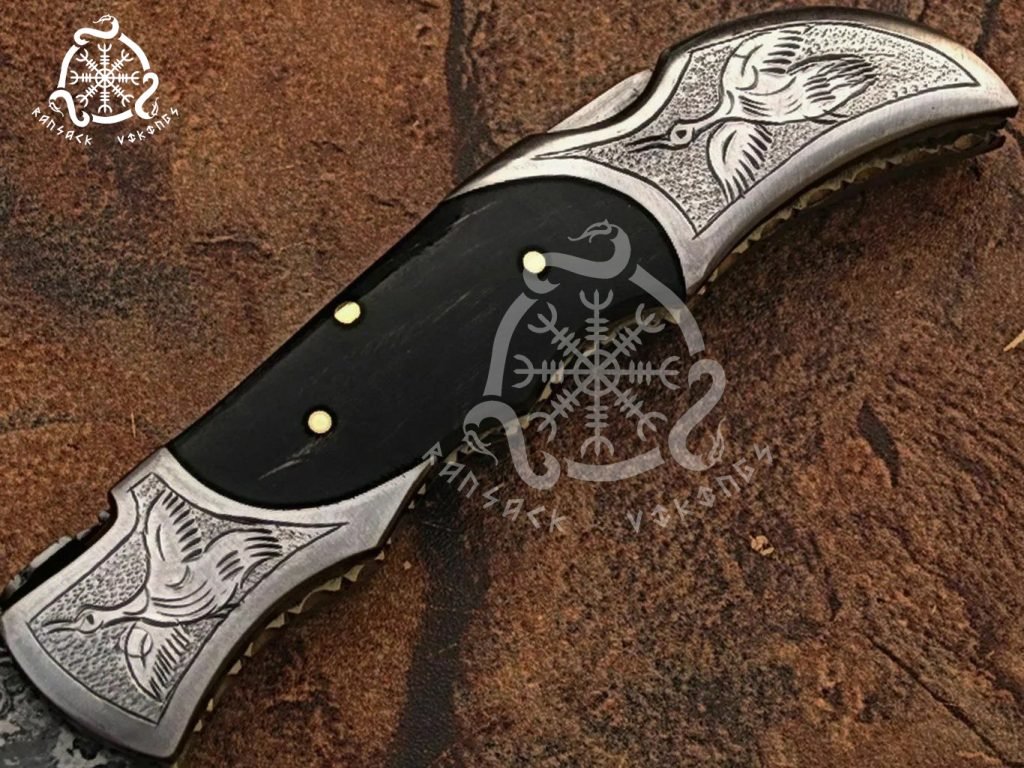
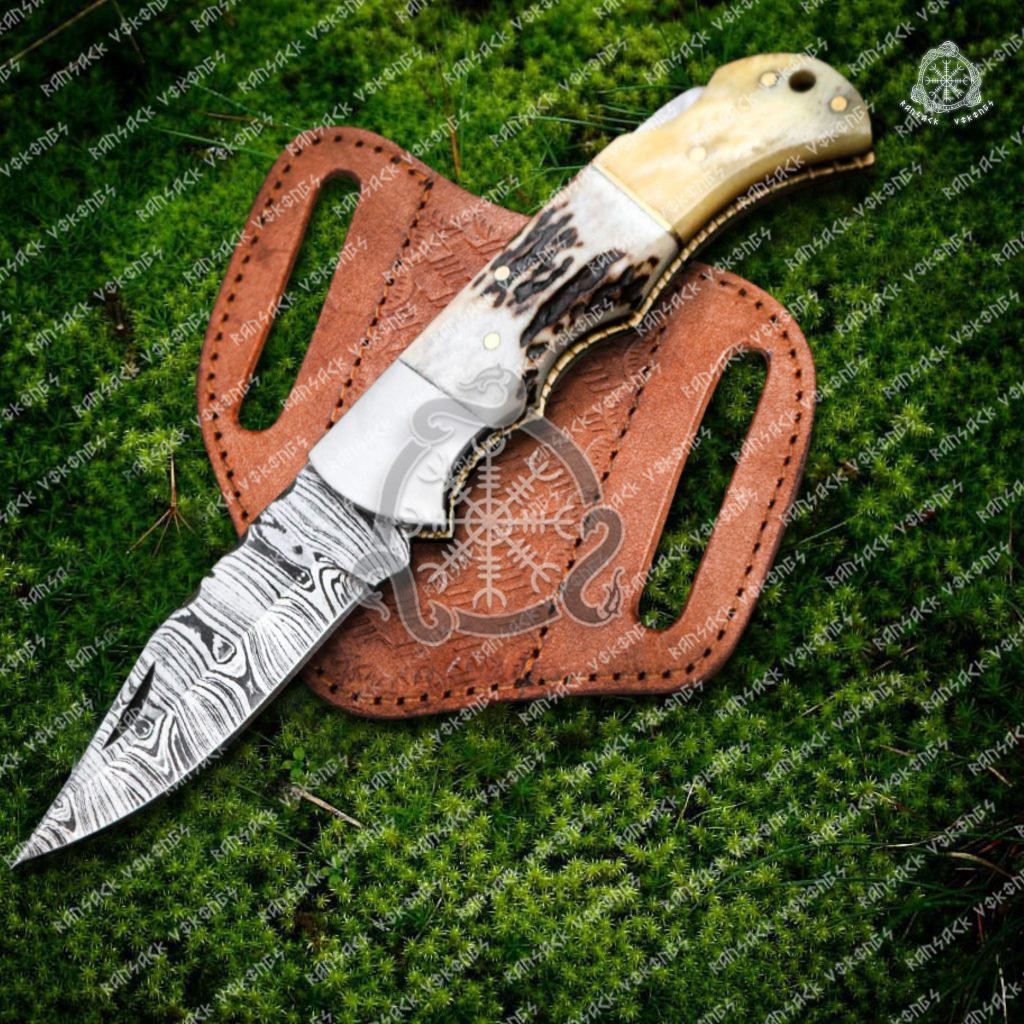
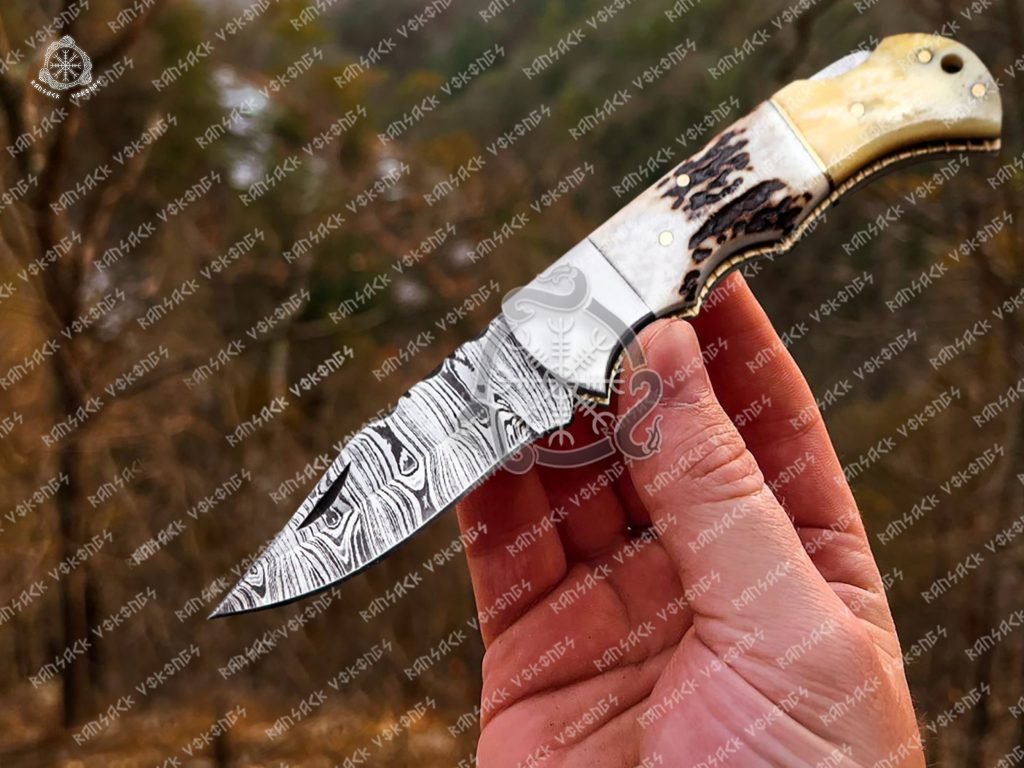
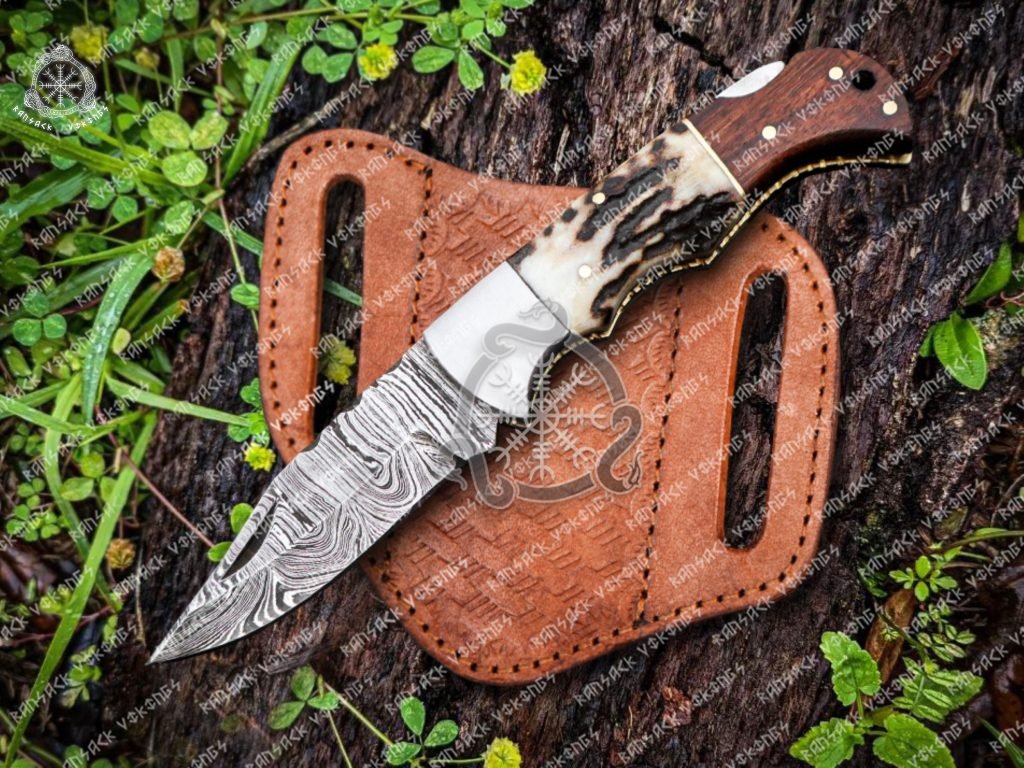
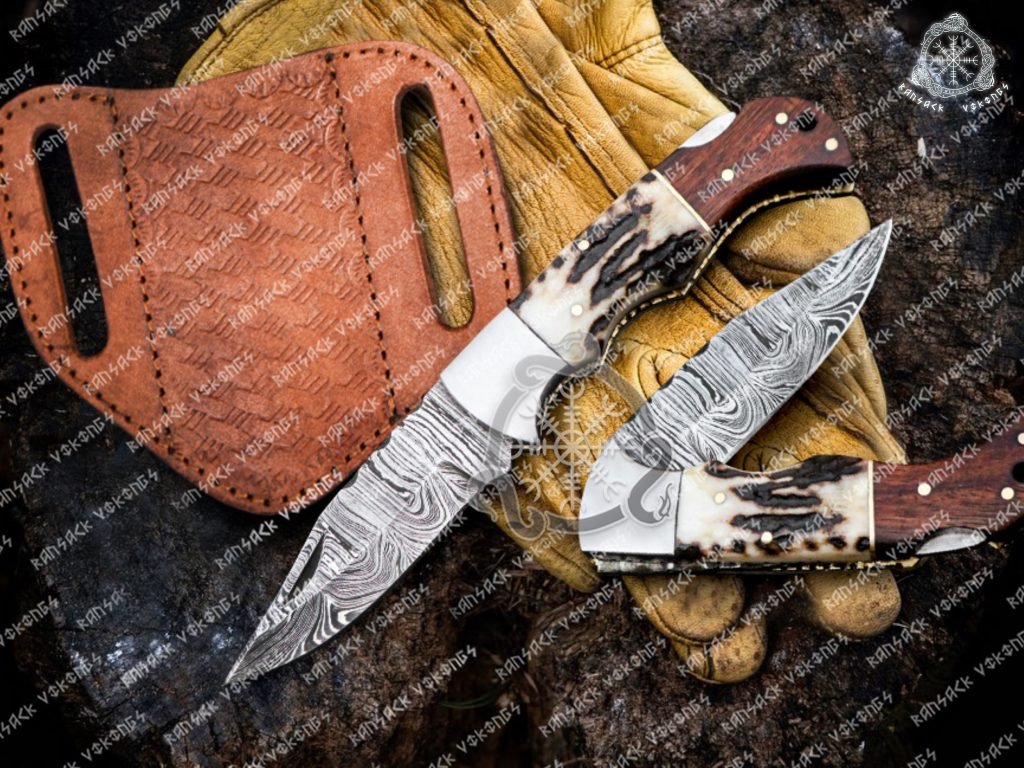
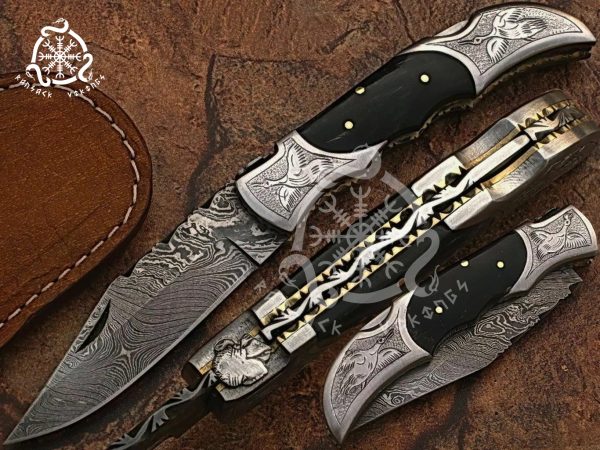
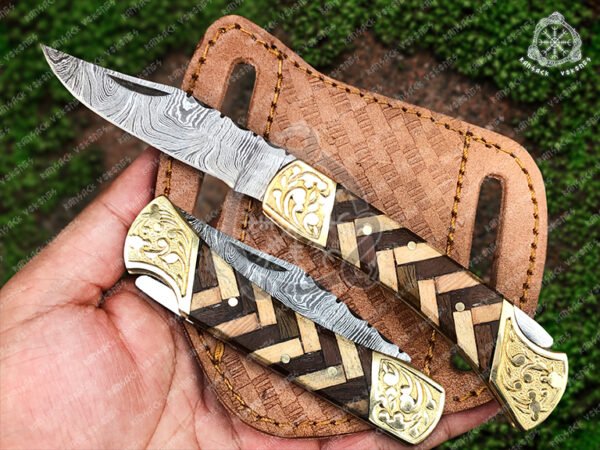
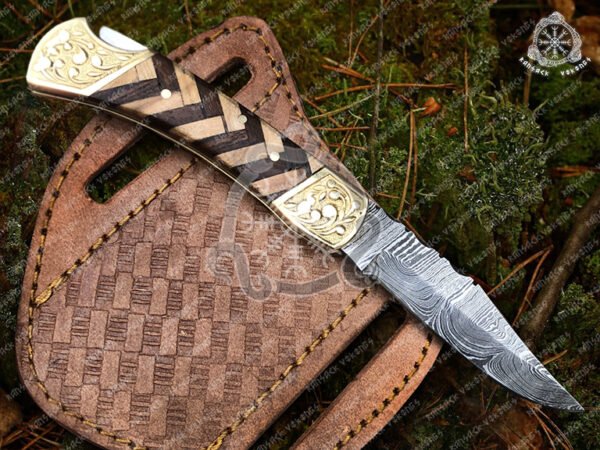
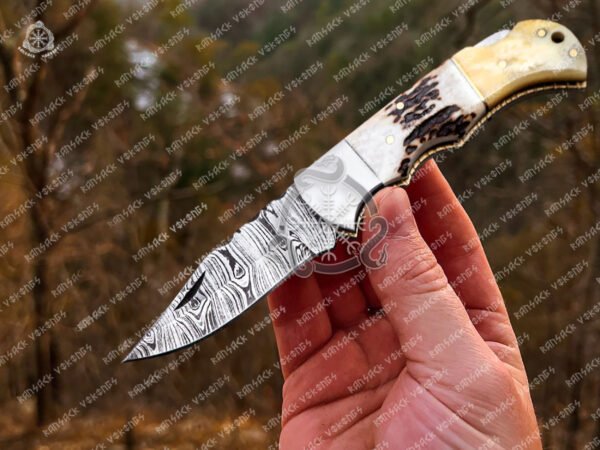
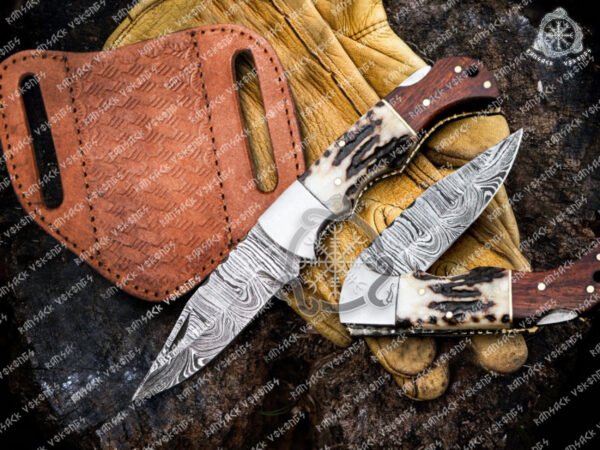
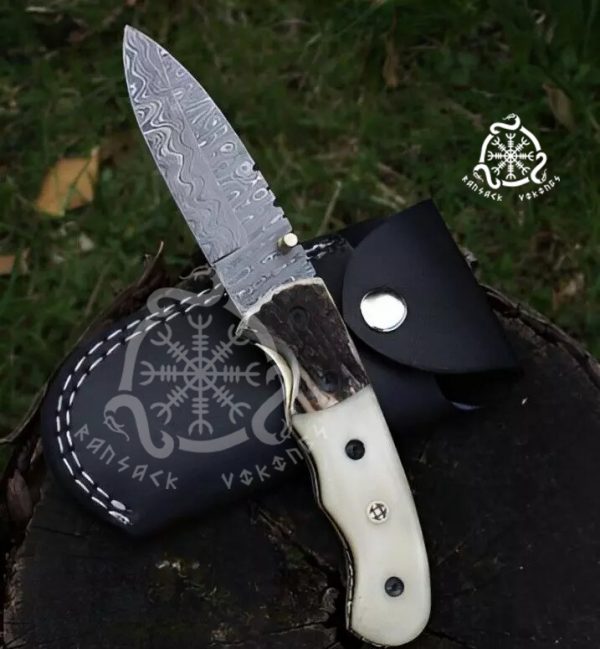
Camel bone scales, an antler stag bolster and a hand forged Damascus blade, nine inches from end to end with the knife open. The Campfold is made one at a time, so the grind, the pattern and the fit belong to this knife and to no other, and the two natural materials in the handle mean it will never look quite like the next one off the bench. Before you put it in a pocket, check the state by state rules for your state.
The bolster is the part most buyers overlook and the part a cutler cares most about. On a traditional folder the bolster is the block at the front of the handle where the pivot lives, and it exists for three reasons at once. It protects the front edges of the scales, which is where a folder takes almost all of its knocks. It gives the pivot pin a substantial seat instead of relying on a thin panel of bone or wood. And it puts mass forward of the hand, which shifts the balance point towards the blade and makes the knife feel purposeful rather than tail heavy. Two hundred years of pocket knife design converged on the bolster because it solves all three problems with one piece of material.
This knife is forged and finished in the Czech Republic, from billet welding through heat treat, grinding, bolster and scale fitting, and final sharpening. It ships in protective packaging with the edge already set, and needs no sheath because it folds.
Specifications
| Steel | Hand forged Damascus, 1095 and 15N20 |
|---|
| Hardness | 58 to 60 HRC |
|---|
| Overall length | 9 inches open |
|---|
| Handle | Camel bone with antler stag bolster |
|---|
| Sheath | Not included, this is a folding knife |
|---|
| SKU | RK-693 |
|---|
What the bolster is doing on this knife
Look at where a folding knife actually fails and you find the same two places every time: the pivot, and the front corner of the handle. The pivot fails because it is a hole with a pin in it taking every bit of leverage the blade generates. The front corner fails because that is what hits the floor when the knife is dropped and what takes the wear when it goes in and out of a pocket a thousand times.
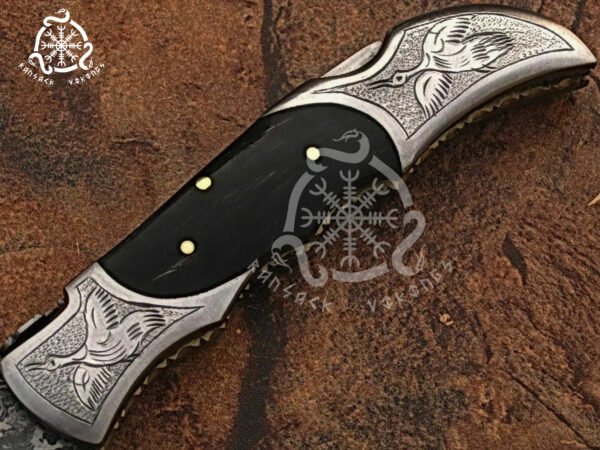
The antler stag bolster addresses both. It caps the front of the handle in a dense, hard material that shrugs off the impacts a thin scale would chip on, and it gives the pivot a solid seat rather than a thin one. It also does something for the hand. A bolster forward of the grip means the index finger sits against a smooth, rounded, slightly wider section rather than on the corner of a flat scale, and over a long job that is the difference between a comfortable knife and a knife you put down. Pairing antler with camel bone is a deliberate choice as well: the two materials are both mineralised, so they wear at similar rates and neither one shrinks away from the other over the years the way two very different materials might.
Why Damascus and not stainless
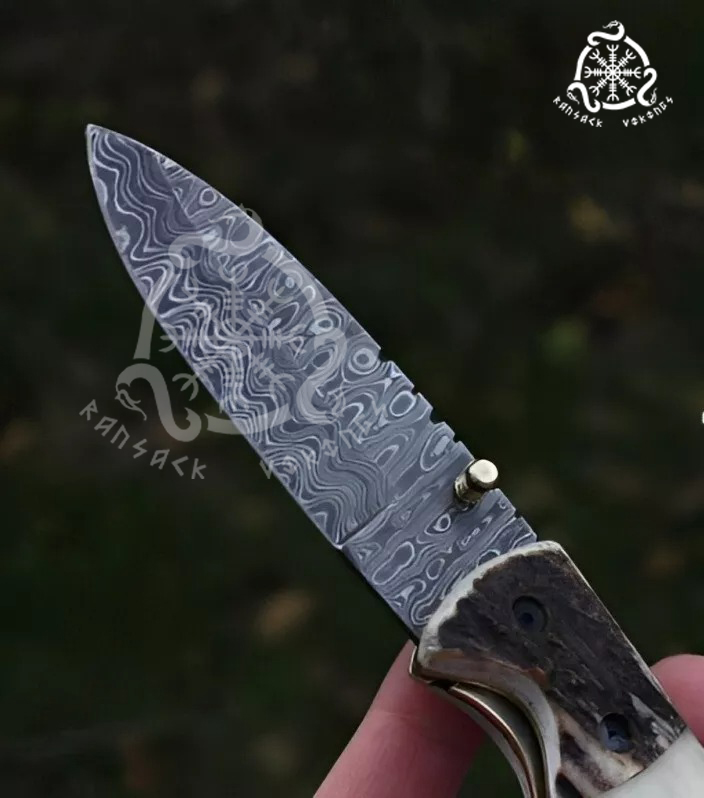
The blade is pattern welded Damascus, made by forge welding 1095 and 15N20 into a single billet, then folding and drawing it out until the layers show as a pattern in the steel. The two steels take etching differently, which is what makes the light and dark bands. It is not a coating and it will not wear off. If you want the long version, read what Damascus steel is.
Against that, stainless has one real advantage: it demands nothing. No drying, no oil, no thought at all. What it gives up is hardness and edge behaviour. Hardened and tempered to 58 to 60 HRC, this blade takes a keener edge and holds it longer through rope, cardboard, tape and food prep than a soft stainless folder will, and it comes back on a stone faster. The price is that it is carbon steel underneath, so it will spot if you put it away wet. That is the entire trade, and we lay it out in Damascus versus stainless.
The camel bone and antler handle
The scales are camel bone, cut and fitted by hand. Because it came from an animal rather than a mould, the grain and colour are unique to your piece, running anywhere from pale cream to a warm tan with the natural marks of the bone left visible rather than sanded and dyed out of existence. The antler bolster brings its own tone, which is usually a shade or two different, and the contrast between the two is the point of the design.
Both materials want the same treatment. Keep them out of prolonged soaking and away from sustained dry heat, so no dishwasher, no radiator and no summer afternoons on a car dashboard. Wash the knife by hand, dry the handle at the same time as the blade, and leave the knife open until the pivot is dry before you close it. A light wipe of oil once or twice a year stops either material looking chalky, using the same short routine as a wooden grip, which is in wooden handle care.
Engraving, runes and your own design
Use the rune converter on this page to turn a name, a date or a short phrase into Elder Futhark and we will cut it into the steel or the handle. If you would rather have a Viking pattern than a rune line, choose your own design in the engraving option above the add to cart button and tell us whether it goes on the blade or the handle. Where a piece already carries an engraved design, your chosen engraving replaces it rather than sitting alongside it. On this knife there are three surfaces that work: the blade flat, the bone scale, and initials on the bolster, which is the traditional place for them on a folder. See the engraving page for layout and lettering.
Care and sharpening
A minute after use is all it asks. Wipe the blade dry, particularly after cutting anything acidic, and leave it open until the pivot has dried rather than closing a damp knife on itself. Before a long spell in a drawer, run a thin film of light oil over the blade. Once or twice a year put a single drop at the pivot and work the action to spread it. The full routine is in steel care.
To sharpen, hold the existing bevel angle and work one side in overlapping passes until you can feel a burr the whole length of the edge, turn the blade over and match it, then take the burr off with light alternating strokes. Stop at a medium stone for a working edge with some bite for rope and cardboard, or go finer if most of your cutting is food. The method is in sharpening with a whetstone.
Made in the Czech Republic
The work behind this piece happens in a Czech Republic workshop that has kept to the old methods. Steel is forged and heat treated by hand, the grind is taken down by eye rather than by machine, and the handle, fittings and sheath are cut and finished one at a time. Because of that, every piece carries small marks of the hand that made it.
Ransack Viking is a United States company. We import direct, check each piece when it reaches us, and ship from our Memphis, Tennessee warehouse. Engraving is added here in the United States after arrival, so the piece you receive is finished to your order.
A note on handmade variation
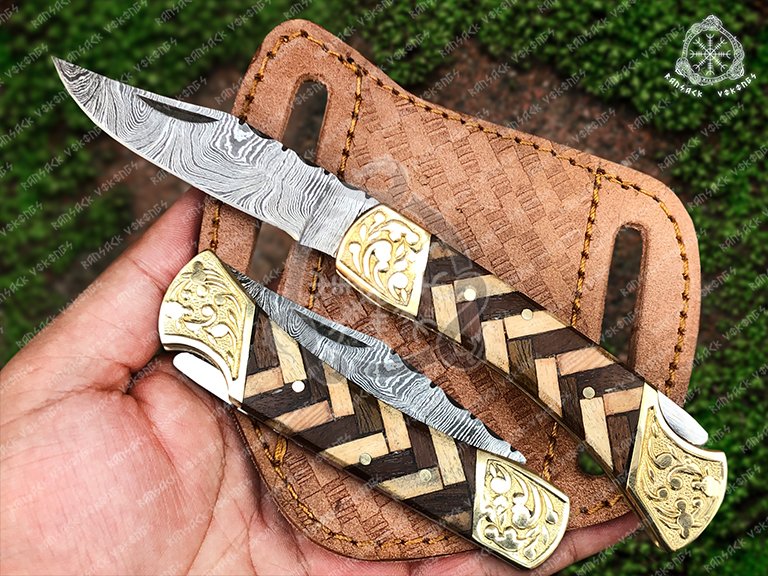
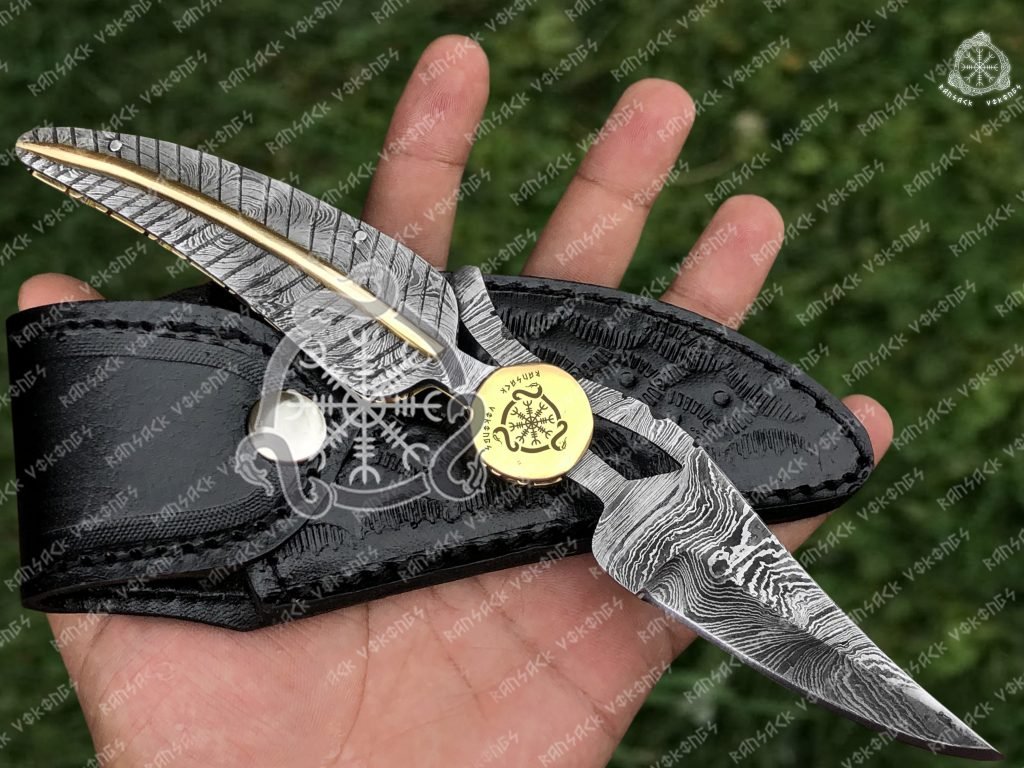
The Campfold is hand forged, not machine made or bulk produced, so the knife that arrives will not be a pixel for pixel copy of the photograph on this page. The Damascus pattern is determined by how that billet folded and where the blade was cut from it. The camel bone and the antler bolster each bring their own grain, tone and small natural marks. The dimensions, the steel and the build are the same every time. The character is not.
Frequently asked questions
What does the bolster actually do?
Three things. It protects the front corner of the handle, which is what gets knocked and worn. It gives the pivot pin a solid seat instead of a thin scale. And it puts weight forward of the hand so the knife balances towards the blade rather than the butt.
Is camel bone different from cow bone?
Slightly denser and often a little warmer in colour, with its own natural marking. Both are mineralised bone and both behave the same way in use, which is to say hard, stable and warm in the hand as long as you keep them out of soaking and dry heat.
Does it arrive sharp?
Yes. The edge is set by hand on a stone before packing and it will slice paper on arrival. It is a working edge rather than a polished one, which is what holds up best day to day.
Can I take it camping?
That is what it is built for. It handles cord, tape, food prep, kindling shavings and the hundred small cuts a campsite generates. What it is not is a prybar or a chopping tool, so keep it off bone and out of wood splitting.
What happens if the bone gets wet?
A splash is nothing. Dry it with the blade and it is fine. What causes problems is prolonged soaking or a dishwasher cycle, which pushes water into the material and then bakes it out, and that is what opens hairline cracks.
Can initials go on the bolster?
Yes, and it is the traditional spot on a folding knife. You can also put a rune line on the bone scale or on the blade flat. Use the rune converter above, or choose your own design in the engraving option and tell us where you want it.
What is in the box
- One Campfold hand forged Damascus folding pocket knife
- Protective packaging
- Forged and finished in the Czech Republic
Explore the range
Related collections: Folding Pocket Knives, Hunting Knives, Viking Knives and Camping Axes and Hatchets. The how and why behind the steel and the handle materials is covered in the guides.









No regrets on this purchase at all. Came in a nice gift box which made it feel even more special. Can’t recommend this enough. I keep coming back to Ransack Viking because it’s always this good.