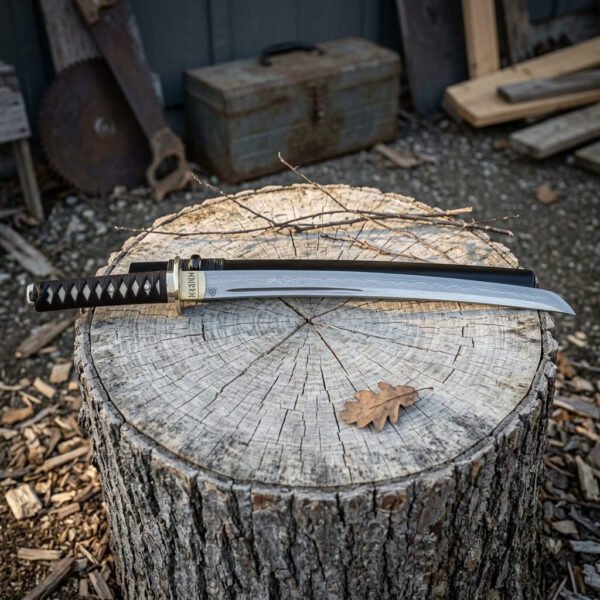
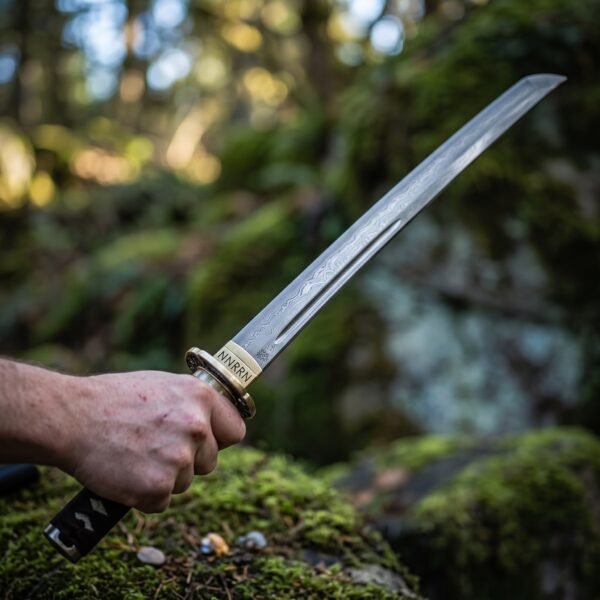
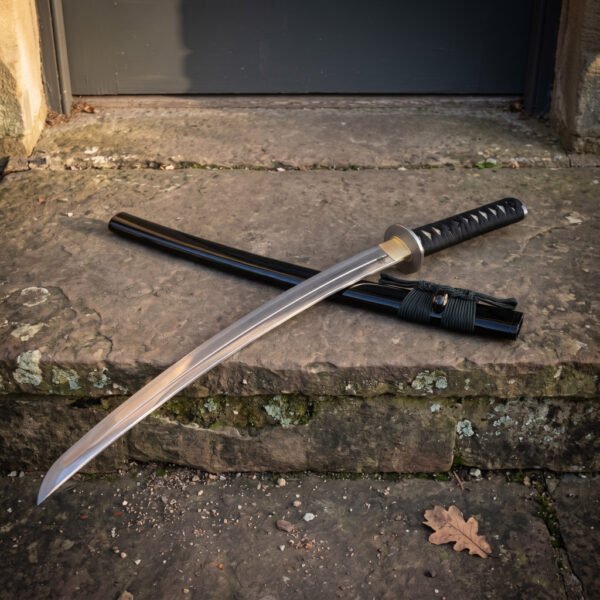
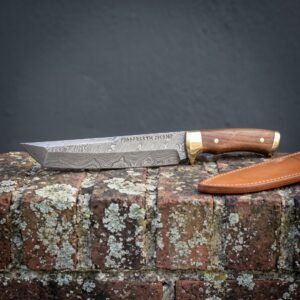
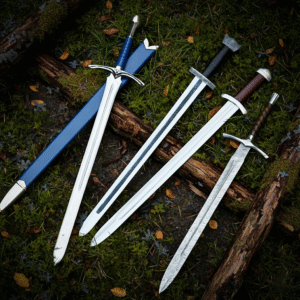
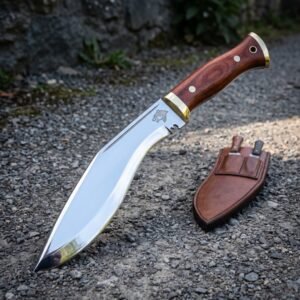
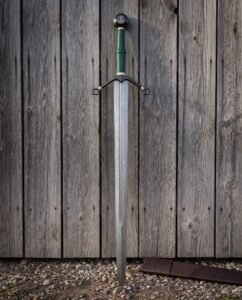
A hand forged katana is one that started as a bar of carbon steel and was drawn out, ground, hardened and fitted by a person rather than stamped from plate and screwed to a rat tail tang. That is the whole distinction, and it is the reason people type this phrase instead of just katana. The buyers here are collectors who want the grain visible under a lamp, martial arts students who need a blade that will survive soft target cutting, and people buying a milestone gift that has to look serious on a stand.
Lengths, steels and fittings
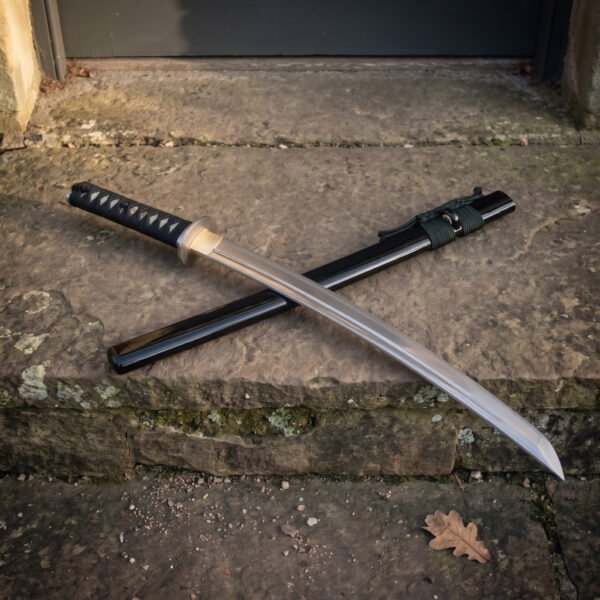
Overall lengths sit mostly at 40 inches, with blades between 27 and 29 inches, and outliers at 32 inches for a shorter olive burl handled piece and 41.5 inches for the longest. Steel is one of two house specs. Plain 1095 high carbon at 54 to 58 HRC is the tougher option and the sensible pick if the sword will actually be swung. Forge welded 1095 and 15N20 Damascus at 58 to 60 HRC holds a finer edge and carries the folded pattern down the blade. Fittings vary more than the blades do: iron and steel tsuba, brass tsuba and habaki, rayskin under the cord, black or green silk ito, and black or green lacquered saya with a cord sageo. Detail work runs from a clay quenched hamon and a bo hi fuller to etched Norse marks, a valknut, a triskele or a knotwork band, since a fair number of these were cut for the Norse side of the catalogue. One listing is a two sword set with matching scabbards. Prices run from 289 dollars to 699 dollars.
Buying and keeping one
Decide first whether the sword is going to cut or going to sit, because that answers the steel question and the sharpening question at once. If the shape and the terminology are new, the background on what a katana actually is is the place to start, and our page on steel and hardness explains what 54 to 58 and 58 to 60 HRC mean in the hand. A katana needs somewhere to live, and the notes on displaying swords and axes cover stands, wall mounts and the mistakes that leave a blade spotted. The wider Japanese range including wakizashi and daisho sets is in katana and Japanese swords. Wipe the blade after handling, keep a light film of oil on it, and never leave it shut in the saya for months without a look.
Ransack Viking is a US company based in Chicago, Illinois. These pieces are handmade in the Czech Republic, then imported, inspected and shipped from Chicago. Engraving is done in the US after arrival: text 19 dollars, symbol 39 dollars, family crest 49 dollars.
Free US shipping
On most pieces. Heavier and oversized ones carry a flat charge.
Hand Forged
Heated, hammered and ground by hand.
Engraving available
Names, dates or Norse runes on most pieces.