
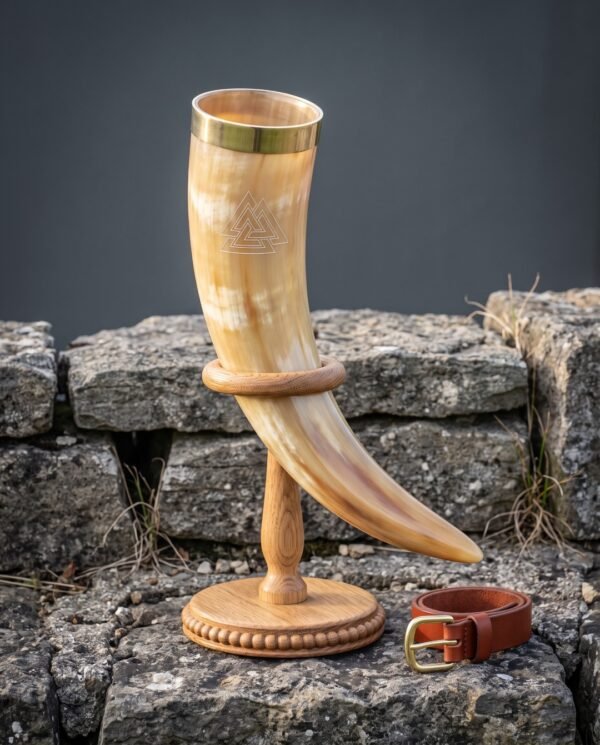
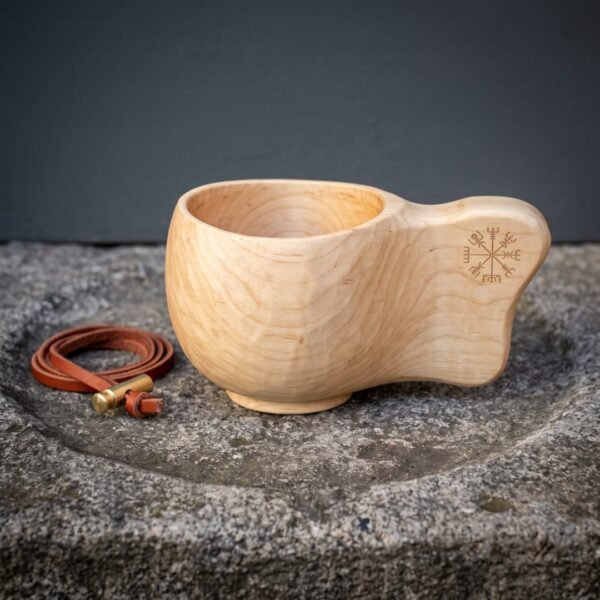
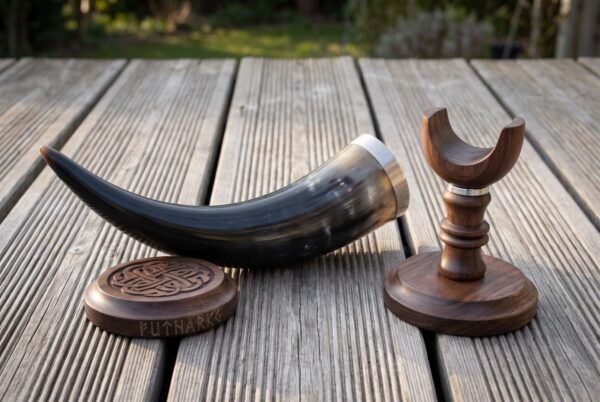
Viking home decor covers the pieces meant to live in a room rather than on a belt. It is a mixed collection, so read what is actually in it before you browse. There are sword stands and wall mounts in oak and black walnut, axe heads mounted on carved plaques, a painted steel heater shield, a canvas wall banner on an ash cross bar, forged steel candle holders, solid oak and stained timber storage chests, engraved slate rune stones and full 24 tile rune sets, hnefatafl boards, kubb lawn sets, drinking horns supplied with turned stands, and a turned birch kuksa cup.
Materials are what you would expect from hand work. Solid oak, black walnut, maple, beech and ash, riven slate, natural ox horn, cotton canvas, solid brass and forged carbon steel. Where an axe head is part of a display piece it is 1095 high carbon at 54 to 58 HRC, the same steel used across the rest of the site.
Decide first whether the piece hangs, stands or gets played with, then work down from there.
Free US shipping
On most pieces. Heavier and oversized ones carry a flat charge.
Hand Forged
Heated, hammered and ground by hand.
Engraving available
Names, dates or Norse runes on most pieces.
Ships from New York
Inspected and dispatched from our New York warehouse. No import duty, no customs delay on US orders.
Viking Home Decor
What this collection is for
Most people arrive here having already bought a blade. A sword in a box is not doing anything, and a hand forged axe left flat on a shelf gets knocked, marked and eventually forgotten. This collection exists to solve that, and then it widens out into the pieces that make a room read Norse without a blade being involved at all.
Three groups cover it. Things that go on a wall. Things that stand on a table, a mantel or a floor. And things that come out and get used, which is the games, the rune sets and the drinking horns on stands.
Wall mounted pieces
Sword wall mounts and hooks
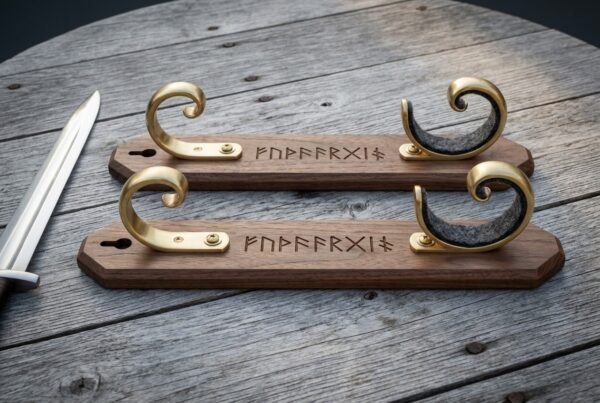
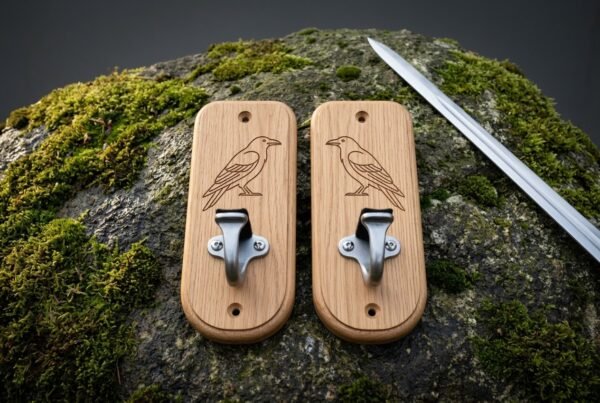
Two patterns. The walnut bracket pair runs about 9 inches per bracket, four solid brass scroll hooks in total, each cradle lined with dense grey wool felt so a scabbard or a bare blade rests on cloth rather than metal. Each bracket carries a cut Elder Futhark rune line and a routed keyhole slot at either end, and screws and wall anchors are supplied. The oak pattern is a matched pair of small plaques with cast steel hooks, each hook with an upturned lip so a blade cannot roll off, engraved with a standing raven and drilled for two countersunk screws each.
Axe wall plaques
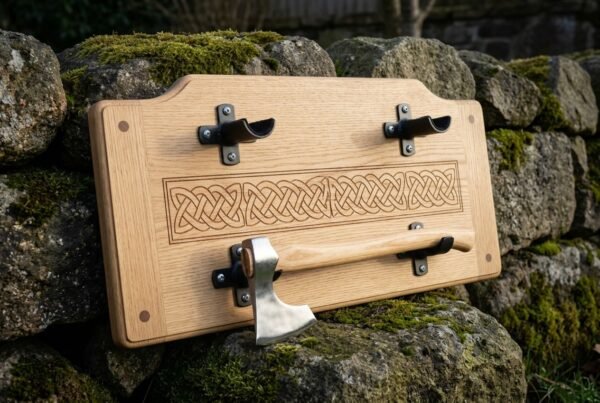
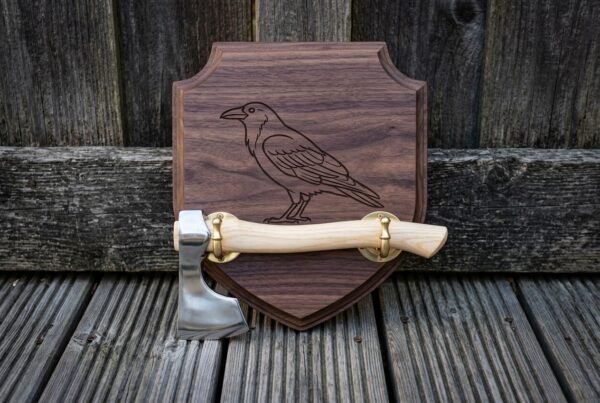
An axe head and haft mounted on a carved board, sold complete. One is a bearded head on a solid oak board with shaped shoulders, plugged dowels at the corners and a carved knotwork band, held in four steel brackets lined in black leather. The other is a bearded head with a roughly 5 inch cutting edge on a 14 inch ash haft, mounted on a shield profile black walnut plaque about 12 by 10 inches carved with a standing raven, on two solid brass cradle brackets. Both have keyhole hanging points and fixings on the reverse.
Shields and banners
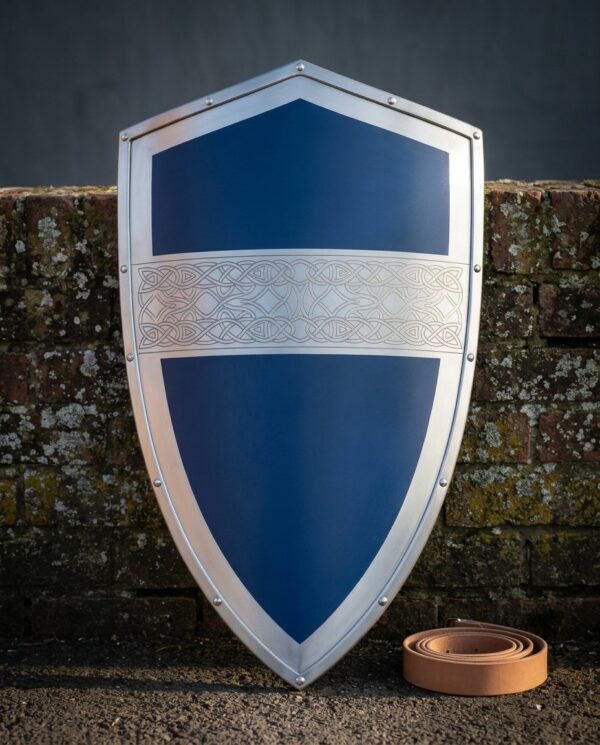
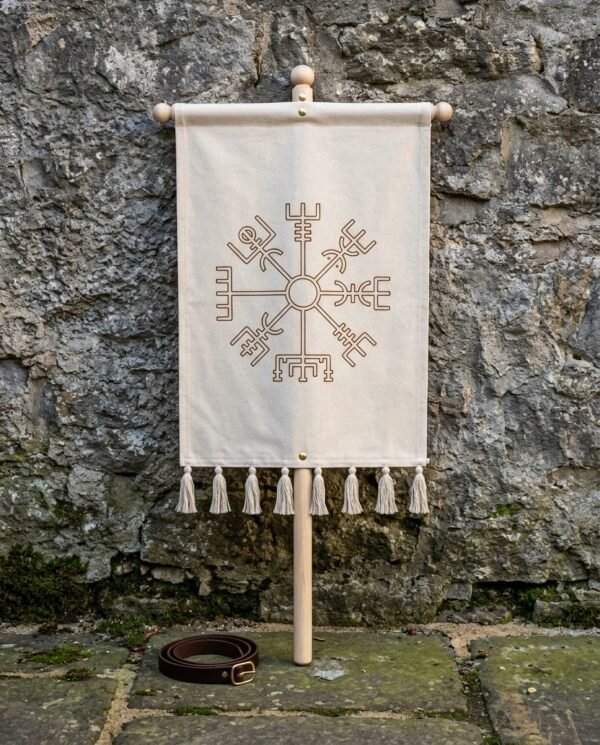
The heater shield is a sheet steel body 30 inches tall by 22 inches wide, slightly dished along the vertical axis, painted deep blue over a sealed ground with a polished steel border folded over the rim and set with domed rivets. It carries a cut knotwork band across the widest point and weighs about 9 lb, which is a real fixing load, so put it into a stud. The canvas banner is 12 ounce undyed cotton, about 16 inches wide by 22 inches deep excluding the fringe and about 40 inches overall including the turned ash staff, with a Vegvisir applied in ochre ink and eight hand tied tassels.
Table and floor pieces
Sword stands
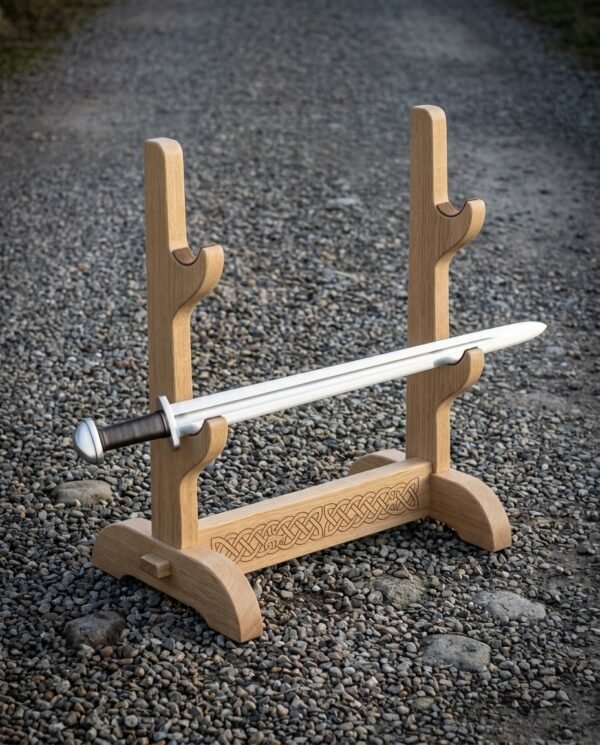
The oak stand is a three tier design in solid oak throughout, one sword or hafted piece per tier, joined with a through tenon stretcher passing across both uprights and carved with a running knotwork band. Cradles are cut and rounded oak notches, and the two curved feet are set wide so the stand does not tip when the top tier is loaded. There is also a two tier walnut version. Both suit a table top, a shelf, a mantel or a cabinet.
Candle holders
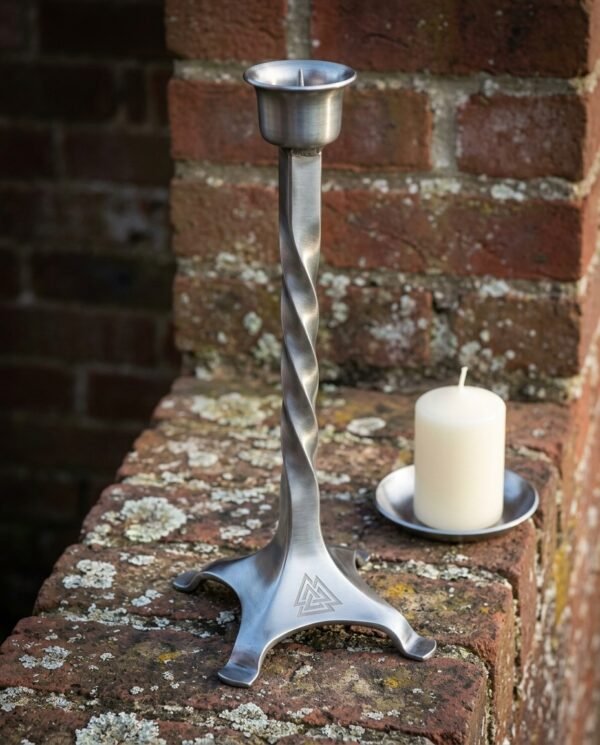
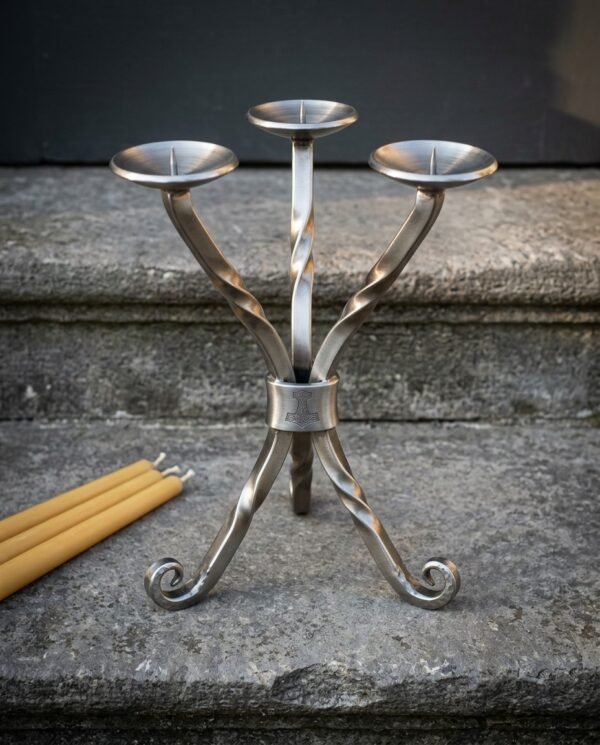
Forged from solid steel bar, twisted hot along the stem. The tripod pattern stands roughly 12 inches from foot to the lip of the dish with a 5 inch base spread, weighs roughly 1.5 to 2 pounds and is weighted low, with a shallow drip dish about 3 inches across on a central pricket spike that takes pillar candles of roughly 2 to 3 inches. The three branch pattern carries a pricket and a dished drip pan on each branch, the centre standing taller than the outer two, on three scrolled feet forged and curled by hand.
Storage chests
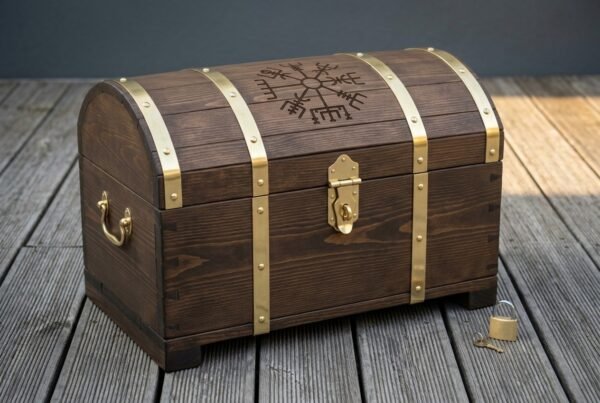
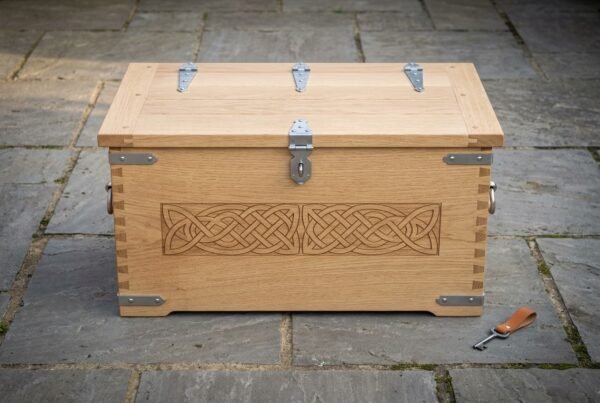
Two builds. The oak chest is solid boards with through dovetailed corners and a pegged lid frame, two carved interlaced knotwork panels on the front board, three long steel strap hinges, steel corner brackets and a keyed hasp lock with the key on a leather fob. The stained chest has a domed and braced lid, studded brass straps over lid and body, brass corner angles, cast brass swing handles at both ends and squared block feet lifting the base clear of the floor.
Rune stones, slate and sets
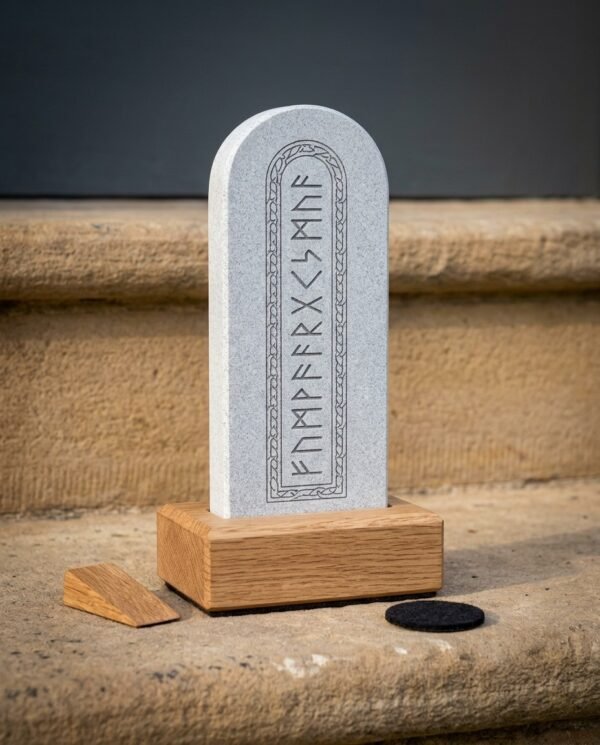
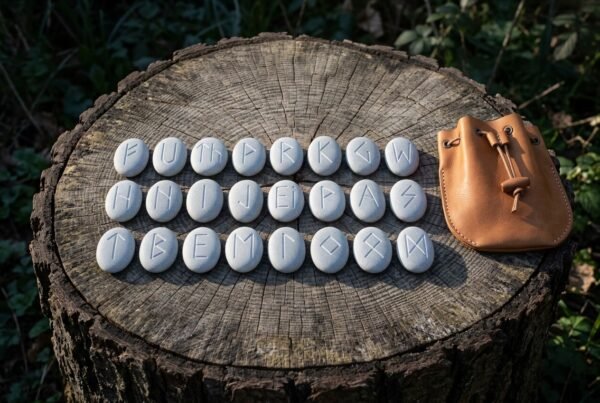
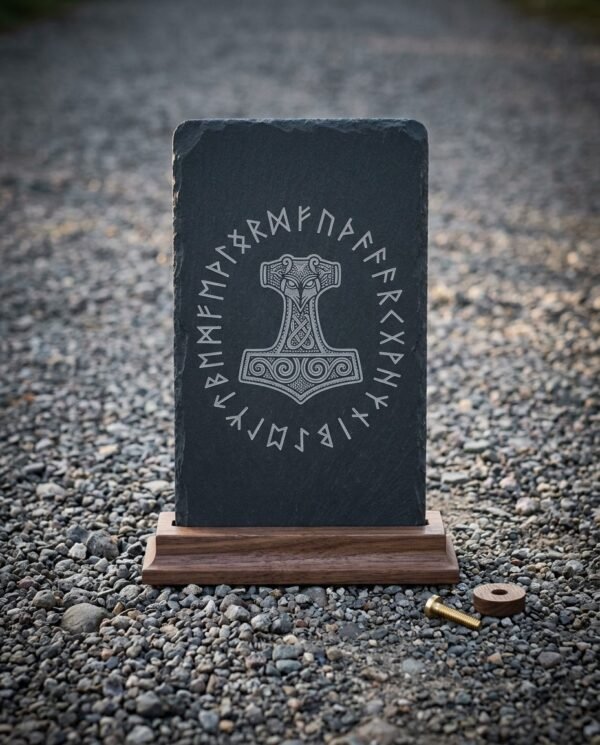
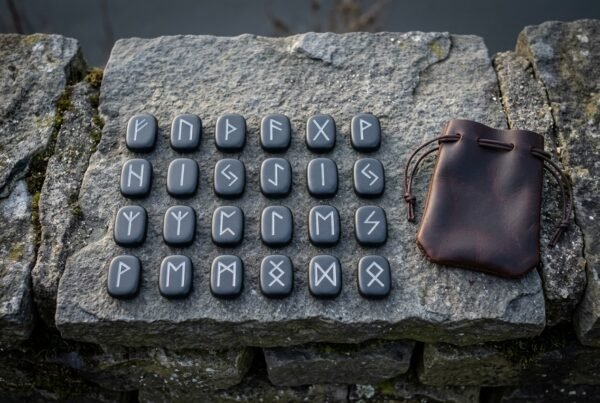
Three formats. A standing slate rune stone about 8 inches tall by 4 inches wide with an arched top, engraved with the Elder Futhark row inside an interlaced knotwork arch, seated in a slotted solid oak base and standing about 10 inches complete at roughly 2 lb 4 oz. A wall or shelf plaque in riven slate about 10 by 7 inches and 8 to 12 mm thick, with a knotwork Mjolnir inside a full ring of 24 runes, on a grooved black walnut base. And a casting set of 24 engraved slate tiles about 1.2 by 0.9 inches in a leather drawstring pouch, roughly 12 oz complete with a folded guide card.
Slate is riven rather than sawn, so edges and thickness vary across a slab. That is the material behaving normally rather than a fault.
Games for the table and the lawn
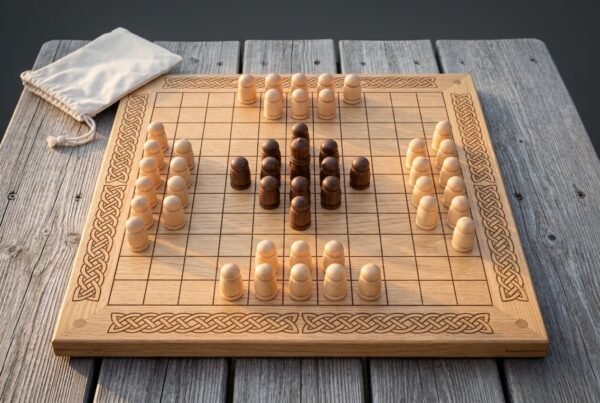
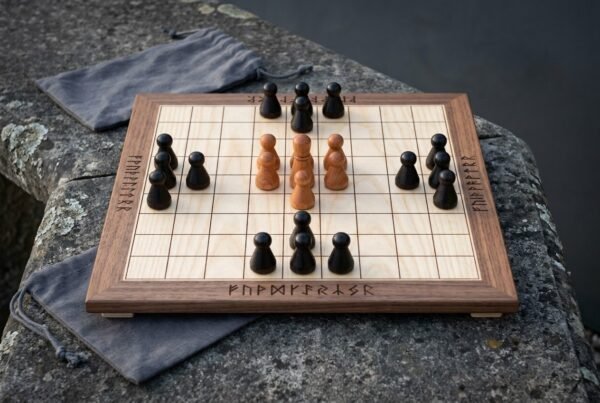
Hnefatafl is the Norse board game, an asymmetric siege played on an odd numbered grid where a king tries to reach a corner and the attackers try to surround him. The oak board here is about 16 inches square with an eleven by eleven grid engraved rather than printed, 37 turned hardwood pieces as 24 pale attackers, 12 dark defenders and a king, a pyrography burned knotwork border on all four edges, finished with a food safe hardwax oil and supplied with a canvas drawstring pouch and a printed rule sheet. There is also a walnut and maple version.
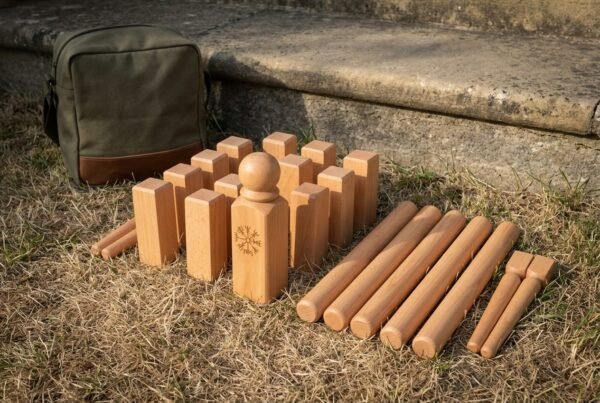
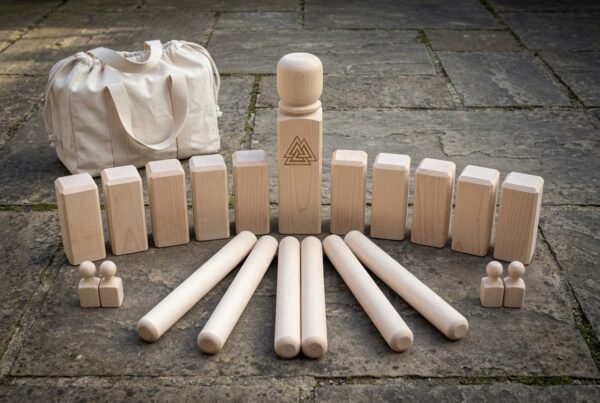
Kubb is the outdoor game, played by throwing batons at blocks. Sets come in solid beech or hard maple with ten kubbs about 6 inches tall at a 2.75 inch square section, a king about 12 inches with a turned crown, six turned batons about 12 inches long and four corner stakes, 21 pieces in all with a carry bag and rules. The maple set is left unsealed for outdoor use, which is the right choice for something that lives on grass.
Sizes and materials across the range
Every figure below is taken from the specification panel of a piece on this page. These are hand made goods in natural materials, so read the numbers as what to expect rather than as a guarantee to the millimetre.
| Piece | Material | Key dimension | Second figure | Included |
|---|---|---|---|---|
| Oak sword display stand | Solid oak throughout | Three tiers | One piece per tier | Stand only |
| Walnut wall bracket pair | Black walnut with solid brass hooks | About 9 in per bracket | Two brackets, four hooks | Mounting screws and wall anchors |
| Oak wall hook pair | Solid oak with brushed steel hooks | Matched pair | Two plaques, two hooks | Wall screws and wall plugs |
| Axe on a walnut plaque | 1095 head at 54 to 58 HRC on black walnut | Plaque about 12 by 10 in | 5 in edge on a 14 in ash haft | Axe, plaque, brass brackets, fixings, care card |
| Steel heater shield | Sheet steel with a polished steel border | 30 in by 22 in | About 9 lb | Shield only |
| Canvas wall banner | 12 oz cotton canvas on turned ash | 16 in by 22 in banner | About 40 in with the staff | Cross bar, staff and brass studs |
| Forged candle holder | Twisted solid steel bar | About 12 in tall | 5 in base spread | Roughly 1.5 to 2 lb, holder only |
| Slate rune plaque | Riven slate on a black walnut base | About 10 in by 7 in | 8 to 12 mm thick | Plaque, base, felt strip |
| Hnefatafl board | Solid oak with turned hardwood pieces | 16 in square | 37 playing pieces | Board, pieces, pouch, rule sheet |
| Kubb lawn set | Solid European beech | Kubbs about 6 in tall | King about 12 in | 21 pieces, canvas bag, rule sheet |
Weight is the figure to read before you drill. A 9 lb steel shield and a loaded three tier stand are both real loads, and the fixings supplied with a bracket assume you are going into something solid.
Hanging a blade without damaging it or the wall
Find a stud and fix into it, or use an anchor rated well above the weight of the piece. Plasterboard on its own will not hold a mounted axe or a loaded sword bracket for long, and the failure happens quietly over months as the fixing works loose.
Rest a blade on felt or leather rather than bare metal. Every mount here is either felt lined, leather lined or cut from timber for that reason. Bare steel hooks mark a polished blade and can wear a line into a scabbard over a year.
Keep the piece out of direct sunlight and away from a radiator or a wood burner. Heat dries out timber hafts, shrinks horn and bone, and cracks leather. Sunlight fades dyed leather and pales oiled oak unevenly, so a sword that hangs in a window ends up two colours.
Looking after wood, steel, slate and horn
Oiled oak and walnut want a fresh coat of hardwax oil every year or two if the piece is handled often, and a dry cloth the rest of the time. Do not use a silicone furniture spray on an oiled finish, because it sits on the surface and makes recoating patchy.
Forged steel here is brushed, waxed or clear sealed rather than lacquered, so a wipe with an oiled cloth after handling is enough. Any carbon steel axe head mounted on a plaque follows the same rule as a blade, which is dry it, oil it lightly and do not leave it damp. Slate needs nothing beyond a dry cloth, and horn wants to stay out of dry heat.
Engraving and gifting
Many pieces here can be engraved after they arrive in the United States, and most already carry a cut or burned design from the maker. Names and dates go onto the face of a plaque, the stretcher of a stand, the bracket face or the cheek of a mounted axe head. Elder Futhark is a phonetic alphabet rather than a cipher, so a name is transliterated by sound, and there is no rune for the letter C.
Engraving is permanent and an engraved piece cannot be returned, so send the exact spelling and read it twice before you order.
Where these pieces are made
Everything on this page is made by hand in the Czech Republic. Finished pieces are imported to the United States, inspected by Ransack Viking in North Babylon, New York, and shipped from there, with engraving added after arrival. Because slate is riven, horn is a natural cone and timber has its own figure, two pieces carrying the same name will differ in colour, grain and exact size.
Browse related categories
- Sword stands and wall displays
- Rune stones and Elder Futhark casting sets
- Hnefatafl boards and Norse lawn games
- Drinking horns with brass and steel rims
- Viking shields for wall and stand display
- Viking banners, belts and buckles
- Accessories, the wider collection of non blade pieces
- Engraved and personalised pieces across the site
Guides worth reading first
- How to display swords and axes safely on a wall
- The hnefatafl board: rules, history and how to play
- Runestones explained: what the raised stones actually say
- Elder Futhark runes: the alphabet and how names transliterate
- Choosing a shield for display: size, weight and fixing
Frequently asked questions
What is in the Viking home decor collection?
Sword stands and wall mounts, axe heads on carved plaques, a steel heater shield, a canvas wall banner, forged candle holders, oak and stained storage chests, slate rune stones and rune sets, hnefatafl boards, kubb lawn sets and drinking horns supplied with turned stands. It is a mixed collection rather than one product type.
Will a wall mount hold a heavy sword?
Yes, if it is fixed properly. The brackets ship with screws and anchors, but the real question is what is behind the plasterboard. Fix into a stud where you can, or use an anchor rated well above the weight of the piece, and check the fixing again after a few months.
Do the axe wall plaques come with the axe?
Yes. Both plaque pieces are sold complete with the axe head, haft, cradle brackets and wall fixings. The heads are 1095 high carbon at 54 to 58 HRC, the same steel used across the axe range.
Can the sword stands hold axes and spears too?
They can. The tiered stands take one sword or hafted piece per tier, and the oak wall hooks are described as suiting swords, axes, spears, staves and scabbarded blades. A long haft is heavier at one end, so seat it with the head over a cradle rather than overhanging.
How do I look after an oiled oak or walnut piece?
A dry cloth most of the time, and a fresh coat of hardwax oil every year or two if the piece is handled often. Avoid silicone furniture sprays, which sit on the surface and make recoating patchy, and keep the piece out of direct sun and away from a radiator.
Are the slate pieces all the same size?
No. Slate is riven rather than sawn, so thickness runs roughly 8 to 12 millimetres and the edges follow the split. The stated sizes are nominal, and variation between two pieces is the material behaving normally.
Can these pieces be engraved with a name or date?
Many can, after the piece arrives in the United States. Engraving goes onto a plaque face, a stand stretcher or the cheek of a mounted axe head. Elder Futhark works phonetically and there is no rune for the letter C, so names are transliterated by sound. Engraved pieces cannot be returned.
Where are these pieces made?
They are made by hand in the Czech Republic, then imported, inspected and shipped by Ransack Viking from North Babylon, New York, with engraving added in the United States after arrival.