Celtic knotwork on steel, leather, bone and wood
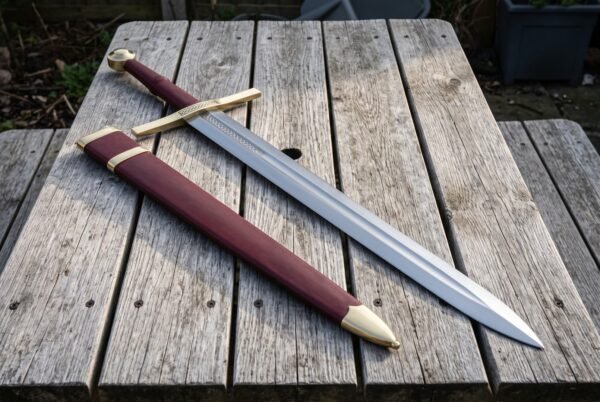
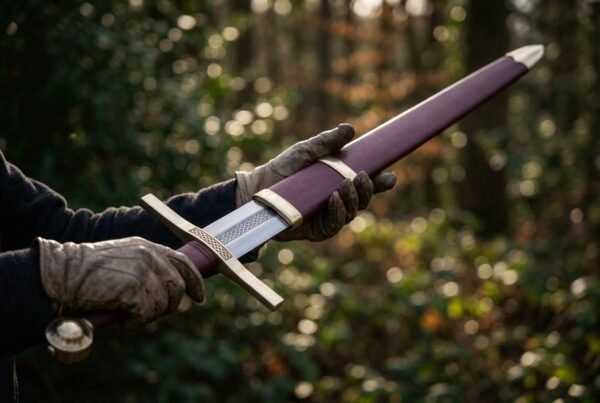
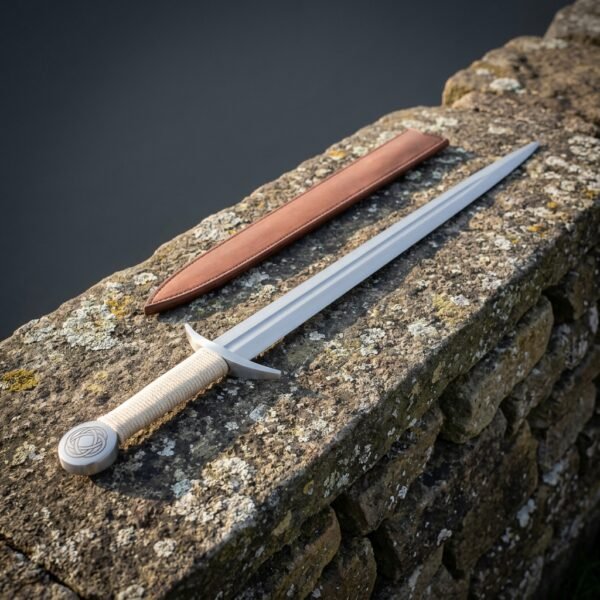
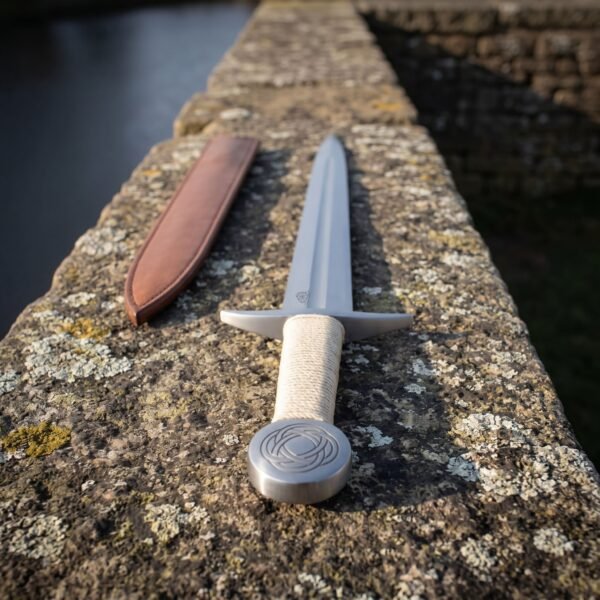
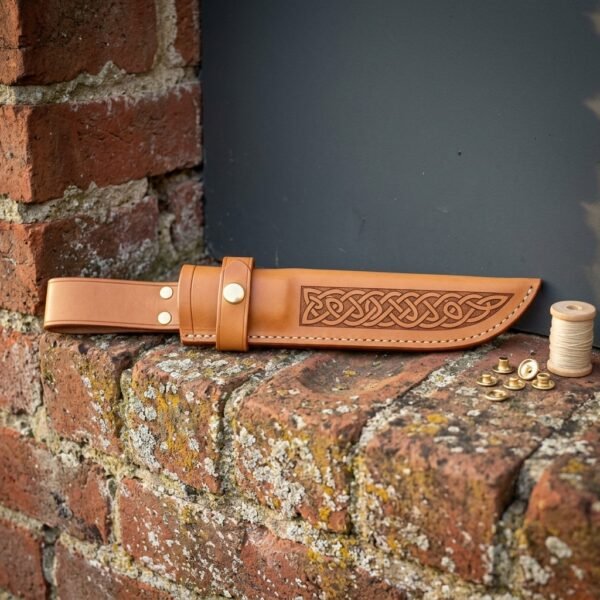
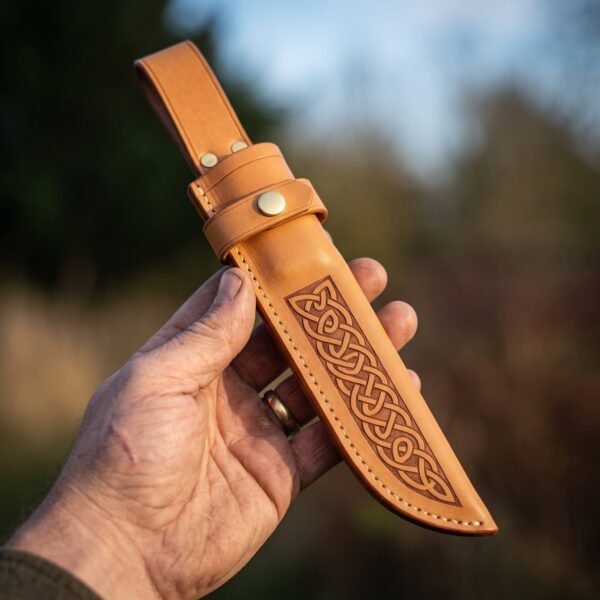
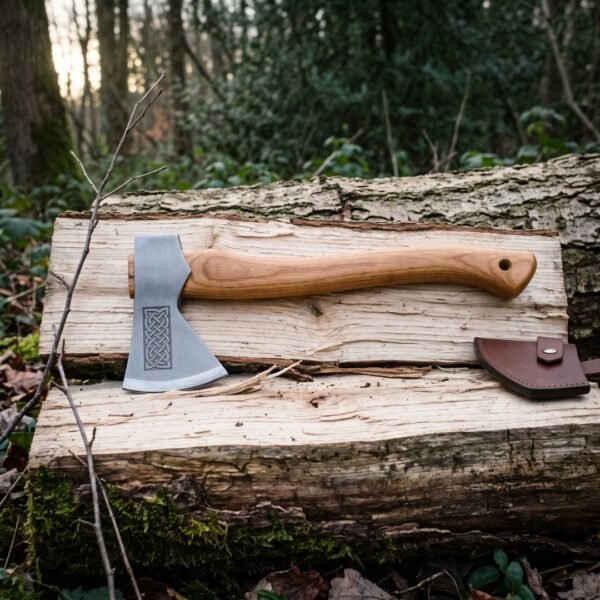
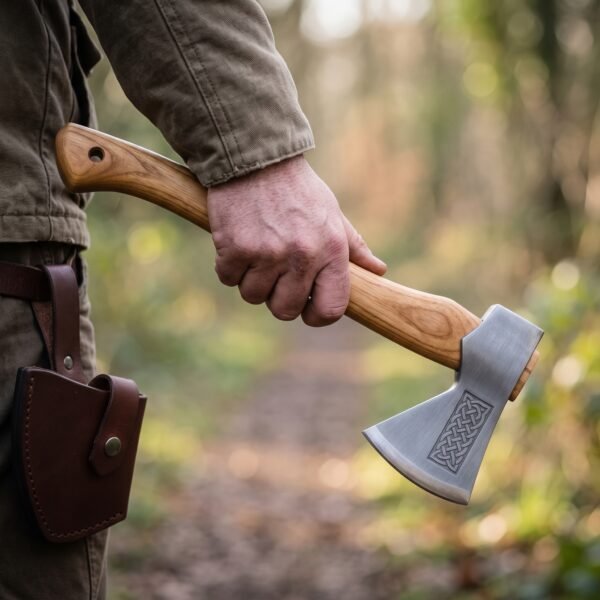
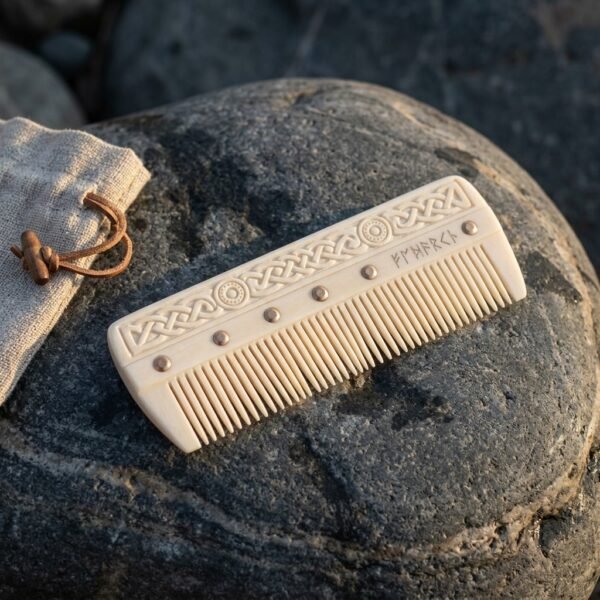
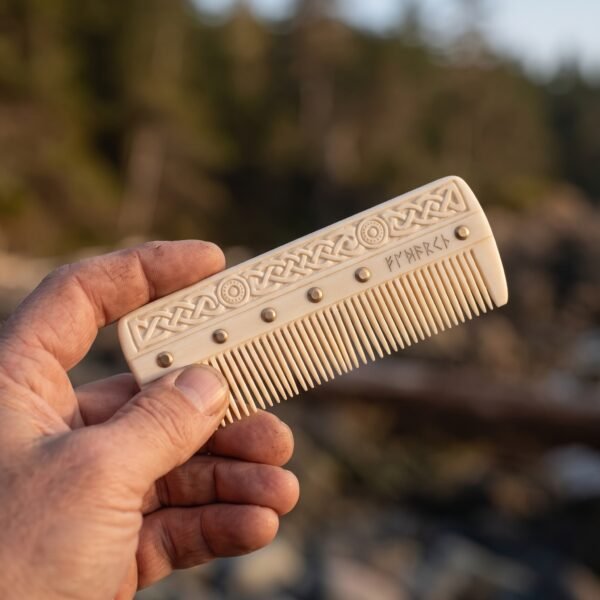
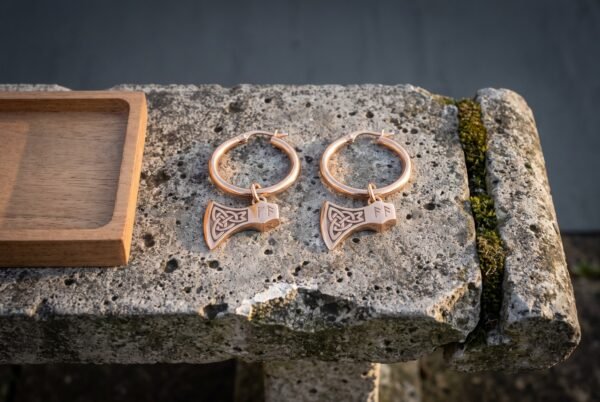
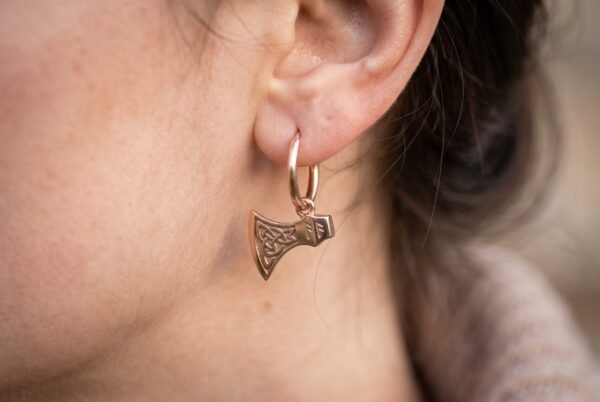
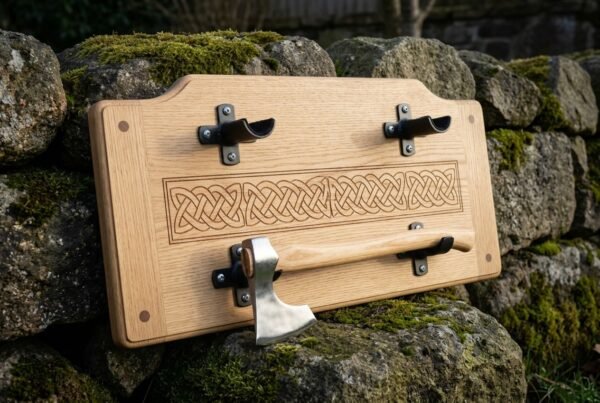
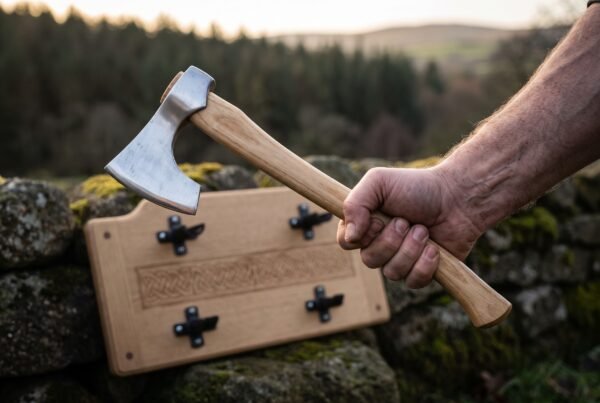
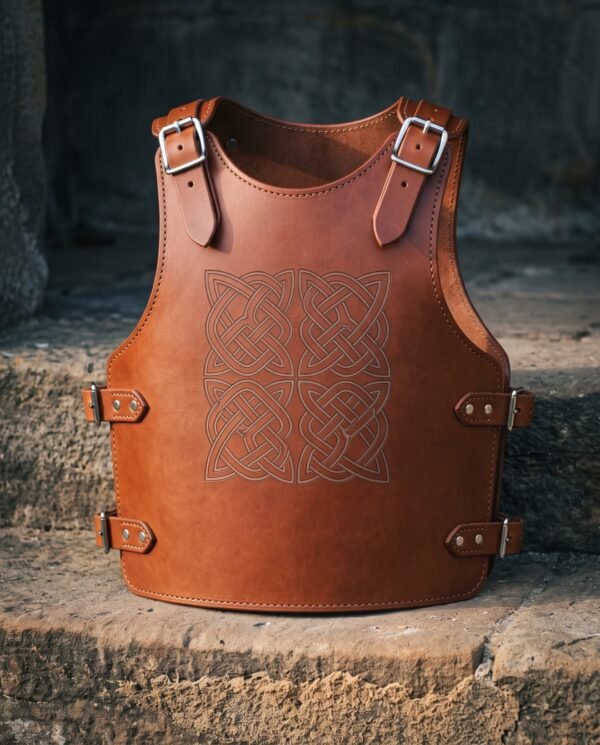
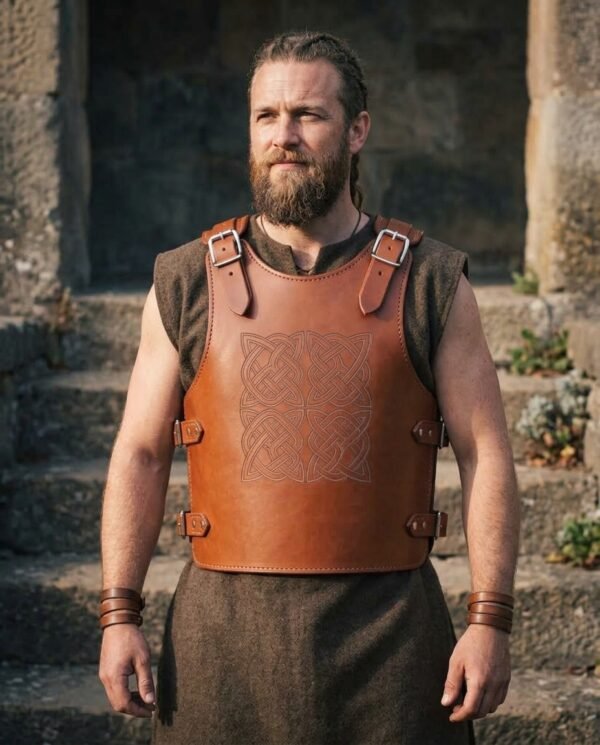
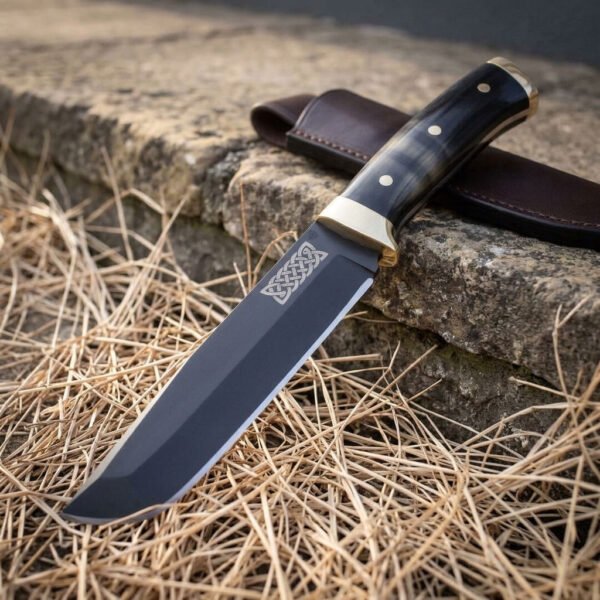
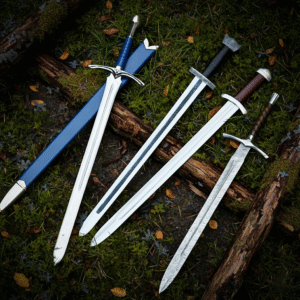
This is a small archive that crosses the whole catalogue. Everything in it carries the interlaced, endless knot pattern that came out of Ireland, Britain and the Celtic world and was later picked up by Norse carvers. You will find a 1095 steel Celtic sword and a knightly sword with knotwork on the guard, a hand axe with a knotwork etched cheek, a tooled leather knife sheath, a carved bone comb, a bearded axe mounted on a carved oak wall plaque, a leather cuirass with a knotwork chest panel, and a pair of rose tone hoop earrings in the axe design. Eight pieces at the moment, and it will grow as the workshop finishes more knotwork panels.
It is for the buyer who cares about the pattern more than the object. People with Irish, Scottish or Welsh family looking for a gift that says so without a shamrock. Wedding parties who want the knot as the theme across the groomsmen’s pieces. Reenactors filling an early medieval kit where knotwork on leather and bone is right for the period.
What to look for
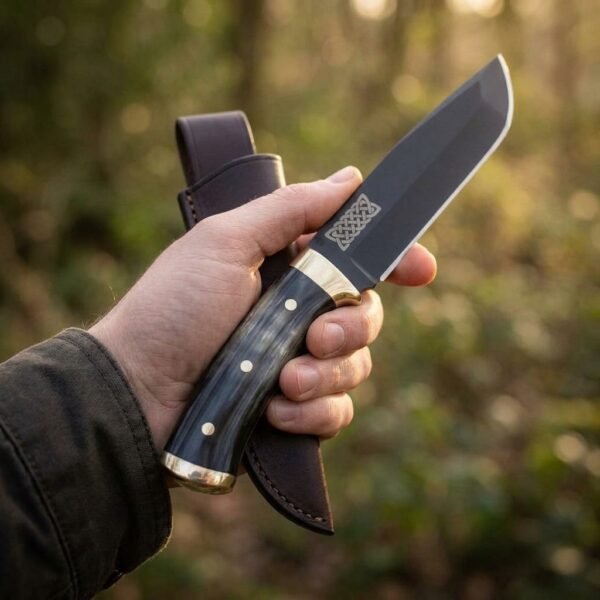
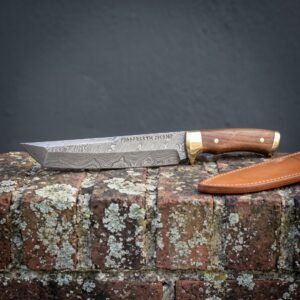
Look at how the knot is applied. On steel it is etched or engraved into the flat of a blade or an axe cheek and will last as long as the metal. On leather it is tooled, pressed into the damp hide, and it darkens with handling. On bone and wood it is carved. If the piece is a blade or an axe, check the steel: the forged pieces are plain 1095 at 54 to 58 HRC or 1095 and 15N20 Damascus at 58 to 60 HRC, and the title says which. If it is armour or a sheath, check the size notes, since leather does not stretch far.
How they are made and where
Ransack Viking is a Memphis, Tennessee company. All of these pieces are made by hand in the Czech Republic the old way. The steel is forged, ground and heat treated there, the leather is cut and tooled there, and the bone and oak are carved there. Each piece is then imported, inspected at our Memphis warehouse and shipped from Memphis. Engraving beyond the knotwork, such as a name or a date on the reverse of an axe head, is done in the United States before dispatch.
Care depends on the material. Wipe steel dry and oil it lightly, feed leather with a neutral balm once or twice a year, and keep bone and wood away from radiators and damp.
Related archives
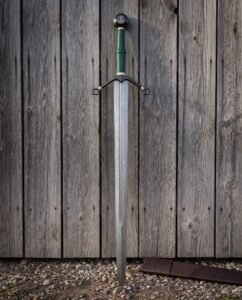
The Celtic and Anglo Saxon pieces as a category, including the sword above, are in Anglo Saxon and Celtic. Knotwork axes sit alongside the rune marked ones in Viking axes, the tooled sheaths are in scabbards and sheaths, and the wall plaque keeps company in Viking home decor. To see how the knot relates to the Valknut, the Vegvisir and the other marks you will find on our pieces, read Viking symbols and their meanings.
Frequently asked questions
Is Celtic knotwork the same as Viking knotwork?
They are related. The endless interlace began in the Celtic and Anglo Saxon world and Norse craftsmen adopted it, adding animal heads and gripping beasts. On our pieces the plainer interlace is described as Celtic and the beast forms as Norse.
Can I add a name or a date to a knotwork piece?
On the steel pieces, yes. The knotwork itself is done in the Czech workshop as part of making them, and lettering, dates or runes are added in the United States before dispatch.
Is the leather cuirass wearable?
Yes, it is made to be worn at events and for display. It is costume and reenactment leather, not protective equipment, and it is not rated for combat or sport.
Are the earrings steel?
They are rose tone hoops in the axe design with Celtic knotwork, made for wearing. The listing gives the exact materials.
Will the knotwork wear off?
Etched or engraved steel and carved bone or oak do not wear. Tooled leather softens and darkens over years of use, which most people consider an improvement.
8 matching pieces
Free US shipping
On every order, no minimum.
Hand Forged
Heated, hammered and ground by hand.
Engraving available
Names, dates or Norse runes on most pieces.