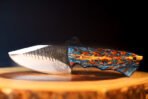
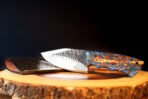
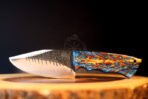
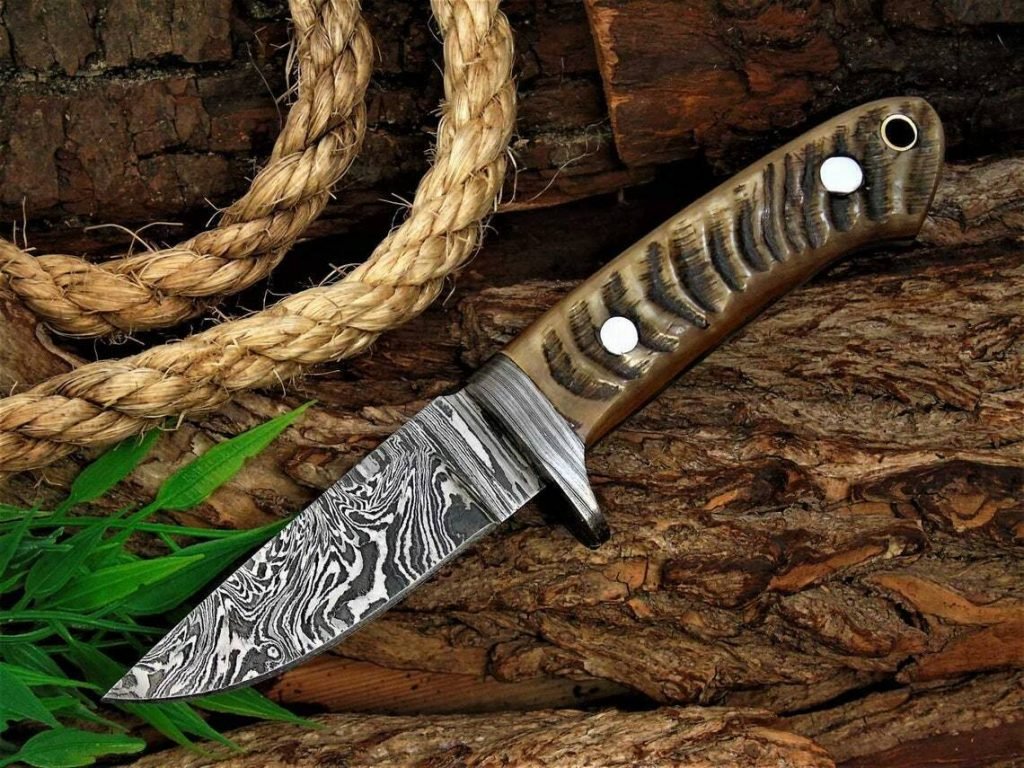
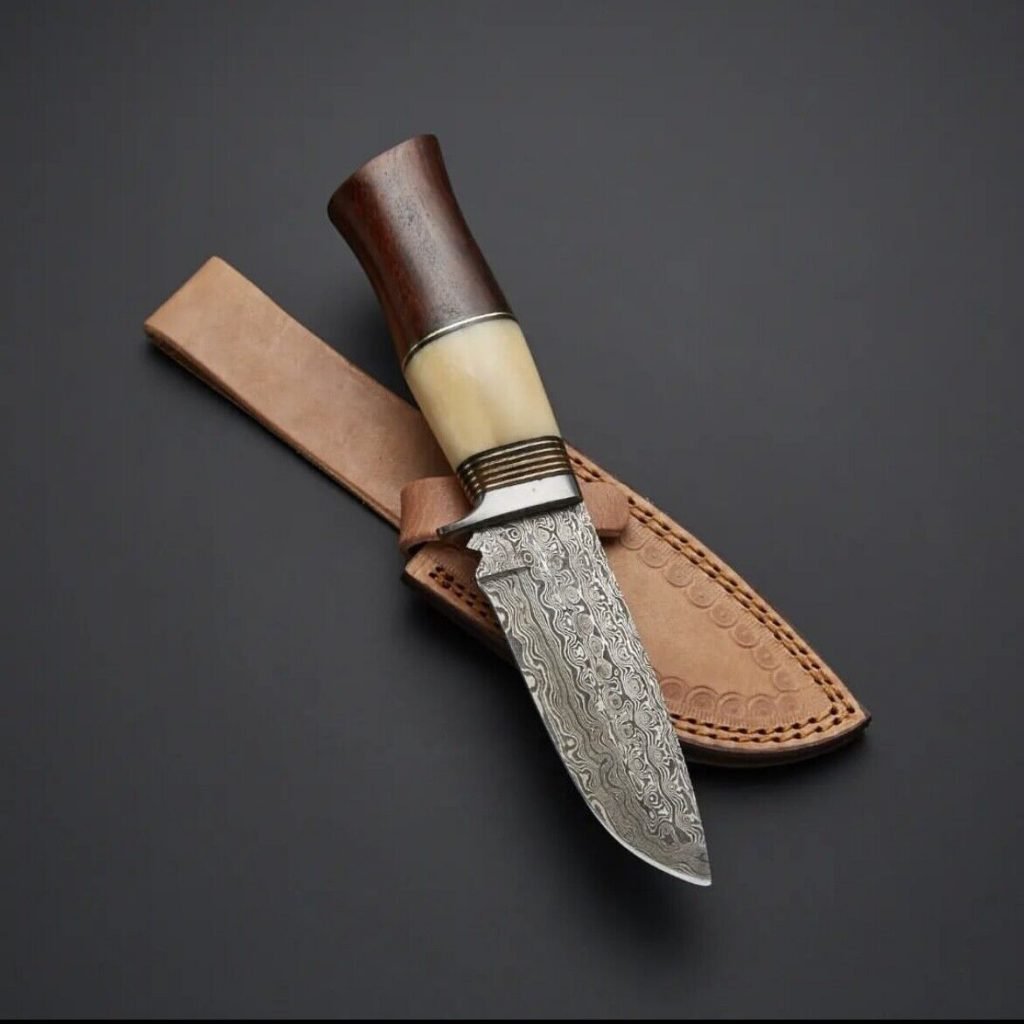
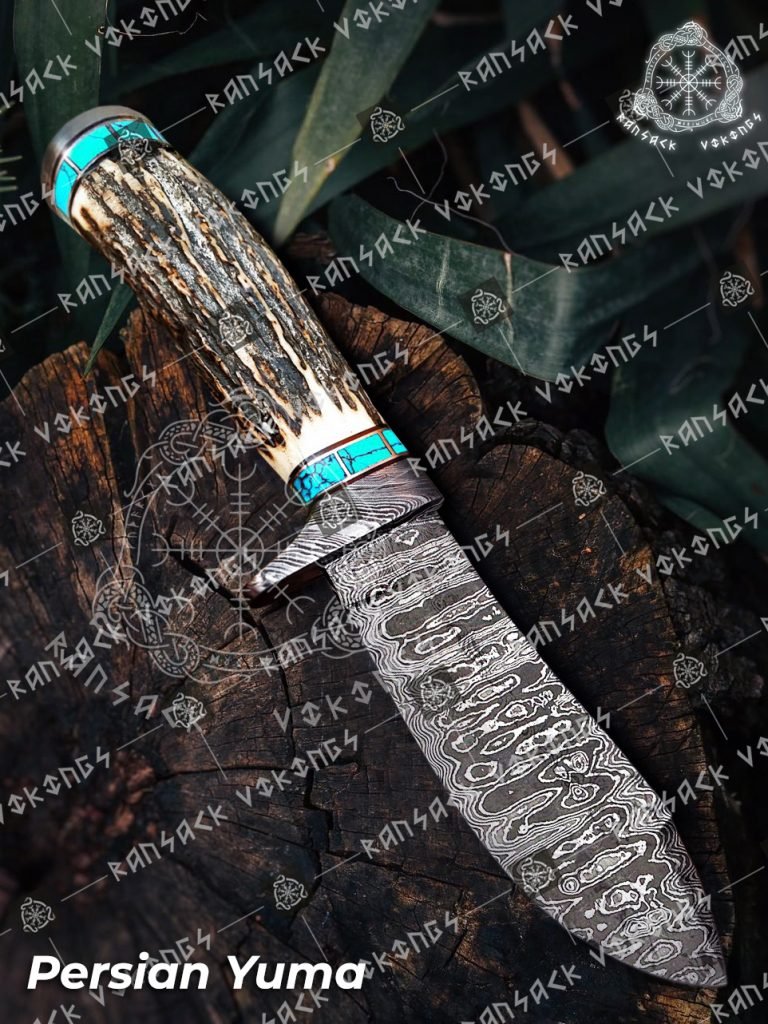
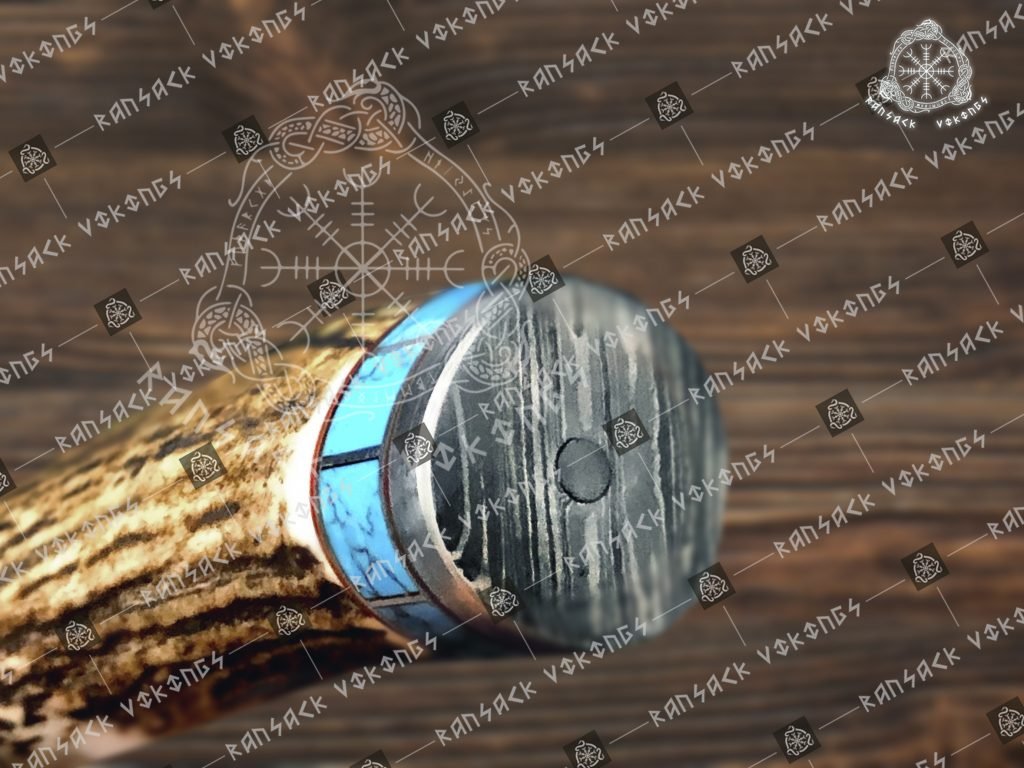
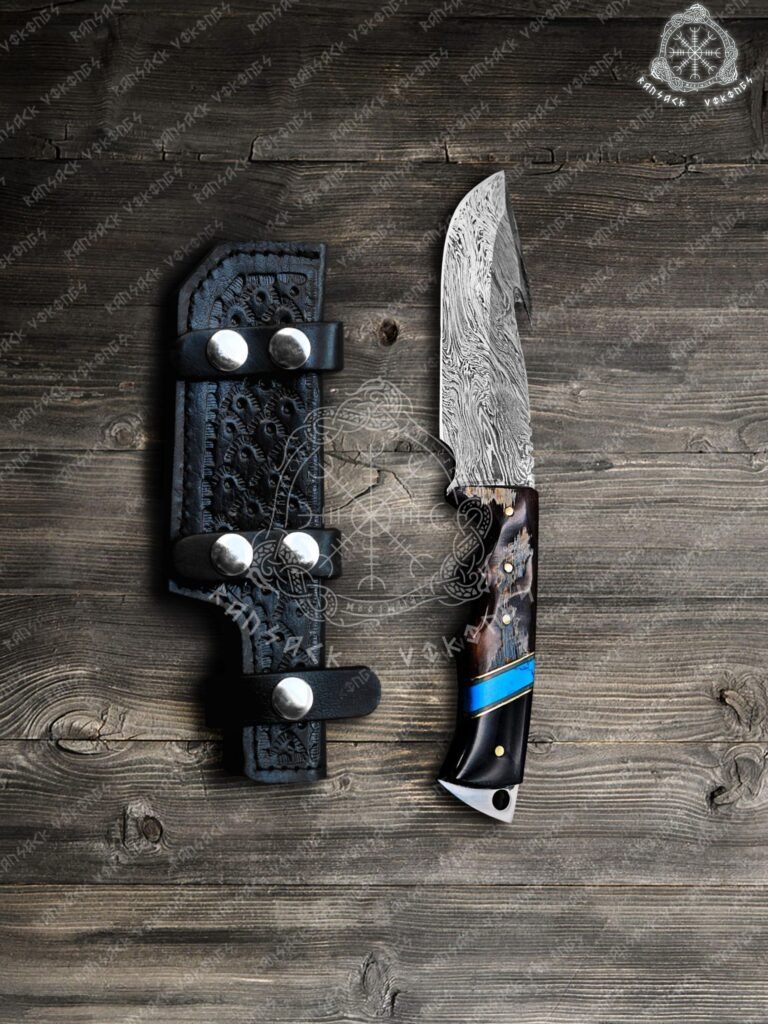
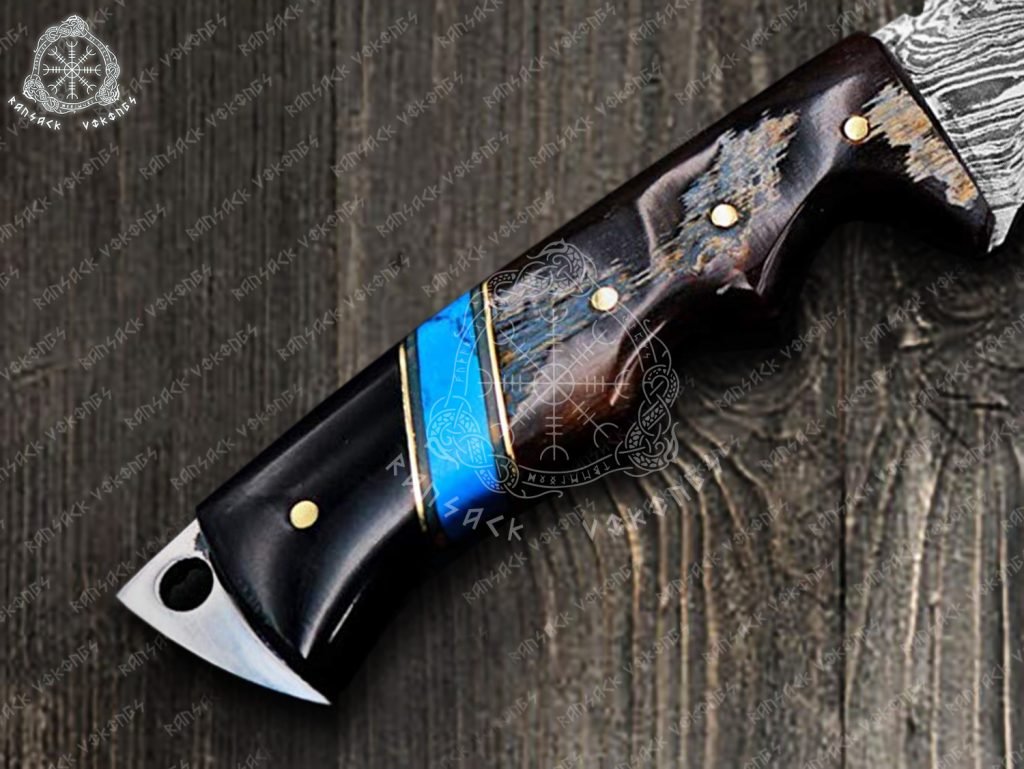
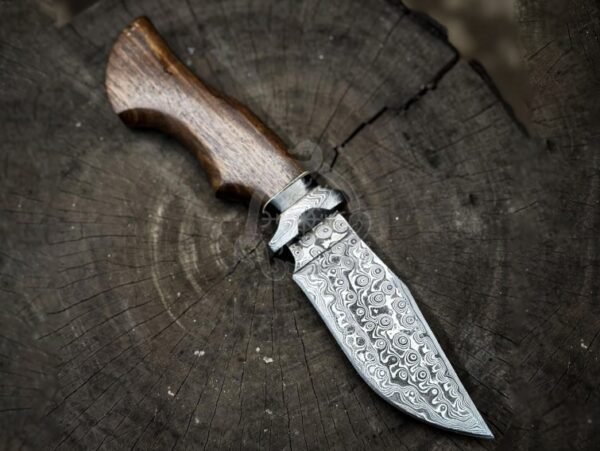
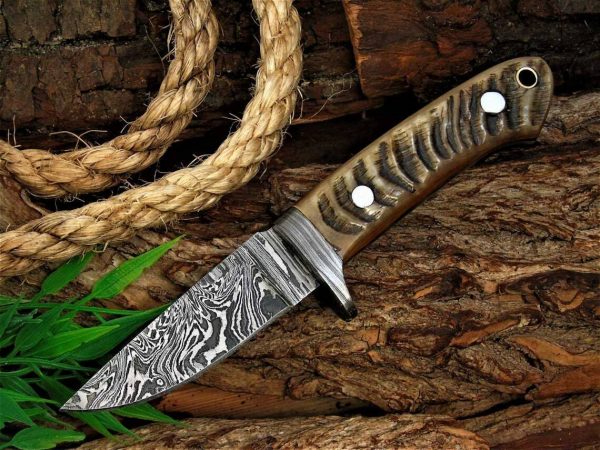
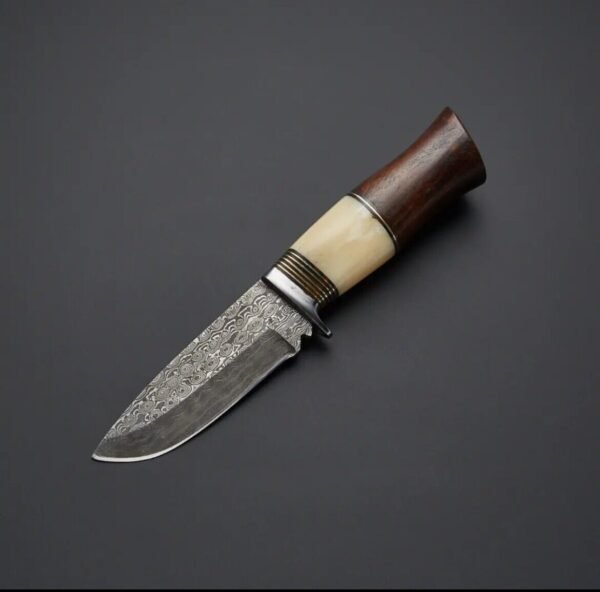
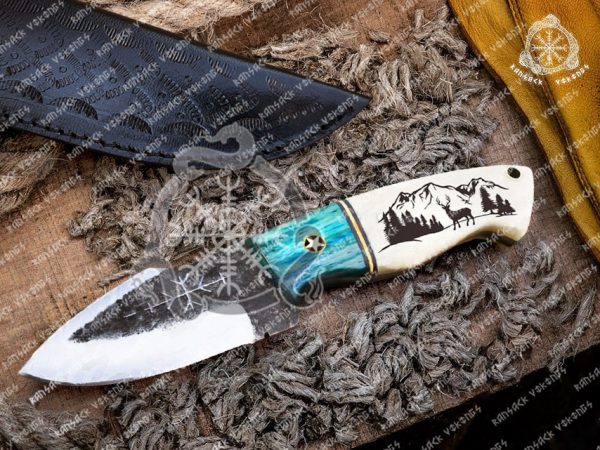
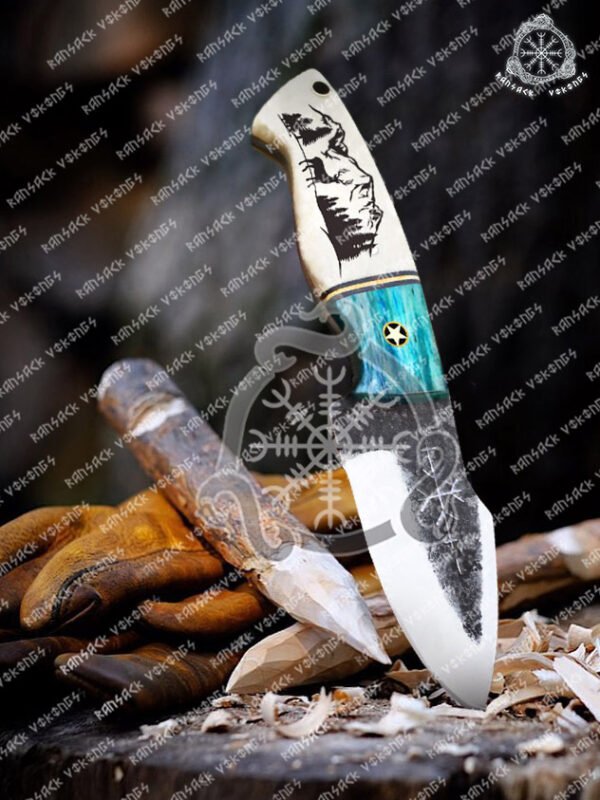
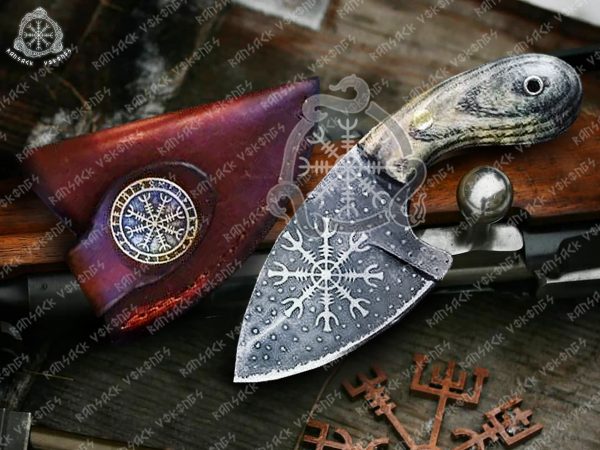
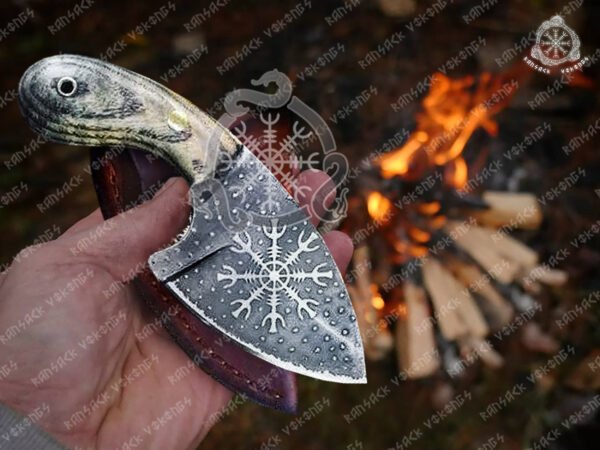
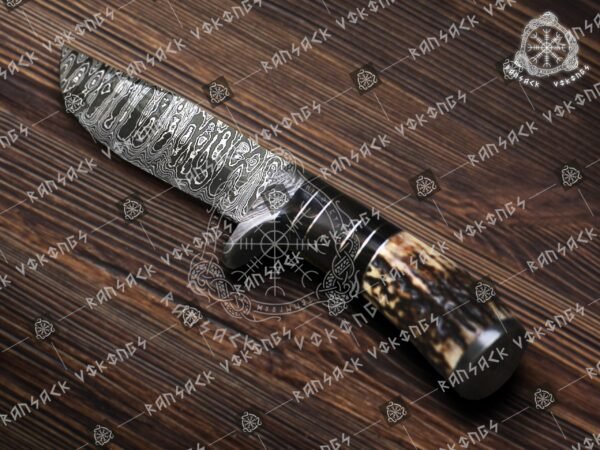
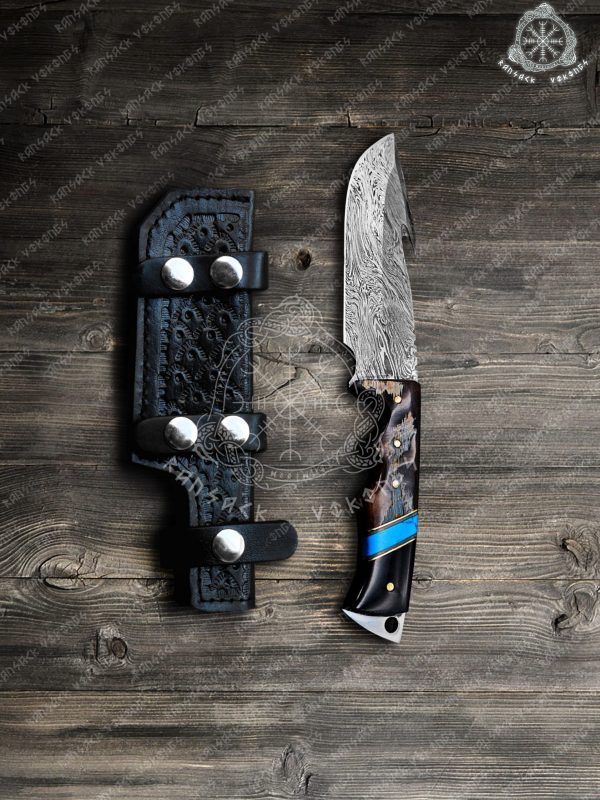
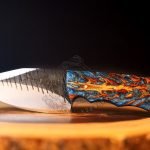
Forged in high carbon steel and handled in stag horn and stabilised pine cone, the Pinecrest is a skinner knife built around one idea: a blade you will actually reach for. It runs 8 inches overall with a 4 inch blade, a hand made steel guard and bolster, and it ships in a cowhide leather pouch cut for right hand carry.
The upswept skinner is one of the oldest continuously used working shapes in North America. It came out of the butcher and trade knives of the fur era, the plain thin bladed patterns that were shipped west by the crate and used by people whose income depended on getting a hide off an animal without cutting it. That commercial pressure is why the shape settled where it did. A damaged hide was worth less money, so the profile evolved to keep the point out of trouble and put as much curved edge as possible into contact with the skin. Nothing about it is decorative and nothing about it has needed changing since.
The Pinecrest is forged and finished in the Czech Republic. Shipping inside the United States is free.
Specifications
| Steel | Hand forged high carbon steel |
|---|
| Hardness | 54 to 58 HRC |
|---|
| Blade shape | Upswept skinner |
|---|
| Overall length | 8 inches |
|---|
| Blade length | 4 inches |
|---|
| Handle | Stag horn and pine cone, hand made steel guard and bolster |
|---|
| Sheath | Cowhide leather pouch, right hand carry |
|---|
| SKU | RK-597 |
|---|
Why a skinner curves the way it does
The curve is the whole point, and it does two separate jobs at once.
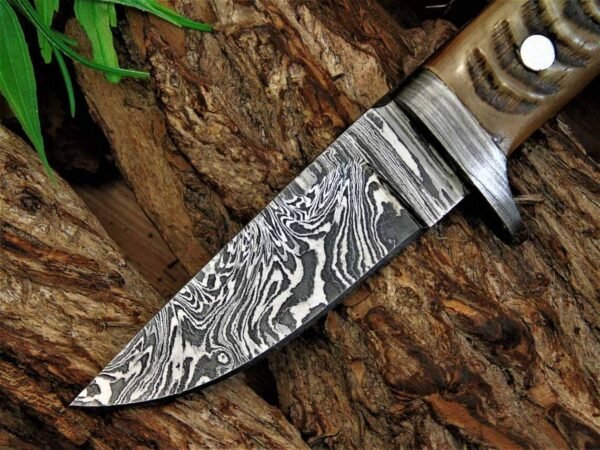
The first is contact length. Skinning is not a stabbing job or a chopping job. It is a drawing cut, where you pull the edge along the line between the hide and the carcass and let the blade separate the two. A straight edge only touches that line at one point at a time, so you end up sawing. A deeply curved belly lies along the seam and cuts continuously as you draw it, which is why a good skinner feels like it is doing the work for you.
The second is where the tip ends up. On an upswept skinner the point rises above the line of the spine rather than dropping below it, which lifts it clear of the work. That matters because the two things you must not cut are the hide itself, which loses value the moment you nick it, and the muscle underneath, which bleeds and spoils. A high tip means the part of the blade doing the cutting is the belly, and the point is simply along for the ride.
At 4 inches this is the length most people find best for deer and similar sized animals. Long enough to get a proper draw stroke going, short enough to work around a leg joint or up under a shoulder without the tip swinging into something you did not intend. A skinner is a specialist, though, and that is worth saying plainly. It is poor at piercing, mediocre at food preparation and useless for chopping. If you want one knife for the whole trip, a drop point hunter is a better choice and this is what you add alongside it. Our skinning knife guide for deer covers blade length, steel and technique in detail, and hunting knife versus skinner compares the two directly.
Why high carbon steel and not stainless
Our plain blades are 1095 high carbon steel, hardened and tempered to 54 to 58 HRC. That is a slightly softer heat treat than we use on Damascus, and it is deliberate on a knife like this. A skinner works against bone and joint edges as well as hide, and a slightly tougher, slightly less hard edge will roll rather than chip, which means you can steel it straight and carry on rather than losing a piece of the edge in the field.
High carbon steel is what working blades were made from long before stainless existed. It hardens well, it sharpens fast, and it takes a keener edge than stainless of comparable price. It also greys over with a patina, and that patina is a stable oxide layer that protects the surface underneath. Leave it and it will darken to a soft grey over a few seasons. Scrub it off and you are simply starting again.
The honest cost is that it will rust if you neglect it, and skinning is the wettest, most corrosive work a knife does. Blood is mildly acidic and will spot bare carbon steel within hours if it is left on the blade. Wash it and dry it before you put it away and this is a non issue. If you know you will not do that, buy stainless and accept a duller edge. The comparison against pattern welded steel is in high carbon versus Damascus, and the wider case is in Damascus versus stainless.
Stag horn and stabilised pine cone
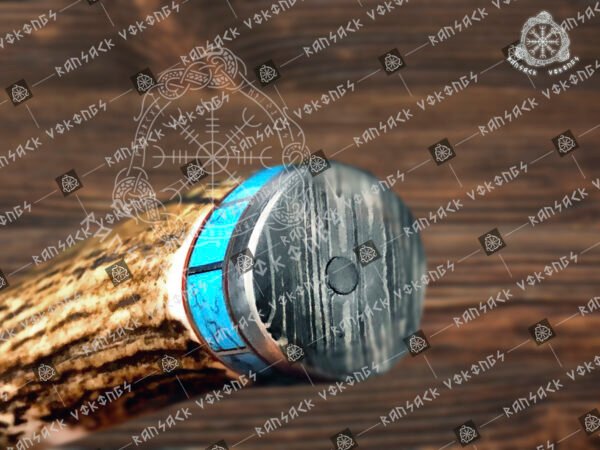
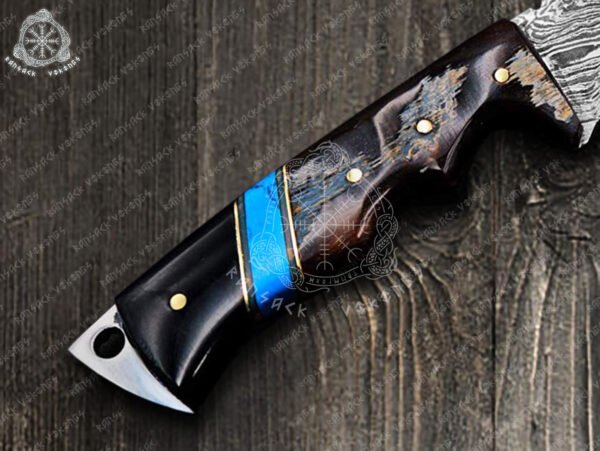
The grip pairs stag horn with stabilised pine cone, separated by a hand made steel bolster. Neither is timber and neither behaves like it.
Stag horn is keratin, the same material as a fingernail. It is warm in the hand within seconds, slightly resilient rather than rigid, and it is one of the best wet grips of any material we work with, which is precisely what a skinning knife needs when your hands are slick.
The pine cone section is a genuine pine cone that has been vacuum impregnated with resin under pressure until every void inside it is filled, then cured hard and turned to shape. What you are looking at is real cone structure suspended in a solid block, which is why the pattern is a mass of overlapping scales rather than a grain. Because it is fully stabilised it behaves like resin rather than like wood: it does not absorb water, it does not swell or shrink with humidity, and it needs no feeding at all.
That means the two halves of this handle want different care. The stag takes a light coat of oil once or twice a year, thin and wiped back, using the method in wooden handle care, which applies to horn without change. The pine cone needs nothing beyond soap, water and drying. Keep the whole handle out of long soaking and off heat sources.
Engraving, runes and your own design
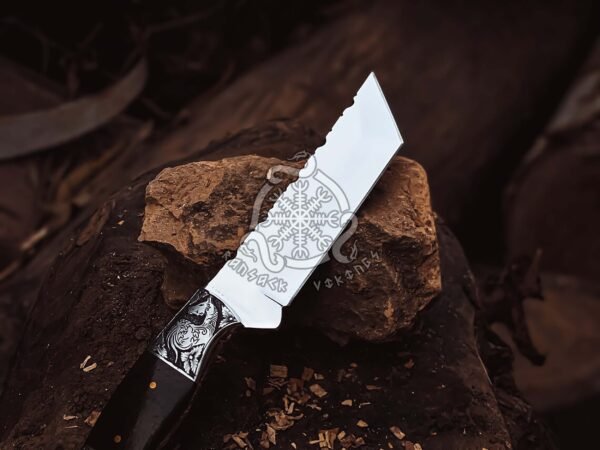
Use the rune converter on this page to turn a name, a date or a short phrase into Elder Futhark and we will cut it into the steel or the handle. If you would rather have a Viking pattern than a rune line, choose your own design in the engraving option above the add to cart button and tell us whether it goes on the blade or the handle. Where a piece already carries an engraved design, your chosen engraving replaces it rather than sitting alongside it. On a 4 inch skinner the flat above the belly takes a short line or a set of initials cleanly, and stag horn engraves beautifully because the cut reads pale against the darker surface. Stabilised pine cone does not hold a fine line, so handle work on this piece goes into the stag. See the engraving page.
Care and sharpening
High carbon steel patinas and will rust if neglected. Wash it properly after field use, dry it, and oil it before storage. In exchange it sharpens quickly and takes a keener edge than stainless.
Sharpening a curved blade is where people struggle. You cannot lay the whole edge flat on a stone, because the belly lifts away from the surface. Instead, sweep the knife across the stone as you draw it, rolling the handle up as you reach the tip so the contact point tracks the curve. Some skinners take a slightly convex edge, which slides through hide better than a flat ground bevel and is worth trying once you are comfortable freehand. Method in sharpening with a whetstone and blade care in steel care.
Made in the Czech Republic
This piece is made by hand in the Czech Republic, in a workshop that still works the old way. The steel is forged, ground, heat treated and finished by smiths who learned the trade from the people before them, and the wood, horn and leather are cut and fitted by hand rather than pressed out on a line. That is also why no two pieces come out exactly the same.
Ransack Viking is a United States company. We import these pieces ourselves, check every one when it lands and ship from our warehouse in Memphis, Tennessee. Engraving is done here in the United States after the piece arrives, so your runes or your own design go on before it leaves for you.
A note on handmade variation
The Pinecrest is hand forged. It is not machine made and it is not bulk produced, so what arrives will not be a pixel for pixel copy of the photograph. The stag horn carries the marking of the animal it came from, every pine cone sets differently in the resin so no two handles show the same pattern of scales, and the sweep of the belly and the height of the point shift by fractions because a person ground them. The dimensions, the steel and the build are the same every time. The character is not.
Frequently asked questions
Is 4 inches long enough to skin a deer
Yes. Four inches is the length most people settle on for deer sized animals, because it gives a full draw stroke while staying controllable around joints.
Will the pine cone handle break
No. It is fully stabilised, which means every void in the cone is filled with cured resin. It behaves like a solid block rather than like a natural cone and it is unaffected by water.
Why is the tip curved upward
To keep it away from the hide and the meat while the curved belly does the cutting. A dropped point would keep catching on the material you are trying not to damage.
My blade has gone grey. Have I damaged it
No, that is the patina and it is protecting the steel. Leave it. Only orange or red rust needs removing.
Can I use it to gut as well as skin
You can, carefully, but a gut hook or a blade with a lower point does that job more safely. Most people carry a skinner alongside a general hunting knife rather than instead of one.
How long is the wait
One to two weeks of processing, then transit. Free shipping inside the United States and seven day returns.
What is in the box
- One Pinecrest high carbon steel skinner knife
- Cowhide leather pouch, right hand carry
- Protective packaging
- Forged and finished in the Czech Republic
Explore the range
Compare it with the rest of Damascus Skinner Knives, the general field blades in Hunting Knives, the larger profiles in Bowie Knives and the Norse pieces in Viking Knives. Technique and steel background sit in the guides.










Reviews
There are no reviews yet