The Celtic knot is a band with no beginning and no end, worked into a repeating interlace. It came out of Ireland and Britain, was borrowed by Norse carvers, and ended up on more sword furniture than any other pattern in northern Europe. On a pommel or a guard it gives the eye something to follow.
Where the knot is worked
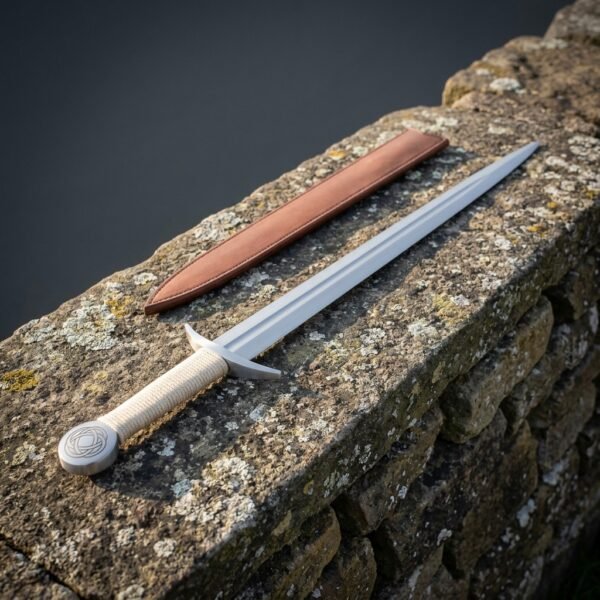
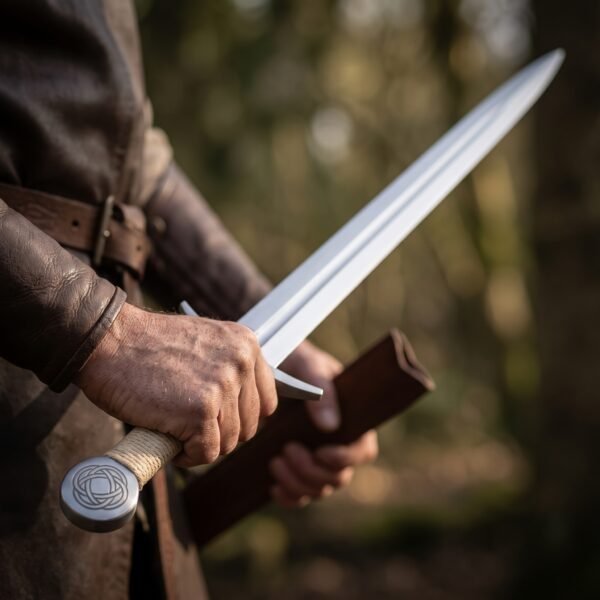
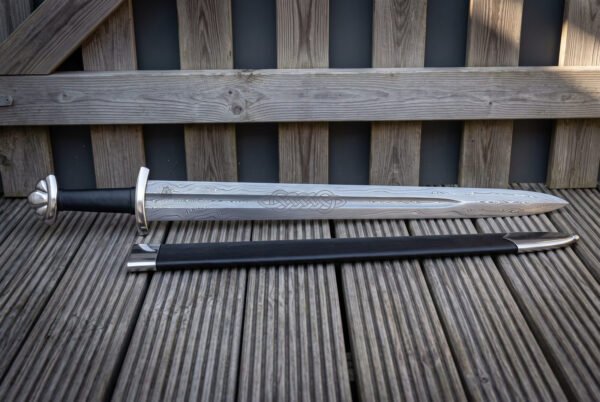
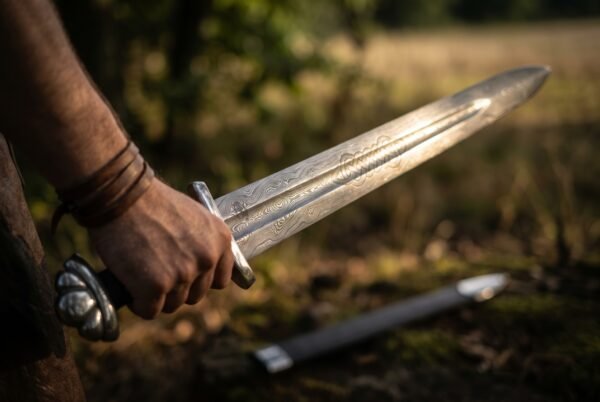
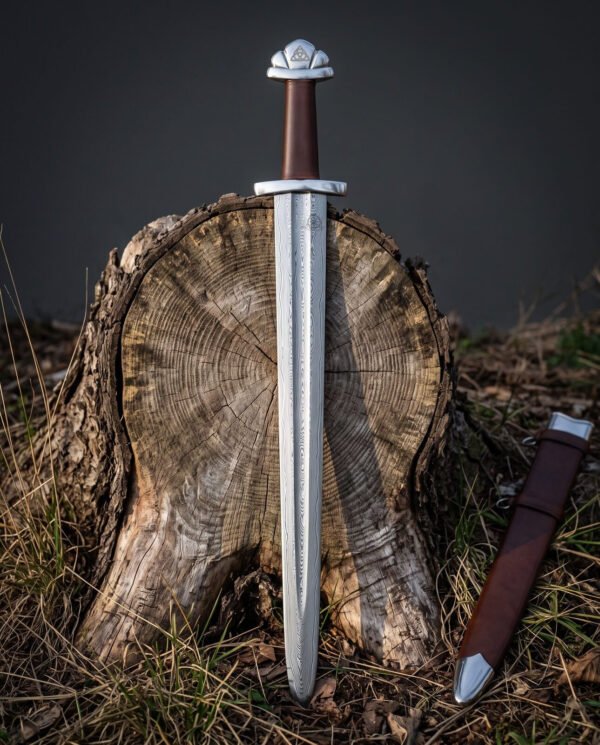
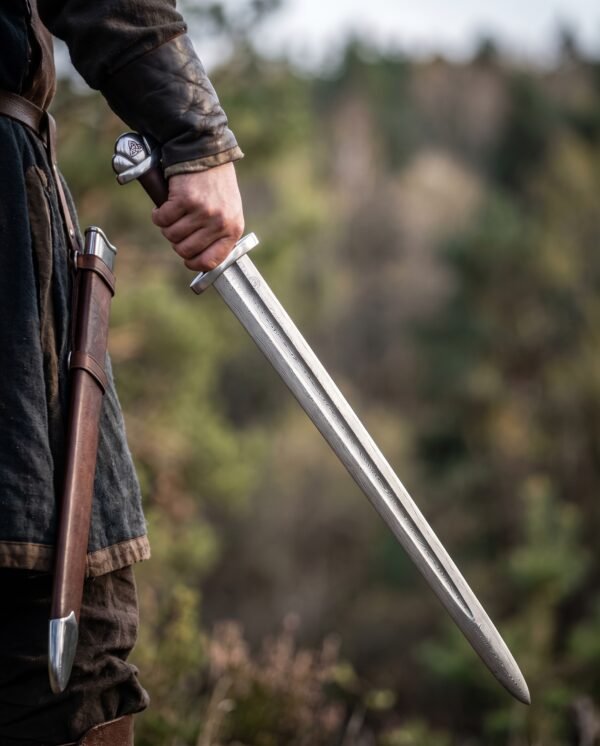
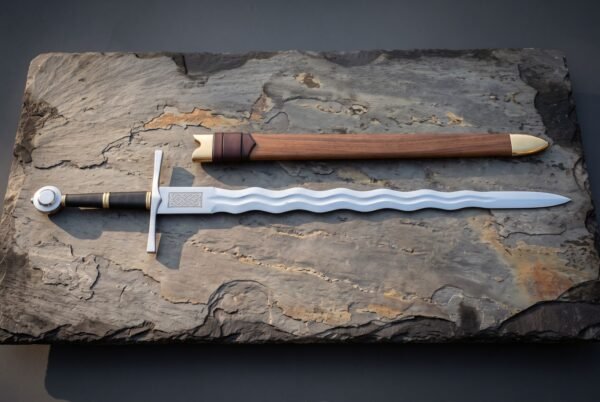
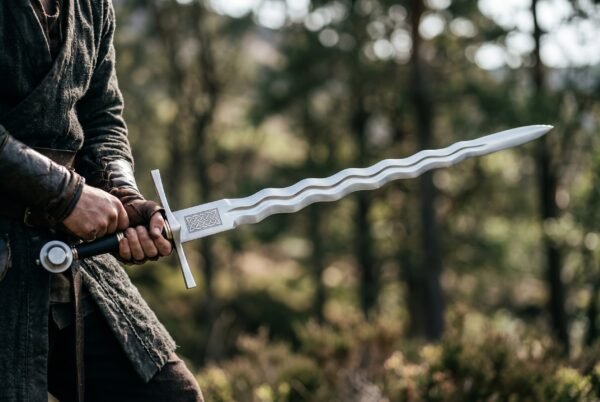
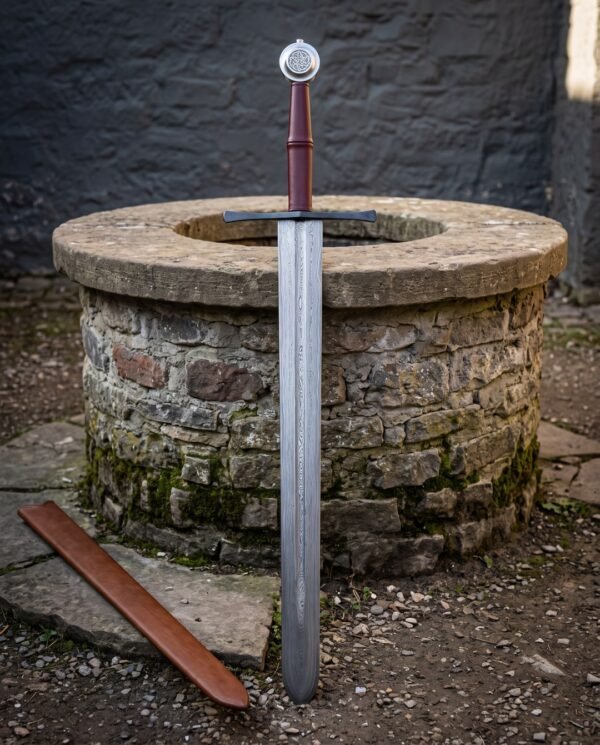
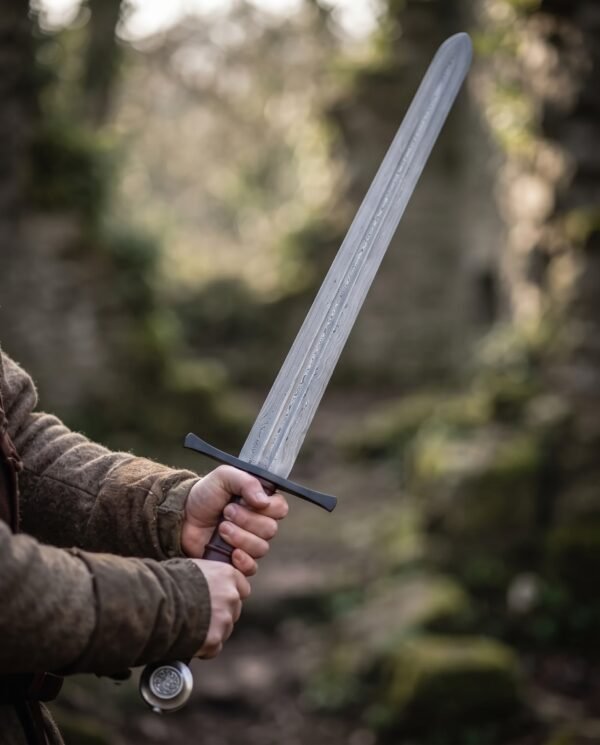
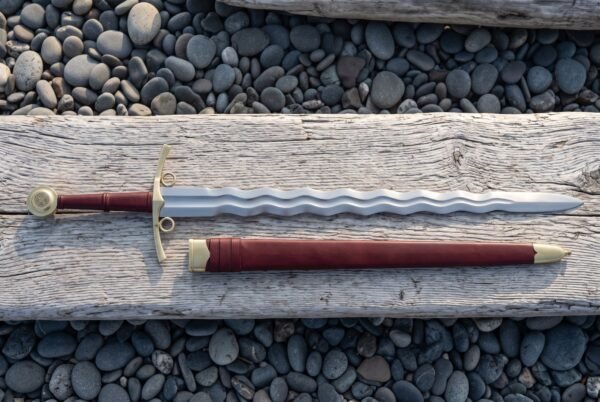
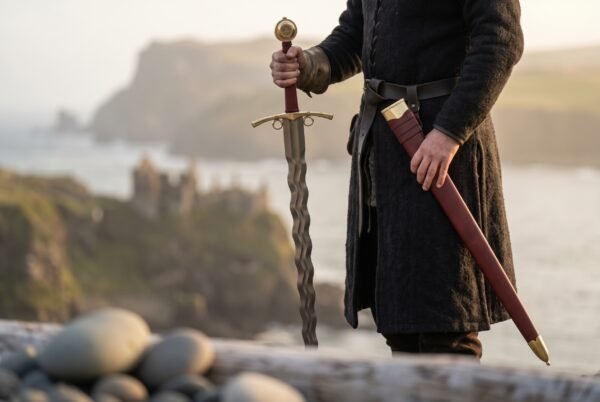
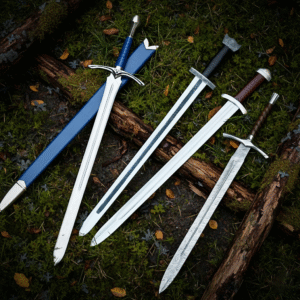
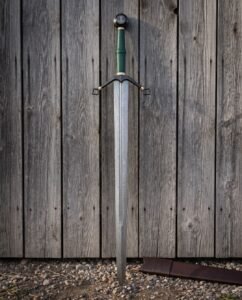
Knotwheel is the clearest example, a Damascus arming sword with a Celtic knot wheel pommel, a banded burgundy leather grip, a rounded display point and a leather scabbard. Knotdrift takes the pattern onto the blade, a Damascus Viking sword with an etched Celtic knot panel, a three lobed pommel and a steel mounted scabbard. Trinefold and Trinecrown both use the triquetra, the three cornered knot: the first as a lobed pommel on a five lobe steel hilt, the second as an engraved disc pommel on a thirty one inch short sword with a cream cord grip. Two flame blades carry it too. Ringflame has a Celtic cross pommel on a brass side ring hilt, and Wavecrown pairs a wave blade with a disc pommel and a timber scabbard.
The insular pieces sit in Anglo Saxon and Celtic, the Norse ones in Viking swords and the wave blades in flamberges.
Free US shipping
On most pieces. Heavier and oversized ones carry a flat charge.
Hand Forged
Heated, hammered and ground by hand.
Engraving available
Names, dates or Norse runes on most pieces.