A collector gift has to clear one bar. The recipient probably already owns the obvious things. Somebody with a wall of swords does not need another sword, and the fastest way to give them something they will actually put up is to move sideways into a category they have not started yet. Polearms and blunt arms are almost always that category.
What is on this tag
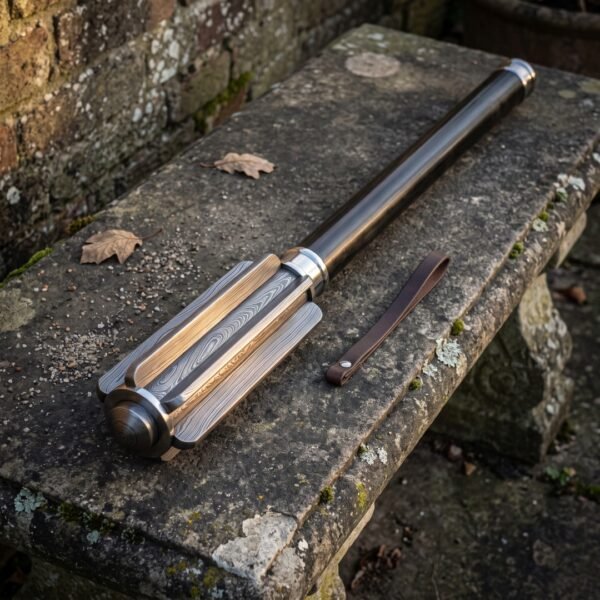
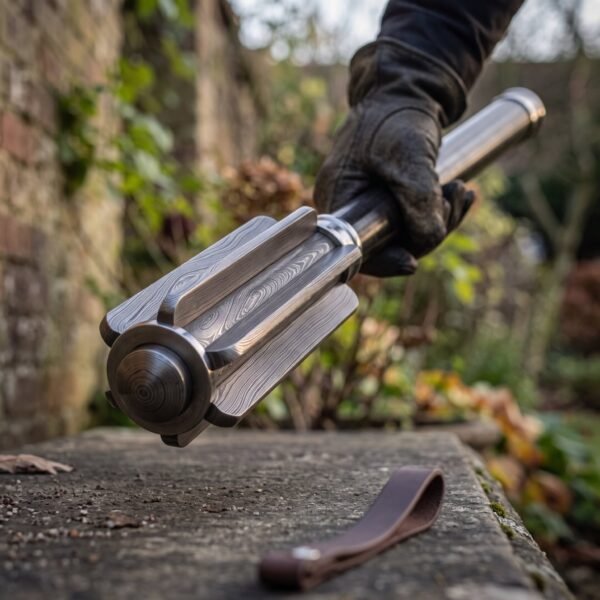
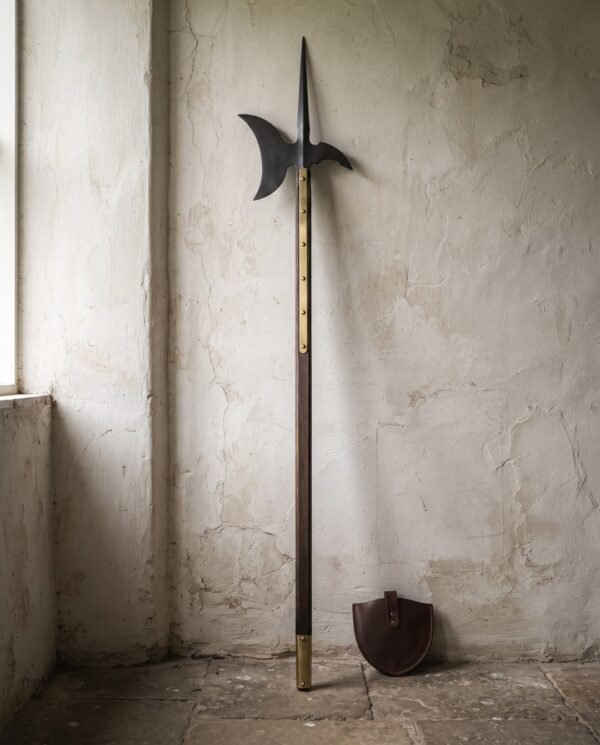
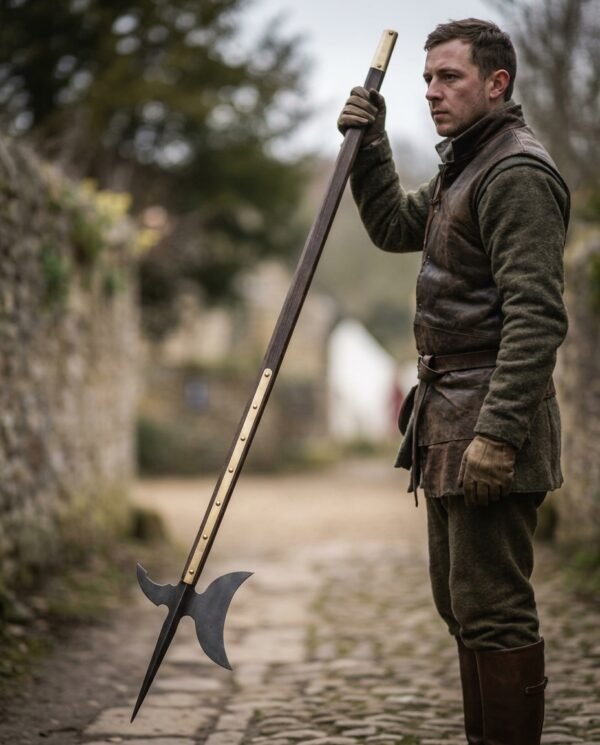
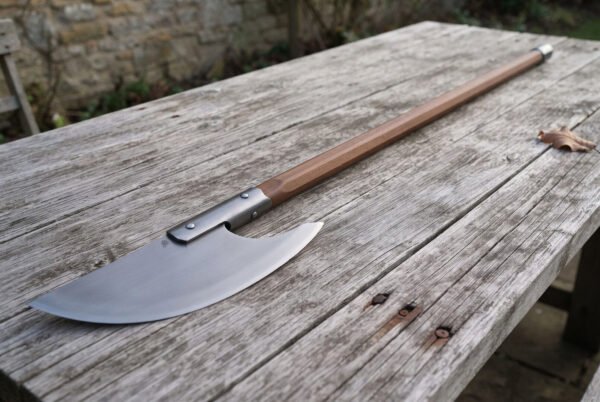
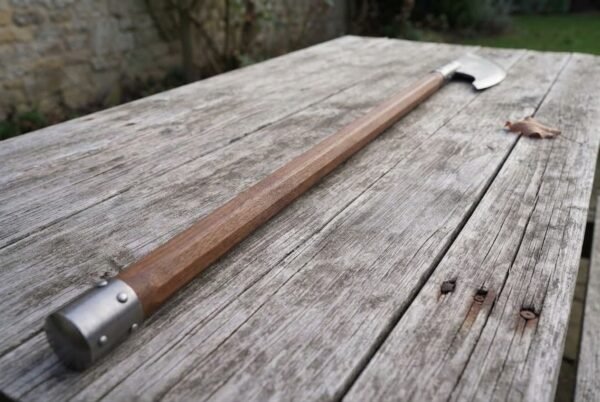
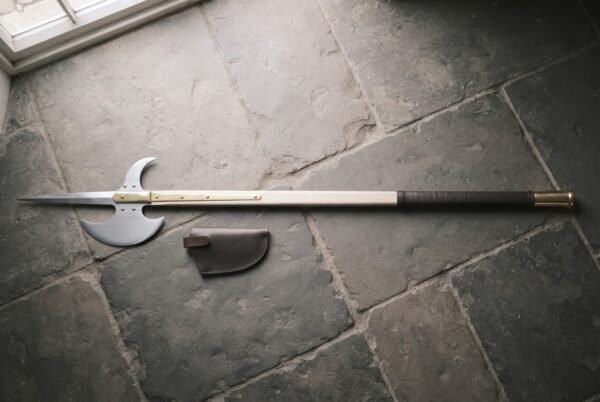
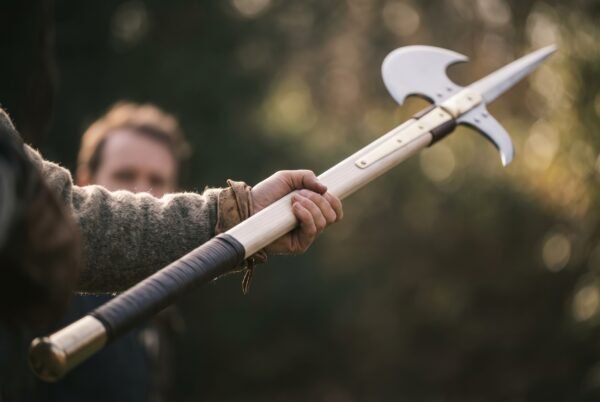
Medieval glaives at 62 inches overall with 24 inch blades, Damascus glaives at 54 inches with 20 inch blades, morning star maces at 26 inches with 5 inch heads, flanged maces at 27 inches with 6 inch heads on rosewood hafts, halberds and poleaxes. Steel is plain 1095 high carbon at 54 to 58 HRC or Damascus of 1095 and 15N20, forge welded and acid etched, at 58 to 60 HRC. Hafts are ash, oak and rosewood with steel collars and langets.
Why blunt arms existed
Because mail is very good at stopping a cut and poor at stopping impact. A sword that cannot cut through a riveted mail shirt can still be a nuisance, but a flanged mace transmits the whole blow through the armor into whatever is underneath it. That is the entire logic of the medieval arms race in one sentence, and the war hammer and mace article works through it with the surviving examples.
Space, before you order
A 62 inch glaive is an extraordinary object and it does not fit anywhere ordinary. It needs two anchor points on a wall, a room with height, and a route from the front door to the wall that does not involve a tight staircase. Measure first. The long hafted pieces are in the glaives and polearms and the halberds, and the blunt arms in the maces.
Construction
Heads are forged and ground rather than cast, sockets are welded closed, and hafts are wedged rather than glued. Langets, the steel straps running down the haft below the head, are there to stop a blade cutting the shaft through and are a fair sign that the maker understood what the piece is for.
Care
Carbon steel wants a wipe and a thin film of oil. Ash and oak hafts want an occasional feed of oil rather than varnish.
Free US shipping
On most pieces. Heavier and oversized ones carry a flat charge.
Hand Forged
Heated, hammered and ground by hand.
Engraving available
Names, dates or Norse runes on most pieces.